Forcing Friendships Doesn't Equal Autistic Youth Gaining Social Skills

My son's first friendships were with family.
[Image of a hug between Mu and his adult big sister. His back is to the camera.
His sister is smiling. Posted with the permission of the subjects.
Image by their father, Nuri Cevik.]
Kerima Çevik
theautismwars.blogspot.com

"How do I handle my child seeing the children of every new family who moves into the neighborhood surrounding us included in outdoor play knowing he is being excluded from the group?"

I saw another parent posting this question as one of the most frequent questions autism parents ask as their kids become preteens and teenagers, and I cringed a bit. It is a common concern for all families with autistic youth trying to navigate a world where they are often othered and mistreated. My son and I also see them when we hang out on our deck or the backyard in the summer, or on snow days. Kids his age, teenagers, will for the most part either ignore him, ridicule him, or ask to do his respite care to fulfill their community service requirement at school. They never ask him what he wants.

That last bit is particularly anger-inducing. Asking for my son as if you are doing me the favor of walking the family dog is dehumanizing to my son in a dismissive way that reeks of ableism on steroids. These are not the kinds of interactions that will help him build the self-confidence he will need to navigate this world after his father and I are gone. He needs to understand that random people may be ableist and some people are dangerous. He needs to know that some will offer friendship as a ruse to some other end. He must be given the chance to interact enough to grasp the differences between true friendship and all other types of approaches.

My son is not just Autistic. He is the son of a Black woman. Survival social skill building is a requirement of being Black in America. Like code-switching to gain access to better education and employment opportunities, knowing who hates you and what that looks like can keep you alive. In approaching/considering my son’s interactions with others, my racial and ethnic experiences inform my stance on his human rights.

Parts of my childhood were spent in areas where my siblings and I were the only African American children in predominantly white neighborhoods and schools. We were in North Carolina in 1972, where "This is Klan Country" billboards appeared on highways in several parts of the state. We never lived or went to school with the expectation of friendship. We were taught to survive the environments, which were for the most part hostile to us.

My mother was an educator. Her parenting flaws were legion but she had a tendency to rise like a phoenix in times of adversity. When I came home at age twelve with a bruise on my cheek asking what an n-word was, she pulled out an unabridged dictionary and had me look it up. Then she told me in terms that I could understand what this slur was meant to do and why it was untrue. We discussed how I would handle my bullies. She warned that even those in authority might hold biases and turn away while I was being beaten and how to reduce situations ripe for being dragged off and beaten up at school in the future.

My mother said something to me back then that was life-changing. She said people were not required to like me or befriend me. They were required to respect my right to exist, to move in the same space, and to be treated equally under the law.

That is what I want my son to learn. I want him to know, as an Autistic person, that he can choose to befriend someone or not. An autistic young person has the right to have an active and willing agency in the process of deciding who to befriend, what boundaries should be set on such friendships and who they are just not comfortable with. Before any of that can happen, they must understand not to comply with every demand made to them from everyone. They need to understand they have a right to say no to people. And they need to know what kinds of behaviors are abusive and wrong.

But I don't see this happening with parents. The focus is on finding friends, even finding dates when children become teens and adults, without assessment or understanding of their children’s needs, wants, or ability to protect themselves from harm. This goes hand in hand with the belief that friendship by any means necessary with "normal" teens will "rub off." As long as parents force friendships their autistic kids will someday go to sleep at night and wake up magically typical in the morning. Any sign of intolerance from their autistic offspring for whatever the parent views as ideal social interactions with peers is then a behavioral challenge needing to be imposed not only on the disabled child but on peers in the neighborhood. This escalates to pleas to communities to create normalizing events by inducing pity for the autistic child or young adult to elicit a response from the schools, friends, or neighbors.

I hope I never embarrass my son by blasting a social media demand that someone come and befriend him without his consent. He played with other children on playgrounds until he didn't wish to go to them anymore. The noise of a gaggle of young folk filling a sidewalk and refusing to yield to his wheelchair is not particularly pleasant for him. If the non-disabled peers who are his neighbors don't even have the courtesy to yield when needed unless he glares at them, how can I as a parent demand that those same teens befriend him?

Contrary to assertions that these forced experiences are a necessary part of the social skills process, the aggressive demand of parents that other teens interact or befriend their autistic teen can backfire by being off-putting. Negative responses from teens cliques/groups parents wish their autistic teen was part of are NOT teachable moments. My view is that my son is a human being, not a social science project. He doesn't exist to teach his non-disabled peers tolerance.

Two cautionary tales of autistic teens irrevocably harmed by the mistaken parental idea that somehow they had neighborhood friends are the cases of the autistic teen boy in Ohio who was assaulted by five teen males with bodily fluids during a faked ice bucket challenge, and the case of an autistic teen boy who was systematically tortured during snow days and holidays by two teen girls. In both cases, parents spoke of insisting their teens leave with their abusers, even when they showed reluctance to do so.

The parents spoke of being relieved their offspring had made friends with typical neighborhood peers. They had no idea their children were being victimized by their "friends." The need for the parents to want their children to have friends in order to make parents feel better overrode possible red flags about these relationships they might have spotted immediately otherwise.

In contrast, every person who has genuinely befriended my son has come directly to him, not me, and extended their hand or signed to him or asked him if he would like to sit with them. They made it clear to my son that they wanted his friendship and their intent was transparent. And yes, they knew he was a nonverbal autistic. They only asked how he communicated, respected boundaries, and made an effort to find activities that allowed him to see us and understand he could return to us anytime he wished.

My point is simple. We parents shouldn't push friendships on our autistic children because we think they need to have them to reach a goal of being indistinguishable from their typical peers. We shouldn’t presume their incompetence at acquiring friends or berate them for not having any or enough friends. We should not create or force participation in events requiring typical partners and then send social media lamentation that our kid is autistic and has no friends when things don't go well. What parents do by this behavior is to broadcast across a global platform that they have a vulnerable disabled person who is friendless. They broadcast that they are willing to force their autistic loved one to comply with anyone who presents themselves as a potential friend to them. This destroys our young people’s self-worth, reinforces the belief that they must comply with everyone’s demands, and leaves them with a sense of helplessness and lack of agency in their own lives.

Look at what your autistic offspring like, what they want, and how they navigate the world first. Consider what would work for them. Then sit with them and however they communicate with you, explain consent and boundaries. Only when parents are certain their autistic teens want friendship facilitation and understand boundaries and consent should friendship facilitation happen with the active agency of the autistic teen. Otherwise, this is about us, not them.

P.S. Friendship facilitation does not mean broadcasting your teen's lack of friends online or trying to gaslight other teens into taking them to events like homecoming dances, proms, or birthday parties. It means looking for meetups and events that will be accessible to your autistic teen, asking them if they want to participate, and allowing them to leave if and when they wish.

This could save our children from irreparable trauma.

Peace.

----

A version of this article was previously published at The Autism Wars.
Share:

Autistic Burnout: An Interview With Researcher Dora Raymaker

Dora Raymaker is a researcher, writer, and artist based in Portland, Oregon. She is co-director of the Academic Autism Spectrum Partnership In Research and Education (AASPIRE) with Christina Nicolaidis. AASPIRE is currently running a pilot study on autistic burnout and suicidal behavior. Autistic people have often talked about burnout, and it emerged as a major theme in their previous study on autism and skilled employment, but up to now, it has received limited attention from researchers.

Fergus Murray interviewed Dora for Thinking Person's Guide to Autism.

Photo courtesy Dora Raymaker
[image: Dora Raymaker, a white person with
curly shoulder-length red hair with one teal
lock, glasses, and a steady gaze.]
FM: Could you summarise what autistic burnout means to you?

DR: The question evokes for me the impacts of autistic burnout on my own life, like "it means feeling my abilities and successes slip away and being powerless to stop it..."

But I think it is more asking, "how would you define autistic burnout?" I think that's an important frame for the rest of the conversation. We're still a finalized-analysis away from coming up with a definition grounded in research, but a fair start at an operational definition might be, "A state of pervasive exhaustion, loss of function, increase in autistic traits, and withdrawal from life that results from continuously expending more resources than one has coping with activities and environments ill-suited to one's abilities and needs." In other words, autistic burnout is the result of being asked to continuously do more than one is capable of without sufficient means for recovery.

FM: There has so far been very little research on autistic burnout, although it is something autistic people have been talking about for a long time. Why do you suppose that is?

DR: Autism research, until fairly recently, has been mostly directed by non-autistic researchers, professionals, and family members whose priorities may be different from, or not fully inclusive of, the priorities of autistic people. Add on top of that a still-pervasive medical model of autism in the research world (disability as a disease to be cured, rather than disability as a divergence to be supported) which makes it even harder to get through the barriers between what we've been talking about wanting and what autism research is actually examining. This is a complicated topic I could probably spend the whole interview on, so I'll stop my geekery about it there, LOL.

Anyway, I'm hopeful that we'll have more research about autistic burnout (possibly disability burnout?) in the future. Autistic people have more voice in research than we used to, from the policy level to the participant level. Also I'm anticipating the surge of work into connected topics, such as camouflaging and mental health, will bring autistic burnout more into the awareness of the research community.

FM: How do you see the relationships between burnout and other experiences often reported by autistic people—meltdowns, shutdowns, sensory overwhelm, and catatonia?

DR: These other experiences are distinct states from burnout, but people report experiencing them far more often when also in a state of burnout. If we consider autistic burnout as a reduction in resources to cope with activities and environments that were already difficult—including by camouflaging and all the negative consequences of that—then it makes sense that a person would be left with less ability to tune out sensory stimulus, breathe through their trauma-reaction, or otherwise avoid the triggers for these other states. Nearly everyone we've spoken with in our research cited increased instances of these experiences as a consequence of the burnout.

FM: Have you been able to show what some effective strategies for coping with or avoiding burnout might look like?

DR: We asked people in our interviews what strategies helped them avoid or recover from burnout. We also looked at social media, where people have been sharing strategies. The community has also been compiling this information, and there are some good resources out there, like this guide from Autistic Women and Nonbinary Network (AWN). I recently did a talk at Seattle Children's Hospital on the research, and the slides from that talk also list a number of the strategies. You can get the slides here, and the talk should be available on YouTube at some point. Until then, it was recorded on Facebook, and you can view it there.

The tl;dr version: being accepted for who you are as an autistic person and supported by others, being able to act autistic and do things that fuel you (like engage in special interests), taking time off, and having a reduction in expectations to do things in the same way as non-autistic people are some of the primary things that help.

FM: Many autistic adults report that they only realised they were autistic (or only received professional help) after experiencing burnout. Some may have talked to specialists before this, and been denied a diagnosis because they were not seen as sufficiently impaired. Do you think it might help some people to avoid burnout, if it was easier to be formally identified as autistic without insisting that someone's autism must 'limit or impair everyday functioning'?

DR: Yes, absolutely. Even just realizing that you're probably diagnosable could be helpful, because it gives you access to community wisdom, and the strategies people use.

However, if the dynamic of autistic burnout really is related to spending more resources coping than one has, I'm not sure the real leverage in avoiding burnout resides with the autistic person alone. Especially because a number of the strategies people have to avoid or recover from burnout involve being able to act more autistic, being accepted as autistic, and getting support and accommodations--all things that require the cooperation of others. So we need to also be looking at ways to make neurodivergence more accepted and less stigmatizing, as well as ways for services to become more inclusive of supporting autistic people who appear to be "functioning well." Knowing you're on the spectrum, alone, isn't, in my opinion, going to fix this.

FM: Some have suggested parallels between autistic burnout and Chronic Fatigue Syndrome. Do you think this is likely to be a fruitful connection to explore in future research?

DR: I'm not a clinician and don't have interest in clinical research. However, there are clinicians like Christina on my research team. Her impression from descriptions of autistic burnout are that it's likely a different thing from CFS (although one could certainly be experiencing both), and that addressing autistic burnout directly is probably going to help more people than looking for a possible relationship between it and CFS. That said, it could be research for someone else with interest in that area to explore.

FM: You’ve completed the first stage of your study, interviewing ten autistic people about their experiences of burnout. Did any surprising themes emerge in these interviews?

DR: Since many of the people on our research team have been part of the Autistic community for years where autistic burnout is frequently discussed, I’m not sure that there were any particularly surprising themes to us. One of the themes that might be most surprising to the general public is that some things they might think are good for autistic people—learning to emulate mainstream social behavior, appearing to “overcome” autistic traits, things like that—may actually be hurtful in the long-term. I think it makes sense if a person thinks about it—if you were asked to pretend to be something you’re not constantly out of fear of negative, possibly life-threatening consequences, and it was very difficult to do, how long could you keep it up? I think it might surprise some people how close autistic burnout is in a lot of ways to professional burnout, or to caregiver burnout, or something else that they might have experienced themselves.

FM: You plan to develop tools to measure burnout in the second part of your study. How might you go about measuring something like that—and what sorts of uses do you foresee for it?

DR: Measurement is a whole field of research in itself. This study is using a mixed-methods approach to create a survey. That means first we’re doing this qualitative part to understand what ideas, or “constructs,” might need to go into a survey to measure autistic burnout. We’re putting together the symptoms of burnout that people talked about in their interviews, on the blog posts, in the community to create a draft of that measure. Then we’ll be trying the survey out with a small number of participants. They’ll take the survey, along with some additional surveys, and be able to give some written feedback. We can then run statistics on the results to start validating the measure. We can learn things like, does the survey contain the right constructs? Do the sections of the survey group together well? Is there an expected relationship between scores on the autistic burnout survey and another survey; for example do people with high burnout scores also have low self-efficacy scores (since people in our interviews talked about a loss of self-confidence when in autistic burnout)? These are all parts of validating a measure. Then we refine the measure and test again.

As far as uses, there are many. Two big ones related to the work I’m most interested in are: 1) It can be used to tell if someone is experiencing autistic burnout, which could then change how services or supports relate to that person; 2) If anyone creates an intervention, or a program of some sort, to help prevent or relieve autistic burnout, a measure will be needed to know if the intervention is working; in other words, you need to be able to measure it to know if you have changed it.

FM: What’s next for AASPIRE?

DR: A lot! We have multiple projects, including our ongoing work on issues such as healthcare and employment, and a new branch of AASPIRE starting up in Australia. You can visit aaspire.org to see some of what we’re up to. As far as the burnout research, the next steps after finishing up this study are 1) to publish papers in the academic and clinical literature to start getting the word out, and 2) to apply for new funding to further test the measure and begin exploring further how autistic burnout impacts people’s lives, so that we can start working toward creating an intervention to prevent or relieve it—as well as giving others tools to do the same.
Share:

Stop Claiming Autistic People Who Commit Sex Crimes "Don't Know Any Better"

Cropped photo of a shadow of two people, on grass. A foo t in a woman's black flat shoe is visible on the lower right.
Photo © Jan Olof Nygren | Creative Commons
[image: Cropped photo of a shadow of two people, on grass.
A foo t in a woman's black flat shoe is visible on the lower right.]

Zack Budryk

twitter/@BudrykZack

A show that ran as long as Law And Order is, naturally, going to have some off days. I’ll admit to occasionally tuning into the show’s seemingly never-ending basic cable blocks as a guilty pleasure. One of the telltale signs you’re about to watch one of the shitty ones is when the culprit is apprehended about 20 minutes in. When it’s taken care of that early, you know the trial portion of the episode is going to revolve around the perpetrator’s lawyer arguing that their client killing people is a medical condition or something similarly absurd. So you can imagine how irritated I was, to say the least, when someone decided to pull the same trick  in real life.

The Internet is vast and contains multitudes If, for some reason, you want to identify the absolute worst people on here, there are several ways you could go. There are the neo-Nazis of course, but there are also the mass-shooting truthers, the guys who call everything “free speech” and of course, whoever wrote this.

But a top contender is the “pickup artist” community, a blanket term for various oily sleazes who purport to teach men to score through tactics aimed not at genuinely being more appealing to women, but at manipulating them or wearing down their resistance. As you might imagine, obtaining consent is often neither here nor there for these people, and some of the subculture’s most famous faces, such as sex tourist Roosh Valizadeh, are admitted rapists.

Which brings us to Jason Berlin. Berlin was sentenced to prison for participating in the rape of an inebriated woman in 2013. At the time of his crime, he was paying for seminars that claimed to train men in pickup artistry, or “game,” in their parlance. Last week, Berlin’s lawyer argued in a sentence-reduction hearing that Berlin had recently been diagnosed with an autism spectrum disorder and as such was not aware raping women was wrong. It’s difficult to know where to begin with something this obscene and absurd. It brings to mind theoretical physicist Wolfgang Pauli’s reaction to a poorly written paper: “That is not only not right, it is not even wrong.” Berlin’s defense claimed he was manipulated by his co-defendants, Alex Smith and Jonas Dick, and that he had the “social and emotional capacity of a 5-year-old,” according to the Daily Beast.

As an autistic man who’s been married for five years and in a relationship for nearly a decade, I have a front-row seat to the ways this argument is bullshit. First of all, while autistic people are in fact susceptible to manipulation from neurotypical people, we also have strong senses of right and wrong. This is especially true when we’re younger. For example, when I was in fourth grade I printed up a broadsheet about how my classmates were sliding into juvenile delinquency by saying things “sucked” because my parents had forbidden me to say it.

Berlin, autistic or not, actively boasted about the incident and blogged about his goal of having sex with 15 women over a three-month period. The defense’s implication that simply having autism made Berlin an incompetent child is difficult to square with the $2,000/month apartment Berlin rented for himself and his partners. Paying rent and maintaining an apartment are relatively complex life skills. Local coverage of the trial noted that while Berlin was unemotional in his apology, he “cried openly when his mother turned and faced the victim and apologized to her.” I realize our understanding of autism is constantly evolving, but what’s described here sounds less like autism and more like “not actually being sorry.”

This argument is offensive because it plays into the stereotype that autistic people as exclusively white men who have problems relating to women. This ignores the fact that not only do autistic women, exist, but they too are susceptible to manipulation and are at high risk of sexual abuse as a result. By treating autism as some kind of brain parasite that removes men’s capacity to know rape is wrong, Berlin and his defense have reinforced those stereotypes and actively made these women’s lives harder.

Like a lot of people on the autism spectrum, I struggled with modern dating rituals until I found a partner who clicked. It’s true that dating is an environment that can be particularly fraught for autistic people. But—and I didn’t expect to have to clarify this, yet here we are—there’s a difference between “getting a date is confusing” and “I don’t know not to have sex with someone without their permission.” In trying to blur these lines, Berlin is infantilizing himself and all autistic people and playing into misconceptions that allow non-autistic people, often with ill intent, to step in and presume to speak for us. It also plays into the insidious, well-established tradition of connecting violent crime with autism as in the cases of Sandy Hook shooter Adam Lanza, misogynistic spree killer Elliot Rodger, and, not a week after he murdered 58 people in Las Vegas, Stephen Paddock.

A spotlight is currently shining on just how easy it is to prey on women in our society in general. To blame what Berlin did on autism is not only ableist and scientifically unsound, it ignores our disturbing tolerance for this kind of behavior. Something makes men like Berlin decide not that what they do is wrong, necessarily, but that the wrongness of what they do is irrelevant. If we focus on autism, rather than whatever that thought process, is, we won’t do anything to prevent future Jason Berlins. All we’ll do is continue to stigmatize autistic people.

----

This article was previously published at NOS Magazine.
Share:

Being Hyper-Verbal Is A Real—And Disabling—Autistic Experience

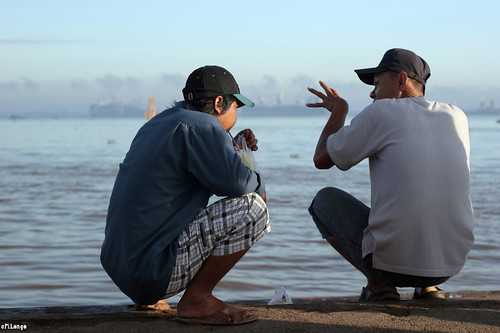
Two Vietnamese men, seen from behind, wearing billed caps and squatting as they have a conversation. The man on the right is gesticulating with his left hand
Photo © ePi.Longo | Flickr / Creative Commons
[image: Two Vietnamese men, seen from behind, wearing billed caps and squatting as
they have a conversation. The man on the right is gesticulating with his left hand.]

M. Kelter
www.TheInvisibleStrings.com

Content note: This article discusses suicide risk factors specific to the autistic experience.

I worry that too many people think of hyper-verbal autistic speech as being synonymous with "articulate" or "fast" or as something purely beneficial. This is actually not correct. Hyper-verbal autism is autism, and it is a disability. I want to provide a few details about how it generally works, so that I can draw a line connecting it to what people generally think of, when they think of autism.

I am on the spectrum, and I was fortunate enough to spend a few years working with a specialist who taught me the parameters of my particular way of engaging with language. We found that my verbal processing tends to create difficulties for me when it connects up with three factors: Emotional volume, thought speed, and social pragmatics.

What I am going to describe here is the way hyper-verbal speech works for myself—one, non -representative individual—and the way that these factors are exactly what you would expect to find in the realm of autism.

Some who have children with significant degrees of intellectual disability feel like conversations like this can obscure what they call "real" autism. But this, too, is incorrect. The distinction they are making only manages to cut the common thread that connects varied autistic experiences into a coherent neurological profile.

To explain what I mean by that: there simply is no reason to see different experiences with autism as mutually exclusive, as if they are in competition for territory. Autism is a disability that impacts communication. And because there is predominantly a genetic basis—there are currently 102 genes associated with ASD—you would actually expect for people on the spectrum to be very different from one another. The genetic complexity means that people are taking many different neurological pathways into an autistic profile.

The unifying component of autism is communication, not the many individualized forms communication can take. If you focus only on differences at the expression side of autism—whether someone is verbal or non-verbal—you are going to skip over that essential shared ground. Variations are not invalidating of a diagnosis, they are what you would expect to find in a condition this genetically heterogeneous.

So, that's how the different types of autistic communication link up, but I do want to go into some detail about accelerated language since it is one of the ways that autistic communication happens.

Take that word "accelerated" and think of hyper-verbal speech as an accelerant or a fuel, something combustible that can turn volatile when mixed with the wrong variables (like fire, for example). Then take that accelerant and throw it on a mood.

When words are naturally assembled in such a way that they bring a detailed, granular focus to an experience, it can become quite destabilizing if that experience is an emotion. The words take the volume of a mood and turn them to a much higher level.

Hyper-verbal autism is no joke. It is not an affectation. When anger or depression or self-hatred gets a boost from this kind of added intensity, it can be very difficult to steer in a better direction. The interplay between mood volume and hyper-verbal speech is under-discussed and under-appreciated as a risk factor for suicide in autistic people. Please believe me when I tell you this.

These concerns include risks for children, as well as teens and adults. If you are a parent and you do not believe me when I say this kind of speech can be extraordinarily difficult to manage, ask another parent of a hyper-verbal autistic child. I am quite confident that they will tell you, at least in many cases, that the internal fights these children go through as they battle with their own words; it can be a terribly difficult situation.

If we are thinking of words as a kind of fuel, thoughts are what drive the vehicle. The speed with which words can form and race to new and varied patterns can make concentration a daily, hourly nightmare. I am rarely able to concentrate. Simple tasks are not simple. Every possible thought is instantly ten alternate thoughts that quickly grow to a hundred and then more and when you take that head space into a grocery store or a school test or a job interview, most of every day can feel like an incredibly frustrating obstacle course.

That's internally. Externally, people interpret your concentration issues a lot of way. It can scan as not paying attention, as rude, as flighty, as indifferent, as lacking empathy (because you're too overwhelmed to notice subtle emotions and people, not understanding autism, feel neglected and inadvertently spread myths about empathy) and so on. The concentration issue alone can lead to significant degrees of impact and disability when it comes to daily functioning.

Take the mood thing, the thought thing and imagine how they play out in the middle of a real-time social interaction. It can be extremely disruptive. The impact of this kind of autistic speech can be significant and—due to the hostile reactions it receives from the rest of the word—it can easily lead to depression and social isolation.

Via front-line observation, I can report to you that in social contexts, hyper-verbal autistic speech functions like a chain event. As a child, I had social needs, I liked approaching other kids and sharing my thoughts, but that's now how interactions work. You have to know the social codes and hidden social rituals, and my words blew past all of that like a boulder going downhill. I would approach kids and start talking out of my head in a deluge of monologue, and that only ever drove kids away, or elicited bullying (aka violence). Mood disorders and social isolation ensued. It was a chain event.

To be clear, the answer back then would not have simply been to have me talk less. People tried that, but it didn't take because that's not how autism works. The answer would have had a lot more to do with changing the way people react to autistic differences, but we can take that up in another post.

If you are someone who generally believes that hyper-verbal autistics are arrogant, or have it easy, or that they do not have "real" autism: please know that you do not understand what autism is, and you are not helping autism conversations. What you are doing is are disparaging a group that doesn't need more disparagement. My only hope is that you can sense that I am trying to share good information with you here, and that you do not need to shout at autistics on twitter because they said a thing.

I honestly believe people will have an easier time understanding the autism spectrum the instant they stop creating nonsensical barriers between autistic people and their lived experience, and the ways that they engage with communication. New school, 2019 autism is simply a better conversation to have. I did not like the old one.
Share:

The Kelsey Honors the 20th Anniversary of Olmstead

wheelchair, and a bipap mask; a white man with brown hair in an undercut and a mustache & beard; and a Black man with very short gray hair.
Alice Wong, John Marble, and Leroy Moore
[image: Stylized photo of an Asian-American woman with bobbed black
hair, a motorized wheelchair, and a bipap mask;
a white man with brown hair in an undercut and a mustache & beard;
and a Black man with very short gray hair.] 
There are few better ways to spend the evening than at an event for inclusive housing initiative The Kelsey, in celebration of the 20th anniversary of the Olmstead decision—"the most important civil rights decision for people with disabilities in our country's history"—with an amazing panel of disability advocates: Alice Wong, John Marble, Leroy Moore, and Micaela Connery. We were lucky enough to do just that last night, and now we'll share what we learned with in this lightly edited transcript of our live-tweeted coverage of the event. 

Listening to Alice Wong of Disability Visibility Project talk (with a dash of salt) about why needing supports doesn’t negate innate independence & autonomy. And how public funding of supports keeps PWD like her in the community, & out of institutions. Even when it’s not easy—& she still feels vulnerable.

The annual redetermination process is laced with anxiety for people who depend on it. And it is a poverty trap! She can’t earn more than $2K (which is less than 2.5x the poverty level) without losing benefits. So she has to pass on paying opportunities all the time.

This is not in keeping with the spirit of the Olmstead decision, e.g., a lot of disabled people do not have the freedom to move between states, because anchored to state-specific benefits.

And community based services (HCBS) look very different state-to-state (though there’s never a barrier to institutionalization!). And most states still enable sub-minimum wage for PWD, which keeps the poverty trap cycling hard.

Did you know: People who depend on SSI often can’t get married, because that means their benefits will be reduced? There is no marriage equality for many disabled people.

Recently, a high-profile story of Anna Landre, a Georgetown student who had their support hours reduced resulted in those hours being reinstated. But how many other PWD have support hours arbitrarily reduced without any recourse or resolution?

There are also social and physical barriers to PWD taking part in their legal right to voting, e.g., every SINGLE US presidential candidate’s website is inaccessible to Blind people. IN 2019. #CripTheVote

Every disabled person can have the life they want!

John Marble is feeling a bit abashed in having to follow Alice, which is totally understandable.

John is the founder of Pivot Diversity. Talking about how even though he’s never been institutionalized, he’s always had a fear of institutionalization. Which, turns out, is not actually that irrational, because most autistic people his age & slightly older WERE.

Example: Darryl Hannah was diagnosed #autistic as a child, but was able to evade institutionalization because her mom was able to homeschool her until she was ready to attend school with her peers.

John says that he always feels like he is one step away from losing everything because he’s autistic—and in talking with other autistics, he’s not alone. It is a stark fear, shared with many autistics.

The number of disabled people killed by police, especially PoC, is a bracing reminder of how far we have to go even 20 years after Olmstead and the ADA.

So John does not want Institutionalization to be the path for the future. At the very basic level, PWD have the right to live in the community. Not just reside. LIVE.,

John is now throwing shade on people who use “the voice” when talking to autistic people.

He wants other autistic people to have the right to be DULL and BORING. Per James Baldwin on the bizarreness of perceiving difference as bizarre.

PWD, autistic, and neurodivergent people deserve to be integrated into society and as normal as anyone else!

Now Micaela Connery of The Kelsey is talking about the 20th anniversary of Olmstead, and how everyone always assumed her cousin Kelsey, who was a disabled person with high support needs, should be institutionalized—and how it was a life-long fight for her entire family to keep her in the community.

If you read the fine print behind the ableist parts of Olmstead: No matter how high a person’s support needs are, they have the RIGHT to live in their own damn community. (I may be paraphrasing.)

Living in the community doesn’t look the same for everyone! Whether in the general community, living, employment, school—but the baseline is the same. Everyone belongs.

Even when institutions are surrounded by rolling green hills and aesthetically pleasing environments, when people have no control over their schedule and autonomy, those differences really don’t matter. Institutions sap their residents’ souls.

Now: Leroy Moore of Krip Hop Nation. He used to live in San Francisco, but he got gentrified out.

Poor Magazine has been fighting against institutionalization/eviction of poor people and elders. Sometime successfully, but sometimes landlords blocked. And elders died from the stress.

Under former mayor Willie Brown, San Francisco wanted to get rid of all the public benches. This is trend that’s spread all over the country.

Under Obama, public housing was eroded in every major city. And people with disabilities (PWD) depend on public housing. So how are PWD supposed to get out of institutions if there’s no place for them to go?

Under Housing Secretary Ben Carson, increasing amounts of public housing are coming under non-profit and private companies’ control. So PWD and others who used to live in those communities can’t move back.

One time, Leroy was stuck on the third floor of his building for an entire month because the elevator was out of order. The lawsuit is still pending.

Under former California Governor Jerry Brown, the conservatorship laws undermined access to SSI and independence for many PWD.

Anti-poverty and anti-disability laws are making things harder all over the country. We have people taking housing away from elders because their places are “messy.” What can we do? Poor Magazine has been on the forefront of this issue.

We need funding for public housing and related disability programs so PWD can stay where they live and live where they want to.

Right now, Poor Magazine is working on building housing in East Oakland.

There is basically no low-income housing any more. Leroy Moore feels like he’s hanging on by a thread, and he’s not alone. When the current president pushed to exterminate housing programs, the only person who came out against it was Rep. Maxine Waters.

And it’s not just housing. IDEA, funding for special education, has NEVER been fully Federally funded. People with disabilities of all ages remain under attack in the US.

Leroy Moore has been to the disability caucuses at DNC conventions—and there was no one there. NOBODY. Just a video of FDR. That tells you how much politicians value PWD.

We need to destroy conservatorship law, as it goes against Olmstead.

The one in-need housing population that is really growing is disabled elders. This is a violation of civil rights, and we need to do better.

The floor is now being opened to questions.

Q for Alice Wong on the intersection of disability/Asian people/women. Though she doesn’t have five hours to do properly address the issue, here's the short version: she consistently sees that disability leadership is… white. This has to do with who gets amplified. Which gets in the way of Asian/other POC identifying as disabled.

Disability activism needs to be more welcoming. Alice is wary of being tokenized. She wants to be valued for all of her amazing talents! There are a lot of people who share her identities out there. She wants them to be visible too.

“Fuck the model minority myth!” Alice got a D in trigonometry! The stereotypes of Asian-Americans as model citizens and students and coming from wealth is damaging, and limits Asian PWD from getting mental health and disability supports/community.

Audience member who is Autistic and Black talking about how he was running for a BART train because he was late, then got detained by the transit police because he fit the description of a perpetrator. It was really distressing.

John Marble was asked by a local newspaper about a story on autism and restaurants. And he really didn’t want to be the token white male autistic; he insisted on having an intersectional grouping of autistics.

He ways we have to change the narrative that we project and make it more inclusive. Starting with having autistic people on the boards and staff of autism orgs because most of them (MOST) really do not include autistic people at all.

Alice: EVERY issue is a disability issue, e.g., mass incarceration. And prisons are just another form of institutions/warehousing. There is so much trauma that is created and compounded in those environments.

Immigration is another huge intersectional disability issue, e.g., family separation and the trauma that it creates. Not to mention that PWD are having all of their disability supports (like crutches and other devices) removed as standard procedures. We need more solidarity.

Disability rights are civil rights are human rights.

Leroy Moore: Moses had a disability. So PWD have always been here. The problem is that people are just not doing their homework.

Also, reports of police brutally about PWD/people of color are generally not done by or informed by PWD/people of color. We need community-informed resources.

Leroy Moore: Poor Magazine has a workshop called “Never Call The Cops.” These are the kinds of resources disabled people of color need, these resources save lives. This is what the community needs, NOT more police training.

Elders are dying on the streets. PWD make up a huge proportion of homeless people. He’s been to cities in FL where people were kept in cages on the SIDEWALK. We need to think outside the box.

If you want disability justice, go to Sins Invalid.

Micaela Connery: Disability is a lens that is too often missing from formal social justice and housing policy work, even when race and SES lenses are applied. This needs to change.

Alice Wong: if allies want to think of themselves as co-conspirators, they need to support the orgs that are already doing the work, like HEARD and the Autistic Self Advocacy Network (I missed the first org noted, so sorry). Props to ASAN Director Julia Bascom, and see their Resource Library.

John Marble: Autistic and disabled people are the experts in their own lives! Imagine what could happen if even 1% of the money splashed all over autism causes and orgs was given to the autistic people who know what to do with it to change autistic lives for the better?

John recently took on Fiona Ma for spewing ableist crap all over the disability caucus at a Democratic convention.

John desperately wants radical young autistics to show him where he needs to push the political envelope! What is he missing?

Alice is giving props to #ActuallyAutistic Greta Thunberg and her lack of f***ks when it comes to doing what is right for the planet and humanity’s future.

She is also out of patience with gatekeepers who are getting in the way of disability and civil rights justice. We need better leaders.

Leroy: we need a change in the status quo! We need to support politicians like @RepMaxineWaters who actually do push back and do the right thing. Even when it hurts.

Micaela to Alice: what does good ally ship/co-conspiratorship look like?

Alice: Acknowledge what you don’t know! Find out more about what ableism is, in terms of everyday experiences and also systemically. Read up. Follow these panelists right here.

  …and provide material support. Show up to events. Buy the books and CDs. Connect with actual disabled people. Immerse yourself. Alice loves the people and the culture in the Disability movement and she thinks you will too.

Leroy: Krip Hop Nation is having a Disabled African Musicians tour in July! Support it.

Over and out! Thanks everyone.

----

Additional Event Coverage and Links: 

Alice Wong: The Olmstead Decision & Me
The Kelsey: Reflecting on Olmstead Panels

Share:

Dangerous Assumptions

proud parents
Photo © Lucy Downey | Flickr / Creative Commons
[image: Two Canada geese swimming with a fluffy baby gosling.]

Julia Bascom
juststimming.wordpress.com

There is this thing that happens sometimes.

Parent has an autistic child. Autistic child doesn’t speak, or their speech isn’t an accurate window into what they are thinking. Autistic child is presumed to be very significantly intellectually disabled.

Years later, a method of communication is found that works for the child, and it turns out that they are in fact very smart. Very smart! The parents are overjoyed. They begin talking about presuming competence, the least dangerous assumption, that not being able to speak is not the same as not having anything to say.

They are so, so excited.

And they start talking about all the incorrect assumptions they had. If we’d known, they say, we wouldn’t have done X. If we had known they could read, think, hear us.

And it’s a big problem, because the way they talk… they think the problem was that they treated their child like they were intellectually disabled, and they weren’t. But that’s not the problem. The problem is that they thought their child was intellectually disabled, and so they didn’t treat them like a person.

These revelations, about presuming competence, human dignity, and the least dangerous assumption—they don’t apply only to kids who are secret geniuses. They apply to everyone. They are the most important for the kids who really do have intellectual disabilities, who really can’t read or use full sentences and who really do need extensive support. The people who came up with these terms came up with them for a population where there is very little doubt that significant disability is a factor. These terms don’t mean assume they aren’t actually disabled. These terms mean assume they are a person, and remember what you don’t know.

When the neurodiversity movement first got its legs, oh so many years ago, we got a LOT of pushback from people who thought we were denying disability. And we had to be clear that we meant everyone. And I worry, more and more, that certain very academic circles have left that behind, in practice as much as in theory. It makes liars out of the rest of us, and it makes a lot of work very, very difficult.

If I told the parents in question that I am thinking about this, they wouldn’t understand. They’re not saying intellectual disability doesn’t exist, they would say. But the truth is, they’re either saying that, or they’re saying thank god, it wasn’t my kid.

And it’s a slap in the face, every time.

----

Originally published at juststimming.wordpress.com. Sincere thanks to Julia for allowing us to share it here.
Share:

How Being a Minority (of Mixed Race) on the Autistic Spectrum Shaped My Life

Emanuel Frowner
www.instagram.com/emanuelfrowner

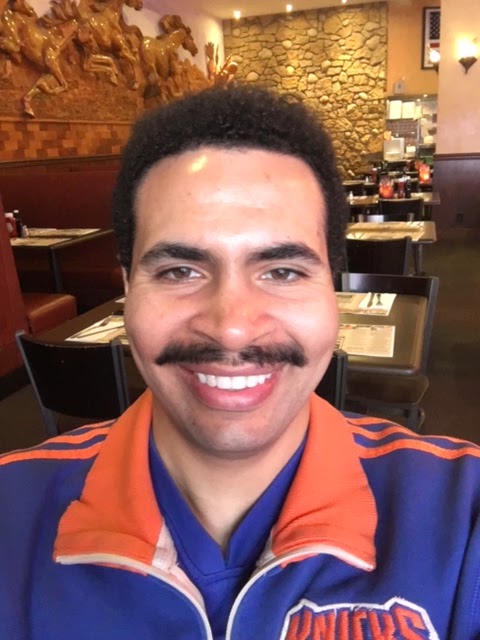
Emanuel Frowner (photo courtesy the author)
[image: A smiling mixed race man with short black
hair in a natural style, and a mustache. he is wearing a
collared orange-and-blue Knicks pullover.]
I grew up mostly in the Bronx with my dad and my grandmother, and I still live there. The neighborhood was dangerous during my childhood because of fighting and drugs—a few people were killed. Therefore, I could not go out alone (until I was 17) and my folks were very protective of me. I would see my mom on the weekends. Sometimes, I would hang out with my siblings (with my folks). They had a different mom than I did, but we had the same dad and grandmother. Even though my grandmother looked very white, she called herself black, but my dad did not agree with her on that. My mom called herself black as well.

I was very quiet, and I would stutter sometimes.  My grandmother told me that this was because I think faster than I talk. She also told me that a still tongue keeps a wise head. I took these as compliments.

I went to an elementary school right near where I lived. At first, I did some mischievous things like breaking forks. During a test, I bubbled in all of the choices and the kids started saying that I was all wrong. The teacher erased them. My grandmother found out about this and she was not happy. At that point, I started doing a lot better and I began getting good grades on my report card. I kept working hard and with the help of my folks, I was named student of the month. This was an honor for me and it made me feel proud.

This did not prevent me from being bullied by other students and teachers just because I was different, which led to my dad homeschooling me from the 6th grade until I got my GED in 2000.  Being homeschooled helped me excel academically. It also helped me develop a strong work ethic, and it helped me to think outside the box.

Another reason my dad homeschooled me was because he did not want me to be fed nonsense. My dad did not want me to get a diagnosis that would put me in a box, or have a label so others could categorize me. He also did not want my brilliance and sensitivity to be overlooked, or want me to be marginalized to the point where it would do irreparable damage. This was a culturally specific issue (which is described later in this essay) as well as a generational issue; my folks stressed that getting an education was the most important thing. And my dad also did not want me to be apart of the herd mentality; he wanted me to develop along my own lines. He took me to his job to meet his coworkers and we all would hang out sometimes. It was okay for a while, but I would have liked to been around others who were similar to me.

Technology really came into my life when I was in my late teens. I began emailing and texting, and no longer had to rely on talking when communicating with others: I could take my time, and respond at my own pace. This also helped me have more privacy, and over time I began making my own decisions.

Before I knew I was autistic, quite a few people told me that I was very bright person who was just quiet and shy—even though I had particular interests like dates, sports stats, being punctual and being patient, yet did not have a few social nuances that others had. This may be because, being mixed race and from a minority culture (I am part Caucasian, part African American, some Native American, some German and a little Scottish, just to name a few), I found that talking about psychological subjects like autism is overlooked and is often talked about in a bad way. Also, I hardly received the type of support or empathy I needed when I was struggling. For example, when I stuttered a bit, I was told that I was hesitating. Another example is when I chose Psychology as my major in the summer 2004, one of my relatives was not supportive of this. But it made me even more determined to do well and I got my BA in Psychology from St. John’s.

In 2005, I started hanging out with my oldest brother Blair, who lived in Canada. He knew an autistic lady, started reading about ASD, and began telling me that I might be autistic. He did some research online and found the Seaver Autism Center at Mt Sinai for me. I did interviews and tests there, and the doctor told me that I was on the autistic spectrum. I was a little surprised, but it was a blessing in disguise.

I began reading up on autism. Two years later When I told my dad what the doctor said about me, he was surprised, but then he came to accept it. I joined some support groups over the years and made a few friends. In 2009, a lady, Katrina R. from Job Path, helped me obtain two jobs through customized employment. I have had those jobs for eight and a half years.

Today, I still work, and also do some speaking gigs. I am also a die-hard Knicks fan, and have been for years. In the future, I would like to do even more public speaking and I would like to run workshops relating to autism. I would like to write a book about my life story and I would like to write more articles on topics relating to autism. I would like to one day run an autistic group designed for minorities. I would definitely like to do more acting in order to improve my skills.
Share: