Showing posts with label happiness. Show all posts

Why I Do Not Hate Autism

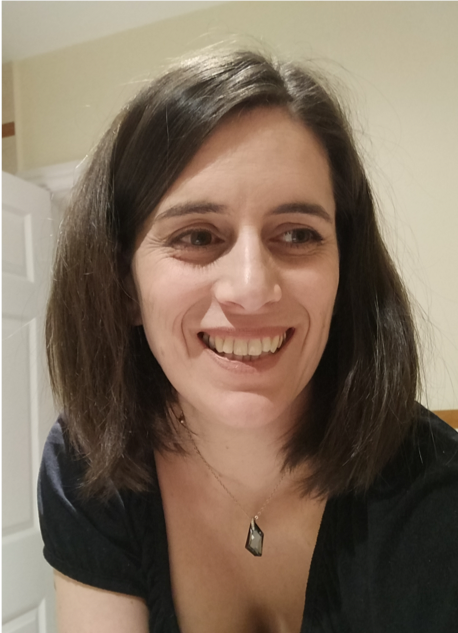
Photo of a white woman with straight shoulder-length  dark brown hair. She is looking to her left, and smiling.
Shona Davison. Source: Author
[image: Photo of a white woman with straight shoulder-length
dark brown hair. She is looking to her left, and smiling.]

Shona Davison
shonadavison.co.uk

I do not hate autism. Sadly, many people do, including some autistic people. Recently I saw a post in a Facebook support group for autistic people. The original poster said that they hated autism and gave a list of reasons why. Many others agreed in the comments. There was almost relief that someone had said it. Autistic people sometimes feel like they are not allowed to say such things. In the comments many autistic people explained why they hate autism. The reasons were mostly to do with how difficult their lives are. I didn’t comment as I recognise when people need to vent, and arguing would not have been supportive. However, I found the thread extremely upsetting. I hate to see people suffer and this thread was evidence that many autistic people do indeed suffer.

One of the things that bothered me about the thread was I do not think their hatred was directed in the right place. Their comments suggested that they hated that their lives are so difficult. Are their lives difficult because of autism?

Life is difficult for me as an autistic woman. I’ve spent most of my life being criticised or rejected because of perceived social failings. It is difficult trying to keep up with conversations because my brain processes information more slowly, and people don't realize I need a few extra seconds to reply. It's difficult being in sensory overload because fluorescent lights exist (they wouldn't if autistics were the majority). I put in extra effort compared to most for every outing, every social interaction, everything I do, yet I still do not meet the appropriate ‘standard’ as defined by non autistic people. I get more tired and stressed from this extra effort, so I need more downtime. But if I take more downtime I am perceived as lazy. Yet if I don’t have downtime, I have anxiety attacks or meltdowns and I’m considered not to be "resilient." All of this means my life is difficult—more difficult that it would be if I were not autistic.

Many autistic people have really difficult lives through no fault of their own.

I therefore understand why some autistic people want a cure. But my view is that those people are putting the blame for their problems in the wrong place. If we blame autism, which is an integral part of us, the consequence is that we try to change ourselves for a better life.

I do not believe it is possible to be a happy autistic person whilst trying to behave like a non-autistic person. It is futile. Even if we are successful at ‘fitting in’ for many years, there is usually a price to pay in the long run. We will always stand out as different to some extent and for some of us the effort involved in acting ‘normal’ will kill us.

In my view, the blame for most of the challenges we face should be placed in our environments.

I’m autistic, I’m always going to be autistic. Whether or not I am happy depends on external factors such as the people around me, my physical environment, the type and amount of work I do. I believe that accepting this is key to wellbeing.

I have had more success improving my life once I stopped focusing on changing myself, and instead started to look at my surroundings. As my knowledge about my own brain and my own needs has increased, I have been able to educate my family and friends. I say ‘no’ to work or social events more often, so that I get the downtime I need. Our house has dimmer switches, headphones, weighted blankets, a mini trampoline, and so many stim toys. Changing our environments is not necessarily a simple task, but for lots of us autistics it is far easier than long-term masking. Research shows it is also less dangerous to our mental health. I believe it is more likely to result in happiness too, but how to be a happy autistic person is not a priority in autism research, so that is just my personal view based on my experience.

For those of us who are able and willing to go that step further there is a lot of work to be done changing wider society. Professionals need educating; laws, policies and diagnostic manuals need changing; public spaces need to be more sensory friendly.  But one step at a time—changing our immediate environment needs to come first.

I have seen some autistic people argue that blaming society for our difficulties is shirking personal responsibility and that we should be aiming to ‘improve’ ourselves. This stance says a lot about their conceptualisation of autism: If one sees autistic people as deficient or lacking in some way compared to non-autistic people then it is understandable that one would believe that acting more like a non-autistic person is "self-improvement."

I do not see autism that way at all. All humans learn and develop over their lifetime, and that is a positive thing. Why should autistic people be any different? It should be obvious that autism acceptance is compatible with personal development. I saw a really lovely phrase on Twitter once: "We do not grow out of autism, we grow into it."

I do not just accept I am autistic, I embrace it.  Autism is intertwined into every part of me and influences everything I do and feel.  I would not be me if I were not autistic, I’d be an entirely different person.

Do autistic people suffer? Sadly yes, lots of us do. Do we suffer from autism? No, I do not think so. That is why I do not hate autism.
Share:

Why Do So Many Autistic People Flap Our Hands?

Maxfield Sparrow
unstrangemind.com


[image: rainbow colored hands in silhouette,
upraised and reaching out with joy.]
The saying goes, “if you’ve met one Autistic person, you’ve met one Autistic person.” That was really hammered home for me today as I watched a short video in which an Autistic man explains why Autistic people flap our hands … and pretty much nothing he said matched up with my own experience. A few of the things he said even bothered me.

My intention is not to erase what he said, however. His view of why he used to flap his hands is just as valid as my view of why I still flap my hands. There are many ways of being Autistic.

(Since the video was not captioned, I took the time to make a transcript of it for those who can’t hear or understand it. That was fortunate as the original video was removed from YouTube.) The video explains,
“It comes down to repetition. When we, as people with Asperger’s, are in a really unknown situation or we’re in a situation where there’s a lot of anxiety […], there’s a lot of stress, the way that we manage that, is because generally it’s overwhelming we do repetitive motions, because then we at least know, hey, if I do this I have complete control over it. And I know that whatever I do, I have complete control and it’s going to happen the same time every time. Therefore, I get a little bit of comfort from it.”
This does not even begin to describe why I flap my hands or make other “Autistic movements.” Yes, I flap in stress. I flap in overwhelm. I flap when I get hurt. The video presents hand flapping as if it only occurs as a result of stress or anxiety, however, and that is not at all true for me.

I flap my hands when I am happy. I flap them when I am content. I flap them a lot when I get excited about something. I have as many different ways of flapping and twisting and ruffling and fluttering my hands as I have emotions and emotional combinations that wash over and through me. My hands are like barometers of my emotional climate.

There are plenty of things I do to try to increase the amount of control in my life, but flapping my hands is not really one of those things. I don’t flap my hands to have something reliable and constant in my life. I fill that need with other things, like small stuffed animals I carry in my pocket or ritual ways of doing certain things. For example, there is a little ritual to how my boyfriend and I say good night in the evening and that ritual comforts me, gives me a sense of stability and predictability in my life, and helps me to make the transition from visiting with him to being alone again. I do other things like always removing the ice cube trays from the freezer in the same order, always putting the same number of ice cubes in my glass, always walking or bicycling the same route to get places, always brushing my teeth for the same number of minutes every night, and so on.

These things serve my need to have a predictable, orderly world that is under my control as much as possible. The more I am able to feel a sense of control over my life, the calmer and happier I am. I suspect this is true for most or all people, but it is quite extreme in my case. Something small, like not getting my usual seat, or having the water turned off for twenty minutes in my apartment building in the middle of the day with no warning, can make me feel like my world is coming to an end.  I am always fighting back the forces of chaos. But I do not wage this war with hand flaps.

The most common reason for me to flap my hands is that I am very happy and excited about something. My boyfriend told me that he loves to see my hands flap because there is a lovely joy that goes along with it that is fresh and appealing, without guile or artifice. If I recall correctly, he used the word “childlike” and meant it in a beautifully loving and respectful sense. Over the month of December, we went through a Jacquie Lawson advent calendar together every morning right after having breakfast together and he got to see lots of hand-flapping on the days when the calendar surprise was a steam locomotive or a peacock spreading his bright tail feathers, or a mansion kitchen staffed entirely by giant teddy bears.

I’d see these things that made me really happy and excited and there would go the hands. By the time I was aware that I was flapping my hands, they’d already been going wild all on their own without my awareness. My hand flapping is so often an expression of sheer, unadulterated joy—pretty much the exact opposite of what is being taught in the video, when Asperger Experts says, “it’s basically a giant signal saying, “hey! I’m not comfortable right now. Things are too much pressure or too much, just, overwhelm of sensation to the point that I need to do something to feel better about it.”

Yes, I can feel pretty overwhelmed by joy! But the kind of flapping I do when I’m not comfortable and suffering is another kind of hand flap. It’s a whole language of flaps and twists and shifts and strokes and claps. My hands speak my emotions so clearly, but only to those who are willing to learn what they are saying. My hand flapping is not a single message of suffering. It is a multi-faceted expression of my complex and beautiful emotional life.

As an alexithymic, I’m not usually aware of my emotions. So I even watch my own hands flapping away to help me understand what emotions I’m experiencing. I am “blind” to my emotions—I have emotions, usually very strong ones, but I am unable to know what I am feeling so I have to play detective and watch my body for clues.

My hands are always telling me what I am feeling. Without my hand flaps, I would not be anywhere near as connected to my inner life. Without my hand flaps, I would struggle so much more every day, just trying to understand what my body and spirit were experiencing. My hands are my teachers and they educate me about my deepest self every day.

While I feel as if my three-dimensional experience of hand flapping is described in a very one-dimensional way in the video, that’s not what really bothered me about the message. I was bothered by the way hand flapping was presented as something bad, undesirable, ridiculous looking, and mainly restricted only to small children. The video admitted that hand flapping is necessary, but presented it as something annoying and embarrassing that should be substituted as quickly as possible with something less visible, like repetitive thoughts:
“You shouldn’t just try to stop it because then they’re just going to find some other way of gaining comfort. […] All of a sudden, they might gain a tic, like [clicks tongue several times] and then that’s just even more annoying.”
No.

You shouldn’t try to stop hand flapping because it is part of who we are. Would you like it if everyone were trying to make you stop smiling? Or tucking your hair behind your ear? Or putting your sunglasses on top of your head? Or crossing your legs when you sat? That is what people are doing to us when they try to make us stop flapping our hands: they are trying to force us to stop moving in ways that are natural, healthy, and comfortable to us.

(And when I say “we” and “us,” I mean those of us who do flap our hands or otherwise naturally move in different ways from the rest of society. Not all Autists move in the same ways and that includes the fact that not all of us rock or flap or spin (although the vast majority of us do) so don’t assume someone is not Autistic because you don’t see them moving in different ways. Or they speak. Or hold a job. As I always say, there is no one way of being Autistic.)

The Asperger's Experts video presents hand flapping as a necessary evil—something that is annoying but has to be tolerated because we do it to soothe anxiety, and might end up doing something even more annoying if we’re forced to stop. In my opinion, hand flapping is a fundamental manifestation of the native nervous system of those who flap. It is how we are built, it is what we do. The focus should not be on whether it “might look ridiculous” or whether it’s better to “[transition] into listening to the same song over and over again, [or]  say the same thing in [one’s] mind over and over again.” the focus should be on building a society that understands that we don’t all move our bodies the same way and that’s okay.

“You know, you don’t see many people that are forty doing this [waves hands].” I am fifty and I flap my hands. Many of my friends who flap their hands are older than me. I know people in their twenties, thirties, forties, and fifties who flap their hands and even someone in his seventies who flaps his hands. It’s okay to move differently from others. It’s okay to have a different neurology and it’s okay to be who you are.

There is a much worse risk that comes from trying to suppress hand flapping than developing an “annoying tic.”

When I was a child, I felt like there was no place that was safe, no place where it was okay to be who I am, no place where I could just relax and be myself. Everybody was trying to give me the advice of “just relax and be yourself,” but when I would actually do that, I would be yelled at, criticized, punished, bullied. I lived in fear and anger because nothing I did, no matter what, was ever right or good enough. At school, I was bullied by the students and even by many of the teachers.

At home, I was blamed for the bullying and told I was bringing it on myself. In a misguided attempt to shape me into someone who would not deserve to be bullied so much, all my mannerisms and stims and quirks were under attack. I felt like I was constantly picked apart for behaviors like walking on tiptoe, clearing my throat, flicking my fingers, spinning around, talking too loudly, grunting instead of talking, and so on. I spent … wasted … so much energy and focus on trying to make my body and face and voice do all the proper things. But no matter how hard I tried, I kept always doing something wrong, and getting called out for it.

As a result, I was filled with so much anger toward everyone around me and so much self-loathing. I felt like nothing I did was ever right and I had no place to relax – school was filled with bullies and home was filled with picking apart my stims. I grew to hate everyone and often would lose myself in bitter daydreams with imagery I don’t care to re-visit now. My whole life was torment and I was in agony. This is the reason to let Autistic people be, not the fear that they might develop new behaviors that are even more annoying to the people around them.

The Asperger's Expert video’s reason for tolerating hand flapping was all about what makes other people feel okay or uncomfortable and had almost nothing to do with what the Autistic person wants and needs. Hand flapping almost had to be defined in that very one-dimensional manner, because if hand flapping is nothing but a comfort for excruciating anxiety, it is easier to decide to tolerate the “annoying” and “ridiculous” behavior, but if hand flapping is something that can be a sign of happiness as well as of more difficult emotions it’s harder to justify allowing people to be “annoying” just because they are happy.

But the problem is not with the hand flapping. The problem comes when the decision has been made that hand flapping is annoying or weird and not natural and adorable (which happens to be how it appears to me. I love to see people hand flapping! It makes me happy to see someone making a happy hand flap.)

The makers of the video may be Asperger’s Experts, but they are most surely not Maxfield Experts, because I’m not at all like what was portrayed in that video and I have many Autistic friends who are similar to me. Of course some Autistic people must resemble the portrait that was painted by the educational video purporting to explain hand flapping because that is how those two young men experienced their own Autistic movements. I don’t want to erase their voice when raising mine. But I also want to make sure their message is not the only one available to people.

So, as I said, the lesson here is that if you’ve met one Autistic person, you’ve met one Autistic person. There is not just one way to be Autistic. I’m sure the makers of the hand flapping video were expressing the truth about what being Autistic is like for them. Just be careful to remember that no one (including me!) speaks for all Autists. It is a pretty safe bet that there are also Autists out there who aren’t like the description in the video but aren’t like me, either.

So when you see someone flapping their hands, don’t make assumptions about what it means. There are some meanings that are more likely and some that are less likely, but better than guessing—better even than statistically-backed guessing—is getting to know the individual Autist and learning what hand flapping means for them.  Engaging with humans is almost never a one-size-fits-all scenario. We Autists are individuals; it’s good to learn general autism data, but “at the end of the day” there is no substitute for learning the language, including the body language, of the special person in your life. Or of yourself, if that’s how it’s all playing out for you.

But no matter what the flaps mean where you are, I do hope you will take one thing seriously that I said: don’t hate on the flaps, don’t be afraid of them, don’t judge them so harshly. Learn to live with the hand flaps because they are a good and useful thing for Autists, no matter what purpose they serve for each individual Autistic person. And, who knows: if you don’t already, there may come a day when you begin to see the beauty in hand flaps. Hand flapping and other Autistic stims are quite exuberant and lovely if you remember that they are a person’s heart and spirit made visible in time and space for all to behold.

(Note: A version of this post was published at unstrangemind.com in 2014.)
Share:

Happy (Autism Diagnosis) Anniversary

Chris Williams
medium.com/@Marrowsky

Hello. My name is Chris Williams. Nice to meet you.

I recently celebrated an anniversary. If you’re reading this, thank you for letting me share it with you.

On January 7th of 2017, my doctor telephoned. My screening, my tests, my questionnaires, and interviews with my family had been reviewed and evaluated. My diagnosis was in the mail. “…Chris demonstrates pattern of behavior and impairment consistent with Autism Spectrum Disorder 299.00 (F84.)…”

I’ll introduce myself again, for the first time:

Hello. My name is Chris Williams, and I’m autistic. Nice to meet you.

My diagnosis was, it still is, mind boggling to me. Perhaps to those of you who know me. Perhaps not. To have a paradigm shift, at thirty-six years old, in self reflection, and in reflection about my personal relationships. My memories now telling me different stories. An awfully familiar stranger resembling me in mirrors. My internal cartography reordering itself, patterns forming across my strengths, my weaknesses, my ways of learning, my ways of thinking, and my ways of communicating. It’s been a cacophony of a change of perspective.

Outside my self, my genetics, looking forward and looking backwards, have been concurrent labyrinths to explore. My almost-seven-year-old daughter Calliope* is diagnosed autistic, and has significant support needs. At this time, she’s our only child with a professional diagnosis. In time, I’m confident she won’t be the only one. I’m 95% certain Caspian is; Catherina, perhaps closer to 35% sure. And casting a wider net onto my mother’s family, and onto my father’s reveals traits, behaviors, and whole individuals in different lights. Even friends start to take on new forms or more fully realized shapes, once you know the diagnostic criteria and prevalence of the condition, and not with an unreasonable eye.

You see, 1 in 68 people in the United States are estimated to be on the spectrum, and there’s talk that this is a low estimate. In his 2015 masterwork on autism, NeuroTribes, Steve Silberman writes: “…given current estimates of prevalence, autistic people constitute one of the largest minorities in the world. There are roughly as many people on the spectrum in America as there are Jews.”

That means there’s a lot of us out there. Out there in the open. Hiding within ourselves. Hiding from ourselves. Some of you reading this, maybe there’s some real questions you need to ask—or context you never thought to provide—about yourself to yourself. Or maybe about your spouse, your children, your parents, your brother or sister, your aunt or uncle, your friends, your coworkers. Maybe you'll consider that people are built in strange ways, ones you wouldn’t expect to be so unifying. It’s a revealing thread of humanity to understand, and be attuned to.

It’s funny. Despite Calliope's limited language, she has communicated more to me about myself, my family, and how to regard other humans than anyone I’ve known. She inspired me to learn, she inspired me to self-realize, she inspired me to seek my diagnosis, and now she’s inspiring me to stand tall and make my own truths plain for others to see. She is my skeleton key, my Rosetta Stone, my North Star in this journey.

It’s been a good year in this regard. With my vision unclouded about the best version of my self I can be, I stride towards the future with greater purpose. I am a proud autistic father of beautiful autistic children. I am a devoted autistic husband. I am Chris Williams, an exquisite, autistic human being, one with his eyes on horizons of advocacy, of leadership, and of making a difference for my family and for others. It’s a good place to be.

So on that note, happy anniversary. Here’s a toast to finding myself, and to all old friends and new friends alike. Thank you.

Chris Williams. Photo courtesy the author.
[image: A solar-flare selfie of the author, a smiling white man with short dark hair,
wearing a red baseball cap with two giant cartoon eyes on it.]
----

Editor's note: While many people find comfort in an official autism diagnosis, getting one is not always affordable or accessible, plus the Autistic community generally welcomes people who are self-diagnosed.

If you are newly diagnosed with autism, think you might be autistic, and/or are the parent of an autistic child, we recommend the following books and resources:
---

A version of this article was originally published on January 8th, 2018, at Medium.

*The children's names are pseudonyms.
Share:

What Makes Institutions Bad

Mel Baggs
ballastexistenz.wordpress.com

Buffalo State Hospital
Buffalo State Hospital, closed in 1974. Photo © Shannon O'Toole
[image: A dilapidated interior hallway of a former state hospital.]

Most people don’t have the foggiest clue what’s bad about institutions. What’s bad is something you pretty much never hear about, which is the violence it does to people’s insides at a very deep level. And that can’t be stopped by just removing the things that LOOK bad and throwing a layer of glamour on top.

Please, please, please everyone who talks about this in the past tense—STOP. This is still going on. Everywhere.

I think too many people get the wrong kind of idea. They will think that this is over. It’s not.

They will think that the awfulness and cruelty of an institution is measured by the size, the shape, the physical beauty or lack thereof, the amount of money funneled into it.

And those things are not real.

And those things—the belief in those things—are hurting and killing people still.

People don’t understand what’s behind the worst institutions I can possibly imagine. They think I’m kidding when I say it. Understand that I’m saying this as someone with experience of institutions that people often remark (from my photographs) look just like prisons, and institutions that look absolutely lovely to anyone who doesn’t have to live in them.

The worst institutions have lots and lots and lots of staff. They have beautiful grounds that people are more or less free to walk around on. Every room is decorated in ways that suggest a regular, pleasant house—and if anything is stained or broken someone fixes it, washes it, and paints over it within a day. There are no locks on the doors.

All of the staff are gentle and would never physically abuse an inmate. They are highly trained at redirecting and calming anyone who becomes violent. If you go outside, they follow you at a discreet distance, where they think you can’t see, to give the illusion of freedom and privacy. Their every movement and tone suggests sweetness and gentleness.

But they treat everyone as if they were somewhere varying, between infancy and four years old. With everything—everything—that entails.

Because they do not use physical restraint, they have to restrain you in other ways. They do it by such skillful manipulation that if you ever find out you were being manipulated, it’s long after the fact. If you confront them on it they’ll sweetly and politely tell you they have no idea what you mean. And they will continue to somehow always get you to do what they want, or else to feel awful about not doing so.

Glamour is a word that can refer to a kind of faery magic that can make a hovel appear to humans as a splendid palace. I often use the word to mean a similar kind of deception—a beautiful facade over a terrible reality. I make it part of my life’s work to see through glamour. And I see a whole lot of glamour used in conversations about institutions.

The above institution I have just described has a layer of glamour over it as well. If you look beneath the surface, it’s utterly horrifying. Most people don’t know how to see beneath the surface. Even when you personally are in such a situation, it can be hard to see.

You feel as if there is something pressing down on you, muffling and suffocating. But when you look around, there’s no outward sign of it. So why are you not happy? You must be an awful person to feel so awful when all these nice staff people are doing so much to make you feel at home. You look around, you try to search for what is bothering you, and it’s nowhere. But you’re in agony. Whenever you think nobody’s looking, you cry, sometimes it feels like you’ll never stop. Deep down inside you, you know something is going terribly wrong. But trying to pinpoint it is like trying to get a firm grip on a cloud.

Get a glimpse under the glamour and you see that all that has happened is a bunch of substitutions. They stopped locking the doors, but they started following you everywhere and subtly guiding you where they want you. The institution itself is positioned so that even if you tried to run away you couldn’t get anywhere. They stopped restraining your body, but their manipulation is like a permanent set of shackles on your mind. Their sweetness in manner hides the fact that they are sweet to you the way they would be sweet to an infant—even when you’re pushing sixty. Treat you like that long enough and you begin to respond and structure yourself like an infant, and the damage that does inside can’t be calculated.

I literally have nightmares about that type of institution. When I’m wrapped up in the glamour, this terrible calm takes over. It feels like something soft and smooth pressing all over my skin, and the temptation is to surrender to it and feel its fake calm, fake happiness. Then I wake up and want to vomit I am so terrified and disgusted with what I’ve just experienced.

This past summer I attended a recreation program for DD (developmentally disabled) people. And it was so much like a replica of my nightmare it was scary. Sometimes I would get smothered under the glamour, other times I wanted to scream. I cried more that week than I normally do in years, yet I was at every turn made to feel as if the problem was me. I can be so very passive but even my most passive wasn’t good enough for them.

One day I looked around and saw that everyone there was older. From the era of big institutions. Where they were used to being treated like this, and mostly could out-passive me any day (which is scary because I can get very passive). I talked to a woman whose roommate goes there—she said she goes in a grown woman and comes out acting like a young child. And not in a way that’s just her self-expression—this is one of those places that molds you into that form.

To survive in a place like that something inside you has to break. It’s impossible to fully explain to someone who hasn’t been in that position. Something inside you has to die. And it doesn’t die any less because you got one of the “good” (read: glamour-covered) institutions. The same forces are crushing down on you either way, the difference is cosmetic.

The worst part of institutions is not physical violence, obvious forms of abuse or neglect. It’s not even the experiences you don’t get to have. It’s the damage that is done right down to your soul, by living under the power of other human beings. Glamour makes no difference. Prettiness makes no difference. Size makes no difference. Even length of time makes less difference past a certain point than you’d think.

Until you understand that damage—what it is, what it means, where it comes from—you will never get rid of institutions. You have to understand it on a very intimate level or you will reproduce it without knowing what you’re doing.

I still can’t tell you how long I was institutionalized. I can tell you roughly the amount of time I lived in mental institutions and other residential facilities. But that’s not the same as the amount of time I was in institutions. I call what I got when I got out, “community institutionalization.” That’s where you live with your parents but you spend most of the day being driven between various places—segregated schools, segregated day programs, segregated rec programs, each one with institutional power structures behind it. I remember mental institutions where they walked us to different parts of the grounds for different parts of the day. There’s not so much difference between that and being driven.

The transition between a locked ward on a mental institution and later periods of my life was so absolutely gradual that by the time I was “free.” I never noticed. That’s how they wanted it. I simply created the institutional walls around me wherever I went. That’s why I put “free” in quotes. If I had been someone else, I would have been free. Because I was me—because of my particular history—I was not. There were invisible walls all around me and I certainly never noticed the real ones were not there. Which was exactly the purpose behind what was done to me. They didn’t think I could function outside an institution so they carefully built one inside my head, making me truly unable to function anywhere.

I can get over the physical violence. The attempts on my life. The neglect. The sexual abuse. The parts of “normal life” that I missed and still am missing. So long as I physically survive (which even the recent rec program almost avoided) I will and can get over these things.

I am not sure to what extent I will ever get back the parts of me that died in order for the rest of me to survive. Every now and then I notice I’ve gotten a little bit back, and I think that finally everything will be okay. And then a little time passes and I realize how much is still gone.

I’m not even saying I can’t be reasonably happy. But there are parts of me I still have no idea if I will ever get back. Those parts weren’t destroyed by ugly bare rooms, horrific physical or sexual abuse, the loss of normal experiences, or any of the rest of the things most people think when they think of bad institutions. Those things happened to me and they are bad. But on a real basic level they are not the cause of the problem.

The cause of the problem is a certain exercise of power. Of person over unperson. And in order to survive it the inmates have to become as much of that unperson as they can manage. And that does violent damage deep inside the self, that can be incredibly hard to repair. It’s violent even when it comes with purported love and sweetness and light.

And until people can stop forcing us to damage ourselves in this way, institutions will continue. That, not anything else, is the core of what is wrong with them. But it’s much harder to put that into songs or images or even just words, that the average person would comprehend.

----

(I wrote this in response to a Dave Hingsburger post. Andrea Shettle asked me to post it.)
Share: