 |
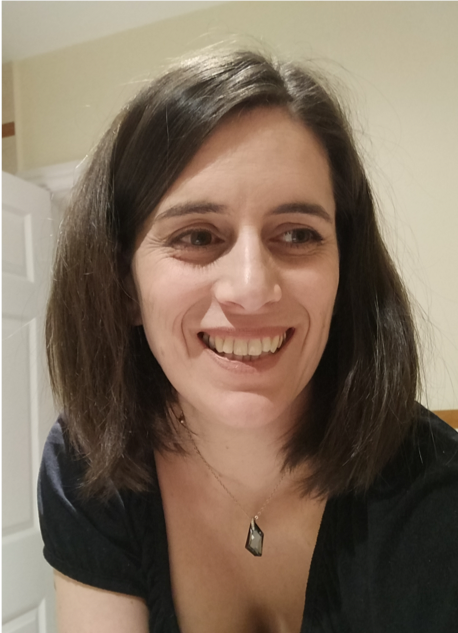
| Shona Davison. Source: Author [image: Photo of a white woman with straight shoulder-length dark brown hair. She is looking to her left, and smiling.] |
Shona Davison
shonadavison.co.uk
One of the things that bothered me about the thread was I do not think their hatred was directed in the right place. Their comments suggested that they hated that their lives are so difficult. Are their lives difficult because of autism?
Life is difficult for me as an autistic woman. I’ve spent most of my life being criticised or rejected because of perceived social failings. It is difficult trying to keep up with conversations because my brain processes information more slowly, and people don't realize I need a few extra seconds to reply. It's difficult being in sensory overload because fluorescent lights exist (they wouldn't if autistics were the majority). I put in extra effort compared to most for every outing, every social interaction, everything I do, yet I still do not meet the appropriate ‘standard’ as defined by non autistic people. I get more tired and stressed from this extra effort, so I need more downtime. But if I take more downtime I am perceived as lazy. Yet if I don’t have downtime, I have anxiety attacks or meltdowns and I’m considered not to be "resilient." All of this means my life is difficult—more difficult that it would be if I were not autistic.
Many autistic people have really difficult lives through no fault of their own.
I therefore understand why some autistic people want a cure. But my view is that those people are putting the blame for their problems in the wrong place. If we blame autism, which is an integral part of us, the consequence is that we try to change ourselves for a better life.
I do not believe it is possible to be a happy autistic person whilst trying to behave like a non-autistic person. It is futile. Even if we are successful at ‘fitting in’ for many years, there is usually a price to pay in the long run. We will always stand out as different to some extent and for some of us the effort involved in acting ‘normal’ will kill us.
In my view, the blame for most of the challenges we face should be placed in our environments.
I’m autistic, I’m always going to be autistic. Whether or not I am happy depends on external factors such as the people around me, my physical environment, the type and amount of work I do. I believe that accepting this is key to wellbeing.
I have had more success improving my life once I stopped focusing on changing myself, and instead started to look at my surroundings. As my knowledge about my own brain and my own needs has increased, I have been able to educate my family and friends. I say ‘no’ to work or social events more often, so that I get the downtime I need. Our house has dimmer switches, headphones, weighted blankets, a mini trampoline, and so many stim toys. Changing our environments is not necessarily a simple task, but for lots of us autistics it is far easier than long-term masking. Research shows it is also less dangerous to our mental health. I believe it is more likely to result in happiness too, but how to be a happy autistic person is not a priority in autism research, so that is just my personal view based on my experience.
For those of us who are able and willing to go that step further there is a lot of work to be done changing wider society. Professionals need educating; laws, policies and diagnostic manuals need changing; public spaces need to be more sensory friendly. But one step at a time—changing our immediate environment needs to come first.
I have seen some autistic people argue that blaming society for our difficulties is shirking personal responsibility and that we should be aiming to ‘improve’ ourselves. This stance says a lot about their conceptualisation of autism: If one sees autistic people as deficient or lacking in some way compared to non-autistic people then it is understandable that one would believe that acting more like a non-autistic person is "self-improvement."
I do not see autism that way at all. All humans learn and develop over their lifetime, and that is a positive thing. Why should autistic people be any different? It should be obvious that autism acceptance is compatible with personal development. I saw a really lovely phrase on Twitter once: "We do not grow out of autism, we grow into it."
I do not just accept I am autistic, I embrace it. Autism is intertwined into every part of me and influences everything I do and feel. I would not be me if I were not autistic, I’d be an entirely different person.
Do autistic people suffer? Sadly yes, lots of us do. Do we suffer from autism? No, I do not think so. That is why I do not hate autism.


