Showing posts with label abuse. Show all posts

Running Away: Autism and Elopement

#vscocam run away child!
Photo © Gonsalo Gomes | Creative Commons / Flickr
[image: Sepia-toned photo of a small child with short dark hair,
seen from behind, running.]

Marie Porter
www.celebrationgeneration.com

In an effort to raise a bit more “AutismAwareness,” I’d like to discuss “elopement.” I invite other autistics to add in their own experiences in the comments—this could be educational! But as far as what I’m about to say, I’m really just speaking to my own experience and thoughts.

First, I’d like to say that “elopement” is a ridiculous term. Right up there with “differently abled,” IMHO. It’s running away. It’s wandering. Call it what it is!

Secondly—and this is in response to an "autism warrior mom" who recently came at me to defend ABA—no one “dies from elopement,” just like no one dies from “running away.” Yes, there are all kinds of ways that one can meet their end running away, but those would be the cause of death—drowning, starvation, hypothermia, murder, etc. I don’t know why “died from elopement” rubs me the wrong way, but it does.

Now that my pedantry is out of the way, I’d like to discuss autistic running and wandering. It’s been really upsetting to see how it’s discussed among allistic (non-autistic) parents of autistics. I feel like there’s this idea that we just mindlessly wander, or run without intention, or that there’s no thought at all involved.

I’m sure that idea is a comfort to warrior parents but—at least in my case—that’s not accurate.

I ran to get away. Plain and simple.

Living with parents who are awful, unaccommodating, without empathy, who are abusive—verbally, physically, emotionally—is bad for anyone. I’m not discounting the awfulness of abuse when it happens to allistic kids.

But picture being alone. You aren’t like your own family, and everyone—even family—treats you like an outsider. You don’t relate to your “peers” at school, are constantly bullied, etc.… and on top of that, those closest to you are awful to you. Home feels like such an unsafe space, that even school—bullies, noise, crowds, and all—feels like a little bit of respite.

That is the reality I lived, and that’s the reality that so many of my autistic friends lived.

So when I ran, it was to get away.

I had many thoughts on this: Maybe a nice family would find and rescue me. Maybe I’d find my “real” parents (I often wondered if I’d been switched at birth, being that different from everyone I was related to). Maybe I’d get arrested, and somehow that would lead to a better life. Maybe I’d get kidnapped, maybe even worse; but anything would have been better than what I was living.

I had thoughts like that at least as early as six or seven years old—as far as I can remember. It may even have been earlier.

On a less… dark… note, I also did my share of “wandering” at school, usually at recess. Our recess area was a playground and fields, bordered with sidewalk—and we were not to go beyond that sidewalk. I did, and I did so knowingly, because that sidewalk represented a clear delineation between utter chaos, and peace. Beyond that sidewalk was a few meters of lightly wooded area, ending in fencing, separating the school area from the homes beyond it. I would sit among the trees, playing with leaves, and generally enjoying the solitude and quiet.

In the winter time, I’d hang out in the space between the snow drifts and that fencing, usually making a fort-type area. I’d carve seating out of the snow, and again… just enjoy the solitude. Sometimes I’d miss hearing the buzzer, of course, but I really needed that mental health break. Sometimes, that fifteen minutes, twice a day, was the only peace and quiet I had access to. It really made a difference!

As I got older—about eleven years old—I did more wandering. I enjoyed it, and I would purposefully try to get lost, almost as a challenge. I loved getting on my bike and just randomly turning down streets, eventually ending up on the far side of the city. It was fun. It was exploring, it was learning new things, seeing new sights, and it was being 100% in control of my environment.

I could go somewhere more quiet if I liked, I could head in areas with fewer people if I liked, and I didn’t have anyone telling me how broken I was. It was peaceful. I enjoyed having that peace.

Running, wandering... it was always conscious, and with purpose. It was escaping a bad environment, and that rings true for others I know. Maybe it wasn’t full-out abuse, maybe it was just being in a situation that was too noisy, or too bright, or whatever… but many/most of those I know who ran… it was to get away from something, or someone.

In my experience with autism warrior parents, they don’t want to hear this, because it contradicts their victimization narrative. They take it as an attack on them, rather than as a valuable source of information that they can learn from. They don’t want to consider the possibility that they are what the kid is running away from, whether personally, or as a matter of the overall environment provided.

They would rather buy a leash and subject the kid to ABA, than to invest time in investigating what could possibly be inspiring their kid to run. It could literally be as simple as their TV and/or lights emitting a high pitched noise that is intolerable. Maybe the cleaning solution used on the floors in the house just smells super noxious. Either can definitely inspire an autistic to run.

Imagine being put through 40 hours a week of abusive compliance therapy, because your parents didn’t want to change the types of lightbulb in the house!

In this sense, running and wandering are very much like many of the “negative” aspects of autism that parents want to “therapy” out of a kid, rather than address the underlying issue. Maybe it’s banging their heads. Maybe it’s another stim. Maybe it’s something verbal, like yelling—these are all signals that something is wrong. They’re all communication.

Compliance therapy isn’t going to make that lightbulb or that cleaning solution any less painful to deal with, it’s just going to make that kid bottle it up.

Cutting off a major means of communication doesn’t do anything good for the person being “silenced,” whether literally or figuratively silenced.

The completely wild thing, to me, is that the concept of running and wandering to get away from something shouldn’t be foreign to many people. You take vacations to get away from work. You go to the gym to get away from stress. You leave toxic friendships, and…I’m sure there’s some sort of sensory equivalent, but to be honest, the amount of sensory hell that is acceptable to allistics is completely beyond my comprehension. I’m sure some must like, leave restaurants that are too loud, or…?

Anyway.

I guess what I really want parents to take away from this is that anything your autistic child is doing that is annoying or distressing to you… is because something is annoying or distressing to them. You can take that as a personal slight, or you can take that as inspiration to make the environment better for your child.

Personally, I hope you go with the latter, as it will make things better for everyone.

Fin.
Share:

A Documentary About “Scary” Kids Scares Me—On Behalf of the Kids

One of the families featured in A Dangerous Son (Source: HBO)
[image: A white family of four, with two young kids, on a couch together.]
Kit Mead
kpagination.wordpress.com

Content note: Discusses violence and abuse regarding children with mental illness and disability, and the Newtown shootings.

I'm not going to watch “A Dangerous Son,” the HBO documentary that tells “a story about families with children who have psychiatric disorders that lead to violent behavior.” I'm going to avoid it mostly because I have already read all of those stories. Again. And again. And again.

And I have found them incredibly disturbing each time—on behalf of the children who are being written off and exploited. Especially because, as Mel Baggs points out: Across violent and abusive sets of environments, we—the kids—are the only ones seen as having a violence problem.

And those environments are so very often the context for “violent outbursts.” Like mine.

People considered sending me to a school for kids with behavioral problems, after therapy and medication didn’t work to quell my outbursts. Because they were going after the wrong thing: It must, the psychiatrist said, be Oppositional Defiant Disorder and anxiety. Not trauma. Not communication barriers. Not what was modeled as social behavior. Just that I was a rebellious, insolent, violent kid.

A throw-away diagnosis. A throw-away kid.

And I already know the kinds of things they’re going to talk about in the documentary: Parents saying we are desperate, at our wit’s end, we’re scared of our so, so very violent and mentally ill kid. But we’re out of treatment options. The psychiatric hospital is out of beds.

.  .  .

It’s possible to advocate for and with children who are struggling and vulnerable with some level of dignity, as I have pointed out before, some level of dignity. According to NPR, the director of the film “wanted to show how challenging this situation is both for the child and the family. Often, people assume a child’s behavior is a type of parental failure.” Further, director Liz Garbus told NPR, “Destigmatizing families like Stacy’s who are going through this and seeing how hard they’re trying is really important.”

Well, yes, in part it often is a parental failure, along with the psychiatric industry and other adults in the children’s lives. Whether it is directly perpetuating abuse and violence, enabling it, or failing to recognize the abuse and trauma, it is a failure of adults in their lives. You know what else is a parental and societal failure? Filming kids at their most vulnerable as a way to showcase how “challenging” it is.

You know what’s really important?

Not, as the NAMI spokesperson in the NPR article implies, framing it as a choice between psychiatric beds and intractable violence at home. Because it does not surprise me and my friends that one of the kids’ behavior “didn’t improve” when he got home from inpatient. Because we have witnessed the violence and hostility of inpatient institutions.

Maybe a focus on trauma-informed care and removing sources of abuse and violence in the kid’s life. Maybe that’s also important. Maybe it’s important to fight for community-based services and training providers need instead of more psych beds.

It’s possible to advocate for struggling children with dignity.

.  .  .

After the Newtown shootings and a particularly bad Gawker article called I am Adam Lanza’s Mother—written by a parent about her 13-year-old son—Savannah Logsdon-Breakstone wrote an article describing being one of the “scary kids,” the right to privacy, and the dangerous assumptions and dismissals people make. Every word of the piece is important, but here is a snippet:
"My mother doesn’t regret keeping it private, between her and her private journal or her therapist. Today she was at  a consumer and family advisory for our behavioral health managed care organization (BHMCO). They read that Gawker article, and my mother was appalled. She has scary stories about me, but the idea of sharing them in a way that associated them publicly with me was a horrifying violation of privacy and good sense to her. She was struck by the negativity of the piece, of the author. And she noticed how it relies on and perpetuates stigma, and jumps to conclusions. 
"Having been one of those scary kids is scary… What made it scary to have been one is what people assume based on it — and what they assume when you don’t disclose."
I Am Adam Lanza’s Mother inspired A Dangerous Son. The author is featured in the movie.

.  .  .

And what if filmmakers had turned a camera on me capture my worst moments? Then what? Would anyone have seen the context? Would anyone have seen a vulnerable child? Would anyone have stopped to think about the young person whose future they’re so willing to damage? What this might do to them on every level of being?

No. They wouldn’t have, because it’s already happened, over and over again, to others. They chose to exploit. But they could have provided sensitivity and trauma-informed care to a young, struggling person instead.

However lost in life you may think we are: “None of us are lost causes.”
Share:

His Hands Were Quiet: A Review

[image: Brown book cover. Small yellow text at
the top reads, "Zachary Goldman Mysteries 2"
Next, the title in white all caps text reads,
"His Hands Were Quiet." Next is an image of a
yellow triangle with a silhouette of a person bending
backwards and being struck in the chest with a
bolt of electricity. Large yellow text at the 
bottom reads, "PD Workman".]
Maxfield Sparrow
His Hands Were Quiet
By P.D. Workman

Content notes: suicide, abuse, murder, house fires, burn injuries, PTSD, Judge Rotenberg Center, ABA

This book review gets all the Autistic trigger warnings. It is a gripping thriller/suspense novel that could help people understand autism and Autistic people better, and it is raw and honest about what some of the most vulnerable Autistic people endure. It will be a tense read for everyone and could be especially triggering for many Autistic people, so proceed carefully with this review and remember that your self care is more important than anything.

Zachary Goldman is a private investigator with his own past history of trauma. He grew up in the foster care system and had a long and painful recovery from being badly burned in a house fire. He’s not in the greatest life situation when the novel opens—he’s sleeping on someone’s couch and not even doing that very well. Zachary suffers nightmares and insomnia from the stress of his current situation and the long-term effects of trauma.

When the mother of an Autistic boy living in a residential facility contacts him to investigate her son’s death—the institution and the coroner have decided that her son’s death was a suicide but she doesn’t feel that’s the truth—Zachary falls down a rabbit hole of autism therapies, electric shock, and adult Autistic protestors. Will Zachary uncover the truth about the boy’s death? Was it suicide? Murder? And why do the therapies used in the school make Zachary feel so uncomfortable? It looks to him like torture, but surely professionals know what’s right?

I have been a fan of P.D. Workman’s writing for years. She mainly writes YA and adult genre fiction and develops relatable underdog characters who move the story forward with their drive to understand and be understood. Workman’s characters seek and speak truth while others doubt their information and often their basic life competence.

Zachary Goldman is no exception to the theme. In fairness, his life is in shambles when the story opens, but people hover, untrusting. Both his ex and his friend who owns the couch Zachary is crashing on suspect he’s going off the deep end when he becomes obsessed with the school, the therapies, and the autistic children as he watches more and more troubling “therapeutic” situations—including a malfunction of a skin shock device, resulting in an electrical burn on an autistic girl’s skin.

As you may have already guessed by now, the school in the novel is modeled after the infamous Judge Rotenberg Center (JRC). When Zachary begins his investigation, he’s shown reward areas with cartoon characters, bright colors, a ball pit. He’s given the “glossy brochure” tour and might have walked away satisfied if it weren’t for all the protestors outside. The school’s director has Zachary enter and leave through a back door, hoping he would ignore the protestors, but Zachary ends up talking to a woman, an Autistic adult, who is with the protestors.

There are many moments in the novel that shine as not just scenes in a well-crafted story, but sensitive and insightful teaching moments. Zachary’s conversation with the protestor is one of those moments. As a longtime fan of Workman’s writing, I knew she was working on this novel and, along with many other Autistic activists and advocates, helped her connect with as much #ActuallyAutistic #OwnVoices as we could. Her research was tremendous and I felt a depth of understanding of Autistic issues throughout the novel. Some characters are ableist, some are grappling with entrenched ableism, but the bedrock of the novel is clearly respectful and Autistic-allied.
“Even without aversives, therapy can still cause PTSD or other anxiety or emotional problems.” 
Zachary scratched the back of his neck. “Do you have proof of that?” 
“I am proof of that.” 
He looked at her, studying her face and her body language. “You did ABA?” 
“Yes. I did.” 
“What for? You aren’t autistic, are you?” 
“Yes, I am.” 
 “You… must be very high-functioning. I wouldn’t have guessed it…” 
 “Do you think that’s a compliment?” she snapped. 
Zachary fumbled for an answer. He had clearly said the wrong thing. He’d somehow insulted her. And he didn’t know what he’d done or how to undo it. 
“You think I want to be like you?” Margaret persisted, her eyes flaming. 
 “Like me?” Zachary let out one bitter bark of laughter before he caught himself. “No, I don’t think you would want to be like me.”
(From His Hands Were Quiet, location 1088, Kindle version)

Researching for the case, Zachary reads the ABA classic text, The Me Book by O. Ivar Lovaas. At points throughout the story, Zachary reflects on what he had read in The Me Book and how it relates to the aversive therapies he witnesses in the school.
And Lovaas… what had Lovaas said? He had said something along the lines of some children being rewarded by negativity and punishment, so that the parent or therapist had to be very angry and hard on them to get the proper results, and that weeks or months of such intense therapy could be taxing on the parent. Poor parents, having to be so hard on their kids. Zachary shook his head, thinking about the arrogance of such a statement.
(Location 1995)

His Hands Were Quiet serves as an engaging fictionalized introduction to many crucial issues in the Autistics Rights movement. Many people who would be disinterested in reading non-fiction political writing will find themselves drawn into and caring about the human rights issues of the JRC, ABA therapies, the presumption of Autistic competence, and related issues through reading Workman’s mystery/suspense novel. His Hands Were Quiet is part of a series of novels about Zachary Goldman’s cases, but reads well as a stand-alone novel.

If there are people in your life who enjoy detective novels and would want to (or NEED to!) learn more about autism, here’s your Christmas present for them. Workman’s eye-opening story will lead to many fruitful discussions and much increased empathy for the struggles and needs of Autistic people.

Once more, I warn about the general content of the book, which can be intense at times, both in the ways that most mystery/suspense novels are but also for any Autistic who has experienced stressful therapies. With that caveat in mind, I loved this novel and recommend it to anyone who enjoys the genre.
Share:

On ABA: They hate you. Yes, you.

Amanda Forest Vivian
adeepercountry.blogspot.com

Content note: Includes discussion of discrimination and abuse by teachers and ABA practitioners, and a photo of a child in ABA therapy receiving an electric shock.

----

I always think about Danny, who was not really named Danny. It's too bad I can't use his real name because it's one of my favorite names. I'm sure he's forgotten me, but I can remember his name, his face, his favorite subway train, and the words he made up.

He was a kid I met this summer at the school where I interned. I have written about him several times, sometimes at length. And although he was my favorite kid at the school, that isn't why Danny is always surfacing in my mind, tiny in his big t-shirts, flinging himself around and reciting things.

It's through Danny that I found out for sure, this stuff is about me.

Because the first thing people use on us is always, "It's not about you." When I was a kid, when I first started reading about autism rights, it was so instinctive: of course it's wrong to say "cure autism now." Of course it's wrong to say autism is a tragedy, a disease, it's wrong to give kids electric shocks, it's wrong to say you thought about killing your kid in a video about eliminating autistic people from the gene pool. Like Sinclair says it's wrong to mourn for a living person. All this stuff was plain and clear and bright, and I was autistic, and I was being attacked.

Right?

Well, not to anyone else.

Because, of course, if I told anyone I was autistic, they said I was lying, or I had a different kind of autism that made me smart and talented, so I wasn't like Those Kids, the kids who needed to be cured. And that I should think about their parents, about the money and time to care for a person like that, about the dreams that are shattered when your kid is really autistic—not smart autistic, the real kind.

So in my late teens when I put myself through my paces, when I figured out my deficiencies and set myself to systematically eradicating them, one of the deficiencies I eradicated was my use of the word autistic. Because you shouldn't use words people don't understand. And you shouldn't use words that will make someone feel bad, someone who has a kid who's Really Bad, Really Disabled. Because you're not that.

And I met some autistic kids and they were not much like me, and I didn't know to apply what I knew about myself to them, because I couldn't see what they were feeling inside. But I liked them. Then I met some people with intellectual disabilities and I liked them too; after a brief nervousness because some of them looked so different from me, and made noises I didn't understand, it was easy to like them. They were people who liked things, some of them the same things I liked. I could see that they weren't on the surface very similar to me, but I liked being around them almost more because of that, because it made me feel happy and chastened to misjudge them again and again. To be proven wrong when I thought I could quantify them just because I knew more words.

So by this point, I was pretty much sold, even if I wasn't Really Autistic, on the idea that people with developmental disabilities matter. Because I was around them all the time and it was obvious they mattered. But still, I felt my position was that of an outsider, an ally. I had opinions, but I didn't necessarily feel that I had much right to talk about them; I didn't feel I had as much right as the parents or teachers of people with developmental disabilities.

And then I interned at this school.

And I started out thinking: wow, ABA is so cool. I've heard negative things about it from other Not Really Autistic people, but who am I to talk about what these Really Autistic kids need? They can't even talk. They might bite themselves or something. What the hell do I know about that?

And then I met Danny and the other kids in his class. High-functioning kids. Verbal kids.

Tony, who had been nonverbal a few years before, was incredibly hardworking and sweet. When he went into the school director's office and turned out the lights as a joke, I laughed, but she said, "Tony. Look at my face. How do you think that made me feel?" She stood there looking grim until he apologized.

James was stressed out and upset; one of his teachers leaned towards him, staring fiercely into his eyes, talking with cold, strained-sounding words, the kind of voice I called "static" when I was a kid. James looked scaredly back at her, wriggling his hands around in his lap. "James," she said. "I know you're upset. But what you're doing with your hands looks silly." This boy, all the tension in him being channeled into something harmless, something she had to look under the table to see. His tension was silly. His discomfort was an inconvenience. He was eight or nine years old.

And Danny with his words. "Danny's an interesting kid," the school director told me. "He likes to be in charge." Danny and I were walking, holding hands, and when I responded with concern when he told me he was tired, another teacher told me, "He's playing you." It's true that Danny was a bossy little boy; when we played restaurant, he replied, "No, we're out of that" again and again until I ordered the food he wanted to pretend to make.

And his love of subway trains spilled out everywhere. He was supposed to write a story about a sad princess, and he did, but half the story was about the princess's friends taking her on the subway to cheer her up. He was supposed to write a crossword puzzle and the clues were things like, "Transfer is available to _____ North." The school was full of subway maps, since many field trips involved subways, and Danny would sometimes just lean over a desk, pressing his face into the shapes and colors, whispering his favorite schedules to himself.

Danny just liked words. When he was using his special words, the weird words he scrounged for or made up himself, he would find himself jerkily hopping across the room, speaking in a squeaky voice, his small face tense with excitement. "Presentation" was a weird word for movie, "document" was a way to talk about the letter he had typed on the computer for his parents. "I went to the barber," he said when I commented on his newly short hair, and then, with a rush of joy, "!but I like to call it the hair shop!"

I like words too. It was hard to watch Danny's teachers nudge him, sit down with him, say, "Danny, the word 'presentation' is a little weird; you need to say 'movie.'" It was hard to watch the way they looked at him, pointedly, until he stilled his hopping and lowered his voice to a more standard pitch. When Danny found out my middle name is Wood, he completely tripped out on it, hammering pretend nails into my stomach and giggling, "I'm gonna build something out of you!" "Danny," a teacher said, "don't be weird. You and Amanda were talking about names."

It was the word 'weird.' Nothing foreign my whole life. Tracing words and shapes in the air, crossing myself, my mom asking me a lot of questions, "Have you been feeling the urge to do that lately? Why do you do that?" with so much static voice it was clear I'd better keep my hands as still as possible when she was around. Running jerkily up the stairs at school, I couldn't help myself until I was fifteen or sixteen, despite the older boys laughing to each other—"is she trying to race you?" Movement just consumed me that way. And being a thirteen-year-old who said "suppose" and "quite" when no other kids did. Just loving words too much, finding it hard to stay away from the strange ones. And getting too excited. Being weird is not that alien for me.

So my divisions broke down a little, because I was watching a kid just like me, and I was learning, in very specific, qualitative terms, what other people thought of people like me. I was so nervous about keeping myself still and using the right words because I thought they wouldn't let me intern there if they knew I was actually like Danny, that I didn't think he was weird at all. All of Danny's teachers had been taught to grimace and say how annoying it was when he talked about trains. They watched The Office, but they never ever laughed when Danny told flat, self-referential jokes on purpose, twisting the ones he had been trained to say. I thought Danny was funny. Every time I talked to him I felt nervous about doing something that his teachers would think was wrong, and I also felt bad about perpetuating the attitude he was being taught, that none of the things he loved mattered.

So from specific to general, from Danny to James and Tony, to Max and John. John's teacher made him walk, in stiff, clean steps, and if he started doing anything that looked like skipping or jumping, she grabbed his arm, said "No," forced him again and again. Max liked to move his arm in circles while he was watching TV, so he was hauled off into an office, pushed down into a chair, had mouthwash forced into his mouth while he cried. They told me they were narrowing it down, he was moving less and less. Max and John didn't talk. James and Tony didn't talk as well as I do. But I move too much, and I move wrong, especially when I was a kid, and in that school I saw what they do to kids who move wrong.

I realized that, actually, a lot of it was about moving wrong. Or talking wrong, if you could talk. Or just taking too much initiative--wanting to make up songs, like Danny did, or playing a practical joke, like Tony did. That these kids looked and acted different and the school wanted to control them and make them as still and docile as they could possibly be. Watching them treat hopping, rocking, and neologisms like you'd treat a bomb on an airplane--it was like being at summer camp with a kid from the south, sitting in a car uncomfortably while he said he'd kill a gay person if they ever came near him. Wanting to say, no, it's not anything important; I'm like that, see? But I didn't talk in the car, and I didn't talk in the school.

This is too long. It's hard to even explain it. I just have to say, for the millionth time, that this whole functioning level thing—yes, it matters in certain ways. I can buy and cook food for myself, while high-support autistic people probably can't. I can hide the way I move and talk better than other people can. But this doesn't really have much to do with politics, because when people claim that "cure autism now" and the disease model and the Judge Rotenberg Center are not about me, well I beg to differ. The only reason they're not about me is that I'm old and verbal enough to not be vulnerable to that kind of abuse. They would be all too happy to practice it on me if they could. Autistic people do not get abused because they are low-functioning, they get abused because they do weird things.

So, the old-school ABA trials? With Lovaas?

This is a kid getting an electric shock:

[image: Black-and-white photo of an autistic child
receiving an electric shock as part of ABA therapy.]

This is why:

[image: black-and-white photo of a child who is
stimming by holding their hand in front
of their face, and also toe-walking.]

If you were in the wrong place at the wrong time, the wrong age, the wrong functioning level, this could be your life.

This what people like them think about people like us.


This post was originally published at adeepercountry.blogspot.com.

Author's disclaimer: This is a nine-year-old post and when I wrote it, I didn’t have close Autistic friends or much familiarity with self-advocacy or disability rights, except from reading. I don’t disagree with anything I said, except the part about being able to cook, but I would say a few things differently.

1) I obviously can’t speak about all ABA therapists/techs or schools. I will share a story though! When I was first blogging and vlogging about my internship experience, I exchanged messages with an ABA therapist who agreed that the school I interned at was doing certain things wrong, and recommended a better ABA school for me to intern at.

It was the same school.

2) I once read a thread of Autistic people discussing this post on a forum, where people criticized the post for speaking about the staff at the school as a monolith. But I want to clarify that—at least at this school, but I gather at ABA schools in general—they were a monolith by nature. All the teachers and staff had to follow the behavior plan which targeted the child’s “behaviors,” like stimming, neologisms, skipping, etc. and outlined how the child was supposed to be punished for doing those things. Teachers or staff weren't allowed to act in a way that deviated from this. So this is one case where saying “the staff did such-and-such” is not a generalization but just correct.
Share:

Autism and Psychiatric Medication: Caution Advised

Medical Mandalas - One Week of Pills
Photo © RoseFireRising | Flickr / Creative Commons
[image: Mandala made out of different colored and shaped pills, on a dark blue background.]
Kit Mead
kpagination.wordpress.com

[Note: This post discusses anxiety, medications, and chemical restraints. It is meant to caution against overmedication and about risk factors in medication for autistic people, with the understanding that many autistic people rely on psychiatric medication for their health and well-being.]

I would need more than two hands to count the psych meds I’ve been given.


There are enough that I don’t remember all of them; it started in the first grade. Some were just regular ADHD meds—which I needed—not psychotropic. As years passed, others were anti-anxiety SSRIs, and then antipsychotics; many well before I’d hit the end of middle school (these include Risperdal, Paxil, and Wellbutrin).

While I was not diagnosed autistic until I was 14 or 15, the logic under which these drugs were prescribed to me was the same as for those diagnosed autistic: The psychiatrists likely said the medications would manage my anxiety and my outbursts. (I now know the outbursts occurred from a trauma history, and having a hard time communicating.)

But the medications were like a merry-go-round. Some effectively sedated me, others made me uncontrollably irritable. Abilify is proving difficult to get off of, even though I'm experiencing the side effect moderate akathisia, which is “a movement disorder characterized by subjective feelings of internal restlessness or jitteriness with a compelling urge to move. Patients describe ‘nervousness, inner tension, discomfort, restlessness, itching, and/or an inability to relax.’” The result is repetitive, unwanted movements that primarily affect the legs. Untreated, akathisia can lead to worsening suicidal ideation, agitation, and aggression.

I found out I wasn’t alone in the overmedication department in the 2010s, when I found autistic community, and read some anecdotal experiences. For this article, I collected information about autistic people's experiences with medications in an informal Google Forms survey.

One survey respondent, Alex, has been on 11-15 different psychiatric medications between the ages of 4-18. Cat says they’ve been on 16 or more so far. Survey taker “12-year-old boy” states he was around four years old when he was first given meds. And S.L. and Cass report they were around eight years old when they started meds. Multiple survey respondents noted they had been on four or more medications at one time.

The statistics on psychiatric medication and autistic people


I discovered scientific research on the heavy medication of autistic people in 2016, while I was looking into how autistics interact with the mental health care system.

In one study, researchers found in 2013 that out of 33,565 children with ASD, 64% were on at least one psychotropic medication, 35% were on at least two, and 15% were on at least three. The authors concluded that,
“Despite minimal evidence of the effectiveness or appropriateness of multidrug treatment of ASD, psychotropic medications are commonly used, singly and in combination, for ASD and its co-occurring conditions. Our results indicate the need to develop standards of care around the prescription of psychotropic medications to children with ASD.”
In 2008, The Interactive Autism Network (IAN) published a breakdown of psychiatric medication types used as autism "treatments": Of the more than 5,000 parents surveyed, 31% reported that their autistic children were taking at least one psychotropic drug, and 6% were taking three or more.

And in a 2014 study on prescribing in primary health care, researchers note “Drug surveys and studies of health insurance claims databases conducted in the USA have shown that over time more psychotropic drugs (and in particular antipsychotics, antidepressants and stimulants) are being prescribed to children, young people and adults with ASD…” and there is “limited evidence to guide psychotropic medication use in the ASD population.” A 2013 article concurs about the lack of evidence.

The dangers of misusing medication on autistics


Judicious restraint needed


The research cited above shows that medical professionals should be judicious in prescribing medications. Yet the authors of the 2014 primary health care study condone the use of aripiprazole (Abilify) and risperidone (Risperdal), which are both antipsychotics. The article states that these drugs have demonstrated efficacy in treating irritability, aggression, and self-injurious behaviors in autistic people.

My personal experience is that I was prescribed Abilify at age 16, presumably as an adjunct for my SSRI (an antidepressant drug type), and when I then developed akathisia, I was simply prescribed added muscle relaxants. As Risperdal caused me uncontrollable anger and irritability, I was taken off of it. These two drugs are FDA-approved for treating irritability in autism, the only two approved for such use, including in children. Other uses of psychotropic drugs “for autism” are off-label.

Side effects


Most, if not all, antipsychotics are less than ideal medications: they can be sedating, and can also cause serious movement disorders such as tardive dyskinesia.

In discussing antipsychotics in my survey, Alex wrote: “I was really disconnected from my emotions while I was on [Risperdal] for most of my childhood. It also caused tardive dyskinesia.” They were misdiagnosed with bipolar disorder at age four.  S.L. noted drastic weight loss, fainting, and appetite disturbances that were not taken seriously as a side effect of antipsychotics.

A study led by Dr. Sinead Brophy and published in 2018, found that, “Antipsychotics are prescribed predominantly to those with intellectual difficulty/autism and there is evidence that they can increase rates of respiratory disease, epilepsy, diabetes for all, and of hospital-admitted depression and injury.” Even for those whom the drugs are supposedly designed, they have risks of inefficacy and provoking serious relapses. Some studies have also found there is an increased mortality risk from antipsychotics. While some people feel antipsychotics help them and choose to be on them, these drugs are prescribed to autistic people at high rates despite the risks.

The anti-depressant SSRIs should also be used with caution, as they too come with a host of side effects, some of which autistic people may experience intensely. We can also experience confusing signals from our bodies—like alexithymia—and communication barriers. This is potentially dangerous if negative side effects occur. SSRIs can also be very difficult to quit.

Owl, one respondent to my survey, says the SSRI Welbutrin impacted their memory. A four year period of theirs is “very foggy and chronologically hard to distinguish.” In addition, “Elavil triggered a bunch of weird physical reactions that sound made up. Cymbalta just nearly killed me and tore apart my personality entirely. Looking back I seemed prone to really strange and bad side effects that should have been of concern to at least one of my doctors.”

What reasoning goes into prescribing autistic people these medications?


According to the parents


According to IAN’s report, 62% of parents thought the use of a psychotropic medication on their child came with low risk, and 80% felt their children improved on the medications.

It is not clear how parents decided there was low risk, or determined improvement, but possibly it includes the criteria listed in the report's Table One, which notes common reasons that determined which drug an autistic child was given: Antipsychotics for “irritability, tantrums, aggression, and unstable mood”; antidepressants for “stereotypic (repetitive) behaviors, unstable mood, anxiety, and depression,” and anxiolytics (anti-anxiety meds) are used to treat “anxiety.”

Misdiagnosis, control and abuse, suppressing autistic traits


Survey respondent Cass believes the purpose of the medication given to them was control: They were considered not just autistic, but a “bad kid.” Respondents “12 year old boy” and Kem reported being prescribed drugs to shut them up and keep them still. Kem also received a misdiagnosis of bipolar disorder, as did Cat—who misdiagnosed with multiple forms of bipolar, along with borderline personality disorder. S.L. says that factors included their methods of communicating, which included “lack of verbal communication,” and age.

Alex reported that in addition to gender and age factors,
“I’m pretty sure the reason I was given medications was to make me more compliant. Risperdal in particular seems like it was chemical restraint. My parents were abusive and obsessed with control. No one listened to me about side effects or whether I thought the meds were actually doing what they were supposed to do.”
Owl reported that, upon seeking autism and ADHD assessments, they were “continually dismissed and treated for depression and anxiety despite none of the medications helping.” They chalk most of their negative experience up to bias around their gender presentation reading as female, along with their nonbinary and queer identities. “It seems their logic was that: I thought something was going on with me, ergo I was 'anxious' about it, and it was so it had to be ‘depression,’ which is easier than delving into anything more complicated.”

A look into long-term impact


Autistic people have been fighting the use of antipsychotics on us for years. For example, in 2011, the Autistic Self Advocacy Network issued a call to action against the use of chemical restraints on people with intellectual and developmental disabilities (I/DD). The organization Autistic People Against Neuroleptic Abuse (APANA) was active in the 2000s, and now exists as a web archive. Based in the UK, APANA worked to, among other things:

  • “End routine prescribing and re-prescribing of neuroleptics for ASD
  • Reduce current neuroleptic prescribing for all people with learning disabilities, in a gradual and carefully monitored manner to lowest feasible levels—zero where possible
  • Raise awareness of side-effects and withdrawal effects.”

In 2017, the FDA hosted a “Patient-focused Drug Development for Autism” public meeting. I was one of only three self-advocates on the panels. We spoke of clarifying co-occurring conditions from autism, and assessing what resources were needed there. We asserted that we didn’t want “treatments” that simply shut down our autistic traits. We wanted better communication tools, help with movement and task initiation as well as executive functioning, and supports for community living.

There is a need for quality of life supports as opposed to automatically choosing medications “for autism.” It’s not just the direct effects of the drugs—there’s a diversion of funds that could be better spent on researching supports. But the direct effects of psychotropic drug cocktails on autistic people can be indelible and devastating.

Survey respondent Cass’s academic career was ended by the effects of the antipsychotic Geodon. They just want to be able to write again. Kem doesn’t trust medical professionals anymore. Neither does Alex.

Cat reflects, “If I had known that my differences were autism, I could have built a life and career around something more compatible with my actual needs.” They have instead experienced 15+ years of chronic and debilitating stress-related pain.

Owl related that “I experience neurological stuff. My physical health is not good. But mostly,” their last answer reads, “it's that my life has been stagnant, gone nowhere, fighting for support I need and am still not getting. But pills, oh have I got pills.”
Share:

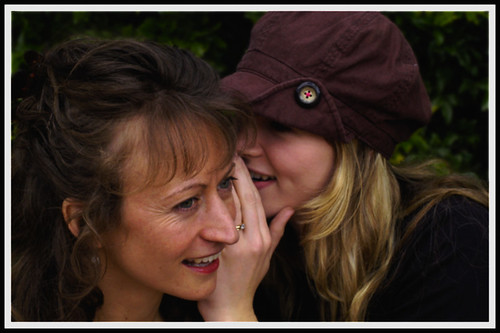
Identifying Good People and Avoiding Bad People: How Can an Autistic Person Stay Safe?

Trust
Photo © Dee Teal | Flickr/Creative Commons license
[image: Blonde white teen girl whispering into the ear
of an adult white woman with long brown hair and bangs.]
Maxfield Sparrow
unstrangemind.com

It started as a tweet from @frogautistic to my friend, Shannon: “Would you know of any guides for adult autistics wanting to differentiate between Good & Bad people.”

Shannon replied:
Shannon's response included a link to my TPGA article about social reciprocity, in which I analyzed some research on how non-autistic people respond much better to Autistic people when they read our words, compared to when they interact with us in person.

I am always happy to make time to help people and I am very grateful to Shannon and The Thinking Person’s Guide to Autism for helping me help others. So I thought about the question as I was waiting for sleep to overtake me, and I woke up thinking about how complex a question this actually is.

See, I’m 50 years old and I’ve met a lot of “good eggs” and “bad eggs” on the long path from my original birthday to today. And I’m (mostly) getting pretty good at spotting the bad eggs and steering clear of them after all that time, but it’s hard because there really aren’t clear, simple, easy rules for that. And what guidelines do exist are not very easily boiled down to 280 characters. So if you can forgive me for spreading out into the larger space an essay affords, I would like to do what I can to provide some guidance, such as it is.

Here are a few basic but important rules for filtering people to let the good ones in and keep the bad ones out: Slow Down, Set Boundaries, and Watch for Red Flag Patterns.

Slow Down

In looking back through my own life and thinking about what would have helped me steer clear of people who were harmful to me, the number one piece of advice I would give myself—and thus you—is to slow down. I’ve noticed that when I get lonely and rush into a friendship or other relationship, I miss seeing warning signs that I might be headed in the wrong direction. People call these warning signs "red flags" and that’s a good name, because they really are like a construction worker waving a red flag at you to let you know you are headed toward danger.

People have red flags, too, and usually don’t even realize they’re waving them at others. When we move too quickly, we don’t always notice those red flags waving. Relating with others happens so fast it can be overwhelming. The emotions of getting to know new people can also be overwhelming. When we slow down and take our time, we have a chance for our minds to catch up with all that information that has been coming at us when we are with the other person and interacting together.

In fact, moving too fast is a red flag itself. This is a really important thing to remember: the red flags of relating with others aren’t just the things that you want to watch out for from other people. They are also the things you want to avoid doing yourself. It makes sense when you think about it: I’m not the only person who notices patterns in how people are with each other. Anyone else who notices patterns will eventually realize that bad things happen when people get too close too quickly, and if you aren’t working to keep things slow enough to take care of yourself, you will also be waving a big red flag at the other person. A person who notices patterns and has noticed this one before will back away from you, both physically and emotionally, if you are moving too fast.

What does moving too fast or slowing down look like? Well, the speed that makes people comfortable will vary from person to person, but comfort is not always the best gauge. One reason why people who have been abused often keep getting abused, again and again, is because the behaviors that make it easier for other people to abuse them are the only way they have learned to be. It feels safe, familiar, and comfortable to keep being the way we have always been, even despite past negative consequences. I have noticed this pattern in myself, and I have noticed it in other people.

Slowing Down Is Important in Seeking Love

I dated a very nice woman who had been abused by both her mother and her last girlfriend before she dated me. Chances are good it had been a lifelong pattern for her, and everyone she had been close to had been abusive. As a result, I could see her being very uncomfortable with our relationship and intentionally trying to start fights. When she wasn’t being yelled at and threatened, it made her panic. She had learned that people yell at you because they care about you. I wasn’t yelling, so maybe my feelings were not deep enough? Maybe I didn’t care enough about her to yell at her? So she did things to try to make me upset enough to yell. I didn’t even realize on my own that this was what was happening: It took a counselor to point out the pattern. Once we saw what was happening, it was life changing for us both.

The point of telling you about this relationship is to illustrate that you can’t always trust what feels comfortable and familiar, especially if you have been abused in the past. It might feel very comfortable and even ecstatic to meet someone on Monday, never separate longer than it takes to use the bathroom (if that!) all week, and be living together or even engaged to be married by Thursday. But that can be very risky behavior. While you might be lucky and have suddenly found just the right relationship (it does happen), the odds are against that, and it is probably an extreme example of what moving too fast looks like.

When I was starting to notice these patterns, and resolved that I was not going to move so fast anymore, I was terrified. What if I really had just met the perfect person and I was trying to slow things down and then lost them as a result of hesitating? But now I realize that if someone really is perfect for me and I’m really perfect for them, our relationship will survive moving more slowly. It may actually strengthen our relationship to take our time with things.

Slowing things down will also give you time to recognize when you are heading into a relationship that will be trouble for you. Slowing down is also not at all likely to chase off a relationship that would be good for you. If you are keeping things slow, and it is frightening to the other person and no matter what you say, they just keep pressuring you and finally deliver an ultimatum (“do this or I am leaving you”) and then break up with you, you have just learned that they were not able to trust you and go the distance with you. They might otherwise be the greatest person in the world, but they were not able to stay calm enough to give you what you needed to be safe, and so they weren’t a good choice for you regardless. When you are with someone who loves you, they are willing to give you the space and time you need to feel safe and strong. That is a big part of what love is.

A slower pace can mean waiting on sex to give time for an emotional bond to develop first. A slower pace can mean waiting to tell your deepest secrets until there has been time for you to see how the other person behaves when they are very anxious or in a crisis. You don’t want to trust someone with your secrets until you know if those secrets will be safe even when things are bad or stressful. A slower pace means you are spending some time apart as well as some time together. Time apart gives you room to think about what is happening without the pressure of being in the middle of everything while you are trying to think about it.

Slowing Down Is Important For Friendships, Too

Last year I met a person who was interesting but was also moving our friendship forward way too fast. We were together pretty much around the clock for days. She essentially took over my whole life and I didn’t notice it because I barely had any time away to think about what was happening. It was almost like being under a magic spell, even though I’m not saying that to excuse myself from responsibility. I was entranced—not by magic, but by her presence. Some people are really good at weaving themselves into other people’s lives and we Autistic people are especially vulnerable to those sorts of people.

It was only when she called me “special” as an insult that her spell was broken. She was using “special” as a euphemism for the R-word, and it really stung. And once she insulted me like that, I was able to look back at the two weeks we had spent together and see that she had been insulting and manipulating me every day, but I had been ignoring it because I was allowing things to move too fast to see the red flags. When she called me "special" and I stopped in my tracks, we had already become roommates. I had paid rent but I packed up my things and walked away from everything because I realized that she was really bad for me and I had been moving too fast to see it, until it had gone so far. I lost money and had to endure her yelling at me for leaving our apartment and breaking the “friendship” and I even felt some fear that she might do something bad to me. I now know that if I had refused to let things move so fast, I probably would have known better than to try to be roommates with her.

Set Boundaries

How I slow down now: I sat down when I was not in the middle of a new friendship or other relationship, asked myself hard questions, and came up with a set of friendship and relationship boundary rules. I can’t tell you what your rules should be, because only you should decide on them. And every time you have an unpleasant encounter with someone, you should revisit your rules, and ask yourself if you broke any of them. If you didn’t break your rules yet still ended up in a bad situation, then ask yourself if you need to modify any of your rules.

In coming up with your own rules, don’t just think through my questions below: Write your answers down somewhere, and put them somewhere you won’t lose them. Look at them periodically. Put a regular date on your calendar to review your rules. Revise them as necessary but never in the heat of the moment. When that very attractive person is asking you for sex? That’s not the time to revise your personal rule about how long and how well you must know someone before having sex with them.

  • When you are first getting to know someone, how many hours are you willing to be in their presence before you ask for a break? A first date probably should not last a week. You might find yourself in situations that go against the rules so think about that, too. For example, if you are at a weekend retreat and meet someone, how will you handle together time? Know that you will feel pressure to spend every minute with that great person you just met. How will you counter that pressure from them or from yourself? Maybe you will have a different set of rules for situations like that? Or maybe the same set of rules no matter what?
  • When you are dating someone, how will you decide it is okay for you to be sexual? Will you decide based on an amount of time you’ve spent together or length of time you’ve been dating? Are there personal “road signs” that will let you know it’s okay? Decide what your rules are before you meet someone special and stick to those rules to protect your body and your heart.
  • How will you decide that you trust someone enough to tell them your secrets? What will you do or say if they start to tell you very personal things about themselves before you’re ready to tell them personal things about yourself?
  • How well should you know someone before becoming roommates? How close should you and a romantic partner be before moving in together?

These are all just suggestions. Take some time to get to know yourself well and look back over your life’s patterns, and you will see where you could benefit from adding more structure to your life. You will be a good judge of what rules you need and what limits to set. Trust yourself to make good decisions when you are thinking about these things while you are alone and calm. You also might want to talk about your rules with a therapist you trust or someone close to you in your life that you trust.

This is called “setting boundaries.” You decide what you want from life, and what you will not put up with. You make personal rules about those boundary lines. And you protect those boundaries by refusing to let others violate them. That includes you, by the way. All of us can be our boundaries’ worst enemy. Setting and keeping boundaries is as much about staying strong in your own sense of self as it is about refusing to let someone else push you farther than you wanted to go.

If it helps you to recognize your patterns, try writing down the names of all the friends and lovers who have turned out to be unpleasant experiences. Write down what went wrong, and how you might have recognized those red flags sooner. A list like that can be depressing—be ready to comfort yourself when you tackle it—but it can also be very enlightening. That is exactly how I came to recognize my own patterns that were holding me back from the kind of life, and community, and love I wanted for myself.

Watch People For Red Flag Patterns

Slowing down helps you to recognize your own patterns and gives you time to see the red flags the other person is waving. Watching them, and thinking about how they are treating you and others, is how you notice those red flags.

Clearly if they hit you and yell at you a lot, you will know they are not good for you. But also watch how they treat other people: A person who insults the server at a restaurant, yells at the clerk at the grocery store, or intentionally cuts people off in traffic while saying nasty things is not someone you should trust, even if they are treating you marvelously at the same time. It is a red flag: the way people treat others is the way they will eventually treat you.

If someone is with you because they are cheating on someone else who doesn’t know about you, that’s another red flag. I’m not talking about open relationships or polyamory where people are dating or having sex with more than one person and doing it ethically by being honest with everyone. If you are sneaking around with someone, they have just taught you that they are not someone you should trust.

I dated someone whose wife had died and his adult children were not ready for him to start dating again. He wanted me to sneak around with him and hide our relationship from his children. That was very emotionally damaging for me because it triggered memories of my childhood abuse. It was also a huge red flag. He was willing to lie to his children and he was willing to force me to sneak around and hide. I could never trust that he would tell me the truth and not sneak around and hide people or other things from me.

The reason I say to watch for patterns is because anyone can lose their temper. Anyone can become so anxious they shout at you. If someone loses their cool once, and they did not call you nasty names or hit you while they were angry or afraid, decide if you want to give them another chance. But if they lose their cool, and use demeaning language toward you, or physically hurt you or your pet or someone you love, you’ve got to protect yourself.

I once had a partner who yelled every day. He was in a health crisis and experiencing a lot of pain, so even though I didn’t like the yelling, I understood. He would yell when he was in pain but he was not yelling at me—he was yelling at the pain—so I stayed with him (I can understand someone yelling because they are in pain. I don’t like it, but I can forgive it). But after he had been sick for a long time, the yelling turned nasty, and he said lots of hurtful and demeaning things to me. That’s when I left him.

There is never an excuse for being hurtful toward others. Someone may try to tell you they didn’t mean the things they yelled at you when they were in pain or drunk or in some other incapacitated state, but adults who love you will not say harmful things to you even when their self-control has been worn down through personal suffering. It is your choice whether you want to forgive someone for yelling, but I beg you to refuse to put up with being verbally abused or battered.

Going slow and watching for patterns are your two best tools for staying safe with people. People have patterns of behavior, and if you take your time getting to know them, they will fall into their patterns. Watch for red flags and decide ahead of time what you will accept and what is unacceptable. Keep things slow so you can spot the patterns. Don’t get too intertwined with someone else until you’ve had a good chance to see what their patterns are, especially how they are when they are sick, tired, or under stress. Take time apart while you are getting to know each other so you have space to think about how things are going and decide how you feel about their red flags. Everyone has red flags, so if you haven’t spotted any at all, slow down some more and pay closer attention to their patterns. Everyone has red flags but some are flagging you about behavior that you can live with while others are flagging you about behavior that you do not want to be trapped in.

Stay strong, set boundaries and keep them, stay safe. May you find loving friends and happy, healthy relationships with others, always.
Share:

What Makes Institutions Bad

Mel Baggs
ballastexistenz.wordpress.com

Buffalo State Hospital
Buffalo State Hospital, closed in 1974. Photo © Shannon O'Toole
[image: A dilapidated interior hallway of a former state hospital.]

Most people don’t have the foggiest clue what’s bad about institutions. What’s bad is something you pretty much never hear about, which is the violence it does to people’s insides at a very deep level. And that can’t be stopped by just removing the things that LOOK bad and throwing a layer of glamour on top.

Please, please, please everyone who talks about this in the past tense—STOP. This is still going on. Everywhere.

I think too many people get the wrong kind of idea. They will think that this is over. It’s not.

They will think that the awfulness and cruelty of an institution is measured by the size, the shape, the physical beauty or lack thereof, the amount of money funneled into it.

And those things are not real.

And those things—the belief in those things—are hurting and killing people still.

People don’t understand what’s behind the worst institutions I can possibly imagine. They think I’m kidding when I say it. Understand that I’m saying this as someone with experience of institutions that people often remark (from my photographs) look just like prisons, and institutions that look absolutely lovely to anyone who doesn’t have to live in them.

The worst institutions have lots and lots and lots of staff. They have beautiful grounds that people are more or less free to walk around on. Every room is decorated in ways that suggest a regular, pleasant house—and if anything is stained or broken someone fixes it, washes it, and paints over it within a day. There are no locks on the doors.

All of the staff are gentle and would never physically abuse an inmate. They are highly trained at redirecting and calming anyone who becomes violent. If you go outside, they follow you at a discreet distance, where they think you can’t see, to give the illusion of freedom and privacy. Their every movement and tone suggests sweetness and gentleness.

But they treat everyone as if they were somewhere varying, between infancy and four years old. With everything—everything—that entails.

Because they do not use physical restraint, they have to restrain you in other ways. They do it by such skillful manipulation that if you ever find out you were being manipulated, it’s long after the fact. If you confront them on it they’ll sweetly and politely tell you they have no idea what you mean. And they will continue to somehow always get you to do what they want, or else to feel awful about not doing so.

Glamour is a word that can refer to a kind of faery magic that can make a hovel appear to humans as a splendid palace. I often use the word to mean a similar kind of deception—a beautiful facade over a terrible reality. I make it part of my life’s work to see through glamour. And I see a whole lot of glamour used in conversations about institutions.

The above institution I have just described has a layer of glamour over it as well. If you look beneath the surface, it’s utterly horrifying. Most people don’t know how to see beneath the surface. Even when you personally are in such a situation, it can be hard to see.

You feel as if there is something pressing down on you, muffling and suffocating. But when you look around, there’s no outward sign of it. So why are you not happy? You must be an awful person to feel so awful when all these nice staff people are doing so much to make you feel at home. You look around, you try to search for what is bothering you, and it’s nowhere. But you’re in agony. Whenever you think nobody’s looking, you cry, sometimes it feels like you’ll never stop. Deep down inside you, you know something is going terribly wrong. But trying to pinpoint it is like trying to get a firm grip on a cloud.

Get a glimpse under the glamour and you see that all that has happened is a bunch of substitutions. They stopped locking the doors, but they started following you everywhere and subtly guiding you where they want you. The institution itself is positioned so that even if you tried to run away you couldn’t get anywhere. They stopped restraining your body, but their manipulation is like a permanent set of shackles on your mind. Their sweetness in manner hides the fact that they are sweet to you the way they would be sweet to an infant—even when you’re pushing sixty. Treat you like that long enough and you begin to respond and structure yourself like an infant, and the damage that does inside can’t be calculated.

I literally have nightmares about that type of institution. When I’m wrapped up in the glamour, this terrible calm takes over. It feels like something soft and smooth pressing all over my skin, and the temptation is to surrender to it and feel its fake calm, fake happiness. Then I wake up and want to vomit I am so terrified and disgusted with what I’ve just experienced.

This past summer I attended a recreation program for DD (developmentally disabled) people. And it was so much like a replica of my nightmare it was scary. Sometimes I would get smothered under the glamour, other times I wanted to scream. I cried more that week than I normally do in years, yet I was at every turn made to feel as if the problem was me. I can be so very passive but even my most passive wasn’t good enough for them.

One day I looked around and saw that everyone there was older. From the era of big institutions. Where they were used to being treated like this, and mostly could out-passive me any day (which is scary because I can get very passive). I talked to a woman whose roommate goes there—she said she goes in a grown woman and comes out acting like a young child. And not in a way that’s just her self-expression—this is one of those places that molds you into that form.

To survive in a place like that something inside you has to break. It’s impossible to fully explain to someone who hasn’t been in that position. Something inside you has to die. And it doesn’t die any less because you got one of the “good” (read: glamour-covered) institutions. The same forces are crushing down on you either way, the difference is cosmetic.

The worst part of institutions is not physical violence, obvious forms of abuse or neglect. It’s not even the experiences you don’t get to have. It’s the damage that is done right down to your soul, by living under the power of other human beings. Glamour makes no difference. Prettiness makes no difference. Size makes no difference. Even length of time makes less difference past a certain point than you’d think.

Until you understand that damage—what it is, what it means, where it comes from—you will never get rid of institutions. You have to understand it on a very intimate level or you will reproduce it without knowing what you’re doing.

I still can’t tell you how long I was institutionalized. I can tell you roughly the amount of time I lived in mental institutions and other residential facilities. But that’s not the same as the amount of time I was in institutions. I call what I got when I got out, “community institutionalization.” That’s where you live with your parents but you spend most of the day being driven between various places—segregated schools, segregated day programs, segregated rec programs, each one with institutional power structures behind it. I remember mental institutions where they walked us to different parts of the grounds for different parts of the day. There’s not so much difference between that and being driven.

The transition between a locked ward on a mental institution and later periods of my life was so absolutely gradual that by the time I was “free.” I never noticed. That’s how they wanted it. I simply created the institutional walls around me wherever I went. That’s why I put “free” in quotes. If I had been someone else, I would have been free. Because I was me—because of my particular history—I was not. There were invisible walls all around me and I certainly never noticed the real ones were not there. Which was exactly the purpose behind what was done to me. They didn’t think I could function outside an institution so they carefully built one inside my head, making me truly unable to function anywhere.

I can get over the physical violence. The attempts on my life. The neglect. The sexual abuse. The parts of “normal life” that I missed and still am missing. So long as I physically survive (which even the recent rec program almost avoided) I will and can get over these things.

I am not sure to what extent I will ever get back the parts of me that died in order for the rest of me to survive. Every now and then I notice I’ve gotten a little bit back, and I think that finally everything will be okay. And then a little time passes and I realize how much is still gone.

I’m not even saying I can’t be reasonably happy. But there are parts of me I still have no idea if I will ever get back. Those parts weren’t destroyed by ugly bare rooms, horrific physical or sexual abuse, the loss of normal experiences, or any of the rest of the things most people think when they think of bad institutions. Those things happened to me and they are bad. But on a real basic level they are not the cause of the problem.

The cause of the problem is a certain exercise of power. Of person over unperson. And in order to survive it the inmates have to become as much of that unperson as they can manage. And that does violent damage deep inside the self, that can be incredibly hard to repair. It’s violent even when it comes with purported love and sweetness and light.

And until people can stop forcing us to damage ourselves in this way, institutions will continue. That, not anything else, is the core of what is wrong with them. But it’s much harder to put that into songs or images or even just words, that the average person would comprehend.

----

(I wrote this in response to a Dave Hingsburger post. Andrea Shettle asked me to post it.)
Share: