Showing posts with label Maxfield Sparrow. Show all posts

CinemAbility: A Review

CinemAbility poster via Amazon.com
[image: Movie poster featuring a shadowy
photo of a person in a wheelchair, seen from
behind. Headshot of the actors Jane Seymour,
Ben Affleck, Jamie Foxx, Marlee Matlin,
William H. Macy, and Geena Davis are
arranged in a diagonal over the wheelchair
user, above large white text reading
"CinemAbility The Art of Inclusion."]
Maxfield Sparrow
unstrangemind.com

CinemAbility: The Art of Inclusion (2018)
Directed by Jenni Gold, Leomark Studios
Closed Captions

I recently and eagerly watched the new documentary CinemAbility: The Art of Inclusion via an Amazon rental. Although I have a couple of complaints, I don’t want to lead with them because the documentary overall was amazing and has been sorely needed. For those who only read articles' opening paragraphs: you must see this film! You will not regret it.

The documentary was filled with interview clips—actors, directors, casting directors, academics. I apologize in advance because I won’t have the names of some people. While the documentary had closed captioning and Marlee Matlin had an interpreter, one accommodation typically missing from documentaries was also lacking in this one: identifying the speakers every time they come onscreen. I have prosopagnosia (face blindness), so in a film with scores of different speakers I really need their identity to be included every time they appear or I will be lost as far as who is speaking at least half the time, if not more.

The opening clips centered around an academic, Martin F. Norden, a communications professor who teaches film and media studies at the University of Massachusetts, Amherst. Norden’s 1994 book, The Cinema of Isolation: A History of Physical Disability in the Movies, appears to have strongly informed the entire documentary in form and content. Theories from his book were used to lay the groundwork, demonstrating the pre-existing stereotypes that cinema needs to work past if films and television are going to depict disability in an honest and realistic way that does not harm or diminish disabled people in the name of entertainment.

The documentary also goes through a chronological history of disability, interwoven with interviews, facts, and opinions, and that chronology began at the same time as Norden discussed the three biggest tropes or storyline stereotypes about disabled people: the Saintly Sage, the Sweet Innocent, and the Obsessive Avenger.

The Saintly Sage is usually elderly. A classic example is the old, blind hermit in Bride of Frankenstein (a character who was also spoofed in Mel Brook’s comic satire, Young Frankenstein -- not mentioned in the documentary, but I couldn’t help thinking of it, especially as I’ve never seen the original Bride of Frankenstein film). The old man can’t see that Frankenstein is a monster and treats him like a human being until the hunters come looking for him and tell the hermit that he’s been sharing dinner with a monster.

The Saintly Sage is not a compliment—it is using a disabled character as a plot device to illustrate a point or advance the script. Saintly Sage is the disability version of another trope often called the “Magical Negro.” Someone the audience views as “exotic” comes into the story solely to assist the hero with life wisdom inaccessible to “normals.” Another similar trope is the “Manic Pixie Dream Girl” who is not a fully-formed character and only exists to help the male protagonist find meaning and purpose in his own life.

The film digresses a moment to show some clips of a homeless, disabled street beggar being used to comic effect while the narrator (Jane Seymour) tells us that this clip filmed by Thomas Edison may be the first depiction of disability ever in film. The image is iconic after all these years of being repeated again and again in much the same tone Edison originally depicted.

The Sweet Innocent is usually a beautiful young woman or a child. This is the prototype for the “good disabled person” that so many of us feel near-continual pressure to be. The Sweet Innocent is kind and good, usually to the level of being completely one-dimensional. They are sexless and childlike and too good to be real. At the end of the movie the Sweet Innocent is usually rewarded for being a good disabled person by receiving a miracle cure.

Several examples of the Sweet Innocent were depicted but the one that most caught my attention was from the movie Heidi where the Sweet Innocent in the wheelchair is taught to walk by Shirley Temple’s Heidi, another character too sweet and good to be true. This is one of my earliest memories of a wheelchair user being depicted in a movie I watched as a child. That illustrates how damaging these stereotypes and tropes can be. Movies are many people’s first education about what disability is, what it means, how we should respond to disability, and so on.

The Obsessive Avenger is the flip side of the Sweet Innocent—the “bad disabled person” who gets punished instead of cured. Some examples include the Phantom of the Opera, The Wax Museum, and Speed. Although not depicted in the documentary, I realized that many of the villains in Batman are also Obsessive Avengers. The Obsessive Avenger becomes disabled and is so infuriated by it that they devote their life to seeking revenge for the wrong done to them and typically die by the end of the movie.

The bad disabled person off-screen is the one who is not always cheerful and smiling and sometimes is angry. I think a lot of Autistic activists get socially punished (or much worse!) because we are viewed as “bad disabled people” for feeling angry about some things, for speaking up for our rights instead of being grateful and happy all the time. Sometimes it feels like all a person has to do to be the “bad disabled person” is mention one thing that needs to be changed.

I really do feel like these movie tropes have trickled through our society, shaping ideas like inspiration porn and so-called mercy killings that affect Autistics and all disabled people. CinemAbility is an important film for Autistic people even though the word “autism” is never spoken in the documentary and there are only a few clips, one to two seconds long each, from movies and TV about or including Autistic people. The ones I noticed were: Rain Man (which went by so fast I didn’t even catch it until I saw it listed in the end credits!), Temple Grandin (which somehow got listed twice in the end credits), and a quick image of Max, from Parenthood. If you add in other developmental disabilities, there was Charly, I Am Sam, What’s Eating Gilbert Grape, Life Goes On, and Forrest Gump.

That’s my biggest complaint—how under-represented developmental disabilities were in the documentary. I did some thinking about why that might be and I have a few thoughts on that:

First, I think we had to be “patched in” to be there at all because, as I mentioned, the documentary seemed to have heavily relied on Martin F. Norden’s work and his book was strictly about physical disabilities. The only developmentally disabled character who got any real air time at all was Corky, played by Chris Burke, from Life Goes On, an ABC television show that aired from 1989 to 1993. I watched it when it aired and enjoyed it. Chris Burke, who is also a Down syndrome activist and singer, is a solid actor and Corky was a great character. I didn’t realize until I watched the documentary that the show was made for Chris Burke.

Burke had written to ABC, saying that he was an actor with Down syndrome and wanted a chance to be in a show. Executives and casting staff were charmed by Burke’s friendly and direct request and built Life Goes On just for him. It was ground-breaking television as far as depicting someone with a developmental disability living a happy and fulfilled life.

The documentary shows a clip of a mother of someone with Down syndrome (as I asked my screen why they were talking to a parent and not a person with Down syndrome), Gail Williamson, who said, “The more images we put in TV and film, the more opportunities there are for people to see what Down syndrome is and have a better understanding of it.” She went on to mention that the Down syndrome community had a definite before Corky / after Corky effect: doctors started telling mothers that their baby has Down syndrome but they shouldn’t despair because their child might turn out to be like Corky.

That’s where representation gets sticky, of course. The film didn’t talk about the “super crip” phenomenon at all (although it did, very briefly, mention inspiration porn.) I can’t help wondering how many people felt oppressed by the pressure to be “another Corky” just as so many of us Autistics feel pressure to be “another Temple.” Telling mothers that their child could be another Corky might make the mothers feel better, but at what cost for their children?

There was a short segment about Lauren Potter, an actor from Glee with Down syndrome, and how she grew stronger as an actor because they trusted her to be competent. There was also a short segment about RJ Mitte, who has another developmental disability: cerebral palsy. He was hired to play Walter, Jr. on Breaking Bad because the show wanted to represent reality rather than having an abled actor portray cerebral palsy.

The movie Forrest Gump had a fairly long segment in the documentary, but I noticed it barely grazed upon Forrest’s disability and spent nearly all the airtime focused on Lieutenant Dan’s story arc of becoming disabled, being angry, coming to terms with disability, and going on to have a vibrant, thriving life. It was a great analysis of Lieutenant Dan’s character, but I wanted that spotlight turned on Forrest, too. As I say, what content there was about autism and other developmental disabilities was pretty thin on the ground and added in, since the book that set the framework and tone for the documentary was only about physical disabilities.

Another reason for the low representation of people like me in the documentary is general societal attitudes and assumptions found in the larger disability community. Many times I have been spending time in communities of cross-disability activists and felt alienated as people unthinkingly (at least I’m really hoping they didn’t realize an Autistic was listening to them) talked about how worthy they are because “our minds are fine.” Sometimes the talk even goes so far as, “if there were something wrong with my mind I’d kill myself.” The larger disability community can be unfriendly to Autistics or simply doesn’t think about us enough to remember that we are part of the movement, too.

And part of that is our own fault for isolating ourselves in Autistic or Neurodiversity or Asperger’s spaces and ignoring the larger disability community. We really need to make the effort to reach out past our own issues because we risk being left out of disability representation that way. We also miss the opportunity to learn from a long-standing and results-achieving community when we isolate. We could get our own game so much more on point than it already is by spending more time actively studying what activists and advocates with other disabilities are doing. Finally, we’re cutting ourselves off from potential friendships with people of other neurotypes who care about accommodations and acceptance.

Along the lines of feeling excluded in subtle ways, Marlee Matlin (who I love so much) said, “Don’t look at us as different. We have the same brains. We have the same hearts. We all live and breathe the same air. At the end of the day, just be more open-minded and have passion, not sympathy.” This is such a beautiful message and I laud it—but it’s not entirely true. I don’t have the same brain as non-Autistic people.

That’s just it: I’m neurodivergent. I have a beautiful Autistic brain and it’s both my super power and my downfall. As I saw Neurobeautiful say in the Facebook forum for the Autistic Women and Nonbinary Network recently: “most superpowers turn into disabilities in an environment not built to accommodate them.” You may call it a minor thing that Marlee Matlin said we all have the same brains, but it did break my heart a little bit.

That said, I do think we have more in common with other disabled people than we do with neurotypical people who are not disabled. Danny Woodburn, an actor who is a Little Person, (side note: when Googling to see if I should capitalize Little Person, the first site I found was, coincidentally, a conversation between the actor Danny Woodburn and Roger Ebert) said something in CinemAbility that any of us could, sadly, easily imagine being said to the mother of an Autistic child: “Even when I was a baby in the late 60s, early 70s, people would approach my mom and think that she did something horrible in the face of God to deserve a child like me.”

Here’s to working together with our siblings in the larger disability community, to gaining more and better representation in the disability community and society at large, and to being part of the fight for a world where we are viewed as human beings—not plot devices, not inspiration, and not punishments and burdens.
Share:

Autistic Disturbances: A Review

[image: Book cover with a black background.
At the top, large white text & then yellow text reads
"Autistic Disturbances" then smaller yellow text
reads, "Theorizing Autism Poetics from the
DSM to Robinson Crusoe".
 A large photo in the center features a storage
rack with stacked cylinders, with different
whimsical buttons on the lid of each cylinder
White text below the graphic reads,
"Julia Miele Rodas". Smaller yellow text
below reads, "Foreword by Melanie Yergeau".]
Maxfield Sparrow
unstrangemind.com

Autistic Disturbances: Theorizing Autism Poetics from the DSM to Robinson Crusoe
By Julia Miele Rodas, University of Michigan Press, 2018.

“Autism has a particular language, one that has been extensively recognized, researched, and described by clinical theorists, literary scholars, and autism (self)advocates” Rodas writes in her groundbreaking book on Autistic poetics, Autistic Disturbances. Through discussing the features of Autistic voice and examining various novels, short stories, and even diagnostic literature through the lens of Autistic rhetoric, Rodas illustrates the outsider, outlaw status of Autistic voice and culture. Rodas’ book title is intentionally ironic, playing on the title of a 1943 book by Leo Kanner, Autistic Disturbances of Affective Contact, while underlining the ways Autistic voice disturbs the status quo.

Rodas plays literary detective, showing the reader celebrated works of literature unknowingly employing the poetics of Autistic voice, demonstrating that the aesthetic of Autistic voice is highly valued in the undiagnosed while the same lovely structures of language are pathologized in the diagnosed. Autistic Disturbances is an academic book, not a light read. But for those who enjoy digging into philosophy, literature, and poetics (the study of how language is used to create art and meaning) Rodas has created the book of our dreams. I am drinking deeply from Autistic Disturbances in my own academic work, responding to Rodas’ lovely invitation at the conclusion of the book: “I close these pages with an apostrophic call to absent and invisible partners to invent new categories, to add to and rearrange this project, and to explore and challenge its boundaries.” (page 192)

What is an apostrophic call? The apostrophe is one of five categories of speech patterns Rodas has identified and described in loving detail. Since these five categories are at the heart of Rodas’ work in Autistic Disturbances, let me introduce you to these five beautiful, powerful aspects of Autistic voice: ricochet, apostrophe, ejaculation, discretion, and invention.

Ricochet is Rodas’ new, non-pathologizing term for language patterns clinically identified as echolalia and other repetitive linguistic stereotypies. Ricochet can repeat the same words (like unmitigated echolalia or altered repetition (like mitigated echolalia).

Apostrophe is what clinicians call “monologuing” and Autistics call “infodumping.” This torrent of information, often professorial in nature (even among very young, highly verbal Autistics),  is labeled as a “lack” in Autistic people, despite being the stuff from which university lecturers are forged.

Ejaculation is Rodas’ term for the outbursts and interruptions Autists engage in (or indulge in, as we are often judged as intentionally inappropriate in our vocal blurts.) This language is alternately described in violent, explosive terms or described in words reminiscent of low-impulse-control sexuality. Rodas speaks of Autistic ejaculation as “the language of extraordinary elaboration and digression, both often interpreted as abrupt, stilted, staccato, or disjointed, but in their connectedness to one another pointing in the direction of formal poetry” (page 56).

Discretion is Rodas’ term for Autistic traits such as systematizing, ordering, lining things up, list-making. This is the category of Autistic poetics that overlaps with list poems and prose.

Finally, invention, a trait those who stereotype Autists might claim we could never possess. Clinical descriptions claim we have little or no imagination, but Rodas points out the “neologisms and invented language” described by doctors all the way back to Bettelheim’s work in the 1960s.

After identifying these five categories of Autistic voice, Rodas tours different pieces of writing, engaging in deep, thoughtful, philosophical conversation with each piece, seeking and reflecting on Autistic language she finds there. One of my favorite of her analyses is Roda’s meta-analysis of the DSM-5 diagnostic criteria for autism, finding that, “It may be a rather crude joke, irrelevant perhaps, even disingenuous, but the DSM, in a beautiful, recursive irony, may be read as the index document of literary autism.” (page 77) I find myself sharing Rodas’ amusement that the document used to diagnose autism is written with autistic voice.

Other works Rodas explores include Andy Warhol’s avant-garde memoir, The Philosophy of Andy Warhol, Charlotte Bronte’s Villette, Mary Shelley’s Frankenstein, Daniel Defoe’s Robinson Crusoe. She also weaves many other great writers through the text—including lines of poetry from Walt Whitman and Gertrude Stein—illustrating and enlarging the five rhetorical categories of autism she identifies. I particularly enjoyed a short “squeezed in” chapter (actually numbered chapter 4 ½) about why Bartleby the Scrivener doesn’t belong in the discussion of Autistic poetics—because the story is not written in an Autistic voice but is written about a character academic readers have been identifying in print as autistic since at least 1976.

Rodas touches on the problematic nature of identifying fictional characters as Autistic, writing “such a move obscures the potential for reading autism as an aesthetic, cultural, literary, linguistic, or rhetorical category, a form of being and expression that might emerge not only in personhood but also in art and fashion, in music and architecture, in circuit design or literary poetics. The focus on Bartleby as an autistic figure effectively marginalizes autistic voice to a kind of performance, a caricature, an amplified mimicking of clinically identified discursive features. It is the stereotyping of autistic stereotypies.” (page 120) She lumps Bartleby together with more recent problematic representations such as Sheldon Cooper (of Big Bang Theory) or Christopher Boone (of The Curious Incident of the Dog in the Night-time).

It is important to come to this book ready to work, because it is an academic book: excellent and rigorous and diving deeply into areas of thought that demand study. But if you think academic books are all drudgery, you’re wrong in this case. Autistic Disturbances is lively, funny, political, outrageous, and just what the Great Conversation of academic thought needed someone to say. Rodas says it with spirit and leaves our perception of the literary landscape forever changed for her readers.
Share:

It’s Time to Prepare the World for Your Child

Atlas, it's time for your bath
Photo: woodleywonderworks | Flickr/Creative Commons
[image: Young white child with short dark brown hair
embracing an enormous globe of the earth.]
Maxfield Sparrow
unstrangemind.com

Ray Hemachandra recently published an essay on his blog that reads like a love letter to/about his adult Autistic son, Nicholas. In the essay, Ray muses about how quickly time slips by, and how suddenly it seems that his son is transitioning from school to adult life and all the possibilities and struggles that includes.

“For an adult child, parents and families soon no longer have school IEP meetings to fight for rights, accessibility, and inclusion. But many of the same questions we wrestled with in the school setting extend into adulthood and society: Will he or she be isolated or included? How do we foster more inclusive communities broadly, but also more specifically take steps to ensure our child feels a part of the world, not an outcast? So many disabled and autistic adults experience isolation and often depression.”

Ray shares many worries about Nicholas’ future, but then turns his thoughts around and says that worry isn’t helpful. He points out that parents must do all they can to help their children, but in the end parents can’t determine how their children’s lives will turn out. Your child’s life is your child’s life, not yours. Worrying too much will eat away at the precious time you have together. Trying to over protect your child will limit them and leave them unprepared for many of life’s opportunities and possibilities.

Most crucially, Ray writes: “We miss something here. Developmental delay means that much life development happens in adult life for autistics, after age 18 or 21—maybe even more so than it does for us the rest of us.” That’s such an important point. As a 51-year-old Autistic, that’s been my experience: we don’t emerge fully developed at age 18; we are growing and changing throughout our life span.

That is the first thing you must do to prepare the world for your child: join the fight to extend services. The sooner you join that fight, the more years you will have to work to help establish what your child needs as they grow.

Beth Arky’s older article about Autistic people aging out of the system describes several possible solutions different parents and organizations are approaching to address the issue of Autists aging out of the system, citing data that suggests 40,000 Autistics per year are turning 21 or 22 (the age at which services stop varies from state to state). Some of the solutions Arky’s article describes are more workable if parents have access to large amounts of money. Other solutions are problematic and Arky specifically reports on the dangers of setting up a segregated community for Autistic adults. It is so important to fight for your child’s future and it is important to start learning right now—no matter how young your child currently is—about the options and issues coming up in your child’s (and your) future.

It’s also really important to pay attention to what services your child is getting right now. An ABA group called The Daily BA made a video that highlights how important it is for you to pay attention. (There are two things I should warn you about concerning the video, in case you decide to go watch it: it’s heavily pro-ABA, and it is a high-risk seizure trigger as the first three seconds of it are flashing at a rate faster than 3 hz. I wanted to warn you before I gave you the link to the video.)

Disclosure: if you’ve ever read anything I’ve written, you probably already know I’m against ABA. You might be wondering why I’m telling you about a pro-ABA video: It’s because the video unconsciously explains why you should not rely on ABA to prepare your child for their future. Quoting the video:
“I think one of the impending crises we’ve got right now is that these kids are getting great services, they’re getting fantastic services and they’re getting a lot of services. The issue I see is we’re getting now these providers that only work with kids and are not transitioning them and we work with adults obviously, all the way up to 80, but when we get those folks they are not prepared for moving from 35 hours to now 2. And they don’t have the functional skills. [...] They might be able to read and they might have all the academic stuff but they don’t have how to ride the bus, they don’t know job skills. So we’re taking that and we suddenly have a lot less hours. That’s quite a dilemma. I think the only way that’s going to get fixed is as the activist parents who helped vote to get their kids these services follow their child through this transition to adulthood and vote to get more funding because that’s the issue right now.”

I think the BCBA I just quoted from that video highlights two important things. One is that ABA is not getting the stellar outcomes that we should expect from a therapy that dominates the market as the “only evidence-based therapy.” Why are we allowing one therapy to lobby so heavily that it’s often the only thing insurance will cover, if it’s dumping non-transitioned adults into a world that’s not prepared for them nor they for it? The BCBA mentions 35 hours a week of therapy. Autists are getting intensive therapy like that for years. Parents: do not settle for therapies or educational systems that only teach academic literacy and don’t do anything to prepare your kids for adult life!

Another important thing the BCBA says in the video is that parent activists are the ones who need to dig in and change the system. He’s completely right! Leaving aside my feelings about ABA specifically, the “autism industry” caters to the “perpetual child” because that’s what a wave of parent activists before you told them to do. A 2011 report in Disability Studies Quarterly looked at the images of autism and found that parents presented autism as the face of a child 90% of the time. The authors looked at the feedback loop among parents, charitable organizations (75% of depictions of autism were child-only narratives), fictional books (90% children), narrative films and television shows (68% children), and news media (four times as much coverage of autistic children as of autistic adults) and pointed out that the closed loop excludes the voices of autistic adults, resulting in “a barrier to the dignity and well-being” of all Autistic people.

More specific to the topic at hand, this feedback loop has informed the autism industry that Autistic children are the only worthy targets for services. So now it’s time for parents, as the only close stakeholders who are getting heard, to step up and say, “hey, my kid is going to be an adult some day. Autistic children become autistic adults.

Parents need to lobby for more funding for adult autistics so that their children will have the services they need in their 20s and beyond.

Parents need to educate everyone: policy-makers, doctors, teachers, and other parents of autistic children. Find opportunities to speak about the problem of low funding and services for adult autistics. Every parent worries, like Ray Hemachandra wrote, about how their child will survive and thrive after they are gone. Working to teach everyone about the importance of continuing services and education for Autistic adults will help you cut through some of the anxiety about what your child will do when you are gone. You can help to build a better world for your child right now.

Parents need to insist that their child’s education begins introducing transition material early. There is so much to learn when it comes to living independently, with or without supports. For example, no one taught me how to manage money. Maybe everybody figured someone else was going to be teaching it to me. Maybe everybody saw how well I could read and assumed I must not need help with anything else. Whatever happened, someone dropped the ball and I ended up out in the world with no idea how to earn, spend, save, or invest money.

Your kids deserve better. Make sure they are learning what they need to learn and not getting dumped out of the system in their early twenties with an education so uneven it leaves them vulnerable and unnecessarily struggling. We autists take longer to develop and we are still learning new things much later in life than non-autistic people. I realize I’ve just set another load on your already overburdened shoulders with this. You’re in a different phase of childhood and might already be feeling overwhelmed by the demands of the present. I get that. Parenting any child is hard work. But future you will thank current you for carving out the time to think about and work toward these goals now. Your child will not be a child forever and this world is still not ready for your child. We’re all out here trying so hard to change that and we welcome you to join in with this important fight because your child’s future depends on you.
Share:

His Hands Were Quiet: A Review

[image: Brown book cover. Small yellow text at
the top reads, "Zachary Goldman Mysteries 2"
Next, the title in white all caps text reads,
"His Hands Were Quiet." Next is an image of a
yellow triangle with a silhouette of a person bending
backwards and being struck in the chest with a
bolt of electricity. Large yellow text at the 
bottom reads, "PD Workman".]
Maxfield Sparrow
His Hands Were Quiet
By P.D. Workman

Content notes: suicide, abuse, murder, house fires, burn injuries, PTSD, Judge Rotenberg Center, ABA

This book review gets all the Autistic trigger warnings. It is a gripping thriller/suspense novel that could help people understand autism and Autistic people better, and it is raw and honest about what some of the most vulnerable Autistic people endure. It will be a tense read for everyone and could be especially triggering for many Autistic people, so proceed carefully with this review and remember that your self care is more important than anything.

Zachary Goldman is a private investigator with his own past history of trauma. He grew up in the foster care system and had a long and painful recovery from being badly burned in a house fire. He’s not in the greatest life situation when the novel opens—he’s sleeping on someone’s couch and not even doing that very well. Zachary suffers nightmares and insomnia from the stress of his current situation and the long-term effects of trauma.

When the mother of an Autistic boy living in a residential facility contacts him to investigate her son’s death—the institution and the coroner have decided that her son’s death was a suicide but she doesn’t feel that’s the truth—Zachary falls down a rabbit hole of autism therapies, electric shock, and adult Autistic protestors. Will Zachary uncover the truth about the boy’s death? Was it suicide? Murder? And why do the therapies used in the school make Zachary feel so uncomfortable? It looks to him like torture, but surely professionals know what’s right?

I have been a fan of P.D. Workman’s writing for years. She mainly writes YA and adult genre fiction and develops relatable underdog characters who move the story forward with their drive to understand and be understood. Workman’s characters seek and speak truth while others doubt their information and often their basic life competence.

Zachary Goldman is no exception to the theme. In fairness, his life is in shambles when the story opens, but people hover, untrusting. Both his ex and his friend who owns the couch Zachary is crashing on suspect he’s going off the deep end when he becomes obsessed with the school, the therapies, and the autistic children as he watches more and more troubling “therapeutic” situations—including a malfunction of a skin shock device, resulting in an electrical burn on an autistic girl’s skin.

As you may have already guessed by now, the school in the novel is modeled after the infamous Judge Rotenberg Center (JRC). When Zachary begins his investigation, he’s shown reward areas with cartoon characters, bright colors, a ball pit. He’s given the “glossy brochure” tour and might have walked away satisfied if it weren’t for all the protestors outside. The school’s director has Zachary enter and leave through a back door, hoping he would ignore the protestors, but Zachary ends up talking to a woman, an Autistic adult, who is with the protestors.

There are many moments in the novel that shine as not just scenes in a well-crafted story, but sensitive and insightful teaching moments. Zachary’s conversation with the protestor is one of those moments. As a longtime fan of Workman’s writing, I knew she was working on this novel and, along with many other Autistic activists and advocates, helped her connect with as much #ActuallyAutistic #OwnVoices as we could. Her research was tremendous and I felt a depth of understanding of Autistic issues throughout the novel. Some characters are ableist, some are grappling with entrenched ableism, but the bedrock of the novel is clearly respectful and Autistic-allied.
“Even without aversives, therapy can still cause PTSD or other anxiety or emotional problems.” 
Zachary scratched the back of his neck. “Do you have proof of that?” 
“I am proof of that.” 
He looked at her, studying her face and her body language. “You did ABA?” 
“Yes. I did.” 
“What for? You aren’t autistic, are you?” 
“Yes, I am.” 
 “You… must be very high-functioning. I wouldn’t have guessed it…” 
 “Do you think that’s a compliment?” she snapped. 
Zachary fumbled for an answer. He had clearly said the wrong thing. He’d somehow insulted her. And he didn’t know what he’d done or how to undo it. 
“You think I want to be like you?” Margaret persisted, her eyes flaming. 
 “Like me?” Zachary let out one bitter bark of laughter before he caught himself. “No, I don’t think you would want to be like me.”
(From His Hands Were Quiet, location 1088, Kindle version)

Researching for the case, Zachary reads the ABA classic text, The Me Book by O. Ivar Lovaas. At points throughout the story, Zachary reflects on what he had read in The Me Book and how it relates to the aversive therapies he witnesses in the school.
And Lovaas… what had Lovaas said? He had said something along the lines of some children being rewarded by negativity and punishment, so that the parent or therapist had to be very angry and hard on them to get the proper results, and that weeks or months of such intense therapy could be taxing on the parent. Poor parents, having to be so hard on their kids. Zachary shook his head, thinking about the arrogance of such a statement.
(Location 1995)

His Hands Were Quiet serves as an engaging fictionalized introduction to many crucial issues in the Autistics Rights movement. Many people who would be disinterested in reading non-fiction political writing will find themselves drawn into and caring about the human rights issues of the JRC, ABA therapies, the presumption of Autistic competence, and related issues through reading Workman’s mystery/suspense novel. His Hands Were Quiet is part of a series of novels about Zachary Goldman’s cases, but reads well as a stand-alone novel.

If there are people in your life who enjoy detective novels and would want to (or NEED to!) learn more about autism, here’s your Christmas present for them. Workman’s eye-opening story will lead to many fruitful discussions and much increased empathy for the struggles and needs of Autistic people.

Once more, I warn about the general content of the book, which can be intense at times, both in the ways that most mystery/suspense novels are but also for any Autistic who has experienced stressful therapies. With that caveat in mind, I loved this novel and recommend it to anyone who enjoys the genre.
Share:

See it Feelingly: Classic Novels, Autistic Readers, and the Schooling of a No-Good English Professor: A Review

Maxfield Sparrow
unstrangemind.com

[image: cover of the book See It
Feelingly, by Ralph Savarese]
See It Feelingly: Classic Novels, Autistic Readers, and the Schooling of a No-Good English Professor (Thought in the Act) by Ralph James Savarese
Foreword by Stephen Kuusisto
Duke University Press Books (October 12, 2018)

Reading See it Feelingly took me much longer than I expected, because I wanted to stop to take notes with almost every page turn. Dr. Savarese has produced a masterpiece, simultaneously dense and accessible. His voice moves freely—alternating among lyrical, narrative, and instructive—never losing the flow, never dipping into pedantry, never soaring too far toward the abstract for the reader to follow. Not only is this collection of essays brimming with the most important information and ideas about autism, it is a collaboration of rare beauty.

See it Feelingly crosses genres effortlessly. The result is a book rich in the neuroscience of autism, literary criticism, Autistic poetry, the science and politics of neurodiversity, theory and practice of inclusive education, and direct quotes from Autists. See it Feelingly also belongs on my virtual bookshelf of Autistic Poetics*, along with Autistic Disturbances: Theorizing Autistic Poetics from the DSM to Robinson Crusoe, by Julia M. Rodas, and Authoring Autism: On Rhetoric and Neurological Queerness, by Melanie Yergeau. While Savarese, unlike Rodas and Yergeau, is not Autistic, his work that has culminated in See it Feelingly has given him great depth of insight into Autistic poetics. More importantly, his understanding of Autistic poetics is directly informed by the extensive conversations and feedback from his Autistic friends with whom he explores literary works.

There are six Autistic co-readers highlighted in See it Feelingly. Dr. Savarese makes it clear that he considers the relationships between his Autistic friends and himself to be more about shared journeys as equals than a hierarchical teacher-student relationship. One reason for this attitude was that his Autistic friends were teaching him as much, if not more than, he was teaching them. And they weren’t the stereotypically expected sort of lessons about autism and Autistics. Rather, his co-readers were teaching him new ways of engaging with the text—Autistic ways of reading. As Savarese writes on page 54,
“What literature professors call 'close reading' might as well be called 'autistic reading,' I decided, for the kind of careful attention and full-bodied engagement that Tito evinced are exactly what literature deserves.”
Savarese returns often to the theme of embodiment in writing and reading—“feelingly seeing” the text. He shows the deeply somatic (body/sensory as opposed to mind-based) nature of Autistic experience by weaving together three information strands: conversations in which various of his six co-readers share experiences of how they interact with the texts they are reading and discussing; explanations of some of the differences in brain structures and functions that cause Autistic people to engage somatic regions of our brains more actively and with more connections than non-autistic people; and a review of somatic theories in linguistics and poetics, suggesting that the sounds of language evolved as echoes of body movements. “Metric feet” in poetry echo the way language echoes the footfalls of running.

The six Autistic people Dr. Savarese explored literature with were: his son, DJ Savarese; Tito Rajarshi Mukhopadhyay; Jamie Burke; Dora Raymaker; Eugenie; and Temple Grandin. As Savarese notes in the introduction, what he has done is not a scientific study or even a random sample. The people he worked with were the people he knew one way or another. Or, as in Grandin’s case, people both famous and somewhat accessible. The choice to include Grandin also stemmed from the irresistible challenge of re-visiting Dr. Oliver Sacks’ assessment of Grandin’s assumed deficit with respect to literature in his book, An Anthropologist on Mars.

Dr. Savarese chose the books he read with each of his friends. The chapter about reading with his son is labeled prologue rather than chapter one. I think that choice is meant to show how DJ wasn’t just another Autistic to read with but The Autistic who taught Dr. Savarese his first lessons in full-autistic-body reading, re-living personal trauma while reading fictional trauma, close-autistic-reading, and the importance of building a raft of safety upon which to navigate the often treacherous waters of literature. Savarese focused mainly on a shared reading of Mark Twain’s Huckleberry Finn. In chapter one, Savarese immersed in a slow—two chapters at a time—reading of Herman Melville’s classic, Moby Dick, with Mukhopadhyay. In chapter two, Savarese and Burke explore a classic Native American novel that plays with concepts of time, space, and ritual: Ceremony by Leslie Marmon Silko.

Chapter three spends a lot of time exploring the connections between the science fiction genre and autism, drawing heavily on Steve Silberman’s autism history, NeuroTribes. Savarese chose the novel before the reading partner in the case of Philip K. Dick’s Do Androids Dream of Electric Sheep?. After exploring the parallels between Vulcans (Spock) and androids (Data) and Autistics (as well as dipping into the reasons so many Autistics love Star Trek), Savarese knew he wanted to discuss Dick’s novel about a bounty hunter searching for renegade replicants with an Autistic reader. He chose Raymaker because he had been impressed by things she had said in the documentary film Loving Lampposts, Living Autistic. Blade Runner was one of her favorite movies but she had not yet read the book upon which it was based.

In chapter four Dr. Savarese reads with a woman who chooses to go only by the name Eugenie. She is Autistic, Deaf, a classical ballerina and a figure skating choreographer. She already faces so many barriers as a multi-racial, Jewish, Deaf choreographer that she does what she can to keep her autism undercover, fearing it would tip the balance for too many people, rendering her unhirable. Together, they read The Heart is a Lonely Hunter by Carson McCullers. Savarese chose that novel as a fertile ground for exploring intersectionality—the synergy that happens when someone has more than one minority identity—in Eugenie’s case, the intersection of being multi-racial and multiply-disabled.

Finally, in chapter five,  Dr. Savarese successfully deconstructs Dr. Sacks’ earlier assessment of Grandin during a shared reading of two short stories from the anthology Among Animals: The Lives of Animals and Humans in Contemporary Short Fiction: “Meat” and “The Ecstatic Cry.” Citing much of what has been said by and about Grandin to support the notion that she is purely logical with only the simplest emotions—he quotes Grandin on page 157, saying, “ [I] only understand . . . fear, anger, happiness, and sadness”—Savarese set out to explore Grandin’s actual emotional landscape through discussing literature together.

While Grandin’s initial response to “Meat” was frustration that the story never revealed what species of animal was described, I shed genuine tears reading just one excerpted paragraph Savarese included. Still, Savarese found great depth of reflection and insight in Grandin’s approach to the texts. Her literary reality was much richer than Savarese, or I, had been led to believe. When Savarese asked Grandin on page 171 if “Meat” had moved her, she replied, “Well, I don’t get overly emotional [...] [b]ut the words created images in my head, and they moved me.” But Savarese was most insightful halfway through his recounting of their discussion of “The Ecstatic Cry” when he suddenly realized that he was trying to box Grandin up and force her into a mold every bit as much as he felt Sacks had done. Savarese writes, “Can we presume competence without striving for normalcy? I think so, but in my quest to uncover emotion, I was certainly muddying the waters.” (182)

In the epilogue, Dr. Savarese revisits theories of literature and reading but soon turns to pondering our future, based on the current grim political landscape in the U.S. He closes with a quote from Azar Nafisi, an Iranian professor, explaining that literature does not, “merely reflect reality but reveal a spectrum of truths, thus intrinsically going against the grain of totalitarian mindsets.” (195)  Echoing her language, Savarese calls upon “a spectrum of readerly minds” to “stretch and amplify” the spectrum of truths. Now, more than ever, the world needs literature. And Dr. Savarese has amply demonstrated how much literature needs Autistics.

See it Feelingly is a manifesto of power, singing out the value and beauty of Autistic minds and lives. It centers non-speaking Autistics while expressing acceptance and inclusion for all flavors of Autists. It does not position our worth in the commercial sense we’re so accustomed to. Some of the co-readers have successful careers; others may never support themselves through labor and earned income. That is not where any of their value as human beings resides and Savarese makes that abundantly clear as he invites us to savor the inner lives of his friends. Literature is about what makes us human and Dr. Savarese and his friends find the humanity in fictional humans … and whales and penguins … by looking into the mirror of literature and seeing themselves reflected there in myriad forms. The careful reader—of any neurology—will look into See it Feelingly and find themselves reflected there as well.

----

*Poetics are sets of theories about how language is used artistically and politically in different settings.
Share:

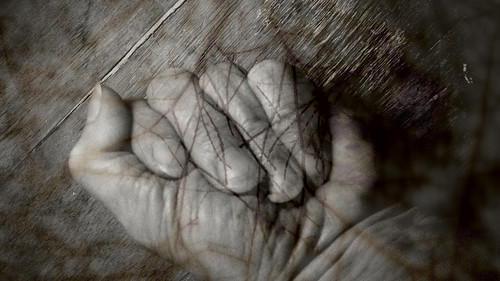
Eliminating Restraints and Seclusion Improves Outcomes for Injuries/Trauma, Expenditures, and Student Goal Mastery

holding on
Photo: Nancy Marie Davis | Flickr / Creative Commons
[image: sepia-tone print of a clenched fist, with superimposed scratched lines.]

Maxfield Sparrow
unstrangemind.com

A little over two years ago, Crystal Garrett wrote an article for Thinking Person’s Guide to Autism about the long-term traumatic effects on her Autistic son of the restraints and seclusion used against him at school. Garrett chose to end her career as a journalist to stay at home and school Zachary herself. Garrett wrote,
“We know a restraint and seclusion free environment is realistic. Virginia-based Grafton Integrated Health Network, an organization that works with children and adults with autism and co-occurring psychiatric diagnoses, went restraint and seclusion free ten years ago. Since then, their client and staff injury rate has dramatically gone down, while employee satisfaction has increased. They are now teaching their system, Ukeru, to others across the country, in order to create a trauma-informed environment for addressing aggressive behavior.”
Garrett also wrote about the importance of more people learning about the Ukeru model:
“Perhaps if more educational bodies knew about this approach, my 60-pound six-year-old wouldn’t have ever been placed in the back of the patrol car that hot summer day. We also wouldn’t have to travel the 30-mile stretch of highway for trauma-based therapy each week.”
Over a Decade of Research into Alternatives to Restraint and Seclusion

I couldn’t help thinking about Crystal and Zachary Garrett today when I learned that an official study of Grafton’s Winchester, Virginia, Ukeru program was published in Advances in Neurodevelopmental Disorder in August of 2018.

The study’s authors are Jason H. Craig (a BCBA at Grafton School) and Kimberly L. Sanders, who has filled many roles at Grafton and is currently the Chief Outcomes Officer. In another article earlier this year, Sanders writes about the Ukeru vision as “comfort versus control,” and writes that it’s more than just how people are trained to approach alternatives to restraint and seclusion but a “core operating principle” informing the entire philosophy of the organization. She links to a capsule explanation of The Grafton Method, the seven-point framework for addressing issues of restraint and seclusion with the committed intention to minimize or eliminate restraint entirely:
  • Leadership. Decide the organization’s mission, envision a path between the present and the future, plan actions and keep everyone focused on the goals.
  • Communications. Communicate the vision to staff. Set up communication practices within the organization that will keep everyone informed and on point.
  • Training. Teach everyone the best practices to use instead of restraint and seclusion.
  • Measurement. Keep track of what’s working and what isn’t. Measuring and record-keeping are what keep education scientific rather than intuitive, and documentation is crucial for repeatable results.
  • Debriefing. When an unwanted outcome arises, it’s important to establish clear communication to discuss what happened and how to achieve more desirable results next time.
  • Alternative solutions. At Grafton, brainstorming about alternative solutions was how Ukeru was developed.
  • Therapeutic planning. Don’t leave a student/client’s progress to chance: 
    1. Assess a student’s strengths and weaknesses
    2. Develop strategies around a student’s strengths, encouraging academic growth in an environment of safety and security for the student
    3. Train staff in techniques and documentation methods
    4. Monitor progress
    5. Modify what’s happening, based on progress toward goals (as well as adjusting goals when they no longer suit a client’s preferences and needs).
The study Sanders and Craig published is important because it represents peer-reviewed scientific evidence that eliminating restraints and seclusion not only have the direct benefit of treating clients with dignity and respect, rather than traumatizing them, but the Ukeru program has documented evidence that eliminating restraint saves on workplace injuries caused by client responses—which also saves organizations millions of dollars.

A copy of the Grafton study needs to be in every parent’s toolkit when arguing for the well-being of their children in the education system. Sanders and Craig have produced reputable scientific evidence that serves as valuable munitions for every parent’s IEP battle against a school that uses restraints and seclusion.

In a recent Scientific American article, Alycia Halladay writes about hyped-up autism studies and how harmful they are to Autistic people, saying,
“The mainstream news media need to consider a more measured and responsible approach to covering autism research. This should include very careful vetting of which studies are reported. Not all scientific journals are equal in their scientific rigor or review policies, so just because a study is 'published' does not mean it necessarily has scientific significance.” 
Advances in Neurodevelopmental Disorders is a reputable journal, and the Grafton study is crucial to developing appropriate methods for schools to interact with Autistic students, but I haven’t seen much, if any, journalistic hype for this study. I guess there’s nothing sensationalistic and headline-grabbing about NOT harming students.

Why the Grafton Study is Useful and Important

The Grafton study provides clear data useful when debating against the many people who insist that there is no way to get around using restraint against “violent people” because there is no other way to control dangerous behavior. These people often add statements about such harsh treatment such as saying that it is done “for the client’s own good” adding that people will have better future outcomes if we control their behavior now, and shape them into something socially acceptable.

As an Autistic advocate/activist myself, I also get told that I can’t understand the needs and benefits for Autistic people who “aren’t like [me]” because I’m allegedly only “mildly affected” and can’t understand the needs of “serious autism.” And if you’ve ever read anything else I’ve written, I don’t need to tell you how frustrating and infuriating that kind of talk is to me.

Humor me while I unpack those representative statements a little: There aren’t Autistic people who “aren’t like me” in a real sense, because we’re all different (being, you know, human beings) and no one on this planet is actually “like me” but the Autistic people on this planet are a heck of a lot more like me than the non-autistic people. Yes, I’m even talking about “those people”—you can fill in that blank however you choose. I have more in common with any Autistic person, even those who can do things I can’t, even those who can’t do things I can.

“Mildly affected” and “serious autism” are just euphemisms for functioning labels, and we Autistic folks have written so much already against that misunderstanding of autism. Let me just skip past that this time to tell you that I have a personal history of being restrained, secluded, and institutionalized. I am not speaking from some philosophical stance or set of political beliefs when I say that treating Autistic people with restraint and seclusion make us worse, not better. I am speaking from personal experience. Now, thanks to the Grafton study, we can all speak from a scientific basis as well when we talk about the ways restraint and seclusion make things worse for everyone, not just for the Autistic people these methods are used on.

In the introduction/literature review section of  their paper, Craig and Sanders talk about the 2006 policy paper issued by the National Council for Behavioral Health that said restraint and seclusion should be methods of last resort, used only after all other options have been exhausted. They also cite a 2012 paper from the American Journal of Orthopsychiatry that found restraint and seclusion to be “traumatizing and dangerous to both the children and the staff involved in each incident.” Some agencies have been successful in reducing restraint and seclusion while others struggle with the mandate.

Next, Craig and Sanders talk about the Trauma-informed approach (TIA) model. Instead of focusing on controlling someone’s behavior, TIA focuses on establishing a relationship between the student/patient and a trusted adult caregiver. When the student feels emotionally and physically safe, they will be more invested in accepting help and considering new ideas about their lives. This safe space allows the student to shift from a position focused on bare survival into a position where growth and learning can take place. Grafton’s comfort vs. control perspective grew out of TIA practices. Comfort vs. control aims to change interactions between staff and student such that the risks of traumatizing or re-traumatizing the student are significantly minimized, using the following techniques/philosophies:
  1. Response blocking. The simplest example is putting a pillow between someone’s face and fist to stop them from hitting their face and instead hit the pillow. Response blocking is controversial among some people. Most parents support response blocking because it directly prevents a student from injuring themselves. Response blocking in an ABA context can be either a punishment or an extinction, depending on how the client responds to being blocked.
  2. An understanding of behavioral intent and client needs. In other words, not just deciding what a client should or should not be allowed to do, but rather working to understand why a client chooses a particular action, feedback, etc. What unmet needs are driving the client’s behavior? “Behavior” does not happen in a vacuum; behavior is communication and/or an attempt to meet unmet needs.
  3. Developing creative solutions as alternatives to restraint and seclusion. How can using comforting techniques help clients calm and self-regulate? How can staff take care to not use control tactics on behavior that is disruptive and appears “out of control”?
These three points created a mindset shift among staff, allowing workers to:
  • Reassure clients.
  • Ask questions of clients instead of jumping to inaccurate conclusions and assumptions.
  • Embrace flexibility
  • Do not strive to always keep the upper hand / hold an imbalance of power / maintain control over situations and people.
  • Treat others with kindness and respect.
Sanders and Craig write,
“The belief was that many situations in which a restraint or seclusion was used could be better resolved by a non-coercive, caring intervention from a person focused on peaceful conflict resolution who was willing and able to spend time with the upset or angry individual.” 
I feel like that sentence highlights the biggest reasons why we are still wrestling with the demon of restraint and seclusion, even 14 years after a strong governmental policy recommendation against it: “willing and able to spend time.” So many workers are under such constraints of time and money that TIA feels overwhelming. Staff need to be educated about the time, money, and (most importantly!) human safety and well-being that will be preserved through implementing a TIA approach instead of restraint and seclusion.

How the Grafton Experiment was Conducted

Sanders and Craig examined the entire Grafton system, including over 750 employees and 3244 clients, male and female, from age 6 to age 22, with intellectual and developmental disabilities presenting at a wide variety and levels of support needs. At the beginning of the study, when Grafton began making concerted efforts to reduce restraint and seclusion, any and all of these 3244 clients were potential candidates for restraint and/or seclusion, if they were deemed to be a risk to themselves or others. The restraint reduction program began in 2004 and the year before the program there were 6646 incidents of restraint or seclusion. In other words, a client would be restrained or secluded on average more than twice per year.

The study authors also laid groundwork statistics representing the pre-intervention levels of measurable outcomes, particularly:
  • Rate of incidents of restraint and seclusion.
  • Rate of restraint-induced staff injuries (Why they did not count rate of restraint-induced client injuries is beyond me.)
  • Client-induced staff injuries.
  • Lost time and modified duty for workplace injuries.
  • Lost money due to all of the above causes.
  • Client outcomes / goal mastery
The results of the study came from a combination of carefully conducted interviews, and the raw data related to the above focused outcomes.

Research Outcomes

The researchers found that the Grafton Method reduced instances of restraint by 99%.

They reduced instances of seclusion by 100%.

Restraint-induced injuries to staff were reduced in the same time period by 97%.

Client-induced injuries to staff were reduced by 64%.

(I should note that client-induced injuries is one of the biggest reasons I hear cited for the need for staff at facilities to be able to restrain clients: fear of injury to staff. This result shows that staff were actually being injured MORE by the clients when there was restraint and seclusion and far LESS after restraint and seclusion were removed.)

There was an 81% reduction in lost days and modified schedules after reducing restraint and seclusion.

Lost expenses decreased by 75% overall. Between money lost to sick/injured days, worker’s compensation, employee turnover, and training, in the 12 years covered by the study, Grafton saved approximately $16.4 million (an average savings of $1.37 million per year) by restricting/eliminating restraint and seclusion practices.

As for client goal mastery, when the study started in 2005 the client goal mastery rate was 34%. By 2008 the client goal mastery was 66%. By 2018, that rate was 80%. Overall, this represents a 133% increase in the ability of the students to learn, grow, and change in positive ways desired by both the students and the staff.

Conclusions

Who (except us Autistics and many of our parents!) expected so much positive gain from simply choosing to treat clients with respect and kindness? Craig and Sanders advise other organizations to look at these results and choose to eliminate restraints and seclusion as well. They wrote, “Organizations need to learn to be more responsible and accountable, especially when it comes to the treatment to vulnerable individuals.”

It is my fervent hope that this study from Craig and Sanders will be widely cited and shared in the research community as well as the community of parents of school-aged Autistic children. We all need to get the word out about these results and get other researchers and organizations on board with the TIA approach to helping students feel more comfortable and less manipulated, controlled, bullied, and traumatized.

Everything in this study seems obvious to us, of course. Whether you’re an Autistic person, the parent of an Autistic person, a compassionate teacher looking for better ways to mentor your students, an activist or policy maker—it should seem obvious that life is better for everyone when we aren’t tackling vulnerable people to the ground, punishing, and isolating them for the “crime” of being different and struggling with self-regulation, sensory onslaught, and the countless other daily battles Autistic people have with our environments.

But these things are not obvious to everyone. A study that demonstrates significant savings in money will sway some organizations. A study showing less injury to staff will sway others. This study demonstrates both and more. Add it to your collection and use it as evidence in your fight to make the world a better place for Autistic children, the Autistic adults they will grow into, and everyone whose life touches or is touched by the lives of our precious Autistic children who deserve so much better than our society has been giving them.
Share:

Neurodiverse-Friendly Workplaces in Your Community: A Symposium Report

Photo courtesy Max Sparrow
[image: Symposium organizers and presenters stand in front of the Dirt Coffee
Truck while the Dirt workers smile from the left window of the truck.
From left to right, the people pictured are: Dr. Elaine Meyer, Bill Morris,
Lauren Burgess, Kris Harrington, Drew Webster, Dr. Stephen Shore,
Dr. Kristie Koenig, Thomas Koenig, David Finch, Becca Lory Hector,
Philip Tedeschi, Antonio Hector, Erica Elvove.]

Maxfield Sparrow

UnstrangeMind.com

I am sitting in Dirt Coffee in Littleton, Colorado. Ryan, an outgoing young woman with enormous blue eyes, has served me a massive Americano to which I’ve added tons of cream. “Do you know about our mission?” she asks me.

I do know the mission of Dirt Coffee, but I let her tell me anyway because I want the joy of hearing the words again.  I discovered Dirt Coffee earlier today when I attended a symposium at the University of Denver’s Graduate School of Social Work where I heard heartening words about local workplaces that are making the effort to create friendly, inclusive environments for their neurodivergent workers.

The symposium, which ran from nine in the morning until half past eleven on Friday, September 21st, 2018 (after which many of us retired to the excellent mediterranean restaurant across the street to continue networking and sharing information), was sponsored by Colorado’s Center for Neurodiversity and The University of Denver Institute for Human-Animal Connection.  The headliners were Dr. Stephen Mark Shore of Adelphi University in New York and Dr. Kristie Patten Koenig of NYU. The two joined an impressive panel with Philip Tedeschi of the Institute for Animal-Human Connection, Lauren Burgess, founder of DIRT Coffee, and Bill Morris, the CEO and director of Blue Star Recyclers.

First, however, Becca Lory Hector, the Director of Communications/Program Design and Admin at the Center for Neurodiversity, spoke, setting the tone for the event by talking about the importance of community and thanking everyone for taking the time to change the conversation around neurodiversity because we can do so much better than we are. Then the host and moderator, David Finch, author of The Journal of Best Practices: A Memoir of Marriage, Asperger Syndrome, and One Man’s Quest to Be a Better Husband and second-season consultant for the Netflix show Atypical, got the audience laughing by sprinkling jokes through his introductions of the panel members.

Dr. Stephen Shore opened his presentation by talking about central coherence and hyperfocusing. This autistic trait is often framed as a negative “symptom” of an “illness,” but Dr. Shore demonstrated why that is an erroneous way to view such a core aspect of how our brains work. He put up two photos of the same carousel and asked the audience to find ten or eleven tiny differences between the two photos. My friend Dennis Mashue, seated next to me, cracked me up by saying, “the top box is labelled number one and the bottom box is labelled number two.” I shot him a look and he shrugged, “At lunch yesterday Stephen said we should all think outside the box.”

We found a few differences, and then Dr. Shore revealed all the rest of the differences to us. Then he removed the photos from the screen and asked us: what was this a picture of? What animal was in the foreground? What color is the animal behind the first one? How many animals are in the row closest to us? We could only answer the first two questions because the exercise had forced us to focus on the details so much that we missed seeing much of the big picture. Dr. Shore explained that we had just engaged in an autistic thinking style and asked us: Since neurotypical people are usually better at seeing the big picture, does that mean they have a deficit of detail-oriented observation?

Of course that’s not the case. Our society does not generally view the ways a majority of people view things as deficits. Dr. Shore clearly demonstrated that focusing on details is not a deficit, simply a different way of engaging with the world—in fact, it is a way of engaging that can have a lot of benefits. Dr. Shore asked the audience to name some tasks that benefit from detail-oriented thinking. Audience members called out: coding, film production, reading knitting charts, technical editing. Being detail-oriented, as well as many other autistic traits, are labeled as deficits or deficiencies, but Dr. Shore implored us to instead look at autism and other neurodivergences as presenting challenges, but stressed the importance of focusing on strengths when considering autistic people.

Instead of thinking of autism as deficits in communication, socialization, and restricted interests, Dr. Shore told us, we should be focusing on possible areas of success by looking at how an autistic person prefers to spend most of their time. What are their abilities? What are their interests? (Dr. Shore interchangeably used the term “special interest” and “focused interest.” I’ve been fumbling for a better phrase than “special interest” because I don’t like using the word “special” to describe aspects of autism or other developmental disabilities. I really like “focused interest” a lot as an accurate, non-pathologizing term.)

Another question Dr. Shore recommended for those seeking to help an autistic person find their areas of employment success was: What kind of mind does the person have? To illustrate the last concept, he asked the audience if they knew what kind of mind autistics have, asking, “is it a visual mind?” Dr. Shore was pleased to see that no one raised their hand and explained that, while many, perhaps most, autistics are visual thinkers, others are so much the opposite they can’t even read a map. It was a caution against stereotyping the entire body of autistic people as having one particular type of thinking or the same learning needs. I particularly appreciated Dr. Shore making this point because I am not much of a visual thinker. I can mostly read a map but that’s the summit of my abilities.

Dr. Shore talked about the “three As” of autism: awareness, acceptance, and appreciation. He said that organizations have done a pretty good job of awareness and explained that acceptance does not mean just giving up on a person and their future but rather viewing autistic people as whole and valuable human beings who do not need to be eliminated, cured, or made to look and sound like everybody else. Appreciation, of course, would be a natural result of reframing how society views autistic people, using an abilities-based model to help channel people into employment that suits them, and seeing society’s benefits, the results of including neurodiverse people in the workforce.

Dr. Shore mentioned a Los Angeles organization called Autism Works Now and the Glorious Pie business that has come out of it. While the page has some language that does not match Dr. Shore’s message (e.g. “Larry King’s fight against autism”) the organization overall appears to be doing a lot of good work in helping autistic people find jobs, and helping employers understand why autistic people make great employees.

This was my first time seeing Dr. Shore speak and I am a huge fan now. I admit that I was worried about what he might say since he is on the board of Autism Speaks and most people familiar with my writing already know that I do not like Autism Speaks. But after hearing what Dr. Shore had to say, I am grateful that he is working with Autism Speaks and hope that his message of acceptance, focusing on strengths, and inclusion are influencing the organization in positive, helpful ways. I unreservedly recommend Dr. Shore’s work as he is so clearly a force for good in our community and in the world.

After Dr. Shore spoke, his close colleague and friend of many years, Dr. Koenig, spoke about the difference between equality and equity. She showed a slide of four people who each got a bicycle. The bicycles were all the same: it was equal and ‘fair.’ But one person couldn’t use their bicycle because they were a wheelchair user who didn’t have leg strength to use the pedals. Another was too tall to use the bicycle and a third was far too short. Only one person could enjoy the bicycles—not fair at all!

But in the next slide the short person had a smaller bicycle, the tall person had a bigger bicycle, and the person who uses a wheelchair had a hand-pedaled quad bicycle. When all the bicycles were the same only 25% of the users were able to enjoy the bicycles. When each bicycle was different, to accommodate for the differences between riders, 100% of the users were able to enjoy the bicycles and instead of being merely equal, there was actual equity.

Dr. Koenig used this example to illustrate an important consideration: individuals know what they need. Professionals should listen to people explaining their needs rather than assuming they can just figure out people’s needs and fill them with no input from those who will have to live with those professionals’ choices.

In addition to speaking, Dr. Koenig showed some film clips. One clip said that neurodiversity is as important for the human race as biodiversity is for life itself. She also showed a clip of the actor Benedict Cumberbatch in The Imitation Game, a film about genius mathematician Alan Turing. (Turing was quite likely neurodivergent, possibly autistic.) Dr. Koenig showed a clip in which Turing was very literally interpreting what his colleagues said, and she talked about how Autistic people can leave others feeling as if they are rude or irritating because of the differences in how we communicate.

Dr. Koenig also pointed out that whenever businesses support neurodiversity in their workforce they see an increase in productivity and profit as a result. The diverse strengths, skills, and abilities autistic people have mean that matching autistic minds to the best fitting trajectory will not only be transformative for us but also for the employing workplace and for society at large.

After Dr. Koenig spoke, David Finch began asking questions of the entire panel. Sometimes I could tell who was saying what, but not always because I was sitting in the back. Here are some of the things people talked about:

We have to force inclusion. It will not happen naturally. But we can force inclusion in powerful and compassionate ways. One panel member suggested that a Christian model might call that sort of forced inclusion “grace.”

Communication is very important. Many people type to communicate, and we have to keep offering that option (as well as other forms of communication beyond speech) to everyone to keep communication channels as open as possible. Most people tend to be lazy communicators so we need to help autistic people with the tools to engage in communication as much as wanted/needed.

Small talk is virtually useless, but people engage in it anyway. How long does it take to genuinely check in with someone? If we think that extra time is a burden we need to re-think. A work environment that is humane and inclusive is also economically valuable. Companies will want to choose humane communities and look for strong inclusive values and attitudes plus policies in place to support those values. Building accepting communities helps everyone. There is research supporting this but it’s hard to briefly cite because it’s multi-disciplinary and you have to integrate findings from many places to come to these conclusions. (Note from Max: I hope some academics do that integrating work, write down the results, and publish. I’d jump at the chance to read and write about that research!)

Someone (I think it was Dr. Koenig) mentioned the importance of authentic autistic involvement in all research about us and our lives. In that vein, they recommended PARC: The Participatory Autism Research Collective.

Lauren Burgess talked about the DIRT coffee shop she founded in 2013, its mission to employ neurodiverse people, and their internship program and education. More than once Burgess mentioned that neurotypical employees routinely required more training and more supports (like visual aids) than the neurodiverse employees. Burgess told a story about an employee who developed a highly efficient way to do inventory. Burgess mentored him by suggesting he train all the other employees in his system. He wrote detailed instructions in an email and now everyone uses his system.

David Finch responded that one mentor can put everything on track for an autistic worker by suggesting things (like taking a leadership role) that might not have occurred to the autistic person.

Bill Morris talked about his business, Blue Star Recycling. He talked about his early struggles when he was first promoted to management in his twenties and learned “Be the kind of boss you’d like to work for.” As a result, he runs his business that way. His employees are neurodiverse—from entry-level employees to management. Morris praised the strengths of the autistic people working in his business, and said that the attention to detail was perfect for the work they do: dismantling old electronics so the parts can be reused in other devices and projects.

Finally Dr. Elaine Meyer , who was in the audience, spoke about a press release issued earlier this month, announcing that Harvard’s Center for Bioethics will be collaborating with Colorado’s Center for Neurodiversity in studying issues surrounding “ethics, human rights and neurodiverse qualities of life.” The press release states the goals and aspirations of this collaboration are, “expected to evolve and, most importantly, be responsive to the priorities and needs of a neurodiverse population. There will be an emphasis on joint projects including conferences serving academic and lay audiences; innovative educational offerings such as webinars and simulation-enhanced learning opportunities; a range of scholarship; media presence; and timely policy statements. It is anticipated that the Center for Neurodiversity may serve as a placement for the Master of Bioethics students to fulfill their year-long Capstone Project requirements, culminating in scientific poster sessions and scholarly publications.”

Overall, the symposium was very upbeat and positive. Attendance was good, and many people raised their hands when asked how many were neurotypical (NT) professionals who work with autistic people. Hopefully the information everyone shared will help professionals and employers better serve autistic adults, and make a significant dent in the distressingly high unemployment rate autistic workers face.

Later, at Dirt Coffee, Ryan mentioned that high unemployment rate. I asked for the WiFi password and it turned out to be a variation on the statistic of 90%. “Do you know why that’s our password?” Ryan asked me, looking genuinely eager to tell me the answer.

“Why?” I was genuinely curious to hear the answer. I had instantly liked Ryan. She is authentically friendly and made me feel welcome from the moment I walked in the door.

“Because 90% of people on the spectrum are unemployed or underemployed,” she told me.

The statistic I’ve always seen is 85% so I have no problem accepting that Dirt Coffee found a source citing 90%. What an important WiFi password, and opportunity for education.

Companies like Dirt Coffee and Blue Star Recycling, academics and researchers, writers and advocates, parents, adult autistics, and more are all working toward a brighter future for autistic adults. It was so uplifting to hear words of hope and progress at the symposium and so comforting to end my day at a coffee house that loves and values my neurotribe. We live in uncertain times. I am reassured when I see so many people working so hard toward so much good.
Share:

I Might Be You / Neurodiversity: A Review of Two Books

[image: Cover of the book "I Might Be You,"
showing two seating white women facing
and engaging with each other.]
Maxfield Sparrow
unstrangemind.com

I Might Be You: An Exploration of Autism and Connection (2012) By Barb Rentenbach and Lois Prislovsky; Audio version (2013) read by Lois Prislovsky PhD and Ariane Zurcher

Neurodiversity: A Humorous and Practical Guide to Living with ADHD, Anxiety, Autism, Dyslexia, The Gays, and Everyone Else (2016) By Barb Rentenbach and Lois Prislovsky; Audio version (2016) read by Chad Dougatz, Lois Prislovsky PhD, Carol Riggs Holloway, John Bond, and Jery Yarber

I read “I Might Be You” in 2014 and loved it, but never thought to review it back then. When I discovered that Barb Rentenbach and Lois Prislovsky had a second book out, I got it in an Audible version and, on a whim, decided to get the Audible version of “I Might Be You” as well, and re-read it before reading “Neurodiversity.” I am so glad I did, because the Audible versions of both these books really shine.

Barb Rentenbach is an autistic woman with unreliable speech who types to communicate. Lois Prislovsky is Barb’s therapist and friend. The two alternate chapters in “I Might Be You,” talking about autism from Barb’s lived experience and Lois’ experience as a professional and friend. While Barb chose Ariane Zurcher to be her voice in the Audible book, Barb’s own voice comes through the words loud and clear. Barb is brilliant and playful, simultaneously jokingly boastful (after all, if you have such fabulous hair wouldn’t the world want to know about it?) and humble, refusing to take herself too seriously—and advising readers to do the same.

Anyone who might be afraid that Lois would talk over Barb need only read or listen to a short excerpt to realize that Barb has a dynamic, funny, larger-than-life personality that can’t be pressed down or spoken over. The hours I spent with Barb’s voice, as rendered by Zurcher in the first book and Chad Dougatz in the second were a joyful encounter with a woman I came to admire and love. Side note: given Barb’s playful comment in the first book about not having spent time as a boy… yet…I was delighted that she chose a masculine voice to read her words in the second book.

As far as I know, Barb is not trans. But she describes the ways she is not entirely tethered to her body, not the way so many typical people report. It is clear to me that Barb can—and probably does—“visit” being masculine in ways I can only envy. Barb knows she is connected to the “marshmallow” body, as she laughingly describes her zaftig frame, butt she also speaks lucidly of mystic transport to realms that are beyond words and beyond physicality. She calls it “going inside her autism,” and though it is hard to wrap words around a state of being that is beyond words, she does a great job of introducing us to the splendor of her world.

But Barb doesn’t give a one-sided view of autism. She doesn’t mince words when she describes herself as having “autism: the hard kind.” And she doesn’t hide her struggles. Barb writes openly about biting herself, biting her beloved Lois, screaming, breaking things, and even smearing shit. She knows how she comes across, even though she can’t help coming across that way. Barb describes herself as being “disguised as a poor thinker.” While she claims that she’s done trying to convince the people who say that her facilitated communication is some kind of puppet show that she is really “in there,” these books are a testament to just how in there Barb is.

I know I keep going on about Barb and saying nearly nothing about Lois. I suspect Barb would find that amusing as she’s always conducting a bit of a stand-up routine using Lois as her straight man / fall guy. Barb would probably laughingly say that I’m focusing mostly on her because Lois is sadly just not as interesting. I assure you that Lois is plenty interesting and gives a lot of great tips for other teachers and therapists, but let’s not try to kid anyone: Barb is the undisputed star of these books.

There are some repeated passages from the first book in the second book. Barb explains the two-fold reasoning: repetition aids learning and she and Lois really want you to learn that autistic people who don’t speak or are “disguised as poor thinkers” deserve a presumption of competence. You could assume someone is “in there” just as easily as you could assume they’re not, but the more respectful and human choice to make is to presume competence at all times.

The other reason for the repeated passages is that Barb types so slowly that some chapters took many months to write. The first book took ten years to write and the second took “only” four. Barb types with one finger. She’s aiming toward fully independent typing (which should hopefully shut up the remaining naysayers) but it’s really hard, and takes a lot of energy to focus. Over the years, Barb’s work with facilitated typing has improved her skills to the point where she just needs a hand pressed against her back to get her body-machine moving and typing. It seems a small thing—a hand on the back—but it makes all the difference when it comes to Barb’s struggle against apraxia.

Barb types only a few words per minute, and points out that when writing is so slow and difficult it makes sense to recycle some of the words. I agree and I felt that the amount of repetition from one book to the next was not too much for me. The second book was very much worth getting, with enough new material and re-contexting of old material to make me feel satisfied that I’d gotten a new book with its own theme and purpose.

The first book, “I Might Be You,” is more of an introduction to autism, while the second book, “Neurodiversity” tells more comic stories and has more advice for all sorts of neurodivergent people. Since Lois has ADHD and dyslexia and is a lesbian, Barb jokes that Lois has more to say in the second book, having more neurodivergent traits than Barb (who laughs that she gets to be the normal one for a change).

People sensitive to language might struggle in some points during both these books. For example, Barb doesn’t do anything to soften the R-word. I wondered if she’d gotten criticized for that because the second book opens with a mention of political correctness and a warning that the book would NOT be politically correct.

I can’t speak for anyone else, of course, but I have no quibble with Barb’s and Lois’ choice to be blunt with word choice. Were there things that would be “politically sensitive” in some circles? Oh, yes. Was there any disrespect toward any human being? Well, other than the slightly mocking response Barb wrote to the man who claimed she couldn’t have “the hard kind” of autism because she wouldn’t be able to read, write, or think (she decided the best pseudonym for him was a tittering “Dick”), I spotted no disrespect toward anyone. In fact, Barb expresses a spiritual love for all humanity (“God cares about us all through us all”) and a love of the gifts autism has brought her (“Autism is my prism, not my prison”).

Speaking of spiritual matters, I would love for Barb to write a book entirely about spiritual matters. I’ve already mentioned that she has a mystic’s vision. Barb also has a theologian’s academic knowledge of religion. I found her discussions of spirituality some of the more fascinating passages.

I heartily recommend these two books as well as the “Loud Mute Radio” show Barb and Lois host. You can learn more about Barb and Lois and listen to Loud Mute Radio at Barb and Lois’ website: muleandmuseproductions.com
Share: