Showing posts with label Disability. Show all posts

Being Hyper-Verbal Is A Real—And Disabling—Autistic Experience

Two Vietnamese men, seen from behind, wearing billed caps and squatting as they have a conversation. The man on the right is gesticulating with his left hand
Photo © ePi.Longo | Flickr / Creative Commons
[image: Two Vietnamese men, seen from behind, wearing billed caps and squatting as
they have a conversation. The man on the right is gesticulating with his left hand.]

M. Kelter
www.TheInvisibleStrings.com

Content note: This article discusses suicide risk factors specific to the autistic experience.

I worry that too many people think of hyper-verbal autistic speech as being synonymous with "articulate" or "fast" or as something purely beneficial. This is actually not correct. Hyper-verbal autism is autism, and it is a disability. I want to provide a few details about how it generally works, so that I can draw a line connecting it to what people generally think of, when they think of autism.

I am on the spectrum, and I was fortunate enough to spend a few years working with a specialist who taught me the parameters of my particular way of engaging with language. We found that my verbal processing tends to create difficulties for me when it connects up with three factors: Emotional volume, thought speed, and social pragmatics.

What I am going to describe here is the way hyper-verbal speech works for myself—one, non -representative individual—and the way that these factors are exactly what you would expect to find in the realm of autism.

Some who have children with significant degrees of intellectual disability feel like conversations like this can obscure what they call "real" autism. But this, too, is incorrect. The distinction they are making only manages to cut the common thread that connects varied autistic experiences into a coherent neurological profile.

To explain what I mean by that: there simply is no reason to see different experiences with autism as mutually exclusive, as if they are in competition for territory. Autism is a disability that impacts communication. And because there is predominantly a genetic basis—there are currently 102 genes associated with ASD—you would actually expect for people on the spectrum to be very different from one another. The genetic complexity means that people are taking many different neurological pathways into an autistic profile.

The unifying component of autism is communication, not the many individualized forms communication can take. If you focus only on differences at the expression side of autism—whether someone is verbal or non-verbal—you are going to skip over that essential shared ground. Variations are not invalidating of a diagnosis, they are what you would expect to find in a condition this genetically heterogeneous.

So, that's how the different types of autistic communication link up, but I do want to go into some detail about accelerated language since it is one of the ways that autistic communication happens.

Take that word "accelerated" and think of hyper-verbal speech as an accelerant or a fuel, something combustible that can turn volatile when mixed with the wrong variables (like fire, for example). Then take that accelerant and throw it on a mood.

When words are naturally assembled in such a way that they bring a detailed, granular focus to an experience, it can become quite destabilizing if that experience is an emotion. The words take the volume of a mood and turn them to a much higher level.

Hyper-verbal autism is no joke. It is not an affectation. When anger or depression or self-hatred gets a boost from this kind of added intensity, it can be very difficult to steer in a better direction. The interplay between mood volume and hyper-verbal speech is under-discussed and under-appreciated as a risk factor for suicide in autistic people. Please believe me when I tell you this.

These concerns include risks for children, as well as teens and adults. If you are a parent and you do not believe me when I say this kind of speech can be extraordinarily difficult to manage, ask another parent of a hyper-verbal autistic child. I am quite confident that they will tell you, at least in many cases, that the internal fights these children go through as they battle with their own words; it can be a terribly difficult situation.

If we are thinking of words as a kind of fuel, thoughts are what drive the vehicle. The speed with which words can form and race to new and varied patterns can make concentration a daily, hourly nightmare. I am rarely able to concentrate. Simple tasks are not simple. Every possible thought is instantly ten alternate thoughts that quickly grow to a hundred and then more and when you take that head space into a grocery store or a school test or a job interview, most of every day can feel like an incredibly frustrating obstacle course.

That's internally. Externally, people interpret your concentration issues a lot of way. It can scan as not paying attention, as rude, as flighty, as indifferent, as lacking empathy (because you're too overwhelmed to notice subtle emotions and people, not understanding autism, feel neglected and inadvertently spread myths about empathy) and so on. The concentration issue alone can lead to significant degrees of impact and disability when it comes to daily functioning.

Take the mood thing, the thought thing and imagine how they play out in the middle of a real-time social interaction. It can be extremely disruptive. The impact of this kind of autistic speech can be significant and—due to the hostile reactions it receives from the rest of the word—it can easily lead to depression and social isolation.

Via front-line observation, I can report to you that in social contexts, hyper-verbal autistic speech functions like a chain event. As a child, I had social needs, I liked approaching other kids and sharing my thoughts, but that's now how interactions work. You have to know the social codes and hidden social rituals, and my words blew past all of that like a boulder going downhill. I would approach kids and start talking out of my head in a deluge of monologue, and that only ever drove kids away, or elicited bullying (aka violence). Mood disorders and social isolation ensued. It was a chain event.

To be clear, the answer back then would not have simply been to have me talk less. People tried that, but it didn't take because that's not how autism works. The answer would have had a lot more to do with changing the way people react to autistic differences, but we can take that up in another post.

If you are someone who generally believes that hyper-verbal autistics are arrogant, or have it easy, or that they do not have "real" autism: please know that you do not understand what autism is, and you are not helping autism conversations. What you are doing is are disparaging a group that doesn't need more disparagement. My only hope is that you can sense that I am trying to share good information with you here, and that you do not need to shout at autistics on twitter because they said a thing.

I honestly believe people will have an easier time understanding the autism spectrum the instant they stop creating nonsensical barriers between autistic people and their lived experience, and the ways that they engage with communication. New school, 2019 autism is simply a better conversation to have. I did not like the old one.
Share:

Dangerous Assumptions

proud parents
Photo © Lucy Downey | Flickr / Creative Commons
[image: Two Canada geese swimming with a fluffy baby gosling.]

Julia Bascom
juststimming.wordpress.com

There is this thing that happens sometimes.

Parent has an autistic child. Autistic child doesn’t speak, or their speech isn’t an accurate window into what they are thinking. Autistic child is presumed to be very significantly intellectually disabled.

Years later, a method of communication is found that works for the child, and it turns out that they are in fact very smart. Very smart! The parents are overjoyed. They begin talking about presuming competence, the least dangerous assumption, that not being able to speak is not the same as not having anything to say.

They are so, so excited.

And they start talking about all the incorrect assumptions they had. If we’d known, they say, we wouldn’t have done X. If we had known they could read, think, hear us.

And it’s a big problem, because the way they talk… they think the problem was that they treated their child like they were intellectually disabled, and they weren’t. But that’s not the problem. The problem is that they thought their child was intellectually disabled, and so they didn’t treat them like a person.

These revelations, about presuming competence, human dignity, and the least dangerous assumption—they don’t apply only to kids who are secret geniuses. They apply to everyone. They are the most important for the kids who really do have intellectual disabilities, who really can’t read or use full sentences and who really do need extensive support. The people who came up with these terms came up with them for a population where there is very little doubt that significant disability is a factor. These terms don’t mean assume they aren’t actually disabled. These terms mean assume they are a person, and remember what you don’t know.

When the neurodiversity movement first got its legs, oh so many years ago, we got a LOT of pushback from people who thought we were denying disability. And we had to be clear that we meant everyone. And I worry, more and more, that certain very academic circles have left that behind, in practice as much as in theory. It makes liars out of the rest of us, and it makes a lot of work very, very difficult.

If I told the parents in question that I am thinking about this, they wouldn’t understand. They’re not saying intellectual disability doesn’t exist, they would say. But the truth is, they’re either saying that, or they’re saying thank god, it wasn’t my kid.

And it’s a slap in the face, every time.

----

Originally published at juststimming.wordpress.com. Sincere thanks to Julia for allowing us to share it here.
Share:

Parenting Kids With Disabilities: How to Get Through Tough Times

Shannon Des Roches Rosa
www.squidalicious.com

Content note: This article discusses abuse and murder.

Photo © Steve Silberman
[image: a white woman, standing behind a white teen boy
with brown curly short hair. He is looking at the camera.
Her arms are over his shoulder, his arms are up
and tickling under her chin.]
When parents like me talk about our kids with disabilities and intense support needs, we have to be thoughtful. We need to make it quite clear that our kids are much-loved and very awesome human beings. We should never, ever state or imply that any challenges we face as a parent are our children's fault. We need to handle their privacy with delicacy. And we shouldn't accidentally enable disrespect towards children who are already too-frequent magnets for morbid fascination, and pity.

But we do need to talk, because our parenting gig is not like other parenting gigs. It just isn't. We, our kids, and our families need different supports than families whose kids don't have disabilities, and we often need a lot of them. Sometimes we're not always sure where to find those supports, or even aware of available supports; sometimes we're ashamed to pursue the supports we and our kids need. And not having the supports we need for the best quality of life possible can lead to unnecessary hardship for everyone involved.

So, let's talk about what parents like us need, and especially how to get what we need. But first, I need to be forthright on one matter: In no way does lack of services excuse harming our children. Ever.

People with intensive support needs deserve sufficient resources, and so do their families. When these services are minimal or unavailable, that is a large-scale failure on our society's part. However, insufficient resources don't explain or justify murder of disabled children, because such crimes—which are also, frighteningly, not rare—do not actually have lack of services in common. So please don't buy into or spread the dangerous message that if parents don't get enough services, they might kill their autistic or disabled child.

Instead, parents—like me, like you—need to hear that it's not a failure or shameful to ask for help, and we need to feel safe about doing so. For our own sake, of course, and because reaching out also protects our kids.

Being in crisis is not the same as being a failure. Nor is it a personal failure to admit you and your child need help. So we need to work past fear and misinformation, and get educated about what our support options are, both during emergencies, and in general. Misinformation can lead to tragedies, as when parents absorb media-propelled myths that it more understandable for a mother to try to kill her child than to call Child Protective Services (CPS) on herself if she's thinking about harming that child. These dangerous myths sometimes persist because parents don't actually understand the role of CPS in protecting both children and families, nor are they aware of emergency services or rights-based services that were always available to them, if they'd known or been told where to look.

I spoke to Dori Tanaka, Family Resource Specialist Coordinator at Support for Families in San Francisco, who says:
"While contacting CPS is perceived by many families as a negative, it can help families access emergency services. Once CPS is involved, they may be able to assist families with support to get through a crisis. If possible, CPS's goal is the reunification of the family. 
"Unfortunately, it would be better if families did not have to resort to using CPS services; it would be better if services that would help them in caring for their children were easier to access. [But] many parents are often unaware of resources like Support for Families (and its local sister agencies) that help San Francisco families of kids with disabilities navigate IEPs, home health care, childcare access, and insurance scenarios -- services that can help prevent getting to that crisis point in the first place."
But avoiding parenting crises isn't just about services. We also need to be thoughtful and compassionate in how we approach our parenting, because our kids do not exist in a vacuum. They have a relationship with us, they react to us, and if our behavior and parenting choices do not respect our kids' needs and choices, then we parents can actually be the main problem in our kids' lives.
Especially when, as with autistic kids like my son, so many treatments and approaches and interventions are based on "normalizing." If we prioritize compliance and obedience, if we do not allow that autistic people have autistic brains and autistic learning styles, and are ill-served by forcing them to learn in non-autistic ways, that can lead to trouble.

How else can you work on improving your outlook and attitude as a parent? By finding a supportive community. Community matters, when it comes to feeling supported as a parent. It matters a lot. Both online community, and IRL.

You need to be selective, though. You need to connect and talk with people and parents who are good listeners, and avoid those who aren't. Once, when I was feeling particularly overwhelmed, I managed to squeak in a night out with a friend. On the ride home, I confided in her about some of my parenting worries. She responded by telling me about a friend whose children died from degenerative diseases, implying that by comparison I didn't have anything to worry about. I certainly never confided in her again.

Because when when any of us are floundering, depressed, or in crisis, it doesn't matter if other people have things harder. They are not living our lives. We are. So find someone who gets you, who wants to be around you, and/or who wants to listen (and to whom you will return the courtesy, yes?). Then cut the scoffers or other unfriendlies out. Your time and energy are precious, so don't waste them on people who treat you and your heart thoughtlessly.

Unsurprisingly, many of my friends are parents of kids with disabilities, and/or autistic and/or disabled themselves. When we talk, we talk—and talk and talk and talk. We discuss things we would never, ever say in public, out of respect for our kids and also for the reasons listed in this essay's first paragraph.  We coach and advise each other. And we talk about silly things that are totally unrelated to our kids, because all parenting all the time gets old really quickly. It's all cathartic, it's all fair, and it's all necessary. So try to find your people. Either IRL or online is fine, and anyone who tries to tell you that online community isn't real is living in 1994.

A last, much-appreciated resource for me (as I've written many times) is the writings and insights of autistic adults. Parents and professionals are capable of beautiful observations and crucial recommendations, but there is no substitute for having lived an autistic life. Consider also my personal experience: professionals were the ones who lobbied for my son to have early intervention because otherwise he might "never develop" life skills—and left me a panicked, jibbering wreck; autistic people are the ones who soothed my soul by reassuring me that my son's developmental trajectory was his own, and that, like them, he's probably going to be a life-long-learner and developer.

And of course, my son is also good at teaching me what he needs, as long as I'm paying attention. Our relationship is one of affection and synergy rather than one-sided deficit-battling. He is not my precious special angel meant to teach me life lessons, but rather an embodiment of self-advocacy and grace despite the crap that life, silly people, and even well-meaning people constantly throw at him due to his disability. I hope I will always have his back in the way he deserves, and in the way he has mine. Even when things are tough for either of us.

A final reminder about healthy attitudes towards parenting kids with disabilities, from autistic autism parent Ally Grace. I think we all could all use such a reminder. Possibly daily. Possibly hourly.
"My children owe me nothing. I brought them into the world, which was my choice and is my responsibility now. I will unconditionally embrace who they are. Because that's my job. And because that is my ethical obligation to my children, who are fellow and equal human beings. Whatever their neurological makeup."
Please know that I am not saying every parenting crisis of ours is fixable, because that also would be unfair and untrue. But there are tools, there are people, there is information that may prevent crises from happening, and can also help us find our way to the other side when crises do happen. We parents of kids with disabilities both deserve and need to know more, and feel better, about our options.

----

Resources

----

A version of this essay was formerly published at BlogHer.com
Share:

What the College Admissions Scandal Reveals About Privilege Inequality For Disabled Students

Three students at computer workstations, seen from behind
Photo © US Department of Education  | Creative Commons / Flickr
[image: Three students at computer workstations, seen from behind.]

Shannon Rosa
Senior Editor

Wealthy people using their privilege to bypass regular people problems like paying taxes is nothing new. But using that clout to exploit disability accommodations—to give their college-aspiring children truly unfair and also illegal advantages—is infuriating on multiple levels. As disability policy professional Rebecca Cokley noted at Teen Vogue:
"This behavior is harmful because when celebrities and others with privilege use a marginalized community’s civil rights as a 'VIP pass,' it frames reasonable accommodations as something 'special' that you should be able to buy, versus actual civil rights that give people with disabilities an equal seat at the table."
Adrienne Wichard-Edds reported on the scandal for the Washington Post, from the perspectives of several irate parents of students with disabilities:
"For children who really do struggle with learning and other disabilities, taking those high-pressure tests is challenging. Those accommodations, which can include extra time to complete the exam, are there to create fairness for students who encounter daily challenges in their education. Parents work overtime fighting to secure these accommodations, to try to level the playing field a bit. So finding out that people are abusing that system is a bitter pill for them to swallow."
…and I was one of the parents Wichard-Edds talked to:
“The thing that makes me the angriest about this is that my kids are already very hesitant to ask for accommodations because they don’t appear disabled,” says Shannon Rosa, senior editor of the website Thinking Person’s Guide to Autism and mom to three children ages 14, 18 and 20 — all of whom have disabilities. “There’s a stigma around receiving accommodations. Some people treat 504s and IEPs like they’re optional, but they’re the law. When you see wealthy parents gaming the system for things that people already have trouble accessing, it makes it even harder for those people who legitimately deserve and need them.”
I was grateful to be included, but the Washington Post article didn't include all of the points I discussed on the record, and wanted to emphasize. So I'm discussing them here:

One of the reasons my college-student eldest is hesitant to ask for accommodations isn’t just disability stigma, or anxiety about not being believed. It’s because she’s an intensely ethical person who knows that there are other students who need accommodations, but don’t get them because they're undiagnosed. And the reason they are undiagnosed often has to do with the privilege gap underlying this entire mess.

My family lives in a town that is adjacent to two of the wealthiest towns in the country, but our city has a high proportion of low socioeconomic status families and English learners. If parents can't afford to take time off of work to attend IEP or 504 meetings, and/or don't speak English as a first language or at all, that makes accessing disability diagnoses and supports difficult. In addition, parents who can't hire professionals to help them navigate the often impenetrable disability supports and disability education systems aren't even aware of the rights their kids are legally entitled to.

So it’s not only that kids with disabilities get penalized for seeking accommodations they need and deserve—and that those wealthy parents exploited for their own, non-disabled kids’ advantages. It’s that many families don’t even have the ability to get their kids legal access to IEPs/504s. And that's just wrong, in all the ways.
Share:

Inspiration Porn: How the Media and Society Objectify Disabled People

Florida State football player Travis Rudolph, a Black man with  short natural hair, eating pizza in a school cafeteria at a table with a  white boy with very short red hair and glasses, who is seen from behind.
Photo via Time
[image: Florida State football player Travis Rudolph, a Black man with
short natural hair, eating pizza in a school cafeteria at a table with a
 white boy with very short red hair and glasses, who is seen from behind.]
Kit Mead
kpagination.wordpress.com

A while back, an example of inspiration porn crossed my Twitter feed: a Florida State University college football player sat down and had lunch with an autistic boy in a cafeteria. The story got picked up by the New York Times.

I don’t fault the college football player very much, if it all (but I hope he asked the autistic student if the company would be welcome). The football player probably just saw a person likely excluded by classmates. He wanted to make sure the student was not alone. At worst, there is the element of pity involved, but the act itself was not ill-intended.

I do fault the Internet and the news media. We, disabled people, see these types of things spread like wildfire, time and time again:
Two examples are the way the Internet took hold of an autistic store employee decorating a cake, and an employee at a Kentucky Qdoba helping a physically disabled woman eat when she asked for assistance. In the age of easy access to recording devices and uploads to YouTube, Facebook, and other social media platforms, these stories attain a viral ferocity. Journalists pick up on the fact that the video or story is trending across social media. News articles about the story crop up, fueling its spread even further.

We Could Be Next: The Risk of Being Filmed


The effects of these viral stories are quite damaging, even when one does not go to the most extreme consequences. Any one of us could be the next story by asking for help, or getting help even if we don’t want it. Since the conductor announcements of what train is approaching are hard to hear, a  blind person asks a subway stationmaster to help them get on the right train. An autistic person has a shutdown. Their friend helps them retreat to a quiet location without fanfare at the scene. A wheelchair user faces a curb without a cut, and they decide to complain to the city after finding another route. But a stranger rushes over anyway and helps get them over the curb. Someone could film any one of these situations and unleash the tidal wave of feel-good comments, shares, and news stories.

We are all too aware of the risk of being filmed for someone’s feel-good story (or for someone to mock, but that could be another post). We already face enormous pressure to not ask for help – to be the “supercrip” and “overcome” our disabilities – and the risk of being a viral story is yet another reason we might avoid asking for help when we need it.

Inspiration Porn Hides Key Issues


Inspiration porn also hides key social and policy issues. In “Inspiration Porn Further Disables the Disabled,” David Perry writes of these kinds of stories, “[the stories] all feature people doing good things. There’s nothing necessarily wrong with the content of these stories, of course, but the way they’re told conceals the real issues faced by the disability community… Inspiration porn makes us feel that everything is going to be OK.” Perry also wonders: Why isn’t the state of Kentucky providing community-based supports to the wheelchair user at Qdoba, so she doesn’t have to rely on strangers to help?

In the case of that autistic boy eating alone at school, why has the school failed to model social inclusion? What about the scenario of the blind person asking for help getting on the correct train – why aren’t conductor announcements for arriving trains distinct and clear? And for the wheelchair user facing the curb—why wasn't there a curb cut to begin with?

The Destruction of Privacy


They also destroy our right to privacy. As one writer in the Chavisory blog post Deprivation of privacy and other thoughts points out, “persistently violating someone’s privacy over time also just establishes a standard (to both that person and everyone around them) that it’s acceptable to persistently violate their privacy over time.” Even if we haven’t had our privacy eroded over time, often journalists publish our names, even if the original poster of the video or story did not. Everyone now knows us as “the person in that inspirational video,” and the person helping as our hero. The instantaneous destruction of privacy tells society that it is acceptable to sacrifice our privacy to make a feel-good news story, and to do it to any disabled person…over and over again.

How It’s Toxic for Us


Finally, we notice when we get objectified as inspiration porn. We feel objectified. It is toxic. Being objectified hurts our self-image and mental health. It erodes our ability to feel safe and like we can have even some privacy. It hampers our ability to set boundaries around privacy. It makes us feel like we have no control over our life and story. We notice, and it hurts in more ways than one.

Conclusion: The Vicious Cycle


And of course, the way these viral stories get reported and commented on further a vicious cycle, encompassed in the following:
  1. We (disabled people) get seen as other: less than human, or a lower level of human.
  2. Because we are other, acts of kindness toward us seem newsworthy. We are not real people, after all. We are other. Kindness toward unpeople is as newsworthy as large-scale natural disasters and transportation accidents.
  3. The writers of these news stories objectify us. We are pity objects and have no agency. We exist to make people feel good about their deeds. We reach the bare minimum of humanity, if we are human at all. They make us seem other by teaching people that it’s a miracle anyone is nice to us at all.
  4. We get seen as other. Kindness toward us is newsworthy. We get objectified. People learn that being nice to us is miraculous. We get seen as other
But we are here and human. We can tell our own stories, if anyone bothers to ask. If no one asks, we tell them anyway. We can be our own advocates, and we can also be activists and writers and professionals. The Developmental Disabilities Act says “disability is a natural part of human experience,” and this is true. It is past time that non-disabled people get accustomed to seeing disabled people in their midst as normal, rather than as a news story.
Share:

The Meaning of Self-Advocacy

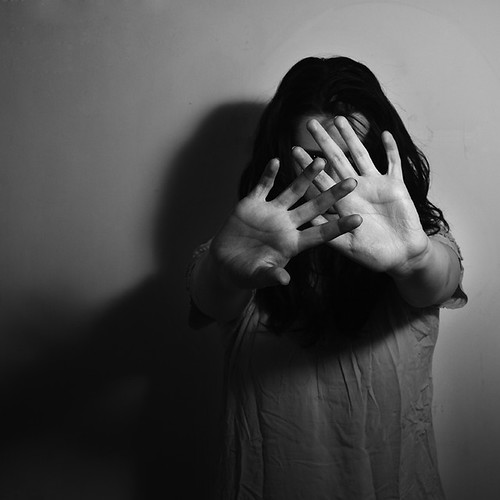
Black and white photo of a person with long dark hair holding their arms straight out towards the camera, with palms facing outward protectively.
Image © Gioia de Antoniis  | Flickr / Creative Commons
[image: Black and white photo of a person with long dark hair holding their arms
straight out towards the camera, with palms facing outward protectively.]


Mel Baggs
withasmoothroundstone.tumblr.com

Too often people define self-advocacy in narrow terms. They define it in terms of formal groups like People First or Autism Network International. They define it in terms of the ability to use standard language in a specific set of ways. They define it in terms of a specific method of going through the legal system, or other usual channels, to get specific kinds of things done. These are all valid kinds of self-advocacy, but they set people up to believe that only certain kinds of people could ever become self-advocates.

When one inmate in an institution fights back against the staff in defense of another inmate who is being brutalized, this is self-advocacy. I have only seen this happen once. She was brave and heroic in the genuine senses of the words, and she paid the price for trying to protect me.

When an autistic teen without a standard means of expressive communication suddenly sits down and refuses to do something he's done day after day, this is self-advocacy. When his initial peaceful methods are ignored in favor of restraining him and violently shoving him into a car so that staff can meet their schedules rather than listen to him, his decision to bite the driver is self-advocacy. I was there in the car with him.

When an autistic person who has been told both overtly and otherwise that she has no future and no personhood reacts by attempting in any way possible to attack the place in which she's been imprisoned and the people who keep her there, this is self-advocacy. That was me and too many others I knew.

When inmates of institutions (both traditional and those that masquerade as community), including those who are said to have no communication, devise covert means of maintaining communication and friendship in spite of staff's attempts to stamp it out, this is self-advocacy.

When people generally said to be incapable of communication find ways of making clear what they do and don't want through means other than words, this is self-advocacy.

When inmates and 'clients' devise both small and big ways of sabotaging staff's attempts to control our lives, this is self-advocacy.

In the book First Contact, Dave Hingsburger describes how people with significant developmental disabilities, normally believed to be incapable of self-advocacy, can and do engage in it:
Helen is her own self-advocate in that her "self" "advocates" that we adapt the world for how she experiences it. This is self advocacy at the grandest level. Why? Because it is immediately apparent that if Helen's personhood can liberate her—our understanding of the personhood of people with disabilities should do the same. Her statement of joy, of self awareness, shows that people who think that she would be better off dead—are simply bigots who choose not to know her. Helen is a radical person. Her message is about radical acceptance. Her life is radically her own. For those labeled "profoundly retarded," emphasize the word "profound."1
Then there's the question of things that get called self-advocacy, but aren't.

When a non-disabled person gets full of ideas about what disabled people should be saying and thinking about our lives, and holds us lockstep in his control while pretending to teach us all these revolutionary ideas, that is not self-advocacy. Nor is it self-advocacy when someone is constantly telling us that our existing methods of advocating for ourselves are wrong, that we need to ask permission to have a voice, and that self-advocacy can only be accomplished once we learn to behave and go through "appropriate" channels. Or when an institution sets up a "self-advocacy group" that it keeps busy doing meaningless work to siphon off the frustrations of inmates and prove to others that they're really about "empowerment." These things often get passed off as self-advocacy, though. Real self-advocacy involves respect and listening to us.

When a disabled person decides to disenfranchise entire categories of disabled people on the basis that they're not as worthy or capable of self-advocacy as her kind of disabled people, that is not self-advocacy. When people run around saying "I can make decisions of my own, but 'retarded' people shouldn't," "People with developmental disabilities shouldn't live in institutions, but can you please tell me how to lock up my crazy brother?" or even "It's perfectly natural for people like me to hate ourselves, that's just how we are..." that's more like oppression than self-advocacy.

There's also a common practice of getting a bunch of disabled people together for a recreation program and calling it a self-advocacy activity. Real self-advocacy involves getting the tools for real power—not bite-sized pieces of power, but the real thing—in the hands of disabled people. Too often people in these 'programs' are punished as showing inappropriate behavior if we engage in real self-advocacy.

Self-advocacy doesn't always look good on paper. It doesn't always stay within the sensibilities of people who want everything neat, orderly, pretty, and civil. People who declare a certain category of person to be uniformly incapable of self-advocacy are usually the same people who view that category of people as people who must be controlled rather than listened to. Self-advocacy doesn't mean staff get to pat us on the head, use the right buzzwords, tell us what wonderful little self-advocates we are, and then chastise us or put us on a behavior program when we get angry at them about their controlling behavior.

Self-advocacy is fundamentally about true equality, respect, and power, and about recognizing and changing the current imbalances in all of those things. Whether it is going through the legal system to close an institution, fighting back physically against intolerable surroundings, talking back to staff, sabotaging the power of staff over the lives of disabled people, being listened to when we communicate in non-standard ways, learning that it's okay to have a voice and make decisions, or passively resisting the dominance of others over our lives, real self-advocacy will always upset the status quo in some way.

No matter how legal and proper it is, self-advocacy won't be comfortable and cushioned. It will not give the people who are used to having power over us a warm fuzzy feeling of helping us, nor will their viewpoints on what we should be doing be able to dominate us and speak through us. They will not be able to pretend away the power inequalities between us and live in fairyland where everyone's the same and that's what counts. It will frighten them and force them to examine themselves. This will be true not only for non-disabled people, but to disabled people who are used to feeling superior to other kinds of disabled people.

I was once told by a surprisingly renowned "parent-advocate" that I only have a voice because Gunnar Dybwad gave me one, and that I should sit back and let parents and professionals do all the work towards closing institutions in my state. I beg to differ. Self-advocacy was not born with Gunnar Dybwad, no matter how much of an ally he was. It was born the first time a suspected changeling tried to run away before anyone could kill him. And the first time an inmate of an institution resisted staff power. The first time someone without a standard system of communication devised one of her own and tried to communicate basic things to other people.

Self-advocacy has been and is still often labeled intransigence, non-compliance, treatment resistance, lack of motivation, behavior issues, violence, manipulation, game-playing, attention-seeking, bad attitude, bad influence, babbling nonsense, self-injurious behavior, inappropriate behavior, disrespect, disruption of the milieu, catatonic behavior, social withdrawal, delusions, septal rage syndrome, and even seizures or reflex activity. Self-advocates have been tortured, intimidated, locked up, separated from our friends and lovers, and killed for our actions since before any organized movements existed. To say that the parent-advocacy movement or any other group of people created our voices is arrogant and shows real disrespect for the price many of us have paid for using our voices. We have always had these voices, in many forms. It is others who have shut us out, shut us up, and refused to listen.

1First Contact, Charting Inner Space: Thoughts about establishing contact with people who have significant developmental disabilities, by Dave Hingsburger. This book is available from Diverse City Press. It talks extensively about how to get to know and listen to people without controlling and projecting your values all over them, and about the roles all people can play in the self-advocacy movement.

----

Originally published at Autistics.org
Share:

CinemAbility: A Review

CinemAbility poster via Amazon.com
[image: Movie poster featuring a shadowy
photo of a person in a wheelchair, seen from
behind. Headshot of the actors Jane Seymour,
Ben Affleck, Jamie Foxx, Marlee Matlin,
William H. Macy, and Geena Davis are
arranged in a diagonal over the wheelchair
user, above large white text reading
"CinemAbility The Art of Inclusion."]
Maxfield Sparrow
unstrangemind.com

CinemAbility: The Art of Inclusion (2018)
Directed by Jenni Gold, Leomark Studios
Closed Captions

I recently and eagerly watched the new documentary CinemAbility: The Art of Inclusion via an Amazon rental. Although I have a couple of complaints, I don’t want to lead with them because the documentary overall was amazing and has been sorely needed. For those who only read articles' opening paragraphs: you must see this film! You will not regret it.

The documentary was filled with interview clips—actors, directors, casting directors, academics. I apologize in advance because I won’t have the names of some people. While the documentary had closed captioning and Marlee Matlin had an interpreter, one accommodation typically missing from documentaries was also lacking in this one: identifying the speakers every time they come onscreen. I have prosopagnosia (face blindness), so in a film with scores of different speakers I really need their identity to be included every time they appear or I will be lost as far as who is speaking at least half the time, if not more.

The opening clips centered around an academic, Martin F. Norden, a communications professor who teaches film and media studies at the University of Massachusetts, Amherst. Norden’s 1994 book, The Cinema of Isolation: A History of Physical Disability in the Movies, appears to have strongly informed the entire documentary in form and content. Theories from his book were used to lay the groundwork, demonstrating the pre-existing stereotypes that cinema needs to work past if films and television are going to depict disability in an honest and realistic way that does not harm or diminish disabled people in the name of entertainment.

The documentary also goes through a chronological history of disability, interwoven with interviews, facts, and opinions, and that chronology began at the same time as Norden discussed the three biggest tropes or storyline stereotypes about disabled people: the Saintly Sage, the Sweet Innocent, and the Obsessive Avenger.

The Saintly Sage is usually elderly. A classic example is the old, blind hermit in Bride of Frankenstein (a character who was also spoofed in Mel Brook’s comic satire, Young Frankenstein -- not mentioned in the documentary, but I couldn’t help thinking of it, especially as I’ve never seen the original Bride of Frankenstein film). The old man can’t see that Frankenstein is a monster and treats him like a human being until the hunters come looking for him and tell the hermit that he’s been sharing dinner with a monster.

The Saintly Sage is not a compliment—it is using a disabled character as a plot device to illustrate a point or advance the script. Saintly Sage is the disability version of another trope often called the “Magical Negro.” Someone the audience views as “exotic” comes into the story solely to assist the hero with life wisdom inaccessible to “normals.” Another similar trope is the “Manic Pixie Dream Girl” who is not a fully-formed character and only exists to help the male protagonist find meaning and purpose in his own life.

The film digresses a moment to show some clips of a homeless, disabled street beggar being used to comic effect while the narrator (Jane Seymour) tells us that this clip filmed by Thomas Edison may be the first depiction of disability ever in film. The image is iconic after all these years of being repeated again and again in much the same tone Edison originally depicted.

The Sweet Innocent is usually a beautiful young woman or a child. This is the prototype for the “good disabled person” that so many of us feel near-continual pressure to be. The Sweet Innocent is kind and good, usually to the level of being completely one-dimensional. They are sexless and childlike and too good to be real. At the end of the movie the Sweet Innocent is usually rewarded for being a good disabled person by receiving a miracle cure.

Several examples of the Sweet Innocent were depicted but the one that most caught my attention was from the movie Heidi where the Sweet Innocent in the wheelchair is taught to walk by Shirley Temple’s Heidi, another character too sweet and good to be true. This is one of my earliest memories of a wheelchair user being depicted in a movie I watched as a child. That illustrates how damaging these stereotypes and tropes can be. Movies are many people’s first education about what disability is, what it means, how we should respond to disability, and so on.

The Obsessive Avenger is the flip side of the Sweet Innocent—the “bad disabled person” who gets punished instead of cured. Some examples include the Phantom of the Opera, The Wax Museum, and Speed. Although not depicted in the documentary, I realized that many of the villains in Batman are also Obsessive Avengers. The Obsessive Avenger becomes disabled and is so infuriated by it that they devote their life to seeking revenge for the wrong done to them and typically die by the end of the movie.

The bad disabled person off-screen is the one who is not always cheerful and smiling and sometimes is angry. I think a lot of Autistic activists get socially punished (or much worse!) because we are viewed as “bad disabled people” for feeling angry about some things, for speaking up for our rights instead of being grateful and happy all the time. Sometimes it feels like all a person has to do to be the “bad disabled person” is mention one thing that needs to be changed.

I really do feel like these movie tropes have trickled through our society, shaping ideas like inspiration porn and so-called mercy killings that affect Autistics and all disabled people. CinemAbility is an important film for Autistic people even though the word “autism” is never spoken in the documentary and there are only a few clips, one to two seconds long each, from movies and TV about or including Autistic people. The ones I noticed were: Rain Man (which went by so fast I didn’t even catch it until I saw it listed in the end credits!), Temple Grandin (which somehow got listed twice in the end credits), and a quick image of Max, from Parenthood. If you add in other developmental disabilities, there was Charly, I Am Sam, What’s Eating Gilbert Grape, Life Goes On, and Forrest Gump.

That’s my biggest complaint—how under-represented developmental disabilities were in the documentary. I did some thinking about why that might be and I have a few thoughts on that:

First, I think we had to be “patched in” to be there at all because, as I mentioned, the documentary seemed to have heavily relied on Martin F. Norden’s work and his book was strictly about physical disabilities. The only developmentally disabled character who got any real air time at all was Corky, played by Chris Burke, from Life Goes On, an ABC television show that aired from 1989 to 1993. I watched it when it aired and enjoyed it. Chris Burke, who is also a Down syndrome activist and singer, is a solid actor and Corky was a great character. I didn’t realize until I watched the documentary that the show was made for Chris Burke.

Burke had written to ABC, saying that he was an actor with Down syndrome and wanted a chance to be in a show. Executives and casting staff were charmed by Burke’s friendly and direct request and built Life Goes On just for him. It was ground-breaking television as far as depicting someone with a developmental disability living a happy and fulfilled life.

The documentary shows a clip of a mother of someone with Down syndrome (as I asked my screen why they were talking to a parent and not a person with Down syndrome), Gail Williamson, who said, “The more images we put in TV and film, the more opportunities there are for people to see what Down syndrome is and have a better understanding of it.” She went on to mention that the Down syndrome community had a definite before Corky / after Corky effect: doctors started telling mothers that their baby has Down syndrome but they shouldn’t despair because their child might turn out to be like Corky.

That’s where representation gets sticky, of course. The film didn’t talk about the “super crip” phenomenon at all (although it did, very briefly, mention inspiration porn.) I can’t help wondering how many people felt oppressed by the pressure to be “another Corky” just as so many of us Autistics feel pressure to be “another Temple.” Telling mothers that their child could be another Corky might make the mothers feel better, but at what cost for their children?

There was a short segment about Lauren Potter, an actor from Glee with Down syndrome, and how she grew stronger as an actor because they trusted her to be competent. There was also a short segment about RJ Mitte, who has another developmental disability: cerebral palsy. He was hired to play Walter, Jr. on Breaking Bad because the show wanted to represent reality rather than having an abled actor portray cerebral palsy.

The movie Forrest Gump had a fairly long segment in the documentary, but I noticed it barely grazed upon Forrest’s disability and spent nearly all the airtime focused on Lieutenant Dan’s story arc of becoming disabled, being angry, coming to terms with disability, and going on to have a vibrant, thriving life. It was a great analysis of Lieutenant Dan’s character, but I wanted that spotlight turned on Forrest, too. As I say, what content there was about autism and other developmental disabilities was pretty thin on the ground and added in, since the book that set the framework and tone for the documentary was only about physical disabilities.

Another reason for the low representation of people like me in the documentary is general societal attitudes and assumptions found in the larger disability community. Many times I have been spending time in communities of cross-disability activists and felt alienated as people unthinkingly (at least I’m really hoping they didn’t realize an Autistic was listening to them) talked about how worthy they are because “our minds are fine.” Sometimes the talk even goes so far as, “if there were something wrong with my mind I’d kill myself.” The larger disability community can be unfriendly to Autistics or simply doesn’t think about us enough to remember that we are part of the movement, too.

And part of that is our own fault for isolating ourselves in Autistic or Neurodiversity or Asperger’s spaces and ignoring the larger disability community. We really need to make the effort to reach out past our own issues because we risk being left out of disability representation that way. We also miss the opportunity to learn from a long-standing and results-achieving community when we isolate. We could get our own game so much more on point than it already is by spending more time actively studying what activists and advocates with other disabilities are doing. Finally, we’re cutting ourselves off from potential friendships with people of other neurotypes who care about accommodations and acceptance.

Along the lines of feeling excluded in subtle ways, Marlee Matlin (who I love so much) said, “Don’t look at us as different. We have the same brains. We have the same hearts. We all live and breathe the same air. At the end of the day, just be more open-minded and have passion, not sympathy.” This is such a beautiful message and I laud it—but it’s not entirely true. I don’t have the same brain as non-Autistic people.

That’s just it: I’m neurodivergent. I have a beautiful Autistic brain and it’s both my super power and my downfall. As I saw Neurobeautiful say in the Facebook forum for the Autistic Women and Nonbinary Network recently: “most superpowers turn into disabilities in an environment not built to accommodate them.” You may call it a minor thing that Marlee Matlin said we all have the same brains, but it did break my heart a little bit.

That said, I do think we have more in common with other disabled people than we do with neurotypical people who are not disabled. Danny Woodburn, an actor who is a Little Person, (side note: when Googling to see if I should capitalize Little Person, the first site I found was, coincidentally, a conversation between the actor Danny Woodburn and Roger Ebert) said something in CinemAbility that any of us could, sadly, easily imagine being said to the mother of an Autistic child: “Even when I was a baby in the late 60s, early 70s, people would approach my mom and think that she did something horrible in the face of God to deserve a child like me.”

Here’s to working together with our siblings in the larger disability community, to gaining more and better representation in the disability community and society at large, and to being part of the fight for a world where we are viewed as human beings—not plot devices, not inspiration, and not punishments and burdens.
Share:

Eliminating Restraints and Seclusion Improves Outcomes for Injuries/Trauma, Expenditures, and Student Goal Mastery

holding on
Photo: Nancy Marie Davis | Flickr / Creative Commons
[image: sepia-tone print of a clenched fist, with superimposed scratched lines.]

Maxfield Sparrow
unstrangemind.com

A little over two years ago, Crystal Garrett wrote an article for Thinking Person’s Guide to Autism about the long-term traumatic effects on her Autistic son of the restraints and seclusion used against him at school. Garrett chose to end her career as a journalist to stay at home and school Zachary herself. Garrett wrote,
“We know a restraint and seclusion free environment is realistic. Virginia-based Grafton Integrated Health Network, an organization that works with children and adults with autism and co-occurring psychiatric diagnoses, went restraint and seclusion free ten years ago. Since then, their client and staff injury rate has dramatically gone down, while employee satisfaction has increased. They are now teaching their system, Ukeru, to others across the country, in order to create a trauma-informed environment for addressing aggressive behavior.”
Garrett also wrote about the importance of more people learning about the Ukeru model:
“Perhaps if more educational bodies knew about this approach, my 60-pound six-year-old wouldn’t have ever been placed in the back of the patrol car that hot summer day. We also wouldn’t have to travel the 30-mile stretch of highway for trauma-based therapy each week.”
Over a Decade of Research into Alternatives to Restraint and Seclusion

I couldn’t help thinking about Crystal and Zachary Garrett today when I learned that an official study of Grafton’s Winchester, Virginia, Ukeru program was published in Advances in Neurodevelopmental Disorder in August of 2018.

The study’s authors are Jason H. Craig (a BCBA at Grafton School) and Kimberly L. Sanders, who has filled many roles at Grafton and is currently the Chief Outcomes Officer. In another article earlier this year, Sanders writes about the Ukeru vision as “comfort versus control,” and writes that it’s more than just how people are trained to approach alternatives to restraint and seclusion but a “core operating principle” informing the entire philosophy of the organization. She links to a capsule explanation of The Grafton Method, the seven-point framework for addressing issues of restraint and seclusion with the committed intention to minimize or eliminate restraint entirely:
  • Leadership. Decide the organization’s mission, envision a path between the present and the future, plan actions and keep everyone focused on the goals.
  • Communications. Communicate the vision to staff. Set up communication practices within the organization that will keep everyone informed and on point.
  • Training. Teach everyone the best practices to use instead of restraint and seclusion.
  • Measurement. Keep track of what’s working and what isn’t. Measuring and record-keeping are what keep education scientific rather than intuitive, and documentation is crucial for repeatable results.
  • Debriefing. When an unwanted outcome arises, it’s important to establish clear communication to discuss what happened and how to achieve more desirable results next time.
  • Alternative solutions. At Grafton, brainstorming about alternative solutions was how Ukeru was developed.
  • Therapeutic planning. Don’t leave a student/client’s progress to chance: 
    1. Assess a student’s strengths and weaknesses
    2. Develop strategies around a student’s strengths, encouraging academic growth in an environment of safety and security for the student
    3. Train staff in techniques and documentation methods
    4. Monitor progress
    5. Modify what’s happening, based on progress toward goals (as well as adjusting goals when they no longer suit a client’s preferences and needs).
The study Sanders and Craig published is important because it represents peer-reviewed scientific evidence that eliminating restraints and seclusion not only have the direct benefit of treating clients with dignity and respect, rather than traumatizing them, but the Ukeru program has documented evidence that eliminating restraint saves on workplace injuries caused by client responses—which also saves organizations millions of dollars.

A copy of the Grafton study needs to be in every parent’s toolkit when arguing for the well-being of their children in the education system. Sanders and Craig have produced reputable scientific evidence that serves as valuable munitions for every parent’s IEP battle against a school that uses restraints and seclusion.

In a recent Scientific American article, Alycia Halladay writes about hyped-up autism studies and how harmful they are to Autistic people, saying,
“The mainstream news media need to consider a more measured and responsible approach to covering autism research. This should include very careful vetting of which studies are reported. Not all scientific journals are equal in their scientific rigor or review policies, so just because a study is 'published' does not mean it necessarily has scientific significance.” 
Advances in Neurodevelopmental Disorders is a reputable journal, and the Grafton study is crucial to developing appropriate methods for schools to interact with Autistic students, but I haven’t seen much, if any, journalistic hype for this study. I guess there’s nothing sensationalistic and headline-grabbing about NOT harming students.

Why the Grafton Study is Useful and Important

The Grafton study provides clear data useful when debating against the many people who insist that there is no way to get around using restraint against “violent people” because there is no other way to control dangerous behavior. These people often add statements about such harsh treatment such as saying that it is done “for the client’s own good” adding that people will have better future outcomes if we control their behavior now, and shape them into something socially acceptable.

As an Autistic advocate/activist myself, I also get told that I can’t understand the needs and benefits for Autistic people who “aren’t like [me]” because I’m allegedly only “mildly affected” and can’t understand the needs of “serious autism.” And if you’ve ever read anything else I’ve written, I don’t need to tell you how frustrating and infuriating that kind of talk is to me.

Humor me while I unpack those representative statements a little: There aren’t Autistic people who “aren’t like me” in a real sense, because we’re all different (being, you know, human beings) and no one on this planet is actually “like me” but the Autistic people on this planet are a heck of a lot more like me than the non-autistic people. Yes, I’m even talking about “those people”—you can fill in that blank however you choose. I have more in common with any Autistic person, even those who can do things I can’t, even those who can’t do things I can.

“Mildly affected” and “serious autism” are just euphemisms for functioning labels, and we Autistic folks have written so much already against that misunderstanding of autism. Let me just skip past that this time to tell you that I have a personal history of being restrained, secluded, and institutionalized. I am not speaking from some philosophical stance or set of political beliefs when I say that treating Autistic people with restraint and seclusion make us worse, not better. I am speaking from personal experience. Now, thanks to the Grafton study, we can all speak from a scientific basis as well when we talk about the ways restraint and seclusion make things worse for everyone, not just for the Autistic people these methods are used on.

In the introduction/literature review section of  their paper, Craig and Sanders talk about the 2006 policy paper issued by the National Council for Behavioral Health that said restraint and seclusion should be methods of last resort, used only after all other options have been exhausted. They also cite a 2012 paper from the American Journal of Orthopsychiatry that found restraint and seclusion to be “traumatizing and dangerous to both the children and the staff involved in each incident.” Some agencies have been successful in reducing restraint and seclusion while others struggle with the mandate.

Next, Craig and Sanders talk about the Trauma-informed approach (TIA) model. Instead of focusing on controlling someone’s behavior, TIA focuses on establishing a relationship between the student/patient and a trusted adult caregiver. When the student feels emotionally and physically safe, they will be more invested in accepting help and considering new ideas about their lives. This safe space allows the student to shift from a position focused on bare survival into a position where growth and learning can take place. Grafton’s comfort vs. control perspective grew out of TIA practices. Comfort vs. control aims to change interactions between staff and student such that the risks of traumatizing or re-traumatizing the student are significantly minimized, using the following techniques/philosophies:
  1. Response blocking. The simplest example is putting a pillow between someone’s face and fist to stop them from hitting their face and instead hit the pillow. Response blocking is controversial among some people. Most parents support response blocking because it directly prevents a student from injuring themselves. Response blocking in an ABA context can be either a punishment or an extinction, depending on how the client responds to being blocked.
  2. An understanding of behavioral intent and client needs. In other words, not just deciding what a client should or should not be allowed to do, but rather working to understand why a client chooses a particular action, feedback, etc. What unmet needs are driving the client’s behavior? “Behavior” does not happen in a vacuum; behavior is communication and/or an attempt to meet unmet needs.
  3. Developing creative solutions as alternatives to restraint and seclusion. How can using comforting techniques help clients calm and self-regulate? How can staff take care to not use control tactics on behavior that is disruptive and appears “out of control”?
These three points created a mindset shift among staff, allowing workers to:
  • Reassure clients.
  • Ask questions of clients instead of jumping to inaccurate conclusions and assumptions.
  • Embrace flexibility
  • Do not strive to always keep the upper hand / hold an imbalance of power / maintain control over situations and people.
  • Treat others with kindness and respect.
Sanders and Craig write,
“The belief was that many situations in which a restraint or seclusion was used could be better resolved by a non-coercive, caring intervention from a person focused on peaceful conflict resolution who was willing and able to spend time with the upset or angry individual.” 
I feel like that sentence highlights the biggest reasons why we are still wrestling with the demon of restraint and seclusion, even 14 years after a strong governmental policy recommendation against it: “willing and able to spend time.” So many workers are under such constraints of time and money that TIA feels overwhelming. Staff need to be educated about the time, money, and (most importantly!) human safety and well-being that will be preserved through implementing a TIA approach instead of restraint and seclusion.

How the Grafton Experiment was Conducted

Sanders and Craig examined the entire Grafton system, including over 750 employees and 3244 clients, male and female, from age 6 to age 22, with intellectual and developmental disabilities presenting at a wide variety and levels of support needs. At the beginning of the study, when Grafton began making concerted efforts to reduce restraint and seclusion, any and all of these 3244 clients were potential candidates for restraint and/or seclusion, if they were deemed to be a risk to themselves or others. The restraint reduction program began in 2004 and the year before the program there were 6646 incidents of restraint or seclusion. In other words, a client would be restrained or secluded on average more than twice per year.

The study authors also laid groundwork statistics representing the pre-intervention levels of measurable outcomes, particularly:
  • Rate of incidents of restraint and seclusion.
  • Rate of restraint-induced staff injuries (Why they did not count rate of restraint-induced client injuries is beyond me.)
  • Client-induced staff injuries.
  • Lost time and modified duty for workplace injuries.
  • Lost money due to all of the above causes.
  • Client outcomes / goal mastery
The results of the study came from a combination of carefully conducted interviews, and the raw data related to the above focused outcomes.

Research Outcomes

The researchers found that the Grafton Method reduced instances of restraint by 99%.

They reduced instances of seclusion by 100%.

Restraint-induced injuries to staff were reduced in the same time period by 97%.

Client-induced injuries to staff were reduced by 64%.

(I should note that client-induced injuries is one of the biggest reasons I hear cited for the need for staff at facilities to be able to restrain clients: fear of injury to staff. This result shows that staff were actually being injured MORE by the clients when there was restraint and seclusion and far LESS after restraint and seclusion were removed.)

There was an 81% reduction in lost days and modified schedules after reducing restraint and seclusion.

Lost expenses decreased by 75% overall. Between money lost to sick/injured days, worker’s compensation, employee turnover, and training, in the 12 years covered by the study, Grafton saved approximately $16.4 million (an average savings of $1.37 million per year) by restricting/eliminating restraint and seclusion practices.

As for client goal mastery, when the study started in 2005 the client goal mastery rate was 34%. By 2008 the client goal mastery was 66%. By 2018, that rate was 80%. Overall, this represents a 133% increase in the ability of the students to learn, grow, and change in positive ways desired by both the students and the staff.

Conclusions

Who (except us Autistics and many of our parents!) expected so much positive gain from simply choosing to treat clients with respect and kindness? Craig and Sanders advise other organizations to look at these results and choose to eliminate restraints and seclusion as well. They wrote, “Organizations need to learn to be more responsible and accountable, especially when it comes to the treatment to vulnerable individuals.”

It is my fervent hope that this study from Craig and Sanders will be widely cited and shared in the research community as well as the community of parents of school-aged Autistic children. We all need to get the word out about these results and get other researchers and organizations on board with the TIA approach to helping students feel more comfortable and less manipulated, controlled, bullied, and traumatized.

Everything in this study seems obvious to us, of course. Whether you’re an Autistic person, the parent of an Autistic person, a compassionate teacher looking for better ways to mentor your students, an activist or policy maker—it should seem obvious that life is better for everyone when we aren’t tackling vulnerable people to the ground, punishing, and isolating them for the “crime” of being different and struggling with self-regulation, sensory onslaught, and the countless other daily battles Autistic people have with our environments.

But these things are not obvious to everyone. A study that demonstrates significant savings in money will sway some organizations. A study showing less injury to staff will sway others. This study demonstrates both and more. Add it to your collection and use it as evidence in your fight to make the world a better place for Autistic children, the Autistic adults they will grow into, and everyone whose life touches or is touched by the lives of our precious Autistic children who deserve so much better than our society has been giving them.
Share:

What Is Light Sensitivity Like for One Autistic?

10mm Lightning
Photo © Jasper Nance | Flickr / Creative Commons
[image: Photo of lightning exploding in a purple night sky above silhouetted conifer trees.]
M. Kelter
theinvisiblestrings.com

I've had a life-long aversion to lights. I wanted to share what this means in terms of the subjective experience, and how this sensitivity generally seems to operate. The concept of a sensory aversion is probably self-explanatory, but it can include more subtle effects that may not be as apparent. I've noticed two primary factors that can cause my eyes to feel pain (no surprises here): brightness levels, and sudden changes in lighting.

What are the types of "pain" involved, specifically? This can vary. Certainly an intensely bright light can cause a sharp pain, but that's probably true for many people. Let's define "intensely bright" as something akin to a camera flash. That can cause a sharp, stabbing pain, and that pain can persist for minutes or hours. It's worse in the moment of the flash, and slowly fades.

Sharp pain isn't the most common eye discomfort I experience, though. The kinds of lights that I come across most frequently—lighting in a room, for example, or overhead lights in public spaces like a grocery store—tend to create a dull, persistent ache. The pain is like a warm burn that hurts in a lasting, nagging way. The pain isn't as intense, but it is draining. That seems to be the biggest negative impact of my light sensitivity, even more than pain: the more my eyes experience a lasting ache, the more my energy level and mood plummets.

In settings where I'm unable to control the lighting, I'm basically on a timer. At some point, I'm no longer going to be able to think clearly, or have the energy left to complete tasks and function. Almost every action I might take in the course of a normal day involves mentally calculating what the lighting will be like, and how long I will be able to tolerate it. Trips to the store, social events, driving during the day and so on: any activity requires forethought regarding lights and the inevitable energy/mood crash. Again, the pain is uncomfortable, but it's the impact on my energy level that creates the biggest hurdle to daily functioning.

The other factor at play with this sensitivity is sudden changes in lighting. Even in locations where the lighting is not too bright, sudden changes in lighting will create pain and a few minutes of blurred vision. This can happen when lights are suddenly turned off, or on or when I'm walking between rooms that have different levels of brightness.

If one room has comfortable lighting and I walk into another room that also has comfortable, but different, lighting, the change alone is enough to trigger pain. It's more in the category of "dull ache," but it's an unwelcome pain and usually results in at least a few minutes of impaired vision. This also takes a chunk out of my already-in-short-supply energy level.

Also, the visual disorientation can often lead to physical mishaps. It basically looks like clumsiness, but it's more specifically about the change in brightness level and blurred vision. Tripping over unseen objects, knocking over lamps, stumbling into walls—I have a long standing habit of exiting a dark theater into the brighter lobby and plowing directly into a crowd of people: this is all a reliably embarrassing byproduct of the issue with abrupt lighting changes. (For better or worse, I've learned to pretend-laugh and feign nonchalance when these things happen, since people rarely understand what's really happening and think it's funny.)

At any given time, I have to pause and give serious consideration as to whether or not turning a light on or off, or walking to a different room, will be worth the discomfort. I think for most people, this can seem like a minor thing, but in the course of a day, even minimal differences with lights can add up to a substantial impact.

One side note: in addition to pain, lighting discomfort is usually accompanied by a visual effect, a imprint of the light that can hover in my vision for several minutes, sometimes hours. Visible bulbs for example, or rays of light from windows or other sources, can imprint a visual "memory" of that light in my vision, and it can take some time for that imprint to fade. I'm sure there is a more scientific way to describe this, but subjectively, it's like a bright little ghost that stings my eyes for as long as the impression lasts. It's not uncommon to go to bed each night, close my eyes, and spend 20 to 30 minutes waiting for the day's accumulation of light imprints to fade. Lights can both make me tired, and make it hard to sleep.

What helps manage sensory pain like this? Honestly, not a lot, but there are some measures that provide a degree of comfort. Pretty much all of them are what you would expect.

Wearing sun glasses doesn't eliminate the pain, but it does function as a kind of dimmer. It turns the discomfort down a notch or two, which can make a meaningful difference when it comes to energy levels and mood. I wear prescription transition lenses that darken in response to sun light. That helps. A little. (I wish I had less obvious things to say here.)

This second strategy is not recommended, because it involves a major shift in life style—but I personally decided to work overnight jobs as much as possible. For the first 15 years of my adult life, I exclusively worked graveyard shifts that allowed me to sleep during the day and be more active during darker, more comfortable hours. Again, this is not recommended and is not always an option, but I just decided that it was necessary in my case. The change was beneficial in terms of light issues, but it didn't do great things for my social life. There were other downsides; sensory aversions involve a lot of lifestyle choices and cost/benefit analyses.

There are more shades of discomfort and pain-triggers than I can go into here, as this is just a brief overview of light sensitivity, from a subjective angle. It goes without saying: other people with this issue may very well experience it in a different way. I can only speak for myself and hope that sharing this information is in some way useful to those wanting to know more about the day-to-day impact of sensory issues.
Share:

Hoshi and the Red City Circuit: An Excellent Debut by a Neurodivergent Author About Neurodivergent Protagonists

[image: Illustrated cover of the book Hoshi and the
Red City Circuit, by Dora M Raymaker,
featuring a person in silhouette sitting
on the ground fending off rays of power from
a pitchfork-wielding person silhouetted in red.]
Kelly Israel


Introduction


Hoshi and the Red City Circuit, the debut work by Dora Raymaker, is first and foremost an excellent page-turning detective story about private investigator Hoshi Archer’s race to discover who murdered three Operators. Operators are a caste of people with disabilities. They are also the only people who have the ability to run the multi-layered, complex technology of the future. It is next a story about Hoshi herself and the many friends, allies, acquaintances, enemies, and lovers she has known and cared for on her way to becoming the person that she is.

Hoshi is also a story that grapples with the intellectual and developmental disability (I/DD) community’s ghosts and collective past. It attempts through showing—rather than telling—to explain how it is that an individual person with I/DD can live in a world that alternatively hates and pities them, loves and loathes them, supports and exploits them.

This is important because we are a community with a painful history. Many autistic people and others with I/DD have experienced terrible ableism as well as both emotional and physical abuse, often at the hands of the very people who were supposed to help us. Hoshi echoes this sordid history in many of its plot threads, and thereby explains it via fiction to those who do not have it burned into their flesh and bone. Above all else, it is a complex and interesting read.

The Positives


One of the primary characters of the book besides Hoshi (both literally and metaphorically!) is the place where Hoshi lives—The Red City. (I won’t spoil for you how the Red City becomes a literal main character.) The Red City exists in a human civilization of the extremely distant future, on a non-Earth planet with its own intricate politics, social constructs, crime syndicates, and religions.

Dora Raymaker made me love the Red City. It is to the author's credit that The Red City has a clear and unrelenting sense of place. I never once was given the impression that it was an artificial or simplified construct. The history of Red City began long before the reader got there, and it will continue long after the reader has left. It has its own slang, look, and feel to its culture. The people of the Red City are take-no-shit-from-anyone hardworking police officers, exhausted dock workers trying to make a living, arrogant no-nothing jerks, criminals and crime lords, and esoteric mystics who commune with very real aliens that live on a different plane of existence from us. Hoshi Archer’s own description of how Red City looks from her window describes it best:
"Outside my cathedral window, the jagged skyline of Red City reached for crimson clouds. I traced the graceful spiral of the Arts and Culture Building, the triple towers of the 100 Worlds Trade Union joined by their series of sky-bridges, the prickly quills of the Red City Reporter, the dip of Lan Qui Park all the way down to Landing and Marcie Bay. I loved Red City. Loved every street corner and sky-lift, every tree in every park, every rumbling tube beneath her crust." -Hoshi and the Red City Circuit, Ch. 1
It’s worth pointing out that Hoshi repeats something similar to this description many times. She, at any and all opportunities, describes her read on the history of each quarter of the city that her investigation takes her to. Beholding her favorite buildings in the city is both satisfying, and likely a form of stimming. It’s fun and exciting to listen to her and find out what she knows. Raymaker could not have picked a better special interest for their protagonist.

Dr. Raymaker makes no attempt to hide that, although the Operators have a fictional developmental disability known as K-Syndrome, they are very much intended to be similar to autistic people and others with intellectual and developmental disabilities. Only a few years ago, all Operators were slaves forced to do nothing but program and operate the future-tech machines and linked Internet-like space called the Mem that keeps Red City running. They were feared for their fine-tuned control of this space, and yet were absolutely necessary for its functioning. Their connection to it was deliberately limited by oppressive rules and regulations that bear a probably intentional similarity to those that govern institutions in the United States. In the present, due to a law known as Integration Law, Operators like Hoshi can work non-Operator jobs. It is an uneasy compromise, with both Operators and non-Operators alike having a variety of different opinions on the rightness of the law and whether it achieves its goals.

Hoshi Archer is an attractive, interesting, lovable neurodivergent protagonist. She is a brilliant detective, able to piece together disparate pieces of information nearly faster than the reader can. She has a powerful coffee addiction that reminds me more than a little of myself. She is incredibly brave yet deeply afraid of becoming a slave again, to the point where her fear can cloud her understanding of who is her friend and who is her enemy. She can be rigid and obsessive in her pursuit of justice, and has difficulty comprehending the more obtuse social and metaphorical aspects of life and society, such as religion.

One of my favorite passages occurs just after the Red City police officer Hoshi works closely with, Sorreno, forces Hoshi to take a weapon even though Hoshi despises being armed. The passage conveys in a way that I cannot what it is like to be a person with I/DD traumatized by a past in which people have forced specific choices upon you:
"I sulked in front of my window, watching the tiny people on the streets twelve stories down, weaving through their hours. If I squinted, the colors of their clothing melted them into long rivers of pattern. 
"None of them were forced to carry a shocker. Or to report in to the IO. Or to be under constant threat of being displaced from everything they loved and thrown into a supervised livestock pen in a job they hate but will be imprisoned or even killed for not doing with no hope of anything better if—forbid!—they end up accidentally missing a meal two weeks in a row. 
"I hit my fist hard against the hard glass. 
"The pain giving me something namable, tangible, blamable to justify my anger. 
"The bitterness of my life up until two years ago broke over the surface of my consciousness and I scratched at the synthskin covering the unhealed scars." -Hoshi and the Red City Circuit, Ch. 12
That Operators themselves do not uniformly agree on Integration Law one way or the other is a testament to the sheer variety of neurodivergent people Raymaker describes. The hero, the hero’s extremely slimy sometimes-ally, sometimes-enemy drug lord acquaintance Luzzie Vai (who happens to be one of my favorite characters in the book), the hero’s anti-Integration yet emotionally beautiful murdered lover, the nearly incomprehensible and mysterious priest Gno, and the cowardly and irritating Martin Ho are all neurodivergent. Each of these characters is given three-dimensional characterization. The book’s characterization is one of the strongest elements of its writing. I wanted to spend as much time as possible with almost everyone in it.

Equal to the book’s characters is the book’s central unsolved murder. I won’t spoil a single thing about it, and that’s because it’s something the reader should enjoy for themselves! Hoshi must race against time to determine who killed the three Operators, how, and why before the serial killer claims their next victim. I found myself obsessively devouring chapters to try and follow Hoshi to the next clue, eager to learn more about how the book’s impossible crime was committed. Hoshi must travel all throughout Red City to solve the murder, from the centrally located Cleopatra Square to the Integration Office to the grim, vaguely brutalist Operator housing where her lover Claudia once lived. The mystery has the heft and complications of the best detective novels, and ultimately places the protagonist’s inner conflict at its center, as its beating heart.

The Negatives


While I did love the book, I do have a few sustained criticisms. The first is that the book is slow to explain itself. While a reader of fantasy or science fiction would be quite used to the full-immersion manner in which Raymaker introduces us to the slang and terminology of their world, a reader of detective novels may be quite confused for the first thirty or forty pages. The book can take longer than it should to make the meanings of these words clear to an uninitiated reader.

Additionally, the book can be a bit clumsy in its treatment of some issues. For instance, a real-world religion (or an interpretation of the form that religion would take in the future) plays a prominent role in the book. While I do not know enough myself to say whether Raymaker consulted spiritual leaders or adherents for the purposes of writing Hoshi (they do mention specific real world gods by name and the god’s known sphere), I feel the book could do more to make the depiction of the religion less vague and superficial.

Finally, I feel that the true main villain of the book, and the villain’s motivations, are too simple in comparison to the detailed and clear personalities of the other characters. Without giving too much away, real people similar to the villain are themselves extraordinarily complex in their desires and reasons for doing what they do. The oversimplification present in Hoshi’s depiction of one such person doesn’t quite serve the book’s story as well as it should. While there’s an argument to be made that dehumanizing the villain works well with the story’s themes, I feel that there is a difference between making someone irredeemable and making them two-dimensional. However, I recognize this is very much a your-mileage-may-vary issue.

Conclusion


Hoshi and the Red City Circuit is an excellent debut by a neurodivergent author about neurodivergent protagonists, set in an immediately engrossing future world. It has a lot to say about people, politics, and the complications of neurodiversity. It also acts as a great detective thriller that makes you want to keep reading. It has its problems and limitations, but the opinions of readers will vary. While the book very much has an autistic or I/DD audience in mind, I wholeheartedly recommend it to neurodivergent and neurotypical readers alike.
Share: