Showing posts with label intellectual disability. Show all posts

Dangerous Assumptions

proud parents
Photo © Lucy Downey | Flickr / Creative Commons
[image: Two Canada geese swimming with a fluffy baby gosling.]

Julia Bascom
juststimming.wordpress.com

There is this thing that happens sometimes.

Parent has an autistic child. Autistic child doesn’t speak, or their speech isn’t an accurate window into what they are thinking. Autistic child is presumed to be very significantly intellectually disabled.

Years later, a method of communication is found that works for the child, and it turns out that they are in fact very smart. Very smart! The parents are overjoyed. They begin talking about presuming competence, the least dangerous assumption, that not being able to speak is not the same as not having anything to say.

They are so, so excited.

And they start talking about all the incorrect assumptions they had. If we’d known, they say, we wouldn’t have done X. If we had known they could read, think, hear us.

And it’s a big problem, because the way they talk… they think the problem was that they treated their child like they were intellectually disabled, and they weren’t. But that’s not the problem. The problem is that they thought their child was intellectually disabled, and so they didn’t treat them like a person.

These revelations, about presuming competence, human dignity, and the least dangerous assumption—they don’t apply only to kids who are secret geniuses. They apply to everyone. They are the most important for the kids who really do have intellectual disabilities, who really can’t read or use full sentences and who really do need extensive support. The people who came up with these terms came up with them for a population where there is very little doubt that significant disability is a factor. These terms don’t mean assume they aren’t actually disabled. These terms mean assume they are a person, and remember what you don’t know.

When the neurodiversity movement first got its legs, oh so many years ago, we got a LOT of pushback from people who thought we were denying disability. And we had to be clear that we meant everyone. And I worry, more and more, that certain very academic circles have left that behind, in practice as much as in theory. It makes liars out of the rest of us, and it makes a lot of work very, very difficult.

If I told the parents in question that I am thinking about this, they wouldn’t understand. They’re not saying intellectual disability doesn’t exist, they would say. But the truth is, they’re either saying that, or they’re saying thank god, it wasn’t my kid.

And it’s a slap in the face, every time.

----

Originally published at juststimming.wordpress.com. Sincere thanks to Julia for allowing us to share it here.
Share:

INSAR 2019: Gender, Sexuality, and Romantic Relationships

Today's INSAR 2019 Special Interest Group (SIG) on Gender, Sexuality, and Romantic Relationships was led by Laura Graham Holmes and Jeroen Dewinter, and co-led by Anna van der Miesen. Essentially, relationships and sexuality are central to everyone's health and well-being. But there isn't enough useful research and materials available fo autistic people of all ages and abilities, their families, and healthcare professionals, and many have expressed the need for research and guidance. So that's what the SIG leaders and the participants in this well-attended session talked about. Any errors or omissions in the highlights below are on us.

SIG participants Sara L, Dori Z, Jac dH, and Christina N, in discussion
[image: Four people of varying gender identities and neurotypes,
talking at a conference table.]
Last year’s Gender, Sexuality, and Romantic Relationships INSAR SIG was about determining the most important issues for the autistic community, in terms of gender and sexuality and relationships. The ultimate goal for this SIG is to create a resource hub.

The SIG leaders started out with the World Health Organization (WHO) guidelines:
"Sexual health is a state of physical, mental and social well-being in relation to sexuality. It requires a positive and respectful approach to sexuality and sexual relationships, as well as the possibility of having pleasurable and safe sexual experiences, free of coercion, discrimination and violence."
Sexuality is a holistic concept. It’s not just about risk reduction. It’s also about living good lives.
Sexuality is for everyone, not just those who have relationships with partners.

Gender is separate from sexuality. A useful resource is The Gender Elephant, "an educational tool that can be used by anyone to help learn and teach the concepts of gender identity, gender expression, sex, physical attraction, and romantic attraction."

The Gender Elephant teaches gender and romantic concepts with simplified visuals
[image: Illustration of a pink elephant in a gray suit, next to a visual chart explaining gender
 identity, gender expression, sex assigned at birth, physical attraction, & emotional attraction.]
Most available research about autism and sex is about sexual behavior, knowledge, and attraction, and also identifying as LGBTQ+. Which is good, bt we want more research on matters that can contribute to autistic people’s quality of life.

We need to incorporate concepts like self-determination.

Previous autism & sexuality SIGs revealed three major areas of interest:

  1. Getting a better understanding of autism, sexuality, & relationships.
  2. Supporting sexual wellbeing and relationship satisfaction.
  3. Autistic perspectives in research, healthcare, and society.
We need to take this research on autistic sexuality realities, and bring it back to the community to help counter myths about autism and sexuality, and get people the resources that will actually improve their life quality.

Working closely with autistic people on autism and sexuality matters makes research better and leads to more useful supports.

Commentary: The best information about sexuality and autism is coming from the autistic and advocacy communities right now, not the research community. We need more practical and applied resources.

Seems like lots of people in the autism and sexuality SIG are looking for collaborators. Some folks are working on tools to help autistic young adults have open conversations about autism and sexuality and their personal experiences.

We need to help clinicians break down the uncomfortable conversations about autism and sexuality, especially since these topics should but rarely come up in autism evals like the ADOS. How do we get relevant gender and sexuality questions into autism studies other people are already doing?

We then moved to the discussion group on including and reaching non-speaking people and people with intellectual disabilities (ID).

Sara Luterman talked about the utter lack of sexual resources for people with ID resources, especially for LGBTQ+ needs. People with ID are complicated sexual being too, and autistic people are more likely to be LGBTQ+.

Carol Greenburg, who is both autistic and the parent of a partially-speaking autistic teen, mentioned Autistic people with ID need to learn about health boundaries: Pulling a girl’s ponytail because a kid is attracted to her is NOT OK, with kids w/ID or no.

Sara Luterman reminded group that teens look at pr0n! So how do we support that healthily?

Parent reports on sexuality are NOT going to be accurate. Again, this is true for autistic people w/ID and people with neither of those traits.

To teach sex ed properly, we have to talk the variety of ways in which people express their sexuality. Parents tend to be OK with it, sort of, until LGBTQ+ and tech (vibrators etc.) aspects arise. Then it's considered off-color.

What teaching health sexuality boundaries for people with ID can look like: IT’s OK to take pictures of your own bits, but it is NOT OK to send those pictures to other people without their consent.

What do visual supports for people with ID, in terms of sexuality materials, look like? Is there a SymbolStix symbol for a penis? And visual materials like po_rn are not realistic at all.

We also need good guides about things like masturbation, and consider that parents can introduce the materials, but then have the teens/clients watch the materials on their own. (We recommend Diverse City DVDS) A problem, though: many group homes are run by religious groups, and/or only have one computer in a public place. This means that not only do autistic people not have access to sexuality materials, but if they do, there’s no place to use them in private.

Another autism and sexuality complication for autistic people, from Sara Luterman: When you need more support, then functionally, you have less privacy.

Also: Even in mainstream sex ed, there’s a lot about how to say NO, and not a lot about how to say YES.

Sexuality is not unhealthy! So let’s talk about pleasure and well-being instead.

We also need more training materials about sexual identity matters, as those tend to be lacking in autism contexts.

John Elder Robison: Is the autism neurotype a key matching factor for successful relationships for #autistic people?
We need a self-advocacy curriculum for kids, because sometimes it’s not safe for adults to be involved, and kids need to know when and if to approach adults about sexual safety matters.
Kidpower California was suggested as a resource, but we have not verified it.

Share:

The Meaning of Self-Advocacy

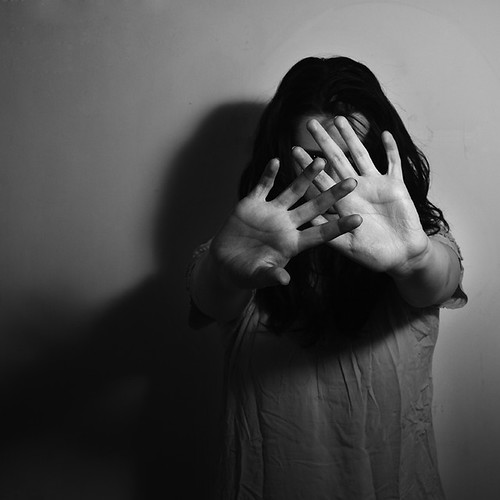
Black and white photo of a person with long dark hair holding their arms straight out towards the camera, with palms facing outward protectively.
Image © Gioia de Antoniis  | Flickr / Creative Commons
[image: Black and white photo of a person with long dark hair holding their arms
straight out towards the camera, with palms facing outward protectively.]


Mel Baggs
withasmoothroundstone.tumblr.com

Too often people define self-advocacy in narrow terms. They define it in terms of formal groups like People First or Autism Network International. They define it in terms of the ability to use standard language in a specific set of ways. They define it in terms of a specific method of going through the legal system, or other usual channels, to get specific kinds of things done. These are all valid kinds of self-advocacy, but they set people up to believe that only certain kinds of people could ever become self-advocates.

When one inmate in an institution fights back against the staff in defense of another inmate who is being brutalized, this is self-advocacy. I have only seen this happen once. She was brave and heroic in the genuine senses of the words, and she paid the price for trying to protect me.

When an autistic teen without a standard means of expressive communication suddenly sits down and refuses to do something he's done day after day, this is self-advocacy. When his initial peaceful methods are ignored in favor of restraining him and violently shoving him into a car so that staff can meet their schedules rather than listen to him, his decision to bite the driver is self-advocacy. I was there in the car with him.

When an autistic person who has been told both overtly and otherwise that she has no future and no personhood reacts by attempting in any way possible to attack the place in which she's been imprisoned and the people who keep her there, this is self-advocacy. That was me and too many others I knew.

When inmates of institutions (both traditional and those that masquerade as community), including those who are said to have no communication, devise covert means of maintaining communication and friendship in spite of staff's attempts to stamp it out, this is self-advocacy.

When people generally said to be incapable of communication find ways of making clear what they do and don't want through means other than words, this is self-advocacy.

When inmates and 'clients' devise both small and big ways of sabotaging staff's attempts to control our lives, this is self-advocacy.

In the book First Contact, Dave Hingsburger describes how people with significant developmental disabilities, normally believed to be incapable of self-advocacy, can and do engage in it:
Helen is her own self-advocate in that her "self" "advocates" that we adapt the world for how she experiences it. This is self advocacy at the grandest level. Why? Because it is immediately apparent that if Helen's personhood can liberate her—our understanding of the personhood of people with disabilities should do the same. Her statement of joy, of self awareness, shows that people who think that she would be better off dead—are simply bigots who choose not to know her. Helen is a radical person. Her message is about radical acceptance. Her life is radically her own. For those labeled "profoundly retarded," emphasize the word "profound."1
Then there's the question of things that get called self-advocacy, but aren't.

When a non-disabled person gets full of ideas about what disabled people should be saying and thinking about our lives, and holds us lockstep in his control while pretending to teach us all these revolutionary ideas, that is not self-advocacy. Nor is it self-advocacy when someone is constantly telling us that our existing methods of advocating for ourselves are wrong, that we need to ask permission to have a voice, and that self-advocacy can only be accomplished once we learn to behave and go through "appropriate" channels. Or when an institution sets up a "self-advocacy group" that it keeps busy doing meaningless work to siphon off the frustrations of inmates and prove to others that they're really about "empowerment." These things often get passed off as self-advocacy, though. Real self-advocacy involves respect and listening to us.

When a disabled person decides to disenfranchise entire categories of disabled people on the basis that they're not as worthy or capable of self-advocacy as her kind of disabled people, that is not self-advocacy. When people run around saying "I can make decisions of my own, but 'retarded' people shouldn't," "People with developmental disabilities shouldn't live in institutions, but can you please tell me how to lock up my crazy brother?" or even "It's perfectly natural for people like me to hate ourselves, that's just how we are..." that's more like oppression than self-advocacy.

There's also a common practice of getting a bunch of disabled people together for a recreation program and calling it a self-advocacy activity. Real self-advocacy involves getting the tools for real power—not bite-sized pieces of power, but the real thing—in the hands of disabled people. Too often people in these 'programs' are punished as showing inappropriate behavior if we engage in real self-advocacy.

Self-advocacy doesn't always look good on paper. It doesn't always stay within the sensibilities of people who want everything neat, orderly, pretty, and civil. People who declare a certain category of person to be uniformly incapable of self-advocacy are usually the same people who view that category of people as people who must be controlled rather than listened to. Self-advocacy doesn't mean staff get to pat us on the head, use the right buzzwords, tell us what wonderful little self-advocates we are, and then chastise us or put us on a behavior program when we get angry at them about their controlling behavior.

Self-advocacy is fundamentally about true equality, respect, and power, and about recognizing and changing the current imbalances in all of those things. Whether it is going through the legal system to close an institution, fighting back physically against intolerable surroundings, talking back to staff, sabotaging the power of staff over the lives of disabled people, being listened to when we communicate in non-standard ways, learning that it's okay to have a voice and make decisions, or passively resisting the dominance of others over our lives, real self-advocacy will always upset the status quo in some way.

No matter how legal and proper it is, self-advocacy won't be comfortable and cushioned. It will not give the people who are used to having power over us a warm fuzzy feeling of helping us, nor will their viewpoints on what we should be doing be able to dominate us and speak through us. They will not be able to pretend away the power inequalities between us and live in fairyland where everyone's the same and that's what counts. It will frighten them and force them to examine themselves. This will be true not only for non-disabled people, but to disabled people who are used to feeling superior to other kinds of disabled people.

I was once told by a surprisingly renowned "parent-advocate" that I only have a voice because Gunnar Dybwad gave me one, and that I should sit back and let parents and professionals do all the work towards closing institutions in my state. I beg to differ. Self-advocacy was not born with Gunnar Dybwad, no matter how much of an ally he was. It was born the first time a suspected changeling tried to run away before anyone could kill him. And the first time an inmate of an institution resisted staff power. The first time someone without a standard system of communication devised one of her own and tried to communicate basic things to other people.

Self-advocacy has been and is still often labeled intransigence, non-compliance, treatment resistance, lack of motivation, behavior issues, violence, manipulation, game-playing, attention-seeking, bad attitude, bad influence, babbling nonsense, self-injurious behavior, inappropriate behavior, disrespect, disruption of the milieu, catatonic behavior, social withdrawal, delusions, septal rage syndrome, and even seizures or reflex activity. Self-advocates have been tortured, intimidated, locked up, separated from our friends and lovers, and killed for our actions since before any organized movements existed. To say that the parent-advocacy movement or any other group of people created our voices is arrogant and shows real disrespect for the price many of us have paid for using our voices. We have always had these voices, in many forms. It is others who have shut us out, shut us up, and refused to listen.

1First Contact, Charting Inner Space: Thoughts about establishing contact with people who have significant developmental disabilities, by Dave Hingsburger. This book is available from Diverse City Press. It talks extensively about how to get to know and listen to people without controlling and projecting your values all over them, and about the roles all people can play in the self-advocacy movement.

----

Originally published at Autistics.org
Share:

What the Neurodiversity Movement Does—And Doesn't—Offer

Emily Paige Ballou 
chavisory.wordpress.com

Autistic folk of diverse abilities somehow enjoying each other's company
[image: Three white autistic people. Two adults: Sara Luterman and John Marble,
and one teen, Leo Rosa, hanging out in front of a Hayes Valley coffee shop.]
It has long been a commonplace accusation against the neurodiversity movement that those of us among the autistic community who are neurodiversity supporters comprise the “very high-functioning,” and that while it’s fine for us to say that what we really need is acceptance and accommodation—we simply don’t understand the challenges of the truly disabled.

This accusation is in stark contradiction to the fact that, from its inception, not only did the neurodiversity movement’s values include the most significantly disabled, but that those individuals themselves were among our earliest pioneers. And that going back even further, the self-advocacy movement didn’t originate with the autistic community at all, but rather largely was led by institutionalized people with intellectual and other developmental disabilities.
We’ve also been having this discussion about neurodiversity, along these same basic parameters, for a long time now—with both sides firing back many of the same basic points:
  • Neurodiversity denialists: Neurodiversity advocates are fundamentally different from, and cannot speak for, the "severely affected," e.g., our autistic children who can’t communicate, self-injure, are aggressive, have epilepsy, have GI troubles, etc.
  • Neurodiversity proponents: You cannot actually know the particulars of another person’s disability by how well they can communicate on the internet. Many of us actually experience the same challenges neurodiversity antagonists cite as only afflicting the "truly disabled." We’re not trying to speak for everybody, we’re standing up for everyone’s right to speak for themselves.
We’re going on circles, and recently, I think I might have gotten a clue as to why.

Lately, on Twitter and elsewhere, I’ve witnessed this basic argument take on a new phrasing:  That we have “nothing to offer” autistic people with more significant support needs.

I was confused at first, thinking of many of the initiatives and developments undertaken by members of the neurodiversity and broader disability rights movements which absolutely apply to all of us, from the successful fight for the $10.10 minimum wage on federal contracts to include those employing disabled people in sheltered workshops, to advances in recognition of the rights of all disabled people to live in our communities with support and not in institutions, increased recognition of the right of all disabled students to meaningful inclusion, literacy instruction, and access to AAC.

I also think about how the Autistic Self Advocacy Network (ASAN)—which is entirely staffed by autistic people—has released toolkits written in plain, accessible language on subjects like political participation, voting, advocacy, safety in the community, abuse, and self-advocacy in sexual and romantic relationships. Their work this past year has been instrumental to preserving the Affordable Care Act, and the provisions of Medicaid that allow many autistic and disabled people to receive services and live at home, rather than being forced into institutions, and also in the fight against discrimination in organ transplant decisions on the basis of disability.

I think about how, when parents and families persistently report that they need better respite services, one of the major aspects of the neurodiversity movement’s long-running protest of Autism Speaks is that for all the revenue it takes in from community-based fundraising, it returns extremely little in the form of tangible support to families and autistic people ourselves.

I think about how Neurodiversity advocates plead with autism researchers for more and better research into co-occurring conditions and assisted communication.

These are all issues that absolutely and intimately affect the lives of autistic people who are significantly disabled, as well as those who are multiply disabled. Presuming that neurodiversity critics aren’t simply ignorant of these efforts (though that’s certainly possible), why do so many remain insistent that neurodiversity doesn’t have anything to offer their disabled loved ones?

I do my level best not to make presumptions about other people’s beliefs or mental states, but as I try to unravel what could possibly be meant by this, what I am beginning to suspect people mean when they say that neurodiversity has nothing to offer the severely disabled, or people like their child, is that we cannot make their loved one non-disabled.

To a large extent, they’re right. We can’t do that.

Or, we certainly can’t do it alone. The social model of disability, basically, says that disabled people are disabled not by our physical or sensory impairments, but by the failure of society to accommodate people with those conditions in the same ways as it does people without them. When businesses don’t have ramps, wheelchair users are disabled by lack of accommodation and not just inevitably by their physical condition. It is a massively important concept that underlies a lot of the recognition of disabled people as equally deserving of public access as non-disabled people.

And to be honest, I’ve always found it a little bit incomplete and unsatisfying.

There are aspects of being autistic, for me, that I doubt it’s possible for society to accommodate perfectly. That, even if society did a substantially better job at accommodating autistic people, being autistic would still markedly affect how I live, and will always leave me expending more effort than the non-autistic people around me just to get by. These experiences aren’t superficial, and they are never going away.

I say this not to undermine the importance of the social model to the thinking of the disability rights movement, but to say that I think I understand at least some of what neurodiversity skeptics are trying to convey, when they counter that accommodation doesn’t just solve everything.

I will always be disabled. I don’t see that not being the case within my lifetime. There are, without a doubt, important roles for government, education, technology, and medicine to play in mitigating disability, but I will always be disabled in ways that even perfect acceptance and accommodation probably cannot erase.

So, neurodiversity critics need to understand that we who support neurodiversity aren’t confused about the fact of your child or loved one being really, truly disabled. We know there are non-speaking autistic people, epileptic autistic people, self-injuring autistic people. We know this because many of us are non-speaking, epileptic, and self-injuring autistic people.

Those of us who can communicate on the Internet believe that what we are saying about our own needs applies to the rights and needs of other disabled people, including the children and loved ones of neurodiversity detractors. So when we talk about the rights, acceptance, and accommodation that autistic people deserve, we are not the ones who think those things are only for people like us. 

Those of you who say that your children or siblings would never be able to advocate in certain ways: Maybe. But, thing is, we don’t believe that those ways are the only kinds of advocacy that matter or count.
“When an autistic teen without a standard means of expressive communication suddenly sits down and refuses to do something he’s done day after day, this is self-advocacy ... When an autistic person who has been told both overtly and otherwise that she has no future and no personhood reacts by attempting in any way possible to attack the place in which she’s been imprisoned and the people who keep her there, this is self-advocacy ... When people generally said to be incapable of communication find ways of making clear what they do and don’t want through means other than words, this is self-advocacy,” -Mel Baggs in “The Meaning of Self-Advocacy,” from the anthology Loud Hands:  Autistic People Speaking
When we say “Everyone can self-advocate,” we don’t mean “All of us can speak in conventional and highly formalized ways in settings that favor a very narrow construction of political advocacy” (although if those settings were more prepared to offer accommodation for significant communication differences, it would certainly help). And we don’t believe that conventional communication should be the prerequisite for your loved one having their communication honored.

Neurodiversity critics say, "our children will never write or speak like you 'high functioning' autistics do." Maybe not. But then again, at least one person who I actually know has, within the space of a few years, gone from being considered incapable of meaningful communication, to authoring her own blog and co-directing a documentary film, after she was provided with the resources necessary for her to do so. So we neurodiversity supporters are not the ones who believe that verbal eloquence is the only form of expression with meaning or value. Your child might never testify in front of Congress, but we aren’t the ones who believe that that makes the rest of their communication unimportant.

You say your children will never go to Harvard or William and Mary. Maybe not, but an elite private college education isn’t the only viable path to a rewarding life (and besides, the first ever non-speaking autistic student just graduated from Oberlin College).

We neurodiversity supporters believe that what someone can do matters. We believe that the way someone can communicate matters.

We also reject the equation that accepting autism and disability means giving up. Research consistently shows that autism acceptance leads to better mental health for parents as well as autistic people themselves. Evidence is mounting that acceptance and accommodation provide a more reliable path to increased capability and independence than fighting autism or disability does. Acceptance isn’t a cure, but it does facilitate recognition and support of abilities that often go unrecognized and under-valued. We are better off when not only our disabilities, but our real abilities, are recognized.

It follows that autism—yes, even involving a significant degree of disability—should not be a reason why we are kept from accessing communication, education, employment, competent medical care, the right to make our own decisions and live on our own terms, friendship, romantic relationships and sexuality, freedom from abuse, or the basic premise of our lives being acceptable.

There is already a history of people trying to eliminate neurodevelopmentally disabled people. It’s not a good history. We can’t make anyone non-disabled—that isn’t what neurodiversity adovcates are offering—but we also don’t believe that being non-disabled is the only right way to be a person.

If you are a neurodiversity skeptic, maybe it looks like, from your end, that we who champion neurodiversity have the luxury of declaring “We’re okay the way we are; we’re valuable to humanity and people like us should exist” to the extent that we don’t seem disabled in the same ways that your loved ones are disabled. Their disabilities are such that we can’t take them away, nor can we make them into people more like us, whatever you imagine our abilities to be.

If I’m even a little bit right, if you recognize yourself at all in this conjecture, then what I want to ask of you is this:

Try to separate autism, or disability, in your mind, from the sense of impossibility of having lives that are rich and complete. From assumptions that people disabled in certain ways only get to have a certain kind of life. Whatever autism looks like for the person you love, disrupt the logic that says that only if they were not disabled in those ways, could they have something of value to contribute, or be entitled to lives of autonomy and acceptance.

You are right; we cannot make your autistic loved one non-disabled. But we can help make a future that has room for people like your child in it, complete with the rights, the access, and the supports they need to live their fullest life. We think that that is doable. We think that that is right.

Yes, autistic lives are different. Yes, they are often hard. No, they will not look like the lives of non-disabled people.

We just don’t think that that makes disabled lives wrong.

Share:

How Does The HCBS Settings Rule Affect Housing and Day Program Rules and Rights?

The Mushroom Hut
Painting © Tracy Booth | Creative Commons/Flickr
[image: Painting of a tiny home with a red roof with
white spots, and a lantern, under a crescent moon]
Many of our U.S.-based community members, including parents and caregivers, want guidance and clarity about how the impending Home and Community Based Services (HCBS) Settings rule will affect both adult housing choices and adult day programs.

So, we spoke with policy expert Julia Bascom, Executive Director of the Autistic Self Advocacy Network, who explained in plain conversational language how exactly the new HCBS Settings rules will affect housing options, how some common misunderstandings about the rule happen, and why the rule is essentially about trying to ensure adults with disabilities have the same basic rights as non-disabled adults do.

Thinking Person's Guide to Autism: Why was the rule enacted in the first place?

Julia Bascom: The HCBS Settings Rule sets ground floor, baseline standards for what qualifies as home and community based services (HCBS). Unlike institutions, which have had basic rules to adhere to for decades, these standards have actually never existed in an enforceable way for HCBS. This has contributed to the problem we're all very familiar with, where "community services" like group homes or day programs can end up being mini-institutions. The settings rule is trying to fix that.

This is important, so I want to dwell on it for a minute. Right now, if someone is on Medicaid and has high enough support needs to qualify for services, they are entitled to receive those services in an institution. That entitlement means there isn't a waiting list—if you need services, you can get them right away, as long as you are willing to give up your freedom and your life in the broader community.

And that's an unacceptable trade-off to ask people to make. By their nature, institutions are extremely restrictive settings. People living in institutions don't get to make their own choices. They have to live by the rules, schedule, meal plan, and decisions made by the instruction. They are segregated and isolated, and that makes them less safe—institutions are hotbeds for abuse and neglect.

In contrast, decades of research shows that people with disabilities living in the community make more choices for ourselves, have a better quality of life, are safer and more included in our communities, live longer, and maintain and develop more skills—and this is true regardless of how disabled a person is or how intense our needs are. Community settings are vastly preferred by people with disabilities and our families, and over the last three decades, there's been a huge push to move people from institutions into the community.

But Medicaid rules haven't kept up with that progress. For example, even though there's no waiting list for a spot in an institution, states are allowed to have wait lists for HCBS. These wait lists can last years, or even decades in some states. So if someone chooses to receive HCBS, they have to waive their right to receive services in an institution (that's why these services are often called "waivers") and then spend years foregoing ANY services while they sit on a waitlist. And right now, over 600,000 people with disabilities and families have made that choices and are currently sitting on a waitlist, with no services, waiting for a spot to open up. That's how popular these services are. That's how badly people with disabilities, including people with the most significant disabilities and our families, want to live in the community.

But prior to the rule, something hideously unfair kept happening. A person with a disability would choose community instead of an institution, spend years on a waitlist without any services, finally get a waiver slot—and end up in a group home or a day program that was exactly like a miniature version of an institution. People theoretically living in the community nonetheless had no choice or control over their own life. They were still segregated and isolated from people without disabilities.

And that's where the HCBS Settings Rule comes in. The rule doesn't close any institutions. If someone wants to live in an institution, they still have that choice. What the rule DOES do is say that if a setting is getting paid to provide home and community based services, they need to actually provide home and community based services.

The new standards in the rule are wild [sarcasm] things like: you can't withhold food from people. The person with a disability gets to make our own schedule. We get a choice between living with other people with disabilities, or living in our own home—and if we chose a group setting, we get to chose our roommate, decorate our room, and lock our door. The rule says we have rights that non-disabled people get to take for granted. That's all. That's the whole thing.

It's also important to point out that it took years to make this rule. The federal government received thousands of comments from people using services, providers, and families, and they had to respond to each and every one. The final rule is a compromise. It sets minimum standards, and it doesn't go as far as self-advocates wanted. Having the right to lock your door or eat when you're hungry isn't radical stuff—it barely scratches the floor of what disabled people deserve. But because the process was so comprehensive, and because the rule does for the first time establish that people receiving HCBS have basic rights, it's supported by the vast majority of national organizations representing people with disabilities and our families, along with hundreds of community providers. It's just a start—but at least we're starting.

TPGA: How long do states and providers have to come into compliance with
the new rule?

Bascom: States and providers have until 2022 to come into compliance. Since the rule was released in 2014, that means they'll have had a total of eight years to get up to speed.

TPGA: Will all adult programs have to change?

Bascom: No. If a community service is good—if it respects people's rights, supports our inclusion in the community, and makes sure that people with disabilities are in charge of how we spend our day—it won't have a problem. If it's not good, but wants to be better, it won't have a problem. If a setting is really dedicated to keeping people with disabilities segregated and subordinate, then it will have to decide to either change, or to find another source of funding.

There's a very limited amount of funding for HCBS services. That's why we have waiting lists. The point of the settings rule is to make sure that those limited dollars are being spent on services that really are home and community based, not services that are just institutions with a new coat of paint. If a setting doesn't meet criteria for HCBS, it can look for institutional funding, or it can switch to private pay. Or it can treat the people it purports to serve fairly. It's up to them.

TPGA: How does this affect adult programs that appear institutional in nature?

Bascom: One of the things that we really like about the rule is that the rule is based on the experiences of people with disabilities living or spending their days in a given setting. So it doesn't do things like set limits on the size of a setting by itself. At the same time,  the rule recognizes the decades of research and lived experience which show that certain types of settings—large congregate settings, or settings that clump a lot of disabled people together and provide a lot of services in one place—are more likely to function as an institution that not. The rule calls these settings "presumptively institutional" settings, or "settings that isolate."

But these settings still aren't banned by the rule! States have a choice. A state can decide to look at settings which, on their face, seem institutional, and give them a chance to prove that they are in fact HCBS. They have to use a process called heightened scrutiny, in which the setting demonstrates that it meets all the criteria. If a setting can prove that the people living there really do keep all their rights, and really are integrated into the broader community, it can keep its HCBS funding. Since the standards are so basic—again, can I eat when I'm hungry, can I lock my door, can I spend my time how I want—this should be pretty easy to prove. If a setting can't meet that baseline, it has no business calling itself HCBS.

TPGA: Does this mean that all clients of adult programs will have to adhere to the same rules without exceptions? What about individualized and competing access needs?

Bascom: Nope! If someone has a disability that means that a certain part of the rule won't work for them (e.g., unrestricted access to food for someone with Prader Willi,) the rule has an exception process that can be done as part of person-centered planning. The flip side, though, is that my exception can't impact someone else's services. If I need to eat on a specific schedule, for example, my provider is no longer allowed to make the whole group home follow that schedule. It's all about what I as an individual person need.

TPGA: How are HCBS rules affecting adult day programs different from those affecting residential programs?

Bascom: There's more clarity around residential services than day services right now. States have a huge amount of flexibility under the rule, so some day programs in progressive states are changing how they operate, to ensure that people set their own schedules and don't spend all day in a facility. By 2022, all adult day programs will have had eight years to figure out any changes. And again, good programs that work to integrate people into their communities and either find employment or do other things during the day that are meaningful to them, won't have to make any changes at all.

TPGA: So why do you think some people might be opposed to the HCBS rules for adult day programs?

Bascom: I think there are a few different reasons. A lot of people are just confused, because there's so much misinformation flying around about the rule. There are also people deliberately spreading this misinformation, and they tend to have a couple different reasons.

First, there are providers who have a vested financial interest in operating miniature institutions and calling it HCBS. There are actually a lot of rules about running formal institutions—there are basic standards you have to follow, licensing regulations, all of that kind of thing. But those rules haven't really existed before in that same way for HCBS. That means a lot of these providers have been able to run mini-institutions for decades with virtually zero regulation or oversight. They aren't wild about changing. This is, bluntly, too bad.

There are also a lot of wealthy families who want to build new institutions. They don't like to call them institutions—they call them farmsteads, or intentional communities, or campuses, or villages. But these are all literally what the first institutions looked like, and they are still large settings that lump a lot of disabled people together and segregate us from the broader community. It's a fresh coat of paint on a bad idea. But these families want to build them, and they've invested a lot of money in their construction, and now they're worried that Medicaid won't pay for services in these settings. So they oppose the rule.

There are also people who are worried that their family member can't live in the community. We know that community living is actually possible and beneficial for everyone, even for people with the most significant disabilities, but I think some families are afraid to take the plunge, especially if they haven't seen a lot of successful examples of people like their family member living good lives in the community. These families aren't helped by misinformation—they need concrete examples of how this works, like those in parent/professional Dr. Clarissa Kripke's article on successful community living for people with developmental disabilities.
Share:

Fast Learners Are Not Better Than Other People

Finn Gardiner
expectedly.org

(Content warning: ableist slurs.)

IMG81
Photo © U.S. Department of Education | Flickr/Creative Commons
[image: Three schoolchildren of different races,
sitting together in a classroom reading corner, reading books.]

It is not nice to say that fast learners are better than other people. That is because it is mean to people who learn more slowly. It is not bad to learn slowly. It is not bad to be a fast learner either. Everyone can learn something. We just need different ways to learn things. That is OK.

But some people treat fast learners like they are better than other people. That is not nice. I am a fast learner. I am not better than somebody who learns more slowly than I do. I just have different learning needs.

Some people call fast learners gifted. There are many problems with that. Gifted is not a good word. Calling fast learners gifted is not fair. That is because it feels like people who learn slowly are not as good. People also say fast learners are intelligent. Intelligent comes from a Latin word meaning "reading between." That means that we see patterns quickly. Other words people use for fast learners are smart, sharp, bright or clever. People think they are nice words. Sometimes they give a message that slower learners are not worth as much. Some people use these words to say it’s better to learn fast. This is unfair.

Some people learn more slowly than others. They can learn, but it takes more time for them to pick things up. That is OK. They are people and everyone is able to learn something. They just need more time. People say that slow learners have intellectual disabilities. This just means they take longer to learn. Sometimes people use mean words about slow learners. Some of these unkind words include retarded, idiot, stupid and dumb. We should not call slower learners these words. These words are hurtful.

I think everyone deserves to learn things in their own time. I think that people can be good or bad no matter how they learn. We are all people. We should not judge people by how fast they learn.

----

Republished with permission.
Share: