Showing posts with label sensory. Show all posts

Behaviour Analysis, The Autistic Way

Ann Memmott PGC
annsautism.blogspot.com

Autistic children endure a lot of ‘behaviour analysis,’ usually done by non-autistic people who are not trained to interpret autistic behaviour and motivation. Often they are taught to assume that the motivation is the same as that of non-autistic children. Thus, if a child gets out of their seat, they are taught that perhaps they are avoiding working and need to be incentivised to sit down and concentrate. Or perhaps that they are attention-seeking and need to be ignored. There’s entire years of courses designed around such theories.

Autistic children aren’t the same as non-autistic children, though. Their reasons for behaving in a particular way are often different, because their brains are designed to work differently. I see too many books and training courses where teachers are told that autistic communication & social skills are faulty, that autistic children are usually to blame and need altering. New research shows clearly that this isn't so, as I talk about on my blog. Autistic people use a genuinely different way of socialising and collaborating, and can often communicate and collaborate well together. But, the difficulties arise when an autistic and a non-autistic person try to understand one another.

Let's say we have a five year old autistic girl, Sam. Sam is asked to sit still on the floor at school during 'circle time.' Sam does not sit still. Sam gets up and wanders round. What's potentially happening here?

Firstly, let's look at how the classroom may appear to Sam. Not all autistic children will see this exact effect, when in noisy, busy, fluorescent-lit spaces. Some do. In this, perhaps the teacher becomes invisible in the sensory chaos.

Photo courtesy Ann Memmott
[image: Overexposed photo of a busy, cluttered classroom.]
Secondly, Sam may be able to hear people talking across the entire school. Next door, moving in the hallways, chairs scraping, bells sounding, planes overhead, clocks ticking. It is a deafening, bewildering experience for those whose hearing is designed to detect oncoming danger, and so who listens to everything, everywhere, all the time. Often, the teacher becomes impossible to hear. That’s a reality of autistic hearing, for many.

Thirdly, Sam may find sitting on a hard floor intensely painful, and doing so becomes torture. Autistic sensory differences may mean things tolerable for others are beyond our ability to cope.

Fourthly, Sam may have Restless Leg Syndrome (“RLS”). Some autistic people do. Researchers suspect it is due to a chemical imbalance that causes intense feelings of rising uncomfortableness, often in the legs. Usually the only quick way to stop the torment of it is to move sometimes. Look it up.

Fifthly, Sam may have a form of Ehlers Danlos Syndrome (EDS). Some autistic people do. It can lead to joint problems, pain, exhaustion, and extreme difficulty sitting unsupported. None of that is deliberate avoidance or attention seeking. Nor is it slumping in a chair because of a poor attitude.

Sixthly, does Sam also have ADHD? There’s a big overlap between autism and ADHD, and sometimes the ADHD is missed. Sitting and concentrating for a long time can be almost impossible for some, therefore, and breaks desperately need to be taken.

Seventhly, Sam may encounter what some autistic people may experience when in sensory hellish places or during too much social interaction—unusual brain activity. Not a full epileptic seizure, but 'spikes' in electricity in the brain, which can lead to unusual responses for a while. Those are entirely out of the individual’s control. It may lead to them ‘shutting down’ or ‘melting down,’ the former being a switch-off response where they cannot communicate. The latter resembling a temper tantrum, but it is not. Neither response can be ‘behaviour-trained’ out of them, as it is not a chosen behaviour.

Possible Reason eight, Sam may find that being jostled leads to intense pain, for example in circle time if the children are very close. An unexpected jostling can feel like being electrocuted. Sam may wish desperately to put space between themselves and potential pain etc, and may need a much bigger personal space zone.

Some autistic children flap their arms or shake their fingers in front of their eyes, for example. Finding our bodies is really hard, because we don’t have a good bodymap in our brains, so this helps locate which bit of us is where. Or it may be a way to regulate what we’re doing and feeling. Or it may be a way to understand how far away we are from other things. Making it stop is somewhat like stopping a Deaf child using sign language, but worse. Yet, I see ‘extinguishing repetitive behaviour’ on so many behaviour plans for the children. Some repetitive movement may be around RLS and EDS also (see above).

There’s another reason why Sam may be patrolling the outskirts of the group. We’re generally better at detecting oncoming danger. In villages and tribes, autistic people would have the hearing range and eyesight-detail that might enable them to be the very first to hear an oncoming predator. The very first to smell approaching smoke. Being on the outskirts, watching, listening, is potentially how a lot of communities survived. A village would benefit from such a lookout person, not distracted by social chatting and looking at the eyes of other people. That patrolling behaviour could be a perfectly natural autistic instinct, therefore. In class, it’s a behaviour that may need clarification that they can relax, that all is OK, that they can return to their place because there are alarms, sensors, and staff already taking care of that detecting. Number of behaviour manuals I’ve ever read this in? None at all.

A further possible reason for behaviour is around trauma. Too many autistic children are victims of traumatic experiences at the hands of some others, and go on to show clear symptoms of PTSD. Escape responses or other trauma responses are not then ‘being naughty.’ They are from a place of terror. Behaviour plans take little or no notice of this possibility, in my experience.

All autistic behaviour has always been thought of as faulty, until recent research has helped us understand its wider purpose.

So, what can we do to potentially help Sam to hear, see, relax, and not be in pain? Let's think.

First, Sam’s medical team may wish to do some autism-friendlier testing for those medical possibilities of RLS, EDS or epileptiform ‘brain spiking.’ It may be worth someone doing an investigation for ADHD, too, and a general medical checkup for any other pain condition or illness. Many autistic children do not register pain and illness in the usual ways, and so may not be able to explain these. Mindful of our own son, who played sport with a broken foot for some weeks, not registering the pain he was in. Thus, medical teams thought it was just bruised.

Can Sam's class not have fluorescent lights or blinding spotlights? Can they be switched off if it’s bright enough outside? Can Sam have sunglasses perhaps, or a baseball cap to cut out glare? Can Sam trial noise cancelling headphones perhaps? Can Sam be allowed to sit on a comfy chair, to avoid collisions and to enable better support and less sensory pain? Can Sam have regular scheduled short breaks and a signalling system to say they need this? Can electrical equipment in the class (overhead projector, computers) be switched off to minimise noise? Can rooms be carpeted, if budget allows?

Can people please Ask Sam What Would Help. Capitalised, because strangely enough so many never think to do this. Whilst some autistic children do not use spoken language, all can communicate. Sometimes the behaviour is the communication. See below for involving autistic expertise in translating, if needs be.

Personally, I want to congratulate Sam for being in that class at all, and engaging in any way, given the obstacles. I start from thinking, "How fantastic to be in a class with Sam. This is my learning opportunity. What behaviour and attitudes of mine can I change?”

Certainly I'd want to bring in autistic specialists. That’s different from autism specialists. Autistic specialists are professionals who are autistic, and are able to interpret and decode autistic communication and behaviour. They can interpret autistic communication, and note any sensory difficulties that non-autistic brains may miss. Quite easy to find these days.

I'd want to affirm and support Sam, enabling them to be their best autistic selves.

Like any child, Sam may well try to get out of activities just because there's something more fun or less work. But that's not my 'go to' for autism. Generally autistic children want to learn and want to follow rules. If that has gone wrong, we need to think way beyond the toolkit for decoding non-autistic children, which is the one so often used.

Our autistic children are doing their best to survive in schools. We need to move beyond the old mantras and myths around reasons-for-behaviour, and into a present and future where we understand deeply and work collaboratively. Then, we have better experiences and outcomes for everyone.

Thank you for reading.
Share:

Autistic Children and Toilets: Misunderstanding the Difficulties

A disorientating digitally altered photo  looking down into an empty toilet cubicle
Photo © Ann Memmott
[image: A disorientating digitally altered photo 
looking down into an empty toilet cubicle.]

Ann Memmott

annsautism.blogspot.com

Many autistic children sense the world very differently from how many parents and teachers expect.

Above, an example of how an autistic child may see a room with a toilet and hand basin in it. A tiled wall, a patterned vinyl floor surface. Would you put your feet on that floor? Could you work out what it was? Could you even reliably find the toilet?

Now let's add in the 'smellscape.' Perhaps air fresheners. Toilet cleaners. Hand soaps. Wee. Poo.

Then, let's add in the soundscape. Noisy pipes. The jet-engine-like flush. The deafening smash of wee or poo hitting the water, and the terrifying prospect of freezing water splashing up.

Let's then add in the elements of freezing cold toilet seat, ice cold taps or boiling hot taps, the ice-cold metal of the toilet handle, the taps. The searing rough surface of the hand towel, or the further deafening roar of a hand drying unit perhaps. Then, of course, the pain of dragging clothing down in order to use the toilet.…coping with the complexities of the toilet paper and what to do with it, where to put it. Dragging clothing back up again, like someone using sandpaper against your skin.

Toileting can be the most terrifying experience imaginable for a child whose experience of the world is turned up to 'max.'

For others, each noise and smell, texture and feeling is a fascination and a puzzle which needs exploring, and they may seek out those experiences over and over, trying desperately to make sense of them.

Some may experience difficulties with balance and co-ordination, or with internal signaling to say they need a loo until it's too late. Or with the ability to point or signal that they want the loo.

To their credit, many autistic children endure all of this and actually do use the loo, politely, over and over again, and continue to do so for life. No-one questions whether it's hell, or whether we could design such spaces in ways less exhausting to use. So, let us bear in mind that most autistic children do manage to cope with this ridiculous scenario.

But how easy it is for some adults to misunderstand why an autistic child may avoid using a toilet.  Some children are so desperately afraid of these spaces that they will only wee or poo in a quiet, safe corner. Often on soft material that disguises the noise.

Yet some adults still say, "They're just animals—they just don't care—this is deliberate challenging behaviour—we must find ways to force them…" We even have playwrights writing a horrible play which portrays autistic children as animals, using this theme and dehumanising puppets.

Oh my. No.

Always, always presume competence. Presume that the child wants to learn. Always, always show respect and caring. Take good advice from autistic advisers and our allies, who are experienced and expert. Many are parents, many have vivid memories of their own of the challenges of such spaces.

If you are designing such a space, take good advice on that design. Think about minimising the pain and the disorientation.

Instead of assuming that, since it's OK for you, it must be OK for an autistic child…think differently. Because the solution isn't the child being forced into that hellish toileting space. Instead, we should be working with the child to find answers to each part of their toileting nightmare. Thinking about making the visual experience understandable. Minimising the smells. Minimising the noise. Using soft towels, soft paper. Using clothing that doesn't cause terrible pain when it is pulled up or down.

Work together. Learn from one another.

Thank you for listening.
Share:

Starting Points for Understanding Autism

Oolong
oolong.co.uk

Photo courtesy the author
[image: Photo (light-painting) by the author: a spectral outline
around a hand and arm, raised as if to flap.]
I believe that the best way to understand autistic minds is in terms of a thinking style which tends to concentrate resources in a few interests and concerns at any time, rather than distributing them widely. I wrote in some detail about how this explains the observed features of autism in Me and Monotropism: A Unified Theory of Autism. Here, I want to distill what this means for living and working with autistic people, expanding on the six starting points for understanding autism that I identified in ‘Theories and Practice in Autism.’

I’m writing in the first person here, as a late-identified autistic adult who has worked and talked with many other autistic people in various contexts over many years. I believe that everything I describe here is a common experience for most people on the spectrum, but not necessarily universal. Many will be shared to various degrees by some non-autistic people—there are very interesting questions about the extent that different thinking styles overlap; brains really are very diverse, and psychological classification is a messy business. References, reviews of research and further resources for each section appear at the end.

1. Coping with multiple channels is hard

This can be sensory channels or other information streams.


This shows up in many ways; some of the most obvious ones are social. If my attention is focused on something else, I may not be able to take in what you’re saying. If I’m focusing on what you’re saying, I may not be able to do anything else (or I may need to do something else to absorb excess attention).

Most people assume there are multiple channels of communication going on in any conversation: words, tone of voice, gesture and eye contact. They also assume an ability to hold various other things in mind while talking: social context, social rules, relevant background facts. This works most of the time, for most people, but causes endless confusion in conversations between autistic and non-autistic people. Be prepared for misunderstandings where someone missed out on one or more of the channels you thought were conveying information.

Be aware that autistic communication styles tends to be different, too, for much the same reason. We are expected to maintain multiple channels of communication in socially acceptable configurations at all times, despite missing a lot of non-verbal cues throughout our lives. It often takes conscious effort to emote ‘appropriately’, display expected body language and suppress urges to regulate ourselves with motions people might find weird… all while trying to make sure not to say anything daft. Learning to do all this can be a valuable social skill, but it takes a lot out of a person, and it just doesn’t always work. If you want someone to be able to relax, they need to be able to feel comfortable being themselves—even if that looks odd to you. Learn to read our body language as best you can, but be aware that most people often get it wrong.

2. Filtering is tricky and error-prone

Sometimes I can’t tune things out, other times I filter them out completely.


Filtering is an active process, and it becomes much less effective when our resources are consumed elsewhere. That means our filters tend to be at their wonkiest when we’re worn out or having to keep up appearances. Any work done filtering out unwanted stimuli leaves less energy over for anything else.

Being unable to filter can be intensely uncomfortable, especially if it’s keeping you from something you want to focus on. Please take care of the sensory environment: too much noise and clutter and stimulation can be exhausting, painful and impossible to work with. Sometimes it helps a huge amount to be able to spend some time in an environment where we can control our sensory input, and not have to filter anything for a while.

Some of the most satisfying, relaxing and productive times are when we can enter a flow state, our attention completely absorbed in an activity. At those times, we may filter out almost everything else. If we can’t get rid of enough distractions to begin with, it becomes impossible to enter that state.

3. Changing tracks is destabilising

Task-switching is hard, and new plans take work.


It takes time and effort to get going, to change direction, or to stop. In other words, autistic thought tends to have a lot of inertia: it resists a change in state.

This can be great for working through complex logical puzzles, learning large collections of facts or just getting intensely absorbed in anything, but it can be very inconvenient all the same. Pulling all our tendrils of thought out of one thing and directing them towards another takes much longer than it does for a lot of people, and sometimes it’s hard to make them go where we want them—let alone where other people want them. Give us warnings, give us time, let us recover.

Don’t expect an instant transition from one thing to another, especially if it’s unexpected. It’s hard enough changing tracks even when we know what’s coming. A sudden change of plans means we have to completely reset and work out how to deal with everything about the new circumstances.

4. I often experience things intensely

Usually things that relate to my concerns and interests.


When my attention is fully focused on something, my brain seems to throw everything it can get at that thing. I credit this with my senses often seeming to be more intense and detailed than most people’s. I seem to get more than most people out of being absorbed in my interests, in general; I think this relates, again, to flow states.

On the other hand, unexpected input sometimes really shakes me. This might be something sudden, or just something that doesn’t seem to fit; either way, I can’t ignore it. It’s been suggested that the main difference with autistic brains is that they just have their ‘surprise’ setting turned right up; I wonder if our tendency towards intense surprise comes from having fewer interests or filters active at any given time, and finding the unexpected more jarring because of the intensity of our focus.

Incidentally, one of the side-effects of being surprised a lot is that you do sort of get used to it. I’ve often known autistic people to seem less surprised by things other people seem shocked by.

5. I keep looping back to my interests and concerns

It’s hard to let things drop.


It’s in the nature of interests and concerns that you loop back to them. If you’re interested in something, things are likely to pull your attention back to thinking about it. Monotropic minds tend to get pulled back to the same loops of concern again and again, especially when they have unresolved questions. People are terribly confusing, so we often have lots of unanswered questions. Sometimes a question might have been adequately answered really, but it still doesn’t quite feel like it, so we need to ask anyway. Other times, people are just impossible to predict, and there is no way to lay those worries to rest. These things can haunt us for years, and carrying them around can really sap your energy.

Still, I like how things are so interesting. Fascination is a fun thing, and I’m glad people have hardly ever tried to talk me out of my fascinations. I like working stuff out, and learning new things, but I also like to just get lost in things sometimes. Sometimes people are baffled by the sorts of things I like to do and learn, but really it’s their loss.

6. Other things that drop out of my awareness tend to stay dropped

I may need reminders.


I really need some kind of system to make sure things I’m supposed to think about come back to my attention. It’s so hard keeping tabs on lots of things at once, I’m bound to drop some of them if I don’t get reminded at the right time. This is complicated by the fact that if I’m in the middle of something, I really don’t want to let myself get pulled out of my attention tunnel for anything I can possibly put off.

This means there are all sorts of things other people might expect me to be thinking about, which I might not be unless I’m getting the right prompts. That includes things I genuinely care about, by the way; I hope nobody assumes I’m indifferent to things just because I fail to think about them. I just have so much else going on in my head!

----

I understand all of these features as manifestations of a monotropic thinking style: the more a brain concentrates its resources in a few interests and concerns, the more we should expect these to be true. Other theories can predict and explain many of the same features (see below) but I’m not sure that any other single theory leads us to all of the same predictions.

All of these taken together add up to a world that can be very difficult to deal with. It is no wonder so many autistic people experience so much anxiety, confusion and overwhelm. Our capacity for joy and focus can be some compensation for this, but it is often difficult to navigate a world dominated by people with relatively typical brains. If people can’t or won’t understand and accommodate our needs, problems accumulate. Discomfort can get ramped up higher and higher, until we have to escape or else we’ll melt down or shut down. This can last for a long time, and it is so often avoidable. I hope what I have described gives you some good starting points for working out how.

With the right strategies and understanding in place, most autistic people can thrive. Without them, life can be incredibly difficult, and much of what we have to give to the world gets lost. I wouldn’t change very much about my brain — I mostly like being who I am. I would, however, like to change many things about this world and how it deals with people who think differently.

----

If any of this helps you make sense of things, or changes how you relate to autistic people you know, I would love to hear about it. More important than that, please let me know if there’s anything here that doesn’t ring true for you! These ideas are being actively developed, by myself and others. There may be things we are getting wrong, and there are certainly things we haven’t fully worked out yet. One of the things I am especially interested in working out is what this all means for teachers, and I may soon produce a tailored version of this piece augmented by examples from educational practice.

Research, References, Resources


There is empirical work to be done to establish how well most autistic people feel these descriptions apply to them—beware anecdata, and all that. So far the best direct evidence for Monotropism as a theory of autism is probably Julia Leatherland’s unpublished PhD thesis, Understanding how autistic pupils experience secondary school, which found that Monotropism accounted for more of pupils’ reported experiences than any other single theory. I believe the basic features I describe here are all well-supported both by psychological research and the accounts of autistic writers, but Monotropism as a theory is still crying out for experimental work.

Notes for each of my starting points follow.


  1. Although it took until DSM-5 for perceptual differences to be included in diagnostic criteria, difficulty dealing with multiple sensory streams is attested since early autism research. Lovaas et al were not the first to record it in 1971, and see Marco et al (2011) for a systematic review. Mongillo et al (2008) found that difficulties with speech processing—perhaps unsurprisingly—were associated with social difficulties, and includes the fun fact that autistic people are much less susceptible to the McGurk Effect.
  2. It is well known that filtering is an active cognitive process, keeping the conscious mind from being overwhelmed with too much data. In the Predictive Coding model of the mind, much of what our brains do can be seen as filtering: non-conscious processes work on predicting the input coming in, and only what they fail to predict makes it through to conscious awareness. See Friston & Kiebel (2009) for a technical account, and Van de Cruys et al (2014) for more on the idea of autism as being a manifestation of excessive surprise. Karl Friston’s video on embodiment and Andy Clark’s book Surfing Uncertainty are both excellent introductions to this general approach to cognition, with a bit about how it currently seeks to account for autism.
        It seems natural to expect filtering to take energy, in the sense of both requiring and exhausting cognitive resources. So far I have only found research exploring the former, and not in an autism-specific context: Drummond et al (2012) found that sleep deprivation reduces visual filtering ability; Hasson et al (2013) found that a combination of emotional exhaustion and stress reduced tolerance for loud sounds.
        The National Autistic Society has a pretty good page on autism and the senses in general. On flow states in autism, see Milton (2017) and this video, also by Damian Milton.
  3. This is normally talked about as an aspect of executive function, which has been extensively studied with reference to autism—see e.g Hill (2004), and occasionally posited as an underlying explanation for all autistic cognition—see Russell (ed.) (1997). As I wrote in Autism and Executive Functions, I find it unconvincing as an overall theory of autism, and a bit of a blunt instrument for describing particular difficulties, but it remains an important idea.
  4. Intense experiences are at the very heart of the Intense World theory of autism (Markram et al 2010) which has important points in common with the Monotropism account. Its proponents are oddly reliant on a rodent model of autism, however, and see Remington & Frith (2014) for some very cogent criticisms, including the fact that unlike monotropism, it only seems to account for hypersensitivity in autism, where hyposensitivity is also commonly reported. Mottron et al (2006) write of enhanced perceptual functioning in autism, backing up the impression of sensory input often being both richer and more detailed in autistic people.
  5. Despite ‘restricted’ interests being a feature of accounts of autism going right back to the beginning, the nature and role of autistic interests has been chronically under-researched, and is very poorly accounted for by most theories of autism. However, see Grove et al (2018) for a study demonstrating the shock finding that pursuing their passions is a positive thing for autistic people’s wellbeing. The focused interests of autistic people are often called ‘special interests’, which is fine as long as you think along the lines of Special Interest Groups in tech, but not so much if you think of them as some weird, incomprehensible autistic thing, probably best suppressed. Mostly I prefer the term ‘passion.’
        On the anxiety front, Wigham et al (2014) found intriguing links between anxiety and repetitive behaviours. Both can be seen through the lens of perseveration, as can the way we keep returning to our interests. The idea that autistic anxiety is often associated with social difficulties is well studied—see e.g. White and Robertson-Nay (2004).
  6. This is another thing that’s usually discussed under the heading of ‘executive dysfunction’, not all that informatively. Mazfinch on Twitter has a handy list of possible reminder systems.

Acknowledgements


My partner Sonny Hallett has contributed greatly to my thinking about all this, and coined the useful phrase ‘loop of concern.’ That’s also them in the photo at the top wearing an excellent dinosaur jumper. The underlying concepts were largely formulated by my mother Dinah Murray, with Mike Lesser and Wenn Lawson. Damian Milton, Nick Chown and Richard Woods have all also contributed notably to my understanding.

----

This essay was previously published at Medium.
Share:

The World Is Such a Loud Place And It Seldom Stops Talking

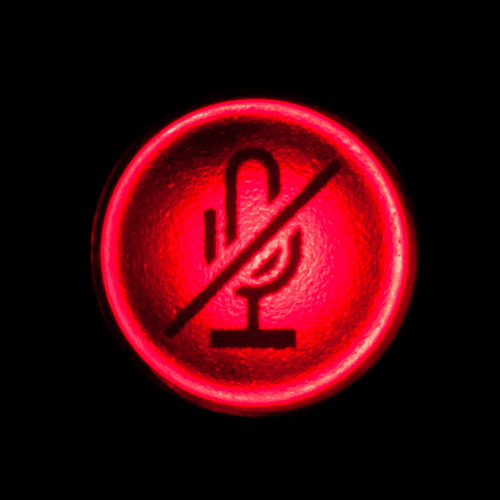
Mute
Photo © dan_giles | Flickr / Creative Commons
[image: A red lit-up mute button featuring a crossed-out microphone symbol.]
Sara Earhart
seekingsara174.com

Hearing is the sense that gives me the most trouble to the point that I often wish I had a mute button for the world around me. Sometimes I even wonder what it would be like to have a cochlear implant that I could detach when sound was just too overpowering. The world is such a loud place and it seldom stops talking.

Some days are better than others. Sometimes my brain does a better job at filtering sounds toward the back of my mind, but most days the sound comes at me all at once in a jumble of confusing, overwhelming chaos. Each sound jockeys for position at the front of my mind as each insists I pay close attention to its deafening shouts. It’s an exhausting experience to be constantly inundated with such a loud, insistent world without the ability to filter any of it out.

Even now while I write this post in a relatively quiet room, sound is everywhere. The high-pitched chirping of a bird outside the window is joined by the electric whine of the TV (which is off), the shower running upstairs, a family member walking on the floor above me, a goose in the front yard honking incessantly, the walls and windows settling, the wind swooshing through the trees out back, an electric toothbrush pulsing, a door opening and closing, the hum of the ice maker, the neighbor’s car door slamming…All loud. All insistent.

I am very easily startled, overwhelmed, or distracted by sounds. I’m likely to jump at a sudden loud noise, and it can often be very painful. A lot of sounds are physically painful to me: fireworks (which I also feel as a punch in the chest), alarms, sirens, anything shrill, etc. Some are less painful but more overwhelming; those make me feel like I’m drowning: crowds, loud music, revving engines, etc.

These are some of the most extreme sounds for me: fireworks, fire alarms, sirens of any kind, pitch-bending (sliding between notes), dentist drills, wood saws or drills, squealing bike brakes, shrill voices, whistles, people whistling, motorcycles revving, airplanes overhead, loud voices/shouting, loud and unexpected sounds in general, high-pitched noises, tapping or clicking, people talking behind me, crowds, out of key music, hairdryers, vacuum cleaners…

While I doubt that these things are pleasant for most people, they can be absolutely excruciating to me.

It’s important to note that auditory sensory overload isn’t always related to sounds I don’t like. When I’m overstimulated, I can’t handle any sound. Not my favorite song or an otherwise pleasant white noise or even the sound of a loved one’s voice. At that point, any sound is toxic until I recover.

Here are some examples of my intense auditory sensitivities to give you a better idea of my experiences:

LOOPING

Sometimes a noise or sound gets stuck in my head. I call this “looping” and it can be maddening. Think about something like nails on a chalkboard. (Even typing that makes me physically uncomfortable. But that cringing sensation that a lot of people experience is how many sounds feel to me!) Imagine that sound getting trapped in your head and sort of echoing again and again and again–long after the actual sound has passed. This happens to me fairly frequently and it’s extremely painful and distressing.

ELECTRONICS

I did an experiment with a friend once while studying abroad. After months of being annoyed by the high-pitched whine of the old TV in the corner of the dorm kitchen, I finally grumbled, “It’s so LOUD!!” My friend looked at the sumo match on the TV, back to me, and then back to the cheering crowd on the screen. “Loud? Ok, I’ll turn it down.”

I shook my head. “Not the program. That shrill sound that comes from the TV.” He cocked his head and muted the TV–listening intently. To my surprise, he said he couldn’t hear it. I was completely shocked.

You can’t hear that? Seriously? It’s all I can hear…” We decided to do an experiment. I turned my back on the TV. He kept the volume muted and silently turned the TV on and off and I told him whether it was on or not based on the whining sound. I left the kitchen and started to walk down the hallway, calling back to him “ON! OFF!!… ON! OFF! No, STILL ON! Ha, tricky!” as I passed room after room.

I made it all the way down to the end of the hallway where I could still hear the faint sound of the shrill TV. When I got back into the room my friend was shaking his head. “Is that why you always turn it off when no one’s watching it? I thought you just really hated sumo or something.”


FIRE ALARMS

One year while teaching in Japan, my desk was located directly beside the fire alarm. I didn’t realize this because it looked different from the ones I’m used to seeing. (In some ways I’m glad I didn’t know because if I had, I may not have been able to relax.) One day, we had an unexpected fire drill and the alarm blared directly at me. It was actual physical agony. I can still remember the physical pain throughout my body and the extreme nausea: I almost threw up. I was on edge for the rest of the day—jumpy and fidgety until I could go home and sit in a dark, quiet room with both earplugs and headphones.


When I was a kid and there were safety drills at school, I would be a complete wreck waiting for the alarm, during, and for the rest of the day. It would make me anxious and physically ill for the entire day. I remember trying to be “tough” like all the other kids who could walk down the hallways laughing and joking, but I always had to shove my fingers in my ears and grit my teeth as I raced out of the building.


COPING

  • Ear plugs: I wear earplugs while I sleep and I have done for at least a decade. I can’t fall asleep without them; I can’t even begin to relax and let down my guard without them. I’ve started to bring earplugs everywhere I go and wear them in restaurants especially.
  • Noise-canceling headphones: When I first got my headphones, I wore them every chance I got but found that I panicked when I had to take them off for work. I think they actually made me more sensitive to sound and that was a horrifying discovery. Now I only wear them when I really, really need to avoid a sound that earplugs just won’t help with.
  • Stimming (Blocking or recovering from bad sensory input with good/neutral stimuli): Humming or singing softly to myself is one of the most effective tools to help me deal with auditory overstimulation and sensory overload. This works by blocking out other sounds and giving me some control over what I’m hearing. Unfortunately, it’s something that society has made me feel uncomfortable doing in public, but sometimes I can’t help but do it to survive. I’m getting better at doing it in situations where I need to.
  • Silence: I bathe in silence whenever possible. Silence is a breath of life.
Share:

Rethinking Autism and "Picky Eating"

butterfly in a Planetbox bento lunch
Photo © Melissa | Flickr / Creative Commons
[image: Lunch box with each food type in a different compartment. Foods
include pretzels, jellybeans, raspberries, sliced cucumber, and
whole wheat sandwich bread in a butterfly cutout.] 


Seeking Sara
seekingsara174.wordpress.com

For as long as I can remember, I’ve been ashamed of what I do and don’t eat. The stigma of being a “picky eater” has followed me my whole life, bringing comments (and no small amount of exasperation) from family, friends, wait staff, and strangers.

I’ve recently been examining why I struggle with certain foods, and have come to the same conclusion as I have with much of my post-autism-diagnosis self-exploration: I’m actually incredibly strong, and my experiences are real and valid.

Why am I so “picky”? Well, if you could experience my senses for a few hours, I bet you’d be more understanding, less judgmental, and I’m fairly certain you’d stop using the word “picky” pretty quickly.

Often times, I want desperately to like a food, to be able to order anything at random, or to just eat whatever is put in front of me without hesitation. But for me, food is almost always a relentlessly overpowering experience.

It’s not just taste that’s overwhelming—so are texture, smell, color, consistency, and more. What if I told you certain foods literally hurt to eat? That some trigger vivid memories that are disorientating and distressing? That some foods make me nauseous and panicky? Throw in IBS, general stomach and digestive issues, multiple food allergies and sensitivities, and it’s actually pretty impressive that I eat at all.

Taste


I really struggle to eat bitter, sour, or spicy foods. Remember, all of my sensory input is dialed up and extra-sensitive, so what you consider overwhelming, is likely not the same as what I do. I’m not just being picky, and I’m not overreacting. I really am experiencing things more intensely than most people. What you might find pleasant with just a hint of a kick might feel like an absolute assault on my senses.

Also, my sensory input sometimes seems to go haywire and—for example—a bitter taste might register just like bile to me. No one else eating the same dish is having the problem, but I literally cannot eat another bite because it legitimately reminds me of throwing up.

Texture


Food texture is a huge factor as well. Texture no-gos for me include peaches, coleslaw, celery, Japanese konyaku, and warm peanut butter. I can’t really explain why some of these things are difficult for me, but the sensation of eating them can be so uncomfortable that my jaw locks up. This can be a full-body experience, causing pain, discomfort, chills, headaches, and tics if I’m truly required to eat something.

Too Many Tastes at Once 


Even if I like certain tastes, too many at once is also overwhelming. There are not many meals I order out that don’t include me saying, “I’d like the (meal), but without (list of ingredients). So basically just the (stuff I still want).” The things I take off make the difference between me being physically able to eat the dish, and literally not being able to eat it without melting down or extreme distress.

Conclusion


I debated making a list of all the foods I struggle to eat, but decided against it. Maybe some day I will, but for now, I still struggle with embarrassment from a lifetime of stigma related to what’s difficult or painful for me to eat—and I’ve decided to focus elsewhere.

I’m currently on a journey of self-acceptance and I’m finding it more productive to focus on my “Can Do” list than my “Can’t Do” list. I’ve come a long way in trying new foods, and I’m working on becoming more accepting that 1) I function differently and it’s okay not to eat foods that are difficult and 2) it’s actually impressive what I do eat, and I should give myself more credit.
Share:

What Is Light Sensitivity Like for One Autistic?

10mm Lightning
Photo © Jasper Nance | Flickr / Creative Commons
[image: Photo of lightning exploding in a purple night sky above silhouetted conifer trees.]
M. Kelter
theinvisiblestrings.com

I've had a life-long aversion to lights. I wanted to share what this means in terms of the subjective experience, and how this sensitivity generally seems to operate. The concept of a sensory aversion is probably self-explanatory, but it can include more subtle effects that may not be as apparent. I've noticed two primary factors that can cause my eyes to feel pain (no surprises here): brightness levels, and sudden changes in lighting.

What are the types of "pain" involved, specifically? This can vary. Certainly an intensely bright light can cause a sharp pain, but that's probably true for many people. Let's define "intensely bright" as something akin to a camera flash. That can cause a sharp, stabbing pain, and that pain can persist for minutes or hours. It's worse in the moment of the flash, and slowly fades.

Sharp pain isn't the most common eye discomfort I experience, though. The kinds of lights that I come across most frequently—lighting in a room, for example, or overhead lights in public spaces like a grocery store—tend to create a dull, persistent ache. The pain is like a warm burn that hurts in a lasting, nagging way. The pain isn't as intense, but it is draining. That seems to be the biggest negative impact of my light sensitivity, even more than pain: the more my eyes experience a lasting ache, the more my energy level and mood plummets.

In settings where I'm unable to control the lighting, I'm basically on a timer. At some point, I'm no longer going to be able to think clearly, or have the energy left to complete tasks and function. Almost every action I might take in the course of a normal day involves mentally calculating what the lighting will be like, and how long I will be able to tolerate it. Trips to the store, social events, driving during the day and so on: any activity requires forethought regarding lights and the inevitable energy/mood crash. Again, the pain is uncomfortable, but it's the impact on my energy level that creates the biggest hurdle to daily functioning.

The other factor at play with this sensitivity is sudden changes in lighting. Even in locations where the lighting is not too bright, sudden changes in lighting will create pain and a few minutes of blurred vision. This can happen when lights are suddenly turned off, or on or when I'm walking between rooms that have different levels of brightness.

If one room has comfortable lighting and I walk into another room that also has comfortable, but different, lighting, the change alone is enough to trigger pain. It's more in the category of "dull ache," but it's an unwelcome pain and usually results in at least a few minutes of impaired vision. This also takes a chunk out of my already-in-short-supply energy level.

Also, the visual disorientation can often lead to physical mishaps. It basically looks like clumsiness, but it's more specifically about the change in brightness level and blurred vision. Tripping over unseen objects, knocking over lamps, stumbling into walls—I have a long standing habit of exiting a dark theater into the brighter lobby and plowing directly into a crowd of people: this is all a reliably embarrassing byproduct of the issue with abrupt lighting changes. (For better or worse, I've learned to pretend-laugh and feign nonchalance when these things happen, since people rarely understand what's really happening and think it's funny.)

At any given time, I have to pause and give serious consideration as to whether or not turning a light on or off, or walking to a different room, will be worth the discomfort. I think for most people, this can seem like a minor thing, but in the course of a day, even minimal differences with lights can add up to a substantial impact.

One side note: in addition to pain, lighting discomfort is usually accompanied by a visual effect, a imprint of the light that can hover in my vision for several minutes, sometimes hours. Visible bulbs for example, or rays of light from windows or other sources, can imprint a visual "memory" of that light in my vision, and it can take some time for that imprint to fade. I'm sure there is a more scientific way to describe this, but subjectively, it's like a bright little ghost that stings my eyes for as long as the impression lasts. It's not uncommon to go to bed each night, close my eyes, and spend 20 to 30 minutes waiting for the day's accumulation of light imprints to fade. Lights can both make me tired, and make it hard to sleep.

What helps manage sensory pain like this? Honestly, not a lot, but there are some measures that provide a degree of comfort. Pretty much all of them are what you would expect.

Wearing sun glasses doesn't eliminate the pain, but it does function as a kind of dimmer. It turns the discomfort down a notch or two, which can make a meaningful difference when it comes to energy levels and mood. I wear prescription transition lenses that darken in response to sun light. That helps. A little. (I wish I had less obvious things to say here.)

This second strategy is not recommended, because it involves a major shift in life style—but I personally decided to work overnight jobs as much as possible. For the first 15 years of my adult life, I exclusively worked graveyard shifts that allowed me to sleep during the day and be more active during darker, more comfortable hours. Again, this is not recommended and is not always an option, but I just decided that it was necessary in my case. The change was beneficial in terms of light issues, but it didn't do great things for my social life. There were other downsides; sensory aversions involve a lot of lifestyle choices and cost/benefit analyses.

There are more shades of discomfort and pain-triggers than I can go into here, as this is just a brief overview of light sensitivity, from a subjective angle. It goes without saying: other people with this issue may very well experience it in a different way. I can only speak for myself and hope that sharing this information is in some way useful to those wanting to know more about the day-to-day impact of sensory issues.
Share:

Why I Do Not Hate Autism

Photo of a white woman with straight shoulder-length  dark brown hair. She is looking to her left, and smiling.
Shona Davison. Source: Author
[image: Photo of a white woman with straight shoulder-length
dark brown hair. She is looking to her left, and smiling.]

Shona Davison
shonadavison.co.uk

I do not hate autism. Sadly, many people do, including some autistic people. Recently I saw a post in a Facebook support group for autistic people. The original poster said that they hated autism and gave a list of reasons why. Many others agreed in the comments. There was almost relief that someone had said it. Autistic people sometimes feel like they are not allowed to say such things. In the comments many autistic people explained why they hate autism. The reasons were mostly to do with how difficult their lives are. I didn’t comment as I recognise when people need to vent, and arguing would not have been supportive. However, I found the thread extremely upsetting. I hate to see people suffer and this thread was evidence that many autistic people do indeed suffer.

One of the things that bothered me about the thread was I do not think their hatred was directed in the right place. Their comments suggested that they hated that their lives are so difficult. Are their lives difficult because of autism?

Life is difficult for me as an autistic woman. I’ve spent most of my life being criticised or rejected because of perceived social failings. It is difficult trying to keep up with conversations because my brain processes information more slowly, and people don't realize I need a few extra seconds to reply. It's difficult being in sensory overload because fluorescent lights exist (they wouldn't if autistics were the majority). I put in extra effort compared to most for every outing, every social interaction, everything I do, yet I still do not meet the appropriate ‘standard’ as defined by non autistic people. I get more tired and stressed from this extra effort, so I need more downtime. But if I take more downtime I am perceived as lazy. Yet if I don’t have downtime, I have anxiety attacks or meltdowns and I’m considered not to be "resilient." All of this means my life is difficult—more difficult that it would be if I were not autistic.

Many autistic people have really difficult lives through no fault of their own.

I therefore understand why some autistic people want a cure. But my view is that those people are putting the blame for their problems in the wrong place. If we blame autism, which is an integral part of us, the consequence is that we try to change ourselves for a better life.

I do not believe it is possible to be a happy autistic person whilst trying to behave like a non-autistic person. It is futile. Even if we are successful at ‘fitting in’ for many years, there is usually a price to pay in the long run. We will always stand out as different to some extent and for some of us the effort involved in acting ‘normal’ will kill us.

In my view, the blame for most of the challenges we face should be placed in our environments.

I’m autistic, I’m always going to be autistic. Whether or not I am happy depends on external factors such as the people around me, my physical environment, the type and amount of work I do. I believe that accepting this is key to wellbeing.

I have had more success improving my life once I stopped focusing on changing myself, and instead started to look at my surroundings. As my knowledge about my own brain and my own needs has increased, I have been able to educate my family and friends. I say ‘no’ to work or social events more often, so that I get the downtime I need. Our house has dimmer switches, headphones, weighted blankets, a mini trampoline, and so many stim toys. Changing our environments is not necessarily a simple task, but for lots of us autistics it is far easier than long-term masking. Research shows it is also less dangerous to our mental health. I believe it is more likely to result in happiness too, but how to be a happy autistic person is not a priority in autism research, so that is just my personal view based on my experience.

For those of us who are able and willing to go that step further there is a lot of work to be done changing wider society. Professionals need educating; laws, policies and diagnostic manuals need changing; public spaces need to be more sensory friendly.  But one step at a time—changing our immediate environment needs to come first.

I have seen some autistic people argue that blaming society for our difficulties is shirking personal responsibility and that we should be aiming to ‘improve’ ourselves. This stance says a lot about their conceptualisation of autism: If one sees autistic people as deficient or lacking in some way compared to non-autistic people then it is understandable that one would believe that acting more like a non-autistic person is "self-improvement."

I do not see autism that way at all. All humans learn and develop over their lifetime, and that is a positive thing. Why should autistic people be any different? It should be obvious that autism acceptance is compatible with personal development. I saw a really lovely phrase on Twitter once: "We do not grow out of autism, we grow into it."

I do not just accept I am autistic, I embrace it.  Autism is intertwined into every part of me and influences everything I do and feel.  I would not be me if I were not autistic, I’d be an entirely different person.

Do autistic people suffer? Sadly yes, lots of us do. Do we suffer from autism? No, I do not think so. That is why I do not hate autism.
Share:

In Silence and in Sound: Autistics Do Not Benefit From Presumptions of Deficit

Hush!!
Photo: Ian Chen | Flickr / Creative Commons
[image: Close-up black-and-white photo of a young East Asian child,
with one finger over their lips in a position indicating "hush."]

Maxfield Sparrow
unstrangemind.com

When an academic writes accurately about aspects of autistic lived experience, some people grumble. “All they needed to do was ask me and I would have told them,” some will say. “We've known this for years but they act like it’s a shocking new revelation,” others might add.

I, however, rejoice. Formal confirmation of autistic common knowledge is exactly the kind of research we need out there. I am so happy when an academic paper states the obvious (at least obvious to us autistics) because it means there is finally an information source that “the system” will respect. Do I wish people would actually listen to actual autistics? Most definitely, I do. But until we manage to shift that Overton window halfway across the wall, I rejoice to see our actual life experiences written about accurately in scientific journals.

I was especially thrilled reading Rebecca Wood’s research, recently published in the journal Educational Review. In her article, “The wrong kind of noise: understanding and valuing the communication of autistic children in schools,” Woods uncovers something we autistic adults have been complaining about for so long: We are not “allowed” to do the same things non-autistic children do. They are allowed to be so loud we cannot bear to be in the same lunchroom with them, but we are silenced if we are even a fraction as loud as the non-autistic people.

We’re relegated to a lesser status wherein we’re expected to quietly tip-toe through life, while forced and shamed into putting up with the sensory onslaught of the “normal” day-to-day noise of others.

Woods studied children in five different mainstream primary schools in England over the course of five months, and observed that autistic children were regularly treated differently with respect to noise and communication. She titled her paper “The wrong kind of noise” because she noted that it didn’t matter whether autistic children were complying or not and it didn’t even matter if the autistic children were being loud or silent: no matter what the children did or did not do, they were viewed as making “the wrong kind of noise” because their autistic sounds, autistic communication style, and even autistic existence itself was “disdained” by the adults in charge.

In her study, Woods found that “communication, noise, and silence all intersect in relation to autistic children in schools.” She saw that all the schools had put the development of communication skills high on the list of important interventions for the children, but the way these interventions played out in the daily school life of the autistic children shaped how the children communicated—often in unplanned-for ways, often in ways directly detrimental to developing communication skills.

Woods goes on to describe concrete examples, like a child she calls Piotr (all names in her study are changed) who expressed 39 verbal and non-verbal signs of aversion to an activity the teaching assistant was trying to engage four-year-old Piotr in. Piotr said no, said he wanted to go outside, tried to hold the book closed, slipped to the floor, and more—all clear indicators of not wanting to do the reading assignment. Yet the school said Piotr was “non-verbal” and one result of that (inaccurate) label was Piotr’s voice going ignored. At one point Wood observed Piotr using a choice card to directly request outside time, but instead of respecting and rewarding Piotr’s communication, the teaching assistant removed Piotr from the choice card area, trying to re-focus him on a different task.

Wood says it was unclear whether the teaching assistant was actually ignoring Piotr’s communication or just wasn’t picking up on it properly, but the end result is the same. As wood writes, “It is difficult to ascertain [...] how Piotr’s independence and communication are being supported,” adding that, “it seemed here that his communication was only validated if it corresponded with what the adults in charge wanted to hear, and in the ways that they expected to hear it.”

In one of the most heart-breaking yet validating sentences I’ve ever seen in an academic paper, Wood writes, “it appeared that the unwitting aim of these communication supports was to tame, train and civilise him.”

This critique of the way education systems are currently functioning is so important. Wood’s study was conducted in England, but the problems it highlights trouble education systems everywhere in the world. Supports are not enough. Access is not enough. Accommodations are not enough. Education is not enough. None of it is enough if the person being supported is not being given adequate personalized assistance. You cannot support a student if you are not primed to listen to them, hear them, and connect with them by showing that their communication was received and taken seriously. Without some hint of personal agency, what encourages a student to make any effort at all? The system is set up to generate learned helplessness and resignation.

Rebecca Wood writes about issues of noise as well. Schools were very noisy environments, even for Wood who may not be as sensitive to noise issues as the autistic students with sensory issues. (Although I’m just guessing here. I have no idea what Wood’s neurotype is.)  She wrote, “when I was transcribing interviews, which were often unavoidably conducted through various interruptions and types of racket, I couldn’t always hear what the participants were saying  because of the general din from talking and the scraping of chairs.”

Silence, on the other hand, was a clear sign of autistic engagement. For example, when Piotr was allowed to choose his own book, none of the aversion behavior was evidenced and instead he quietly read, fully engrossed in the book (and demonstrating his approval with 44 approving behaviors in fewer than 5 minutes).

I know a big, sarcastic “well, of course” is due, but this is exactly the kind of stuff that really needs to be documented in an academic study, because that is the way to get autistic curriculums changed in ways that will benefit autistic students. It’s hard to get educators to listen to autistic adults, which means we need scientific studies that “signal boost” the things autistics have been saying for many years. It’s frustrating, knowing we autistics are not listened to. This paper represents the kind of science that will get us heard. However indirectly that listening has to take place, the important thing is to be heard, in any way that works.

Staff at the schools where Wood observed were visibly irritating the autistic children when the students would go silent by whispering questions to the children, or feeding them a steady stream of spoken words in an attempt to expand their vocabularies. The children’s silence was being just as misinterpreted as their spoken and visual forms of communication. The teaching activities flowing from those misinterpretations risk harming children.

So much of what Wood’s article comes down to is the importance of presuming competence. Wood shows how giving a child the label “non-verbal” (whether accurate or not) causes staff to work with that child differently, including ignoring massive amounts of communication from the child because the adult has been primed to behave as if “non-verbal” means “never communicates.” Wood rightly calls this “confirmation bias” and writes that these “deficit-oriented discourses” are damaging to children.

Hopefully, Wood’s research works its way into the hands of those who can make positive changes in the educational systems that serve the needs of autistic students. It is refreshing to read research written by someone who really seems to see and hear us. It’s time for an autism research renaissance. We need more researchers like Wood: researchers working with and listening to autistic subjects, resulting in findings that genuinely improve the quality of life for autistic people.
Share:

An (Autistic) Review of Vibes Hi-Fi Earplugs

Vibes Hi-Fi Earplugs. Photo from www.discovervibes.com
[image: White earplugs resting in a black box with red sides.]
Jeff at Spectrum Disordered
www.facebook.com/asdisordered

First off, I am quite sensory sensitive/defensive to noise. “Bad” sounds shut me down and hurt, even at low volumes, if it is the wrong type of noise.

My existing coping mechanisms have been playing music through in-ear headphones, and foam earplugs. I haven’t tried many stand-alone active noise-canceling products, save for a few hi-fi music headphones with noise cancelling features.

In reviewing the Vibes earplugs, I am primarily contrasting them with foam earplugs.

Unboxing


The Vibes come in an attractive small package, containing items similar to what you would expect from music earbuds: the earplugs themselves, additional small and large fit rubber earbud inserts, and matchbook-sized carrying case. For anyone who has carried foam earbuds in a pocket, the carrying case is a bonus. Though the case is fairly low-grade plastic, but the earplugs themselves feel well made and sturdy.

Comfort, Fit, Appearance


These areas are where the Vibes shined for me. The large size was the best fit for my ears, and I found them by far to be the most comfortable earplug (or music earbud) I have ever worn. This is high praise. They are very light, and unlike foam earplugs, they do not apply pressure to your ear canal when sealed.

In one case, I spent about a minute searching around my desk for one of the earplugs. I found that I still had it in my ear. I never “forget” I have stuck something in my ear. Ever.

The ear plugs are almost invisible when in. My wife, knowing I was wearing them, could not see them in my ears from five feet away. This makes them far less visible than neon foam earplugs, and over the ear devices. However, this also means people will not recognize you are wearing earplugs and increase their conversational volume to accommodate you.

Performance and Sound Quality


This is where the Vibes turn into a bit of a mixed bag.

Pros: They work about as well as foam earplugs in reducing volume. They transmit a better frequency range of sound than foam earplugs. However, take manufacturer claims of sound quality with a big grain of salt.

The Vibes website,  www.discovervibes.com/our-products, states these earplugs “lower decibel of your environment without sacrificing sound clarity.” Erm. They do much better than foam earplugs in transmitting a broader frequency range with less “muddying,” but they still take away quite a lot of higher frequencies.

I tested the sound quality by inserting the Vibes and then putting on a good pair of over the ear headphones. I chose Metallica’s Black Album to test the sound quality, as the Black Album “sound” is characterized by a heavy bass guitar line on the low end, vocals in the middle frequency, and wailing guitars and cymbal crashes on the high end. Famously, the drum mix favored the high end without booming bass drum sounds, so the result is little overlap on the soundstage.

I listened without the Vibes, then inserted the Vibes and increased the volume back to the same listening level. I found the cymbal crashes almost disappeared from the sound stage, so clearly the Vibes are filtering out more high-end frequencies than low end. “Hi Fi” is a serious stretch here, you are losing a lot of sound frequency.

Cons: For me, an immediate, visceral, “bad sound” con was the sounds that these earplugs make rubbing against my ear canal. The closest I can explain is that the sound was like that of a dry Q-tip in one’s ear: plastic-y “rubbing” noises that occurred whenever I moved my head, every step I took, every time something made my ears move. Not good. For the several hours that I tried the earplugs, this sound was present. However, the noise attenuated over time—I believe in part because of the earplug break-in process, in part because earwax “greased” the rubber of the earplugs. At first it was very unpleasant, but over time, it got to where I didn’t personally feel it was a deal breaker. However, it never went away and I doubt it will.

Effectiveness As Adaptive Tech for Autistics


It is hard to quantify this factor, as everyone has their own personal diet of good and bad sounds. While wearing Vibes in an office setting, I found that they reduced (but did not eliminate) the air conditioning droning. In a street setting, traffic noise and rustling of leaves in the breeze was very attenuated, and it was in this setting where it felt the noise reduction was most effective in filtering unwanted extraneous noise. In a vehicle, again it felt effective at lowering the extraneous engine and climate control noise.

I found it hard to carry on a conversation while wearing the earplugs. At a conversational volume I found myself pulling the plugs out to hear. Obviously that means they are effective at lowering the sound volume, but I suspect most autistics would prefer a solution that allowed them to have conversations without removing the device.

----

Disclosure: A Vibes rep provided earplugs for the author to use in his review.
Share:

An Autistic Burnout

Content note: This post discusses suicide and suicidal ideation (thinking about suicide).

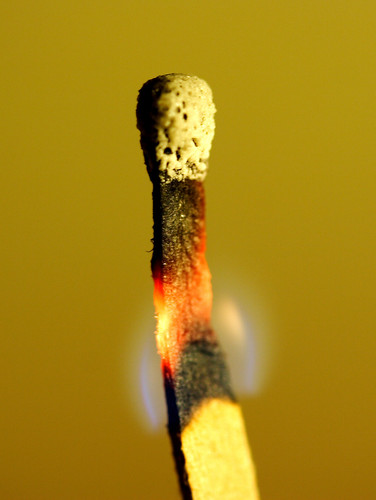
flame
Photo © Lee | Flickr/Creative Commons
[image: Photo of end-stage burning match.]
Kieran Rose
www.theautisticadvocate.com

I've struggled massively with writing this.

It's ironic really.

It's taken me six weeks to start writing an article about Autistic Burnout, because I'm going through Autistic Burnout...

If you saw someone going through Autistic Burnout would you be able to recognise it? Would you even know what it means? Would you know what it meant for yourself if you are an Autistic person?

The sad truth is that so many Autistic people, children and adults, go through burnout with zero comprehension of what is happening to them, and with zero support from their friends and families.

If you're a parent reading this, I can confidently say that I bet that no professional, from diagnosis, through any support services you're lucky enough to have been given, will have mentioned Autistic Burnout or explained what it is.  If you're an Autistic person, nobody will have told you about it either, unless you've engaged with the Autistic community.

Autistic Burnout is an integral part of the life of an Autistic person. It affects us pretty much from the moment we're born to the day we die, yet nobody, apart from Autistic people really seem to know about it.

I had some parents come to see me. It was just a chat, their little boy was struggling in school, and they were looking for some advice. Somehow we got onto talking about my own experiences at school, then onto my suicide attempt at fourteen (which I describe in graphic detail in How to hide your Autism and An Autistic Education). My story was horrifying enough to them, I imagine—but I think what horrified them most was what had led me to place in the discussion: They'd never heard of Autistic Burnout.

When I described to them what autistic burnout is, they actually recognised a recent episode where it had occurred with their son. And the more they looked back at his life, the more they started to recognise a pattern; they started to see how life for an Autistic person is really a series of peaks and troughs. They now see how frequently he has been through burnout, and how they had pushed him to keep going through each episode, unwittingly, when he had no way of communicating what was happening to him.

So, what is Autistic Burnout?

Firstly, you may have heard of something called Autistic regression. Autistic regression, which in itself is a horrible name and a terrible descriptor, is often described around the time a child is diagnosed, or as the reason to seek diagnosis.

A parent may describe the child as losing some or all of their verbal communication ability, for any person of any age they may appear more 'typically Autistic.' As a child, milestones they had passed—walking, toileting, verbally communicating, may revert back to a pre-milestone position. The name Autistic Regression is completely wrong, though, as it does not take into account that it can be—and is often—temporary, and it is part of the ebb and flow of Autistic life, caused by the impact of society and the environment the person lives in, and it is not a permanent return to a former or less developed state, as many would have you believe.

There are, in my opinion two distinct types of Autistic Burnout that feed into each other.

The first is often termed Social Burnout. This is a frequent occurrence: where just your day, just living, talking to people, being assaulted by senses, exhausts you to the point where you can only collapse in a heap at the end of the day, or at the end of the week, depending on your constitution (remember this won't be identical for everyone, but it certainly will be similar). This can happen at any stage, from infancy through old age.
The bell rings for the end of the school day, the children are filing out of school, so I duck out into the woods and light a cigarette.

I need the noise muted and filtered; the wind does that, carrying the hubbub of the end of day away from me—I'm an expert at this by now, staying downwind of noise. My whole body is tired, lead boots weighing me down, my brain slowed distinctly, reactions are slack.

A day of talking and socialising—Conversations with adults and children, timetabled and spontaneous. Running the conversational scripts in my head to full capacity all day long. 
Surrounded by noise; screaming children in the playground, shouting children, singing children, musical instruments, banging and clashing, the general commotion of the classroom; and over the top, the dumpf-dumpf-dumpf of my heart in my ears and in my chest. 
The strip lights overhead, flickering constantly in pulsing waves, each one shooting through my eyes and down through my body; I can physically feel each pulse humming and vibrating. 
A vast array of colours and patterns on the brightly coloured walls, covered with brightly coloured work. The sun glaring through forty year old, grimy windows, diffracted around the room, while a billion dust particles dance captivatingly, confusing my already overwhelmed eyes. 
And over the top of it?

Masking.

Suppressing my reaction to all of this, the urge to scream and scream and scream till I explode—wanting it all to go away. My face is still, good eye contact made, no matter how much it hurts, being touched constantly, leaving my skin feeling like it has been repeatedly pressed by a molten hot branding iron. 
It's not over yet though. 
Three quarters of an hour of tidying and prep for the next day and it's time to leave. I get a lift with a colleague as the buses are so infrequent, so I have to maintain conversation. My colleague is lovely though and can generally sense somehow when I can't speak, and a ten minute car journey often passes in a vaguely comfortable silence. It's sometimes like a tiny piece of decompression time before i get home. 
When I get home there's nobody there. Sometimes turning the key in the lock is the hardest thing to do, it's so heavy. The weight of the bag on my back pulling down.  My lead boots heavier and heavier. 
I get through the door and drop my bag. I crawl and stumble up the stairs and make it to the bedroom, collapsing on the bed without even the energy to remove my shoes, my eyes are heavy, exhaustion pulling my lids shut. 
Several hours later when Michelle comes home, she finds me and wakes me. I have enough energy to make it through the evening, just. My conversation is muted though, like when someone asks a child what they did at school and they reply with 
"Nothing." 
I want to respond, I want to engage, but I have neither the ability or the energy.
I'm 26 and I've been doing this for as long as I can remember, practically every day the same.  
The days when i can't do it, when I can't collapse in a heap, the worse it is the following day... 
Three years diagnosed and I have no idea what is going on, this is my normal.
Can you imagine this, day in and day out—this is just everyday life, and this was pre-me having children. I've got three children now and they are the light of my life, but how they have impacted my ability to recover day after day is immense. I could no longer collapse—I didn't have the capacity.

The responsibility of having one, then two, then three children led me to have to Mask and suppress even more, fight through and resist the extreme, overwhelming shutdown my brain and body wanted to go into.

This has become a sick joke to me.  When people message me and ask me how I am, my response is:

Image courtesy the author
[image: Graphic of a computer error message: A white rectangle with an
icon representing a "sad" page at the top, followed by dark gray text
reading, "Unable to connect to the proxy server", followed by smaller
underlined gray text representing a link, reading, "Details".]

Autistic Burnout is exactly that;  The shutting down of mind and body.

If you've ever had a problem with a computer and it's had to go into safe mode, that would describe what happens to the brain: it runs on limited function, not all services are available, and its access to the Internet (my Rolodex, as I described in The inside of Autism: The world inside my head) denied and unable to connect. No little white bars to indicate how strong or weak the signal is, because it's just not there.

Physically I often imagine this as the need for hibernation, where the body effectively stops all but the most important functions, the heart rate slows, and breathing distributes evenly and slowly, hovering on the precipice between sleep and death.

Except through this all, you are awake and expected to function, expected to get on and live your life, so you repeatedly go back and do the same things over and over again, put yourself through the exact same scenarios that caused you to feel like this in the first place, rinse and repeat.

Another aspect of this is that Autistic people, for some reason, possibly related to Masking and wanting to fit in, can be incredibly eager to please. Part of that eagerness, especially for those who don't fully fill the Pathological Demand Avoidance profile, is often an inability to say "No" to people.  So we take on more and more, we allow our plates to get fuller and fuller, our anxiety heightens, our sensory processing becomes more difficult to maintain, our Executive Functioning abilities spin out of control and again this attributes to burnout. We often aren't terrific at juggling plates.

Jeanette Purkis, who is an Australian Autistic, an absolutely wonderful writer and a Member of my network organisation, The Autistic Cooperative, has written an excellent piece called "‘Too Nice’: Avoiding the traps of exploitation and manipulation." In it, Jeanette says:
"There is an actual concrete reason that we tend to be taken advantage of and it starts with the difference in communication between autistic people and neurotypical people. Autistic communication is generally on one level. We are honest, up front, and do not often do things like manipulation and deceit. We generally do not lie—although many autistic people are capable of lying if they feel the need—but usually it doesn’t come naturally. 
Neurotypical people (or ‘allistics’ if you prefer) operate differently in how they communicate. Their communication tends to happen on more than one level. It can be seen as the difference between visible light and infrared light. If you can only see visible light then it is hard to imagine what infrared looks like, even if you are aware it exists."
These differences are not visible to an unaware or undiagnosed Autistic person, so it leads not only to the full plate, but offers up the Autistic person to all levels of potential abuse and manipulation through compliance. I could talk right now about Behavioural Therapies such as Applied Behavioural Analysis (ABA) or Positive Support (PBS) and how they take advantage of the Autistic being eager to please and open to manipulation, but I'll save that for another day.

I mentioned in An Autistic Education, about the fallacy of parents repeatedly sending their children into school, making the same mistake over and over again, watching their child crumble before their eyes, yet unable to break the cycle even though they can see what is happening to them: 

You have to go to work, as much as you have to go to school.

Society demands it.

Society demands compliance.

Autistic people are doing the very same thing. We repeat processes constantly which wear us down mentally and physically constantly, each day, without a break. Some undiagnosed people unwittingly develop strategies to cope with this, the Mask again, rearing it's head, but it all catches up eventually.

And all because we're made to think that we have to. 

This is what people do...

Society demands it.

Society demands compliance.

As I mentioned earlier, burnout covers all age groups. Autistic babies suffer Social Burnout as much as children or adults. Babies who do not wish to be touched, babies who are forced into eye contact, babies who are picked up and manhandled, babies who have even less of a filter than Autistic children or adults to block out the overwhelming sensory sensations they are put through.

So, if this is the every day normal for an Autistic person, to one degree or another, from birth to death, what happens after an extended period?

The second type of Autistic Burnout.

You crash, and you keep crashing.

If you imagine everything that I have described above, the shutting down of mind and body, but imagine it occurring over a period of weeks, or months, or even sometimes years.

This is extreme Autistic Burnout. It's usually the result of the day-to-day overwhelm combined with an event or trauma, or typically the weight of life building to a point where the Autistic person has to cease to function.

When I was fourteen, my Autistic Burnout was triggered by a combination of things. I'd reached the end of my tether with school—I just couldn't hack it any more, couldn't hold in the pain it was causing me any more. I was in a constant state of sensory overwhelm; I was isolated, confused and didn't know what was happening.

My Grandfather had recently died too—which was a massively life-changing event for me. 

I've mentioned that touch burns me? 

Well at that point, the only person on the planet who could touch me without it hurting was my Grandfather. Albert Ferguson was the kindest, cuddliest man I have ever known. I remember my eldest sister (who is also Autistic) and I were forever clambering over him, rubbing his shiny bald head, breathing in the smell of his tobacco and 'two fingers' of single malt whiskey. I'd lay there silent in his lap for hours while he'd regale me with regimental details, battalion names, and numbers from his time in Burma during World War II—and days later he'd test me on those details, delighted when I remembered them correctly.

When he died he left a huge gaping cavity in my heart and my mind. 

One of the worst parts was that he was hospitalised for a long time before he died—months—and I was not allowed to see him. I was desperately sad that he'd gone, but I also incredibly aware that now I had nobody to touch or be touched by. I resigned myself to a life of pain at that point, could not conceive that I would ever find anyone else who wouldn't physically hurt me.

So this combination of grief and sadness, along with the overwhelming confusion of not knowing what was 'wrong' with me, why I couldn't really connect with anyone, why people singled me out or played tricks or used me, of what the hell was wrong with me and why I just kept hitting this wall over and over again, was what led me to crash and burn out. My physical body and mind started shutting down. I could feel each system in my body closing off as gravity got heavier than it had ever been. I didn't know what to do, did not understand what was happening to me, and I had no way to communicate this.

It was like a switch had gone off, my verbal ability to convey what was going on in my mind and body was gone.

I did not want to die, I've never wanted to die.

I needed to step out. 

I needed to remove myself from the environment and take myself elsewhere;  I needed to escape.

But the only way I knew how to do that was to die. So I tried.

And what I was feeling was not depression, I know that now. 

Some researchers are starting to listen to Autistic people and are starting to recognise that clinically, Autistic Burnout shares a similar presentation to Depression, but is a completely separate thing. They are seeing how Masking, or Social Camouflaging has a distinctive lead-in to the high autistic suicide rate, and also ties into other mental health issues that are identified—sometimes wrongly—in Autistics, and also how a lack of Autism Acceptance plays a huge part in mental health too.

The lack of distinction between Autistic Burnout and Depression; In fact the lack of recognition of Autistic Burnout at all, outside of the Autistic Community, has caused many problems for Autistic people. Many who have been identified as depressed have been and still are being put in psychiatric units, psychiatric care, drugged and then have developed Mental Health issues—when really what they needed was major sensory withdrawal/stimulation (depending on the person), acceptance, understanding and rest.

I'd been taken to the doctor multiple times by my Mum, and had been on various types of antidepressants from the age of twelve, which, looking back, is actually quite disturbing—but probably indicative of a time where so little publicly and medically was known about mental health, let alone Autism.

I cannot emphasise enough how important it is to make the distinction that Autistic Burnout is a separate thing from Depression and how important it is that Autistic Burnout starts being recognised and addressed in Society.

None of this is meant to imply that an Autistic person cannot be depressed—that is not the case at all.

Along with the things that cause anybody to be depressed, prolonged burnout can definitely lead to a depressive state, as indeed can a lack of Acceptance. It is hard for that negativity to not be absorbed, especially by people who are emotional sponges and highly reflective of the emotional state of people around them.

This is also definitely not to say that a suicide attempt comes along as part of the package of Autistic Burnout, because it doesn't always. I've had periods of intense burnout where I haven't taken that measure. It is however indecently common amongst teenage Autistics diagnosed or undiagnosed; and those who are diagnosed Autistic later in life.

Recent studies show that prevalence of Suicide attempts amongst Autistic people stands at 35% of that population, with suicidal idealisation at 66%. We also know that approximately 10% of all suicides are by Autistic people—bearing in mind we only make up 1% of the population, supposedly. I would hazard that the rate is higher in reality.

I'll talk a little more about suicidal idealisation later.

***

Extreme burnout comes fairly regularly during an Autistic's life, and there is a school of thought amongst the Autistic Community that when Autism first becomes 'apparent' to parents who don't know what they are looking for and have zero frame of reference—you know, the old "They were a perfectly normal toddler, then they had their MMR..." that the child is undergoing Autistic Burnout, and that their apparent "Autistic Regression" is because they have had some kind of event—starting nursery, going to school, home life changes, something sensory—it could be anything for each individual child, some major (to them) change that has overwhelmed them to the point that their Mask (which starts establishing itself very early on) has completely dropped off.

The Mask coming off is exactly what happens during the Autistic Burnout period. Your Autistic traits become more obvious as your brain goes into Safe Mode. You may become more inflexible, your ability to 'mock' making eye contact may disappear completely, your ability to socialise may be drastically reduced or go completely, you may sleep more, want to be on your own more, and bury yourself. Life just gets significantly harder and gravity, as I mentioned before, just pulls you down more and more.
I've left my job. 
Well, my job has left me. 
I was happy there once, for a long time. Then the rumbles of change started, people losing their jobs, major restructure. 
My performance dips, I grow tardy and try to cover it up.  It's halfheartedly noticed and commented on, which just makes my anxiety worse, everyone really is too worried about their own jobs though. 
I spend day after day not doing anything, other than pretending to work, because I'm not coping. My life is spiraling out of control and all I can think about is the look of horror on my Wife's face when I tell her I'm jobless. 
The lack of communication, the vague realisation that the people you work with, the people who have actually helped make life feel sort of good over the last few years are my competition now. All of a sudden it seems like everyone is Autistic, nobody makes any eye contact with each other. 
My replacement, from elsewhere, sits opposite me, I'm to train him. 
I'm offered my job, but a long way away. It feels like the final slap in the face. They know I'm Autistic, they know I have Meniere's disease and can't go that far on the bus—what'll be a two hour journey every morning and night. 
I walk out. I ride the bus home. I go to bed. 
I don't know what to do.
Then the click. The flick of the switch. I feel it deep inside me. I recognise it with abject horror, i remember the feeling. I remember the lack of self control. My mind goes into Safe Mode. 
What to do? How do I explain this to Michelle. I clutch at my throat and my words are gone. 
They come back a time later and I'm able to tell her. 
The horror I imagined was there.

But also love, so much love in those deep brown eyes.

I was safe in them. The only eyes I've ever been able to look at.

Eyes I can distinguish the patterns in and lose myself in.

I clutched her tight and the Mask dropped off.  
I heard it slide to the floor and crack in half.
The next few months were like wading through treacle, physically, mentally, and emotionally—but equally I was wound tight as a spring. My sensory sensitivity was incredibly heightened, I couldn't tolerate noises, smells, too fast movement, anything really.

Doing the simplest of things exhausted me, and still at that point I had no real understanding of what was happening to me. I was an Autistic man on anti-depressants for the umpteenth time of my life, completely not depressed, but not knowing how else to explain it.

The truth is, I was relieved not to be at work—it gave me the opportunity to switch off, which I needed, desperately. Had it not happened I think I may have looked at the suicide option again.

As it was around nine months later I started to wake up again—my mind and body felt more alert than they had in years. 

Michelle and I have talked extensively about that period, and the period after. and she sees the difference in me. She recognises that I Masked an awful lot with her from the moment we met, despite my attempts not to, and doesn't see it as me lying to her; she understands that I was doing what I did to survive, and often unconsciously.

My period of burnout saw me unable to function really at all. I was kind of a vaguely absent father—there, but going through the motions, rather than actively engaging.

We struggled financially, I started proceedings for constructive dismissal, but was so crushed and lethargic, and the proceedings were through a Council process which was massively bent in the Council's favour, so we gave up.

I can honestly say that those months were tortuous. We came within a hairs-breadth of losing our home. I expected Michelle to ask me to leave and wouldn't have blamed her if she did. But somehow we came through it and I came out of it.

I came out as someone desperate to know what had happened to me. The pieces were falling into place that there must be a better way, there must be reasons.

So I turned online and found Autistic people. I started talking and learning, realising that ideas and narratives that had been floating around in my head actually existed and had names—things like Neurodiversity.

I found the Autistic community.

I stumbled into this world; metaphorically, my eyes shielded by my arm from the glare of Autistic gold shining back at me.

I've not looked back since.

***

I said earlier I wanted to talk more about Autism and Suicide. 

Sadly the two seem to go hand in hand.

But not all suicide amongst Autistic people is directly attributal to Depression, because not all Autistic people are depressed, as I mentioned before.

Earlier I touched upon my experience at fourteen and explained how it was less an attempt to end my life and more being backed into a corner and it being the only way to get away from the situation I found myself in.

Anecdotally, I have talked to a significant number of Autistic people about this (a few hundred) and have found that their experiences matched my own—not only in the 'why' they had attempted suicide, but also in that, like me, they are pretty much constantly thinking about ways they can do it.
The noise of the traffic is too great. 
The cars are screaming past, one of those motorbikes that sound like giant broken hairdryers is gunning its engine unnecessarily. 
The sun is glaring down upon me, the warmth is nice but the light is too bright, too strong and I don't have my sunglasses. 
A throng of people are walking round, I'm like a rock in a river with the current parting round me, but I'm being buffeted and jostled, my body is burning. 
Somehow I'm forced to edge of the street, right to the curb. 
My head is spinning, eyes feel like they're vibrating in my skull, my teeth hurt, everything is building and rising. I look up the road and see a bus coming, no chance of it slowing. 
I step in front of it. 
The world falls silent, everything slows. The bus coming towards me in slow motion, blurred with movement, feet away, inches away, the look of realisation dawning on the driver's face as he sees me, contorting into fear and horror. 
A glance back over my shoulder at the oblivious people, heads down, intent on their journey, not noticing the person about to dissolve into peaceful oblivion. 
Stepping out. 
I close my eyes, my arms open wide, embracing the stillness about to come, a world of soothing dark, comforting silence. 
I can feel the roar of the wind, the roar of the engine comes, the world kicks into normal speed and... 
I'm back on the pavement, jostled and bustled, ears assaulted with noise as the bus speeds past me.
I do this all the time and so do so many Autistic people.  Stepping into traffic, jumping off of things, taking pills, all manner of things.  It ebbs and flows, depending on what your are doing or where you are.

These are not intrusive thoughts, as such. It's almost like they are deviations on a path, where in one world you make the choice to step out and in the other you don't, but you bear witness to both those paths at once, for just a few moments—the intensity of the situation allowing you to witness a shearing of worlds, of universes, where in one you die and in the other you carry on.

We generally don't want to die.

We want to escape.

We want to step out.

The world is an overwhelming place for us—it doesn't have to be, but the way it's set up with colours, noise and lights and people and expectations makes it so.

We lose ourselves in repetitive behaviour, we Hyperfocus, we Stim, we become different characters or act as animals, we script conversations, we withdraw, we hide in worlds inside our heads, we close ourselves off, or equally sometimes explode outwards, we Mask—all in an effort to endure this world we live in, to survive, to find balance with ourselves internally and externally and also, to hide who we we are—to make Non-Autistic people accept us, because we don't find acceptance as ourselves.

This is why we burn out.

***

The warning signs of Autistic Burnout are actually quite easy to spot if you know what to look for, either from an external point of view, as an observer, or loved one or internally, from an Autistic self's point of view:
  • A growing lethargy
  • An increase in irritability
  • An increase in anxiety
  • An increase in over-sensitivity to sensory information
  • A dramatic decrease in sensitivity to sensory information
  • Heightened Auditory processing disorder
  • A decrease in verbal language
  • A decrease in text language
  • An increase in Shutdowns and heightened withdrawn state
  • An increase in the frequency and severity of Meltdowns
  • A diminished ability for the person to self-regulate their emotional state
  • The slowing down of the thought processes
  • Brain fog
  • Memory loss 
  • A decrease in your ability to effectively communicate what you want 
  • A decrease in motivation
  • An inability to generate momentum of body and of action
  • An increase of rigidity, narrowing of thinking
  • A feeling like your vision is tighter or narrower
  • Extreme forgetfulness
  • Extreme overwhelm
  • A massive increase in guilt
  • An increase in Executive Dysfunction
  • An increase in Demand Avoidance
(If you think there are more, feel free to add them in the comments.)

Can you see why Autistic Burnout is often mistaken for Depression?

Run through that list again and apply each of those thing to, firstly, a child. 

Say, one who is ten years old or younger.

How would the symptoms of autistic burnout present? You got it: Bad behaviour, defiance, lack of compliance, willful disobedience, withdrawal, self-harm, depression. Especially, if you consider that any child—across what is a huge age range—is likely unable to be able to express or communicate any of those things effectively—if at all—or why they feel the way they do, or even how they feel the way they do, especially if they are Autistic.

If you consider a teenager, who has a mess of hormones running through them, who is acutely aware of how much they stick out like a sore thumb, whose growing self-awareness—their very sense of self—is being fractured by a combination of everything they are going through in day-to-day life and everything on that Autistic Burnout warning signs list; how does it present? Bad behaviour, defiance, lack of compliance, willful disobedience? Or if they withdraw completely, they're described as Moody, as an extreme Teen, they lock themselves away and become more withdrawn, less social, less able to function. Through it all they are still unlikely to be able to communicate any of this.

Now apply both those scenarios to an Autistic person who is undiagnosed. From the outside looking in, they are behaving 'badly,' 'acting out,' or they are depressive, or angry, so they are drugged and Therapised, or treated to such delights as PBS or ABA to 'improve' their behaviour,' or they're just left to get on with it and kill themselves, or get caught in a cycle of self-harm, or get wrapped up in short bursts of highs to make them feel better, as in drugs or criminal behaviour, as they fight against themselves and how they are feeling—or all of those things.

It sounds drastic doesn't it? 

Yet it's happening every day. 

Mostly because people do not know or understand 'why.' There are a myriad of reasons so many Autistic kids (diagnosed and undiagnosed) are in the young offenders system, and then further on, Autistic adults in the Prison system.

***

So what can we do to to ward off Autistic Burnout and what can we do to mitigate it once we're in it?

Firstly, acknowledging and accepting that Autistic Burnout is a thing, and you or your child will go through it—Social Burnout pretty frequently, and Extreme Burnout at least a few times in you or their lives.

On a basic level, allowing periods of withdrawal, or decompression time at the end of the day, or even throughout the day can make a big difference. Time where the child can effectively take time to process what has happened throughout the day, shut off external sensory stimulation and basically be inside their own head for a period of time. You may also find that this helps with the level of and freqency of Meltdowns that occur. Especially if you or your child Mask and do the "Coke bottle" thing of bottling up everything all day and exploding at home.

Adults and children both need to proper time to withdraw. So even at Social events or Social Situations, having an escape plan is vitally important. A reason to leave, either completely or temporarily, a quiet space or bolt-hole to enable whoever it is to just have some time away from people.

It's really important to recognise also, that after significantly stimulating or potentially overwhelming events or periods, that the person may need a day or two off of work or school. This may not be realistic, but it is effective. Allowing this decompression time is incredibly important. It allows the Autistic brain and equally the senses, an adjustment period to reestablish whatever the person's brain or body considers normal parameters. 

If the person is of school age, then it will definitely depend on your relationship with the school and how frequently they need decompression days, but my philosophy is generally that my child's mental and physical health is more important than a day at school—if they need a decompression day, they take it. 

If I need to be fined by the school, then so be it, but I'd love to see someone try.

Work may be a little more difficult but, again, it depends on how good a relationship you have with your workplace. If for some reason you can't take a day, then taking as much free time to yourself as you can, with as minimal mental and sensory stimulation as possible is the best you can do. It won't be enough forever though.

Once you're in burnout, you need to learn to recognise and accept that you are in burnout. 

There isn't a huge amount you can do beyond throwing away that Mask as soon as possible and taking as much space as you can get with as minimal sensory input as possible. Some people find that doing hands on tasks helps them; others go for long walks, or immerse themselves in books and films.

Sometimes it drags on and on, sometimes you can see it coming and not be able to stop it.

The period I'm in now was triggered by me, if I'm totally honest.

Autism Awareness week in the UK was, this year (2018), incredibly busy for me and so was the week preceding it.

I established a working relationship with the North East Autism Society earlier in the year and they asked if my family could be their campaign—so, hours of filming, I blogged everyday, I made videos for the first time, spoke on various radio stations, we featured across several newspapers five or six times over the course of the week, plus I also had a trip down to London for the launch of the Westminster Autism Commission report on harmful interventions, plus had to respond to the hundreds of Tweets, Facebook Comments, messages and emails that were thrown at me.

All in all I threw myself into the whole week.

If you've gotten this far down this article, you can probably imagine by now what I felt like after all that. I have written the majority of this article in one day, for the last six weeks since Autism Awareness Week, I've written nothing, not a word.

As I said at the beginning, the irony being that I wanted this to be about burnout, yet didn't have the strength to write a thing.

***

The biggest thing of all you can do to prevent, or at least mitigate burnout, is to start identifying what you do when you Mask and stop.

Even just little things like eye contact, which so many of us do, or at least pretend to do.

Allow yourself not to be sociable if you don't want to be.

Give yourself permission to duck out of situations you can't cope with instead of pretending you can.

Got something important to do? 

Cut out as much of the other crap as possible—give yourself a break, go hole up in a cupboard under a blanket for a few hours, or alternatively, if you are able, go and run or cycle really, really fast (sometimes the wind rush can literally help clear away the cobwebs because so much sensory information is cut out).

A big sensory break every few days, or weeks, coupled with smaller sensory breaks throughout the day could make the world of difference to your life, or the life of your loved one.

The biggest thing of all you can give yourself, or your loved one, is time.

I've experienced Extreme Burnout probably four or five times in my life, lesser burnouts a significant number more, and social burnout pretty much daily. The biggest thing that has helped me avoid and mitigate burnout is learning about myself, and the way I have done that is by connecting with the Autistic Community.

I have learnt to understand the 'why' of why I react to certain things in certain ways, I've learnt to understand 'how' to best avoid certain situations or to shield myself from them with Masking.  I've been supported into learning how to Accept myself and shuck off, to a certain extent what has been thrown at me.

Autistic people have the tendency to want to pull people together because of their similarities, not push them apart because of their differences; we are accused of wanting to be solitary, of not wanting to be around people, when we have one of the strongest Communities I have ever witnessed.

The Autistic community is there waiting to be accessed by Autistic people and their families alike; a font of deep knowledge, a library of cross-referenced and correlated information about Autism, that you will not find coming from an Autism 'Expert' or 'Professional' and you will certainly not find in the DSM 5 or ICD 10/11.

Autistic Burnout is one of those things you will not learn about from Professionals, yet Autistic Burnout leads to death. How horrifying is that?

So please, play your part today and help yourself, or your Autistic loved one to recognise it and take appropriate steps to stop it.

Help save a life.

I'm coming out of my burnout period. I feel like mentally and physically the fog is lifting—I'm starting feel like gravity is slightly less effective than it has been, I'm still exhausted and have been sleeping sometimes 14 hours a night—which is bizarre for the person who has spent his whole life averaging four to five hours a night, and actually has made me more tired than refreshed I think!

I know the burnout is coming to an end because I'm writing again. It's taken me six weeks of staring at a computer screen and writing nothing. Yesterday I wrote most of this in about three hours. I'm on an upward trajectory again and it feels good. Still not quite there though, my Executive dysfunction is still playing merry hell—I've been tinkering with this essay now for five days!

Sometimes knowing what you are experiencing makes the experience less frightening and easier to manage, and offers you a level of control over the situation. Expecting that burnout will happen helps too.

If society changed to accommodate Autistic people, our lives would be a lot easier. Instead though, for the most part we are still expected to change ourselves completely or play catch up—so if there are ways where you can make your life easier, and not damage yourself in the process as with Masking, then I recommend you do them. There is rarely support for this, except from Autistic people, or if you're lucky enough to have understanding family—so self-care is your priority.

A key thing to remember here, because there are proponents of a theory that much of what is identified as Autism is actually the descriptor to a response to lifelong trauma, and I know that much of what I write here could be seen to be backing up that theory:

As a disclaimer: That theory could not be further from the truth. Trauma does play a huge part in the the Autistic upbringing and life, but that feeds into Anxiety. Autism itself is determined by Neurology. Our Neurological functions are different from birth, our brains work differently. Trauma does not play a part in shaping our basic Neurology; trauma plays a part in shaping our personalities. Autism is Autism.

Autistic Burnout is real. It exists.And it plays a huge part in taking our lives.

Repeated short term burnout is completely unsustainable and has huge long-term implications.

So please, whatever you do, take care of yourself.

Kieran.

***

Some other links about Autistic Burnout:

The wonderful Amythest Schaber: What Is Autistic Burnout?

The brilliant Ryan Boren: Autistic Burnout: The Cost of Coping and Passing

The excellent Judy Endow: Autistic Burnout

----

SUICIDE RESOURCES

Anyone who is feeling suicidal may receive immediate help by logging onto Suicide.org or by calling 1-800-SUICIDE. Suicide is preventable, and if you are feeling suicidal, you must get help. So please visit Suicide.org or call 1-800-SUICIDE immediately. Please also know that you are not alone.

MHAutism, which focuses on mental health for autistic people, has developed a Safety Plan, which allows those who are vulnerable to plan for when and if they experiencing suicidal thoughts, and also to record information to help other people provide supports.

For autistic people seeking specifically autistic perspectives, please read our archive posts below. While aimed towards younger people, they discuss getting through the kind of tough times familiar to autistic people of any age who have been conditioned into negativity:
----

A version of this article was previously published at www.theautisticadvocate.com. 
Share: