Showing posts with label self-acceptance. Show all posts

Why I Do Not Hate Autism

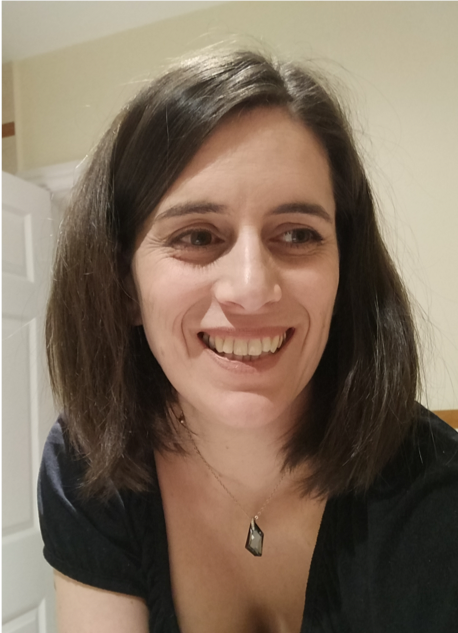
Photo of a white woman with straight shoulder-length  dark brown hair. She is looking to her left, and smiling.
Shona Davison. Source: Author
[image: Photo of a white woman with straight shoulder-length
dark brown hair. She is looking to her left, and smiling.]

Shona Davison
shonadavison.co.uk

I do not hate autism. Sadly, many people do, including some autistic people. Recently I saw a post in a Facebook support group for autistic people. The original poster said that they hated autism and gave a list of reasons why. Many others agreed in the comments. There was almost relief that someone had said it. Autistic people sometimes feel like they are not allowed to say such things. In the comments many autistic people explained why they hate autism. The reasons were mostly to do with how difficult their lives are. I didn’t comment as I recognise when people need to vent, and arguing would not have been supportive. However, I found the thread extremely upsetting. I hate to see people suffer and this thread was evidence that many autistic people do indeed suffer.

One of the things that bothered me about the thread was I do not think their hatred was directed in the right place. Their comments suggested that they hated that their lives are so difficult. Are their lives difficult because of autism?

Life is difficult for me as an autistic woman. I’ve spent most of my life being criticised or rejected because of perceived social failings. It is difficult trying to keep up with conversations because my brain processes information more slowly, and people don't realize I need a few extra seconds to reply. It's difficult being in sensory overload because fluorescent lights exist (they wouldn't if autistics were the majority). I put in extra effort compared to most for every outing, every social interaction, everything I do, yet I still do not meet the appropriate ‘standard’ as defined by non autistic people. I get more tired and stressed from this extra effort, so I need more downtime. But if I take more downtime I am perceived as lazy. Yet if I don’t have downtime, I have anxiety attacks or meltdowns and I’m considered not to be "resilient." All of this means my life is difficult—more difficult that it would be if I were not autistic.

Many autistic people have really difficult lives through no fault of their own.

I therefore understand why some autistic people want a cure. But my view is that those people are putting the blame for their problems in the wrong place. If we blame autism, which is an integral part of us, the consequence is that we try to change ourselves for a better life.

I do not believe it is possible to be a happy autistic person whilst trying to behave like a non-autistic person. It is futile. Even if we are successful at ‘fitting in’ for many years, there is usually a price to pay in the long run. We will always stand out as different to some extent and for some of us the effort involved in acting ‘normal’ will kill us.

In my view, the blame for most of the challenges we face should be placed in our environments.

I’m autistic, I’m always going to be autistic. Whether or not I am happy depends on external factors such as the people around me, my physical environment, the type and amount of work I do. I believe that accepting this is key to wellbeing.

I have had more success improving my life once I stopped focusing on changing myself, and instead started to look at my surroundings. As my knowledge about my own brain and my own needs has increased, I have been able to educate my family and friends. I say ‘no’ to work or social events more often, so that I get the downtime I need. Our house has dimmer switches, headphones, weighted blankets, a mini trampoline, and so many stim toys. Changing our environments is not necessarily a simple task, but for lots of us autistics it is far easier than long-term masking. Research shows it is also less dangerous to our mental health. I believe it is more likely to result in happiness too, but how to be a happy autistic person is not a priority in autism research, so that is just my personal view based on my experience.

For those of us who are able and willing to go that step further there is a lot of work to be done changing wider society. Professionals need educating; laws, policies and diagnostic manuals need changing; public spaces need to be more sensory friendly.  But one step at a time—changing our immediate environment needs to come first.

I have seen some autistic people argue that blaming society for our difficulties is shirking personal responsibility and that we should be aiming to ‘improve’ ourselves. This stance says a lot about their conceptualisation of autism: If one sees autistic people as deficient or lacking in some way compared to non-autistic people then it is understandable that one would believe that acting more like a non-autistic person is "self-improvement."

I do not see autism that way at all. All humans learn and develop over their lifetime, and that is a positive thing. Why should autistic people be any different? It should be obvious that autism acceptance is compatible with personal development. I saw a really lovely phrase on Twitter once: "We do not grow out of autism, we grow into it."

I do not just accept I am autistic, I embrace it.  Autism is intertwined into every part of me and influences everything I do and feel.  I would not be me if I were not autistic, I’d be an entirely different person.

Do autistic people suffer? Sadly yes, lots of us do. Do we suffer from autism? No, I do not think so. That is why I do not hate autism.
Share:

Autism, Transmasculine Identity, and Invisibility

Transgender Pride flag
The Transgender Pride Flag
By SVG file Dlloyd based on Monica Helms design [Public domain], via Wikimedia Commons
[image: A flag with five horizontal stripes. The center stripe is white, flanked by two pink stripes,
then a light blue stripe at the top and the bottom.

Devin S. Turk
@devinst97

Everyone in my life knows that I’m transgender. Comparatively, very few people know about another major part of me: that I’m autistic.

At age twenty-one, I’ve come to understand that many of my young adult years have centered around trying to bridge the gap between my two ways of being: The way that I present myself to the world, and the way that I perceive who I am. I imagine that someday, hopefully soon, those two components of my life won’t feel far apart. And hey, sharing this essay might even help.

I realized I was trans when I was fifteen, but just a year before had come a revelation of similar scale and importance to me; my diagnosis of Asperger’s syndrome (which is now referred to as Autism Spectrum Disorder.) I experience many symptoms or “traits” of ASD, and I won’t mention all of them here, but it’s worth saying that my traits are not obvious to the untrained eye. Underneath the mask, though, lies a deep unsureness of how to regulate social interaction. To cope, I copy, or “mirror” other people in order to appear more socially fluent and less awkward. And it works. Many people close to me might say that I “blend in” very well, in more ways than one.

Now that I’ve been on testosterone hormone replacement therapy for close to three years now, my voice is deeper, my jaw is squarer, and I even have a bit of facial hair. When I tell people that I was assigned the sex “female” at birth, they often say something to the effect of “I would have never guessed!” This is typically meant as a compliment, but to me, it feels patronizing.

In an eerily parallel way, people react very similarly when I disclose to them that I’m autistic. In both scenarios, the disbelief is caused by the preconceived notions of what it “looks like” to be transgender or autistic. I credit the testosterone as the reason I am not read as female, and to some degree, I credit my socialization as a reason I am not perceived as autistic.

Professionals who diagnose Autism Spectrum Disorder are, in general, proficient at recognizing autistic traits in males. After all, the original model for autism was based on studies of mostly young boys. Some doctors are still catching up to being able to recognize such traits in girls and women, but people are becoming increasingly aware that autism presents itself differently in girls than in boys. For example, autistic girls are more likely than boys to be masters of “social camouflage,” which masks their traits of ASD.

So, where do I fit into this framework as a transmasculine person? Yes, I identify as more male than female. However, I lived the first eighteen years of my life as a girl, and so I believe many of my ways of interacting with the world are byproducts of being socialized as female. But when I walk into my doctor’s office, they will likely overlook the significance of my history because they see that I now present as male, despite having a lot of learning experience in the world as a girl.

I’m the same degree of socially clumsy and unsure as when I was presenting as female, yet doctors who are new to my case and doctors who don’t know me well are less likely to agree with my diagnosis. Doctors will commonly overlook my noticeable lack of eye contact and my significant difficulties with Sensory Processing Disorder (which is a common co-occurring condition in autistic people) or severely under-appreciate just how utterly exhausting it is for me to engage with others. Maybe they don’t understand how much my executive dysfunction holds me back. Maybe they don’t believe me when I tell them that when I’m alone, I often flap my hands when I get excited as a means of expression, or that I rock back and forth when I’m focused on something. All of these experiences are very real to me, and yet they seem invisible to so many medical professionals, simply because I don’t outwardly appear to check all the boxes while I’m sitting across from them.

In addition to feeling unheard and unseen, my autistic traits are sometimes swept under the clinical rug and regarded as symptoms of conditions such as depression or severe social anxiety. I suppose it’s an easy enough mistake to make, but such a misunderstanding of my neurotype can lead to misdiagnosis, which could potentially then cause doctors to prescribe medicine and recommend treatments that may do more harm than good.

After receiving handfuls of labels from the DSM as well as literally dozens of unsuccessful psychiatric medications over the years, I’ve learned that much of the way I am is not something to be treated with various therapies and pills. This is not to say that autistic individuals cannot experience things like depression or anxiety which may be very much relieved via therapy and/or medication. I have simply realized that in my specific situation, the best route from here forward is perhaps to make peace with and embrace the qualities that set me apart from neurotypicals, or those who don’t experience neurological differences.

The intersection of being both autistic and transgender is more common than one might think. While the dialogue around autism and gender identity is expanding, I have a bit of trouble figuring out where I fit into the whole picture. So, I decided to do my own research, and while this subject is a fairly new field of study, I found some pretty astounding statistics:

In 2014, a U.S. study of 147 children (ages 6 to 18) diagnosed with ASD found that autistic participants were 7.59 times more likely to express gender variance than the comparison groups. Another study, conducted in the UK in 2015, involved 166 parents of teenagers with Gender Dysphoria (63% were assigned female-at-birth.) Based on parents’ report of their children on the Social Responsiveness Scale, the study found that 54% of the teenagers scored in the mild/moderate or severe clinical range for Autism.

The relationship has only begun to be explored in research in recent years, but I’ve come to realize that there are a lot of autistic trans people out there in the world. As someone who very much values human connection and simultaneously struggles with it, I have to say that looking at those figures provided me an amount of comfort. I discovered that there are a lot of people just like me.

Being autistic and being transgender certainly each has their own respective challenges, though one that they share is a lack of societal acceptance due to stigma. Many people still believe that who I am as a transmasculine person is inherently invalid, just like many other people still believe autism is some kind of tragedy that is to be cured. In contrast, I feel very strongly that who I am as a person is heavily dependent on both my trans and autistic identities, and that they are beautiful things. 

I would not be the person I am today if I did not have the incredible perspective that being transgender as well as being autistic has given me. My worldview has been altered by these two factors in particular in ways that I consider enlightening. Sure, I have tough days. But would I exchange all that I am in return for the promise of a simpler, more typical life? Most definitely not. Because after all, I’ve found that one of the best things about being dealt a different hand of cards is the unambiguous and fulfilling joy that is learning to accept oneself wholeheartedly.
Share:

Autism and Intense Interests: Why We Love What We Love and Why It Should Matter to You

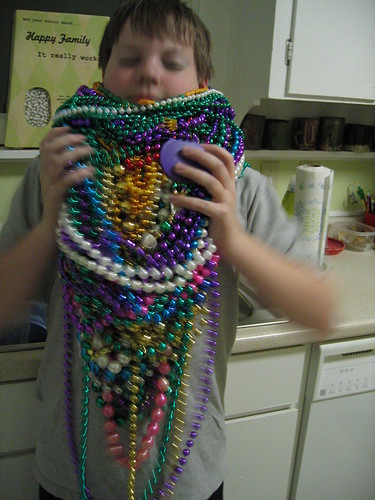
mardi gras bead overload
Photo © Deanna | Flickr/Creative Commons
[image: White child with short brown hair holding up
a massive bunch of colorful Mardi Gras beads.]
Maxfield Sparrow
unstrangemind.com

If you know an Autistic person or are Autistic yourself, you are familiar with the intense interests and consuming passions that we can get so engrossed by that we forget to eat, sleep, or even use the bathroom. While not every Autist has one or more deeply-lived interests*, the laser-focus with which we can approach preferred things is generally considered one of the hallmark traits of autism.

An Australian research study from 2016  demonstrated the tremendous value of going directly to Autists, by asking us about this tendency in order to discern our motivations. The researchers wanted to answer the question: why are Autists drawn with such intensity to the things that catch their interest? To that end, they developed a 20-item, self-administered assessment called the Special Interest Motivation Scale (SIMS). Statements about why one pursues one’s deep interests such as “because I enjoy broadening my knowledge about my special interest” were ranked on a seven point Likert scale.

The 20 items were divided into five broad categories:
  • Personal life values and goals
  • Intrinsic interest and knowledge
  • Prestige
  • Engagement and “flow”
  • Achievement
Based on the results of the SIMS—from 158 professionally-diagnosed Autists (86 males and 72 females), 185 non-autistic parents of Autists (35 males, 150 females), and a control group of 267 people with no autism and no psychiatric history (193 males, 74 females)—the study found that Autists had a higher motivation to pursue interests than non-autistic parents or controls.

The highest particular motivations were intrinsic and associated with “positive affect”—in other words, we pursue our interests because it makes us happy. This is one of the best, most accurate scientific studies of an Autistic trait I’ve ever seen. That’s exactly why we pursue strong interests -- it is inherently satisfying and fulfilling to us.

While some intense interests can lead to satisfying careers, it’s important that our interests not be considered valid or valued according to monetary measures. I see so much emphasis placed on turning intense interests into a career; just last week on Twitter many Autistic adults were debating with a therapist who had said that no Autistic child should be permitted to pursue any intense interest that would not lead to a career.

A valid argument the Autistic adults were making was that you can’t predict whether an interest would lead to a career or not—some do and some don’t. Some topics that seem ill-suited for vocational purposes lead to a life’s calling, while some rather mainstream interests like math or history have not turned into a career for the Autists who intensely pursued them.

But setting that argument aside for the moment, how can it be good for a child to forbid them to pursue an intense interest that is bringing them deep joy and feelings of self-worth and satisfaction? Yes, of course children (and adults!) cannot spend every waking moment pursuing an interest to the exclusion of all other activities. But the therapist with whom we debated talked about preventing all non-vocational interests.

Do we insist that non-autistic children cannot watch their favorite cartoon because it is not likely to lead to a future career? Of course we don’t! Most parents will not allow their child to park in front of the television 24/7, but the thought of telling a child they cannot ever watch Steven Universe because it will not lead to a good career is absolutely ludicrous! Do not hold Autistic children to unrealistic standards their non-autistic peers are not held to.

But there is a more serious reason still why Autistic people of all ages should be encouraged to spend time pursuing their intense interests. (Yes, I said encouraged to pursue their interests, not merely permitted to pursue them.) Whether an Autist is deeply interested in calculus or crochet, plate tectonics or toilets, history or license plate numbers, astrophysics or plucking blades of grass, being encouraged to spend time with those interests is vital for preserving our mental health.

The Autistic members of our human family are in crisis. Anxiety and depression occur at alarmingly high rates, and our rates of suicidal thoughts, attempts, and completions are horrifying. Encouraging Autists to spend time with our intense interests is not enabling or coddling us. It is crucial to our well-being, happiness, thriving, growth, and -- overly-dramatic though it might sound to you -- keeping us alive. Whether it’s categorizing every leaf from every tree in the neighborhood or taking 127 photos of the cat doesn’t matter. What matters is that the interest is special to us, of our own choosing, and warmly encouraged. I am not being hyperbolic when I tell you this is a matter of life and death for us.

The Journal of Autism and Developmental Disorders published a study last month which found that being accepted (or not) was significantly correlated with levels of depression among Autistic people. Let me spell what that means out for you: not accepting an Autist’s intense interest directly contributes to their depression. Accepting and encouraging an Autistic person to be true to themselves is healing and healthy.

When the researchers ran multiple regression analyses of their data, they found that being pressured to “camouflage” Autistic traits also makes Autistic people depressed. This means that it is counterproductive and harmful to have the goal to make an Autistic person “indistinguishable from their peers,” because that is the sort of pressure that leads to the shockingly high suicide rates researchers keep finding whenever they study us.

Oh, and the acceptance that Autistics need in order to be happy? The study found that it must come from within as well as from without. It’s not enough for the world to accept us; we must accept ourselves. I’m here to tell you that it is a tough task, trying to accept myself when the world clearly does not accept me. Autism acceptance from within is so much easier when I meet acceptance from without.

Autism acceptance therefore does not mean valuing me and my interests because they could earn me money some day—it means valuing me and respecting what I value, because I am a worthy human being deserving of dignity and happiness. I work hard to build up my own sense of self-worth, and encourage other Autistic people to build up theirs as well. Imagine my heartbreak and anger a few days ago when a parent commented on my YouTube video supporting suicidal Autistics and encouraging them to develop tools of self-acceptance and told the world that their child’s life was pointless because she would never marry, hold a job, or live independently!

Don’t bother looking for the comment; I removed it. But I am still reeling from it. How could a parent think it was okay to say their child’s life was pointless? And how cruel does a person have to be to say such a thing on a resource meant to help keep suicidal people—people like their own child—alive and aiming toward happiness? Cruel seems too mild a word for it. It was an evil thing to say.

Your life is not pointless. Your child’s life is not pointless. It doesn’t matter whether a person marries or not. It doesn’t matter whether a person drives, holds a job, feeds themselves, gets dressed without prompting, or not. No one’s life is pointless!

As Jesse Jackson told my generation on Sesame Street, whether you are poor, young, on welfare, small, make mistakes, have different clothes, a different face, different hair, are black, brown, white, speak a different language—no matter who you are, you must be respected, protected, never rejected, because you are somebody.

So the next time you are tempted to tell an Autistic person their interest is silly, trivial, a waste of time, weird, or pointless, stop—and remember why we love what we love. We are somebody, too, and we must be respected, protected, and never rejected. Encourage our intense interests. And if you are Autistic, do not feel ashamed of or guilty about your intense interests.

We love what we love because we are who we are. And that is a beautiful thing.

----

*While the standard term for these deeply satisfying interests is “special interest,” I only use that phrase when I’m quoting someone else. It’s a point on which I differ with a large number of Autists, but I don’t like the term “special interest” (often abbreviated as “SI”.) I feel like it belongs in the bin with similar terms like “special needs” and “special education.” As the Down Syndrome community’s public service campaign reminds us, our needs are not special.

I would argue that the only thing “special” about our interests is their meaning to us; our interests are special to us.

I don’t call them “special interests” because we don’t say Bob Ross’ interest in painting was “special” or that Dr. Richard Feynman had a “special interest” in teaching. Being passionately consumed with a topic is a positive trait and I feel like calling it “special” just because the person being passionately consumed is Autistic is unnecessarily “othering.” Autism is a difference in intensity and frequency of traits found in non-Autistic people as well.

However, many Autists do embrace this language and love calling their passions “special interests” and I do not fault them for it. If you are not Autistic and are interacting with someone who is Autistic you should always follow their lead as far as what language they would like their identity and experience to be framed in.
Share: