Showing posts with label character development. Show all posts

ADHD and Creativity. You can't have one without the other.

Image result for ADHD brain activity
Sydney Developmental Clinic

Analysis of mind-wandering studies
offers new perspective on mental disorders

". . .The ADHD mind allows us to think freely and creatively."

During downtime, some of us daydream while others might focus on a to-do list, or get stuck in a negative loop. Psychology has traditionally defined all these thought patterns as variations of "mind-wandering."

But a review of brain imaging studies led by researchers at UC Berkeley and the University of British Columbia offers a new way of looking at spontaneous versus controlled thinking, challenging the adage that a wandering mind is an unhappy mind.

It suggests that increased awareness of how our thoughts move when our brains are at rest could lead to better diagnoses and targeted treatments for such mental illnesses as depression, anxiety and attention deficit hyperactivity disorder (ADHD).


Image result for Zachary Irving, a postdoctoral scholar at UC Berkeley
www.zacharycirving.com

Dr. Irving is developing a new 
theory of mind-wandering as 
unguided attention.
"It's important to know not only the difference between free-ranging mind-wandering and sticky, obsessive thoughts, but also to understand, within this framework, how these types of thinking work together," said review co-author Zachary Irving, a postdoctoral scholar at UC Berkeley.

Irving and fellow authors looked at three different ways in which people think when they're not directly engaged in tasks: spontaneous thought, ruminative thought and goal-directed thought.

The ADHD mind allows us to think freely and creatively
"We propose that mind-wandering isn't an odd quirk of the mind," said the review's lead author Kalina Christoff, a psychology professor at the University of British Columbia. "Rather, it's something that the mind does when it enters into a spontaneous mode. Without this spontaneous mode, we couldn't do things like dream or think creatively."

Irving, who has ADHD, said there are upsides to the most stigmatized mental disorders.

"Everyone's mind has a natural ebb and flow of thought, but our framework reconceptualizes disorders like ADHD, depression and anxiety as extensions of that normal variation in thinking," said Irving. "This framework suggests, in a sense, that we all have someone with anxiety and ADHD in our minds. The anxious mind helps us focus on what's personally important; the ADHD mind allows us to think freely and creatively."

Irving and fellow researchers reviewed nearly 200 neuroscience studies, a large number of which used functional magnetic resonance imaging (fMRI) to scan brains during resting activities.

They found that interactions between large-scale neural networks offered insights into how the resting mind moves. For example, their review of brain-imaging studies found that when the brain was focused on a task at hand, its prefrontal "executive" network, which governs planning and impulse control, among other functions, constrains other brain activity.

When stuck in a negative loop, such as anxious rumination, the brain's "salience" network, which processes emotions, took control, shutting off most other networks. Not surprisingly, spontaneous thought, such as daydreaming, dreaming during sleep and other forms of free association, were linked to far lower activity in the neural networks responsible for controlled thinking, allowing the imagination to flow freely.

Overall, researchers hypothesize that the resting mind naturally transitions between spontaneous and constrained thought.

"Let's say you're walking to the grocery store," Irving said. "At first, your mind wanders to a plethora of ideas: your new shirt, a joke you heard today, an upcoming ski trip to Lake Tahoe. Then your thoughts become automatically constrained when you start to worry about a looming work deadline that needs to be met before the Tahoe trip. Then you realize that your worries are making you miserable, so you deliberately constrain your thoughts, forcing your mind back to grocery shopping."

Historically, Irving said, the field of psychology has approached mental disorders separately, as though each were in a vacuum rather than being interconnected.

"Clinicians have studied compulsive rumination in isolation, and ADHD in isolation, but now there's a huge interest in how we can make sure that the psychology and neuroscience literature is more closely aligned to what is happening in our heads," Irving said.

Story Source:  Materials provided by University of California - Berkeley. Kalina Christoff, Zachary C. Irving, Kieran C. R. Fox, R. Nathan Spreng, Jessica R. Andrews-Hanna. Mind-wandering as spontaneous thought: a dynamic framework. Nature Reviews Neuroscience, 2016
Share:

How "beardedness" affects women's attraction to men

Image result for beardedness
io9.gizmodo.com

To many authors it appears designing a protagonist is a process of making them über-masculine, often to the point of parody.  What this research points out is that a man with a beard is seen by most women as a better match than the hyper-masculine.  Or the almost feminine.  A small point perhaps, but something to consider.


How beardedness affects women's attraction to men

"Extremely masculine and extremely feminine-looking males were least attractive."

New research suggests that women tend to find beardedness attractive when judging long-term relationships, perhaps as a signal of formidability among males and the potential to provide direct benefits, such as enhanced fertility and survival, to females.

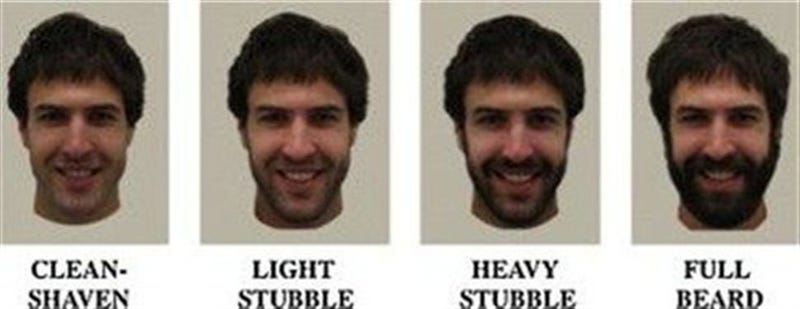
For the study, investigators used computer graphic manipulation to morph male faces varying in facial hair from clean-shaven, light stubble, heavy stubble, and full beards, with additional differences in brow ridge, cheekbones, jawline, and other features so that the same man appeared more or less masculine.

When women viewed the images, masculinized and, to an even greater extent, feminized faces were less attractive than unmanipulated faces when all were clean-shaven. Stubble was judged as most attractive overall and received higher ratings for short-term relationships than full beards, which were more attractive for long-term relationships. Extremely masculine and extremely feminine-looking males were least attractive, irrespective of relationship context.

"Sexual selection via female choice has shaped the evolution of male ornamentation in many species," wrote the authors of the Journal of Evolutionary Biology study.

Story Source: Materials provided by Wiley.  B. J. W. Dixson, D. Sulikowski, A. Gouda-Vossos, M. J. Rantala, R. C. Brooks. The masculinity paradox: facial masculinity and beardedness interact to determine women's ratings of men's facial attractiveness. Journal of Evolutionary Biology, 2016.
Share:

Should gay candidates come out of the (political) closet? Study says yes

Image result for gay political candidates
www.uc.edu
Should gay candidates come out of the
(political) closet? Study says yes

"LGBT elected officials make tremendous public servants because
they are painfully aware of the impact policies have on people's lives."

A political science researcher finds that the sexual orientation of LGBT candidates no longer poses an impediment to being elected to public office -- and, in some cases, may actually help them win.  Drastic shifts in public opinion in the last decade have seen an uptick in gay and lesbian candidates running for -- and winning -- public office as never before.

But experts often advise even openly gay and lesbian candidates to downplay their sexual orientation or risk losing votes.

Now, a new study by David Niven, an assistant professor of political science at the University of Cincinnati, calls that advice into question.

The research suggests that not only does a gay or lesbian candidate's sexual orientation no longer pose a political disadvantage, but that, in some cases, it may actually help them win office.

"Our results call into question the always and everywhere assumption that running as a gay or lesbian candidate is necessarily a hurdle that must be overcome," said Niven.

LGBT candidates are often advised to downplay their sexual orientation for good reason, says Niven. He points to an established body of research documenting how a candidate's sexual orientation can be an impediment to higher office.

"All the research that we have says you have to overcome and to downplay it," he said.

That conclusion, based largely on surveys, offers subjective and interpretive data on how voters react to fictional or hypothetical candidates, but little in the way of how voters respond to actual candidates once they're in a private voting booth, Niven said.

So he decided to test the theory in a real race, with real voters casting ballots for real candidates. Enter the 2016 March primary race for county recorder in Ohio's Franklin County, which includes Columbus.

The Study
Two Democratic candidates vied for the position: Incumbent Terry Brown, an openly gay man seeking his second term in office, and challenger Danny O'Connor, who is straight.

The match-up proved an ideal field study, said Niven. While Brown's website features a photograph of him and his husband, neither he, his opponent nor the "Democrats United" ticket both candidates ran with referenced Brown's sexual orientation or interests in advancing civil rights issues.

Moreover, the low-key race for county recorder drew only minimal media attention, none of which identified Brown as gay, said Niven.

Niven randomly chose 30 precincts for the study. Because most gay and lesbian candidates tend to compete in places where Democrats are likely to win, he said, only households with a registered Democrat in residence were included.

Fifteen of the precincts received one of three 4x6 glossy postcards featuring Brown, while the other half, serving as a control group, received no mailing.

  • The first mailer featured a photograph of Brown and listed his efforts to save taxpayer money, improve the efficiency of the recorder's office and commitment to stamping out real estate fraud.
  • A second mailer included the same campaign claims, but featured a photograph of the candidate and his husband.
  • A third mailing repeated the claims of the previous two and included the same photograph as in the second mailing, but added an additional claim of the candidate's commitment to marriage equality for gay people. 

The Results
Brown ultimately lost the race to O'Connor, but not because of his sexual orientation or commitment to marriage equality, says Niven.

According to the study, Brown actually received slightly less votes from voters who received the first mailer (which included only a photo of him) than he did from those in the control group who didn't receive any mailers.

Swapping a mailer featuring a photograph of the candidate with one of Brown and his husband produced slightly more votes, comparable to those of the control group. That increase, while negligible, speaks volumes, said Niven.

"Study after study suggests there is some kind of penalty gay and lesbian candidates are subject to without exception. That decidedly did not happen here," he concluded.

The results of the third condition, in which voters received a mailer featuring a photograph of the candidate and his husband and listing his commitment to marriage equality, also defied conventional campaign wisdom, says Niven.

In that scenario, Brown received more than four percent more votes than he did in all of the other scenarios.

"A lot of races are won on four percent," said Niven. "This is a pretty startling jump in terms of getting people's attention in a race they wouldn't otherwise give two thoughts about."

Niven says the results strongly suggest that emphasizing Brown's commitment to the rights of gay and lesbian people gave him a political edge.

"He's not just filing deeds, he's on the front lines of the civil rights struggle," he explained. "This is what was compelling to people."

Building Political Power

Niven acknowledges the limitations of the study, which focused on how Democratic voters in a specific region responded in one race. He's planning a follow-up study of the wider electorate this fall.

Nonetheless, he says the data indicates that the nation might be closer to a state of post-gay politics than some realize.

"When candidates hide or downplay their sexual orientation, it sends a message that significant barriers remain for gay and lesbian candidates," Niven said. "This study shows they might be hiding from a reality that isn't as bad as they think."

That comes as welcome news to Aisha C. Moodie-Mills, president and CEO of the Victory Fund, a nonpartisan organization that supports openly lesbian, gay, bisexual and transgender candidates running for public office.

She said the study indicates a growing appreciation amongst voters for LGBT candidates who are open about their lives and policy positions.

"LGBT elected officials make tremendous public servants because they are painfully aware of the impact policies have on people's lives, and therefore think critically about the issues confronting them," she said. "This research offers important insights into the advantages of being an openly LGBT candidate in certain political environments, and provides a fresh perspective on strategies for building long-term political power."

Story Source: Materials provided by University of Cincinnati, original written by Rachel Richardson. "Should gay candidates come out of the (political) closet? Study says yes." ScienceDaily, 12 September 2016. 
Share:

Science shows why we can't tell Clark Kent is Superman

Image result for superman clark kent


How many times have you watched a Superman film or TV show and found yourself almost screaming, "Clark Kent is Superman you dolt!"  Or have you actually screamed this, shocking everyone around you in the theater?

I guess it's because we're in on the joke, whereas, at least according to this research, donning a pair of glasses can be an effective disguise.  Add a hat and a dorky expression, and Superman becomes Clark Kent and no body is the wiser.

Here's the report.

Now go try it.  Put a costume of some sort on over your Superman duds and see for yourself.

*  *  *  *  *

Scientists show that 'Superman' disguise could actually work

Researchers at the University of York have shown that small alterations to a person's appearance, such as wearing glasses, can significantly hinder positive facial identification.  The research has the potential to contribute to future policies concerning photo identification, such as drivers' licences or passports, where an individual has to be matched correctly to their image in order to inform important security decisions.

Psychologists showed participants a number of faces in various 'natural' poses, similar to images seen on Facebook or other social media sites, and asked them to decide whether each pair of images showed the same person or not. Images were shown in three categories -- pairs of faces that wore glasses, images where neither wore glasses, or only one image wore glasses.

In cases where both of the faces wore glasses or where neither wore glasses, accuracy was around 80 per cent. However, when only one of the two faces wore glasses, performance was approximately 6 per cent lower, a statistically significant decrease.

Dr Robin Kramer, from the University of York's Department of Psychology, said: "The question of whether the inhabitants of Metropolis could be realistically deceived by Superman's simple disguise has been rumbling since the comic books first arrived on the stands, but the question becomes a serious one when applied to real-world security issues.

"When a security guard checks a passport photo against the person standing in front of them, they do not have the luxury of familiarity with that face, as Lois does with Superman/Clark Kent. This is something we wanted to investigate further, because we know from previous studies that people are relatively poor at matching faces in various guises when the person is unfamiliar to them.

"We also know from prior work that it is easier to match passport-style photos together when the facial expressions and poses are the same. Here, we investigated unfamiliar face matching, showing participants two unconstrained faces of strangers, with and without glasses, and asked whether the images are the same person or two different people."

The results suggest that people generally find it difficult to correctly match unfamiliar and uncontrolled face images, but they are significantly worse when glasses are worn by only one of the faces.

Co-author, Dr Kay Ritchie, from the University of York's Department of Psychology, added: "In real terms, glasses would not prevent Lois recognising that Clark is in fact Superman as she is familiar with him. For those who do not know him, however, this task is much more difficult, and our results show that glasses do disrupt our ability to recognise the same unfamiliar person from photo-to-photo.

"We hope that this research can be used by legal authorities to help inform future policies on identification for security purposes, particularly in the UK where individuals who normally wear glasses are required to remove them for their identification cards."

The research, Disguising Superman: How glasses affect unfamiliar face matching, is published in Applied Cognitive Psychology.

Story Source:

The above post is reprinted from materials provided by University of York. Note: Content may be edited for style and length.

Journal Reference:

Robin S. S. Kramer, Kay L. Ritchie. Disguising Superman: How Glasses Affect Unfamiliar Face Matching. Applied Cognitive Psychology, 2016
Share:

Psychopathic individuals have trouble detecting threats.

Credit: © Marek / Fotolia 

For many decades fear has been put forth as a hallmark feature of psycho-
pathy, the impairments in which would lead to bold risk-taking behavior.
Psychopaths feel fear but see no danger

Researchers from Vrije Universiteit Amsterdam and Radboud University Nijmegen found proof that psychopathic individuals can feel fear, but have trouble in the automatic detection and responsivity to threat. For many decades fear has been put forth as a hallmark feature of psychopathy, the impairments in which would lead to bold risk-taking behavior. Sylco Hoppenbrouwers (VU Amsterdam), Erik Bulten and Inti Brazil (Radboud University) reviewed theoretical and empirical brain and behavioral data pertaining to fear and psychopathy and found that psychopathic individuals have trouble detecting threats. 

There was however little evidence that the conscious experience of fear was affected, indicating that the experience of fear may not be completely impaired in psychopathy. It's the first study to provide empirical evidence that the automatic and conscious processes can be independently affected within one psychiatric disorder. The results are published in Psychological Bulletin.

In their systematic review and meta-analysis, Hoppenbrouwers, Bulten and Brazil reviewed the available evidence for the potential existence of the relationship between fear and psychopathy in adult individuals. Importantly, their definition of fear was based on state of the art knowledge of the neurobiological and cognitive underpinnings of this emotion. They used this knowledge to generate a model that separates brain mechanisms involved in automatic detection and responding to threats from those involved in the conscious experience of fear as an emotion. Using this model as reference, they first performed a conceptual analysis of the work of earlier theorists, going back to as early as 1806. They found that only one theorist incorporated the construct of fear into an etiological model of psychopathy.

Fear isn't absent in psychopathic individuals
The evidence for impairments in brain areas involved in the experience of fear was less consistent than is often assumed, indicating that the experience of fear may not be completely impaired in psychopathy. The researchers then conclusively showed that psychopathic individuals have trouble in the automatic detection and responsivity to threat but may in fact feel fear, providing direct empirical support for the claim that the conscious experience of fear may not be impaired in these individuals. An additional meta-analysis examining the five other basic emotions found that there may also be impairments in the experience of happiness and anger, but the lack of consistency in the current literature precluded the generation of strong claims.

New model also applies to mood and anxiety disorders
The research by Hoppenbrouwers, Bulten and Brazil is the first to provide empirical evidence that the automatic and conscious processes can be separated. Furthermore, the proposed model not only applies to psychopathy, but can also be used to further increase conceptual precision and generate new hypotheses for research on mood and anxiety disorders. Inti Brazil: "While psychopathic individuals may suffer from a dysfunctional threat system, people with posttraumatic stress disorder may have a hyperactive threat system, which later leads to them feeling fearful." Sylco Hoppenbrouwers agrees: "As a consequence of our research, some very influential theories that assign prominent roles to fearlessness in the aetiology of psychopathy will need to be reconsidered and made consistent with current neuroscientific evidence. Such re-evaluations of key concepts will lead to increased precision in research and clinical practice which should ultimately pave the way toward more targeted and more effective treatment interventions."

Story Source: Materials provided by Vrije Universiteit Amsterdam. Sylco S. Hoppenbrouwers, Berend H. Bulten, Inti A. Brazil. Parsing fear: A reassessment of the evidence for fear deficits in psychopathy.. Psychological Bulletin, 2016
Share:

Facial cues influence how social exclusion is judged

Credit: Images: mirellawalker.com  

People who look cold and incompetent receive less support in situations
of social exclusion than those who look warm and incompetent.

Fair or unfair? Facial cues influence
how social exclusion is judged

People are often excluded from social groups. As researchers from the University of Basel report in the Journal of Experimental Social Psychology, whether un-involved observers find this acceptable or not may depend on the facial appearances of those excluded. The exclusion of cold and incompetent looking people is more likely to be accepted.

Social exclusion -- be it at school, work or among friends -- is usually a painful experience for those affected. This behavior also often has a considerable effect on third-party observers: Bullying and ostracism with the aim to hurt the victims are seen as particularly unfair and morally unacceptable. However, in some cases, social exclusion is also perceived as justified. Groups are, for example, more likely to ostracize people who cause trouble or arguments in order to restore the harmony in their group.

Quick moral judgment
Whether un-involved observers view social exclusion as morally justified or not can be very important for the victim as a possible intervention depends on that judgment. Making such a moral judgment, however, is often difficult and time consuming, which is why observers revert to relatively superficial indicators for guidance. One such indicator is the face of the excluded person.

In several studies, the team of psychologists from the University of Basel presented different male faces to a total of 480 participants. The facial characteristics had previously been altered using a recently developed method for facial manipulation. The portraits were manipulated to appear warm or cold and competent or incompetent. The participants looked at each portrait for two seconds before spontaneously deciding how acceptable they thought it was for a group to exclude this person.

More protection for warm and incompetent looking people
In all studies, participants found it more acceptable to socially exclude people whose faces looked cold and incompetent. However, exclusion was found least acceptable when those excluded looked warm and incompetent. A possible explanation for this could be that these people are often perceived as especially in need of protection and therefore excluding them from a group would be particularly cruel, says lead researcher Dr. Selma Rudert from the Center of Social Psychology at the University of Basel.

Earlier studies have shown that humans have very clear-cut ideas of what a warm or cold person looks like. However, there is no evidence for any relation between facial features and personality traits. In other words: Although appearances are deceptive, individuals let them guide their judgment. The perceived warmth and competence in a person's face play an especially important role in this judgment.

Objectivity would be important
"Our results suggest that the first impression a person makes can also influence moral judgments that would actually call for objectivity," explains Rudert. These impressions can have far-reaching consequences for how people behave in social exclusion situations: "It is conceivable that a cold and incompetent looking victim of exclusion would get less support or, in the worst case, bystanders may even actively join the ostracizing group -- all based on one glance at the face of the victim."

Story Source:  Materials provided by Universität Basel.   "Fair or unfair? Facial cues influence how social exclusion is judged." ScienceDaily, 29 August 2016

Share:

The more we know, the easier we are to deceive

Image result for Dr Ciara Greene from University College Dublin
Dr Ciara Greene, University College Dublin
This confirms the reason academics, scientists and reputable journalists don't print things without thoroughly confirming their sources. At least two sources for a piece of information before posting anything. When I see anything posted with only a single source, I discount it until I have a chance to confirm the story from other independent sources.

I'm not alone in this, and this research clarifies why this is such an important practice.
*  *  *  *  *

The more we know, the easier we are to deceive

Knowing a lot about a subject means you are more likely to have false memories about it. That is the paradoxical conclusion of research presented by Dr Ciara Greene from University College Dublin to the annual conference of the British Psychological Society's Cognitive Psychology Section in Barcelona.

Dr Greene and Anthony O'Connell, then a Masters student at University College Cork, asked 489 participants to rank seven topics (football, politics, business, technology, film, science and pop music) from most to least interesting.

They were then asked if they remembered the events described in four news items about the topic they selected as the most interesting and four items about the topic selected as least interesting. In each case, three of the events depicted had really happened and one was fictional.

The results showed that if someone was interested in a topic, this increased the frequency of accurate memories relating to that topic. But it increased the number of false memories too -- 25 per cent of people experienced a false memory in relation to an interesting topic, compared with 10 per cent in relation to a less interesting topic.

And having a high level of knowledge about a topic -- as measured by the number of true memories recorded -- rather than just an interest, increased the frequency of false memories too. People who were more knowledgeable about a subject were nearly twice as likely to remember incidents relating to that topic that never happened.

Dr Greene said: "Increasing scientific and public understanding of the causes of false memory is an important goal, particularly in light of some of the more negative consequences associated with the phenomenon, including faulty eyewitness accounts and the controversies surrounding false memories of traumatic childhood events. I hope that promotion of knowledge about false memories may provide some inoculation against their harmful effects."

Story Source:  Materials provided by British Psychological Society (BPS).  "The more we know, the easier we are to deceive."  ScienceDaily, 25 August 2016. 
Share:

Why prison populations continue to grow even as crime declines


Image result for prisoners
www.plsqld.com

Why prisons continue to grow, even when crime declines
Study finds more offenders have criminal records

"It is much harder for judges to not give prison sentences to
repeat offenders, so we have more convicted people going to prison."

A new study may help explain why the number of people in prison in the United States continued to rise, even as the crime rate declined significantly. A sociologist found that the US criminal justice system continues to feel the reverberations from the increase in violent crime and imprisonment that occurred from the 1960s to the early 1990s.

The U.S. prison population continued to rise even after the crime rate began declining in the mid-1990s because judges were faced with more repeat offenders, a new study suggests.

Using data from Minnesota, an Ohio State University sociologist found that the U.S. criminal justice system felt the reverberations from the increase in violent crime and imprisonment that occurred from the 1960s to the early 1990s.
"The issue is that the average offender who appears before a judge for sentencing today has a much more extensive criminal record than they did in the past," said Ryan King, author of the study and professor of sociology at Ohio State.
King found that the average offender in Minnesota in 1981 had one prior felony. That increased to two prior felonies in 1991 and 2.5 prior felonies in 2013.

"It is much harder for judges to not give prison sentences to repeat offenders, so we have more convicted people going to prison."

In fact, the study found that 15 percent of convicted offenders received a prison sentence in 1981, which increased to 20 percent in 1995, and reached nearly 30 percent in 2013.

King said that it is important to try to replicate these results in other states. But he believes the findings would be similar in most states, because judges across the country emphasize prior records when sentencing offenders.

The data needed for a study like this is not available for a national sample. So King used 33 years of data that was held by the Minnesota Sentencing Guidelines Commission. This included case-level information on each of the approximately 355,000 felony convictions in the state between 1981 and 2013.

This data included the criminal history of the offender, the severity of the crime, the sentencing outcome and several demographic variables.

King found that in 1981, fewer than 40 percent of sentenced offenders had criminal records, but almost 60 percent did in 2001.

"Criminal activity can decrease, but the criminal record only goes up. Judges are dealing with more repeat offenders now," he said.

It's not that judges are treating repeat offenders more harshly now than in the past. In fact, once he controlled for criminal record over time, King found that judges appeared to be getting more lenient, not harsher.

Minnesota has guidelines for judges to consult when they are deciding on prison sentences for specific crimes and circumstances. Sentences that went below the guidelines increased from 18 percent to 23 percent from 2001 to 2013. Sentences that went above the guidelines decreased by about 2 percent in that same time period.

That suggests the problem isn't the length of prison sentences, but who is who is being sent to prison, King said.

"Judges' hands are tied, to some extent. It is hard to show leniency and maintain legitimacy in the public eye when you're dealing with a repeat offender, and judges are seeing more of them than they have in the past," he said.

If the United States wants to reduce the number of people in our prisons, King said these results suggest we need a new approach.

"Instead of focusing mainly on first-time offenders, we need to come up with new ways of dealing with offenders who have just one prior conviction," he said.

"If we could find ways to keep them out of prison, that would have a large impact."

Regardless of what else is done, the number of people in prison should decline if crime rates stay where they are, he said.

"But it is going to be a slow process. Our prison populations are going to go down much slower than they went up."

Story Source: Materials provided by Ohio State University, original written by Jeff Grabmeier."Why prisons continue to grow, even when crime declines: Study finds more offenders have criminal records."  ScienceDaily.  22 August 2016. 
Share:

Ramen noodles supplanting cigarettes as currency among prisoners

Nissin - Raoh Japanese Instant Ramen Noodles Soy Sauce Taste 

Ramen noodles supplanting cigarettes
as currency among prisoners

Ramen noodles are supplanting the once popular cigarettes as a form of currency among state prisoners, but not in response to bans on tobacco products within prison systems, finds a new study.  Instead, study author Michael Gibson-Light, a doctoral candidate in the University of Arizona School of Sociology, found that inmates are trying to figure out ways to better feed themselves as certain prison services are being defunded.

The rise of ramen as currency in prison signals "punitive frugality," indicating that the burden and cost of care is shifting away from prison systems and onto prisoners and their support networks, said Gibson-Light).

"Punitive frugality is not a formal prison policy, but rather an observable trend in prison administration practice in institutions throughout the country," Gibson-Light said.

"Throughout the nation, we can observe prison cost-cutting and cost-shifting as well as changes in the informal economic practices of inmates," he said. "Services are cut back and many costs are passed on to inmates in an effort to respond to calls to remain both tough on crime and cost effective."

The research Gibson-Light will present is part of a larger project investigating the lives of inmate laborers in a male state prison in the U.S. Sunbelt. During his 12-month investigation from May 2015 to May 2016, Gibson-Light conducted interviews with nearly 60 inmates and prison staff members, and also observed prisoners involved in work. Ultimately, he began to study monetary practices among inmates, and how such men were responding to declining services.

The U.S. Bureau of Prisons reported that states spent about $48.5 billion on corrections in 2010, marking a 5.6 percent decline compared with 2009, and that -- dating back to 1982 -- per capita state corrections expenditures have not kept pace with the number of inmates.

"Prison staff members as well as members of the inmate population provided narratives of the history of changes in prison food -- the past few decades have seen steady decreases in the quality and quantity of inmate food," Gibson-Light said.

"Prisoners are so unhappy with the quality and quantity of prison food that they receive that they have begun relying on ramen noodles -- a cheap, durable food product -- as a form of money in the underground economy," he said. "Because it is cheap, tasty, and rich in calories, ramen has become so valuable that it is used to exchange for other goods."

Those other goods include other food items, clothing, hygiene products, and even services, such as laundry and bunk cleaning, Gibson-Light said. Others use ramen noodles as bargaining chips in gambling when playing card games or participating in football pools, he said.

And ramen noodles are not merely replacing cigarettes. Gibson-Light said the same is happening with noodles replacing stamps and envelopes as forms of in-demand currency.

Gibson-Light believes it is important to highlight the clear connection between prison practices and the daily lives of inmates and their support networks.  Although Gibson-Light's findings are related to his study at one prison, he points to other investigations indicating that the trend toward using ramen noodles for exchanges is evident in prisons that have not banned tobacco use.

"What we are seeing is a collective response -- across inmate populations and security levels, across prison cliques and racial groups, and even across states -- to changes and cutbacks in prison food services," he said.

Gibson-Light called for a deeper study of prison food services, and what implications the decline in support could mean for the quality of care for prisoners.

"The form of money is not something that changes often or easily, even in the prison underground economy; it takes a major issue or shock to initiate such a change," he said. "The use of cigarettes as money in U.S. prisons happened in American Civil War military prisons and likely far earlier. The fact that this practice has suddenly changed has potentially serious implications."

Story Source:  Materials provided by American Sociological Association. "Ramen noodles supplanting cigarettes as currency among prisoners."  ScienceDaily, 22 August 2016.
Share:

The more television you watch, the more you believe myths.


The conclusions of this Austrian study helps explain why some people see the world as frightening and filled with dangers.  As the study points out, they "overestimate the probability of being the victim of crime."

While this study did not address this, it raises the question that the more a person watches television, the more likely they are to stereotype different cultures, races, and societal issues.  For example, does watching reality police shows lead to the impression that a certain minority group is responsible for the majority of crime?  Do the images portrayed on television create either positive or negative stereotypes of different groups?

For example, does the way media focuses on problems in a racially segregated ghetto lead one to believe that all members of that racial group lead exactly that lifestyle in exactly those circumstances.  This could explain why a political candidate in a current election race seemed to express the view that all African-Americans live in dire conditions despite evidence from many other sources showing this is not the case.  Many do, but all do not.

Here's the study, with a link to the report in the attribution.
*  *  *  *  *

Watching a lot of TV makes you
more susceptible to everyday myths

People who watch a lot of television are more likely to be susceptible to everyday myths -- irrespective of their age, education or gender. This is the basic finding of a media study conducted at MedUni Vienna's Center for Public Health and led by Benedikt Till and Thomas Niederkrotenthaler. In the recent study, 322 people were asked about their television viewing habits and also whether they believed that the death penalty still applies in Austria and how many people are on death row. 11.6% of those questioned erroneously believed that the death penalty still exists -- the more TV they watched, the higher the probability that they believed this.

In fact: the death penalty was completely abolished in Austria on 7 February 1968, therefore around 50 years ago, following a unanimous decision by the Austrian National Council. The last actual execution in Austria took place on 24 March 1950.

American TV series influence perceptions
The fact that more than one in 10 people think that Austria still has the death penalty is presumably due to the high proportion of American films and TV series on Austrian television," says Benedikt Till. "Detective dramas, in particular, continually portray the American justice system, where the death penalty plays a central role."

From so-called cultivation research, which looks at the extent to which television shapes viewers' perceptions of reality and attitudes, we know that a distorted portrayal of the world on TV can also result in a distorted view of the world on the part of viewers. Till: "For example, people who watch a lot of television often overestimate the number of people in those professions that are frequently portrayed on television, such as doctors, lawyers or policemen, for example. They also overestimate the probability of being the victim of crime."

However, what has newly emerged from the latest study -- that has now been published in the journal "Death Studies" -- is that television viewing not only changes attitudes and values but also has a fundamental negative influence upon knowledge about fundamental societal principles, such as the death penalty, for example," explain the MedUni Vienna researchers. Based on this study, it would also be reasonable to conclude that other prejudices, myths and misinformation about health-related topics -- for example about suicide, a key subject for the two social medicine experts from MedUni Vienna's Center for Public Health -- could be linked with higher levels of exposure to media. MedUni Vienna is currently conducting a study into this aspect.

Story Source: Materials provided by Medical University of Vienna.  Benedikt Till, Florence Truong, Raymond A. Mar, Thomas Niederkrotenthaler. Blurred world view: A study on the relationship between television viewing and the perception of the justice systemDeath Studies, 2016
Share:

Attn Mystery Writers: Female CSI Workers More Stressed Than Males

Female forensic scientists more stressed than males
Fueled by shows like "CSI" and "Bones," the field has surged in popularity, particularly among women, who greatly outnumber men in undergraduate and graduate forensic science programs.
Females working in forensic science labs were almost two times more likely to report high stress levels than males, according to the study, funded by the U.S. Department of Justice. Forensic scientists aid criminal investigations by collecting and analyzing evidence such as fingerprints, ballistics and DNA.

"It's not clear why female scientists reported more stress than males," said Thomas J. Holt, MSU professor of criminal justice, "though it may stem from differences in the experiences of female scientists who are not sworn law-enforcement officers working in a quasi-military structure where more males are sworn officers, particularly in supervisory roles."

Employment for forensic science technicians is expected to grow 27 percent between 2014 and 2024, according to the U.S. Bureau of Labor Statistics. Fueled by shows like "CSI" and "Bones," the field has surged in popularity, particularly among women, who greatly outnumber men in undergraduate and graduate forensic science programs.

At MSU -- home of the nation's first forensic science program, started in 1946 -- Holt led one of the first studies to examine the job satisfaction and stress of forensic scientists. The researchers surveyed 670 scientists in 25 states; 62 percent of participants were women.

Overall, forensic scientists were happy with their jobs, but also stressed. "The fact that forensic scientists appear to have as much stress as police and corrections officers was somewhat surprising," Holt said.

Specific findings include:

  • About 78 percent of participants reported mid to high levels of jobs stress, with female forensic scientists reporting higher levels than males. This finding is consistent with past research that found higher stress levels among female police officers.
  • About 84 percent of forensic scientists reported mid to high levels of job satisfaction.
  • Scientists who testified more often in court were happier with their jobs. About 51 percent of participants had testified one to five times in the previous year, and about 27 percent had testified six or more times.
  • Forensic scientists worked on average about 42 hours per week. Despite dwindling state and local budgets, Holt noted that law enforcement and prosecutors are placing increasing emphasis on the use of forensic evidence and that forensic science labs are under pressure to clear case backlogs such as rape kits.

"Managers of forensic science labs should consider ways to minimize the overtime that scientists work, though this may be difficult if scientists must work more than 40 hours a week to clear backlogs or because of state mandates and a lack of trained staff to more evenly distribute hours," Holt said.

He added that well-defined policies and clear lines of communications should be established across the whole organization -- from forensic science laboratories to police departments to prosecutors' offices.

"This can give forensic scientists direct access to upper management and foster trust between all parties," Holt said.

Story Source:  Materials provided by Michigan State University. "Female forensic scientists more stressed than males." ScienceDaily, 18 August 2016.
Share:

Origins of the female orgasm explained

Not sure how this article will help anyone's fiction - directly - however, it is a cool factoid.

As always, a link to the complete report is included in the attribution.

Enjoy:


Origins of the female orgasm explained

Female orgasm seems to be a happy afterthought of our evolutionary past when it helped stimulate ovulation, a new study of mammals shows.  The role of female orgasm, which plays no obvious role in human reproduction, has intrigued scholars as far back as Aristotle. Numerous theories have tried to explain the origins of the trait, but most have concentrated on its role in human and primate biology.

Now scientists at Yale and the Cincinnati Children's Hospital have provided fresh insights on the subject by examining the evolving trait across different species.

"Prior studies have tended to focus on evidence from human biology and the modification of a trait rather than its evolutionary origin," said Gunter Wagner, the Alison Richard Professor of Ecology and Evolutionary biology, and a member of Yale's Systems Biology Institute.  Instead, Wagner and Mihaela Pavličev of the Center for Prevention of Preterm Birth at Cincinnati Children's Hospital propose that the trait that evolved into human female orgasm had an ancestral function in inducing ovulation.

Since there is no apparent association between orgasm and number of offspring or successful reproduction in humans, the scientists focused on a specific physiological trait that accompanies human female orgasm ­­ the neuro­endocrine discharge of prolactin and oxytocin ­­ and looked for this
activity in other placental mammals. They found that in many mammals this reflex plays a role in ovulation.

In spite of the enormous diversity of mammalian reproductive biology, some core characteristics can be traced throughout mammalian evolution, note the researchers. The female ovarian cycle in humans, for instance, is not dependent upon sexual activity. However, in other mammalian species
ovulation is induced by males. The scientists' analysis shows male­-induced ovulation evolved first and that cyclical or spontaneous ovulation is a derived trait that evolved later.

The scientists suggest that female orgasm may have evolved as an adaptation for a direct reproductive role ­­ the reflex that, ancestrally, induced ovulation. This reflex became superfluous for reproduction later in evolution, freeing female orgasm for secondary roles.

A comparative study of female genitalia also revealed that, coincidental with the evolution of spontaneous ovulation, the clitoris was relocated from its ancestral position inside the copulatory canal. This anatomical change made it less likely that the clitoris receives adequate stimulation during
intercourse to lead to the neuro­endocrine reflex known in humans as orgasm. "Homologous traits in different species are often difficult to identify, as they can change substantially in the course of evolution," said Pavlicev. "We think the hormonal surge characterizes a trait that we know as female orgasm in humans. This insight enabled us to trace the evolution of the trait across species."

Such evolutionary changes are known to produce new functions, as is well established for feathers, hair, or swim bladders, etc., which originated for one purpose and were co-opted into secondary functions later.

Story Source:  Materials provided by Yale University, original written by Jon Atherton and Bill Hathaway. Mihaela Pavličev and Gunter Wagner. The Evolutionary Origin of Female Orgasm. JEZ­Molecular and Developmental Evolution, 2016.
Share:

Tired of poor eyesight? Try taping batteries to the back of your head.

Credit: © blackday / Fotolia

Brain stimulation temporarily improves visual acuity, according to new research.

As one who wears glasses, I know the dislocation experienced when I put on glasses with a new prescription.  It takes a bit of time to get used to the new vision.  Rather, it takes your brain a little time to reprogram itself to the new visual input.

If your brain can adapt rather quickly to this new experience, what can't the brain simply be stimulated to correct your vision without the need for lenses?

It can.  Using mild electrical stimulation to the visual cortex at the back of your head, researchers have learned that for several hours after the stimulation, people see better.  And, think better as well.

See where this is going?

Are we going to be able to implant devices inside the skull that permanently improve brain function without necessarily altering function?

Looks like it.

Here's the report with a link to the study in the attribution.
*  *  *  *  *

A little spark for sharper sight
". . .those with worse vision see the most improvement."

Stimulating the visual cortex of the brain for 20 minutes with a mild electrical current can improve vision for about two hours, and those with worse vision see the most improvement, according to a Vanderbilt University study published this week in Current Biology.

"It's actually a very simple idea," said co-author Geoff Woodman, associate professor of psychology. "This kind of stimulation can improve cognitive processing in other brain areas, so if we stimulate the visual system, could we improve processing? Could we make someone's vision better -- not at the level of the eye, like Lasik or glasses, but directly at the level of the brain?"

Twenty young, healthy subjects with normal or near-normal vision were asked to evaluate the relative position of two identical vertical lines and judged whether they were perfectly aligned or offset. The test is more sensitive than a standard eye chart, and gave the researchers are very precise measurement of each subjects' visual acuity.

75 percent showed measurable improvement following the brain stimulation
The researchers then passed a very mild electric current through the area at the back of the brain that processes visual information. After 20 minutes, the subjects were asked to perform the test again, and about 75 percent showed measurable improvement following the brain stimulation.

The researchers performed several variations of this experiment to test the effects of different intensity levels, current directions and electrode placements. This third experiment was important because it confirmed that the electrodes had to be positioned specifically over the brain's visual processing center in order to affect the subjects' eyesight -- that the effect wasn't simply a response to stimulus anywhere in the brain.

They also measured how the stimulus changed the speed with which the brain processed visual information and whether the stimulation also improved the subjects' contrast sensitivity -- their ability to differentiate between multiple shades of gray.

The contrast experiment was notable because they found that the stimulation only improved contrast sensitivity at frequencies also associated with visual acuity, indicating that it was just the subjects' visual acuity that was being affected, not the contrast sensitivity.

Lead author Robert Reinhart, an incoming assistant professor in the Department of Psychological and Brain Sciences at Boston University who conducted this research as a Ph.D. student at Vanderbilt, said this finding had interesting implications for future basic science. "Now we have a new tool that could be valuable for researchers investigating fundamental questions about how the visual system works," he said.

For their last experiment, the researchers wanted to see if the improvement they saw in the first experiment was significant enough to translate into a real-world task -- reading a standard eye chart.

They found that the stimulation effects improved the subjects' vision by an average of 1 to 2 letters, though Reinhart noted that there was significant variation between subjects. "We saw that those who came in with poorer vision, who might be on their way to needing glasses, had these big leaps, while others who came in with excellent vision showed no change."

Reinhart speculated that these findings could be explained in several different ways.

  • The prevailing belief is that the current might simply be boosting the visual signals so certain neurons can process them more rapidly, but Reinhart thinks it's also possible that the current essentially injects white noise into the visual system, which drowns out extraneous information and enables the brain to capture visual information more easily.

The researchers stress that much more research needs to happen in a clinical setting in order to confirm the safety of the procedure and that members of the public should never attempt to replicate the experiment at home.

Story Source:  Materials provided by Vanderbilt University, original written by Liz Entman.  Robert M.g. Reinhart, Wenxi Xiao, Laura J. Mcclenahan, Geoffrey F. Woodman. Electrical Stimulation of Visual Cortex Can Immediately Improve Spatial Vision. Current Biology, June 2016

Share:

Chivalry is not dead


Chivalry is not dead when it comes to morality
We're more likely to protect women than we are men

We're more likely to sacrifice a man than a woman when it comes to both saving the lives of others and in pursuing our self-interests, a team of psychology researchers has found.  "Our study indicates that we think women's welfare should be preserved over men's," observes Oriel FeldmanHall, a post-doctoral researcher at New York University and the study's lead author.

The research, conducted at Cambridge University's Medical Research Council's Cognition and Brain Sciences Unit and Columbia University, appears in the journal Social Psychological and Personality Science.

In one experiment, study subjects read one of three versions of a "Trolley Dilemma" -- a commonly used technique in psychology studies and akin to the "Lifeboat Question" (i.e., if you could save only three of five passengers in a lifeboat, whom would you choose?). In the trolley scenario, subjects read one of three versions of the dilemma, where each vignette described a man, woman, or gender-neutral bystander on the bridge. The participants were then asked how willing they were to "push the [man/woman/person] onto the path of the oncoming trolley" in order to save five others farther down the track.

The results showed that both female and male subjects were much more likely to push the male bystander or one of unspecified gender than they were the female bystander.

In a second experiment, a new group of subjects was given £20 and told that any money they held at the end of the experiment would be multiplied up to 10-fold, giving them as much as £200. However, there was a catch. In the experiment, the subjects interacted with other individuals -- the researchers' confederates. The subjects were told that if they decided to keep the money, these individuals would be subjected to mild electric shocks. However, if they gave up the money, it would prevent the shocks from being administrated.

As with the first experiment, women were less likely than men to be subjected to shocks, suggesting an aversion to harming females--even when this came at the subjects' own financial expense. However, while both female and male subjects were less likely to shock females than they were males, women in particular were less willing to shock other women.

A third experiment was a survey in which a new set of more than 350 subjects was asked a series of questions relevant to the study's focus -- specifically, the researchers aimed to sort out the thought process that might explain the behaviors exhibited in the first two experiments.

The questions included the following: "On a sinking ship, whom should you save first? Men, women, or no order"; "According to social norms, how morally acceptable is it to harm (men/women) for money?"; "According to social norms, how fair is it to harm (men/women)?"; and, "According to social norms, how well do (men/women) tolerate pain?"

Overall, the answers of both female and male respondents suggested that social norms account for greater harming behavior toward a male than a female target--women are less tolerant to pain, it's unacceptable to harm females for personal gain, and society endorses chivalrous behavior. Furthermore, these perspectives were not linked to emotion--subjects found harming men and women to be equally emotionally aversive.

"There is indeed a gender bias in these matters: society perceives harming women as more morally unacceptable," explains co-author Dean Mobbs, an assistant professor of psychology at Columbia University.

Story Source:  Materials provided by New York University.  O. FeldmanHall, T. Dalgleish, D. Evans, L. Navrady, E. Tedeschi, D. Mobbs. Moral Chivalry: Gender and Harm Sensitivity Predict Costly Altruism. Social Psychological and Personality Science, 2016.
Share:

Words May Be All You Need

www.itsnicethat.com

Psychologists have discovered that when two strangers meet and
interact for the first time, the extent to which they develop mutual
understanding depends on how much they talk and ask questions
rather than on non-verbal cues such as gestures or exchanging glances.
Over my career I've read several books on or attended seminars about the importance of non-verbal communication as well as how to read a person's body language.  By implication, this knowledge helps control or model a person's own body language to communicate a wanted affect.

We each use these skills - most likely without thinking about it - in our own day-to-day relationships and are an important tool for investigators and interviewers - who do think about it.

But simply talking, asking and answering questions and listening is also very important.  According to this research, more important than reading or projecting body-language.

So here's a report on the research with a link to the full study in the attribution.


Strangers reach mutual understanding 
through talking and asking questions
. . .not from non-verbal cues

Psychologists at The University of Texas at Arlington have discovered that when two strangers meet and interact for the first time, the extent to which they develop mutual understanding depends on how much they talk and ask questions rather than on non-verbal cues such as gestures or exchanging glances.

The UTA researchers used a specialized linguistic program to measure the extent that two strangers "get in synch" linguistically, providing new insight into the processes that underlie how people come to understand each other when they meet for the first time.

"Beginning in the 1970s, many researchers touted the power of non-verbal communication in creating first impressions and connecting with others," said William Ickes, co-author of the study and UTA Distinguished Professor of Psychology. "Our research indicates that the exchange of words in conversation is all that is really needed for the development of common-ground understanding in initial, unstructured interactions."

Ickes, along with the study's lead author, Vivian Ta, and co-author Meghan Babcock, both UTA psychology doctoral students, recently published their results in the Journal of Language and Social Psychology as "Developing Latent Semantic Similarity in Initial, Unstructured Interactions: The Words May Be All You Need."

The first of their two studies focused on 26 female-female pairs and 20 male-male pairs, all volunteers from UTA undergraduate psychology classes, who were seated in a "waiting room" situation while their initial, unstructured interaction was covertly video- and audiotaped for six minutes while the experimenter left to run an errand before the session. A second study used a much larger sample that contained male-female pairs in addition to male-male and female-female pairs.

A specialized linguistic program was used to analyze the transcripts of their conversations. This program measured each pair's latent semantic similarity, or the the degree to which they used words in the same way during their interactions. The researchers also recorded verbal and non-verbal behaviors seen in the video.

The results clearly showed that the pairs of strangers achieved higher levels of mutual understanding when they exchanged more words with each other and asked more questions.

On the other hand, pairs in which the partners looked at each other more did not achieve significantly greater "semantic similarity" scores than pairs where the partners looked at each other less, and the same was true when comparing pairs in which the partners acknowledged each other more versus less or where they gestured to each other more or less.

"We all know it's important to be able to establish common-ground understanding with the people you're interacting," lead author Vivian Ta said. "Our study shows that the key to this is verbal, not non-verbal."

Psychology Department Chair Perry Fuchs added, "This research on basic human interactions between strangers has implications for all aspects of our social lives and work contexts. It will be interesting to see how the researchers extend this work into the online space and telephone space where so many of our initial interactions are happening now."

The research reflects UTA's increasing focus on Health and the Human Condition within its Strategic Plan 2020: Bold Solutions|Global Impact and the psychology department's growing reputation in psychological sciences, including social psychology and personality.

Related stories:


Story Source:  Materials provided by University of Texas at Arlington. V. P. Ta, M. J. Babcock, W. Ickes. Developing Latent Semantic Similarity in Initial, Unstructured Interactions: The Words May Be All You Need. Journal of Language and Social Psychology, 2016
Share:

Science vs. Religion: It's all in our heads

Credit: © IMG_191 / Fotolia  

Clashes between the use of faith vs. scientific evidence
to explain the world around us dates back centuries.


If I understand the research in this report and in other studies posted here, the seeming conflict between faith and science resides in each of us due in part to the structures of our brains combined with how each individual's brain is genetically constructed combined with the fact that of the twenty or so "modes" of our brain, only one can grab the attention of our conscious and aware self at a time.

Recent research (below in related stories) shows differences between conservative and liberal thought processes; conservatives tending to more dominant amygdala reactions and liberals tending to more frontal lobe responses.  (This is my extremely simplistic explanation of our immensely complex brains.)  The importance of this is that political views are as much genetically controlled as based on logical conclusion.

Now we get into the conflict between science and religion.

The latest research seems to say that this, too, is genetic in origin.  Or, perhaps, may be genetically controlled.

As some brain scientists theorize, free will is an illusion; we're all creatures of our genes even on the highest levels.

This research and the debate surrounding it is central to the work we do as writers.  We deal in human action and emotion at all levels.  Understanding the source of behavior and attitude only makes us more adept and realistic in character and story.

Here's the report with a link to the study in the attribution.
*  *  *  *  * 


Conflict between science, religion lies in our brains

". . .the more empathetic the person, the more likely he or she is religious.  
[R]eligious belief is associated with greater compassion, greater social
inclusiveness and greater motivation to engage in pro-social actions."

The conflict between science and religion may have its origins in the structure of our brains, researchers at Case Western Reserve University and Babson College have found.  Clashes between the use of faith vs. scientific evidence to explain the world around us dates back centuries and is perhaps most visible today in the arguments between evolution and creationism.
To believe in a supernatural god or universal spirit, people appear to suppress the brain network used for analytical thinking and engage the empathetic network, the scientists say. When thinking analytically about the physical world, people appear to do the opposite.
"When there's a question of faith, from the analytic point of view, it may seem absurd," said Tony Jack, who led the research. "But, from what we understand about the brain, the leap of faith to belief in the supernatural amounts to pushing aside the critical/analytical way of thinking to help us achieve greater social and emotional insight."

Jack is an associate professor of philosophy at Case Western Reserve and research director of the university's Inamori International Center of Ethics and Excellence, which helped sponsor the research.

"A stream of research in cognitive psychology has shown and claims that people who have faith (i.e., are religious or spiritual) are not as smart as others. They actually might claim they are less intelligent.," said Richard Boyatzis, distinguished university professor and professor of organizational behavior at Case Western Reserve, and a member of Jack's team.

"Our studies confirmed that statistical relationship, but at the same time showed that people with faith are more prosocial and empathic," he said.

In a series of eight experiments, the researchers found the more empathetic the person, the more likely he or she is religious.

That finding offers a new explanation for past research showing women tend to hold more religious or spiritual worldviews than men. The gap may be because women have a stronger tendency toward empathetic concern than men.

Atheists, the researchers found, are most closely aligned with psychopaths -- not killers, but the vast majority of psychopaths classified as such due to their lack of empathy for others.

Brain structure
The research is based on the hypothesis that the human brain has two opposing domains in constant tension. In earlier research, Jack 's Brain, Mind & Consciousness lab used functional magnetic resonance imaging to show the brain has an analytical network of neurons that enables us to think critically and a social network that enables us to empathize. When presented with a physics problem or ethical dilemma, a healthy brain fires up the appropriate network while suppressing the other.

"Because of the tension between networks, pushing aside a naturalistic world view enables you to delve deeper into the social/emotional side," Jack explained. "And that may be the key to why beliefs in the supernatural exist throughout the history of cultures. It appeals to an essentially nonmaterial way of understanding the world and our place in it."

Friedman said, "Having empathy doesn't mean you necessarily have anti-scientific beliefs. Instead, our results suggest that if we only emphasize analytic reasoning and scientific beliefs, as the New Atheist movement suggests, then we are compromising our ability to cultivate a different type of thinking, namely social/moral insight."

"These findings," Friedman continued, "are consistent with the philosophical view, espoused by (Immanuel) Kant, according to which there are two distinct types of truth: empirical and moral."

Experiments and results
The researchers examined the relationship between belief in God or a universal spirit with measures of analytic thinking and moral concern in eight different experiments, each involving 159 to 527 adults. Consistently through all eight, the more religious the person, the more moral concern they showed. But no cause and effect was established.

They found that both spiritual belief and empathic concern were positively associated with frequency of prayer, meditations and other spiritual or religious practices, but neither were predicted by church dinners or other social contact associated with religious affiliation.

While others theorize that mentalizing -- interpreting human behavior in terms of intentional mental states such as needs, desires or purposes -- has a positive association with belief, the researchers found none.

". . .analytic thinking discourages acceptance of spiritual or religious beliefs."

Like other studies, these experiments showed that analytic thinking discourages acceptance of spiritual or religious beliefs. But the statistical analysis of data pooled from all eight experiments indicates empathy is more important to religious belief than analytic thinking is for disbelief.

So why can the conflict between science and religion become so strong?

"Because the networks suppress each other, they may create two extremes," Boyatzis said. "Recognizing that this is how the brain operates, maybe we can create more reason and balance in the national conversations involving science and religion."

Using both networks


"Many of history's most famous scientists were spiritual or religious."

The researchers say humans are built to engage and explore using both networks.  "Far from always conflicting with science, under the right circumstances religious belief may positively promote scientific creativity and insight," Jack said. "Many of history's most famous scientists were spiritual or religious. Those noted individuals were intellectually sophisticated enough to see that there is no need for religion and science to come into conflict."

They refer to Baruch Aba Shalev's book 100 years of Nobel Prizes, which found that, from 1901 to 2000,

  • 654 Nobel laureates, or nearly 90 percent, belonged to one of 28 religions. The remaining 
  • 10.5 percent were atheists, agnostics or freethinkers.

"You can be religious and be a very good scientist," Jack said.

The researchers agree with the New Atheists that suspension of analytical thinking -- at the wrong time -- can be dangerous, and point to the historical use of religious differences to persecute or fight wars.

"Although it is simply a distortion of history to pin all conflict on religion," Jack said. "Non-religious political movements, such as fascism and communism, and quasi-scientific movements, such as eugenics, have also done great harm."

The researchers suggest, however, that taking a carefully considered leap of religious faith appears be an effective route to promoting emotional insight. Theirs and other studies find that, overall, religious belief is associated with greater compassion, greater social inclusiveness and greater motivation to engage in pro-social actions.

Jack said the conflict can be avoided by remembering simple rules:

  1. "Religion has no place telling us about the physical structure of the world; that's the business of science. 
  2. Science should inform our ethical reasoning, but it cannot determine what is ethical or tell us how we should construct meaning and purpose in our lives."

To dig deeper into belief, the researchers are planning studies to learn if individuals who increase their empathy then increase their religious or spiritual belief, or vice versa.

Related stories:
CHARACTER DEVELOPMENT:
Attitude & Politics
The Brain - Is it Nurture? Or Nature?
Story Source: Materials provided by Case Western Reserve University. Anthony Ian Jack, Jared Parker Friedman, Richard Eleftherios Boyatzis, Scott Nolan Taylor. Why Do You Believe in God? Relationships between Religious Belief, Analytic Thinking, Mentalizing and Moral Concern. PLOS ONE, 2016.

Share:

The real Robinson Crusoe: Alexander Selkirk on Gunpowder Island explored


Credit: iStockphoto/Duncan Walker 

A scene from Robinson Crusoe, showing Crusoe and Friday.
Not unlike many, one of the first works of classic literature I remember reading as boy was an abridged version of Robinson Crusoe.

So when I later learned that the Crusoe character may have been based on the real-life Alexander Selkirk, it wasn't all that surprising.  For any writer of fiction, creating a character and the world they live in is a lot of work.  Research, mostly.  How much easier and more likely to ring true with readers is to take a real-life character, world and situation to work with.  Been done so many times.

This bit of research from 2008 examines the island on which Selkirk lived, an island now known as Robinson Crusoe's.  Earth-shattering?  Nah.  Interesting?  Yes.

Here's the report with a link to the full report in the attribution.
*  *  *  *  *

Real Robinson Crusoe: 
Evidence Of Alexander Selkirk’s Desert Island Campsite

An archaeological dig unearths evidence of the campsite of castaway Alexander Selkirk, the model for Robinson Crusoe. Cast away on a desert island, surviving on what nature alone can provide, praying for rescue but fearing the sight of a boat on the horizon. These are the imaginative creations of Daniel Defoe in his famous novel Robinson Crusoe. Yet the story is believed to be based on the real-life experience of sailor Alexander Selkirk, marooned in 1704 on a small tropical island in the Pacific for more than four years, and now archaeological evidence has been found to support contemporary records of his existence on the island.


An article in the journal Post-Medieval Archaeology presents evidence from an archaeological dig on the island of Aguas Buenas, since renamed Robinson Crusoe Island, which reveals evidence of the campsite of an early European occupant. The most compelling evidence is the discovery of a pair of navigational dividers which could only have belonged to a ship’s master or navigator, as evidence suggests Selkirk must have been. Indeed Selkirk’s rescuer, Captain Woodes Rogers’ account of what he saw on arrival at Aguas Buenas in 1709 lists ‘some practical pieces’ and mathematical instruments amongst the few possessions that Selkirk had taken with him from the ship.


The finds also provide an insight into exactly how Selkirk might have lived on the island. Postholes suggest he built two shelters near to a freshwater stream, and had access to a viewpoint over the harbour from where he would be able to watch for approaching ships and ascertain whether they were friend or foe. Accounts written shortly after his rescue describe him shooting goats with a gun rescued from the ship, and eventually learning to outrun them, eating their meat and using their skins as clothing. He also passed time reading the Bible and singing psalms, and seems to have enjoyed a more peaceful and devout existence than at any other time in his life.


David H Caldwell, National Museums Scotland, is pleased with the results of the dig: “The evidence uncovered at Aguas Buenas corroborates the stories of Alexander Selkirk’s stay on the island and provides a fascinating insight into his existence there. We hope that Aguas Buenas, with careful management, may be a site enjoyed by the increasing number of tourists searching for the inspiration behind Defoe’s masterpiece.”

Alexander Selkirk was born in the small seaside town of Lower Largo, Fife, Scotland in 1676. A younger son of a shoemaker, he was drawn to a life at sea from an early age. In 1704, during a privateering voyage on the Cinque Ports, Selkirk fell out with the commander over the boat’s seaworthiness and he decided to remain behind on Robinson Crusoe Island where they had landed to overhaul the worm-infested vessel. He cannot have known that it would be five years before he was picked up by an English ship visiting the island.

Published in 1719, Robinson Crusoe is one of the oldest and most famous adventure stories in English literature. Whilst it is unclear whether Defoe and Selkirk actually met, Defoe would certainly have heard the stories of Selkirk’s adventure and used the tales as the basis for his novel.

Related stories:
Story Source:  Materials provided by Maney Publishing. Takahashi et al. Excavation at Aguas Buenas, Robinson Crusoe Island, Chile, of a gunpowder magazine and the supposed campsite of Alexander Selkirk, together with an account of early navigational dividers. Post-Medieval Archaeology, 2007
Share: