Showing posts with label black. Show all posts

Forcing Friendships Doesn't Equal Autistic Youth Gaining Social Skills

My son's first friendships were with family.
[Image of a hug between Mu and his adult big sister. His back is to the camera.
His sister is smiling. Posted with the permission of the subjects.
Image by their father, Nuri Cevik.]
Kerima Çevik
theautismwars.blogspot.com

"How do I handle my child seeing the children of every new family who moves into the neighborhood surrounding us included in outdoor play knowing he is being excluded from the group?"

I saw another parent posting this question as one of the most frequent questions autism parents ask as their kids become preteens and teenagers, and I cringed a bit. It is a common concern for all families with autistic youth trying to navigate a world where they are often othered and mistreated. My son and I also see them when we hang out on our deck or the backyard in the summer, or on snow days. Kids his age, teenagers, will for the most part either ignore him, ridicule him, or ask to do his respite care to fulfill their community service requirement at school. They never ask him what he wants.

That last bit is particularly anger-inducing. Asking for my son as if you are doing me the favor of walking the family dog is dehumanizing to my son in a dismissive way that reeks of ableism on steroids. These are not the kinds of interactions that will help him build the self-confidence he will need to navigate this world after his father and I are gone. He needs to understand that random people may be ableist and some people are dangerous. He needs to know that some will offer friendship as a ruse to some other end. He must be given the chance to interact enough to grasp the differences between true friendship and all other types of approaches.

My son is not just Autistic. He is the son of a Black woman. Survival social skill building is a requirement of being Black in America. Like code-switching to gain access to better education and employment opportunities, knowing who hates you and what that looks like can keep you alive. In approaching/considering my son’s interactions with others, my racial and ethnic experiences inform my stance on his human rights.

Parts of my childhood were spent in areas where my siblings and I were the only African American children in predominantly white neighborhoods and schools. We were in North Carolina in 1972, where "This is Klan Country" billboards appeared on highways in several parts of the state. We never lived or went to school with the expectation of friendship. We were taught to survive the environments, which were for the most part hostile to us.

My mother was an educator. Her parenting flaws were legion but she had a tendency to rise like a phoenix in times of adversity. When I came home at age twelve with a bruise on my cheek asking what an n-word was, she pulled out an unabridged dictionary and had me look it up. Then she told me in terms that I could understand what this slur was meant to do and why it was untrue. We discussed how I would handle my bullies. She warned that even those in authority might hold biases and turn away while I was being beaten and how to reduce situations ripe for being dragged off and beaten up at school in the future.

My mother said something to me back then that was life-changing. She said people were not required to like me or befriend me. They were required to respect my right to exist, to move in the same space, and to be treated equally under the law.

That is what I want my son to learn. I want him to know, as an Autistic person, that he can choose to befriend someone or not. An autistic young person has the right to have an active and willing agency in the process of deciding who to befriend, what boundaries should be set on such friendships and who they are just not comfortable with. Before any of that can happen, they must understand not to comply with every demand made to them from everyone. They need to understand they have a right to say no to people. And they need to know what kinds of behaviors are abusive and wrong.

But I don't see this happening with parents. The focus is on finding friends, even finding dates when children become teens and adults, without assessment or understanding of their children’s needs, wants, or ability to protect themselves from harm. This goes hand in hand with the belief that friendship by any means necessary with "normal" teens will "rub off." As long as parents force friendships their autistic kids will someday go to sleep at night and wake up magically typical in the morning. Any sign of intolerance from their autistic offspring for whatever the parent views as ideal social interactions with peers is then a behavioral challenge needing to be imposed not only on the disabled child but on peers in the neighborhood. This escalates to pleas to communities to create normalizing events by inducing pity for the autistic child or young adult to elicit a response from the schools, friends, or neighbors.

I hope I never embarrass my son by blasting a social media demand that someone come and befriend him without his consent. He played with other children on playgrounds until he didn't wish to go to them anymore. The noise of a gaggle of young folk filling a sidewalk and refusing to yield to his wheelchair is not particularly pleasant for him. If the non-disabled peers who are his neighbors don't even have the courtesy to yield when needed unless he glares at them, how can I as a parent demand that those same teens befriend him?

Contrary to assertions that these forced experiences are a necessary part of the social skills process, the aggressive demand of parents that other teens interact or befriend their autistic teen can backfire by being off-putting. Negative responses from teens cliques/groups parents wish their autistic teen was part of are NOT teachable moments. My view is that my son is a human being, not a social science project. He doesn't exist to teach his non-disabled peers tolerance.

Two cautionary tales of autistic teens irrevocably harmed by the mistaken parental idea that somehow they had neighborhood friends are the cases of the autistic teen boy in Ohio who was assaulted by five teen males with bodily fluids during a faked ice bucket challenge, and the case of an autistic teen boy who was systematically tortured during snow days and holidays by two teen girls. In both cases, parents spoke of insisting their teens leave with their abusers, even when they showed reluctance to do so.

The parents spoke of being relieved their offspring had made friends with typical neighborhood peers. They had no idea their children were being victimized by their "friends." The need for the parents to want their children to have friends in order to make parents feel better overrode possible red flags about these relationships they might have spotted immediately otherwise.

In contrast, every person who has genuinely befriended my son has come directly to him, not me, and extended their hand or signed to him or asked him if he would like to sit with them. They made it clear to my son that they wanted his friendship and their intent was transparent. And yes, they knew he was a nonverbal autistic. They only asked how he communicated, respected boundaries, and made an effort to find activities that allowed him to see us and understand he could return to us anytime he wished.

My point is simple. We parents shouldn't push friendships on our autistic children because we think they need to have them to reach a goal of being indistinguishable from their typical peers. We shouldn’t presume their incompetence at acquiring friends or berate them for not having any or enough friends. We should not create or force participation in events requiring typical partners and then send social media lamentation that our kid is autistic and has no friends when things don't go well. What parents do by this behavior is to broadcast across a global platform that they have a vulnerable disabled person who is friendless. They broadcast that they are willing to force their autistic loved one to comply with anyone who presents themselves as a potential friend to them. This destroys our young people’s self-worth, reinforces the belief that they must comply with everyone’s demands, and leaves them with a sense of helplessness and lack of agency in their own lives.

Look at what your autistic offspring like, what they want, and how they navigate the world first. Consider what would work for them. Then sit with them and however they communicate with you, explain consent and boundaries. Only when parents are certain their autistic teens want friendship facilitation and understand boundaries and consent should friendship facilitation happen with the active agency of the autistic teen. Otherwise, this is about us, not them.

P.S. Friendship facilitation does not mean broadcasting your teen's lack of friends online or trying to gaslight other teens into taking them to events like homecoming dances, proms, or birthday parties. It means looking for meetups and events that will be accessible to your autistic teen, asking them if they want to participate, and allowing them to leave if and when they wish.

This could save our children from irreparable trauma.

Peace.

----

A version of this article was previously published at The Autism Wars.
Share:

How Being a Minority (of Mixed Race) on the Autistic Spectrum Shaped My Life

Emanuel Frowner
www.instagram.com/emanuelfrowner

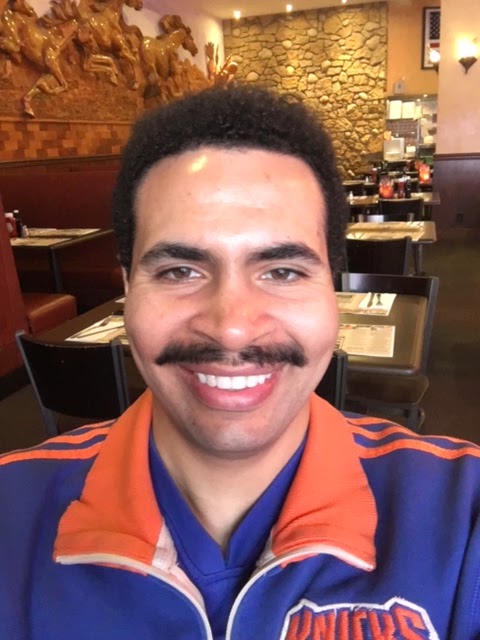
Emanuel Frowner (photo courtesy the author)
[image: A smiling mixed race man with short black
hair in a natural style, and a mustache. he is wearing a
collared orange-and-blue Knicks pullover.]
I grew up mostly in the Bronx with my dad and my grandmother, and I still live there. The neighborhood was dangerous during my childhood because of fighting and drugs—a few people were killed. Therefore, I could not go out alone (until I was 17) and my folks were very protective of me. I would see my mom on the weekends. Sometimes, I would hang out with my siblings (with my folks). They had a different mom than I did, but we had the same dad and grandmother. Even though my grandmother looked very white, she called herself black, but my dad did not agree with her on that. My mom called herself black as well.

I was very quiet, and I would stutter sometimes.  My grandmother told me that this was because I think faster than I talk. She also told me that a still tongue keeps a wise head. I took these as compliments.

I went to an elementary school right near where I lived. At first, I did some mischievous things like breaking forks. During a test, I bubbled in all of the choices and the kids started saying that I was all wrong. The teacher erased them. My grandmother found out about this and she was not happy. At that point, I started doing a lot better and I began getting good grades on my report card. I kept working hard and with the help of my folks, I was named student of the month. This was an honor for me and it made me feel proud.

This did not prevent me from being bullied by other students and teachers just because I was different, which led to my dad homeschooling me from the 6th grade until I got my GED in 2000.  Being homeschooled helped me excel academically. It also helped me develop a strong work ethic, and it helped me to think outside the box.

Another reason my dad homeschooled me was because he did not want me to be fed nonsense. My dad did not want me to get a diagnosis that would put me in a box, or have a label so others could categorize me. He also did not want my brilliance and sensitivity to be overlooked, or want me to be marginalized to the point where it would do irreparable damage. This was a culturally specific issue (which is described later in this essay) as well as a generational issue; my folks stressed that getting an education was the most important thing. And my dad also did not want me to be apart of the herd mentality; he wanted me to develop along my own lines. He took me to his job to meet his coworkers and we all would hang out sometimes. It was okay for a while, but I would have liked to been around others who were similar to me.

Technology really came into my life when I was in my late teens. I began emailing and texting, and no longer had to rely on talking when communicating with others: I could take my time, and respond at my own pace. This also helped me have more privacy, and over time I began making my own decisions.

Before I knew I was autistic, quite a few people told me that I was very bright person who was just quiet and shy—even though I had particular interests like dates, sports stats, being punctual and being patient, yet did not have a few social nuances that others had. This may be because, being mixed race and from a minority culture (I am part Caucasian, part African American, some Native American, some German and a little Scottish, just to name a few), I found that talking about psychological subjects like autism is overlooked and is often talked about in a bad way. Also, I hardly received the type of support or empathy I needed when I was struggling. For example, when I stuttered a bit, I was told that I was hesitating. Another example is when I chose Psychology as my major in the summer 2004, one of my relatives was not supportive of this. But it made me even more determined to do well and I got my BA in Psychology from St. John’s.

In 2005, I started hanging out with my oldest brother Blair, who lived in Canada. He knew an autistic lady, started reading about ASD, and began telling me that I might be autistic. He did some research online and found the Seaver Autism Center at Mt Sinai for me. I did interviews and tests there, and the doctor told me that I was on the autistic spectrum. I was a little surprised, but it was a blessing in disguise.

I began reading up on autism. Two years later When I told my dad what the doctor said about me, he was surprised, but then he came to accept it. I joined some support groups over the years and made a few friends. In 2009, a lady, Katrina R. from Job Path, helped me obtain two jobs through customized employment. I have had those jobs for eight and a half years.

Today, I still work, and also do some speaking gigs. I am also a die-hard Knicks fan, and have been for years. In the future, I would like to do even more public speaking and I would like to run workshops relating to autism. I would like to write a book about my life story and I would like to write more articles on topics relating to autism. I would like to one day run an autistic group designed for minorities. I would definitely like to do more acting in order to improve my skills.
Share:

#AutisticWhileBlack: To Siri With Love's Shallow, Dangerous Take on Forced Sterilization

Kerima Çevik
intersecteddisability.blogspot.com
theautismwars.blogspot.com

Kerima Çevik, photo courtesy the author
[image: Gray haired Afro-Latina woman
next to a windowshade, looking to the left.]

[Content note: Contains descriptions of involuntary medical procedure, including sterilization, on Black and disabled people.]

I am trying to plow my way through Judith Newman's autism parenting book To Siri with Love: A Mother, Her Autistic Son, and the Kindness of Machines. It is slow, painful reading.

How can I explain my serious ethical concerns about yet another bestselling autism book that capitalizes on presenting the experience of disability from a parent's reduction of a disabled individual’s worth to how he makes his mother and those around them feel?

I can tell you that Newman's passage about looking forward to acquiring a medical power of attorney so she could involuntarily sterilize her autistic son Gus tainted the rest of the book for me. A vasectomy, she says. That passage has so much wrong packed into it that shocks, frightens and disturbs me as both a Black woman, and the parent of a nonspeaking autistic teenaged son of color.

I read what Newman wrote, and the years of harm to the black body—borne by my entire race—burst open like a septic wound. Combined with a year of escalation in harm to our people, it was just too much.

Newman writes about looking forward to being able to sterilize her child. This sent chills down my spine. The presumption that Gus might inadvertently father a child, and that this would be some sort of calamity, is both extremely ableist and demonstrates a clear disdain for any potential her son might have to lead the autonomous, inclusive community-based life that is the legal and human right of every disabled adult in our society.

Newman's assumption presents the disabled young adult as passive and inept, when in reality parents are responsible for ensuring that our children's primary life skills include sex education that might protect them from abuse and harm. This need, and the realities about sexual assault of disabled children and adults were featured in a recent NPR series, with statistics that tell a frightening story of helplessness and cyclic abuse because we insist on viewing our own children as having to be 'fixed,' rather than educated, and taught boundaries and self-protection.

Sex education for neurodivergent youth and adults exists. These courses teach students all they need to know about of their own bodies, setting and respecting boundaries, reproduction, self-care, and how to avoid harm in accessible language.

The author writes that she avails herself of access to autistic adults willing to be information resources, yet displays a lack of information about the existing resources for her son to navigate higher education and other aspects of life as a disabled adult. This contradiction in her book is confusing, as well as disturbing.

Gus might turn out to be a more patient, kinder, and understanding parent because he knows what it means to be disabled and subjected to maltreatment as a result. Gus may choose not to be a parent because he knows what it means to be disabled and subjected to maltreatment as a result. Gus is able to speak for himself. The choice, with supported decision-making if he needs it, should be his.

Forced sterilization is part of a larger nightmare of systemic abuse of the black body we've survived but can't forget. The practice of modern gynecology was built on the torturing of the black female body, without the benefit of anesthesia. J Marion Simms cut away at our ancestors' bodies, forcing slave women to hold down their fellow helpless enslaved victims while he did horrible surgeries on them. He brushed aside protests and outcry, by insisting that our women could not feel pain.

He is hailed as a great man. Statues stand in his honor.

Ms. Newman cannot feel what that legacy does to people. She blithely brushes it off in a great hat trick of compartmentalization, secure in her mistaken idea that all parents agree with her view of their disabled children. I beg to disagree. This parent does not hold Ms. Newman’s view of disabled children.

"Mississippi Appendectomy"

See, I can't forget what happened to Fannie Lou Hamer and the African American women of Sunflower County, Mississippi:
"Diagnosed with a small uterine tumor in 1961, Ms. Hamer checked into the Sunflower City Hospital to have it removed. Without her knowledge or consent, without any indication of medical necessity, the operating physician took the liberty of performing a complete hysterectomy.
"Three years later, as a leader of the Mississippi Freedom Democratic Party, Ms. Hamer spoke about her experience to an audience in Washington D.C. – telling them that she was one of many black women in her area that had been a victim of a “Mississippi appendectomy” (an unwanted, unrequested and unwarranted hysterectomy given to poor and unsuspecting Black women). According to her research, 60% of the black women in Sunflower County, Mississippi were subjected to postpartum sterilizations at Sunflower City Hospital without their permission. A number of physicians who examined these women after the procedure was performed confirm that the practice of sterilizing Southern Black women through trickery or deceit was widespread."
Even if Newman claims she's changed her mind now, even if she chose to retract that vile passage from all future copies of her book, this random musing of Ms. Newman's has opened the floodgates to dangerous thinking. Involuntary sterilization is not an idea that should be recirculated in a time of resurgent racism, and vile ableism. It is not an idea that should reemerge in an environment where disabled parents must constantly fight to keep custody of their own children. It should not be introduced to parents as some sort of justifiable option, particularly couched in literary sarcasm or humor, in a nation where Buck v. Bell has not yet been overturned.

Though in the book Newman gives a partial checklist overview of the history of disability and sterilization, she never mentions Buck v. Bell. How is this possible?" Every parent of a neurodivergent offspring in America should know about Buck v Bell, the harm visited upon innocents because of it, and the potential harm that can still be done to others because of it. Here:

Buck v. Bell, 274 U.S. 200 (1927) is a decision of the United States Supreme Court, written by Justice Oliver Wendell Holmes, Jr., in which the Court ruled that a state statute permitting compulsory sterilization of the unfit, including the intellectually disabled, "for the protection and health of the state" did not violate the Due Process clause of the Fourteenth Amendment to the United States Constitution. The decision was largely seen as an endorsement of negative eugenics—the attempt to improve the human race by eliminating "defectives" from the gene pool. The Supreme Court has never expressly overturned Buck v. Bell.

Buck v. Bell allowed the forced sterilization of a neurodivergent young woman and her 52-year-old disabled mother. Buck v. Bell was used to justify thousands of forced sterilizations of disabled people. Then came the thousands of forced sterilizations of African American women and African American girls who were raped. That escalated into the forced sterilization of poor white males and females. Forced sterilization continues today:
"A 2013 report from the Center for Investigative Reporting found that in California between the late 1990s and 2010, hundreds of female prisoners were sterilized without proper state approval. As a result of the investigation, Governor Jerry Brown signed a law banning forced sterilizations in the California prison system."
In 1986, Canada had its own Buck v. Bell moment. It was called the Eve decision, and it ensures forced sterilization doesn't happen there. Perhaps it is time to challenge and defeat Buck v. Bell in the U.S. Perhaps it is too late. But we should all be afraid because forced sterilization has already happened here, and continues to happen.

In her one unfortunate passage, Ms. Newman may have opened Pandora's box.

Here's what disturbs me the most: Our children aren't dogs or cats. They are human beings who need varying degrees of support. Now that you all know what was done to people of color, disabled people, and other marginalized groups, try to feel our distress. Don't treat disabled human beings, your own children, as othered creatures to be de-barked, spayed or neutered into compliance for our convenience. We know in our hearts this path is wrong. This is not something to daydream about or look forward to doing. This is a eugenics rabbit hole.

Literature shapes societal attitudes. What we write in the Internet age, particularly when content creators have as massive a platform as Ms. Newman has, can change the fate of thousands of autistic teens and young adults. We are their parents. Not their wardens, overlords, or owners. What we write can lead to events and public policy changes that might literally make their lives hell on earth.

We are living in a nation grappling with a chief executive who has recorded incidences of racially disparaging and ableist remarks, and who is trying to legislate based upon his personal biases. His remarks have enabled a harmful nationwide attitude shift, and as a result people are moving from vocalizing bigotry to acting on it. We have also seen escalated attempts to enact major changes in public policy, changes that may cause unprecedented harm to disabled people, people of color, and multiply-marginalized groups.

This means all parents authoring autism-related content must think about the consequences of what they write, before rushing to look for provocative vignettes for their bestsellers.

People took the right of consent from us for generations because they didn't like our color. They believed our race was 'defective.' All these unjust, stereotypical labels are being hung on our disabled children now. I cannot accept my son’s right to agency in his own life being taken from him and his people, because some author couldn’t imagine a world where her son has the competence to decide his own fate. It is her obligation as his mother to take the actions necessary to ensure he gains the skills required to gain such agency.

To me, seeing this book written from the perspective of white privilege, yet much-lauded, and hailed as witty, honest, and moving, is heartbreaking.

But unlike Ms. Newman, I won't generalize and assert that other parents in the autism community agree with me.

----

Resources:

The Sexual Assault Epidemic No One Talks About
https://www.npr.org/2018/01/08/570224090/the-sexual-assault-epidemic-no-one-talks-about

The Negro Project
https://www.nyu.edu/projects/sanger/articles/bc_or_race_control.php

Literal Silencing
http://www.autistichoya.com/2013/09/literal-silencing.html

Rocking the Cradle: Ensuring the Rights of Parents with Disabilities and Their Children
https://www.ncd.gov/publications/2012/Sep272012

Buck v. Bell
https://supreme.justia.com/cases/federal/us/274/200/case.html
https://www.democracynow.org/2016/3/17/buck_v_bell_inside_the_scotus

The Eve Decision: Why Forced Sterilization is not a fear in Canada
(with thanks to Emma van der Klift)
https://cic.arts.ubc.ca/the-eve-decision-1986/

Authoring Autism
https://www.dukeupress.edu/authoring-autism
Professor Melanie Yergeau's book addresses the ways literature is used to present stereotypes that dehumanize autistic characters, thus perpetuating structural ableism.
Share:

Autistic, Gifted, And Black: An Interview With Mike Buckholtz

Music producer, actor, and writer Michael "Hot Mike" Buckholtz is also an advocate for autistic people, especially those who, like himself, are part of the Black/POC communities. We recently chatted with Mike via email about his background, some specific challenges (and deadly prejudices) Black autistic people face, and ways he thinks younger autistic people of color can empower themselves. You can follow Mike on Twitter at @OfficialHotMike.

Mike Buckholtz
[image: Black-and-white photo of Mike Buckholtz: a Black man
wearing a silver suit, glasses with blue lenses, and pulled-back locs.]
TPGA: Can you tell us a bit about your fabulous career in music and entertainment, and whether being autistic has been a factor?

Mike Buckholtz: I started out as a Hip Hop music producer for MC Hammer beginning in 1989. Hammer and I met in 1984 in the U.S. NAVY as barracks roommates. MC made a fantastic statement about that time. (I'll let him tell it.) As of  November 2016, MC Hammer has sold 50 million records, some of which I've had the honor to work on.

After MC Hammer, I worked for other labels, signed a songwriter's deal with Warner/Chappell (whom I'm still with) started my own management corporation and authored a self-published book about autism. I'm, also, currently, doing the acting thing and another major book project is in the works.

As for the autistic factor, I've had some years to consider how it may have affected my career. The many tests and observations, from professionals involved in my diagnosis, helped me discover special abilities including a photographic memory, high audible sensitivity and a stubborn tunnel-visioned focus. I use every bit of these abilities in this industry and have sharpened them once becoming aware of their benefit.

TPGA: How did getting an official diagnosis, and understanding that you are an autistic person shift your self-awareness, if at all?

MB: Coming to the conclusion (after all the testing) that I wasn't crazy or losing my mind was an important discovery. Knowing that my brain is wired to do specific things helped me build a positive perception of myself as unique versus damaged. I'd say that was a massive shift for the better.

TPGA: What are some specific positive experiences of being both Black and autistic that are lost to people who don't share your experience?

MB: The positive for me? OK. Follow my logic, here. “Black” people on the spectrum are not covered in the media very much, if at all. So, the perception is, since very few, if any, POC (people of color) are on the spectrum, the large majority of “Black” people must be... "normal." This misperception allows me to do business "under the radar," because I can choose to avoid being patronized or pitied. Otherwise, because of stigma, it would be difficult for me to secure a decent living and do serious business. This prejudice is ten times worse for Black and POC. I can't do my work with that kind of hassle. It sucks, but that's my reality for the kind of work I do.

The other positive, I've been told, is that other Black and POC see the revealing of my autistic status as empowering for them. I don't see myself as a role model, but, if openness about my diagnosis empowers other POC toward the positive, I'm all for it.

TPGA: How connected are you to the Black and POC autistic community, or to other autistic individuals, and are those connections a source of strength and comfort?

MB: I have a few amazing intimate relationships with some, a cozy cordial relationship with groups of others and virtually no relationship with the majority of autistic POC. It's complicated. I have deeply private ways of drawing strength and comfort. I'll leave the matter there.

That said, I want to do more to connect with Black and POC in our autistic community. However, much is expected of me due to being a public figure. Being public is expensive. Folks want to see more of me and that's cool, but, I don't have some bottomless budget allowing me to do that. For those who want to see or hear from me in major public forums, sponsor my visit. I'll do it! I'm proud to be an autistic POC and really want to share my experiences. I have some pretty cool stories that may help other autistic POC persevere through our many difficult experiences or circumstances.

TPGA: We already know the rate of anxiety disorders among autistic people in general is already much higher than the non-autistic population. Can you talk about why that anxiety may be even more intense for Black autistic people, and how for you it sometimes feels like "living under occupation"?

MB: Black people (men, specifically) are seen, by many, in society as dangerous, suspicious, and without moral compulsion, first. This, I feel, has been by design for hundreds of years. I don't see it changing. This reality makes life even more intense for Black autistic men.

You may remember a very popular news video of therapist Charles Kinsey (lying down with hands up) and his autistic client, Arnaldo Rios, not moving at all, but, seen, by police, as dangerous—and shots were fired at both of them. Even a Black man attempting to protect an autistic person of color will get shot at...for no reason, apparently. We cannot assimilate. Our brown skin is not interchangeable.

Since simply being brown can be the reason a police officer beats, chokes or shoots me, that feels a lot like living under occupation. Intimidation via the threat of death. I never feel truly safe. The only adjustment I've made is how often I look over my shoulder to ensure I'm a safe distance from encountering any authority figure carrying a gun.

TPGA: Can you be incredibly frank with our readers about why being both disabled and a person of color puts a body at higher risk of a dangerous police encounter than being only in one category or the other? I am thinking of specific, horrifying recent incidents like the shootings of Keith Lamont Scott, and Alfred Olango.

MB: Right. Specifically in cases like those of Mr. Scott and Mr. Olango, Black men, again, in general, have endured a multi-century campaign of discrimination, mischaracterization, defamation and dehumanization. It's easy to destroy, discard, or even kill something not seen as having any societal value worth saving or caring about.

This is the risk Black men and other POC live with everyday. Add to this fact that the two aforementioned men were battling mental or emotional issues, Mr. Scott's brought on by an accident and Mr. Olango's less defined, the chances of them living through their encounters with police were slim to none.

TPGA: Why do you think discussions about autism and from autistic activists needs to be cleaner and simpler than they generally have been? What are some examples of the kind of communication you'd like to see?

MB: Too often discussions about autism or autistic people are muddied when people confuse co-occurring issues with being autistic. What do I mean? I have OCD, or Obsessive Compulsive Disorder (think Howie Mandel). But OCD is not part of my autism.

By being clear about what autism is and what it isn't, we can keep discussions about autism or autistic accurate, as well as allowing people to get unvarnished stories directly from us. No political or partisan tangents. I believe this clarity will have a more powerful impact on those who aren't autistic, and hopefully lead to increased empathy for us and our challenges.

TPGA: Do you have any specific messages of reassurance or advice for today's younger Black and POC autistics?

MB: If you can, get evaluated. Yes, many Black and POC communities are still in the dark ages in terms of their attitude about neurological conditions. The stigma is widely known. Just know you're not broken or flawed. You're unique. You may even have special neurological wiring giving you an edge over your non-autistic contemporaries. Embrace it. Work with it. See it as an amazing thing. Feel free to connect with other seasoned (but positive) autistic adults as mentors. Remain hopeful. Focus on accomplishing the thing that will allow you the freedom to care for yourself and help others. Avoid using it as an excuse when you fail for other reasons, or, as something to exploit. Love yourself and others will be attracted to that.
Share: