Showing posts with label compassion. Show all posts

The Stories We Don’t Tell: My Mom On Raising An Autistic Child And Why She’ll Never Write About Me

Sarah Kurchak and her Mother Jane Kurchak
 [image: Cheerfully geeky selfie of the author, a white Canadian woman wearing
glasses and also goggles on top of her head; and her mother, a white woman
also wearing glasses plus a pinstriped blue collared shirt, tie, and white jacket.]

Sarah Kurchak
www.riskyfuel.com

When I’m feeling particularly frustrated with my career, I offer to ghostwrite a memoir for my mom. It’s a slightly bitter, semi-serious joke. I’m mostly taking a shot at the fact that the memoirs that non-autistic parents write about raising their autistic children have a much better shot at getting published and selling than anything that I, as an autistic person, could ever hope to write about autism. But there’s also a little part of me that just wants that payday. (I can’t extend this offer to my dad, because he’s a fellow autist and no one seems particularly interested in hearing what autistic parents have to say about these things, either. Or acknowledging that autistic parents even exist.)

My mom is a funny person, and usually quite indulgent when it comes to my humor, but she always shuts this joke down pretty quickly. Even in jest, her answer is clear. This isn’t her story to tell.

As I’ve watched the autistic community respond to the latest offerings from this wretched subgenre and wondered how I could contribute to the conversation at a time where I don’t feel intellectually or emotionally equipped to properly tackle the issue as a writer or an advocate, I kept coming back to this point. So I asked my mom to read two of the most recent and high-profile examples of the Autism Parent memoir, Judith Newman’s To Siri With Love, and the excerpt from Whitney Ellenby’s forthcoming Autism Uncensored that was recently published in The Washington Post. And then I asked her if I could interview her about them. And about us.

The following has been lightly edited for length and clarity. And I’m not so sure it helped the latter. I’m not convinced that I perfectly articulated my points, but it’s the best that I can do right now and I’m hoping you can get the general idea from what I have said.

People argue that no one represents the real autism. This, in its somewhat rambling, possibly overly earnest, and well-meaning glory, is also the real autism.

Sarah Kurchak: You read To Siri With Love recently. Can you give me your general impression of that book?

Jane Kurchak: OK, what I went through while reading was a range of emotions. Mostly it was anger, and then sadness. But, I guess, ultimately I felt that Gus was the punchline and he wasn’t in on the joke. And that bothered me. And I kept thinking…she’s his mother, and that individual that should be the most secure person, place, everything on earth was [instead] doing this end run behind him and telling the whole world about his bathroom issues. And it wasn’t her story to tell.

I always put you in the kid’s position. How would you feel if that were going on? How would you feel? How is Gus going to feel in ten years when maybe the reality of that book hits him? It may or may not, but it still was never her story to tell.

Another thing that bothered me were the number of people and celebrities that were gushing over this book. I kept thinking…why is nobody saying to her “Maybe you shouldn’t be telling Gus’s toilet secrets?” I don’t know. So that’s what Siri did to me. And, in that case…I never, ever questioned that she loved Gus. I just don’t think that she went about all of this the right way. And who am I to judge? But she put the book out there. It’s for all of us to read. We’re going to have opinions. And I just don’t think that was her story to tell.

Which brings us to the article in The Washington Post that we read last week, which was called “Bystanders were horrified. But my son has autism and I was desperate.” Can you give me your general impressions on that?

That made me cry. As upset as I was with the whole Siri book, that pales by comparison to that article I read. That’s child abuse. It is. And, again, I put you in that kid’s position. And never…and I’m not saying that I’m parent of the year, or any of those things. I stumbled through this. I didn’t know. But I cannot, for the life of me, ever ever imagine thinking that was a good idea. To do it wasn’t a good idea. And to write about it is as repugnant as the action.

I was thinking…what the eff is that lady thinking? “I was desperate? People were watching me?” You took him into the damned situation in the first place! This isn’t about her. It shouldn’t be about her. She wanted him to see Elmo.

What I noticed in that piece, even more than in Judith Newman’s observations, was that she kept blaming situations on her child’s autism that were actually problems involving people’s perception of her.

This is all about her. This is all about her.

I try to have sympathy. Not just as a human, but as a writer. Because I think we do have somewhat different boundaries. And yet…I am also someone who has significantly benefited from other people protecting my boundaries so that I could get to the point where I could decide to reveal perhaps too much in certain situations. But even though I am an open book in a lot of ways, there’s a lot of stuff that people don’t know.

And there’s a lot of stuff that is probably going to get weirdly meta in this conversation, where we’re going to talk around what we don’t talk about in my life, so that it can’t be Google-able and people can’t attach things that still have a lot of stigma around them to me, so that I can continue to survive and function as a person in the world and as a writer. As small as my profile is, it’s still a public profile. And none of that would be possible if you and dad had ever been more public about my life.

And we’ve talked about this before. It never occurred to me to make any of your stuff public. We talked about your sleep thing. We all knew about your sleep thing and I joked about that. “Sarah didn’t sleep! That’s why she’s an only child.” There were jokes like that.

There are other situations that we will never discuss. But they were never insurmountable and I can tell you that when some of those things were happening, I would simply say “She’s not going to be doing this at ten. She’s not going to be doing this at sixteen.” It was in the moment.

Do you remember…of course you remember wearing the Smurf hat to Pupo’s [Welland, Ontario’s most beloved grocery store].

I also remember wearing the Smurf hat in grade nine.

I do, too. But that was a bit of a dare, and you go for it. But you loved that hat. And then remember we had to convert it into a Smurfette hat, and you had those big yellow yarn braids hanging down? I loved that you wanted to put that on your head and wear it to the grocery store. You had so much fun doing that, why would I not have gone along with that?

And I do want to be clear for anyone who is going to read this and think this is just an example of someone who is quirky and not “really” autistic: This is an example that we can talk about freely. There are other ones that are way more private that we’re not going to get into. But your choices in all of these situations came from the same compassion. They all came from the same logic. And ultimately ended up benefitting me in the same way, too.

Yes, I can see where you’re going. Yes.

In this conversation, we’re talking about To Siri With Love as a book, because we’ve both read it. We have only read Whitney Ellenby’s article that was published in The Washington Post. We haven’t read Autism Uncensored, her forthcoming book, as a whole. And this is, in part, because you have asked me not to. So can we get into why you asked me not to read this book?

Your level of empathy can be debilitating. You’ve always been like this. Always. And I see your daily struggles. I see you try to function in a pull-up-your-bootsraps neurotypical world. And I know if you read this book, it will crush you. It will take a bigger toll on you, by far, than Siri did. And, as your mother, my concern is your ability to continue functioning carrying that level of upset. So it’s a selfish motive because I don’t want you to hurt and I know that what we’ve read is only a small part of what’s gone on. I don’t want you to read it.

If you were a writer, and you decided to write about me and my childhood, how do you think you would approach it versus what you’ve seen from these parent memoirs?

I have always said to you, to anybody that will listen to me, I have learned more about life in the world from you than from anyone or anything else. And if I were to write, it would be about the lessons that I’ve learned from you. Nothing that you’ve learned from me, but what I’ve learned from you. Only from my perspective. I would never, ever expose, without your permission, any of the incidences that have happened. But every one of those was for me to learn more than it was for you to learn.

So I guess it’s that. Watch your child and learn from them. Take you cues from your child. Just because I’m your parent doesn’t make me right. I would write about how you enrich my life. And people might read this and think “You have to say that. You’re a mother.” They can think what they want. My reality is that my life is a better life because of you. I’m a far more tolerant person. I’m a far more understanding person because of the lessons that I’ve learned from you. Not just because you’re autistic but because you’re autistic and the way you view things and the way you approach things has taught me a different way of viewing and approaching. So that’s what I would want people to know.

So I think we’ve already touched on this a bit but I’m going to try to get a bit more explicit because, for me, this isn’t just an issue of what we write about autism. What concerns me is that this gets to the heart of the stories that we tell about autism in daily life. And when I approach these books…I’ll admit, part of it is professional jealousy, because I want to have at least a fraction of the platform that these people have. I want to be able to write about my autistic life or write autistic characters that can make the next generation feel less of whatever the hell it was that I felt growing up.

But it goes beyond that, too, because I am someone who has benefitted—and, I would argue, only survived and reached this point—because of the stories that nobody told about me. Because I had parents who didn’t exploit me, didn’t film my meltdowns, didn’t tell people about, say, how much I lost my shit at the dentist every time I went, didn’t talk about my toilet training, my utter attachment to you to the point where you couldn’t really go anywhere alone without me freaking out. And these are all things that, again, I want to point out to anyone who is reading this, I am glossing over because this is as much detail as I feel safe revealing under my byline now. The only reason that I feel that anyone can come at me and say “You’re not autistic enough to count” or “You’re not the kind of child that they’re talking about here” is because, when I was that kind of child, no one told on me. When that happened, you would take me out of the situation. No one saw it. And then you wouldn’t talk about it later.

And it would never have occurred to me to talk about it later.

You also, I want to point out, suffered because of that. For all of the talk about autistic kids not being aware of their surroundings, I was hyper aware of the level of criticism that you and dad faced, often when I was around, for ostensibly coddling me, or overprotecting, or spoiling me. Obviously it never occurred to you to say anything, but it could have alleviated your burden if you had told people why you were doing it. And you never did.

No. I never really thought of that before. It didn’t occur to me.

We knew what worked for you. If we were to go into a situation with you, we knew what worked and what didn’t. So if we had to remove ourselves from that situation and hang out somewhere else, what was the problem?

I guess there’s a price that you pay…and people judge. We all judge. But we’re so…who wrote the damned book? Who wrote the book on how society has to function? What’s normal? We can apply it to your temperature, but we certainly don’t need to apply that to behaviour.

I think people assumed that I was a nervous, clingy child because I wasn’t pushed enough, when the reality was that you guys were like that because I was a nervous and clingy child and any steps I’ve made in life are because I have a secure home base. A safe place where I’m never going to be exposed or judged or unduly pushed into something.

And that’s what I feel like every single parental home should be, regardless of if you’re 6 or 36. You should be able to come here, to decompress, and the world doesn’t get to peek in.

My main point that I wanted to discuss here is that I’ve been protected by what you and dad didn’t share, but I also want to say that I think I was really nurtured by the fact that you didn’t bring any outside measurements to my growth and development. Ever. You always always wanted to work on my terms and do what actually made me succeed or survive, or grow. I bring up that shoe story that was in Refinery29 to parents a lot, because I think it’s a great example of how practical you were. The modifications didn’t help. They made me sad, because they ruined my shoes. So you were like “That’s not the solution.”

Unfortunately, because of the narrative that we have around autism now, so many parents are so scared of screwing up and so scared of having these autistic children who won’t be “normal” in the future that they just keep hammering away at one thing, even if it’s not working, even if it’s harming their child, like it’s the only answer.

So again we get back to society’s expectations is driving these parents to make these ridiculous decisions. It’s all of these benchmarks. Why are those the rules?

We should probably wrap this up, but one last thing that I want to say is that I am not just concerned about what these books reveal about their subjects and how that harms them, but I’m also dubious about the purpose of them at all. These are books that are intended to expose the “real” autism or shed a light on the plight and what I wonder is who this level of awareness serves. It seems to me that, as long as the actual issues that they’re talking about have stigma attached to them, we’re not helping autistic people by talking about them in this way. We’re helping carers, because people will sympathize with them. If using a diaper is still stigmatized, then talking about an autistic person who uses a diaper is only going to make people sympathize with the person who might have to help them with it, as opposed to helping people accept that some people just happen to use diapers.

Until the actual autistic needs and behaviors are accepted, I don’t see any purpose to this kind of awareness beyond narratives that peddle in tragedy and the lionization of non-autistic people.

That’s it exactly. I don’t know a catchy phrase for it. But they put it out there, you see how the public eats it up and it’s permission to be the victim. So that’s why it’s going to sell. And I bet there are a lot of…I have no idea what the statistics would be, but there’s no way in the world that Dad and I are the only two who let it play out this way. There have to be a ton of people like this, but those stories just aren’t as exciting.

I’ve become associated with a lot of great parents through Twitter, and I know they’re out there. Unfortunately, part of what makes them great parents is that they don’t dominate the conversation, so you don’t see them.

So you’re going to write a story. You know, when you write that story, you’re going to expose yourself to more criticism.

Yeah.

And I’m not going to lie. I think about that. And I wish it wouldn’t happen. But I have to say, in this case, you’ve taken it upon yourself to help someone that can’t really speak for themselves and I’m so fucking proud.

It’s not that they can’t speak or communicate, it’s just that I am lucky enough to have slipped into a platform that…you know, I might have a higher profile career if I weren’t autistic, but it’s still more than a lot of great autistic writers and bloggers are afforded. And I’m just…I don’t know…what is any of this for if the next Sarah has to live all of this the exact same way?

OK. And I just want you to know that I’m proud.

I’m wondering if it’s going to seem incredibly self-serving if we end on my mommy being proud of me.

Well, you can decide whether you want to put that in or not. But I’m not just throwing that in. I am.

----

Originally published at Medium
Share:

Helping Autistic Children Understand Death and Dying

Maxfield Sparrow
unstrangemind.com

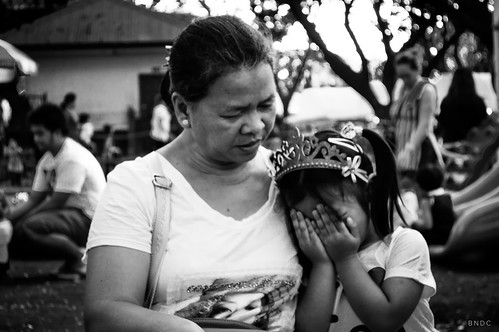
Don't cry little princess
Photo © Benedic Belen | Flickr/Creative Commons
[Image: Black-and-white photo of an Asian woman comforting a small crying child
who is wearing a tiara, and has their hands over their face.]
The Thinking Person’s Guide to Autism asked Autistic adults to fill out a survey about death and dying to create a resource for people who need to explain death to Autistic children. The response was tremendous—in less than a week the survey had 50 responses, mostly from Autistic adults. What follows is a summary and analysis of the responses. We hope it is useful to you, your child, your family, your clients, and your students.

Please note that some of the responses discuss difficult material, including suicide, and suicidal ideation/threats.


Bullet Point Summary
  • Autistic adults were surveyed about death and dying.
  • Most learned about death through observation of people, animals, and plants.
  • Learning about death was a process rather than a one-time event.
  • A majority of Autistics said Autistic children want factual statements, not euphemisms about death.
  • Autistics want the right amount of information about death - not so much it overwhelms, but not so little their questions go unanswered.
  • Don’t expect Autistic children to express grieving emotions in the same way or on the same timetable as the people around them.
  • Links to books and other teaching materials can be found in the last section of this article.
This article discusses those responses to five questions about ways Autistic children learn about death, the most and least useful ways to help Autistic children understand death, and recommendations for adaptive communication technology for talking about death. I have attempted to quantify the answers but also share some representative quotes to help illustrate these responses in a more qualitative manner.

Question One: If you are Autistic, how did you become aware of the concept of death?

Most respondents learned about death through experiencing the death or a person (20), or a pet or other animal (11). It is worth noting that many survey respondents spoke of becoming aware of death as a process happening over the course of more than one death or other learning experience. Respondents often said they were quite aware of death for many years, but it was only with the death of a person or animal close to them that they finally experienced an emotional impact that moved their understanding of death and dying from an abstract concept, to something personal they had to cope with emotionally.
“I was introduced to Death being dragged to funerals as a child, but death never clicked. I never lost a close family or an animal until I was 16 and my grandpa died. That's when I became aware. I wouldn't experience my next death until 25 with my dog and I struggled with reality and depression and confusion. The devastation of both events have had major negative impacts on me solely due to not understanding or learning what death was as a child.” -Sophia 
“The very first death I ever dealt with was with our dog Rex. [...] I didn't really apply my knowledge of death to people yet at that point though. Pet death seems to be a different context in my brain than people death though. I think part of my issue as a kid was taking one context and applying it to other contexts. My great grandpa died when I was 3 though, and my uncle died in a more terrible way when I was 4. [...] By the time I was 8, death and grieving, I don't want to say was "old hat" but, I was more aware of what was going on. [...] By the time I was a pre-teen, I didn't know what to make of people who hadn't experienced loss.” -Anna J
The next most common answers were from those who weren’t sure how they first learned about death or who felt as if they had just always known about death. Eight answers included something along these lines.
“The same way as everyone else?” -Anonymous 
“I can't really remember any one particular moment of becoming aware of the concept of death, which means I probably learned it slowly through media exposure. I did attend my great-aunt's funeral when I was a toddler, and according to my grandmother I did ask if she was sleeping in the casket, but I have no memory of this.” -Billie 
“I just knew about it. Like I did about sex, gay relationships, etc... It wasn't a big deal.” -Jade 
“I honestly don't remember NOT having a concept of death.” -Anonymous
Four Autistics reported learning from books at home or at school.
“2nd grade. Teacher died. Other teachers thought it would be a good idea to read the class a book on weather seasons more specifically autumn. Basically leaves get old on the tree and die and fall off. Life is a cycle in nature. Everything dies kinda lesson. So every time I see a leaf on the ground or in the process of hitting the ground I think of death.” -Michael 
“I started thinking about death and dying when I was two years old. I could read fluently by then and my parents didn't know that and my mum left her horror books lying around and I read them. There was a lot of death in those stories and that is how I learned about it.” -Michele Brenton 
“I read about it in a book about "difficult subjects" to explain to children.” -Anonymous
Three people learned about death and dying through their religious education.
“We learned about it in Jewish day school. One of Maimonides 13 articles of faith is that the dead will come back to life. I used to have nightmares about green people crawling out of the dirt at the end of the world. That's my earliest memory of the concept of death.” -Sara Luterman 
“I don't remember. My grandparents said that dead people were in Heaven when I was a kid and asked about it. I didn't know anyone personally who had died until I was an adolescent. [...] Heaven was a concept that made sense to me because I could picture it as an actual place, and I was most likely satisfied with the explanation of Heaven, especially because the teacher would sometimes discuss Heaven in Sunday School at church.” -LB
Two learned through watching television or movies.
“It was pretty much told to me that people don't live forever, their bodies give out just like with Rex, and that people are looking down from heaven at you when they pass (I think with Rex, everything was also solidified later with All Dogs Go To Heaven).” -Anna J
And two answers were each in a category all their own.
“My mother threaterned to kill herself in front of me when she was 2 and explained she would go away forever and I would have no mummy ever again.” -Anonymous 
“Through continuous exposure with the word (vocabulary building) using pictures and videos.” -Trixie
A theme that emerged from many responses was that of knowing about death but still being unprepared for the intensity of grief when death finally took someone important in a person’s life. This, combined with frequent reports of learning about death as an ongoing process that deepened not only with more personal experiences with death, but also with ongoing exposure through books and movies, suggests that helping Autistic children learn about death is not a one-time event, but an ongoing journey.

Adults need to be aware that an autistic child's intellectual understanding of death should not be mistaken for the fuller understanding that may only come with personal loss and grieving.

Question Two: What do you think is a reasonable and helpful way to help an autistic child understand the concepts of death and dying, based on your personal experience (and with the understanding that autistic children have different personalities)?

An overwhelming majority of responses (26) mentioned honesty, taking a direct approach, explaining the facts.
“Factual, acknowledge feelings, use calm voice, agnostic but hopeful on the afterlife. Death ritual with an insect or animal.” -Anne 
“I think a straightforward explanation that demystifies the experience is the best approach, perhaps something along the lines of "eventually people and animals' bodies stop moving around and the things that made them go leave forever." Most children are naturally curious, and as an autistic person I've always gotten particular satisfaction from understanding the WHY of something.” -Billie 
“Frank but gentle explanations” -Laura 
“Being honest. Allowing involvement in the process where possible.” -Niki 
“I think the younger and more logic-bound someone is, the more explicit you have to be about it.” -Anna J 
“Explain it truthfully, using hard facts. Don't give us a ton of silly convoluted metaphors. [...] You don't have to coddle an autistic child about it the way you would a neurotypical child. Trust me, we don't appreciate it.” -Anonymous
Six responses mentioned using books, movies, or articles to help explain death.
“I think it depends on your religious beliefs and whether or not you believe in Heaven. There are real-life stories I've read in the news about how (presumably neurotypical) young girls learned to understand what death meant, from a religious family  and a secular one. I would recommend reading one of those stories to your child (or together with them) depending on your family's belief system. I liked having real-life examples of other kids handling similar issues to mine, especially when they were also girls (since as a kid, I was convinced most boys had cooties).” -LB
Five responses discussed explaining non-autistic grief styles versus autistic grief styles to help everyone accommodate everyone else’s different grief needs.
“Facts, science about what happens to the body at death and practical tips about stages of grief for normals (strange things they might say like, "He's in a better place." means they cared about them when they were alive and saying that is a way of saying they are sad-- Not that that a coffin or urn is a better place to be). Listing common phrases like "Sorry for your loss" and what the person is really communicating would be helpful” -Sarah Robinson 
“Remind them that NT [non-autistic] people often grieve in a set of specific ways (i.e., crying, talking about memories of the deceased person, cleaning/leaving their things, more irritable). Autistic people may grieve in different ways (i.e., Shutdown/meltdowns, extra hypersensitive, avoidance, frustration) or not at all. Grieving differently is ok, and no one is doing it wrong. Being aware of those differences reminds everyone to give each other the space necessary to process the event.” -JAL 
“I understood what death was. I did not understand the rituals and emotions surrounding it. I did not understand what was expected of me and why. People thought I didn't grasp that my dad was gone so they made me look at the body. It was horrible. I knew about death. I needed to be allowed to NOT respond to everyone else's emotions all the time. I needed some kind of explanation of why people were acting the way they were, crying and touching me. I needed some routine, calm, and reassurance.” -BGP
Four responses mentioned acknowledging feelings and, in particular, the emotions surrounding coping with change.
“Accommodate the fact that an intrinsic part of loss is change. Especially for an autistic person. Death can be upsetting not only because someone they love is gone, but because that means their world is disturbingly different.” -Sara Luterman 
“I do think it's important to let a child know that it's okay to be sad. It's okay to laugh and doesn't mean you aren't also sad at the same time. It's okay to talk about the person or pet that is gone. I felt afraid to talk about my brother.” -Maxfield Sparrow
Three responses mentioned the importance of visual materials when explaining death. Three responses talked about exposing Autistic children to the concept of death through observing and discussing the death of plants and/or animals.
“For me, it helped that my mom did not hide the fact that my pets had died. She was honest that my little friend had permanently lost all biological function, let me view the body (allowing me to touch when possible) and would help me prepare a memorial ceremony for each pet. Experiencing the cycle of life as concrete reality really helped me prepare for the loss of relatives when I was older.” -K. Hall
Two people specifically mentioned the value of using social stories as well as building a vocabulary of words helpful in talking about death.
“Vocabulary building using social stories, videos, pictures of death, burials, and mourning people (given that the child is aware of the concept of emotions).” -Trixie
One participant mentioned the importance of giving an Autistic person extra time for processing grief.
“And don't have them rush grieving. It may take them a long time to grieve someone. I know it still does for me. Usually I have to come to it on my own terms until my subconscious is able to have closure.” -Anna J.

Question Three: What are some misguided ways to explain death and dying to autistic children, and why (again, in your experience)?

The number one response to this question was to avoid using euphemisms or unclear language. Euphemistic phrasing was mentioned in 23 responses, and had a big overlap with the 13 people who said to leave religion out of explanations of death. Among those who specifically said to avoid religion, the reasons varied from religion being too abstract and full of euphemistic language, to religion being “wrong” or “a lie,” to religion being okay for comforting adults—but too confusing for children who are just learning about death.
“Lies like "they go to heaven." That doesn't make sense, is incomprehensible, overly complicated and would just irritate the rational-minded autistics.” -Katharina 
“I was told in vet tech school to never ever use euphemisms such as putting a pet "to sleep," as children might take that literally. Do not, under any circumstances, try to hide the fact that a pet has died by saying it ran away, or sneak off to replace it with an identical pet. Also, abstract concepts like an afterlife can be difficult for Autistic children to understand, even though I take some comfort in them as an adult.” -K. Hall
Two responses came from three people each: don’t avoid the topic, and don’t overwhelm a child with too much emotion or more involvement than they want. Two people each said: don’t lie or underestimate a child, and don’t teach about death through threats or other frightening interactions. Finally, one person each mentioned the following: don’t give false reassurances like “I’m not going to die for a very long time.” don’t treat kids with a one-size-fits-all formula, and don’t deny the family’s religious beliefs.

Question Four: What other aspects of the explaining the concepts of death and dying do you think adults should be more aware of, when it comes to the experiences of autistic children?

The majority of responses to this question (16) repeated the earlier advice about keeping things factual and sharing as much information as a child asks for or appears to need. One response gave a general rule of thumb for deciding how much detail a child might need:
“I would recommend really thinking about how the child reacts to other things and base how you approach this subject in the same way they would want you to approach something else rather than basing it on their age alone, if this is a child (like I was) who wanted to know the species and genus names of dinosaur toys when they were 3-4 years old and would explain what features on their toys did not fit those species and genus, they probably do not want an explanation of death that is any less exact (which isn't to say you should not be sensitive, they will probably still be upset, especially if it is a loved one or pet, but using flowery/euphemistic language might just make it more difficult)” -Brit
The next most common (8) response group were Autistics who talked about not shaming a child if they do not respond in any particular way or on any expected “timetable” and not making emotional demands about how (or whether) emotions are experienced or expressed.
“They shouldn't shame the child for not showing grief or showing grief another way. I remember that I didn't cry when my grandparents died, but when our dog died, it was very hard for me. People might say I didn't love my grandparents just because I didn't grief like they might. So, not shaming is important.” -Katharina
“Sometimes autistic children don't grieve. This may be hard to hear, but sometimes there are people that we are "supposed to" feel close with, such as extended family members, that we don't have a personal connection to. This could be due to not having spent a lot of time with them, or not feeling a lot of care for a particular person. For these people, the autistic children may not grieve, per se, yet be responding to the grief of others around them. They still might still need help understanding why the people are so sad, or why the deceased person won't be around. My point here is, don't get mad at children if they do not feel or experience grief, or in the same way you do.” -JAL 
“Understand that autistic children may not respond as you would to grief. Using the above example [When my third cat was dying, I asked to accompany my parents when he was to be put down, only to be sharply rebuked as insensitive], my parents saw putting my cat down as a means to an end, whereas I saw it as a way to say goodbye. Autistic children may not act as if they are grieving, or their grief might explode outwards in ways you do not expect.” -Nant Celas 
“A child may need information repeated multiple times while they process the permanence of death. Be patient and strive to keep the child from feeling judged for needing to go over the same ground repeatedly.” -Maxfield Sparrow 
“We tend to have strong empathetic relationships with our pets, so treat the death of a pet like the death of a human relative.” -LB
Three people had very helpful suggestions about maintaining routines during grieving or helping an Autistic child find their own role in the death rituals.
“Knowing the significance of routines in the lives of autistic people, a good approach may be to set up a sort of mourning routine if death is being explained in the context of a friend or family member dying.” -Billie 
“Giving them things to do to help (arrange photographs, hand out information for gatherings afterward, asking if they can get anyone a cup of water, etc.) Can give them a defined role” -Sarah Robinson
Along a similar line, two people wrote about letting children set the emotional pace and create their own symbolic gestures or routines that have meaning for the child.
“I think kids need some concrete ways of saying goodbye, some action that is meaningful to them. Rituals that are created for adults often aren't meaningful to autistic adults, much less kids.” -BGP 
“I think "people's legacy live on in their ideas" is important as I stated before that one way I utilize grieving is to commemorate the passed people through their rituals or habits. Like if my food tastes overlap, I might have something they were known to like for dinner and think of them that way, basically to draw back to happy times I spent with them.” -Anna J
One person mentioned the importance of addressing death before someone close to the Autistic child dies and two other people suggested doing that by observing death in nature and using it as teachable moments.
“All kids who spend any time outdoors will see things die. Observing and talking about this is helpful.” -Anne 
“I like to explain the nitrogen cycle, and what happens to bodies after death. that we become plants.” -Anonymous
While two people mentioned the importance of generally presuming a child’s competence, two other people cautioned against talking about religion before a child is ready. Another pair, however, specifically recommended offering spiritual/religious explanations that involve teaching Autistic children that death is not the end of a person.
“Death and dying is not just about the body dying, it is about change and about experiencing a new different experience than what we already experienced.” -J
One person talked about the importance of teaching a vocabulary of death, including medical terms. Another person recommended explanations along the lines of social stories and scripting responses.
“Taking the time to explain the process the body goes through, medical definition of death, and appropriate people and times to ask related questions can help frame an experience like a funeral. Children may need to have an agenda for the steps involved and expected physical touching (more hugs, seeing people crying, outbursts) and appropriate verbal phrases or responses can be provided ahead of time.” -Sarah Robinson
Other responses offered by one person were: remember that grief can exacerbate sensory issues and meltdowns so give lots of quiet time, address the child’s fears of future losses, talk about post-mortem consent and what constitutes a “good death,” and stay calm and try to make the topic as emotionally light as possible.

Question Five: Can you recommend preferred adaptive, simplified, or AAC (augmentative and alternative) materials on this topic, for autistic children who use those approaches?

Most respondents either left this question blank or said they didn’t know of any helpful resources. Here are all the recommendations that were offered:
“Don't know any. Rabbi Ruti Regan probably does, though.” -Sara Luterman 
“The Dead Bird is a pretty good book, by Margaret Wise Brown” -Anne 
“We used to read the Funny Bones books by Janet and Allen Ahlberg. They were amusing and gave us a light hearted way to talk around the various ideas around the subject.” -Michele Brenton 
“Raising a small pet as soon as it is appropriate is a excellent way to teach about the whole entire life cycle, not just death.” -K. Hall 
“Gray's Guide to Loss is really good [note: we could not find a link, but here is an option]. I also appreciate that there have been a lot of recent books. There is a workbook about death and dying and loss which Catherine Faherty uses. Jessica Kingsley and Future Horizons books are also good. I am thinking of virtual ways and independent games and MUDs. TV shows might be good depending on the material—medical and legal series and romance books and magazines.” -Adelaide Dupont 
“Maybe for older children, I think the Everything Dies coloring book is actually really interesting and I would have appreciated it as a 9-12 year old” -Brit 
“Social stories could be found on Google (for those who are capable of understanding social stories). For those with cognitive difficulties, maybe 'emotions' should be taught first, then 'social thinking' could follow next.” -Trixie
----

The Thinking Person’s Guide to Autism would like to thank everyone who responded to this survey. Autistic adults are among the best resources for parents seeking to learn more about raising their Autistic children with compassion and understanding. Taking the time to share your experiences helps so many parents and their Autistic children.

Note: While some respondents were non-autistic parents of Autistic children, only responses from Actually Autistic people have been included in this analysis. The few parent responses repeated things already said by Autistic adults, so no useful information has been omitted by the choice to focus exclusively on Autistic voices.
Share: