Showing posts with label adulthood. Show all posts

It’s Time to Prepare the World for Your Child

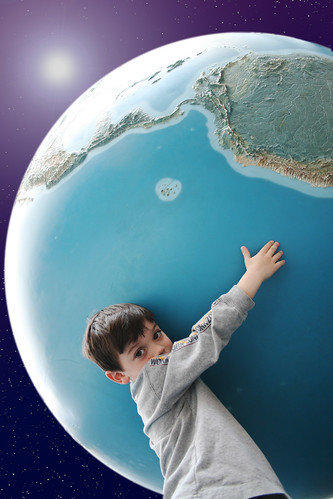
Atlas, it's time for your bath
Photo: woodleywonderworks | Flickr/Creative Commons
[image: Young white child with short dark brown hair
embracing an enormous globe of the earth.]
Maxfield Sparrow
unstrangemind.com

Ray Hemachandra recently published an essay on his blog that reads like a love letter to/about his adult Autistic son, Nicholas. In the essay, Ray muses about how quickly time slips by, and how suddenly it seems that his son is transitioning from school to adult life and all the possibilities and struggles that includes.

“For an adult child, parents and families soon no longer have school IEP meetings to fight for rights, accessibility, and inclusion. But many of the same questions we wrestled with in the school setting extend into adulthood and society: Will he or she be isolated or included? How do we foster more inclusive communities broadly, but also more specifically take steps to ensure our child feels a part of the world, not an outcast? So many disabled and autistic adults experience isolation and often depression.”

Ray shares many worries about Nicholas’ future, but then turns his thoughts around and says that worry isn’t helpful. He points out that parents must do all they can to help their children, but in the end parents can’t determine how their children’s lives will turn out. Your child’s life is your child’s life, not yours. Worrying too much will eat away at the precious time you have together. Trying to over protect your child will limit them and leave them unprepared for many of life’s opportunities and possibilities.

Most crucially, Ray writes: “We miss something here. Developmental delay means that much life development happens in adult life for autistics, after age 18 or 21—maybe even more so than it does for us the rest of us.” That’s such an important point. As a 51-year-old Autistic, that’s been my experience: we don’t emerge fully developed at age 18; we are growing and changing throughout our life span.

That is the first thing you must do to prepare the world for your child: join the fight to extend services. The sooner you join that fight, the more years you will have to work to help establish what your child needs as they grow.

Beth Arky’s older article about Autistic people aging out of the system describes several possible solutions different parents and organizations are approaching to address the issue of Autists aging out of the system, citing data that suggests 40,000 Autistics per year are turning 21 or 22 (the age at which services stop varies from state to state). Some of the solutions Arky’s article describes are more workable if parents have access to large amounts of money. Other solutions are problematic and Arky specifically reports on the dangers of setting up a segregated community for Autistic adults. It is so important to fight for your child’s future and it is important to start learning right now—no matter how young your child currently is—about the options and issues coming up in your child’s (and your) future.

It’s also really important to pay attention to what services your child is getting right now. An ABA group called The Daily BA made a video that highlights how important it is for you to pay attention. (There are two things I should warn you about concerning the video, in case you decide to go watch it: it’s heavily pro-ABA, and it is a high-risk seizure trigger as the first three seconds of it are flashing at a rate faster than 3 hz. I wanted to warn you before I gave you the link to the video.)

Disclosure: if you’ve ever read anything I’ve written, you probably already know I’m against ABA. You might be wondering why I’m telling you about a pro-ABA video: It’s because the video unconsciously explains why you should not rely on ABA to prepare your child for their future. Quoting the video:
“I think one of the impending crises we’ve got right now is that these kids are getting great services, they’re getting fantastic services and they’re getting a lot of services. The issue I see is we’re getting now these providers that only work with kids and are not transitioning them and we work with adults obviously, all the way up to 80, but when we get those folks they are not prepared for moving from 35 hours to now 2. And they don’t have the functional skills. [...] They might be able to read and they might have all the academic stuff but they don’t have how to ride the bus, they don’t know job skills. So we’re taking that and we suddenly have a lot less hours. That’s quite a dilemma. I think the only way that’s going to get fixed is as the activist parents who helped vote to get their kids these services follow their child through this transition to adulthood and vote to get more funding because that’s the issue right now.”

I think the BCBA I just quoted from that video highlights two important things. One is that ABA is not getting the stellar outcomes that we should expect from a therapy that dominates the market as the “only evidence-based therapy.” Why are we allowing one therapy to lobby so heavily that it’s often the only thing insurance will cover, if it’s dumping non-transitioned adults into a world that’s not prepared for them nor they for it? The BCBA mentions 35 hours a week of therapy. Autists are getting intensive therapy like that for years. Parents: do not settle for therapies or educational systems that only teach academic literacy and don’t do anything to prepare your kids for adult life!

Another important thing the BCBA says in the video is that parent activists are the ones who need to dig in and change the system. He’s completely right! Leaving aside my feelings about ABA specifically, the “autism industry” caters to the “perpetual child” because that’s what a wave of parent activists before you told them to do. A 2011 report in Disability Studies Quarterly looked at the images of autism and found that parents presented autism as the face of a child 90% of the time. The authors looked at the feedback loop among parents, charitable organizations (75% of depictions of autism were child-only narratives), fictional books (90% children), narrative films and television shows (68% children), and news media (four times as much coverage of autistic children as of autistic adults) and pointed out that the closed loop excludes the voices of autistic adults, resulting in “a barrier to the dignity and well-being” of all Autistic people.

More specific to the topic at hand, this feedback loop has informed the autism industry that Autistic children are the only worthy targets for services. So now it’s time for parents, as the only close stakeholders who are getting heard, to step up and say, “hey, my kid is going to be an adult some day. Autistic children become autistic adults.

Parents need to lobby for more funding for adult autistics so that their children will have the services they need in their 20s and beyond.

Parents need to educate everyone: policy-makers, doctors, teachers, and other parents of autistic children. Find opportunities to speak about the problem of low funding and services for adult autistics. Every parent worries, like Ray Hemachandra wrote, about how their child will survive and thrive after they are gone. Working to teach everyone about the importance of continuing services and education for Autistic adults will help you cut through some of the anxiety about what your child will do when you are gone. You can help to build a better world for your child right now.

Parents need to insist that their child’s education begins introducing transition material early. There is so much to learn when it comes to living independently, with or without supports. For example, no one taught me how to manage money. Maybe everybody figured someone else was going to be teaching it to me. Maybe everybody saw how well I could read and assumed I must not need help with anything else. Whatever happened, someone dropped the ball and I ended up out in the world with no idea how to earn, spend, save, or invest money.

Your kids deserve better. Make sure they are learning what they need to learn and not getting dumped out of the system in their early twenties with an education so uneven it leaves them vulnerable and unnecessarily struggling. We autists take longer to develop and we are still learning new things much later in life than non-autistic people. I realize I’ve just set another load on your already overburdened shoulders with this. You’re in a different phase of childhood and might already be feeling overwhelmed by the demands of the present. I get that. Parenting any child is hard work. But future you will thank current you for carving out the time to think about and work toward these goals now. Your child will not be a child forever and this world is still not ready for your child. We’re all out here trying so hard to change that and we welcome you to join in with this important fight because your child’s future depends on you.
Share:

Knowing Why Is Everything: An Interview With Editor Elizabeth Bartmess on Adult-Diagnosed Autistic Perspectives

Sarah Kurchak
www.riskyfuel.com

The Knowing Why book cover
[image: Book cover with a black background,
with silhouettes of people of all sizes
and a dog, in a rainbow of colors.
Rainbow-colored text  at the top reads,
"Knowing Why: Adult-Diagnosed Autistic
People on Life and Autism.]
There are many problems with the ways in which autism is currently seen and represented in the media and public discussion. When the face of autism is still predominantly white, cisgender, heterosexual, middle or upper class boys, it erases autistic people of color, LGBTQA autistic people, and poor autistic people from the conversation and denies them vital supports and resources. It also ignores the fact that there’s an entire segment of the autistic population that spends their entire childhoods and adolescences not knowing that they’re autistic at all.

As someone who wasn’t diagnosed until I was 27, I grew up knowing that I was different but not understanding how or why for a large chunk of my life. That experience has shaped me in both positive and negative ways that are sometimes quite different from those of my counterparts who knew so much earlier. This has made me particularly interested in the perspectives of other people who have gone through similar processes. What common ground do people who were diagnosed or self-diagnosed in adulthood have? How do race, gender, sexuality, and class influence this later onset understanding of oneself? How does adult diagnosis inform our past, present and future? What can we learn from each other?

So I was thrilled when The Autistic Self Advocacy Network released its anthology Knowing Why: Adult-Diagnosed Autistic People on Life and Autism. The collection includes nonfiction pieces from a diverse group of autistic writers, and tackles everything from intersecting identities to passions to workplace concerns and burnout. It’s an excellent read and a valuable resource for anyone who has been through the process of being diagnosed or self-diagnosed as autistic in adulthood, anyone who wants to better understand us, and anyone who might be wondering if they might be autistic themselves.

I corresponded with the book's editor, Elizabeth Bartmess, to learn more about the anthology’s genesis, conception, and goals.

Can you tell me a little about the genesis of this anthology? What made you want to produce an anthology of work by people who have been diagnosed or self-diagnosed as adults?

In 2015, I was organizing collaborative Twitter hashtags, including #AutChat (which I'm still doing) and the #AutismMeans hashtag series. Ari Ne'eman asked if I was interested in editing this anthology for the Autistic Self Advocacy Network (he was president of ASAN at the time). He proposed a nonfiction anthology, with personal narratives by adult-diagnosed/adult-self-diagnosed autistic people, aimed primarily at an autistic audience.

When autistic people come together and share their personal experiences, a particular kind of magic can happen. Often there are refrains of "I thought I was the only one!" and "I never realized that was related to being autistic." Frustrations get shared, tips get passed around, lives get better. (This isn't just an autistic thing, of course, and it doesn't always happen, but I've seen it happen often.)

We also learn about experiences that differ from our own. Autistic people vary in our autistic characteristics, in other aspects of our identities, and in our own specific life situations. Creating supportive communities requires developing a broad understanding of both our similarities and differences.

When people learn they're autistic later in life, and get accurate information about autistic experiences, they often have many closely spaced epiphanies about their lives. I found this valuable to go through myself, and fulfilling to help happen for other people. The anthology was an opportunity to do that on a broader scale.

Did you have a list of prospective authors in mind when you started to put together this anthology?

There so many good autistic writers! Some people came to mind immediately, and I learned of more people along the way. In a couple cases I asked for adaptations of existing pieces. We also put out a call for interested writers, and got a big response. The final set of contributors is about half-and-half people I approached, and people who contacted me.

As an adult-diagnosed person myself, I’m impressed and pleased at the wide variety of extremely relevant topics that are tackled in the collection. Did you have themes in mind, or did they naturally appear as a result of the material the writers were submitting?

Thank you! I asked some authors for pieces on specific topics (intersectionality, mental health, managing disability and chronic illness, sensory and social issues). Other authors suggested topics; the ones included in the anthology are burnout, accommodations at work, technology, and passions, (often called "special interests"), and intersectionality and coping skills. The overall theme—the value of knowing that you're autistic—emerged out of the individual pieces.

Some common topics have been covered in depth elsewhere, so I didn't include them in the anthology. For example, navigating the diagnostic process as an adult, job interview etiquette, handling college. There are also important underserved topics I didn't include, such as trauma recovery, acquiring needed supports, poverty, and homelessness. Those need careful and extensive coverage, and I didn't think I could do them justice. And there are topics I didn't include because I didn't have space, or didn't realize their importance at the time, or had them lined up but they fell through (aging, parenting, pregnancy, queer dating and relationships are particular topics that come to mind). Many of these topics have had some work done, but it would be great to have more.

I really love your introduction, which addresses a lot of questions that I think every autistic writer and/or public figure receives when they write anything about their own autism. It also addresses a lot of concerns that many autistic people have about their own place in discussions like these. Why was it important for you to tackle these concerns so directly off the top?

Thank you! I wanted to address common misconceptions right off because they can be particularly emotionally fraught for autistic people who weren't diagnosed in childhood, to the point that even just reading about autistic people's experiences can be stressful. I think it's helpful for non-autistic readers too, but the primary reason I wanted to address them was autistic readers.

The first misconception is that if someone wasn't diagnosed as a child, it's not important for them to know they're autistic. Autistic people are often told we don't have the experiences or needs that we do have, and we internalize that, to one degree or another. Many undiagnosed autistic adults first seek help and answers when unattended needs and the cost of masking autistic traits have pushed us into crisis, because it can take a crisis to override our internalized beliefs that we don't need or deserve support or understanding. Even people who aren't in active crisis are often struggling; it's just not true that lack of diagnosis/self-diagnosis means that we're fine.

The second misconception is that exploring whether we're autistic, thinking we're autistic, self-diagnosis, or even formal diagnosis insults and harms "real" autistic people. That's not true for a lot of reasons—health professionals often fail to diagnose people for superficial reasons, like being nonwhite or being female-presenting—but the reason I wanted to emphasize is that even if they're ultimately wrong (and they're generally not), when people explore whether they're autistic by reading about autistic people's experiences, it increases knowledge and understanding of autistic people. And when people realize they're autistic, that typically helps them personally, and also helps other autistic people generally. There's strength in numbers.

The third misconception is that autistic people are alike, so that if you don't see yourself in someone else's experience it must mean you're not really autistic. Autistic people vary a lot! That's part of what being autistic involves.

Your introduction also includes an acknowledgement of adults who are questioning whether or not they might be autistic and the anthology includes a list of resources for them, as well. Why was it important to you to reach out to this population?

I addressed some of this in my answer to the previous question, but I'll mention two additional reasons.

First, in my experience, and that of other people I've talked to, people generally start considering that the might be autistic because they are. Not always—sometimes it's some other variety of neurodivergent, like ADHD or CPTSD (both of which are common in autistic people too! Having one of those isn't equivalent to not being autistic). But they're rarely neurotypical.

Second, autistic people have built a number of strong autistic communities. People in them often have strong autistic identities, and talk about our differences from neurotypical people, and that can give outsiders the impression that if they don't have a strong autistic identity they must be neurotypical. That's not true; being autistic and having a strong autistic identity aren't the same thing. But people who are questioning whether or not they might be autistic can get the impression that it is true, and that's a barrier to self-knowledge, support, and help. (Including for people who are not autistic, but some other variety of neurodivergent.) So it's important to reach out.

Autistic people who were diagnosed or self-diagnosed in adulthood can have very different experiences—and often very different feelings about their autism—from those who were diagnosed as children. Is there anything that you hope that someone who was diagnosed in childhood might take away from reading this anthology?

When adult-diagnosed/adult-self-diagnosed people learn they're autistic, they typically have more autonomy than kids or teens do. Adults usually have more ability to influence who else gets to know that they're autistic, to refuse harmful quack "cures", and to refuse harmful therapies. (Not always, but more often.) Adults are also more likely to get diagnosed or to self-diagnose because of needs they themselves have identified.

This doesn't mean that it's better to wait for diagnosis as an adult. Often by the time we get diagnosed or self-diagnose, we've had many negative life experiences that already knowing they were autistic would have helped with. It's better to be diagnosed earlier and also not be subjected to mistreatment.

I hope what this anthology offers to autistic readers who've had bad or mixed experiences—some early-diagnosed autistic people but also some late-diagnosed/late-self-diagnosed autistic people—is a picture of what knowing you're autistic should get to look like: the benefits of self-knowledge when combined with relative autonomy and the ability to refuse consent to diagnosis-related harmful treatment. This is the world we want for all autistic people.

(A few caveats: knowing that you're autistic can do more harm than good when accompanied by misinformation about autistic people. For some people, learning that you're autistic means realizing that some things they thought they could change, they can't; that's rough, and grieving over it is normal. And sometimes the diagnosis can result in having autonomy or opportunities removed, even for adults.)

I think the anthology can also offer the same thing that learning about other autistic people's experiences can offer any autistic person, regardless of age at diagnosis/self-diagnosis: the chance to compare someone else's experiences to your own, think about might-have-beens, and potentially come up with ideas that could help you now, or that could help people who were in a position that you used to be in and that you could potentially help work toward, if that's something that's rewarding for you.

What about potential non-autistic readers? Is there anything you hope that they’ll take away from these essays?

That being autistic affects so many different aspects of our lives. That our experiences and challenges are not necessarily reflected in what we may look like to casual observers. That our identities are complex, and not just about being autistic. That we can be incredibly resourceful (even if we shouldn't be tasked with as much as we are).

Some non-autistic readers understand some or all of this already, particularly people who share significant similarities with autistic people due to other neurodivergence or disability, but also some neurotypical readers. They may be able to pick up some useful tips or ideas from the anthology, since coping skills that help autistic people can help other people, too.

Is there anything else that you’d like to address or discuss in this Q and A?

I started writing an answer, which accidentally turned into an essay too long for this interview. The brief version: how can we use accumulated autistic self-knowledge—of which this anthology is a part—to help deal with the extra burden that current and ongoing geopolitical events impose on autistic and similarly disabled people? In particular, how can autistic communities support autistic and similarly disabled people who are already maxed out and have no time or energy to devote to helping anyone else?

The anthology closes with a piece by A.C. Buchanan encouraging us to think and discuss our relationship to technology, not just as individuals but as communities. I think we can better use technology to expand the reach of our community-developed self-knowledge—in particular to help more autistic people identify themselves as autistic, to create additional supportive connections between autistic people, to create additional autistic spaces and make existing autistic spaces more inclusive, and to make more non-autistic spaces more accessible (including activist spaces).

There are already people who work on all of these and have worked on them for a long time, and made progress. I think we can channel more community effort into supporting those efforts and into creating new ones, and that using technology in new or different ways will be part of that.
Share:

Why Supported Decision Making Is a Better Choice Than Conservatorship

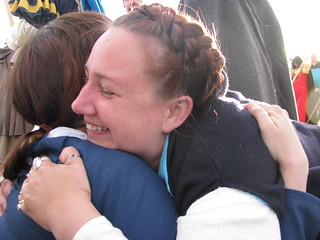
Family hugs

Image © Falashad | Creative Commons
  [image: Smiling white woman with crown braids
hugging a person with an auburn ponytail.]
Many families or guardians assume that when high-support autistic teenagers transition to adulthood, they automatically need to be legally conserved for their own protection. But that's isn't necessarily true. We spoke with UCSF's Dr. Clarissa Kripke about why Supported Decision Making can be a better choice than pursuing conservatorship, and the many reasons why.

----

Dr. Clarissa Kripke: When people with disabilities and their families start to think about transitioning from child to adult services, they are often encouraged to consider conservatorship. 

Conservatorship is a legal process where a court appoints an individual or organization to make decisions for an adult. Courts do this after finding that the adult is unable to provide for his or her own needs for health, food, clothing, or shelter. They must be found unable even with supports, and there must be no less restrictive option available. The court can grant a limited conservatorship to make some decisions, or a full conservatorship to make nearly all decisions. 

Fortunately, there is a less restrictive option, called Supported Decision Making which is less expensive, less burdensome to families, more flexible, and which promotes development, opportunity, and safety.

Thinking Person's Guide to Autism: When it comes to conservatorship, what are some of the main misunderstandings you've observed?

Kripke: Some families fear that they will not be able to continue to provide support, or to be involved with their children’s educational planning, health care, or service planning, unless they are named conservators. Schools often encourage families to include conservatorship as part of transition planning, mistakenly informing parents that without conservatorship they will not be able to participate in their child’s Individual Education Plan meeting. 

This is untrue. Under the Lanterman Act, parents or other authorized representatives are involved as much as their disabled children want and need them to be. A Supported Health Care Decision Making agreement can clarify roles and assure that confidential information can be shared within a circle of support, and that supporters can attend appointments and meetings.

Families often feel that conservatorship will increase their loved one’s safety. However, the best way to ensure safety is to teach and empower a person with disabilities to direct their own life. When people can communicate directly about their preferences they are more likely to end up in a good situation and with people they trust.

Some parents and professionals believe that conservatorships are necessary for people with cognitive disabilities and recommend them routinely as part of transition planning. However, even people with the most profound disabilities can retain their legal capacity, even if they cannot independently meet the legal standard for informed consent for some or all medical decisions. The United Nations Convention on the Rights of Persons with Disabilities provides that disabled people are entitled to legal capacity on an equal basis with others in all areas of life. It obliges states to provide access to support for people with disabilities to exercise their legal capacity.

TPGA: What do the rights of a person who has been conserved look like? 

Kripke: Imagine what your life would be like if, when you reached the age of 18, your parents decided everything about your life—where you live, what you eat, what health care you receive, where you spend your money, and how you spend your day, and with whom? What if a judge said they could make those decisions without consulting you, not just for a few years, but forever? What if people called your parents instead of you about important decisions in your life? Imagine what would happen as your parents got older and a judge handed that power over your life to a stranger who you didn’t get to choose? We do this to people with disabilities when we conserve them.

Fortunately, in California, most regional center clients, even those who have very little expressive communication skills, are unconserved. Regional center clients are entitled to support such as transportation, assistive technology, education, and personal assistance. They still receive health care, disability payments, communication help, services and supports, and participate in their individual program planning to the extent that they are able with the support of family, friends, significant others, service coordinators, clinicians, payees, the client rights advocate, and other service providers. With Supported Decision Making, you can get the support you need to direct your own life.

TPGA: It appears that opting for supported decision making instead of conservatorship gives an individual the highest likelihood of having a strong circle of support. Can you talk about why this is?

Kripke: With Supported Decision Making, you can make agreements with as many people as you wish. For example, many of us would ask a different person for help understanding our finances than we would for understanding our health. Also, many people want different types of support from different people. One person may provide transportation and physical assistance while another provides support for communication.

TPGA: What are some of the benefits of supported decision making for the individual, in terms of growth and learning as an adult?

Kripke: When people are given opportunities to make decisions, they develop skills and learn from mistakes. When people are engaged in the decision-making process and given communication supports, they are more likely to engage. Supported Decision Making gives people with disabilities the opportunity to make choices for themselves. Sometimes this involves taking some risks and taking responsibility for the consequences. This is how we all learn and grow.

TPGA: What are some of the long-term benefits for supported decision making for the family? It seems as though parents' ability to serve as conservators may become more challenging as everyone ages.

Kripke: The people who will provide your child services and supports decades from now, may not have been born yet. People who you have in mind to take over your role may be unwilling or unable to do so by the time they are called to serve. Parents are not the people who will decide who succeeds them as conservator. A judge will. And a judge can remove a parent at any time if they do not like the way they make decisions. They can also compel a conservator to continue to serve even if the conservator moves out of state, or if serving becomes difficult. Parents often develop their own health problems and are less available to provide support over time. Without permission from a judge, nobody else can step in to share the responsibility. This also means that potential successors don’t have an opportunity to learn about your child and their role before they are named conservator.

Supported Decision Making is much more flexible. It keeps the person with a disability in charge of choosing who provides them support and the type of support they want. This typically changes as they age, and as their relationships and circumstances evolve. People can serve for long or short periods of time or share responsibility. Supporters can be friends or family or paid professionals.

TPGA: Do parents in the U.S. have to make a legal decision about their child's future, in terms of conservatorship or supported decision making, by the time the child is 18 years old?

Kripke: No. Just like everybody else, people with disabilities learn and grow—sometimes dramatically. Augmentative and alternative communication (AAC) is an emerging field, and many people who were not able to express themselves in the past are now able to do so. Sometimes new technologies or adaptive equipment can increase people’s skills. 

Supported Decision Making takes into account the fact that capacity fluctuates over time and in different environments and with the type of support they receive. Not only can people with disabilities improve their skills at making decisions and expressing themselves, supporters can improve their skills in learning how to listen.

Currently, only two states have adopted supported decision-making into their legal capacity statutes: Texas and Delaware. It’s important that we see more states adopt Supported Decision Making laws – while supported decision making agreements don’t require legislation in order to be implemented, they are more likely to be respected by banks, clinicians and other entities when they are placed into statute.

TPGA: What if an individual develop skills that afford them more independence after they have been conserved? Can the conservatorship be reversed?

Kripke: Courts evaluate a person at a particular moment in their live without regard to whether the person might develop new skills or their circumstances might change, but their rulings continue indefinitely. Conservatorships are very hard to undo once they are put in place, and it rarely happens. Once someone is conserved, their agency is often overlooked, which has life-long consequences. 

There is no rush. While conservatorships are rarely reversed, a limited conservatorship can be pursued at any time in the future if a need arises that can’t be managed any other way. If someone is already conserved, conservators can still respect will and preference and implement supported decision making principles.

In addition to being very challenging to reverse, there is no guarantee that a conservatorship will transfer as a parent may wish after their death. While a plan may be put in place to set a sibling or other relative as a conservator after the initial one dies, the court has the ultimate decision-making authority: opening up the possibility for people to be placed under professional conservators, who may have dozens of clients and are not actively engaged in a person’s life. This can lead to institutionalization and neglect.

TPGA: What are good resources for families who need guidance about ensuring individuals' rights are protected and respected as they transition into adulthood?

My favorite video about Supported Decision Making is Gabby’s Story. Susan Mizner, Disabilities Counsel from American Civil Liberties Union recently discussed Supported Decision Making (video). ACLU has a helpful Frequently Asked Questions Fact Sheet. To learn more about supported decision-making models around the world, check out the Autistic Self Advocacy Network’s resource The Right To Make Choices. The Office of Developmental Primary Care has videos, training materials, and links to additional resources on its Supported Decision Making page.

----

To improve health outcomes for people with developmental disabilities, you can make a tax deductible donation to support the Office of Developmental Primary Care.

----

Dr. Clarissa Kripke, M.D., FAAFP is Clinical Professor of Family and Community Medicine at the University of California, San Francisco. She is Director of the Office of Developmental Primary Care, and of CART Services, an interdisciplinary, mobile, health care consultation team serving Regional Center clients in Northern California. Our team is deeply committed to supporting people with developmental disabilities to be as healthy as possible. We know that, with access to the right supports and services, even people with the most complex needs can live successfully in the community of their choice.
Share:

About That "Coming Avalanche" of Autistic Adults...

Greg Love
ageofneurodiversityblog.wordpress.com

wave coast
Waves in Santa Cruz, California. © Wonderlane, Creative Commons
[image: Ocean waves breaking on a rocky shore.]
It is currently autism “awareness” month, that time of year when autistic people are told that they are costly and burdensome, that they ruin families, and—even worse—that they’re growing in numbers (oh, the horror.) A petition has even circulated, since Donald Trump took over the White House, claiming autism must be declared a "public health emergency."

While these ideas remain disturbingly common, some parents are changing their tune, albeit unfortunately not in ways that actually diverge from “awareness.” Nowadays, parents and professionals are increasingly alarmed at the incoming “avalanche” of autistic adults who will be ill-prepared for the lack of services and supports after high school.

It is true that the world scarcely cares to accommodate the support needs of autistic adults—yet at the same time it can no longer just “disappear” those adults into institutions like it used to. We have the disability rights movement to thank for winning important reforms over the last several decades, mandating access to the same education options available to non-disabled people. Basic civil rights like non-discrimination in public and private institutions and services, in hiring, in residential facilities, etc., had to be demanded before what should be considered routine accommodations were mandated by law.

Many autistic adults require access to—and deserve—quality services and support to guarantee that their basic needs are met, and to allow for full inclusion into their communities. But those services and supports simply do not exist in most communities. And being fully aware of this problem does not justify using the bigoted language of “awareness” to scare everyone into action.

I have a question. It is a question seldom asked by the “autism community” of non-autistic parents and “experts.” Why do we have this scarcity of services and support for adults? I’m not exaggerating. This simple question is never adequately addressed, if it is asked at all. When it is asked by some parents and professionals, it is erroneously framed as being based around an assumption, that this state of affairs was always going to exist because the world has yet to catch up with the reality of the “epidemic” at their doorsteps.

On the contrary, this is what I see: there is no incoming “avalanche” of autistic adults. There is simply autistic adults who would have always been born, who would have always existed whether or not services and support were available to them.

This is what I see: an “autism industrial complex” that has emerged in recent decades, with its purpose being the development of “treatments,” and locating the source of autism, to possibly cure it.

This is what I see: in childhood, an overwhelming focus on Early Intervention, extending as far back as two years of age or earlier, with therapies that are justified on the basis of teaching “skills” but which frequently consist of behavioral modification, compliance-training, and normalization.

This is what I see: a tunnel-visioned focus on autism as a childhood disorder that erases any notion that these children will grow up into autistic adults, with decidedly adult needs.

This is what I do not see: any ability on the part of the “autism community” to connect the dots, so to speak. While this community of non-autistic parents and professionals stumbles to come up with answers to the oncoming “crisis” of autistic adults, autistic adults are already here and have a lot to say about it.

Perhaps we ought to start with the obvious question: why is it that you continually separate the way autistic children are treated and the way autistic adults are treated? These are not separable issues. Autistic children are treated as “fixable” or amenable to “recovery” with intensive Early Intervention as early as age two. The “autism community” says that they should be subjected to hours upon hours of therapy to reduce “problem behaviors” and learn “skills.” This community believes that the only hope for autistic people is through experimental social engineering therapy that seeks an unmistakable goal of autistic erasure.

How can the needs of autistic people across their lifespan ever be properly addressed when so much money and energy goes into erasing their neurology before they ever reach adulthood? Meeting the needs of autistic people across the duration of their lives is incompatible with seeing them grudgingly as human beings after they’ve been through years of therapy and behavior modification and—shocker!—came out autistic in the end anyway.

So is there really an “avalanche” of autistic adults coming? Parent of an adult autistic daughter Cindy Godwin believes so, and she also doesn’t hold back on the insulting, pathologizing, and fear-mongering language that usually accompanies “awareness”:
“As the number of autistic children grows, so does the number of autistic adults. Their needs remain much the same as they age, yet the support they once received fades. Though families like mine are feeling it most acutely, this is an issue for everyone to consider. The tsunami of adults with autism is coming.”
We’ve now graduated from an avalanche to an even scarier and more devastating “tsunami.” She prefaces her piece by reminding her audience that “autistic children never really grow up.” So what do we do with these children in adult bodies?

She describes the “scene” found at her daughter’s town home, because boundaries like privacy need not be observed when it comes to your autistic kids. Her daughter may be almost thirty years old, but her mother considers her too "feeble-minded" to have any concept of privacy, and describes her daughter's executive functioning disabilities as though the young woman is a human zoo exhibit displaying "the autistic adult in its natural environment," for millions of people to read:
“She’s sitting on the sofa playing video games. Dirty dishes are everywhere in the kitchen, pizza boxes and empty soda bottles cover the countertops, the trash is overflowing and stinks, the patio is littered with cigarette butts, laundry needing to be done is stuffed into black garbage bags. The notice of a certified letter, announcing that she has been dropped from her therapeutic art program for non-attendance, sits on top of a stack of unopened mail and unread handouts from her counselor. 
"This was the scene I walked in on recently. “She” is my 29-year-old daughter.”
This mom, who states she “suffers combat level stress daily,” along with hundreds of thousands of other parents, evidently equates executive functioning disabilities with immaturity. Remember, “autistic children never really grow up.” As an autistic adult with similar executive functioning disabilities, I find Godwin's description of her daughter beyond insulting, but also realize it is standard fare coming from the “awareness” community.

To be fair, not all parents are fixated on the standard impending crisis and tragedy narrative. Father of an autistic son Raquel Regalado published a recent short piece entitled Time for Autism Awareness to Grow Up.
“As the parent of an autistic teen I can attest to the old axiom, “little kids, little problems, big kids, big problems.” And while we appreciate the social and developmental gains our children have made, the older they get the harder it becomes to find services, programing and opportunities for them because funding and public opinion is fixated on early signs and intervention.”
He is absolutely correct when he says, “funding and public opinion is fixated on early signs and intervention.” Let me be clear: this must be the starting point for the divided autistic community and autism community to find common ground in discussing the needs of autistic adults.

But there is an alternative to seeing this as an “avalanche,” and there is certainly no justification for using dehumanizing and pathologizing language to describe a problem that no autistic adult had any part in creating.

Autistic adults do face a severe lack of services and support. But they also regularly face an “avalanche” of bigotry from non-autistic parents and experts, and even the President of the United States, plus anti-vaccine cure cultists, Early Intervention and ABA social engineering conversion therapists, and a highly influential international organization that makes a lot of money but has little intention of using it to address the most important needs of autistic people and their families.

But let us say that there is an avalanche of autistic adults. I welcome it. Because autistic adults are adults, not children in adult bodies, and the failure to meet their needs as adults creates a space for them to begin advocating for the services and support they need. And more than advocating, but demanding it.

Unlike so many other parents, I don’t see myself as the “voice” of my own autistic son. When he grows up, he grows up into an autistic adult, and no matter his communication challenges (he is non-verbal now, but he’s also three years old), he can learn to advocate for himself along with other autistic adults.

Autistic adults are only a “crisis” when autism itself is understood as a crisis. There is only an “avalanche” of autistic adults when autistic children are understood as an “epidemic.” Accepting autistic people as autistic people, and allowing them the same self-determination that every other person has a right to regardless of their support needs, will turn this bogus avalanche into a simple issue of human rights. Never again should any person, based on their different neurology and disability, be described in this way.

Accept autistic children as autistic children and there will not be an avalanche, only a need to make certain that autistic children grow up to be autistic adults with their adult needs met, and fully accommodated.

----

A version of this essay was previously published at ageofneurodiversityblog.wordpress.com.
Share: