Showing posts with label Mel Baggs. Show all posts

The Meaning of Self-Advocacy

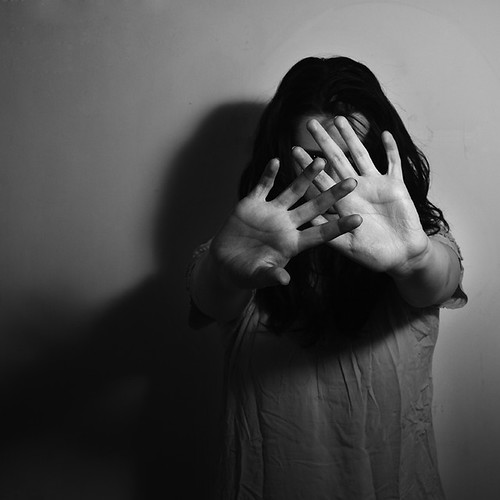
Black and white photo of a person with long dark hair holding their arms straight out towards the camera, with palms facing outward protectively.
Image © Gioia de Antoniis  | Flickr / Creative Commons
[image: Black and white photo of a person with long dark hair holding their arms
straight out towards the camera, with palms facing outward protectively.]


Mel Baggs
withasmoothroundstone.tumblr.com

Too often people define self-advocacy in narrow terms. They define it in terms of formal groups like People First or Autism Network International. They define it in terms of the ability to use standard language in a specific set of ways. They define it in terms of a specific method of going through the legal system, or other usual channels, to get specific kinds of things done. These are all valid kinds of self-advocacy, but they set people up to believe that only certain kinds of people could ever become self-advocates.

When one inmate in an institution fights back against the staff in defense of another inmate who is being brutalized, this is self-advocacy. I have only seen this happen once. She was brave and heroic in the genuine senses of the words, and she paid the price for trying to protect me.

When an autistic teen without a standard means of expressive communication suddenly sits down and refuses to do something he's done day after day, this is self-advocacy. When his initial peaceful methods are ignored in favor of restraining him and violently shoving him into a car so that staff can meet their schedules rather than listen to him, his decision to bite the driver is self-advocacy. I was there in the car with him.

When an autistic person who has been told both overtly and otherwise that she has no future and no personhood reacts by attempting in any way possible to attack the place in which she's been imprisoned and the people who keep her there, this is self-advocacy. That was me and too many others I knew.

When inmates of institutions (both traditional and those that masquerade as community), including those who are said to have no communication, devise covert means of maintaining communication and friendship in spite of staff's attempts to stamp it out, this is self-advocacy.

When people generally said to be incapable of communication find ways of making clear what they do and don't want through means other than words, this is self-advocacy.

When inmates and 'clients' devise both small and big ways of sabotaging staff's attempts to control our lives, this is self-advocacy.

In the book First Contact, Dave Hingsburger describes how people with significant developmental disabilities, normally believed to be incapable of self-advocacy, can and do engage in it:
Helen is her own self-advocate in that her "self" "advocates" that we adapt the world for how she experiences it. This is self advocacy at the grandest level. Why? Because it is immediately apparent that if Helen's personhood can liberate her—our understanding of the personhood of people with disabilities should do the same. Her statement of joy, of self awareness, shows that people who think that she would be better off dead—are simply bigots who choose not to know her. Helen is a radical person. Her message is about radical acceptance. Her life is radically her own. For those labeled "profoundly retarded," emphasize the word "profound."1
Then there's the question of things that get called self-advocacy, but aren't.

When a non-disabled person gets full of ideas about what disabled people should be saying and thinking about our lives, and holds us lockstep in his control while pretending to teach us all these revolutionary ideas, that is not self-advocacy. Nor is it self-advocacy when someone is constantly telling us that our existing methods of advocating for ourselves are wrong, that we need to ask permission to have a voice, and that self-advocacy can only be accomplished once we learn to behave and go through "appropriate" channels. Or when an institution sets up a "self-advocacy group" that it keeps busy doing meaningless work to siphon off the frustrations of inmates and prove to others that they're really about "empowerment." These things often get passed off as self-advocacy, though. Real self-advocacy involves respect and listening to us.

When a disabled person decides to disenfranchise entire categories of disabled people on the basis that they're not as worthy or capable of self-advocacy as her kind of disabled people, that is not self-advocacy. When people run around saying "I can make decisions of my own, but 'retarded' people shouldn't," "People with developmental disabilities shouldn't live in institutions, but can you please tell me how to lock up my crazy brother?" or even "It's perfectly natural for people like me to hate ourselves, that's just how we are..." that's more like oppression than self-advocacy.

There's also a common practice of getting a bunch of disabled people together for a recreation program and calling it a self-advocacy activity. Real self-advocacy involves getting the tools for real power—not bite-sized pieces of power, but the real thing—in the hands of disabled people. Too often people in these 'programs' are punished as showing inappropriate behavior if we engage in real self-advocacy.

Self-advocacy doesn't always look good on paper. It doesn't always stay within the sensibilities of people who want everything neat, orderly, pretty, and civil. People who declare a certain category of person to be uniformly incapable of self-advocacy are usually the same people who view that category of people as people who must be controlled rather than listened to. Self-advocacy doesn't mean staff get to pat us on the head, use the right buzzwords, tell us what wonderful little self-advocates we are, and then chastise us or put us on a behavior program when we get angry at them about their controlling behavior.

Self-advocacy is fundamentally about true equality, respect, and power, and about recognizing and changing the current imbalances in all of those things. Whether it is going through the legal system to close an institution, fighting back physically against intolerable surroundings, talking back to staff, sabotaging the power of staff over the lives of disabled people, being listened to when we communicate in non-standard ways, learning that it's okay to have a voice and make decisions, or passively resisting the dominance of others over our lives, real self-advocacy will always upset the status quo in some way.

No matter how legal and proper it is, self-advocacy won't be comfortable and cushioned. It will not give the people who are used to having power over us a warm fuzzy feeling of helping us, nor will their viewpoints on what we should be doing be able to dominate us and speak through us. They will not be able to pretend away the power inequalities between us and live in fairyland where everyone's the same and that's what counts. It will frighten them and force them to examine themselves. This will be true not only for non-disabled people, but to disabled people who are used to feeling superior to other kinds of disabled people.

I was once told by a surprisingly renowned "parent-advocate" that I only have a voice because Gunnar Dybwad gave me one, and that I should sit back and let parents and professionals do all the work towards closing institutions in my state. I beg to differ. Self-advocacy was not born with Gunnar Dybwad, no matter how much of an ally he was. It was born the first time a suspected changeling tried to run away before anyone could kill him. And the first time an inmate of an institution resisted staff power. The first time someone without a standard system of communication devised one of her own and tried to communicate basic things to other people.

Self-advocacy has been and is still often labeled intransigence, non-compliance, treatment resistance, lack of motivation, behavior issues, violence, manipulation, game-playing, attention-seeking, bad attitude, bad influence, babbling nonsense, self-injurious behavior, inappropriate behavior, disrespect, disruption of the milieu, catatonic behavior, social withdrawal, delusions, septal rage syndrome, and even seizures or reflex activity. Self-advocates have been tortured, intimidated, locked up, separated from our friends and lovers, and killed for our actions since before any organized movements existed. To say that the parent-advocacy movement or any other group of people created our voices is arrogant and shows real disrespect for the price many of us have paid for using our voices. We have always had these voices, in many forms. It is others who have shut us out, shut us up, and refused to listen.

1First Contact, Charting Inner Space: Thoughts about establishing contact with people who have significant developmental disabilities, by Dave Hingsburger. This book is available from Diverse City Press. It talks extensively about how to get to know and listen to people without controlling and projecting your values all over them, and about the roles all people can play in the self-advocacy movement.

----

Originally published at Autistics.org
Share:

A Documentary About “Scary” Kids Scares Me—On Behalf of the Kids

One of the families featured in A Dangerous Son (Source: HBO)
[image: A white family of four, with two young kids, on a couch together.]
Kit Mead
kpagination.wordpress.com

Content note: Discusses violence and abuse regarding children with mental illness and disability, and the Newtown shootings.

I'm not going to watch “A Dangerous Son,” the HBO documentary that tells “a story about families with children who have psychiatric disorders that lead to violent behavior.” I'm going to avoid it mostly because I have already read all of those stories. Again. And again. And again.

And I have found them incredibly disturbing each time—on behalf of the children who are being written off and exploited. Especially because, as Mel Baggs points out: Across violent and abusive sets of environments, we—the kids—are the only ones seen as having a violence problem.

And those environments are so very often the context for “violent outbursts.” Like mine.

People considered sending me to a school for kids with behavioral problems, after therapy and medication didn’t work to quell my outbursts. Because they were going after the wrong thing: It must, the psychiatrist said, be Oppositional Defiant Disorder and anxiety. Not trauma. Not communication barriers. Not what was modeled as social behavior. Just that I was a rebellious, insolent, violent kid.

A throw-away diagnosis. A throw-away kid.

And I already know the kinds of things they’re going to talk about in the documentary: Parents saying we are desperate, at our wit’s end, we’re scared of our so, so very violent and mentally ill kid. But we’re out of treatment options. The psychiatric hospital is out of beds.

.  .  .

It’s possible to advocate for and with children who are struggling and vulnerable with some level of dignity, as I have pointed out before, some level of dignity. According to NPR, the director of the film “wanted to show how challenging this situation is both for the child and the family. Often, people assume a child’s behavior is a type of parental failure.” Further, director Liz Garbus told NPR, “Destigmatizing families like Stacy’s who are going through this and seeing how hard they’re trying is really important.”

Well, yes, in part it often is a parental failure, along with the psychiatric industry and other adults in the children’s lives. Whether it is directly perpetuating abuse and violence, enabling it, or failing to recognize the abuse and trauma, it is a failure of adults in their lives. You know what else is a parental and societal failure? Filming kids at their most vulnerable as a way to showcase how “challenging” it is.

You know what’s really important?

Not, as the NAMI spokesperson in the NPR article implies, framing it as a choice between psychiatric beds and intractable violence at home. Because it does not surprise me and my friends that one of the kids’ behavior “didn’t improve” when he got home from inpatient. Because we have witnessed the violence and hostility of inpatient institutions.

Maybe a focus on trauma-informed care and removing sources of abuse and violence in the kid’s life. Maybe that’s also important. Maybe it’s important to fight for community-based services and training providers need instead of more psych beds.

It’s possible to advocate for struggling children with dignity.

.  .  .

After the Newtown shootings and a particularly bad Gawker article called I am Adam Lanza’s Mother—written by a parent about her 13-year-old son—Savannah Logsdon-Breakstone wrote an article describing being one of the “scary kids,” the right to privacy, and the dangerous assumptions and dismissals people make. Every word of the piece is important, but here is a snippet:
"My mother doesn’t regret keeping it private, between her and her private journal or her therapist. Today she was at  a consumer and family advisory for our behavioral health managed care organization (BHMCO). They read that Gawker article, and my mother was appalled. She has scary stories about me, but the idea of sharing them in a way that associated them publicly with me was a horrifying violation of privacy and good sense to her. She was struck by the negativity of the piece, of the author. And she noticed how it relies on and perpetuates stigma, and jumps to conclusions. 
"Having been one of those scary kids is scary… What made it scary to have been one is what people assume based on it — and what they assume when you don’t disclose."
I Am Adam Lanza’s Mother inspired A Dangerous Son. The author is featured in the movie.

.  .  .

And what if filmmakers had turned a camera on me capture my worst moments? Then what? Would anyone have seen the context? Would anyone have seen a vulnerable child? Would anyone have stopped to think about the young person whose future they’re so willing to damage? What this might do to them on every level of being?

No. They wouldn’t have, because it’s already happened, over and over again, to others. They chose to exploit. But they could have provided sensitivity and trauma-informed care to a young, struggling person instead.

However lost in life you may think we are: “None of us are lost causes.”
Share:

What Makes Institutions Bad

Mel Baggs
ballastexistenz.wordpress.com

Buffalo State Hospital
Buffalo State Hospital, closed in 1974. Photo © Shannon O'Toole
[image: A dilapidated interior hallway of a former state hospital.]

Most people don’t have the foggiest clue what’s bad about institutions. What’s bad is something you pretty much never hear about, which is the violence it does to people’s insides at a very deep level. And that can’t be stopped by just removing the things that LOOK bad and throwing a layer of glamour on top.

Please, please, please everyone who talks about this in the past tense—STOP. This is still going on. Everywhere.

I think too many people get the wrong kind of idea. They will think that this is over. It’s not.

They will think that the awfulness and cruelty of an institution is measured by the size, the shape, the physical beauty or lack thereof, the amount of money funneled into it.

And those things are not real.

And those things—the belief in those things—are hurting and killing people still.

People don’t understand what’s behind the worst institutions I can possibly imagine. They think I’m kidding when I say it. Understand that I’m saying this as someone with experience of institutions that people often remark (from my photographs) look just like prisons, and institutions that look absolutely lovely to anyone who doesn’t have to live in them.

The worst institutions have lots and lots and lots of staff. They have beautiful grounds that people are more or less free to walk around on. Every room is decorated in ways that suggest a regular, pleasant house—and if anything is stained or broken someone fixes it, washes it, and paints over it within a day. There are no locks on the doors.

All of the staff are gentle and would never physically abuse an inmate. They are highly trained at redirecting and calming anyone who becomes violent. If you go outside, they follow you at a discreet distance, where they think you can’t see, to give the illusion of freedom and privacy. Their every movement and tone suggests sweetness and gentleness.

But they treat everyone as if they were somewhere varying, between infancy and four years old. With everything—everything—that entails.

Because they do not use physical restraint, they have to restrain you in other ways. They do it by such skillful manipulation that if you ever find out you were being manipulated, it’s long after the fact. If you confront them on it they’ll sweetly and politely tell you they have no idea what you mean. And they will continue to somehow always get you to do what they want, or else to feel awful about not doing so.

Glamour is a word that can refer to a kind of faery magic that can make a hovel appear to humans as a splendid palace. I often use the word to mean a similar kind of deception—a beautiful facade over a terrible reality. I make it part of my life’s work to see through glamour. And I see a whole lot of glamour used in conversations about institutions.

The above institution I have just described has a layer of glamour over it as well. If you look beneath the surface, it’s utterly horrifying. Most people don’t know how to see beneath the surface. Even when you personally are in such a situation, it can be hard to see.

You feel as if there is something pressing down on you, muffling and suffocating. But when you look around, there’s no outward sign of it. So why are you not happy? You must be an awful person to feel so awful when all these nice staff people are doing so much to make you feel at home. You look around, you try to search for what is bothering you, and it’s nowhere. But you’re in agony. Whenever you think nobody’s looking, you cry, sometimes it feels like you’ll never stop. Deep down inside you, you know something is going terribly wrong. But trying to pinpoint it is like trying to get a firm grip on a cloud.

Get a glimpse under the glamour and you see that all that has happened is a bunch of substitutions. They stopped locking the doors, but they started following you everywhere and subtly guiding you where they want you. The institution itself is positioned so that even if you tried to run away you couldn’t get anywhere. They stopped restraining your body, but their manipulation is like a permanent set of shackles on your mind. Their sweetness in manner hides the fact that they are sweet to you the way they would be sweet to an infant—even when you’re pushing sixty. Treat you like that long enough and you begin to respond and structure yourself like an infant, and the damage that does inside can’t be calculated.

I literally have nightmares about that type of institution. When I’m wrapped up in the glamour, this terrible calm takes over. It feels like something soft and smooth pressing all over my skin, and the temptation is to surrender to it and feel its fake calm, fake happiness. Then I wake up and want to vomit I am so terrified and disgusted with what I’ve just experienced.

This past summer I attended a recreation program for DD (developmentally disabled) people. And it was so much like a replica of my nightmare it was scary. Sometimes I would get smothered under the glamour, other times I wanted to scream. I cried more that week than I normally do in years, yet I was at every turn made to feel as if the problem was me. I can be so very passive but even my most passive wasn’t good enough for them.

One day I looked around and saw that everyone there was older. From the era of big institutions. Where they were used to being treated like this, and mostly could out-passive me any day (which is scary because I can get very passive). I talked to a woman whose roommate goes there—she said she goes in a grown woman and comes out acting like a young child. And not in a way that’s just her self-expression—this is one of those places that molds you into that form.

To survive in a place like that something inside you has to break. It’s impossible to fully explain to someone who hasn’t been in that position. Something inside you has to die. And it doesn’t die any less because you got one of the “good” (read: glamour-covered) institutions. The same forces are crushing down on you either way, the difference is cosmetic.

The worst part of institutions is not physical violence, obvious forms of abuse or neglect. It’s not even the experiences you don’t get to have. It’s the damage that is done right down to your soul, by living under the power of other human beings. Glamour makes no difference. Prettiness makes no difference. Size makes no difference. Even length of time makes less difference past a certain point than you’d think.

Until you understand that damage—what it is, what it means, where it comes from—you will never get rid of institutions. You have to understand it on a very intimate level or you will reproduce it without knowing what you’re doing.

I still can’t tell you how long I was institutionalized. I can tell you roughly the amount of time I lived in mental institutions and other residential facilities. But that’s not the same as the amount of time I was in institutions. I call what I got when I got out, “community institutionalization.” That’s where you live with your parents but you spend most of the day being driven between various places—segregated schools, segregated day programs, segregated rec programs, each one with institutional power structures behind it. I remember mental institutions where they walked us to different parts of the grounds for different parts of the day. There’s not so much difference between that and being driven.

The transition between a locked ward on a mental institution and later periods of my life was so absolutely gradual that by the time I was “free.” I never noticed. That’s how they wanted it. I simply created the institutional walls around me wherever I went. That’s why I put “free” in quotes. If I had been someone else, I would have been free. Because I was me—because of my particular history—I was not. There were invisible walls all around me and I certainly never noticed the real ones were not there. Which was exactly the purpose behind what was done to me. They didn’t think I could function outside an institution so they carefully built one inside my head, making me truly unable to function anywhere.

I can get over the physical violence. The attempts on my life. The neglect. The sexual abuse. The parts of “normal life” that I missed and still am missing. So long as I physically survive (which even the recent rec program almost avoided) I will and can get over these things.

I am not sure to what extent I will ever get back the parts of me that died in order for the rest of me to survive. Every now and then I notice I’ve gotten a little bit back, and I think that finally everything will be okay. And then a little time passes and I realize how much is still gone.

I’m not even saying I can’t be reasonably happy. But there are parts of me I still have no idea if I will ever get back. Those parts weren’t destroyed by ugly bare rooms, horrific physical or sexual abuse, the loss of normal experiences, or any of the rest of the things most people think when they think of bad institutions. Those things happened to me and they are bad. But on a real basic level they are not the cause of the problem.

The cause of the problem is a certain exercise of power. Of person over unperson. And in order to survive it the inmates have to become as much of that unperson as they can manage. And that does violent damage deep inside the self, that can be incredibly hard to repair. It’s violent even when it comes with purported love and sweetness and light.

And until people can stop forcing us to damage ourselves in this way, institutions will continue. That, not anything else, is the core of what is wrong with them. But it’s much harder to put that into songs or images or even just words, that the average person would comprehend.

----

(I wrote this in response to a Dave Hingsburger post. Andrea Shettle asked me to post it.)
Share: