Showing posts with label friendship. Show all posts

Forcing Friendships Doesn't Equal Autistic Youth Gaining Social Skills

My son's first friendships were with family.
[Image of a hug between Mu and his adult big sister. His back is to the camera.
His sister is smiling. Posted with the permission of the subjects.
Image by their father, Nuri Cevik.]
Kerima Çevik
theautismwars.blogspot.com

"How do I handle my child seeing the children of every new family who moves into the neighborhood surrounding us included in outdoor play knowing he is being excluded from the group?"

I saw another parent posting this question as one of the most frequent questions autism parents ask as their kids become preteens and teenagers, and I cringed a bit. It is a common concern for all families with autistic youth trying to navigate a world where they are often othered and mistreated. My son and I also see them when we hang out on our deck or the backyard in the summer, or on snow days. Kids his age, teenagers, will for the most part either ignore him, ridicule him, or ask to do his respite care to fulfill their community service requirement at school. They never ask him what he wants.

That last bit is particularly anger-inducing. Asking for my son as if you are doing me the favor of walking the family dog is dehumanizing to my son in a dismissive way that reeks of ableism on steroids. These are not the kinds of interactions that will help him build the self-confidence he will need to navigate this world after his father and I are gone. He needs to understand that random people may be ableist and some people are dangerous. He needs to know that some will offer friendship as a ruse to some other end. He must be given the chance to interact enough to grasp the differences between true friendship and all other types of approaches.

My son is not just Autistic. He is the son of a Black woman. Survival social skill building is a requirement of being Black in America. Like code-switching to gain access to better education and employment opportunities, knowing who hates you and what that looks like can keep you alive. In approaching/considering my son’s interactions with others, my racial and ethnic experiences inform my stance on his human rights.

Parts of my childhood were spent in areas where my siblings and I were the only African American children in predominantly white neighborhoods and schools. We were in North Carolina in 1972, where "This is Klan Country" billboards appeared on highways in several parts of the state. We never lived or went to school with the expectation of friendship. We were taught to survive the environments, which were for the most part hostile to us.

My mother was an educator. Her parenting flaws were legion but she had a tendency to rise like a phoenix in times of adversity. When I came home at age twelve with a bruise on my cheek asking what an n-word was, she pulled out an unabridged dictionary and had me look it up. Then she told me in terms that I could understand what this slur was meant to do and why it was untrue. We discussed how I would handle my bullies. She warned that even those in authority might hold biases and turn away while I was being beaten and how to reduce situations ripe for being dragged off and beaten up at school in the future.

My mother said something to me back then that was life-changing. She said people were not required to like me or befriend me. They were required to respect my right to exist, to move in the same space, and to be treated equally under the law.

That is what I want my son to learn. I want him to know, as an Autistic person, that he can choose to befriend someone or not. An autistic young person has the right to have an active and willing agency in the process of deciding who to befriend, what boundaries should be set on such friendships and who they are just not comfortable with. Before any of that can happen, they must understand not to comply with every demand made to them from everyone. They need to understand they have a right to say no to people. And they need to know what kinds of behaviors are abusive and wrong.

But I don't see this happening with parents. The focus is on finding friends, even finding dates when children become teens and adults, without assessment or understanding of their children’s needs, wants, or ability to protect themselves from harm. This goes hand in hand with the belief that friendship by any means necessary with "normal" teens will "rub off." As long as parents force friendships their autistic kids will someday go to sleep at night and wake up magically typical in the morning. Any sign of intolerance from their autistic offspring for whatever the parent views as ideal social interactions with peers is then a behavioral challenge needing to be imposed not only on the disabled child but on peers in the neighborhood. This escalates to pleas to communities to create normalizing events by inducing pity for the autistic child or young adult to elicit a response from the schools, friends, or neighbors.

I hope I never embarrass my son by blasting a social media demand that someone come and befriend him without his consent. He played with other children on playgrounds until he didn't wish to go to them anymore. The noise of a gaggle of young folk filling a sidewalk and refusing to yield to his wheelchair is not particularly pleasant for him. If the non-disabled peers who are his neighbors don't even have the courtesy to yield when needed unless he glares at them, how can I as a parent demand that those same teens befriend him?

Contrary to assertions that these forced experiences are a necessary part of the social skills process, the aggressive demand of parents that other teens interact or befriend their autistic teen can backfire by being off-putting. Negative responses from teens cliques/groups parents wish their autistic teen was part of are NOT teachable moments. My view is that my son is a human being, not a social science project. He doesn't exist to teach his non-disabled peers tolerance.

Two cautionary tales of autistic teens irrevocably harmed by the mistaken parental idea that somehow they had neighborhood friends are the cases of the autistic teen boy in Ohio who was assaulted by five teen males with bodily fluids during a faked ice bucket challenge, and the case of an autistic teen boy who was systematically tortured during snow days and holidays by two teen girls. In both cases, parents spoke of insisting their teens leave with their abusers, even when they showed reluctance to do so.

The parents spoke of being relieved their offspring had made friends with typical neighborhood peers. They had no idea their children were being victimized by their "friends." The need for the parents to want their children to have friends in order to make parents feel better overrode possible red flags about these relationships they might have spotted immediately otherwise.

In contrast, every person who has genuinely befriended my son has come directly to him, not me, and extended their hand or signed to him or asked him if he would like to sit with them. They made it clear to my son that they wanted his friendship and their intent was transparent. And yes, they knew he was a nonverbal autistic. They only asked how he communicated, respected boundaries, and made an effort to find activities that allowed him to see us and understand he could return to us anytime he wished.

My point is simple. We parents shouldn't push friendships on our autistic children because we think they need to have them to reach a goal of being indistinguishable from their typical peers. We shouldn’t presume their incompetence at acquiring friends or berate them for not having any or enough friends. We should not create or force participation in events requiring typical partners and then send social media lamentation that our kid is autistic and has no friends when things don't go well. What parents do by this behavior is to broadcast across a global platform that they have a vulnerable disabled person who is friendless. They broadcast that they are willing to force their autistic loved one to comply with anyone who presents themselves as a potential friend to them. This destroys our young people’s self-worth, reinforces the belief that they must comply with everyone’s demands, and leaves them with a sense of helplessness and lack of agency in their own lives.

Look at what your autistic offspring like, what they want, and how they navigate the world first. Consider what would work for them. Then sit with them and however they communicate with you, explain consent and boundaries. Only when parents are certain their autistic teens want friendship facilitation and understand boundaries and consent should friendship facilitation happen with the active agency of the autistic teen. Otherwise, this is about us, not them.

P.S. Friendship facilitation does not mean broadcasting your teen's lack of friends online or trying to gaslight other teens into taking them to events like homecoming dances, proms, or birthday parties. It means looking for meetups and events that will be accessible to your autistic teen, asking them if they want to participate, and allowing them to leave if and when they wish.

This could save our children from irreparable trauma.

Peace.

----

A version of this article was previously published at The Autism Wars.
Share:

Identifying Good People and Avoiding Bad People: How Can an Autistic Person Stay Safe?

Trust
Photo © Dee Teal | Flickr/Creative Commons license
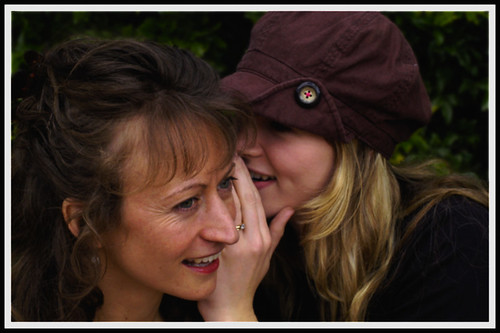
[image: Blonde white teen girl whispering into the ear
of an adult white woman with long brown hair and bangs.]
Maxfield Sparrow
unstrangemind.com

It started as a tweet from @frogautistic to my friend, Shannon: “Would you know of any guides for adult autistics wanting to differentiate between Good & Bad people.”

Shannon replied:
Shannon's response included a link to my TPGA article about social reciprocity, in which I analyzed some research on how non-autistic people respond much better to Autistic people when they read our words, compared to when they interact with us in person.

I am always happy to make time to help people and I am very grateful to Shannon and The Thinking Person’s Guide to Autism for helping me help others. So I thought about the question as I was waiting for sleep to overtake me, and I woke up thinking about how complex a question this actually is.

See, I’m 50 years old and I’ve met a lot of “good eggs” and “bad eggs” on the long path from my original birthday to today. And I’m (mostly) getting pretty good at spotting the bad eggs and steering clear of them after all that time, but it’s hard because there really aren’t clear, simple, easy rules for that. And what guidelines do exist are not very easily boiled down to 280 characters. So if you can forgive me for spreading out into the larger space an essay affords, I would like to do what I can to provide some guidance, such as it is.

Here are a few basic but important rules for filtering people to let the good ones in and keep the bad ones out: Slow Down, Set Boundaries, and Watch for Red Flag Patterns.

Slow Down

In looking back through my own life and thinking about what would have helped me steer clear of people who were harmful to me, the number one piece of advice I would give myself—and thus you—is to slow down. I’ve noticed that when I get lonely and rush into a friendship or other relationship, I miss seeing warning signs that I might be headed in the wrong direction. People call these warning signs "red flags" and that’s a good name, because they really are like a construction worker waving a red flag at you to let you know you are headed toward danger.

People have red flags, too, and usually don’t even realize they’re waving them at others. When we move too quickly, we don’t always notice those red flags waving. Relating with others happens so fast it can be overwhelming. The emotions of getting to know new people can also be overwhelming. When we slow down and take our time, we have a chance for our minds to catch up with all that information that has been coming at us when we are with the other person and interacting together.

In fact, moving too fast is a red flag itself. This is a really important thing to remember: the red flags of relating with others aren’t just the things that you want to watch out for from other people. They are also the things you want to avoid doing yourself. It makes sense when you think about it: I’m not the only person who notices patterns in how people are with each other. Anyone else who notices patterns will eventually realize that bad things happen when people get too close too quickly, and if you aren’t working to keep things slow enough to take care of yourself, you will also be waving a big red flag at the other person. A person who notices patterns and has noticed this one before will back away from you, both physically and emotionally, if you are moving too fast.

What does moving too fast or slowing down look like? Well, the speed that makes people comfortable will vary from person to person, but comfort is not always the best gauge. One reason why people who have been abused often keep getting abused, again and again, is because the behaviors that make it easier for other people to abuse them are the only way they have learned to be. It feels safe, familiar, and comfortable to keep being the way we have always been, even despite past negative consequences. I have noticed this pattern in myself, and I have noticed it in other people.

Slowing Down Is Important in Seeking Love

I dated a very nice woman who had been abused by both her mother and her last girlfriend before she dated me. Chances are good it had been a lifelong pattern for her, and everyone she had been close to had been abusive. As a result, I could see her being very uncomfortable with our relationship and intentionally trying to start fights. When she wasn’t being yelled at and threatened, it made her panic. She had learned that people yell at you because they care about you. I wasn’t yelling, so maybe my feelings were not deep enough? Maybe I didn’t care enough about her to yell at her? So she did things to try to make me upset enough to yell. I didn’t even realize on my own that this was what was happening: It took a counselor to point out the pattern. Once we saw what was happening, it was life changing for us both.

The point of telling you about this relationship is to illustrate that you can’t always trust what feels comfortable and familiar, especially if you have been abused in the past. It might feel very comfortable and even ecstatic to meet someone on Monday, never separate longer than it takes to use the bathroom (if that!) all week, and be living together or even engaged to be married by Thursday. But that can be very risky behavior. While you might be lucky and have suddenly found just the right relationship (it does happen), the odds are against that, and it is probably an extreme example of what moving too fast looks like.

When I was starting to notice these patterns, and resolved that I was not going to move so fast anymore, I was terrified. What if I really had just met the perfect person and I was trying to slow things down and then lost them as a result of hesitating? But now I realize that if someone really is perfect for me and I’m really perfect for them, our relationship will survive moving more slowly. It may actually strengthen our relationship to take our time with things.

Slowing things down will also give you time to recognize when you are heading into a relationship that will be trouble for you. Slowing down is also not at all likely to chase off a relationship that would be good for you. If you are keeping things slow, and it is frightening to the other person and no matter what you say, they just keep pressuring you and finally deliver an ultimatum (“do this or I am leaving you”) and then break up with you, you have just learned that they were not able to trust you and go the distance with you. They might otherwise be the greatest person in the world, but they were not able to stay calm enough to give you what you needed to be safe, and so they weren’t a good choice for you regardless. When you are with someone who loves you, they are willing to give you the space and time you need to feel safe and strong. That is a big part of what love is.

A slower pace can mean waiting on sex to give time for an emotional bond to develop first. A slower pace can mean waiting to tell your deepest secrets until there has been time for you to see how the other person behaves when they are very anxious or in a crisis. You don’t want to trust someone with your secrets until you know if those secrets will be safe even when things are bad or stressful. A slower pace means you are spending some time apart as well as some time together. Time apart gives you room to think about what is happening without the pressure of being in the middle of everything while you are trying to think about it.

Slowing Down Is Important For Friendships, Too

Last year I met a person who was interesting but was also moving our friendship forward way too fast. We were together pretty much around the clock for days. She essentially took over my whole life and I didn’t notice it because I barely had any time away to think about what was happening. It was almost like being under a magic spell, even though I’m not saying that to excuse myself from responsibility. I was entranced—not by magic, but by her presence. Some people are really good at weaving themselves into other people’s lives and we Autistic people are especially vulnerable to those sorts of people.

It was only when she called me “special” as an insult that her spell was broken. She was using “special” as a euphemism for the R-word, and it really stung. And once she insulted me like that, I was able to look back at the two weeks we had spent together and see that she had been insulting and manipulating me every day, but I had been ignoring it because I was allowing things to move too fast to see the red flags. When she called me "special" and I stopped in my tracks, we had already become roommates. I had paid rent but I packed up my things and walked away from everything because I realized that she was really bad for me and I had been moving too fast to see it, until it had gone so far. I lost money and had to endure her yelling at me for leaving our apartment and breaking the “friendship” and I even felt some fear that she might do something bad to me. I now know that if I had refused to let things move so fast, I probably would have known better than to try to be roommates with her.

Set Boundaries

How I slow down now: I sat down when I was not in the middle of a new friendship or other relationship, asked myself hard questions, and came up with a set of friendship and relationship boundary rules. I can’t tell you what your rules should be, because only you should decide on them. And every time you have an unpleasant encounter with someone, you should revisit your rules, and ask yourself if you broke any of them. If you didn’t break your rules yet still ended up in a bad situation, then ask yourself if you need to modify any of your rules.

In coming up with your own rules, don’t just think through my questions below: Write your answers down somewhere, and put them somewhere you won’t lose them. Look at them periodically. Put a regular date on your calendar to review your rules. Revise them as necessary but never in the heat of the moment. When that very attractive person is asking you for sex? That’s not the time to revise your personal rule about how long and how well you must know someone before having sex with them.

  • When you are first getting to know someone, how many hours are you willing to be in their presence before you ask for a break? A first date probably should not last a week. You might find yourself in situations that go against the rules so think about that, too. For example, if you are at a weekend retreat and meet someone, how will you handle together time? Know that you will feel pressure to spend every minute with that great person you just met. How will you counter that pressure from them or from yourself? Maybe you will have a different set of rules for situations like that? Or maybe the same set of rules no matter what?
  • When you are dating someone, how will you decide it is okay for you to be sexual? Will you decide based on an amount of time you’ve spent together or length of time you’ve been dating? Are there personal “road signs” that will let you know it’s okay? Decide what your rules are before you meet someone special and stick to those rules to protect your body and your heart.
  • How will you decide that you trust someone enough to tell them your secrets? What will you do or say if they start to tell you very personal things about themselves before you’re ready to tell them personal things about yourself?
  • How well should you know someone before becoming roommates? How close should you and a romantic partner be before moving in together?

These are all just suggestions. Take some time to get to know yourself well and look back over your life’s patterns, and you will see where you could benefit from adding more structure to your life. You will be a good judge of what rules you need and what limits to set. Trust yourself to make good decisions when you are thinking about these things while you are alone and calm. You also might want to talk about your rules with a therapist you trust or someone close to you in your life that you trust.

This is called “setting boundaries.” You decide what you want from life, and what you will not put up with. You make personal rules about those boundary lines. And you protect those boundaries by refusing to let others violate them. That includes you, by the way. All of us can be our boundaries’ worst enemy. Setting and keeping boundaries is as much about staying strong in your own sense of self as it is about refusing to let someone else push you farther than you wanted to go.

If it helps you to recognize your patterns, try writing down the names of all the friends and lovers who have turned out to be unpleasant experiences. Write down what went wrong, and how you might have recognized those red flags sooner. A list like that can be depressing—be ready to comfort yourself when you tackle it—but it can also be very enlightening. That is exactly how I came to recognize my own patterns that were holding me back from the kind of life, and community, and love I wanted for myself.

Watch People For Red Flag Patterns

Slowing down helps you to recognize your own patterns and gives you time to see the red flags the other person is waving. Watching them, and thinking about how they are treating you and others, is how you notice those red flags.

Clearly if they hit you and yell at you a lot, you will know they are not good for you. But also watch how they treat other people: A person who insults the server at a restaurant, yells at the clerk at the grocery store, or intentionally cuts people off in traffic while saying nasty things is not someone you should trust, even if they are treating you marvelously at the same time. It is a red flag: the way people treat others is the way they will eventually treat you.

If someone is with you because they are cheating on someone else who doesn’t know about you, that’s another red flag. I’m not talking about open relationships or polyamory where people are dating or having sex with more than one person and doing it ethically by being honest with everyone. If you are sneaking around with someone, they have just taught you that they are not someone you should trust.

I dated someone whose wife had died and his adult children were not ready for him to start dating again. He wanted me to sneak around with him and hide our relationship from his children. That was very emotionally damaging for me because it triggered memories of my childhood abuse. It was also a huge red flag. He was willing to lie to his children and he was willing to force me to sneak around and hide. I could never trust that he would tell me the truth and not sneak around and hide people or other things from me.

The reason I say to watch for patterns is because anyone can lose their temper. Anyone can become so anxious they shout at you. If someone loses their cool once, and they did not call you nasty names or hit you while they were angry or afraid, decide if you want to give them another chance. But if they lose their cool, and use demeaning language toward you, or physically hurt you or your pet or someone you love, you’ve got to protect yourself.

I once had a partner who yelled every day. He was in a health crisis and experiencing a lot of pain, so even though I didn’t like the yelling, I understood. He would yell when he was in pain but he was not yelling at me—he was yelling at the pain—so I stayed with him (I can understand someone yelling because they are in pain. I don’t like it, but I can forgive it). But after he had been sick for a long time, the yelling turned nasty, and he said lots of hurtful and demeaning things to me. That’s when I left him.

There is never an excuse for being hurtful toward others. Someone may try to tell you they didn’t mean the things they yelled at you when they were in pain or drunk or in some other incapacitated state, but adults who love you will not say harmful things to you even when their self-control has been worn down through personal suffering. It is your choice whether you want to forgive someone for yelling, but I beg you to refuse to put up with being verbally abused or battered.

Going slow and watching for patterns are your two best tools for staying safe with people. People have patterns of behavior, and if you take your time getting to know them, they will fall into their patterns. Watch for red flags and decide ahead of time what you will accept and what is unacceptable. Keep things slow so you can spot the patterns. Don’t get too intertwined with someone else until you’ve had a good chance to see what their patterns are, especially how they are when they are sick, tired, or under stress. Take time apart while you are getting to know each other so you have space to think about how things are going and decide how you feel about their red flags. Everyone has red flags, so if you haven’t spotted any at all, slow down some more and pay closer attention to their patterns. Everyone has red flags but some are flagging you about behavior that you can live with while others are flagging you about behavior that you do not want to be trapped in.

Stay strong, set boundaries and keep them, stay safe. May you find loving friends and happy, healthy relationships with others, always.
Share:

Encountering the Limits of My Professional Autism "Expertise"

Anonymous

Photo © Carissa Rogers | Flickr/Creative Commons
[image: Adult and two children, silhouetted against
a lake and colorful pink sunset.]
I started working with autistic children in the mid-nineties, as a volunteer in a magnet school. The experience was influential, and I went on to become a psychologist, getting a PhD focused on autism research. Since then I’ve been working in academia for almost a decade, and have published numerous papers reporting on novel autism studies. I’ve built a reputation in my sub-field within autism research and am, I’d like to think, fairly well-regarded professionally. All of this was established well before I had children.

Earlier this year, following about a 12-month process plus a longer period of discussion between myself and my partner, my daughter Penny was diagnosed with autism.

In many ways nothing has changed—Penny is still Penny, my work is my work. In other ways, of course, things are different. The "official" designation of autism for Penny means I am now a "stakeholder" in my own research field, as are the rest of the family. And I have had to experience systems I thought I knew well—such as the diagnostic pathway—from the flipside.

I am by no means the first academic to have a family connection to autism, but I suspect it is more common for a researcher to move into autism studies following the diagnosis of a family member. In fact, I can think of many examples where this is the case, and know of few others like mine – where the professional interest predates the personal connection.

I pride myself on being engaged with the autistic and autism communities. Nevertheless, the official arrival of autism in my family has left me with no doubt as to the limits of my supposed expertise, as in some situations my training and information has been of no use whatsoever. I hope the professional/personal gap examples below may empower parents to know that the ‘professionals’ don’t have all the answers, and also inspire professionals to do what they can to address such challenges.

How to talk about autism with my other child 

My autistic daughter has a six-year-old little brother, Hank. They have a tumultuous relationship, to say the least. When Penny is exhausted from a school day, having worked her butt off to meet everyone’s expectations of her, it is important that she does not have to meet similar expectations in our house. This is her home, and she must be able to relax here.

But what about when her preferred form of relaxation impinges on Hank? What about when Penny wants to commandeer their shared bedroom as her quiet space? What about when her repeated humming of the same phrase drives him round the bend? What about when he is given a new fleece sweater and she seizes it because it is So. Perfectly. Soft?

It is a constant struggle, even as an adult, this working out how to tread the line between supporting Penny’s needs, and also asking her to be reasonable and fair as a family member. Helping a six year old work out how to achieve this balance too?—virtually impossible.

How to ensure my daughter feels loved

My daughter is not a fan of kisses and cuddles. If she is watching a favorite TV show or playing a game, she doesn’t especially want my company—and many times she has asked me to leave her alone. Yet my son loves physical affection. I am not sure what Penny makes of it when she sees me smothering him with kisses, or giving him “just one more hug” before bed.

It troubles me greatly that I am not sure how to express my love for her. Though she and I share few interests, I do know how to make her happy—my husband and I shower her with new facts about the things which interest her, we appreciatively watch her home-made puppet shows and applaud them with unfeigned enthusiasm, we take her to the trampoline center whenever we can. But while these are all obviously the actions of a loving parent, I don’t know whether they make her aware of our love, in the same way that the traditional markers of affection so obviously do for Hank. Although it is her choice, does she feel left out of a key part of family life?

How to talk about friendship

One of the major factors that prompted us to seek a diagnosis for Penny, apart from her telling me explicitly that she knew she was different from other kids, was her difficulty making friends. Or rather keeping friends—she makes a new friend incredibly easily. She is open and gregarious, and will readily introduce herself to children her age at the beach, or on the playground. But her friendships with children she sees regularly—at school for example—are very up and down. Penny is extremely pre-occupied with trying to manage these friendships, often trying to create a gang or club in what I interpret as an effort to codify and organize her friendships into something more reliable and predictable. Needless to say, this doesn’t usually work!

My partner and I do not want to "teach" Penny how to make friends—I’m not sure this is a talent which can be taught, and I won’t consider putting Penny in any program, however well meant, that is more likely to undermine her self-esteem than develop useful skills. This leaves us with three options as far as I can see, all somewhat unappealing:

One is to tell her that this melodrama is a normal part of friendship. Accurate perhaps—I can’t really tell whether there’s anything different in her experience of friendship than that of any other girl her age; maybe she just takes it harder, or dwells on it more?—but of limited practical use.

Another option is to help her understand that her struggles with friendship are not her fault—again true, but I don’t relish suggesting that her classmates are incapable of "getting" her. I hope it isn’t true, but even if it is, I don’t see how this would make things more positive.

The third option is to simply reassure her that it is OK to only have a few friends. I feel pretty strongly about this one—if there’s anything new I’ve noticed since Penny got her diagnosis, it is that society does not endorse the option of growing up and just not having a lot of friends. Every adult asks a child, by default, about their friends. In every story, a happy ending involves a gang of friends, or a marriage. Popularity is an entirely unquestioned marker of happiness. Where are the role models for those who are happy being alone? For this reason, we’ve agreed that my partner, who has very few close friends and is perfectly happy that way, should try to talk more about this, so that Penny can see that building a big gang of friends is not a prerequisite for living a good life.

How to manage my personal connection with autism in the workplace

This blog is being written anonymously for good reason: While I value and respect the many insightful accounts shared by parents, I’ve decided that I shouldn’t share my daughter’s information online before she can make that informed choice herself. In particular, because I am often speaking about autism at public and academic events, it is important to me that Penny doesn’t become a default part of that.

On the other hand, I work with a lot of people who are also my friends, and I want them to know about what’s going on in my family. Even beyond my immediate group of colleagues-who-are-also-buddies, there are people who maybe ought to know. I’ve had to sit awkwardly in dozens of meetings since my husband and I both decided that Penny was probably autistic, and bite my tongue as people speak as if the only connection any of us has to autism is a professional interest. In one particularly tough meeting, I had to endure someone describing autism as “an unfortunately incurable disease.” I’ve no doubt he would never have dared use such language if he had known I had an autistic daughter, but challenging him would mean outing her, which I didn’t want to do.

I’ve always argued that there should be no difference in the language we use to talk about autism in the absence of autistic people versus in their presence (or in my case, in the presence of a family member). Sadly, I have become profoundly aware that this is not the case.

"Expertise" does count for something…

There have been many times over the past year or two when I have been grateful for my professional knowledge. I understand the diagnostic process, and while it was painful to have to repeatedly emphasize my daughter’s difficulties, I knew what to expect at each stage and I’m sure experienced far less stress than many parents.

I have read with interest the growing literature on the profile of autism in girls, which gave me the confidence to seek a diagnosis and allowed me to find good resources (like this excellent booklet) to share with the school and wider family. I can make informed choices, with Penny, about what supports might or might not be helpful for her.

The “everyone’s a little bit autistic” and “but she can’t be autistic, she is doing so well!” reactions from some family members were upsetting,  but being prepared for them softened the blow. Most importantly, perhaps, our familiarity with autism meant that neither my partner nor I felt any distress during the process or at the point of diagnosis.

We hope that her autism label will allow Penny to embrace and own her identity, but also that she won’t let others use it to limit her, or her opportunities. The great strides being made by the autistic community make me optimistic that her future, and that of her community, is full of hope and opportunity. I’m excited to see what she will achieve in her life, and I hope that, expert or not, I will find the right way to support her.
Share: