Showing posts with label understanding. Show all posts

At Home in Ourselves: A Mindful Acceptance of My Autistic Son

Star jump
Photo © Stuart Anthony | Flickr/Creative Commons
[Image: Two backlit people attempting to jump over a horizon-adjacent sun.]
Leslie J. Davis
www.dharmamamas.com
"When I practice breathing in and I say, 'I have arrived,' that is an achievement. Now I am fully present, one hundred percent alive. The present moment has become my true home. When I breathe out I say, 'I am home.' If you do not feel you are home, you will continue to run. And you will continue to be afraid. But if you feel you are already home, then you do not need to run anymore. This is the secret of the practice. When we live in the present moment, it is possible to live in true happiness." –Thich Nhat Hanh, "No Death, No Fear: Comforting Wisdom for Life"
Every Monday night I sit with my meditation group and practice breathing in and out in an attempt to calm my racing thoughts, to learn how my mind works, to remember that I have a body. I sit on a brown zafu cushion and breathe in and out, saying to myself, "I have arrived. I am home." On the in breath: Arrived. On the out breath: Home.

This practice of breathing slowly in and out allows me to slow down, so I can stop running. So I can stop being afraid. So I can stop worrying. Often the fear and the worries rush back in after the meditation session is over, but doing the sitting helps me bring an essence of calm and a sense of being "home" into my daily life when I'm not on the cushion.

Having this capacity to slow down so I can be at home in myself has allowed me to trust that my autistic teen son is also at home in himself. It allows me the space to observe him closely and notice him for who he is, instead of trying to change him to be someone I want him to be, expect him to be, or that society expects him to be.

My autistic son has a rich and vivid inner life. I see him watch, listen, and notice. He uses spoken language and communicates well, yet I know there is much that he isn't sharing because he can't, or chooses not to. I know there are oceans inside of him that he isn't revealing to anyone. Because of my meditation practice and spending time on the cushion, I'm able to watch him, listen to him, and notice.

Recently I had a coffee date with a dear friend and we had heart-to-heart on an important experience in my life. Afterwards, all these thoughts ran through my mind: There's so much more I didn't have a chance to say! There's so much more I could say but am choosing not to say. There's so much more to this that I don't yet understand. There are experiences in my life that this relates to but we didn't have time to talk about it. I don't want to tell her everything; I want to keep some of it to myself.

There is so much going on inside of a person that we don't know about. On all the levels: spiritual, emotional, intellectual, hormonal, ancestral, etc. Our inner lives are rich with detail and feelings—on any given day there is so much we don't share with other human beings. Why would we non-autistic people think this is any different for an autistic person?

When my son was a young child his imagination astonished me with the depth and detail of his creations and made-up worlds. I used to try to get him to write it out, draw it, speak about it, until I realized, Who am I to force him to open those places up to me? When he wanted to talk to me about his made-up worlds, he would. When he decided to draw maps of his world, he would draw maps for days, and I would watch, marvel at his concentration and creativity, gently asking a question or two here and there. Sometimes he was excited to talk about it and other times, not. When I shifted my perspective I could accept that when he's in his own world in his mind, he is safe, he is home.

His present moment is his true home.

As a mom, breathing and staying calm aided me in seeing him for who he truly was: a boy completely at home in his own world—comfortable and calm and free--unless I was the one pressuring him into doing things I "thought" would help him, doing things my societal conditioning told me was right, or was expected of him. When social norms whispered in my ear—or more accurately, shouted in my ear—they came via comments and suggestions from non-autistic people, doctors, therapists, teachers, or the voices in my own head based on my own upbringing in a neurotypical society.

When I listened to these outside voices, I'd yell at my son, insulting his individuality, trying to pressure him into a mold, and attempting to define who he was in a way other people would understand. Putting others first and ourselves, second. But when I stayed mindfully aware of his essence, I saw that he was happy and free. That he was smart and expressive and curious. There was no need for me to intrude.

But intrude I did, for many years. Before having the conditions to set my mind at rest and put my trust in him, before an autism diagnosis, before my meditation practice steadied me, before I let go of outside expectations and trusted my intuition, I intruded in ways I'm not proud of. For years I was a messy conglomeration of views, theories, approaches and therapies. I swung back and forth between being a toxic, controlling, fear-driven, socially-influenced mom, and being a steady, confident, calm, trusting advocate for my son whose actions from a place of love. Both were happening at the same time. It caused a lot of suffering in our home—mostly for our son.

One of my son's occupational therapists used to ask, "What Would Love Do?" and I would cry every time she said it, because my desire to move from a place of love was so deep—and at the same time I was clutched in the grip of a neurotypical world's expectations, and operating through the lens of mainstream expectations and ideologies.

Eventually, our family embraced a non-conventional lifestyle in regards to my son's education and care, and chose to pursue our own path of support for him through homeschooling, private therapies, and mindfulness practices. Letting go of conventional views set us free to be at home in ourselves.

"I am large, I contain multitudes." -Walt Whitman

When I practice meditation and remember to return home to myself in the present moment, I know that my autistic son contains multitudes—oceans of thoughts, feelings, sensations, awareness and insights that he doesn't share with me. And I accept that he has the right to be at home in himself and be the owner of his own experience, and of his own happiness.

Mindful Parenting Resources:
Share:

Mental Health and Autism: Why Acceptance Matters

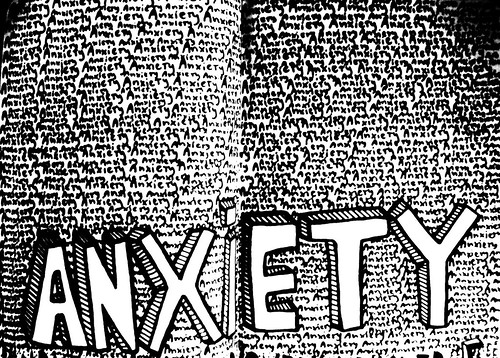
Anxiety
Photo © Mariana Zanatta | Flickr/Creative Commons
[image: Hand-drawn black-and-white outlined block letters spelling "anxiety"
on a background of "anxiety" written repeatedly in black & filling all space.]
Christine Motokane
www.workingthedoubleshift.com

It is well known that individuals on the autism spectrum are likely to have co-occurring mental health issues such as depression and anxiety. However, mental health is a less-discussed topic surrounding autism, compared to behavior and social challenges, etc.

As an autistic young adult with anxiety,  I can give personal insight on this high prevalence. A big part of our susceptibility to issues like anxiety has to do with how we were slowly socialized, either implicitly or explicitly, to believe that an autistic lifestyle is something that is defective and therefore needs fixing. A recent Independent article sums up the strong link between lack of autism acceptance and the development of mental health disorders in autistic people: Research shows that lack of acceptance externally from others and internally from the self significantly predicts depression and anxiety in young adults with autism.

Yet mental health, and having a positive relationship with an autistic identity, are not usual priorities for helping autistic people. And if mental health issues are mentioned with regards to autism, they are are addressed in a pathological way. In this post I am going to write about my experience as someone on the spectrum who lives with mental health issues.

I have written about my struggle with anxiety in an earlier post. However, in that post I talked about some of the symptoms of how my anxiety manifests. I have never written that extensively about the root cause of my mental turmoil being related to lack of acceptance of my being autistic. Although I come across as a "confident self advocate" when I speak about my life experiences, the truth is that I struggle with deep self-confidence issues, and sometimes actually doubt some of my own advice. There is a "monster voice" in my head that constantly tells me, "I am wrong," or that "I am not deserving of support," and other negative scripts. I constantly say, "I'm sorry" to my family or others whenever I feel that my autistic mind takes over. My monster voice is always constantly bringing me down by saying that I am not "entitled to my feelings because I am autistic," and battles with my positive voice or the voice of confidence. I am so hard on myself and I blame myself for all the challenges that life brings me.

Lately, I have been wondering: how did I become this way, or how did I develop such negative thinking which resembles mental self injury? I then realize that the negative scripts and inner anxiety that I developed in my head today were the result of years of growing up, and slowly realizing that disability is something that needed to be fixed. Unlike the children growing up today with the neurodiversity framework, I did not come of age at at time in which autistic advocates were respectfully regarded as the "true experts."

As much as I hate to blast some of my lovely support people like my therapist or my family members on this blog post, they unintentionally—through no fault of their own—contributed to my negative script that I have for myself. Before I go ahead and critique some of the interventions that I received, I want to be clear that I am thankful that I have gotten interventions that enabled me get to the point where I am today. The social skills, emotional and self-advocacy skills that I learned during my adolescence enabled me to be the strong advocate I am today. But for autism intervention, there is always room for improvement.

Throughout my school years, I was taught to camouflage my symptoms in order to blend in and function in the mainstream environment. This was reinforced through behavioral therapy and the school system. A few examples that I can remember include that I was pressured to join clubs, and also sit with a group of kids because that is how typical high schoolers socialized. I was discouraged from socializing with adults such as the other aides at school, or the computer teacher in middle school, because it wasn't considered appropriate. I was socialized to learn about  the fashion and other interests that teens through social groups that my behaviorist made (e.g. the "cool" or "not cool" chart) in an attempt were to make me "fit in" better.

All these experiences and others have taught me that I should camouflage and suppress my natural self because I should appear normal. Friends were chosen for me, because people wanted me to be more social. I went along with the recommendations of my support people and parents, and pretended to live as a neurotypical, because I thought they knew best. I tried all I could to suppress my natural way of being—at the expense of my self esteem, and acceptance of my unique neurology.

What the people who helped me didn't realize at the time were the future implications of my mental health as an autistic person. This was because their focus was on making me as self-sufficient and socially adjusted as possible, and by the time I reached adulthood nobody ever considered that what they were doing could unintentionally affect my self-identity and self esteem. But all my energy spent camouflaging myself in order to appear "normal" became mentally exhausting. I started second-guessing myself, and internally beating myself up, over minor social infractions. This is a big part of my anxiety in living as an autistic person.

My experience with special education and ABA demonstrates how the dichotomy of interventions that are designed to optimize the quality of life for individuals on the spectrum can also adversely impact their mental health, and also their self-acceptance of an autistic identity. This is why so many autistic self-advocates are concerned about behavioral modification programs: because of the long-term effects they can have on autistic people's mental health. This is why we need to preach autism acceptance, and center self advocates in developing appropriate supports for autistic people. That means we need to take autistic people's insights, feelings, and desires into account, instead of dismissing them.

Acceptance means training mental health service providers to look at autism and other disabilities as a part of a person's identity, rather than a problem that needs to be fixed. Acceptance means helping to create a world where autistic people don't have to camouflage themselves as neurotypical. Acceptance also means giving supports and accommodations to autistic people of all abilities and support levels when it's asked for and needed. If the world becomes more embracing of the autistic lifestyle, I believe the severity of the mental health problems autistic people have can, in many cases, be lessened.

----

This article was originally published at redefiningnormalayoungwomansjourney.blogspot.com.
Share:

Parents: Let's Talk About Grief and Disability

Spectrum Disordered
www.facebook.com/asdisordered

Let's talk about grief.

To be specific, let's talk about a specific way the term “grief” is used: as a suggested framework given to parents to process the news that their child has some type of disability.

I’ve encountered this outlook throughout my life. My parents, by well-meaning professionals, were set up to view my disability as a loss: I was not normal, and would have to fight against my deficits for my whole life. They would not know what my future looked like and could not plan. They should feel Very. Sad. About. This.

Having a grief mindset instilled into my parents was the single most devastating thing that has happened in my entire life. I learned very quickly that I was broken, and that there was something wrong with me. I learned very quickly—and at a very young age—that my parents would have preferred a version of me that did not have a disability, rather than the only version of me that will ever exist—the actual me. How could they not? I overheard countless conversations of how scared they were for me. How I wasn’t normal, and what they should do about that fact. How to fix me.

I’ve been actively involved in autism advocacy for just under 15 years, facilitating support groups, public speaking, ranting on the internet. You may be somewhat aware that the views of autistic adults don’t always align with the view of NT parents of autistic children (surprise). During those 15 years, I’ve also seen tremendous positive change in what people, including parents, believe about autism, but this “grief” crap JUST WON’T DIE. Several years ago I severed ties with an autism non-profit I was a founding member of. The reason? A disagreement about the value of parents “grieving” the autism diagnosis their children had received.

When this disagreement has come up, I almost always get the “parent card” thrown at me: I didn’t have kids, so I COULDN'T understand what it is like to “go through” the experience of parenting a child with a disability. I was told that parents need to “grieve.” That it is an important part of the process that allows parents to “heal.” That “if you have children, you will understand how scary it is to get ‘a diagnosis’.”

On January 12, 2018, my wife gave birth to our beautiful, amazing baby boy, our first child. I had no idea how quickly I would find myself confronting “grief.”

Our boy was born exactly one month before his due date. He was born just before 8:00 in the morning, and it was with indescribable joy that we saw him enter the world. Knowing that the lungs are the last organs to mature, we were overjoyed to hear him cry!

Our baby cried for about five seconds. Then he fell silent, as he stopped breathing.

I watched as the nurse steadily escalated breathing support for my son. I heard the anxiety in her voice as she called for another nurse to assist. I watched his color change. His lips turn blue. I watched muscles pull tight against his chest, but his chest would not compress.

Fear. Fear that resists description. Thick. Heavy. Numbing. Draining. I walked behind my son as he was wheeled into NICU, crying, wringing my hands, feeling helpless. Another family was waiting in reception adjacent to the NICU. I saw their face light up with smiles, then they saw my baby, then they saw me. Their smiles drained. They looked away, a momentary expression of horror crossing their faces. “Please don’t let that happen to us,” they had to be thinking.

In NICU, our baby was stabilized but still struggling. We were informed he needed to be transferred to a hospital across the state, and that a flight for life crew was coming to get him. Our boy was intubated and placed on a respirator. And, a mere few hours after giving birth, my wife was rush-discharged so she could sit on a jumpseat in a tiny airplane with our baby boy, who was covered in wires and alone in a plastic box on a gurney. We had not even had a chance to hold him.

Private flights are apparently how our little man rolls
[image: newborn infant in an incubator, barely visible behind tubes and wires,
inside a flight for life plane, with a medical attendant.]
His plane had no room for me. I had to drive seven hours to get to the hospital. I had been awake for 35 hours straight, and had 20 more before I would see sleep. It felt like everything in my body hurt, my blood, my teeth. Everything humming in pain.

This is the end of the bad stuff. Our baby’s vitals were great on the flight. Immediately after admittance on the receiving end, he was taken off a respirator and began only getting oxygen by CPAP. My wife texted me pictures of her finally holding her baby boy, thirteen hours after he was born. I cried in relief. By the time I arrived, he was taken off the CPAP was and just getting oxygen. The next day he was taken off of oxygen and breathing fully independently.

We had planned for a lot of things, but never this. Life was wonderful, we had our baby. We could hold our baby. Eventually we would leave the hospital and start our life as a family.

On the morning of the second day in NICU, we had the composure to finally discuss what had happened. My wife was not yet aware that our baby had stopped breathing. I told her about the walk down the hallway. Told her what I felt and feared. She told me the first 24 hours of our baby’s life was both the best and worst day of her life, all wrapped in one. We talked about how powerless we felt, how afraid, how unsure and helpless and paralyzed by the unknowns of what would happen and what the future looked like, if there was a future. It was awful.

The neonatal nurse practitioner walked in while we were discussing what had happened. Every day she works, she sees people processing these same experiences. She has had this discussion with thousands of people.

She told us we needed to grieve. Grieve to process what had happened. That our baby did not have a normal birth. That we needed to move through the stages of grief to acceptance. That this would help us.

I was dumbfounded. It was a surreal moment to process that I was indeed a parent, getting the advice I have been told for years I would only understand as a parent.

Bullshit! We have nothing to grieve, as we have lost nothing. The story of our baby entering the world contains an eventful day and the expectation of some epic medical bills. Telling us to grieve takes away our agency. We wanted a baby. We have an amazing baby. Sometimes babies enter the world this way. Nobody did anything to us or stole anything from us. And oh my goodness is our baby amazing! Our baby, a matter of weeks old, is already showing us he is a smartass. He’s going to run circles around us. Our baby will be equally amazing if he has atypical development. He probably will, born to an autistic dad and two older parents.

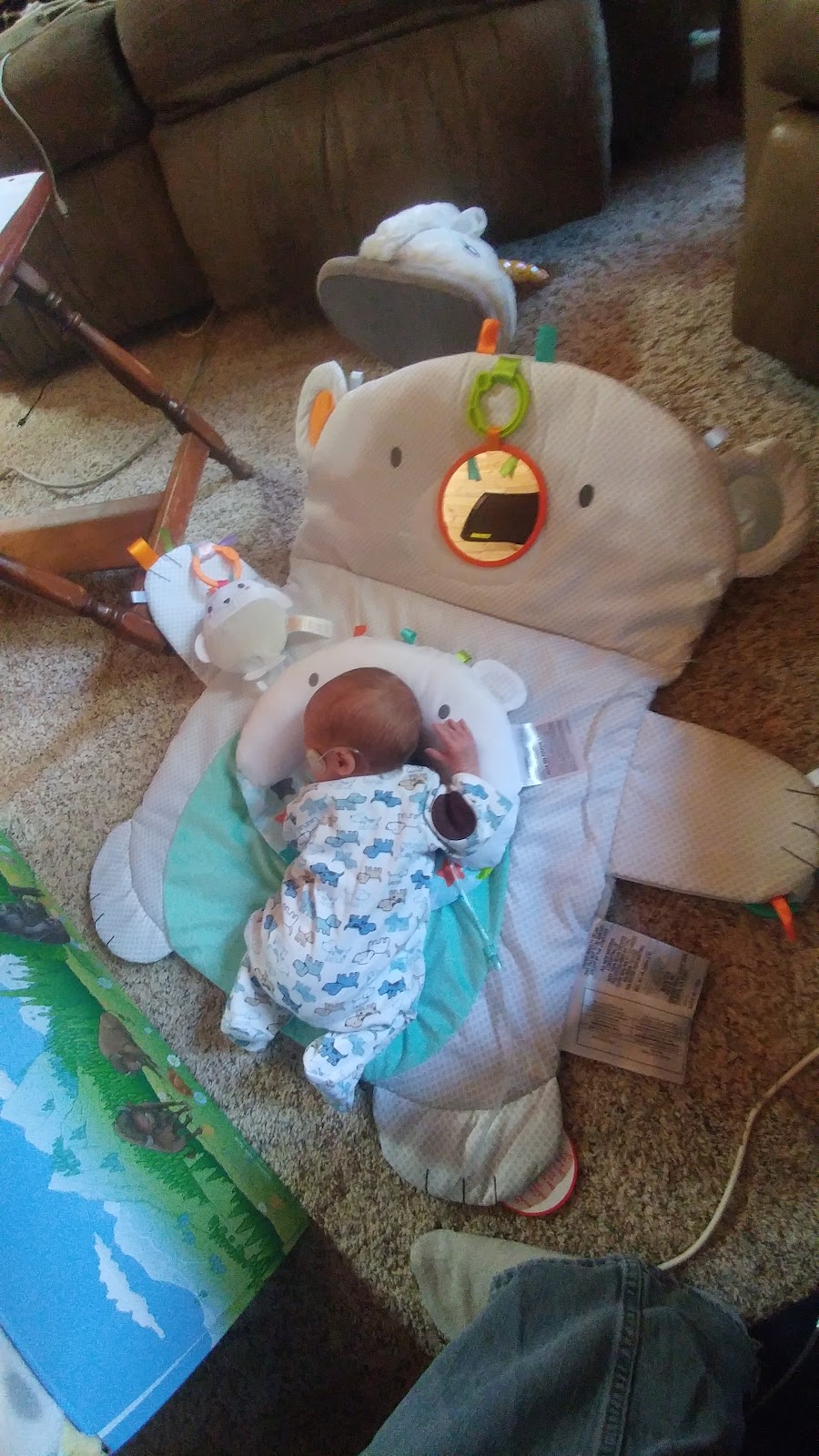
Home.
[image: Newborn baby on its belly, seen from above, lying on a
fuzzy mat on an even bigger fuzzy bear cushion.]
This experience isn’t grief. I’ve talked with thousands of parents of autistic children who are still processing what it means to have an autistic child. I hear expressions of fear. Their roadmap of expectations of what the future holds for their child has been taken away, replaced with uncertainty. Doubt. Worse case scenarios running wild. They experience the exact same types of emotions that we experienced in a very acute, very severe way on our baby’s first day in this world.

We are failing these parents by telling them to grieve. What we need to give these parents is empathy. Their fears need to be acknowledged. They need support to build a new roadmap to process their fears. To move to hope, understanding, and of course, acceptance.

Our autistic community has millions of people who have been through this process, and yet we continue to fail new parents, leaving them susceptible to subjecting their children to harmful sham treatments, to traumatic experiences, to quantifiable harm to their children that they love dearly—chasing that thing that they were told they lost, that thing that snake-oil salesman promise to retrieve—that unfortunate idea of normal.

We can do better.
Share:

Eye Contact

Beth Wilson
www.doodlebeth.com


[image description & transcription: A full-color hand-drawn comic strip.

The first row contains two panels.

The left hand panel has a green background. A blond white person on the left is talking and maintaining eye contact with the olive-skinned person with long dark hair on the right. Black all-caps hand-lettered text on a white background above their heads reads:

“For allistic people (non-autistic) eye contact is a way of connecting with others in conversation.”

The right hand panel has a blue background. On the left A black person with a natural hairstyle is looking down, with an uncomfortable expression on their face while on the right a white person with long straight hot pink hair and bangs has their eyes closed tightly. Black all-caps hand-lettered text on a white background above their heads reads:

“For autistic people, it’s different. Eye contact is uncomfortable and invasive.”

The second row is a black rectangle with white hand-lettered all-caps text reading:

“When we look away, it doesn’t mean that we are not listening. We are not disrespecting you.”

The third row is one large panel. It is a close up of the eyes and nose of a white person with straight long purple hair and bangs, with eyes wide open. Black all-caps hand-lettered text on a white background at the top of the panel reads:

“If we try and make eye contact with people, it can totally distract us from what is being said because of how horrible it can feel and the effort involved.”

Red-outlined word bubbles around the edge of the panel, in black all-caps hand-lettered text on a white background, read:

“Keep looking” “Having I looked too much?” “This hurts” “Am I doing this right?” “I have no idea what they’re saying” “Can’t do this” and “I feel so vulnerable”

All caps hand-lettered black text under the panel reads:

“© Beth Wilson 2017”

The fourth row contains two panels.

The left hand panel has a light blue background, and contains lack all-caps hand-lettered text on a white background. The text reads:

“Many of us can fake it by looking at details.”

The right hand panel has a pink background. It contains a close-up of a white person’s nose and open mouth. In the upper left corner of the panel, black all-caps hand-lettered text on a white background reads:

“Mouths”

The fifth row contains two panels.

The left hand panel contains a close up of the eye of an olive-skinned person’s wearing teal-framed glasses. In the upper right, black all-caps hand-lettered text on a white background reads:

“Glasses”

The right hand panel has an orange background. Black all-caps hand-lettered text on a white background reads:

“For others, even looking at a face is too much.”

The sixth row contains a single panel with a green background. It contains a South Asian person with short black hair on the left. They are looking at the white person with blue-and-purple layered hair on the right, while that person is looking away. Both are smiling. At the top of the panel, black all-caps hand-lettered text on a white background reads:

“When an allistic person demands eye contact from an autistic person, they are asking for something that only benefits them. Why should we experience discomfort for you?”

At the bottom of the panel, black all-caps hand-lettered text on a white background reads:

“Please respect our need to look away.”

All caps hand-lettered black text under the panel reads:

“© Beth Wilson 2017☆”]

----

This comic was originally published at doodlebeth.com.
Share:

Under a Double Rainbow: Autism and LGBTQIA+

Trans Solidarity Rally and March 55436
Photo © Ted Eytan | Creative Commons/Flickr
[image: Multiracial crowd rallying with flags and signs behind a banner reading
"Trans Solidarity against transphobia for justice".]

Maxfield Sparrow
unstrangemind.com

Ten years ago, I wanted to write a paper about autism and gender issues for a gender and sexuality conference at which I had previously presented. I started the research, then dropped into a depression after realizing how little material was available, and that the existing research about autism and gender was both dismal, and erasing. The medical journals talked about transgender autistic children as if their gender issues were delusions, mere symptoms of their autism. I never wrote that paper.

Today, not only is there good autism information available, but the “double rainbow” of being both autistic and LGBTQIA+* is just beginning to be more accepted and understood. We have a long way to go, but people are beginning to understand that autism does not guarantee asexuality, nor are Autistic people’s identities always heterosexual and cisgender**.

In fact, there’s even an organization, Twainbow, started by Louis Molnár in 2015. Molnár was diagnosed with Asperger’s in 2013, and noticed both the dearth of resources for “double rainbow” people, and the similarities between coming out of the closet as a gay man and coming out of the closet as Autistic. Writing in The Advocate, Molnár said,
“For many decades the blame was on just about anything from poor parenting to vaccines. Homosexuals were subjected to behavioral conversion therapy, shock therapy, injections, beatings, removal from imaginary catalysts, and social shaming to drive the gay out of them. These very things currently happen in the autism world.”
Steve Silberman, author of the autism and neurodiversity history best-seller NeuroTribes, spoke about Twainbow, saying, “Any organisation that fights for the civil rights of LGBT+ folks on the spectrum, raises awareness of the special challenges and joys of living under the double rainbow, promotes pride and self-confidence, builds alliances, and condemns bullying, systemic ableism [i.e., the discrimination of people with disabilities] and homophobia is doing really important work.” Silberman is right: acknowledging, understanding, and supporting our “double rainbows” is a crucial part of autism acceptance and raising Autistic children to be happy, healthy, fulfilled Autistic adults.

If you are an Autistic person who lives under the double rainbow, rejoice! You are not alone! Molnár estimates that over five million people world-wide are “double rainbows.” I would not be surprised to learn that Molnár’s estimate is far lower than the reality. Last year, I did a literature review and analysis of the research on autism and gender variance, and discovered that people who were surveyed at gender clinics were ten times more likely to be diagnosed or diagnosable with autism, compared to the general population. Additionally, Autistic people are seven times more likely to be gender variant than the general population. And those figures are just for gender issues, independent of sexual orientations.

If you are a parent of an Autistic person who is or might be a double rainbow, you may be concerned. Either you are worried for your child or you are worried for yourself (or both.) You might worry that your child is already facing so much stigma and discrimination due to being Autistic and a non-mainstream sexuality or gender will make life that much harder for them. You also might be struggling with worries about attitudes from extended family or from those in your family’s religion. You also might be worrying about your ability to parent a child who has “fallen so far from the tree.” If you aren’t Autistic and you are heterosexual and cisgender, you might worry about your ability to support and mentor a child whose life experiences are so very different from your own.

When it comes to fears of stigma and ostracism from society, family, school, church, and more, I recommend finding other parents in your situation to share hopes and fears, tips, and ideas. While there are not yet many organizations supporting double rainbows and our families, if you are in the United States, you can meet other parents of LGBTQIA+ children at your local chapter of PFLAG (Parents and Friends of Lesbians and Gays). Of course those parents may not be familiar with the needs of double rainbows like your child, but they are great people to talk with about issues of rights, safety, stigma, and more.

Some other organizations that might be helpful to you and your child include True Colors, GLSEN, and Queerability in the U.S.; Stonewall, Mermaids, and Gendered Intelligence in the UK; and Minus18 in Australia.

Some other important things to remember as the parent of a double rainbow or potential double rainbow:

  • Be open to listening to your child, even when the topics get difficult. LGBTQIA+ interests might indicate something about your child’s identity...or not. Listen without judgment, and let your child lead the way with the conversation. Ask questions that show your interest but try not to jump to assumptions about your child either way.
  • Be ready to hear some challenging language. Your child might use words that make you uncomfortable like “queer” or even words that are considered slurs among some people, like “faggot,” “dyke,” or “tranny.” If your child identifies with a challenging word, ask if you should also use that word or if your child wants you to use a different word. Sometimes minority groups reclaim language for their own use but do not want people who are not a member of that minority to use those words. Even if the words make you uncomfortable, strive to keep any sense of judgment out of your questions and comments.
  • Your child may need gender or sexuality support at school. This could include a gender neutral bathroom to use, uniform change or discussion of clothing changes, social stories about gender and/or sexuality roles and issues, staff training, and more. Joe Butler goes into more detail on some of these points in the article Supporting Trans and Gender Questioning Autistic Pupils.
  • Seek peer support and double rainbow mentorship if possible. In addition to some of the regional organizations listed above, some writers to look at include Caroline Narby and her Double Rainbow series; Dr. Dawn Prince-Hughes who writes in her memoirs about life as an Autistic lesbian; John Scott Holman, a now-deceased gay Autistic man who wrote frankly about his struggles with addiction as well as the challenges and joys of being a double rainbow; Lydia X. Z. Brown, a genderqueer activist and law student; Wenn Lawson, who wrote for years about life as an Autistic lesbian before coming out transgender.   
  • Be prepared to learn. You might not be aware, for example, that some transgender people are non-binary, meaning they do not identify as either male or female. Some transgender people do not seek to medically transition their bodies. Some people have a different identity for their sexuality and their romantic interests, leading to combinations like “asexual homoromantic.” If you’ve never learned about much beyond gay/lesbian/straight/transgender, be prepared to be a little overwhelmed by the information and options out there. You’ll need at least a surface understanding in order to help your child navigate to an understanding of where they stand in all the gender, sexuality, and relational spectrums.
  • You don’t need to be told this, but I’m rounding out the tips with it anyway because it’s so important: love your child. You already know, having an Autistic child, that parenthood carries no guarantees of what sort of family you will end up building. Odds are, you didn’t expect an Autistic child, but you love them so much and would never erase them to try to get a non-autistic child instead. Take that love and acceptance with you when helping your child figure out their gender and sexuality. Maybe your child is cisgender and heterosexual. Maybe not. So many of us are LGBTQIA+ that you serve your child’s best interests by assuming they might turn out to be any of the identities represented in that acronym, just in case they do. If your child turns out to be a double rainbow (or even a triple rainbow like me: Autistic, Transgender, and Gay) you’ll want to be ready to be there for them, offering the same love and guidance you’ve offered through every other facet of their beautiful life.
----

*LGBTQIA+ is an acronym meaning lesbian, gay, bisexual, transgender, queer, intersex, asexual, and others not specifically named, leaving room for increased future understanding of non-mainstream gender and sexual identities

** Cisgender or 'cis' is a word that means identifying with the gender a person was presumed to be when they were born, and people looked at their genitals then declared with excitement, “it’s a boy!,” or “it’s a girl!” If that presumption turns out to be what the baby grows up to feel comfortable with, then that person is cisgender rather than transgender.
Share:

Helping Autistic Children Understand Death and Dying

Maxfield Sparrow
unstrangemind.com

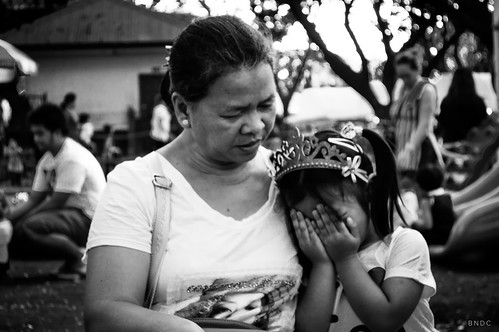
Don't cry little princess
Photo © Benedic Belen | Flickr/Creative Commons
[Image: Black-and-white photo of an Asian woman comforting a small crying child
who is wearing a tiara, and has their hands over their face.]
The Thinking Person’s Guide to Autism asked Autistic adults to fill out a survey about death and dying to create a resource for people who need to explain death to Autistic children. The response was tremendous—in less than a week the survey had 50 responses, mostly from Autistic adults. What follows is a summary and analysis of the responses. We hope it is useful to you, your child, your family, your clients, and your students.

Please note that some of the responses discuss difficult material, including suicide, and suicidal ideation/threats.


Bullet Point Summary
  • Autistic adults were surveyed about death and dying.
  • Most learned about death through observation of people, animals, and plants.
  • Learning about death was a process rather than a one-time event.
  • A majority of Autistics said Autistic children want factual statements, not euphemisms about death.
  • Autistics want the right amount of information about death - not so much it overwhelms, but not so little their questions go unanswered.
  • Don’t expect Autistic children to express grieving emotions in the same way or on the same timetable as the people around them.
  • Links to books and other teaching materials can be found in the last section of this article.
This article discusses those responses to five questions about ways Autistic children learn about death, the most and least useful ways to help Autistic children understand death, and recommendations for adaptive communication technology for talking about death. I have attempted to quantify the answers but also share some representative quotes to help illustrate these responses in a more qualitative manner.

Question One: If you are Autistic, how did you become aware of the concept of death?

Most respondents learned about death through experiencing the death or a person (20), or a pet or other animal (11). It is worth noting that many survey respondents spoke of becoming aware of death as a process happening over the course of more than one death or other learning experience. Respondents often said they were quite aware of death for many years, but it was only with the death of a person or animal close to them that they finally experienced an emotional impact that moved their understanding of death and dying from an abstract concept, to something personal they had to cope with emotionally.
“I was introduced to Death being dragged to funerals as a child, but death never clicked. I never lost a close family or an animal until I was 16 and my grandpa died. That's when I became aware. I wouldn't experience my next death until 25 with my dog and I struggled with reality and depression and confusion. The devastation of both events have had major negative impacts on me solely due to not understanding or learning what death was as a child.” -Sophia 
“The very first death I ever dealt with was with our dog Rex. [...] I didn't really apply my knowledge of death to people yet at that point though. Pet death seems to be a different context in my brain than people death though. I think part of my issue as a kid was taking one context and applying it to other contexts. My great grandpa died when I was 3 though, and my uncle died in a more terrible way when I was 4. [...] By the time I was 8, death and grieving, I don't want to say was "old hat" but, I was more aware of what was going on. [...] By the time I was a pre-teen, I didn't know what to make of people who hadn't experienced loss.” -Anna J
The next most common answers were from those who weren’t sure how they first learned about death or who felt as if they had just always known about death. Eight answers included something along these lines.
“The same way as everyone else?” -Anonymous 
“I can't really remember any one particular moment of becoming aware of the concept of death, which means I probably learned it slowly through media exposure. I did attend my great-aunt's funeral when I was a toddler, and according to my grandmother I did ask if she was sleeping in the casket, but I have no memory of this.” -Billie 
“I just knew about it. Like I did about sex, gay relationships, etc... It wasn't a big deal.” -Jade 
“I honestly don't remember NOT having a concept of death.” -Anonymous
Four Autistics reported learning from books at home or at school.
“2nd grade. Teacher died. Other teachers thought it would be a good idea to read the class a book on weather seasons more specifically autumn. Basically leaves get old on the tree and die and fall off. Life is a cycle in nature. Everything dies kinda lesson. So every time I see a leaf on the ground or in the process of hitting the ground I think of death.” -Michael 
“I started thinking about death and dying when I was two years old. I could read fluently by then and my parents didn't know that and my mum left her horror books lying around and I read them. There was a lot of death in those stories and that is how I learned about it.” -Michele Brenton 
“I read about it in a book about "difficult subjects" to explain to children.” -Anonymous
Three people learned about death and dying through their religious education.
“We learned about it in Jewish day school. One of Maimonides 13 articles of faith is that the dead will come back to life. I used to have nightmares about green people crawling out of the dirt at the end of the world. That's my earliest memory of the concept of death.” -Sara Luterman 
“I don't remember. My grandparents said that dead people were in Heaven when I was a kid and asked about it. I didn't know anyone personally who had died until I was an adolescent. [...] Heaven was a concept that made sense to me because I could picture it as an actual place, and I was most likely satisfied with the explanation of Heaven, especially because the teacher would sometimes discuss Heaven in Sunday School at church.” -LB
Two learned through watching television or movies.
“It was pretty much told to me that people don't live forever, their bodies give out just like with Rex, and that people are looking down from heaven at you when they pass (I think with Rex, everything was also solidified later with All Dogs Go To Heaven).” -Anna J
And two answers were each in a category all their own.
“My mother threaterned to kill herself in front of me when she was 2 and explained she would go away forever and I would have no mummy ever again.” -Anonymous 
“Through continuous exposure with the word (vocabulary building) using pictures and videos.” -Trixie
A theme that emerged from many responses was that of knowing about death but still being unprepared for the intensity of grief when death finally took someone important in a person’s life. This, combined with frequent reports of learning about death as an ongoing process that deepened not only with more personal experiences with death, but also with ongoing exposure through books and movies, suggests that helping Autistic children learn about death is not a one-time event, but an ongoing journey.

Adults need to be aware that an autistic child's intellectual understanding of death should not be mistaken for the fuller understanding that may only come with personal loss and grieving.

Question Two: What do you think is a reasonable and helpful way to help an autistic child understand the concepts of death and dying, based on your personal experience (and with the understanding that autistic children have different personalities)?

An overwhelming majority of responses (26) mentioned honesty, taking a direct approach, explaining the facts.
“Factual, acknowledge feelings, use calm voice, agnostic but hopeful on the afterlife. Death ritual with an insect or animal.” -Anne 
“I think a straightforward explanation that demystifies the experience is the best approach, perhaps something along the lines of "eventually people and animals' bodies stop moving around and the things that made them go leave forever." Most children are naturally curious, and as an autistic person I've always gotten particular satisfaction from understanding the WHY of something.” -Billie 
“Frank but gentle explanations” -Laura 
“Being honest. Allowing involvement in the process where possible.” -Niki 
“I think the younger and more logic-bound someone is, the more explicit you have to be about it.” -Anna J 
“Explain it truthfully, using hard facts. Don't give us a ton of silly convoluted metaphors. [...] You don't have to coddle an autistic child about it the way you would a neurotypical child. Trust me, we don't appreciate it.” -Anonymous
Six responses mentioned using books, movies, or articles to help explain death.
“I think it depends on your religious beliefs and whether or not you believe in Heaven. There are real-life stories I've read in the news about how (presumably neurotypical) young girls learned to understand what death meant, from a religious family  and a secular one. I would recommend reading one of those stories to your child (or together with them) depending on your family's belief system. I liked having real-life examples of other kids handling similar issues to mine, especially when they were also girls (since as a kid, I was convinced most boys had cooties).” -LB
Five responses discussed explaining non-autistic grief styles versus autistic grief styles to help everyone accommodate everyone else’s different grief needs.
“Facts, science about what happens to the body at death and practical tips about stages of grief for normals (strange things they might say like, "He's in a better place." means they cared about them when they were alive and saying that is a way of saying they are sad-- Not that that a coffin or urn is a better place to be). Listing common phrases like "Sorry for your loss" and what the person is really communicating would be helpful” -Sarah Robinson 
“Remind them that NT [non-autistic] people often grieve in a set of specific ways (i.e., crying, talking about memories of the deceased person, cleaning/leaving their things, more irritable). Autistic people may grieve in different ways (i.e., Shutdown/meltdowns, extra hypersensitive, avoidance, frustration) or not at all. Grieving differently is ok, and no one is doing it wrong. Being aware of those differences reminds everyone to give each other the space necessary to process the event.” -JAL 
“I understood what death was. I did not understand the rituals and emotions surrounding it. I did not understand what was expected of me and why. People thought I didn't grasp that my dad was gone so they made me look at the body. It was horrible. I knew about death. I needed to be allowed to NOT respond to everyone else's emotions all the time. I needed some kind of explanation of why people were acting the way they were, crying and touching me. I needed some routine, calm, and reassurance.” -BGP
Four responses mentioned acknowledging feelings and, in particular, the emotions surrounding coping with change.
“Accommodate the fact that an intrinsic part of loss is change. Especially for an autistic person. Death can be upsetting not only because someone they love is gone, but because that means their world is disturbingly different.” -Sara Luterman 
“I do think it's important to let a child know that it's okay to be sad. It's okay to laugh and doesn't mean you aren't also sad at the same time. It's okay to talk about the person or pet that is gone. I felt afraid to talk about my brother.” -Maxfield Sparrow
Three responses mentioned the importance of visual materials when explaining death. Three responses talked about exposing Autistic children to the concept of death through observing and discussing the death of plants and/or animals.
“For me, it helped that my mom did not hide the fact that my pets had died. She was honest that my little friend had permanently lost all biological function, let me view the body (allowing me to touch when possible) and would help me prepare a memorial ceremony for each pet. Experiencing the cycle of life as concrete reality really helped me prepare for the loss of relatives when I was older.” -K. Hall
Two people specifically mentioned the value of using social stories as well as building a vocabulary of words helpful in talking about death.
“Vocabulary building using social stories, videos, pictures of death, burials, and mourning people (given that the child is aware of the concept of emotions).” -Trixie
One participant mentioned the importance of giving an Autistic person extra time for processing grief.
“And don't have them rush grieving. It may take them a long time to grieve someone. I know it still does for me. Usually I have to come to it on my own terms until my subconscious is able to have closure.” -Anna J.

Question Three: What are some misguided ways to explain death and dying to autistic children, and why (again, in your experience)?

The number one response to this question was to avoid using euphemisms or unclear language. Euphemistic phrasing was mentioned in 23 responses, and had a big overlap with the 13 people who said to leave religion out of explanations of death. Among those who specifically said to avoid religion, the reasons varied from religion being too abstract and full of euphemistic language, to religion being “wrong” or “a lie,” to religion being okay for comforting adults—but too confusing for children who are just learning about death.
“Lies like "they go to heaven." That doesn't make sense, is incomprehensible, overly complicated and would just irritate the rational-minded autistics.” -Katharina 
“I was told in vet tech school to never ever use euphemisms such as putting a pet "to sleep," as children might take that literally. Do not, under any circumstances, try to hide the fact that a pet has died by saying it ran away, or sneak off to replace it with an identical pet. Also, abstract concepts like an afterlife can be difficult for Autistic children to understand, even though I take some comfort in them as an adult.” -K. Hall
Two responses came from three people each: don’t avoid the topic, and don’t overwhelm a child with too much emotion or more involvement than they want. Two people each said: don’t lie or underestimate a child, and don’t teach about death through threats or other frightening interactions. Finally, one person each mentioned the following: don’t give false reassurances like “I’m not going to die for a very long time.” don’t treat kids with a one-size-fits-all formula, and don’t deny the family’s religious beliefs.

Question Four: What other aspects of the explaining the concepts of death and dying do you think adults should be more aware of, when it comes to the experiences of autistic children?

The majority of responses to this question (16) repeated the earlier advice about keeping things factual and sharing as much information as a child asks for or appears to need. One response gave a general rule of thumb for deciding how much detail a child might need:
“I would recommend really thinking about how the child reacts to other things and base how you approach this subject in the same way they would want you to approach something else rather than basing it on their age alone, if this is a child (like I was) who wanted to know the species and genus names of dinosaur toys when they were 3-4 years old and would explain what features on their toys did not fit those species and genus, they probably do not want an explanation of death that is any less exact (which isn't to say you should not be sensitive, they will probably still be upset, especially if it is a loved one or pet, but using flowery/euphemistic language might just make it more difficult)” -Brit
The next most common (8) response group were Autistics who talked about not shaming a child if they do not respond in any particular way or on any expected “timetable” and not making emotional demands about how (or whether) emotions are experienced or expressed.
“They shouldn't shame the child for not showing grief or showing grief another way. I remember that I didn't cry when my grandparents died, but when our dog died, it was very hard for me. People might say I didn't love my grandparents just because I didn't grief like they might. So, not shaming is important.” -Katharina
“Sometimes autistic children don't grieve. This may be hard to hear, but sometimes there are people that we are "supposed to" feel close with, such as extended family members, that we don't have a personal connection to. This could be due to not having spent a lot of time with them, or not feeling a lot of care for a particular person. For these people, the autistic children may not grieve, per se, yet be responding to the grief of others around them. They still might still need help understanding why the people are so sad, or why the deceased person won't be around. My point here is, don't get mad at children if they do not feel or experience grief, or in the same way you do.” -JAL 
“Understand that autistic children may not respond as you would to grief. Using the above example [When my third cat was dying, I asked to accompany my parents when he was to be put down, only to be sharply rebuked as insensitive], my parents saw putting my cat down as a means to an end, whereas I saw it as a way to say goodbye. Autistic children may not act as if they are grieving, or their grief might explode outwards in ways you do not expect.” -Nant Celas 
“A child may need information repeated multiple times while they process the permanence of death. Be patient and strive to keep the child from feeling judged for needing to go over the same ground repeatedly.” -Maxfield Sparrow 
“We tend to have strong empathetic relationships with our pets, so treat the death of a pet like the death of a human relative.” -LB
Three people had very helpful suggestions about maintaining routines during grieving or helping an Autistic child find their own role in the death rituals.
“Knowing the significance of routines in the lives of autistic people, a good approach may be to set up a sort of mourning routine if death is being explained in the context of a friend or family member dying.” -Billie 
“Giving them things to do to help (arrange photographs, hand out information for gatherings afterward, asking if they can get anyone a cup of water, etc.) Can give them a defined role” -Sarah Robinson
Along a similar line, two people wrote about letting children set the emotional pace and create their own symbolic gestures or routines that have meaning for the child.
“I think kids need some concrete ways of saying goodbye, some action that is meaningful to them. Rituals that are created for adults often aren't meaningful to autistic adults, much less kids.” -BGP 
“I think "people's legacy live on in their ideas" is important as I stated before that one way I utilize grieving is to commemorate the passed people through their rituals or habits. Like if my food tastes overlap, I might have something they were known to like for dinner and think of them that way, basically to draw back to happy times I spent with them.” -Anna J
One person mentioned the importance of addressing death before someone close to the Autistic child dies and two other people suggested doing that by observing death in nature and using it as teachable moments.
“All kids who spend any time outdoors will see things die. Observing and talking about this is helpful.” -Anne 
“I like to explain the nitrogen cycle, and what happens to bodies after death. that we become plants.” -Anonymous
While two people mentioned the importance of generally presuming a child’s competence, two other people cautioned against talking about religion before a child is ready. Another pair, however, specifically recommended offering spiritual/religious explanations that involve teaching Autistic children that death is not the end of a person.
“Death and dying is not just about the body dying, it is about change and about experiencing a new different experience than what we already experienced.” -J
One person talked about the importance of teaching a vocabulary of death, including medical terms. Another person recommended explanations along the lines of social stories and scripting responses.
“Taking the time to explain the process the body goes through, medical definition of death, and appropriate people and times to ask related questions can help frame an experience like a funeral. Children may need to have an agenda for the steps involved and expected physical touching (more hugs, seeing people crying, outbursts) and appropriate verbal phrases or responses can be provided ahead of time.” -Sarah Robinson
Other responses offered by one person were: remember that grief can exacerbate sensory issues and meltdowns so give lots of quiet time, address the child’s fears of future losses, talk about post-mortem consent and what constitutes a “good death,” and stay calm and try to make the topic as emotionally light as possible.

Question Five: Can you recommend preferred adaptive, simplified, or AAC (augmentative and alternative) materials on this topic, for autistic children who use those approaches?

Most respondents either left this question blank or said they didn’t know of any helpful resources. Here are all the recommendations that were offered:
“Don't know any. Rabbi Ruti Regan probably does, though.” -Sara Luterman 
“The Dead Bird is a pretty good book, by Margaret Wise Brown” -Anne 
“We used to read the Funny Bones books by Janet and Allen Ahlberg. They were amusing and gave us a light hearted way to talk around the various ideas around the subject.” -Michele Brenton 
“Raising a small pet as soon as it is appropriate is a excellent way to teach about the whole entire life cycle, not just death.” -K. Hall 
“Gray's Guide to Loss is really good [note: we could not find a link, but here is an option]. I also appreciate that there have been a lot of recent books. There is a workbook about death and dying and loss which Catherine Faherty uses. Jessica Kingsley and Future Horizons books are also good. I am thinking of virtual ways and independent games and MUDs. TV shows might be good depending on the material—medical and legal series and romance books and magazines.” -Adelaide Dupont 
“Maybe for older children, I think the Everything Dies coloring book is actually really interesting and I would have appreciated it as a 9-12 year old” -Brit 
“Social stories could be found on Google (for those who are capable of understanding social stories). For those with cognitive difficulties, maybe 'emotions' should be taught first, then 'social thinking' could follow next.” -Trixie
----

The Thinking Person’s Guide to Autism would like to thank everyone who responded to this survey. Autistic adults are among the best resources for parents seeking to learn more about raising their Autistic children with compassion and understanding. Taking the time to share your experiences helps so many parents and their Autistic children.

Note: While some respondents were non-autistic parents of Autistic children, only responses from Actually Autistic people have been included in this analysis. The few parent responses repeated things already said by Autistic adults, so no useful information has been omitted by the choice to focus exclusively on Autistic voices.
Share:

Why Everyone Should Read The ABCs of Autism Acceptance

Patricia George
www.persnicketypatricia.ca

image: Book cover, with white text reading "The ABCs of Autism Acceptance" on a background of multicolored representations of letters of the Roman alphabet, above black text on a white background, reading, "by Sparrow Rose Jones."
The ABCs of Autism Acceptance
[image: Book cover, with white text reading
"The ABCs of Autism Acceptance" on a
background of multicolored representations
of letters of the Roman alphabet,
above black text on a white background,
reading, "by Sparrow Rose Jones."]
I’ve been an avid reader my whole life, so when I was asked to review The ABCs of Autism Acceptance by Maxfield Sparrow, and saw that it was "only" 152 pages, I thought, "this won't take long to read, so sure, I'd love to!"


I was wrong. This is the largest 152-page book I've ever read. In fact, I wrote more notes for this book than I did for a 500-plus page book I reviewed in 2015.


The book's title is straight-forward: Maxfield uses the Roman alphabet as a way to educate the reader about autism acceptance from an autistic person’s point of view, while interlacing quotes and links from other Autistics. The resulting resource makes this book an invaluable asset to furthering Autistic acceptance.


The ABCs of Autism Acceptance started out as a self-challenge for the author during the controversial month of April. I remember the post in which Maxfield began discussing this undertaking. I also remember thinking, what a fantastic idea! It was time to take April back and show why, without acceptance, autism awareness is actually a huge disservice to autistic people. 


Sparrow also aimed to make this book relatable to a diverse audience. Something a fellow Autistic could read, but so could our siblings, our teachers, our doctors, our friends ... and other people too. Especially people well outside our ally circle. We need them all!


As I looked over my sixteen pages of notes, I tried to think of a direction to take this. My pattern recognition noticed certain words appeared over and over again: 'acceptance,' 'dignity,' 'respect,' and 'Autistic.' And I noticed my notes had certain quotes from the book that I circled and underlined, with  exclamation points. I want to share how those quotes make me feel as an Autistic person. (Props to the book for helping me feel more confident about capitalizing 'Autistic.')  


“Autism acceptance is seeing us as whole, complete human beings worthy of respect.” (pg. 13)


Everyone needs to read and absorb that sentence. Autistic people are not broken versions of our normal selves. Living life feeling that way is an early death sentence. I feel like this needs to be the benchmark for how we're treated. If you're not seeing us this way then you have some work to do.

“Do not expect us to harm ourselves in order for you to feel as if we care for you. Respect our ways of being, our ways of knowing, our ways of loving.” (pg. 42)


Coming into being autistic later in life means I've struggled with just how much love has come to mean pain for me, in one way or another. And I don't mean things like heartbreak, from the loss of some one/thing/place.

When I write "love has come to mean pain for me," I'm remembering all the times I took on the weight and overload of a person/place/thing, etc., and it ended up costing me self-respect and dignity. I struggle 'til this very day with a choir of ghosts-of-the-past in my head, singing “everyone hates you."

Autism awareness does absolutely nothing to fix these kinds of crises for autistic people. "Awareness" would like you to think the crisis is us, and the increase in autism diagnoses. But the crisis is really what's not happening for us.

“ ... above all we need autism acceptance because we will never get our healthcare needs met until we are fully recognized as deserving of respect and dignity, and until we are widely understood as valuable not for what we can do, but for who we are.” (pg. 59)


I went a decade, my entire 30's, without a doctor. Various medical professionals still don't take my over- and under- reactions to medications seriously. Just last week, I was totally shut down by a doctor because I said there was a link between Ehlers-Danlos syndrome and Autism, and the doctor took umbrage with that. 

I knew autistics had trouble being taken seriously by medical professionals before I read Sparrow's book, but now I've confirmed that I am not alone in experiences like these. Autism "awareness" fails us Autistics, time and time again.

“Awareness without acceptance is fear. Fear of autism hurts Autistics. A culture of fear leads to murder.” (pg. 76)


This really hit me hard. One of the most sobering things I've ever experienced in my life was the reading of the names of people with disabilities who had been murdered by their parents—at the time 70 people in five years—for the 2015 Disability Day of Mourning. I read a poem from a past submission of another autistic poet. I participated online.


The number of autistic and disabled people killed grows, and doesn't slow. Awareness isn't making this horror any better. Awareness get murdering parents put on TV, and people somehow rationalizing parents' killings of their disabled children. This is why acceptance is desperately needed. It will save Autistic people’s lives!


“When a person pushes me to overload, especially when they over-ride my protests to do so, I experience a massive loss of trust for that person.” (pg. 91)

Having someone push me to overload after they've been educated about, and agreed to, the boundaries I put in place to help me with things like trust—that is something I really can't take any longer. I pay such a huge personal price. That relationship doesn't stand much of a chance, not without big changes on their part.


I feel like I lose my dignity when I melt down, even though I know it's not my fault. If the person pushing me past my boundaries into a meltdown was able to see me through a lens of acceptance, would they still act that way, still insist on hurting me? I doubt it.

I deserve to maintain my dignity. It's so hard to have it stolen away. 

And besides, we Autistics are pretty loyal people. Why wouldn't you want our trust?

“When comparing myself to all women, I feel lost and alien. When comparing myself to Autistic women, I feel a sense of belonging.” (pg. 134) 


Awareness would make you believe Autistic women couldn't possibly even get along. And awareness still tries to erase us with outdated statistics. But I, and countless other Autistic women, will tell you a very different story.


I was recently on a women's panel at an autism conference, with two Autistic women in our 40's, and two in their 20's. We were all so different—but our commonalities were so powerfully connecting that our differences became things to celebrate. We don't just need acceptance from society, we also need to accept ourselves, and it is imperative to have reflections of ourselves,  to allow that to happen.

I ended up reading and writing this review in April, and took The ABCs of Autism Acceptance many places with me: It went to a lunch where an Autistic woman close to my age saw herself reflected back as turned the pages, which made her light up. I took it to my doctor's office and she said she'd like to read it.


It's important to get to know this book. Sparrow has, in my opinion, succeeded in what he set out to do: create something that a diverse audience could read and learn from. I came away with so much new knowledge and validation, and a desire to learn more.


I'll leave the last words to the author; powerful words that when turned into action can make autism acceptance truly possible:


“Cherish our yes, respect our no.” (pg. 135)


----
 

Note: All page numbers are from the paperback version of the book.
Share: