Showing posts with label communication. Show all posts

Being Hyper-Verbal Is A Real—And Disabling—Autistic Experience

Two Vietnamese men, seen from behind, wearing billed caps and squatting as they have a conversation. The man on the right is gesticulating with his left hand
Photo © ePi.Longo | Flickr / Creative Commons
[image: Two Vietnamese men, seen from behind, wearing billed caps and squatting as
they have a conversation. The man on the right is gesticulating with his left hand.]

M. Kelter
www.TheInvisibleStrings.com

Content note: This article discusses suicide risk factors specific to the autistic experience.

I worry that too many people think of hyper-verbal autistic speech as being synonymous with "articulate" or "fast" or as something purely beneficial. This is actually not correct. Hyper-verbal autism is autism, and it is a disability. I want to provide a few details about how it generally works, so that I can draw a line connecting it to what people generally think of, when they think of autism.

I am on the spectrum, and I was fortunate enough to spend a few years working with a specialist who taught me the parameters of my particular way of engaging with language. We found that my verbal processing tends to create difficulties for me when it connects up with three factors: Emotional volume, thought speed, and social pragmatics.

What I am going to describe here is the way hyper-verbal speech works for myself—one, non -representative individual—and the way that these factors are exactly what you would expect to find in the realm of autism.

Some who have children with significant degrees of intellectual disability feel like conversations like this can obscure what they call "real" autism. But this, too, is incorrect. The distinction they are making only manages to cut the common thread that connects varied autistic experiences into a coherent neurological profile.

To explain what I mean by that: there simply is no reason to see different experiences with autism as mutually exclusive, as if they are in competition for territory. Autism is a disability that impacts communication. And because there is predominantly a genetic basis—there are currently 102 genes associated with ASD—you would actually expect for people on the spectrum to be very different from one another. The genetic complexity means that people are taking many different neurological pathways into an autistic profile.

The unifying component of autism is communication, not the many individualized forms communication can take. If you focus only on differences at the expression side of autism—whether someone is verbal or non-verbal—you are going to skip over that essential shared ground. Variations are not invalidating of a diagnosis, they are what you would expect to find in a condition this genetically heterogeneous.

So, that's how the different types of autistic communication link up, but I do want to go into some detail about accelerated language since it is one of the ways that autistic communication happens.

Take that word "accelerated" and think of hyper-verbal speech as an accelerant or a fuel, something combustible that can turn volatile when mixed with the wrong variables (like fire, for example). Then take that accelerant and throw it on a mood.

When words are naturally assembled in such a way that they bring a detailed, granular focus to an experience, it can become quite destabilizing if that experience is an emotion. The words take the volume of a mood and turn them to a much higher level.

Hyper-verbal autism is no joke. It is not an affectation. When anger or depression or self-hatred gets a boost from this kind of added intensity, it can be very difficult to steer in a better direction. The interplay between mood volume and hyper-verbal speech is under-discussed and under-appreciated as a risk factor for suicide in autistic people. Please believe me when I tell you this.

These concerns include risks for children, as well as teens and adults. If you are a parent and you do not believe me when I say this kind of speech can be extraordinarily difficult to manage, ask another parent of a hyper-verbal autistic child. I am quite confident that they will tell you, at least in many cases, that the internal fights these children go through as they battle with their own words; it can be a terribly difficult situation.

If we are thinking of words as a kind of fuel, thoughts are what drive the vehicle. The speed with which words can form and race to new and varied patterns can make concentration a daily, hourly nightmare. I am rarely able to concentrate. Simple tasks are not simple. Every possible thought is instantly ten alternate thoughts that quickly grow to a hundred and then more and when you take that head space into a grocery store or a school test or a job interview, most of every day can feel like an incredibly frustrating obstacle course.

That's internally. Externally, people interpret your concentration issues a lot of way. It can scan as not paying attention, as rude, as flighty, as indifferent, as lacking empathy (because you're too overwhelmed to notice subtle emotions and people, not understanding autism, feel neglected and inadvertently spread myths about empathy) and so on. The concentration issue alone can lead to significant degrees of impact and disability when it comes to daily functioning.

Take the mood thing, the thought thing and imagine how they play out in the middle of a real-time social interaction. It can be extremely disruptive. The impact of this kind of autistic speech can be significant and—due to the hostile reactions it receives from the rest of the word—it can easily lead to depression and social isolation.

Via front-line observation, I can report to you that in social contexts, hyper-verbal autistic speech functions like a chain event. As a child, I had social needs, I liked approaching other kids and sharing my thoughts, but that's now how interactions work. You have to know the social codes and hidden social rituals, and my words blew past all of that like a boulder going downhill. I would approach kids and start talking out of my head in a deluge of monologue, and that only ever drove kids away, or elicited bullying (aka violence). Mood disorders and social isolation ensued. It was a chain event.

To be clear, the answer back then would not have simply been to have me talk less. People tried that, but it didn't take because that's not how autism works. The answer would have had a lot more to do with changing the way people react to autistic differences, but we can take that up in another post.

If you are someone who generally believes that hyper-verbal autistics are arrogant, or have it easy, or that they do not have "real" autism: please know that you do not understand what autism is, and you are not helping autism conversations. What you are doing is are disparaging a group that doesn't need more disparagement. My only hope is that you can sense that I am trying to share good information with you here, and that you do not need to shout at autistics on twitter because they said a thing.

I honestly believe people will have an easier time understanding the autism spectrum the instant they stop creating nonsensical barriers between autistic people and their lived experience, and the ways that they engage with communication. New school, 2019 autism is simply a better conversation to have. I did not like the old one.
Share:

Dangerous Assumptions

proud parents
Photo © Lucy Downey | Flickr / Creative Commons
[image: Two Canada geese swimming with a fluffy baby gosling.]

Julia Bascom
juststimming.wordpress.com

There is this thing that happens sometimes.

Parent has an autistic child. Autistic child doesn’t speak, or their speech isn’t an accurate window into what they are thinking. Autistic child is presumed to be very significantly intellectually disabled.

Years later, a method of communication is found that works for the child, and it turns out that they are in fact very smart. Very smart! The parents are overjoyed. They begin talking about presuming competence, the least dangerous assumption, that not being able to speak is not the same as not having anything to say.

They are so, so excited.

And they start talking about all the incorrect assumptions they had. If we’d known, they say, we wouldn’t have done X. If we had known they could read, think, hear us.

And it’s a big problem, because the way they talk… they think the problem was that they treated their child like they were intellectually disabled, and they weren’t. But that’s not the problem. The problem is that they thought their child was intellectually disabled, and so they didn’t treat them like a person.

These revelations, about presuming competence, human dignity, and the least dangerous assumption—they don’t apply only to kids who are secret geniuses. They apply to everyone. They are the most important for the kids who really do have intellectual disabilities, who really can’t read or use full sentences and who really do need extensive support. The people who came up with these terms came up with them for a population where there is very little doubt that significant disability is a factor. These terms don’t mean assume they aren’t actually disabled. These terms mean assume they are a person, and remember what you don’t know.

When the neurodiversity movement first got its legs, oh so many years ago, we got a LOT of pushback from people who thought we were denying disability. And we had to be clear that we meant everyone. And I worry, more and more, that certain very academic circles have left that behind, in practice as much as in theory. It makes liars out of the rest of us, and it makes a lot of work very, very difficult.

If I told the parents in question that I am thinking about this, they wouldn’t understand. They’re not saying intellectual disability doesn’t exist, they would say. But the truth is, they’re either saying that, or they’re saying thank god, it wasn’t my kid.

And it’s a slap in the face, every time.

----

Originally published at juststimming.wordpress.com. Sincere thanks to Julia for allowing us to share it here.
Share:

Behaviour Analysis, The Autistic Way

Ann Memmott PGC
annsautism.blogspot.com

Autistic children endure a lot of ‘behaviour analysis,’ usually done by non-autistic people who are not trained to interpret autistic behaviour and motivation. Often they are taught to assume that the motivation is the same as that of non-autistic children. Thus, if a child gets out of their seat, they are taught that perhaps they are avoiding working and need to be incentivised to sit down and concentrate. Or perhaps that they are attention-seeking and need to be ignored. There’s entire years of courses designed around such theories.

Autistic children aren’t the same as non-autistic children, though. Their reasons for behaving in a particular way are often different, because their brains are designed to work differently. I see too many books and training courses where teachers are told that autistic communication & social skills are faulty, that autistic children are usually to blame and need altering. New research shows clearly that this isn't so, as I talk about on my blog. Autistic people use a genuinely different way of socialising and collaborating, and can often communicate and collaborate well together. But, the difficulties arise when an autistic and a non-autistic person try to understand one another.

Let's say we have a five year old autistic girl, Sam. Sam is asked to sit still on the floor at school during 'circle time.' Sam does not sit still. Sam gets up and wanders round. What's potentially happening here?

Firstly, let's look at how the classroom may appear to Sam. Not all autistic children will see this exact effect, when in noisy, busy, fluorescent-lit spaces. Some do. In this, perhaps the teacher becomes invisible in the sensory chaos.

Photo courtesy Ann Memmott
[image: Overexposed photo of a busy, cluttered classroom.]
Secondly, Sam may be able to hear people talking across the entire school. Next door, moving in the hallways, chairs scraping, bells sounding, planes overhead, clocks ticking. It is a deafening, bewildering experience for those whose hearing is designed to detect oncoming danger, and so who listens to everything, everywhere, all the time. Often, the teacher becomes impossible to hear. That’s a reality of autistic hearing, for many.

Thirdly, Sam may find sitting on a hard floor intensely painful, and doing so becomes torture. Autistic sensory differences may mean things tolerable for others are beyond our ability to cope.

Fourthly, Sam may have Restless Leg Syndrome (“RLS”). Some autistic people do. Researchers suspect it is due to a chemical imbalance that causes intense feelings of rising uncomfortableness, often in the legs. Usually the only quick way to stop the torment of it is to move sometimes. Look it up.

Fifthly, Sam may have a form of Ehlers Danlos Syndrome (EDS). Some autistic people do. It can lead to joint problems, pain, exhaustion, and extreme difficulty sitting unsupported. None of that is deliberate avoidance or attention seeking. Nor is it slumping in a chair because of a poor attitude.

Sixthly, does Sam also have ADHD? There’s a big overlap between autism and ADHD, and sometimes the ADHD is missed. Sitting and concentrating for a long time can be almost impossible for some, therefore, and breaks desperately need to be taken.

Seventhly, Sam may encounter what some autistic people may experience when in sensory hellish places or during too much social interaction—unusual brain activity. Not a full epileptic seizure, but 'spikes' in electricity in the brain, which can lead to unusual responses for a while. Those are entirely out of the individual’s control. It may lead to them ‘shutting down’ or ‘melting down,’ the former being a switch-off response where they cannot communicate. The latter resembling a temper tantrum, but it is not. Neither response can be ‘behaviour-trained’ out of them, as it is not a chosen behaviour.

Possible Reason eight, Sam may find that being jostled leads to intense pain, for example in circle time if the children are very close. An unexpected jostling can feel like being electrocuted. Sam may wish desperately to put space between themselves and potential pain etc, and may need a much bigger personal space zone.

Some autistic children flap their arms or shake their fingers in front of their eyes, for example. Finding our bodies is really hard, because we don’t have a good bodymap in our brains, so this helps locate which bit of us is where. Or it may be a way to regulate what we’re doing and feeling. Or it may be a way to understand how far away we are from other things. Making it stop is somewhat like stopping a Deaf child using sign language, but worse. Yet, I see ‘extinguishing repetitive behaviour’ on so many behaviour plans for the children. Some repetitive movement may be around RLS and EDS also (see above).

There’s another reason why Sam may be patrolling the outskirts of the group. We’re generally better at detecting oncoming danger. In villages and tribes, autistic people would have the hearing range and eyesight-detail that might enable them to be the very first to hear an oncoming predator. The very first to smell approaching smoke. Being on the outskirts, watching, listening, is potentially how a lot of communities survived. A village would benefit from such a lookout person, not distracted by social chatting and looking at the eyes of other people. That patrolling behaviour could be a perfectly natural autistic instinct, therefore. In class, it’s a behaviour that may need clarification that they can relax, that all is OK, that they can return to their place because there are alarms, sensors, and staff already taking care of that detecting. Number of behaviour manuals I’ve ever read this in? None at all.

A further possible reason for behaviour is around trauma. Too many autistic children are victims of traumatic experiences at the hands of some others, and go on to show clear symptoms of PTSD. Escape responses or other trauma responses are not then ‘being naughty.’ They are from a place of terror. Behaviour plans take little or no notice of this possibility, in my experience.

All autistic behaviour has always been thought of as faulty, until recent research has helped us understand its wider purpose.

So, what can we do to potentially help Sam to hear, see, relax, and not be in pain? Let's think.

First, Sam’s medical team may wish to do some autism-friendlier testing for those medical possibilities of RLS, EDS or epileptiform ‘brain spiking.’ It may be worth someone doing an investigation for ADHD, too, and a general medical checkup for any other pain condition or illness. Many autistic children do not register pain and illness in the usual ways, and so may not be able to explain these. Mindful of our own son, who played sport with a broken foot for some weeks, not registering the pain he was in. Thus, medical teams thought it was just bruised.

Can Sam's class not have fluorescent lights or blinding spotlights? Can they be switched off if it’s bright enough outside? Can Sam have sunglasses perhaps, or a baseball cap to cut out glare? Can Sam trial noise cancelling headphones perhaps? Can Sam be allowed to sit on a comfy chair, to avoid collisions and to enable better support and less sensory pain? Can Sam have regular scheduled short breaks and a signalling system to say they need this? Can electrical equipment in the class (overhead projector, computers) be switched off to minimise noise? Can rooms be carpeted, if budget allows?

Can people please Ask Sam What Would Help. Capitalised, because strangely enough so many never think to do this. Whilst some autistic children do not use spoken language, all can communicate. Sometimes the behaviour is the communication. See below for involving autistic expertise in translating, if needs be.

Personally, I want to congratulate Sam for being in that class at all, and engaging in any way, given the obstacles. I start from thinking, "How fantastic to be in a class with Sam. This is my learning opportunity. What behaviour and attitudes of mine can I change?”

Certainly I'd want to bring in autistic specialists. That’s different from autism specialists. Autistic specialists are professionals who are autistic, and are able to interpret and decode autistic communication and behaviour. They can interpret autistic communication, and note any sensory difficulties that non-autistic brains may miss. Quite easy to find these days.

I'd want to affirm and support Sam, enabling them to be their best autistic selves.

Like any child, Sam may well try to get out of activities just because there's something more fun or less work. But that's not my 'go to' for autism. Generally autistic children want to learn and want to follow rules. If that has gone wrong, we need to think way beyond the toolkit for decoding non-autistic children, which is the one so often used.

Our autistic children are doing their best to survive in schools. We need to move beyond the old mantras and myths around reasons-for-behaviour, and into a present and future where we understand deeply and work collaboratively. Then, we have better experiences and outcomes for everyone.

Thank you for reading.
Share:

The Problem With Autistic Communication Is Non-Autistic People: A Conversation With Dr. Catherine Crompton

Dr. Catherine Crompton is doing ground-breaking research on autistic social dynamics and communication, so we were thrilled to interview Dr. Crompton about her work on Information Transfer between Autistic and Neurotypical People during INSAR 2019. We were fascinated (and gratified) to learn about her findings that when there are communication disconnects between the two groups, it tends to be a mutual hiccup rather than an autistic-specific problem.

Shannon Rosa of Thinking Person's Guide to Autism (TPGA): I’m speaking with Dr. Catherine Crompton from the University of Edinburgh. Catherine is working on a project that examines whether performance on cultural transmission tasks varies, depending on the diagnostic status of the social partner, which basically, if you want to summarize that in layman’s terms?

Dr. Crompton: It means that we’re looking at how autistic people interact with other people, whether that is different, depending on whether the person they’re interacting with is also autistic or whether they’re neurotypical.

TPGA: Thanks so much. So can you please tell us a little bit about yourself, about your background and your affiliations?


Shannon Rosa and Dr. Catherine Crompton at INSAR 2019
[image: Two white women posing together, one with red chin-
length hair and glasses, the other with long brown hair and bangs.]

Dr. Crompton: Sure, currently I’m a postdoctoral researcher at the Patrick Wild Centre at the University of Edinburgh and before that I did my undergraduate degree in psychology. Before that, I worked at an outreach service for autistic adults that did a lot of community-based stuff with people who were doing lots of different things, and who wanted support for various different bits and bobs in their life. I did that for a few years and then I went and did my Ph.D in aging. My Ph.D wasn’t in autism, but now I’ve come back to doing autism stuff in the project that I’m doing now.

TPGA: Why did you choose to study the efficiency of how autistic and non-autistic people exchange information?

Dr. Crompton: There are two reasons why this project came about. Firstly, we’ve had a huge amount of first-person accounts and anecdotal evidence that autistic people can find spending time with other autistic people more comfortable and easier and less stressful, and just easier than interacting with non-autistic people. We’ve heard a lot from people who have said, “once I found more autistic people I thought I had found my community” and this kind of stuff. And we didn’t have any empirical evidence to back that at all.

We’ve got a theoretical framework within the double empathy problem which kind of says a similar thing, in that the problems of interacting and interactions between autistic and neurotypical people isn’t necessarily all down to a deficit on the part of the autistic person. It’s more to do with a mismatch in communication style, and mismatch in background.

There is now a growing body of evidence that’s looking at double empathy problem matters, but when we started this project we were really keen to try to address these two areas in an empirical and data-driven way, to see whether this is something that we could explore scientifically in a controlled fashion. We were really interested to see if our theories would stand up to empirical tests.

TPGA: Got it. Can you please tell us about your research sample. What were your selection criteria and why?

Dr. Crompton: For everyone that was involved, we asked that they were over 18 years of age. We didn’t put an older age limit on it because we didn’t want to be overly restrictive. There was no reason for us to be, so we just asked that everyone was over 18; and within our autistic group we said that people could either be clinically diagnosed or self-identified as being autistic. We didn’t want to exclude anyone from taking part who felt that they were part of the autistic community, and had that lived experience. We did use measures with everyone who came in. So even if people were self-diagnosed we asked them to do a couple of screening measures, made sure that they were within the area that we would expect them to be.

We matched our groups on age and gender and IQ and years of education, and things like that. So all the factors we might expect to have potentially an effect on sharing information, or on learning a new task, we just made sure our groups were matched on those things. We also made sure that all our participants were native English speakers, or spoke English to a native-level.

The only other thing that we used as an exclusion criteria is social anxiety disorder. I think it would have been fairly self-selecting anyway, in that we were very up front with people and we said, “if you’re coming in, we’re going to ask you to talk to people that you don’t know. There’s going to be other people there.” So I doubt that we necessarily would have really got a lot of people with social anxiety coming forward, but we just said, just for the purpose, because this is a first and very exploratory we just wanted to try to make things as easy as possible to analyze. So we just said, “sorry, but we can’t take anyone with social anxiety disorder.”

TPGA: What were the primary findings and implications of your study?

Dr. Crompton: The study’s got a few different arms and legs, but the main body of the study is using a diffusion chain, which is like a scientific version of the game "Telephone." So the researcher will tell someone a story or show them how to do a new thing or teach them a new skill, and then that person has to teach the next person, that person has to teach the next person, and so on. We did this in groups of eight; and we had groups where everyone was autistic and groups where everyone was non-autistic and groups that alternated between neurotypical and autistic people.

We did three tasks across multiple groups and we found that when autistic people are sharing information they do so with a similar accuracy to neurotypical people. But when you have groups of people who alternate information sharing between being an autistic person and a neurotypical person, we see that the amount of information that’s shared, the amount of data that’s transferred within these groups, really drops off significantly.

It’s when you’ve got this mismatch of neurotypes that you’re really seeing a problem in the communication—we’re not seeing that within our autistic-only groups. So that’s what we’re presenting here at INSAR. We did add extra little arms and legs on it, so we also looked at how people rated their own experience of the interaction. We wanted to know what it felt like for them. And so we found that the autistic people felt much more comfortable when interacting with other autistic people. There was much higher rapport when they were talking to other autistic people.

I should say, these are people that have never met before. Everyone was strangers. But they felt much more comfortable and much happier when they were talking to autistic people at a comparable level than with non-autistic people talking to non-autistic people. And, again, when it’s mixed groups of autistic and non-autistic people, the rapport is much lower than we get when it’s just an autistic group or just a neurotypical group.

We’re also having those videos coded for markers of interactional rapport as well. So we’re having the subjective, “what was the experience like for you?” question and we’re also having a master’s student, Becca Stewart, who is coding the videos for objective markers of rapport.

We’ve also done a qualitative arm where we did interviews with autistic people about their experiences of spending time with other autistic people, what that was like for them, and how it compares to when they spend time with non-autistic people. So we’ve got a really nice, complementary set of findings.

TPGA: Were there any findings that surprised you?

Dr. Crompton: I was surprised with the diffusion chain findings where we found that the mixed group didn’t do so well. It was surprising that we found the effect to be as strong as we did. You would hypothesize, based on the literature and the clinical diagnostic criteria of autism, that you would have your neurotypical group doing fine and well and they’re all great, and maybe when you’ve got an autistic person and a neurotypical person that the neurotypical person has wonderful social skills so they’ll maybe be able to scaffold that relationship and scaffold the information transfer so they’d maybe come second, they’d do okay. And that if you had a group of all autistic people that everything’s just going to fall apart. That’s what you would hypothesize—if you’d just read the literature and the clinical diagnostic criteria. The fact that we found in such a strong statistically significant way what we did was really lovely and really great. It was surprising that we found it in such a strong effect, but very lovely to find.

TPGA: Yes, please blow apart those autism stereotypes! So what could have gone wrong?

Dr. Crompton: Oh my god, everything!

[both laugh.]

Dr. Crompton: What could have gone wrong… loads of things could have gone wrong. It was a difficult study to run logistically. Not really in terms of hard-brain science, just logistics and admin. We had to match all of our groups on age and gender, and we had to get people to come in, in groups of eight. A lot of people traveled a really long way. And we had to say to people, “you’re going to come in to this horrible, not very nice building, in Edinburgh that you’ve never been to before, and talk to people that you’ve never met before, and do a task that I can’t tell you what it is right now, but you’ll see it when you get here and you’re going to be here for a few hours.”

It’s a lot to ask of anyone. It’s a huge amount to ask, and quite a stressful experience—so we worked really hard to try to make it very accessible, and to share as much information as we possibly could with people before they came in.

The process was made much easier because we have two autistic consultants on the project. Dr. Claire Evans-Williams, who is an autistic psychologist, and Cos Michael. Claire and Cos were really great in working with me to put together this huge wodge of information that we sent to people that had everything that you could ever want to know, and I think that helped. We actually didn’t have anyone who said they were going to come in and didn’t come in, which is a miracle. It was really great, we had really, really brilliant participants. That made it a lot easier. Logistically, it was difficult in terms of getting… I mean, it’s hard enough to get eight of your pals to get down to the pub at the same time together, so getting eight people to come in and do a thing is pretty tough. So that was hard.

And also, I think another thing that could have gone wrong from a more scientific angle is we could have really picked bad tasks. So the diffusion chain stuff has been used pretty extensively in cultural evolution psychology—which isn’t my background at all. It’s not been used in autism. As far as I know, it’s not been used in autism in adults at all. And we wanted to make sure we picked a task to use in the diffusion chain tasks that was not going to be systematically more difficult for autistic people. So we didn’t want to have a task that the neurotypical people would be fine at and the autistic people wouldn’t because they were autistic. We didn’t want to have anything that was too fine motor-oriented, or had horrible sensory stuff, or had a big language load, or had all these kind of different things that we know that autistic people might particularly struggle with, especially in a stressful situation like this. So we worked for a really long time to find tasks that would be okay and would be possible and acceptable and fun and that was difficult, scientifically as well.

Because you want to get something where you’re going to get a good amount of variance in your data, so you need a task that you can score within a range where you can then get good statistics. It’s difficult to come up with a task that does all of these things that you normally get in scientific tasks but that can still be kind of very measurable in a concrete way. We could have just picked the wrong task and it could have all gone horribly wrong.

TPGA: How has your study been received?

Dr. Crompton: I think it’s been received pretty positively. Obviously, this study comes off the back of a lot of autistic people telling us about their experiences, and saying that they feel more comfortable with other autistic people—so they’re probably reading this and saying, “yes, I know,” which is fine [laughs]. First person accounts are so important. It’s what the study was based on. But to make impact at policy level you need to have data for it as well. It’s just the way of the world. So we needed some data for it even if it did state the obvious to a lot of people.

TPGA: We talk about about that a lot when we discuss research at TPGA. Much of the time, it doesn’t matter if you know; you have to show.

Dr. Crompton: Yeah, exactly. And I think the thing is a few people have said, “that’s very obvious,” and it might be obvious to them—but it’s not obvious to everyone else. It’s really not. And it's not in the narrative that we’re getting about autism in this public dissemination of autism knowledge and autism awareness, so it’s kind of important that we’ve got the data to back that up.

We’ve had a huge amount of really, really positive feedback, and a lot of people saying it really resonates with them. They’ve said that it’s been really nice for them to see that this is a “real” effect, it’s not something that they’re imagining: there’s numbers to back it up.

I think the most important thing the data shows is that autistic people can communicate just fine in the right situation. We’ve had a really nice response of people saying, “thank you for showing that I’m not doing it wrong, I’m just doing it differently,” which is great, so it’s been really nice.

TPGA: How would you like the findings of your study to affect approaches of professionals to supporting autistic people in the real world?

Dr. Crompton: [laughter] …. so...

TPGA: Well, you alluded to this in your previous answer by saying that you can’t change policy if you don’t have data.

Dr. Crompton: Yeah, so I think there’s a few interesting ways that this could be taken forward. I think, most importantly, it’s a pretty radical finding so I think we need replications, and we need similar studies showing similar things. In saying that, there’s work at this conference that’s being shown by Brett Heasman and Kerrianne Morrison and it’s all converging on this same narrative, so there’s this growing body of evidence suggesting the same thing.

I think, particularly from our study, it shows the importance of things like autistic-led spaces and the value that can have, and that the need to create these spaces where autistic people can be comfortable amid themselves and talk to other autistic people is really important—whether that’s as part of schools and education, whether that’s in post-diagnostic support, opportunities for adults, things like that.

I think it’s really important to make sure that opportunity is available for people. The last thing I want people to think we’re suggesting is that we should ghetto-ize autistic people. “You go and talk to the people who are like you.” That’s absolutely not what I’m saying and not what we would want at all. But I think creating these spaces that aren’t led by someone who’s telling you what to do, who doesn’t know what your experience is, is really, really important.

I think that we’ve got a good chance to be leading on and doing some good work from this, and we’re about to start another project based on these findings that’s looking at co-designing a peer support system for autistic adults. I’m working with the Autistic Mutual Aid Society of Edinburgh to create that, and I think it’s a really nice, practical applied way of taking this work and seeing how we can translate these findings into the real world. How can we look at what the applications of these things can be, and whether they can benefit people.

Obviously, it’s difficult to translate basic science findings into clinical practice or educational practice or whatever else. It’s all a step-by-step process, but I think it’s a really exciting step. I’m really excited to see what happens with it.

TPGA: Thank you, Catherine, I really appreciate talking with you.

Dr. Crompton: Thank you.

----

Transcription by Max Sparrow.
Share:

Inter-Views: A Typing-Only Podcast Listening Party

Adam Wolfond
[image: A young teenage boy with brilliant brown hair
sitting on the beach.]

Adam Wolfond
soundcloud.com/awolfond

I have a podcast called Inter-Views. My first podcast was an interview with artist Ellen Bleiwas. Ellen collaborates with me in thinking about art and movement at The A Collective in Toronto, Canada. She is a kind and wonderful artist. The Inter-Views podcasts are not about me but about sharing views. I like that I am not asked questions about autism. People should learn with others. I am hoping my podcasts will reach people. In the interviews I manage to type to communicate and my guests mostly talk.

I had an Inter-Views listening party recently because I wanted lots of people to hear what we do and I wanted open minds about how people like me type to really talk. The interesting part of the interviews is the way insides of thinking are yards apart: We are managing to talk with the typing and talking together. The yards are the easy distance—always at the same and easy place—but we all have different ways of inside thinking. The inside thinking is the way of answering, mastering deep thinking which is like the way of feeling. Answering by the way of the typing is different. That is the way I am thinking when I have to answer questions. The way of feeling-and-thinking does not easily answer questions.

Thinking happens at a slower pace with typing. The idea about the typing-only listening party was to have not-speaking questions but answering with the amazing pace of inside thinking. I am mad about the fact that I can’t speak but amazing thing about the listening party was that I was like others when they had to type.

The way I feel about not being able to start conversations is always hard for me and I like when others have to work at typing, having to wait for management of bothersome social talking. The pace of talking is really fast and people seem to want to move from one topic to the next and when I type I am slowed. The slowness of typing is mostly frustrating but when people listen slowly they are thinking more and not having to worry about what to do in social situations. Always being patient when I am typing is good and makes interviews interesting. I was thinking that the management of the want of talking at the party was the funniest thing because everyone was awkward but I was pleased that want to type was in the room.

I want to say that I am wanting people to be patient when I type because I am working really hard at doing what you do and I want an easy way of always having a relaxing time with everyone. When people have to type they learn that it takes time to get out the words and I am amazed when people take the time to do it with me, answering each other like watering the plants of talking without speaking. I think the amazing sign language Deaf people use is something everyone else should try so that they appreciate many ways of communication. I would have a hard time signing because I don't have good movement for that but I can type and that’s something a lot of people can do, and if they can’t read well they can use language of pictures. Open classes of communication need more inspiring options to express thinking.

I think the listening party was successful because everyone was in the spirit of answering the call to different way of communication. If everyone had to type the world would think about things each word at a time. The way of communication amazes me because I am wanting to talk having you and me in always equal easy feeling. I think more people should try typing-only parties and classes. My teacher at school liked the idea of typing so now the class types conversations in the morning and I am in easy equal feeling. The communication of typing thinks about real feelings and not just social words.

----

Adam Wolfond is a sixteen year-old  non-speaking high school student, artist and poet, and the co-founder of The A Collective in Toronto which is a learning/artistic community on neurodiversity and creation. You can hear his podcasts at soundcloud.com/awolfond.

Share:

Starting Points for Understanding Autism

Oolong
oolong.co.uk

Photo courtesy the author
[image: Photo (light-painting) by the author: a spectral outline
around a hand and arm, raised as if to flap.]
I believe that the best way to understand autistic minds is in terms of a thinking style which tends to concentrate resources in a few interests and concerns at any time, rather than distributing them widely. I wrote in some detail about how this explains the observed features of autism in Me and Monotropism: A Unified Theory of Autism. Here, I want to distill what this means for living and working with autistic people, expanding on the six starting points for understanding autism that I identified in ‘Theories and Practice in Autism.’

I’m writing in the first person here, as a late-identified autistic adult who has worked and talked with many other autistic people in various contexts over many years. I believe that everything I describe here is a common experience for most people on the spectrum, but not necessarily universal. Many will be shared to various degrees by some non-autistic people—there are very interesting questions about the extent that different thinking styles overlap; brains really are very diverse, and psychological classification is a messy business. References, reviews of research and further resources for each section appear at the end.

1. Coping with multiple channels is hard

This can be sensory channels or other information streams.


This shows up in many ways; some of the most obvious ones are social. If my attention is focused on something else, I may not be able to take in what you’re saying. If I’m focusing on what you’re saying, I may not be able to do anything else (or I may need to do something else to absorb excess attention).

Most people assume there are multiple channels of communication going on in any conversation: words, tone of voice, gesture and eye contact. They also assume an ability to hold various other things in mind while talking: social context, social rules, relevant background facts. This works most of the time, for most people, but causes endless confusion in conversations between autistic and non-autistic people. Be prepared for misunderstandings where someone missed out on one or more of the channels you thought were conveying information.

Be aware that autistic communication styles tends to be different, too, for much the same reason. We are expected to maintain multiple channels of communication in socially acceptable configurations at all times, despite missing a lot of non-verbal cues throughout our lives. It often takes conscious effort to emote ‘appropriately’, display expected body language and suppress urges to regulate ourselves with motions people might find weird… all while trying to make sure not to say anything daft. Learning to do all this can be a valuable social skill, but it takes a lot out of a person, and it just doesn’t always work. If you want someone to be able to relax, they need to be able to feel comfortable being themselves—even if that looks odd to you. Learn to read our body language as best you can, but be aware that most people often get it wrong.

2. Filtering is tricky and error-prone

Sometimes I can’t tune things out, other times I filter them out completely.


Filtering is an active process, and it becomes much less effective when our resources are consumed elsewhere. That means our filters tend to be at their wonkiest when we’re worn out or having to keep up appearances. Any work done filtering out unwanted stimuli leaves less energy over for anything else.

Being unable to filter can be intensely uncomfortable, especially if it’s keeping you from something you want to focus on. Please take care of the sensory environment: too much noise and clutter and stimulation can be exhausting, painful and impossible to work with. Sometimes it helps a huge amount to be able to spend some time in an environment where we can control our sensory input, and not have to filter anything for a while.

Some of the most satisfying, relaxing and productive times are when we can enter a flow state, our attention completely absorbed in an activity. At those times, we may filter out almost everything else. If we can’t get rid of enough distractions to begin with, it becomes impossible to enter that state.

3. Changing tracks is destabilising

Task-switching is hard, and new plans take work.


It takes time and effort to get going, to change direction, or to stop. In other words, autistic thought tends to have a lot of inertia: it resists a change in state.

This can be great for working through complex logical puzzles, learning large collections of facts or just getting intensely absorbed in anything, but it can be very inconvenient all the same. Pulling all our tendrils of thought out of one thing and directing them towards another takes much longer than it does for a lot of people, and sometimes it’s hard to make them go where we want them—let alone where other people want them. Give us warnings, give us time, let us recover.

Don’t expect an instant transition from one thing to another, especially if it’s unexpected. It’s hard enough changing tracks even when we know what’s coming. A sudden change of plans means we have to completely reset and work out how to deal with everything about the new circumstances.

4. I often experience things intensely

Usually things that relate to my concerns and interests.


When my attention is fully focused on something, my brain seems to throw everything it can get at that thing. I credit this with my senses often seeming to be more intense and detailed than most people’s. I seem to get more than most people out of being absorbed in my interests, in general; I think this relates, again, to flow states.

On the other hand, unexpected input sometimes really shakes me. This might be something sudden, or just something that doesn’t seem to fit; either way, I can’t ignore it. It’s been suggested that the main difference with autistic brains is that they just have their ‘surprise’ setting turned right up; I wonder if our tendency towards intense surprise comes from having fewer interests or filters active at any given time, and finding the unexpected more jarring because of the intensity of our focus.

Incidentally, one of the side-effects of being surprised a lot is that you do sort of get used to it. I’ve often known autistic people to seem less surprised by things other people seem shocked by.

5. I keep looping back to my interests and concerns

It’s hard to let things drop.


It’s in the nature of interests and concerns that you loop back to them. If you’re interested in something, things are likely to pull your attention back to thinking about it. Monotropic minds tend to get pulled back to the same loops of concern again and again, especially when they have unresolved questions. People are terribly confusing, so we often have lots of unanswered questions. Sometimes a question might have been adequately answered really, but it still doesn’t quite feel like it, so we need to ask anyway. Other times, people are just impossible to predict, and there is no way to lay those worries to rest. These things can haunt us for years, and carrying them around can really sap your energy.

Still, I like how things are so interesting. Fascination is a fun thing, and I’m glad people have hardly ever tried to talk me out of my fascinations. I like working stuff out, and learning new things, but I also like to just get lost in things sometimes. Sometimes people are baffled by the sorts of things I like to do and learn, but really it’s their loss.

6. Other things that drop out of my awareness tend to stay dropped

I may need reminders.


I really need some kind of system to make sure things I’m supposed to think about come back to my attention. It’s so hard keeping tabs on lots of things at once, I’m bound to drop some of them if I don’t get reminded at the right time. This is complicated by the fact that if I’m in the middle of something, I really don’t want to let myself get pulled out of my attention tunnel for anything I can possibly put off.

This means there are all sorts of things other people might expect me to be thinking about, which I might not be unless I’m getting the right prompts. That includes things I genuinely care about, by the way; I hope nobody assumes I’m indifferent to things just because I fail to think about them. I just have so much else going on in my head!

----

I understand all of these features as manifestations of a monotropic thinking style: the more a brain concentrates its resources in a few interests and concerns, the more we should expect these to be true. Other theories can predict and explain many of the same features (see below) but I’m not sure that any other single theory leads us to all of the same predictions.

All of these taken together add up to a world that can be very difficult to deal with. It is no wonder so many autistic people experience so much anxiety, confusion and overwhelm. Our capacity for joy and focus can be some compensation for this, but it is often difficult to navigate a world dominated by people with relatively typical brains. If people can’t or won’t understand and accommodate our needs, problems accumulate. Discomfort can get ramped up higher and higher, until we have to escape or else we’ll melt down or shut down. This can last for a long time, and it is so often avoidable. I hope what I have described gives you some good starting points for working out how.

With the right strategies and understanding in place, most autistic people can thrive. Without them, life can be incredibly difficult, and much of what we have to give to the world gets lost. I wouldn’t change very much about my brain — I mostly like being who I am. I would, however, like to change many things about this world and how it deals with people who think differently.

----

If any of this helps you make sense of things, or changes how you relate to autistic people you know, I would love to hear about it. More important than that, please let me know if there’s anything here that doesn’t ring true for you! These ideas are being actively developed, by myself and others. There may be things we are getting wrong, and there are certainly things we haven’t fully worked out yet. One of the things I am especially interested in working out is what this all means for teachers, and I may soon produce a tailored version of this piece augmented by examples from educational practice.

Research, References, Resources


There is empirical work to be done to establish how well most autistic people feel these descriptions apply to them—beware anecdata, and all that. So far the best direct evidence for Monotropism as a theory of autism is probably Julia Leatherland’s unpublished PhD thesis, Understanding how autistic pupils experience secondary school, which found that Monotropism accounted for more of pupils’ reported experiences than any other single theory. I believe the basic features I describe here are all well-supported both by psychological research and the accounts of autistic writers, but Monotropism as a theory is still crying out for experimental work.

Notes for each of my starting points follow.


  1. Although it took until DSM-5 for perceptual differences to be included in diagnostic criteria, difficulty dealing with multiple sensory streams is attested since early autism research. Lovaas et al were not the first to record it in 1971, and see Marco et al (2011) for a systematic review. Mongillo et al (2008) found that difficulties with speech processing—perhaps unsurprisingly—were associated with social difficulties, and includes the fun fact that autistic people are much less susceptible to the McGurk Effect.
  2. It is well known that filtering is an active cognitive process, keeping the conscious mind from being overwhelmed with too much data. In the Predictive Coding model of the mind, much of what our brains do can be seen as filtering: non-conscious processes work on predicting the input coming in, and only what they fail to predict makes it through to conscious awareness. See Friston & Kiebel (2009) for a technical account, and Van de Cruys et al (2014) for more on the idea of autism as being a manifestation of excessive surprise. Karl Friston’s video on embodiment and Andy Clark’s book Surfing Uncertainty are both excellent introductions to this general approach to cognition, with a bit about how it currently seeks to account for autism.
        It seems natural to expect filtering to take energy, in the sense of both requiring and exhausting cognitive resources. So far I have only found research exploring the former, and not in an autism-specific context: Drummond et al (2012) found that sleep deprivation reduces visual filtering ability; Hasson et al (2013) found that a combination of emotional exhaustion and stress reduced tolerance for loud sounds.
        The National Autistic Society has a pretty good page on autism and the senses in general. On flow states in autism, see Milton (2017) and this video, also by Damian Milton.
  3. This is normally talked about as an aspect of executive function, which has been extensively studied with reference to autism—see e.g Hill (2004), and occasionally posited as an underlying explanation for all autistic cognition—see Russell (ed.) (1997). As I wrote in Autism and Executive Functions, I find it unconvincing as an overall theory of autism, and a bit of a blunt instrument for describing particular difficulties, but it remains an important idea.
  4. Intense experiences are at the very heart of the Intense World theory of autism (Markram et al 2010) which has important points in common with the Monotropism account. Its proponents are oddly reliant on a rodent model of autism, however, and see Remington & Frith (2014) for some very cogent criticisms, including the fact that unlike monotropism, it only seems to account for hypersensitivity in autism, where hyposensitivity is also commonly reported. Mottron et al (2006) write of enhanced perceptual functioning in autism, backing up the impression of sensory input often being both richer and more detailed in autistic people.
  5. Despite ‘restricted’ interests being a feature of accounts of autism going right back to the beginning, the nature and role of autistic interests has been chronically under-researched, and is very poorly accounted for by most theories of autism. However, see Grove et al (2018) for a study demonstrating the shock finding that pursuing their passions is a positive thing for autistic people’s wellbeing. The focused interests of autistic people are often called ‘special interests’, which is fine as long as you think along the lines of Special Interest Groups in tech, but not so much if you think of them as some weird, incomprehensible autistic thing, probably best suppressed. Mostly I prefer the term ‘passion.’
        On the anxiety front, Wigham et al (2014) found intriguing links between anxiety and repetitive behaviours. Both can be seen through the lens of perseveration, as can the way we keep returning to our interests. The idea that autistic anxiety is often associated with social difficulties is well studied—see e.g. White and Robertson-Nay (2004).
  6. This is another thing that’s usually discussed under the heading of ‘executive dysfunction’, not all that informatively. Mazfinch on Twitter has a handy list of possible reminder systems.

Acknowledgements


My partner Sonny Hallett has contributed greatly to my thinking about all this, and coined the useful phrase ‘loop of concern.’ That’s also them in the photo at the top wearing an excellent dinosaur jumper. The underlying concepts were largely formulated by my mother Dinah Murray, with Mike Lesser and Wenn Lawson. Damian Milton, Nick Chown and Richard Woods have all also contributed notably to my understanding.

----

This essay was previously published at Medium.
Share:

“Can My Child Ever Learn to Speak?” Authentic Communication and Autistic People

girl
Photo © Kasia_Jot | Flickr / Creative Commons
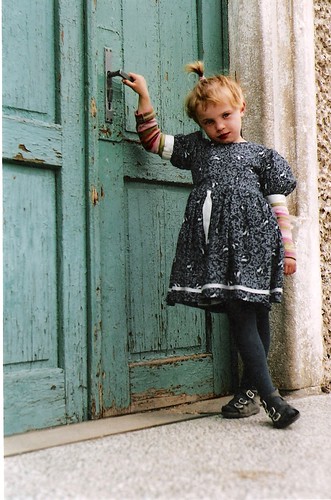
[image: Photo of a young blonde girl standing outside a
wooden door painted with aqua paint. Her legs are crossed at
the ankle. She is holding on to the door handle with one hand.]
Ann Memmott
annsautism.blogspot.com

Often, in my consultancy and training work, we get questions such as, “Can my child ever learn to speak?”

The answer to this is important, because, for a lot of parents of newly diagnosed autistic children, it’s easy to become misinformed or misled on this point. A number of organisations will be keen to tell such parents that without their ‘ACME Treatment X’ or ‘Potion Y with Added Secret Ingredient,’ their child will never speak, never learn to communicate. The parents may be told that most autistic children who do not use speech at (say) four years of age will never do so. “Early intervention to enforce speech is vital!” they’re told.

Is it?

Frankly, too much of this is scaremongering. It may lead to some parents being parted from a lot of their money, for treatments that are unwarranted, ineffective, or—in some cases—harmful.  We sometimes see autistic children pushed for endless hours to attain developmental milestones they’re simply not yet ready to attain.

Most parents of course only want the very best for their child. I do not doubt that many therapists are good people who also only want the best for the child. They may have been misled into thinking that early intervention is the Only Way, no matter the cost to the child. Little wonder that parents believe someone who seem to be providing an answer, even if the child seems distressed, bewildered, exhausted by it.

Am I saying that parents should not help their child or support their child in good ways? No, I’m absolutely not saying that. We’re talking about what is in an autistic child’s best interests here, though. I’ll generalise throughout.

Firstly, what do we mean by good communication? I’d say that it means a person is communicating authentically with one or more other people, using their own best way of doing so. Communicating with others about things practical, emotional, spiritual, enjoyable, intellectual or otherwise. Communicating in ways that means others respond safely and well.

Is spoken language the only way to achieve this? We might look at the Deaf communities and their use of sign language and technology for an answer here. It’s very possible to communicate very well, without using spoken words, with a rich and deep pattern of communication, a genuine alternative.

For some autistic children, it could well be that they won’t use spoken words as their way of communicating at any point during their lives. Instead, they may use a variety of authentic autistic ways. Perhaps through technology. Perhaps through other assisted/assistive communication methods. Perhaps through sign languages, or through any combination of other vocalisations, movement, gesture, pattern, rhythm, music, drawing, etc.

In 20 years of having the honour of working with and alongside countless autistic people of all kinds, I’ve yet to find one who doesn’t communicate. I’ve met a number of parents and professionals who don’t notice the communication, though. Or who had misinterpreted it. Or who were insistent that communication had to be the way they want it, when they want it, or it didn’t count.

Can autistic children and young people develop speech, if they are not using spoken language before (say) age 4? Yes. In fact, most do, according to research by Wodja, Mathy and Kalb (2012). The team examined 535 autistic children and young people with "severe" speech delay, and found that 372 of their subjects (7 out of every 10) managed to say phrases by age eight, and 253 (nearly half) could speak fluently at age eight or after.

What is the amazing ingredient that does this? Is it an expensive therapy? A pill or potion? A genetic scientist? No, it’s time. Quite simply, autistic children may well learn to speak at a later time than non-autistic children, and that’s the natural pace for us. Certainly, working with an autism-trained, qualified speech and language therapist is a sensible thing for many. Good therapists of this kind will look at all sorts of ways to communicate, and will enable the child’s own best way. But supporting and encouraging communication should never be about forcing autistic children down a path they cannot take, or are not ready to take.

I bring personal experience of speech delay to this subject: For the first ten years of my life, I could not use words to communicate with others in any social way. I could, in the latter part of this and with effort, repeat phrases or individual words well enough to make it seem like I was ‘communicating.’ But I had absolutely no idea what I was saying, or what it meant. I knew I was rewarded from making sound A, and punished for making sound B. But in no way was that communication: I wasn’t communicating a thing, any more than making an accordion play a note means it’s communicating with you. My natural, authentic communication was in pictures, in pattern, in colour, in drawing, in movement. It still is. And, as an autistic person, my natural non-verbal communication is also authentically different. I won’t choose to look into eyes to communicate emotion or attention, as doing so is painful, and prevents me from comprehending what’s said to me.

By the age of 11, I could make a small amount of spoken conversation with a trusted person, if I thought about it hard enough. By age 18, I could speak more. Some of my teachers failed to notice that I was in their classes, as they had never heard me speak—that was how good I had become at making myself unnoticeable, lest someone should try to talk to me. Awful, because I actually love being with people, and love sharing with them. It was assumed that I was just painfully shy.

In a world before most autism in young people was recognised, it never occurred to people that I was autistic and communicated differently. By my teens, I’d mostly learned to disguise (‘mask’) any visible trace of my autistic behaviour, out of fear of the responses of some non-autistic others and their bullying and ostracism. I kept my repetitive movements small. I pretended an interest in ‘things-I-should-be-interested-in,’ by displaying the ‘right’ posters for right TV shows and pop stars. By feigning the excitement I saw others show.

I recall trying to pronounce the right words at the right time, in conversation. How hard was it? By the time I’d heard something…translated it to pictures in my mind…thought about an answer in pictures in my mind…thought of some words to put together…and remembered how to make my mouth, lips and tongue move correctly, the conversation would have moved on. If I was not putting 100% concentration into it, I would also say the wrong word, or a mispronounced word, or say them too fast, too slow, too slurred, in a strange accent. Or respond by just describing the picture in my mind, which is not the communication expected.

Natural autistic communication is genuinely different. It was hell, trying to communicate in a way entirely not my own. Easier to be with a person who spoke 100% of the time at me, and my role was just to listen 100% of the time and occasionally agree. Using spoken language was like clambering up a cliff face in a gale force wind, weighed down with ever-shifting boulders. Clinging on in desperation, making my brain and body do something utterly alien to it, fearful of a wrong move, a wrong grasp of a situation. How much do autistic people have to care about others, to try to do this, time after time after time? I learned to talk, but the effort remains the same.

In my mind, I could visualise whole 3-D scenes, create incredible 3D rendering of situations past and present. In my heart, I could feel so intensely the emotions and joys of those around me. But my ways of sharing those emotions using spoken words would be deemed clumsy, insulting, or humiliatingly hilarious for others. So, I created with music, with art, with sharing unspoken but (for me) beautiful prayer and emotion. I communicated by movement, by rocking, by flapping. I communicated really well with other autistic people, and really well with animals. Some of my good friends are translators by trade, who have no difficulties understanding that I communicate differently.

None of my own ways of communicating were seen by those in power as communicating. None of it counted.

I’m in my 50s now, with a good job running a company, an achievement only possible with the support and encouragement of so many other fantastic autistic people and allies around me. I speak at conferences, on a subject I know well, amongst autistic colleagues. I train people, on a subject I know well, amongst autistic colleagues. I have to balance my time and energy very carefully to ensure I can speak when I need to.

How did I achieve this? Some therapy? No, just time and personal effort. And being punished if I did not. I wouldn’t recommend that for any child; it shows a deep lack of empathy for autistic individuals, and colleague Dr Damian Milton has much to say about this with his work on Double Empathy.

For me, using words is inauthentic—often as far from how I’m actually feeling inside as it’s possible to get. Speaking is a very poor ‘second language’ compared to what I can express through other means.

I am sometimes not able to use spoken language, in common with 80% of other autistic people (from informal online research). When too tired, too stressed, too unwell, in pain from sensory or social overload, I become as unable to speak as I was as a young child. This, to the point where I could be in any amount of distress or danger, and still not be able to utter a word. In reality, I might even be smiling when most in pain, most terrified.  

I would like us to think about this. We’re telling children spoken language is worthwhile, because when they’re in most danger, they’ll be able to ‘use their words’ to ask for help.

Will they?

And, if they do, will anyone listen and respond well?

If you go onto social media, you will find yourself awash with accounts from autistic people who asked for help, but were judged as ‘attention seeking,’ as liars, as fakers. As not being in pain, because they hadn’t done precisely the right amount of crying, screaming, grimacing, etc. You’ll also find yourself in the midst of a community grieving for all the autistic people now living with PTSD, all the autistic friends now dead, having taken their own lives because ‘use your words’ got them nothing. Those dead because some in the medical profession didn’t listen.

When I need spoken language most, it deserts me. It is a fickle friend, not an ally. When I do use it, it often gets me nothing, because language is only part of the hugely nuanced and complex social communication system of non-autistic people.

Why not give us things we can reliably use to summon assistance and communicate our whole selves, instead?

Using technology, I can ‘speak,’ I can ask for help. I can share friendship and love. I can add photos, and diagrams, and artwork, and charts, and numbers, and music. I can make my communication into the authentic me. I can share my faith and my emotions, authentically, and express all that is dear to me. Freed from the suffocation of having to use spoken words. Freed from the humiliation of others finding my speech amusing or insulting, or the outrage of those who misunderstand the difficulty and accuse me of ‘just not trying’ to be friends.

I think we have done a generation of autistic children a disservice, by saying that speech is the pinnacle of achievement. That if they can ‘use their words,’ life will be much easier for them. That people will like them more as a result. That well paid jobs will fall from the proverbial heavens into their laps.

I suspect that by forcing them to communicate inauthentically, we have set some of them up for a lifetime of exhaustion and misunderstanding of autism. A world where our different use of spoken language has been seen as just more evidence of us being faulty, a minority to be erased from the future. Where we have been misunderstood as rude, as lacking in caring about others and about the world around us.  Good evidence shows this is entirely mistaken for the majority. The researchers had been so keen to look at spoken words in a ‘correct’ formula that it has never occurred to them that many of us were communicating emotions and caring differently, I suspect.

“My child will never be able to tell me that they love me,” I’ve been told by a number of distraught parents. Yet when I’ve met the child, their love for the parent has been apparent to me from the outset. The problem is that the parents would only accept “love” if communicated in spoken words.

If you are the parent or carer of a fantastic young autistic person who does not use spoken words, your quest is to enable them to find their own best way to communicate. To really listen, with your heart, with your eyes, with your love…not just with your ears. To be patient and let them develop in their own natural time frame. To allow them to use their own best body language and movement, their own best choice of eye contact, or not. All, of course, with the love, help and support around them they need to enable them to thrive, autistically. With that good speech and language professional to guide you. The child’s future should not depend on being an inauthentic copy of non-autistic children.

Ask the #ActuallyAutistic communities online for some ideas and inspiration, and learn from them. There are some fantastic people out there, who are all too willing to pass on their wisdom on good social media pages, on blogs, in books or otherwise.

Most of all,  trust that your autistic child can thrive alongside others, whether with spoken words, or not. Do not be afraid to tell the next salesperson, arriving with a false horror story about how your child will never achieve anything without their ‘Patented Treatment,’ that you have more confidence in your child than they do.

Then, walk into the future, alongside that fantastic young person, sharing the journey together and truly communicating as two equal and wonderful people.

Thank you for reading.
Share:

I Might Be You / Neurodiversity: A Review of Two Books

[image: Cover of the book "I Might Be You,"
showing two seating white women facing
and engaging with each other.]
Maxfield Sparrow
unstrangemind.com

I Might Be You: An Exploration of Autism and Connection (2012) By Barb Rentenbach and Lois Prislovsky; Audio version (2013) read by Lois Prislovsky PhD and Ariane Zurcher

Neurodiversity: A Humorous and Practical Guide to Living with ADHD, Anxiety, Autism, Dyslexia, The Gays, and Everyone Else (2016) By Barb Rentenbach and Lois Prislovsky; Audio version (2016) read by Chad Dougatz, Lois Prislovsky PhD, Carol Riggs Holloway, John Bond, and Jery Yarber

I read “I Might Be You” in 2014 and loved it, but never thought to review it back then. When I discovered that Barb Rentenbach and Lois Prislovsky had a second book out, I got it in an Audible version and, on a whim, decided to get the Audible version of “I Might Be You” as well, and re-read it before reading “Neurodiversity.” I am so glad I did, because the Audible versions of both these books really shine.

Barb Rentenbach is an autistic woman with unreliable speech who types to communicate. Lois Prislovsky is Barb’s therapist and friend. The two alternate chapters in “I Might Be You,” talking about autism from Barb’s lived experience and Lois’ experience as a professional and friend. While Barb chose Ariane Zurcher to be her voice in the Audible book, Barb’s own voice comes through the words loud and clear. Barb is brilliant and playful, simultaneously jokingly boastful (after all, if you have such fabulous hair wouldn’t the world want to know about it?) and humble, refusing to take herself too seriously—and advising readers to do the same.

Anyone who might be afraid that Lois would talk over Barb need only read or listen to a short excerpt to realize that Barb has a dynamic, funny, larger-than-life personality that can’t be pressed down or spoken over. The hours I spent with Barb’s voice, as rendered by Zurcher in the first book and Chad Dougatz in the second were a joyful encounter with a woman I came to admire and love. Side note: given Barb’s playful comment in the first book about not having spent time as a boy… yet…I was delighted that she chose a masculine voice to read her words in the second book.

As far as I know, Barb is not trans. But she describes the ways she is not entirely tethered to her body, not the way so many typical people report. It is clear to me that Barb can—and probably does—“visit” being masculine in ways I can only envy. Barb knows she is connected to the “marshmallow” body, as she laughingly describes her zaftig frame, butt she also speaks lucidly of mystic transport to realms that are beyond words and beyond physicality. She calls it “going inside her autism,” and though it is hard to wrap words around a state of being that is beyond words, she does a great job of introducing us to the splendor of her world.

But Barb doesn’t give a one-sided view of autism. She doesn’t mince words when she describes herself as having “autism: the hard kind.” And she doesn’t hide her struggles. Barb writes openly about biting herself, biting her beloved Lois, screaming, breaking things, and even smearing shit. She knows how she comes across, even though she can’t help coming across that way. Barb describes herself as being “disguised as a poor thinker.” While she claims that she’s done trying to convince the people who say that her facilitated communication is some kind of puppet show that she is really “in there,” these books are a testament to just how in there Barb is.

I know I keep going on about Barb and saying nearly nothing about Lois. I suspect Barb would find that amusing as she’s always conducting a bit of a stand-up routine using Lois as her straight man / fall guy. Barb would probably laughingly say that I’m focusing mostly on her because Lois is sadly just not as interesting. I assure you that Lois is plenty interesting and gives a lot of great tips for other teachers and therapists, but let’s not try to kid anyone: Barb is the undisputed star of these books.

There are some repeated passages from the first book in the second book. Barb explains the two-fold reasoning: repetition aids learning and she and Lois really want you to learn that autistic people who don’t speak or are “disguised as poor thinkers” deserve a presumption of competence. You could assume someone is “in there” just as easily as you could assume they’re not, but the more respectful and human choice to make is to presume competence at all times.

The other reason for the repeated passages is that Barb types so slowly that some chapters took many months to write. The first book took ten years to write and the second took “only” four. Barb types with one finger. She’s aiming toward fully independent typing (which should hopefully shut up the remaining naysayers) but it’s really hard, and takes a lot of energy to focus. Over the years, Barb’s work with facilitated typing has improved her skills to the point where she just needs a hand pressed against her back to get her body-machine moving and typing. It seems a small thing—a hand on the back—but it makes all the difference when it comes to Barb’s struggle against apraxia.

Barb types only a few words per minute, and points out that when writing is so slow and difficult it makes sense to recycle some of the words. I agree and I felt that the amount of repetition from one book to the next was not too much for me. The second book was very much worth getting, with enough new material and re-contexting of old material to make me feel satisfied that I’d gotten a new book with its own theme and purpose.

The first book, “I Might Be You,” is more of an introduction to autism, while the second book, “Neurodiversity” tells more comic stories and has more advice for all sorts of neurodivergent people. Since Lois has ADHD and dyslexia and is a lesbian, Barb jokes that Lois has more to say in the second book, having more neurodivergent traits than Barb (who laughs that she gets to be the normal one for a change).

People sensitive to language might struggle in some points during both these books. For example, Barb doesn’t do anything to soften the R-word. I wondered if she’d gotten criticized for that because the second book opens with a mention of political correctness and a warning that the book would NOT be politically correct.

I can’t speak for anyone else, of course, but I have no quibble with Barb’s and Lois’ choice to be blunt with word choice. Were there things that would be “politically sensitive” in some circles? Oh, yes. Was there any disrespect toward any human being? Well, other than the slightly mocking response Barb wrote to the man who claimed she couldn’t have “the hard kind” of autism because she wouldn’t be able to read, write, or think (she decided the best pseudonym for him was a tittering “Dick”), I spotted no disrespect toward anyone. In fact, Barb expresses a spiritual love for all humanity (“God cares about us all through us all”) and a love of the gifts autism has brought her (“Autism is my prism, not my prison”).

Speaking of spiritual matters, I would love for Barb to write a book entirely about spiritual matters. I’ve already mentioned that she has a mystic’s vision. Barb also has a theologian’s academic knowledge of religion. I found her discussions of spirituality some of the more fascinating passages.

I heartily recommend these two books as well as the “Loud Mute Radio” show Barb and Lois host. You can learn more about Barb and Lois and listen to Loud Mute Radio at Barb and Lois’ website: muleandmuseproductions.com
Share:

In Silence and in Sound: Autistics Do Not Benefit From Presumptions of Deficit

Hush!!
Photo: Ian Chen | Flickr / Creative Commons
[image: Close-up black-and-white photo of a young East Asian child,
with one finger over their lips in a position indicating "hush."]

Maxfield Sparrow
unstrangemind.com

When an academic writes accurately about aspects of autistic lived experience, some people grumble. “All they needed to do was ask me and I would have told them,” some will say. “We've known this for years but they act like it’s a shocking new revelation,” others might add.

I, however, rejoice. Formal confirmation of autistic common knowledge is exactly the kind of research we need out there. I am so happy when an academic paper states the obvious (at least obvious to us autistics) because it means there is finally an information source that “the system” will respect. Do I wish people would actually listen to actual autistics? Most definitely, I do. But until we manage to shift that Overton window halfway across the wall, I rejoice to see our actual life experiences written about accurately in scientific journals.

I was especially thrilled reading Rebecca Wood’s research, recently published in the journal Educational Review. In her article, “The wrong kind of noise: understanding and valuing the communication of autistic children in schools,” Woods uncovers something we autistic adults have been complaining about for so long: We are not “allowed” to do the same things non-autistic children do. They are allowed to be so loud we cannot bear to be in the same lunchroom with them, but we are silenced if we are even a fraction as loud as the non-autistic people.

We’re relegated to a lesser status wherein we’re expected to quietly tip-toe through life, while forced and shamed into putting up with the sensory onslaught of the “normal” day-to-day noise of others.

Woods studied children in five different mainstream primary schools in England over the course of five months, and observed that autistic children were regularly treated differently with respect to noise and communication. She titled her paper “The wrong kind of noise” because she noted that it didn’t matter whether autistic children were complying or not and it didn’t even matter if the autistic children were being loud or silent: no matter what the children did or did not do, they were viewed as making “the wrong kind of noise” because their autistic sounds, autistic communication style, and even autistic existence itself was “disdained” by the adults in charge.

In her study, Woods found that “communication, noise, and silence all intersect in relation to autistic children in schools.” She saw that all the schools had put the development of communication skills high on the list of important interventions for the children, but the way these interventions played out in the daily school life of the autistic children shaped how the children communicated—often in unplanned-for ways, often in ways directly detrimental to developing communication skills.

Woods goes on to describe concrete examples, like a child she calls Piotr (all names in her study are changed) who expressed 39 verbal and non-verbal signs of aversion to an activity the teaching assistant was trying to engage four-year-old Piotr in. Piotr said no, said he wanted to go outside, tried to hold the book closed, slipped to the floor, and more—all clear indicators of not wanting to do the reading assignment. Yet the school said Piotr was “non-verbal” and one result of that (inaccurate) label was Piotr’s voice going ignored. At one point Wood observed Piotr using a choice card to directly request outside time, but instead of respecting and rewarding Piotr’s communication, the teaching assistant removed Piotr from the choice card area, trying to re-focus him on a different task.

Wood says it was unclear whether the teaching assistant was actually ignoring Piotr’s communication or just wasn’t picking up on it properly, but the end result is the same. As wood writes, “It is difficult to ascertain [...] how Piotr’s independence and communication are being supported,” adding that, “it seemed here that his communication was only validated if it corresponded with what the adults in charge wanted to hear, and in the ways that they expected to hear it.”

In one of the most heart-breaking yet validating sentences I’ve ever seen in an academic paper, Wood writes, “it appeared that the unwitting aim of these communication supports was to tame, train and civilise him.”

This critique of the way education systems are currently functioning is so important. Wood’s study was conducted in England, but the problems it highlights trouble education systems everywhere in the world. Supports are not enough. Access is not enough. Accommodations are not enough. Education is not enough. None of it is enough if the person being supported is not being given adequate personalized assistance. You cannot support a student if you are not primed to listen to them, hear them, and connect with them by showing that their communication was received and taken seriously. Without some hint of personal agency, what encourages a student to make any effort at all? The system is set up to generate learned helplessness and resignation.

Rebecca Wood writes about issues of noise as well. Schools were very noisy environments, even for Wood who may not be as sensitive to noise issues as the autistic students with sensory issues. (Although I’m just guessing here. I have no idea what Wood’s neurotype is.)  She wrote, “when I was transcribing interviews, which were often unavoidably conducted through various interruptions and types of racket, I couldn’t always hear what the participants were saying  because of the general din from talking and the scraping of chairs.”

Silence, on the other hand, was a clear sign of autistic engagement. For example, when Piotr was allowed to choose his own book, none of the aversion behavior was evidenced and instead he quietly read, fully engrossed in the book (and demonstrating his approval with 44 approving behaviors in fewer than 5 minutes).

I know a big, sarcastic “well, of course” is due, but this is exactly the kind of stuff that really needs to be documented in an academic study, because that is the way to get autistic curriculums changed in ways that will benefit autistic students. It’s hard to get educators to listen to autistic adults, which means we need scientific studies that “signal boost” the things autistics have been saying for many years. It’s frustrating, knowing we autistics are not listened to. This paper represents the kind of science that will get us heard. However indirectly that listening has to take place, the important thing is to be heard, in any way that works.

Staff at the schools where Wood observed were visibly irritating the autistic children when the students would go silent by whispering questions to the children, or feeding them a steady stream of spoken words in an attempt to expand their vocabularies. The children’s silence was being just as misinterpreted as their spoken and visual forms of communication. The teaching activities flowing from those misinterpretations risk harming children.

So much of what Wood’s article comes down to is the importance of presuming competence. Wood shows how giving a child the label “non-verbal” (whether accurate or not) causes staff to work with that child differently, including ignoring massive amounts of communication from the child because the adult has been primed to behave as if “non-verbal” means “never communicates.” Wood rightly calls this “confirmation bias” and writes that these “deficit-oriented discourses” are damaging to children.

Hopefully, Wood’s research works its way into the hands of those who can make positive changes in the educational systems that serve the needs of autistic students. It is refreshing to read research written by someone who really seems to see and hear us. It’s time for an autism research renaissance. We need more researchers like Wood: researchers working with and listening to autistic subjects, resulting in findings that genuinely improve the quality of life for autistic people.
Share: