Showing posts with label How to write fiction How to write comedy How to write for television. Show all posts

Eating Probiotics Makes One More Likely to Vote for Trump. Really.

Let's face it, as a society we're suckers for every new fad to wander down the interweb.

Take probiotics.  The miracle food

No.  Quite the obverse.  This cute, cuddly little research project shows that eating probiotics tends to make one foggy, addle-patted and significantly confused.  And fatter.

"This is not good," as said the crazy Nazi author in The Producers.  Right before the dynamite touched off.

So it could be that probiotic use prior to 2016 is a direct link to Trump being elected.  And is anyone investigating the food supplement industry?  Is Mueller conducting an investigation to election meddling by vegans?

Makes you think, don't it?

Here's the report.
*  *  *  *  *

Probiotic use is a link between brain fogginess, severe bloating

Probiotic use can result in a significant accumulation of bacteria in the small intestine that can result in disorienting brain fogginess as well as rapid, significant belly bloating, investigators report.

In a published study of 30 patients, the 22 who reported problems like confusion and difficulty concentrating, in addition to their gas and bloating, were all taking probiotics, some several varieties.

When investigators looked further, they found large colonies of bacteria breeding in the patients' small intestines, and high levels of D-lactic acid being produced by the bacteria lactobacillus' fermentation of sugars in their food, says Dr. Satish S.C. Rao, director of neurogastroenterology/motility and the Digestive Health Clinical Research Center at the Medical College of Georgia at Augusta University.

D-lactic acid is known to be temporarily toxic to brain cells, interfering with cognition, thinking and sense of time. They found some patients had two to three times the normal amount of D-lactic acid in their blood. Some said their brain fogginess -- which lasted from a half hour to many hours after eating -- was so severe that they had to quit their jobs.

The report in the journal Clinical and Translational Gastroenterology appears to be the first time the connection has been made between brain fogginess, bacterial overgrowth in the small intestine, high levels of D-lactic acid in the gut and probiotic use, Rao says.

"What we now know is that probiotic bacteria have the unique capacity to break down sugar and produce D-lactic acid. So if you inadvertently colonize your small bowel with probiotic bacteria, then you have set the stage for potentially developing lactic acidosis and brain fogginess," Rao says.

While probiotics can be beneficial in some scenarios, like helping a patient restore his gut bacteria after taking antibiotics, the investigators advised caution against its excessive and indiscriminate use.

"Probiotics should be treated as a drug, not as a food supplement," Rao says, noting that many individuals self-prescribe the live bacteria, which are considered good for digestion and overall health.

Others have implicated probiotics in the production of D-lactic acid -- and brain fogginess -- in patients with a short bowel so their small intestine does not function properly, and in newborns fed formula containing the popular product. Short bowel syndrome results in a lot of undigested carbohydrates that are known to cause small intestinal bacterial overgrowth, or SIBO, and the high levels of D-lactic acid. Severe liver and kidney problems can produce similar problems.

Whether there was also a connection when the gut is intact was an unknown. "This is the first inroad," says Rao.

All patients experiencing brain fogginess took probiotics and SIBO was more common in the brain fogginess group as well, 68 percent compared to 28 percent, respectively. Patients with brain fogginess also had a higher prevalence of D-lactic acidosis, 77 versus 25 percent, respectively.

When brain-foggy patients stopped taking probiotics and took a course of antibiotics, their brain fogginess resolved.

Movement of food through the gastrointestinal tract was slow in one third of the brain foggy patients and one fourth of the other group. Slower passage, as well as things like obesity surgery, can increase the chance of bacterial buildup, or SIBO.

"Now that we can identify the problem, we can treat it," Rao says. Diagnosis includes breath, urine and blood tests to detect lactic acid, and an endoscopy that enables examination of fluid from the small intestines so the specific bacteria can be determined and the best antibiotics selected for treatment.

Normally there is not much D-lactic acid made in the small intestines, but probiotic use appears to change that. SIBO, which was present in most with brain fogginess, can cause bacteria to go into a feeding frenzy that ferments sugars resulting in production of uncomfortable things like hydrogen gas and methane that explain the bloating.

Probiotics added to that feeding frenzy the bacterium lactobacillus, which produces D-lactic acid as it breaks down sugars, The acid get absorbed in the blood and can reach the brain.

All those with brain fogginess, SIBO and/or D-lactic acidosis, were given antibiotics that targeted their bacterial population and asked to discontinue probiotics. Those without SIBO were asked to halt probiotics and stop eating yogurt, which is considered one of the best sources of probiotics. Those with SIBO and D-lactic acidosis but no brain fogginess also took antibiotics.

Following treatment, 70 percent of patients reported significant improvement in their symptoms and 85 percent said their brain fogginess was gone. Those without brain fogginess but with SIBO and high levels of D-lactic acid reported significant improvement in symptoms like bloating and cramping within three months.

Abdominal pain was the most common symptom in both groups and before treatment, six of those with brain fogginess reported a tremendous increase in their abdominal size within just a few minutes of eating.

All patients received extensive examination of their gastrointestinal tract, including a motility test, to rule out other potential causes of their symptoms. They filled out questionnaires about symptoms like abdominal pain, belching and gas and answered questions about related issues like antibiotic and probiotic use as well as food fads and yogurt consumption.

They were given carbohydrates followed by extensive metabolic testing looking at the impact on things like blood glucose and insulin levels. Levels of D-lactic acid and L-lactate acid, which results from our muscles' use of glucose as energy and can cause muscle cramps, also were measured.

Probiotic use may be particularly problematic for patients who have known problems with motility, as well as those taking opioids and proton pump inhibitors, which reduce stomach acid secretion and so the natural destruction of excessive bacteria.

Probiotics are supposed to work in the colon and not the small intestines or stomach, Rao says, so motility issues can result in problems with probiotic bacteria reaching the proper place. A wide variety of problems, from conditions like diabetes to drugs like antidepressants and minerals like iron, can slow movement and increase the possibility that probiotics will remain too long in the upper gut where they can cause harm, he says.

Probiotics definitely can help, for example, people who have gastroenteritis, or stomach flu, or are left with diarrhea and other problems after antibiotics wipe out their natural gut bacteria, Rao says.

"In those situations, we want to build up their bacterial flora so probiotics are ideal," he says.

Rao's pursuit of a possible connection between probiotics, brain fogginess and bloating started with a memorable patient who developed significant amounts of both problems within a minute of eating.

"It happened right in front of our eyes," Rao says of the dramatic abdominal distention. They knew the woman had diabetes, which can slow motility. When they looked in the blood and urine at a variety of metabolic compounds, they found the high levels of D-lactic acid and soon learned the patient used probiotics and regularly ate yogurt.

Next steps include additional studies in which the investigators better quantify and characterize the brain fogginess reported by patients and following patients for longer periods to ensure their problems remain resolved. Some patients in the current study required a couple of rounds of antibiotics, Rao notes.

Good food sources of probiotics include yogurt, sauerkraut, kimchi, kefir and dark chocolate, which are generally safe because of the small amounts of bacteria present, Rao says.

The 19-foot long small intestine has been a bit of an understudied organ, likely in part because it's hard to visualize via the mouth or anus, Rao says. "I think the small bowel can be a source of huge mystery," Rao says.

Your helpful gut bacteria, or microbiome, which are essential to things like a well-functioning immune system and general health, are largely in the large intestine and colon.

Story Source:

Materials provided by Medical College of Georgia at Augusta University. Note: Content may be edited for style and length.

Journal Reference:

Satish S. C. Rao, Abdul Rehman, Siegfried Yu, Nicole Martinez de Andino. Brain fogginess, gas and bloating: a link between SIBO, probiotics and metabolic acidosis. Clinical and Translational Gastroenterology, 2018.
Share:

Don't Bother Me With Truth, Facts or Evidence.


If you've yet to read "The True Believer" by Eric Hoffer, you'd best get on it.

In a world ruled by True Believer ignorance and hutzpah, the more you know about this self-perpetuating phenomena, the better off you'll be.  Not happier or more content, rather less frustrated and ready to scream.

As to why people ignore facts, truth or science in what they believe, read on.
*  *  *  *  *


Why we stick to false beliefs: Feedback trumps hard evidence
New study finds that feedback rather than hard evidence makes us more confident that we're right

Ever wonder why flat earthers, birthers, climate change and Holocaust deniers stick to their beliefs in the face of overwhelming evidence to the contrary?  New findings from researchers at the University of California, Berkeley, suggest that feedback, rather than hard evidence, boosts people's sense of certainty when learning new things or trying to tell right from wrong.

Developmental psychologists have found that people's beliefs are more likely to be reinforced by the positive or negative reactions they receive in response to an opinion, task or interaction, than by logic, reasoning and scientific data.

Their findings, published in the online issue of the journal Open Mind, shed new light on how people handle information that challenges their worldview, and how certain learning habits can limit one's intellectual horizons.

"If you think you know a lot about something, even though you don't, you're less likely to be curious enough to explore the topic further, and will fail to learn how little you know," said study lead author Louis Marti, a Ph.D. student in psychology at UC Berkeley.

This cognitive dynamic can play out in all walks of actual and virtual life, including social media and cable-news echo chambers, and may explain why some people are easily duped by charlatans.

"If you use a crazy theory to make a correct prediction a couple of times, you can get stuck in that belief and may not be as interested in gathering more information," said study senior author Celeste Kidd, an assistant professor of psychology at UC Berkeley.

Specifically, the study examined what influences people's certainty while learning. It found that study participants' confidence was based on their most recent performance rather than long-term cumulative results. The experiments were conducted at the University of Rochester.

For the study, more than 500 adults, recruited online through Amazon's Mechanical Turk crowdsourcing platform, looked at different combinations of colored shapes on their computer screens. They were asked to identify which colored shapes qualified as a "Daxxy," a make-believe object invented by the researchers for the purpose of the experiment.

With no clues about the defining characteristics of a Daxxy, study participants had to guess blindly which items constituted a Daxxy as they viewed 24 different colored shapes and received feedback on whether they had guessed right or wrong. After each guess, they reported on whether or not they were certain of their answer.

The final results showed that participants consistently based their certainty on whether they had correctly identified a Daxxy during the last four or five guesses instead of all the information they had gathered throughout.

"What we found interesting is that they could get the first 19 guesses in a row wrong, but if they got the last five right, they felt very confident," Marti said. "It's not that they weren't paying attention, they were learning what a Daxxy was, but they weren't using most of what they learned to inform their certainty."

An ideal learner's certainty would be based on the observations amassed over time as well as the feedback, Marti said.

"If your goal is to arrive at the truth, the strategy of using your most recent feedback, rather than all of the data you've accumulated, is not a great tactic," he said.

Story Source:  Materials provided by University of California - Berkeley. Original written by Yasmin Anwar.   Louis Martí, Francis Mollica, Steven Piantadosi, Celeste Kidd. Certainty Is Primarily Determined by Past Performance During Concept Learning. Open Mind, 2018
Share:

Does helping people affect your brain?

Image result for helping someone
Source:  Ravishly


Yes, it does.

For the better.

Next question.
*  *  *  *  *


How does helping people affect your brain? 
Study shows neurobiological effects of giving social support

Providing "targeted" social support to other people in need activates regions of the brain involved in parental care- which may help researchers understand the positive health effects of social ties, reports a study in Psychosomatic Medicine: Journal of Biobehavioral Medicine, the official journal of the American Psychosomatic Society.

By comparison, providing "untargeted" support such as giving to charity does not have the same neurobiological effects, according to the new research by Tristen K. Inagaki, PhD, and Lauren P. Ross, BA, of University of Pittsburgh. "Our results highlight the unique benefits of giving targeted support and elucidate neural pathways by which giving support may lead to health," the researchers write.

Study May Show 'Neural Pathway' By Which Providing Support Improves Health

The researchers performed a pair of experiments to evaluate brain responses to providing different kinds of social support. In the first study, 45 volunteers performed a "giving support" task where they had a chance to win rewards for someone close to them who needed money (targeted support), for charity (untargeted support), or for themselves. As predicted, participants felt more socially connected, and felt that their support was more effective, when giving targeted social support.

The subjects then underwent an emotional ratings task including functional MRI scanning to assess activation of specific brain areas when giving social support. Providing support, regardless of who received the support, was linked to increased activation of the ventral striatum (VS) and septal area (SA) -- regions previously linked to parental care behaviors in animals. However, only higher activation of the SA when people gave targeted support was associated with lower activity in a brain structure called the amygdala -- sometimes linked to fear and stress responses.

In the second study, 382 participants provided information on their behavior in giving support (prosocial behavior) and underwent a different emotional ratings task with functional MRI scanning. Once again, those who reported giving more targeted support to others also showed reduced activity in the amygdala. In both studies, giving untargeted support (such as giving to charity) was unrelated to amygdala activity.

"Humans thrive off social connections and benefit when they act in the service of others' well-being," according to the authors. A previous study by Dr. Inagaki, also published in Psychosomatic Medicine, found that giving social support has positive effects on brain areas involved in stress and reward responses. That study suggested that providing support -- not just receiving it -- may be an important contributor to the physical and mental health benefits of social support.

The new study adds further evidence that giving targeted support may be uniquely beneficial. Both targeted and untargeted support are linked to increased SA activity, supporting the "warm glow" theory of providing support: we help others, directly or indirectly, simply because it "feels good."

But the link between increased SA activation and decreased amygdala activity "suggests a neural pathway by which giving support ultimately influence health that is specific to targeted forms of support-giving, such as giving to specific people we know are in need," Dr. Inagaki and Ms. Ross write. The authors note that their study cannot show a cause-and-effect of providing support on activation of the SA or amygdala. They also point out that providing targeted social support does not always lead to improved health -- for example, prolonged caregiving for an ill family member can be detrimental to health.

The study adds to previous evidence that providing social support to others "may be an overlooked contributor to the well-known link between social ties and health," Dr. Inagaki and Ms. Ross write. They conclude: "Giving targeted support to an identifiable individual in need is uniquely associated with reduced amygdala activity thereby contributing to understanding of how and when giving support may lead to health."

Story Source:  Materials provided by Wolters Kluwer Health.  Tristen K. Inagaki, Lauren P. Ross. Neural Correlates of Giving Social Support. Psychosomatic Medicine, 2018
Share:

Goats prefer happy people

Credit: Alan McElligott.  

Dr Alan McElligott with a goat.  The goat likes him.  Dr McElligott is happy.


I love science.  You never know what type of earthshaking factoid may rear its weird head on any given day. 

Like two days ago.

When it was announced that goats like happy people.

And since goats don't appear to be following me around, I must not be happy.

Go figure.

I thought I was.

Here's the report.  It explains why goats may or may not be following you around.
*  *  *  *  *

Goats prefer happy people

Goats can differentiate between human facial expressions and prefer to interact with happy people, according to a new study led by scientists at Queen Mary University of London.  The study, which provides the first evidence of how goats read human emotional expressions, implies that the ability of animals to perceive human facial cues is not limited to those with a long history of domestication as companions, such as dogs and horses.

Writing in the journal Royal Society Open Science, the team describe how 20 goats interacted with images of positive (happy) and negative (angry) human facial expressions and found that they preferred to look and interact with the happy faces.

Dr Alan McElligott who led the study at Queen Mary University of London and is now based at the University of Roehampton, said: "The study has important implications for how we interact with livestock and other species, because the abilities of animals to perceive human emotions might be widespread and not just limited to pets."

The study, which was carried out at Buttercups Sanctuary for Goats in Kent, involved the researchers showing goats pairs of unfamiliar grey-scale static human faces of the same individual showing happy and angry facial expressions.

The team found that images of happy faces elicited greater interaction in the goats who looked at the images, approached them and explored them with their snouts. This was particularly the case when the happy faces were positioned on the right of the test arena suggesting that goats use the left hemisphere of their brains to process positive emotion.

First author Dr Christian Nawroth, who worked on the study at Queen Mary University of London but is now based at Leibniz Institute for Farm Animal Biology, said: "We already knew that goats are very attuned to human body language, but we did not know how they react to different human emotional expressions, such as anger and happiness. Here, we show for the first time that goats do not only distinguish between these expressions, but they also prefer to interact with happy ones."

The research has implications for understanding how animals process human emotions.

Co-author Natalia Albuquerque, from the University of Sao Paulo, said: "The study of emotion perception has already shown very complex abilities in dogs and horses. However, to date, there was no evidence that animals such as goats were capable of reading human facial expressions. Our results open new paths to understanding the emotional lives of all domestic animals."

Story Source:  Materials provided by Queen Mary University of London.  Christian Nawroth, Natalia Albuquerque, Carine Savalli, Marie-Sophie Single, Alan G. McElligott. Goats prefer positive human emotional facial expressions. R. Soc. open sci., 2018.
Share:

Laziness helped lead to extinction of Homo erectus

Image result for lazy cavemen


I am a great fan of laziness in all its many forms. 

An enthusiastic practitioner of lethargy and ennui. 

Sloth becomes me.

Always looking for the easiest way to avoid anything remotely like effort or expending energy.

Now it turns out that while this may a personally gratifying life strategy for the individual, it does not bode well for the species. 

Rats.

So it's not survival of the fattest.

Who knew? 

Too late to change now.

Here's the report:
*  *  *  *  *

An archaeological excavation of ancient human populations in the Arabian Peninsula during the Early Stone Age, found that Homo erectus used 'least-effort strategies' for tool making and collecting resources.  This 'laziness' paired with an inability to adapt to a changing climate likely played a role in the species going extinct, according to lead researcher Dr Ceri Shipton of the ANU School of Culture, History and Language.

"They really don't seem to have been pushing themselves," Dr Shipton said.

"I don't get the sense they were explorers looking over the horizon. They didn't have that same sense of wonder that we have."

Dr Shipton said this was evident in the way the species made their stone tools and collected resources.

"To make their stone tools they would use whatever rocks they could find lying around their camp, which were mostly of comparatively low quality to what later stone tool makers used," he said.

"At the site we looked at there was a big rocky outcrop of quality stone just a short distance away up a small hill.

"But rather than walk up the hill they would just use whatever bits had rolled down and were lying at the bottom.

"When we looked at the rocky outcrop there were no signs of any activity, no artefacts and no quarrying of the stone.

"They knew it was there, but because they had enough adequate resources they seem to have thought, 'why bother?'."

This is in contrast to the stone tool makers of later periods, including early Homo sapiens and Neanderthals, who were climbing mountains to find good quality stone and transporting it over long distances.

Dr Shipton said a failure to progress technologically, as their environment dried out into a desert, also contributed to the population's demise.

"Not only were they lazy, but they were also very conservative," Dr Shipton said.

"The sediment samples showed the environment around them was changing, but they were doing the exact same things with their tools.

"There was no progression at all, and their tools are never very far from these now dry river beds. I think in the end the environment just got too dry for them."

The excavation and survey work was undertaken in 2014 at the site of Saffaqah near Dawadmi in central Saudi Arabia.

Story Source:  Materials provided by Australian National University.  Ceri Shipton, James Blinkhorn, Paul S. Breeze, Patrick Cuthbertson, Nick Drake, Huw S. Groucutt, Richard P. Jennings, Ash Parton, Eleanor M. L. Scerri, Abdullah Alsharekh, Michael D. Petraglia. Acheulean technology and landscape use at Dawadmi, central Arabia. PLOS ONE, 2018.
Share:

Eat Crickets? Good For You, Safe In High Doses, and Yummy.


Image result for eating crickets
Source: Worlds Fair Nano


They're especially good for you if you catch your own.  Which means running around like a head with its chicken cut off, in the back yard, like Rocky trying to catch a chicken to improve his footwork. trying to snare them using chopsticks like Mr. Muyagi in The Karate Kid.
Image result for Mr. MiyAGI
Mr. Miyagi is a fictional karate
master played by Japanese-
American actor Pat Morita.

No, Seriously.

Crickets are great protein.

It appears you cannot overeat them.

They're great for your gut.

They reduce inflammation.

They may even reduce depression and help prevent cancer.

What more do you want??

*  *  *  *  *

Eating crickets can be good for your gut

A new clinical trial shows that consuming crickets can help support the growth of beneficial gut bacteria and that eating crickets is not only safe at high doses but may also reduce inflammation in the body.

Researcher Valerie Stull was 12 when she ate her first insect.  "I was on a trip with my parents in Central America and we were served fried ants," she says. "I remember being so grossed out initially, but when I put the ant in my mouth, I was really surprised because it tasted like food -- and it was good!"

Today, Stull, a recent doctoral graduate of the University of Wisconsin-Madison Nelson Institute for Environmental Studies, is the lead author of a new pilot clinical trial published in the journal Scientific Reports that looks at what eating crickets does to the human microbiome.

It shows that consuming crickets can help support the growth of beneficial gut bacteria and that eating crickets is not only safe at high doses but may also reduce inflammation in the body.

"There is a lot of interest right now in edible insects," Stull says. "It's gaining traction in Europe and in the U.S. as a sustainable, environmentally friendly protein source compared to traditional livestock."

More than 2 billion people around the world regularly consume insects, which are also a good source of protein, vitamins, minerals and healthy fats. The research team was interested in documenting for the first time via clinical trial the health effects of eating them.

"This study is important because insects represent a novel component in Western diets and their health effects in human populations haven't really been studied," says co-corresponding author Tiffany Weir, a professor of food science and human nutrition at Colorado State University. "With what we now know about the gut microbiota and its relationship to human health, it's important to establish how a novel food might affect gut microbial populations. We found that cricket consumption may actually offer benefits beyond nutrition."

Raising insects for protein not only helps protect the environment, but also offers a more healthful option than meat in many wealthy countries with high-meat diets, says co-author Jonathan Patz, director of the UW-Madison Global Health Institute, where Stull will begin a postdoctoral research position in the fall.

Crickets, like other insects, contain fibers, such as chitin, that are different from the dietary fiber found in foods like fruits and vegetables. Fiber serves as a microbial food source and some fiber types promote the growth of beneficial bacteria, also known as probiotics. The small trial probed whether insect fibers might influence the bacteria found in the gastrointestinal tract.

For two weeks, 20 healthy men and women between the ages of 18 and 48 ate either a control breakfast or a breakfast containing 25 grams of powdered cricket meal made into muffins and shakes. Each participant then ate a normal diet for a two-week "washout period." For the following two weeks, those who started on the cricket diet consumed a control breakfast and those who started on the control diet consumed a cricket breakfast.

Every participant served as their own control for the study and the researchers were blinded with respect to which diet each participant was on at any given time.

The researchers collected blood samples, stool samples and answers to gastrointestinal questionnaires immediately before the study began, immediately following the first two-week diet period and immediately after the second two-week diet period.

Participants' blood samples were tested for a host of health measures, like blood glucose and enzymes associated with liver function, and also for levels of a protein associated with inflammation. The fecal samples were tested for the byproducts of microbial metabolism in the human gut, inflammatory chemicals associated with the gastrointestinal tract, and the overall makeup of the microbial communities present in the stools.

Participants reported no significant gastrointestinal changes or side effects and the researchers found no evidence of changes to overall microbial composition or changes to gut inflammation. They did see an increase in a metabolic enzyme associated with gut health, and a decrease in an inflammatory protein in the blood called TNF-alpha, which has been linked to other measures of well-being, like depression and cancer.

Additionally, the team saw an increase in the abundance of beneficial gut bacteria like Bifidobacterium animalis, a strain that has been linked to improved gastrointestinal function and other measures of health in studies of a commercially available strain called BB-12.

But, the researchers say, more and larger studies are needed to replicate these findings and determine what components of crickets may contribute to improved gut health. "This very small study shows that this is something worth looking at in the future when promoting insects as a sustainable food source," says Stull.

Stull is co-founder of an award-winning startup and research collaboration called MIGHTi, the Mission to Improve Global Health Through Insects. In the future, MIGHTi hopes to provide home-use insect-farming kits to communities that already consume insects, including many in southern Africa. Insects require far less water to farm than traditional livestock and can help improve food security in impoverished communities while providing economic opportunities to women.

"Most of the insects consumed around the world are wild-harvested where they are and when they are available," says Stull, who has eaten insects -- including caterpillars, cicadas, grasshoppers and beetle larvae -- all over the world. "People love flying termites in Zambia, which come out only once or twice a year and are really good; they taste like popcorn and are a crunchy, oily snack."

She hopes to promote insects as a more mainstream food in the United States, and though the industry is currently small, the rise of edible insect producers and companies using insects in their food products may make this possible.

"Food is very tied to culture, and 20 or 30 years ago, no one in the U.S. was eating sushi because we thought it was disgusting, but now you can get it at a gas station in Nebraska," she says.

The study was funded by a multistate Hatch project (W3122: Beneficial and Adverse Effects of Natural Chemicals on Human Heath and Food Safety), the Karen Morris-Fine New Investigator Success Fund, the Climate Quest competition, and the Clinical and Translational Science Award program of the NIH National Center for Advancing Translational Sciences (UL1TR000427). Entomo Farms donated a portion of the cricket powder used in the study.

Story Source:  Materials provided by University of Wisconsin-Madison, original by Kelly April Tyrrell.  Valerie J. Stull, Elijah Finer, Rachel S. Bergmans, Hallie P. Febvre, Colin Longhurst, Daniel K. Manter, Jonathan A. Patz, Tiffany L. Weir. Impact of Edible Cricket Consumption on Gut Microbiota in Healthy Adults, a Double-blind, Randomized Crossover Trial. Scientific Reports, 2018; 


Share:

Mom was Right: Sit Up Straight. You'll Perform Better.

Image result for Mom knows


Mom knows.

When she says you'll do better if you mind your posture and sit up straight. you will do better.  Recently published research shows that if you mind your posture and sit up straight, you will do better.

Really.

Would you rather hear that from someone in a white coat with a clipboard, or from mom?

Here's the report.
*  *  *  *  *


Math with good posture means better scores
Sitting up straight aids performance

A new study finds that students perform better at math while sitting with good posture.

If you've ever felt like a deer in the headlights before taking a math test or speaking before a large group of people, you could benefit from a simple change in posture. As part of a new study by researchers at San Francisco State University, 125 college students were tested to see how well they could perform simple math -- subtracting 7 from 843 sequentially for 15 seconds -- while either slumped over or sitting up straight with shoulders back and relaxed. Fifty-six percent of the students reported finding it easier to perform the math in the upright position.

"For people who are anxious about math, posture makes a giant difference," said Professor of Health Education Erik Peper. "The slumped-over position shuts them down and their brains do not work as well. They cannot think as clearly." Before the study began, students filled out an anonymous questionnaire asking them to rate their anxiety levels while taking exams and performing math; they also described any physical symptoms of stress they experienced during test taking.

According to co-author Associate Professor of Health Education Richard Harvey, slumping over is a defensive posture that can trigger old negative memories in the body and brain. While the students without math anxiety did not report as great a benefit from better posture, they did find that doing math while slumped over was somewhat more difficult.

Peper and Harvey say these findings about body position can help people prepare for many different types of performance under stress, not just math tests. Athletes, musicians and public speakers can all benefit from better posture prior to and during their performance. "You have a choice," said Peper. "It's about using an empowered position to optimize your focus."

That empowerment could be particularly helpful to students facing the challenge called "stereotype threat," said Lauren Mason, one of the paper's authors and a recent SF State graduate. A first-generation college student, Mason can identify with such students, who experience fear and insecurity because of a belief by others -- which can become internalized -- that they won't do as well at math. Mason said she has benefitted personally from using a more empowered posture before taking difficult tests, including math. She believes that adopting a more confident posture could help other first-generation students as well as women entering science and math, who often battle stereotype threat, too.

"I always felt insecure about my math abilities even though I excelled at other subjects," said Mason, who helped design the experiment in the study. "You build a relationship with [math] so early -- as early as elementary school. You can carry that negative self-talk throughout your life, impacting your perception of yourself."

Mason said the study results demonstrate a simple way to improve many aspects of life, especially when stress is involved: "The way we carry ourselves and interact in space influences not only how others perceive us but also how we perceive ourselves."

Story Source:  Materials provided by San Francisco State University.  Erik Peper, Richard Harvey, Lauren Mason, I-Mei Lin. Do Better in Math: How Your Body Posture May Change Stereotype Threat Response. NeuroRegulation, 2018; 
Share:

Coffee helps teams work together

Image result for coffee team meeting
Source:  Lmt-lss


Coffee helps teams work together
Caffeine makes people more positive by making them more alert

Good teamwork begins with a cup of coffee for everyone, a new study suggests. Researchers found that people gave more positive reviews for their group's performance on a task -- and their own contribution -- if they drank caffeinated coffee beforehand. A second study showed that people talked more in a group setting under the influence of caffeinated coffee -- but they also were more on-topic than those who drank decaf.

Coffee seems to work its magic in teams by making people more alert, said Amit Singh, co-author of the study and a doctoral student in marketing at The Ohio State University's Fisher College of Business.

"We found that increased alertness was what led to the positive results for team performance," Singh said.

"Not surprisingly, people who drank caffeinated coffee tended to be more alert."

Singh conducted the study with Vasu Unnava and H. Rao Unnava, both formerly at Ohio State and now with the Graduate School of Management at the University of California, Davis. The study appears online in the Journal of Psychopharmacology.

While many studies have looked at how caffeine affects individual performance, this is the first to examine the impact it has on teams, Singh said.

The first study involved 72 undergraduate students who said they were coffee drinkers. They were instructed not to drink coffee before the experiment.

Half of them first participated in what they were told was a coffee-tasting task. They were split into groups of five. After drinking a cup of coffee and rating its flavor, they were given 30 minutes of filler tasks to give the caffeine a chance to kick in. The other half of the participants did the coffee tasting at the end of the experiment.

Each group then read about and were asked to discuss a controversial topic -- the Occupy movement, a liberal movement that highlighted social and economic inequality. After a 15-minute discussion, group members evaluated themselves and the other group members.

Results showed that those who drank the coffee before the discussion rated themselves and their fellow team members more positively than did those who drank coffee after the discussion, Singh said.

The second study was similar, except that 61 students all drank coffee at the beginning of the study. However, half drank decaf and the others drank caffeinated brew.

Those who drank caffeinated coffee rated themselves and their fellow group members more positively than those who drank decaf.

It had to do with alertness.
All participants rated how alert they felt at the end of the study, and those who drank the caffeinated coffee rated themselves as more alert than the others.

A key finding was that people who rated themselves as more alert -- whether they drank caffeinated coffee or not -- also tended to give higher marks to themselves and their fellow group members.

This suggests that any intervention that increases alertness (such as exercise) may also produce similar results, which the authors propose in the paper as a future research topic.

"We suspect that when people are more alert they see themselves and the other group members contributing more, and that gives them a more positive attitude," Singh said.

But the caffeine does more than just increase good feelings. The researchers did an analysis of the group discussion in the second study, rating how much each group member talked and stayed on topic.

Results showed that people tended to talk more after drinking caffeine, but they also tended to stay more on topic.

"They're talking about more relevant things after drinking caffeinated coffee," he said.

One might think that if people are talking more about a controversial topic like the Occupy movement, that may cause friction in the group. But that's not what the study suggests.

People who drank caffeinated coffee were more likely than those who drank decaf to say they would be willing to work with their group again.

"Even though they are talking more, agreeing and disagreeing, they still want to work with them again," Singh said.

"Coffee didn't seem to make group discussions too uncomfortable and disagreeable."

Story Source:  Materials provided by Ohio State University, original by Jeff Grabmeier.  Vasu Unnava, Amit Surendra Singh, H. Rao Unnava. Coffee with co-workers: role of caffeine on evaluations of the self and others in group settings. Journal of Psychopharmacology, 2018.
Share:

The Death of Fossil Fuels: An Economic Disaster?

Credit: © Andrey Burmakin / Fotolia  Oil pumps (stock image).

New research suggests that the prospects of the fossil-fuel
industry are not bright, and that its demise may have
profound economic and geopolitical consequences. 


As a rule, I don't put much stock in doom and gloom forecasts.  However, this study brings up several points to consider when trying to plan for your personal financial future.
  • One:  the global transition from fossil fuels to renewable energy sources has taken on a life of its own that transcends any one nation's attempts to continue a fossil fuel economy.  As the authors say, "ongoing technological change, by itself and even without new climate policies, is already reducing global demand growth for fossil fuels."
  • Two: as the global economy makes this transitions, countries who are fossil fuel suppliers are potentially losers in the transition while consumer countries will see their economies profit.
While the authors see a potential for world wide depression from this transition, I understand from both experience and reading that forecasts of any kind have to be taken with a grain of salt, and that a substantial number of bleak forecasts never come about.

But as the old adage says, "Hope for the best but prepare for the worst."

Here's the report:
*  *  *  *  *

Potential 'Carbon bubble' could wipe
trillions from the global economy

Demand for fossil fuels will decline in the near future
with major macroeconomic and geopolitical consequences.

New research shows that the demise of the fossil-fuel industry has profound economic and geopolitical consequences. Relying on ground breaking modelling techniques, researchers from Radboud University, the University of Cambridge (C-EENRG), Cambridge Econometrics, The Open University (UK) and the University of Macau show that the consumption of fossil fuels will slow down or decline in the near future, as a result of ongoing technological change, potentially exacerbated by new climate policies.

This transition will result in clear winners, importers such as China and the EU, and losers, exporters such as Russia, the USA or Canada, which could see their fossil-fuel industries nearly shut down. If these countries keep up their investment and production levels despite declining demand, the global wealth loss could be huge: 1-4 trillion dollars, a loss comparable to that which triggered the financial crisis in 2007. Even the USA could not pull out from the transition, as it would only hurt itself even more. Global climate policy is therefore no longer a 'prisoner's dilemma' game.

A dangerous 'carbon bubble'
Several major economies rely heavily on fossil-fuel production and exports. The price of fossil-fuel companies' shares is calculated under the assumption that all fossil-fuel reserves will be consumed. But to do so would be inconsistent with the tight carbon budget set in the 2015 Paris Agreement, which limits the increase in global average temperature to 'well below 2°C above pre-industrial levels'. So far, this prospect has not deterred continuing investment in fossil fuels because many believe that climate policies will not be adopted, or at least not in the near future.

However, and crucially, researchers now show that ongoing technological change, by itself and even without new climate policies, is already reducing global demand growth for fossil fuels, which could peak in the near future. New climate policies would only aggravate the impact. Continuing investment in fossil fuels is therefore creating a dangerous 'carbon bubble' that could burst, with massive economic and geopolitical consequences.

Winners and losers
The scientists modelled the decline of demand for fossil fuels using novel modelling techniques that track the diffusion of low-carbon technologies on the basis of empirical data. Examples are technologies in power generation, cars and households that become more efficient and therefore diminish the use of fossil fuels. They then tracked what this means for national economies, as some economies lose an important industry (mostly due to loss of competitiveness), while other economies get rid of high current fossil-fuel expenditures and imports. "This means that by 2035, Gross Domestic Product (GDP) growth is affected negatively in producer countries (e.g. USA, Russia), while it is affected positively in importing countries (e.g. EU, China)," Dr Jean-Francois Mercure of Radboud University/C-EENRG explains.

'Free-riding' climate change mitigation: good or bad idea?
With the USA's withdrawal from the Paris Agreement, the scientists also modeled what would happen if the USA did indeed continue to invest in fossil-fuel assets instead of diversifying and divesting from them. The analysis shows their GDP would be reduced even further. Dr Mercure clarifies this point: "With a declining global fossil-fuel demand, fossil-fuel production in the USA is becoming uncompetitive, and may shut down. If the USA remains in the Paris Agreement, it will promote new low-carbon technologies and reduce its consumption of fossil fuels, creating jobs and mitigating its loss of income, despite losing its fossil-fuel industry. If it pulls out, it will nevertheless lose its fossil-fuel industry, but by not promoting low-carbon technologies, will miss out on job creation opportunities, while increasing its fossil-fuel imports by not reducing its domestic fossil-fuel consumption. The outcome is therefore worse if the USA pulls out."

A new financial crisis?
The study findings support the existence of a carbon bubble which, if not deflated early, could lead to a discounted global wealth loss of between 1 to 4 trillion dollars, a loss comparable to what triggered the 2007 financial crisis. "If countries keep investing in equipment to search for, extract, process and transport fossil fuels, even though their demand declines, they will end up losing money on these investments on top of their losses due to limited exports," Mercure explains. "Countries should instead carefully deflate the carbon bubble through investment in a variety of industries and steady divestment. The way in which this is done will determine the impact of the ongoing low-carbon transition on the financial sector."

Hector Pollitt, study co-author from Cambridge Econometrics and C-EENRG, adds: "This new research clearly shows the mismatch between the reductions in fossil fuel consumption required to meet carbon targets and the behaviour of investors. Governments have an important role to play in emphasizing commitments to meet the Paris Agreement to ensure that the significant detrimental economic and geopolitical consequences we have identified are avoided."

Divestment and creative destruction
The process of transition towards a low-carbon economy is now becoming inevitable, as policies supporting this change have been developed and gradually implemented for some time. "New efficiency standards imply that we do more with the same amounts of energy, as older, less efficient technologies are gradually phased out. The transition is therefore irreversible; however its pace can vary according to whether and how new climate policies are implemented."

The scientists conclude that further economic damage from a potential bubble burst could be avoided by de-carbonizing early. "Divestment is a prudential thing to do. We should be carefully looking at where we are investing our money. For instance, much like companies, pension funds and other institutions currently invest in fossil-fuel assets. Following recommendations from central banks, commercial banks are increasingly looking at the financial risks of stranded fossil-fuel assets, even though their possible impacts have not yet been fully determined. Until now, observers mostly paid attention to the likely effectiveness of climate policies, but not to the ongoing and effectively irreversible technological transition. This level of 'creative destruction' appears inevitable now and must be carefully managed," Mercure concludes.

Story Source:  Materials provided by Radboud University Nijmegen.   J.-F. Mercure, H. Pollitt, J. E. Viñuales, N. R. Edwards, P. B. Holden, U. Chewpreecha, P. Salas, I. Sognnaes, A. Lam, F. Knobloch. Macroeconomic impact of stranded fossil fuel assets. Nature Climate Change, 2018.
Share:

Your Brain and Spirituality.


Stained glass brain (stock image).  Credit: © Katharine / Fotolia

Scientists have identified a possible neurobiological home
for the spiritual experience -- the sense of connection to 
something greater than oneself.

I would find it strange for someone to deny ever having a spiritual experience.  We all have them.  What is different from person to person is what we attribute the experience to.

The brain is an amazing organ, our sole interpreter of the greater world around us.  However, whether you believe that spirituality emanates from God or hold the position that our apparently three dimensional reality is actually a two dimensional projection from the nearest black hole, this is how you and I experience the spiritual.

*  *  *  *  *


Where the brain processes spiritual experiences

Spiritual experiences can be religious in nature or not, such as feeling
of oneness in nature or the absence of self during sporting events.

Yale scientists have identified a possible neurobiological home for the spiritual experience -- the sense of connection to something greater than oneself.

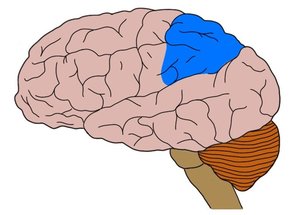
 posterior parietal cortex in blue.
Source:  Neuroscientifically Challenged
Activity in the parietal cortex (area in blue, left), an area of the brain involved in awareness of self and others as well as attention processing, seems to be a common element among individuals who have experienced a variety of spiritual experiences, according to a study published in the journal Cerebral Cortex.

"Spiritual experiences are robust states that may have profound impacts on people's lives," said Marc Potenza, professor of psychiatry, of the Yale Child Study Center, and of neuroscience. "Understanding the neural bases of spiritual experiences may help us better understand their roles in resilience and recovery from mental health and addictive disorders."

Spiritual experiences can be religious in nature or not, such as feeling of oneness in nature or the absence of self during sporting events.

Researchers at Yale and the Spirituality Mind Body Institute at Columbia University interviewed 27 young adults to gather information about past stressful and relaxing experiences as well as their spiritual experiences. The subjects then underwent fMRI scans while listening for the first time to recordings based on their personalized experiences. While individual spiritual experiences differed, researchers noted similar patterns of activity in the parietal cortex as the subjects imagined experiencing the events in the recordings.

Potenza stressed other brain areas are probably also involved in formation of spiritual experiences. The method can help future researchers study spiritual experience and its impact on mental health, he said.

Story Source:  Materials provided by Yale University.   Lisa Miller, Iris M Balodis, Clayton H McClintock, Jiansong Xu, Cheryl M Lacadie, Rajita Sinha, Marc N Potenza. Neural Correlates of Personalized Spiritual Experiences. Cerebral Cortex, 2018.
Share:

War Leaves 17 Women for Every Man

Image result for one man many women
Source: Psychology Today

This report of a "Y-chromosone Bottleneck" that occurred seven thousand years ago raises some interesting questions.

In it, the author theorizes that war may have the effect of simplifying the male genome to the point that it's like having but one man for every 17 women.  Sounds like a male fantasy, but is it good for humanity and the potential for our survival on our planet?

Research shows that healthy populations depend on genetic diversity such as in this report from 2015, Genetic Diversity Linked to Today's Taller, Smarter People.  So if war has the effect of creating a male genome bottleneck, does the bottleneck limit the diversity needed to maintain a healthy population?  Could genetic bottlenecks be the reason that some militarily aggressive cultures such as the ancient Romans and Greeks are very peaceful today?  i.e., have they had the aggression breed out of them by years of wars in which the most warlike men died in battle or the epidemics that spread through armies?

The flip side is the question of whether a successful culture can maintain it's edge so to speak by encouraging immigration and intermixing?

And what happens to groups that reject others genetically different than themselves?  Are they creating a genetic bottleneck that will impact their descendants for generations to come?

A side thought:  could genetic bottlenecks of the past created pressure that led to cultures allowing polygamy as so many men had died in battle that multiple wives became a way of maintaining a population large enough to continue the war?

Here's the report -
*  *  *  *  *

Wars and clan structure may explain
a strange biological event 7,000 years ago

". . .it's almost as if everyone in a clan has the same father."

Starting about 7,000 years ago, something weird seems to have happened to men: Over the next two millennia, recent studies suggest, their genetic diversity -specifically, the diversity of their Y chromosomes -- collapsed. So extreme was that collapse that it was as if there was only one man left to mate for every 17 women.

Anthropologists and biologists were perplexed, but Stanford researchers now believe they've found a simple -- if revealing -- explanation. The collapse, they argue, was the result of generations of war between patrilineal clans, whose membership is determined by male ancestors.

The outlines of that idea came to Tian Chen Zeng, a Stanford undergraduate in sociology, after spending hours reading blog posts that speculated -- unconvincingly, Zeng thought -- on the origins of the "Neolithic Y-chromosome bottleneck," as the event is known. He soon shared his ideas with his high school classmate Alan Aw, also a Stanford undergraduate in mathematical and computational science.

"He was really waxing lyrical about it," Aw said, so the pair took their idea to Marcus Feldman, a professor of biology in Stanford's School of Humanities and Sciences. Zeng, Aw and Feldman published their results May 25 in Nature Communications.

A cultural culprit
It's not unprecedented for human genetic diversity to take a nosedive once in a while, but the Y-chromosome bottleneck, which was inferred from genetic patterns in modern humans, was an odd one. 
  1. First, it was observed only in men -- more precisely, it was detected only through genes on the Y chromosome, which fathers pass to their sons. 
  2. Second, the bottleneck is much more recent than other biologically similar events, hinting that its origins might have something to do with changing social structures.

Certainly, the researchers point out, social structures were changing. After the onset of farming and herding around 12,000 years ago, societies grew increasingly organized around extended kinship groups, many of them patrilineal clans -- a cultural fact with potentially significant biological consequences. The key is how clan members are related to each other. While women may have married into a clan, men in such clans are all related through male ancestors and therefore tend to have the same Y chromosomes. From the point of view of those chromosomes at least, it's almost as if everyone in a clan has the same father.

That only applies within one clan, however, and there could still be considerable variation between clans. To explain why even between-clan variation might have declined during the bottleneck, the researchers hypothesized that wars, if they repeatedly wiped out entire clans over time, would also wipe out a good many male lineages and their unique Y chromosomes in the process.

Computing clans
To test their ideas, the researchers turned to mathematical models and computer simulations in which men fought -- and died -- for the resources their clans needed to survive. As the team expected, wars between patrilineal clans drastically reduced Y chromosome diversity over time, while conflict between non-patrilineal clans -- groups where both men and women could move between clans -- did not.

Zeng, Aw and Feldman's model also accounted for the observation that among the male lineages that survived the Y-chromosome bottleneck, a few lineages underwent dramatic expansions, consistent with the patrilineal clan model, but not others.

Now the researchers are looking at applying the framework in other areas -- anywhere "historical and geographical patterns of cultural interactions could explain the patterns you see in genetics," said Feldman, who is also the Burnet C. and Mildred Finley Wohlford Professor.

Feldman said the work was a unusual example of undergraduates driving research that was broad both in terms of the academic disciplines spanned -- in this case, sociology, mathematics and biology -- and in terms of its potential implications for understanding the role of culture in shaping human evolution. And, he said, "Working with these talented guys is a lot of fun."

Story Source:  Materials provided by Stanford University.   Tian Chen Zeng, Alan J. Aw, Marcus W. Feldman. Cultural hitchhiking and competition between patrilineal kin groups explain the post-Neolithic Y-chromosome bottleneck. Nature Communications, 2018.

Share:

Men take shortcuts; women follow well-known routes. As they fight.

Image result for ask for directions
Source:  Telegraph

It's estimated that the average man will drive an extra 900 miles
during his lifetime because he is lost.  Actually, it's because his
loving life partner is ripping him a new one and he's too busy 
defending himself to watch where he's going.  From The real
reason why men get lost and never ask for directions 

We really don't need research to know that -
  1. men prefer to take spontaneous shortcuts, while 
  2. women tend to use routes they know. Or that
  3. to the undying annoyance of women, research shows clearly that men navigate more efficiently than women.  (Yes, research shows this to be true.)
  4. However, this efficiency is tempered by the fact that men frequently get lost on a short cut
  5. which men consider an adventure while
  6. getting lost when you could have stopped to ask directions really pisses her off.  We also instinctively know that  
  7. men and women tend to fight bitterly about how to get from point a to point b. ( I once traveled across country with my parents.  I'm still in therapy some sixty years on.)
  8. Finally, male female navigational differences are the basis of much enjoyable comedy.
I would love to see a reality television show, Travel Court, in which a cameraman and presenter sit in the back seat while a normally stable, loving couple make their way across country for a well-deserved vacation.  They could cut to commentators such as psychiatrists, traffic court judges and emergency medical technicians analyse what they hear.  Bookmakers could establish odds on when physical violence will break out or if they'll actually make it to their destination.  Best of all, viewers could place bets in those states that allow sports betting.

It would be a big hit.

Here's the research -
*  *  *  *  *


Men take shortcuts, while women follow well-known routes


When navigating in a known environment, men prefer to take shortcuts to reach their destination more quickly, while women tend to use routes they know. This is according to Alexander Boone of UC Santa Barbara in the US who is lead author of a study that investigated the different ways in which men and women navigate. The research is published in Springer's journal Memory & Cognition.

Boone and his colleagues set out to measure the navigation styles and strategies used by men and women to reach a specific location in an area that they know. The team conducted two experiments involving students who performed tasks on a computer. In the first experiment, data were analysed from 68 participants who familiarized themselves with the layout of a maze including specific landmarks before having to find their way through it from designated spots. They also completed questionnaires which provided self-reported information about their sense of direction, the strategies they believe they use to find their way, and whether they often play video games.

The second experiment drew on data from 72 participants who used the same computer software and hardware as in the first experiment. However, this test involved using different versions of the maze: one with distal landmarks such as trees in the background, and one without distal markings. Boone and his team wanted to find out how men and women used these markings when navigating.

"As predicted from previous research, these experiments showed that men were more likely to take shortcuts and on average reached their goal location faster than women. In contrast, female participants were more likely to follow learned routes and wander," explains Boone. "In both experiments, men were significantly more efficient than women, even after controlling for the effects of strategy."

The study also confirmed the large difference in efficiency with which men and women navigate which was measured by looking at the time it took participants to reach the goal locations, and whether they reached it by following a direct route or not. The participating men were better at this task and therefore reached the intended destination more quickly. However, it is important to point out that these are differences in average performance between men and women, and some women were just as efficient as the best male performers.

"Overall, our research indicates that the sex difference in navigation efficiency is large, and is partly related to navigation strategy," says Boone.

According to Boone and his colleagues, when a person wanders it suggests that he or she does not have adequate knowledge about the specific landmarks in a certain area. He says that the finding that women tend to wander more might reflect a possible inability on their part to learn the layout of an area, at least with the amount of familiarization they receive in this experiment.

"It is also possible that the sex difference in efficiency is due in part to facility with the interface or navigation in virtual environments, as men tend to spend more time playing video games," speculates Boone.

Therefore the researchers believe that it will be important in future research to examine whether the same results are found when people navigate in real environments, rather than virtual environments.

Story Source:  Materials provided by Springer.  Alexander P. Boone, Xinyi Gong, Mary Hegarty. Sex differences in navigation strategy and efficiency. Memory & Cognition, 2018.
Share:

We're All Racist.

Image result for suppressed racism
Yes, actually I am.  We all are.

*  *  *  *  *

How humans repress prejudices
Even people who would describe themselves as liberal
and open-minded might not be free of unconscious racism

A philosopher has used psychoanalysis to investigate why people are often not aware of their prejudices.  Bochum-based philosopher Dr Beate Krickel has used psychoanalysis to investigate why people are often not aware of their prejudices. In her accounts, she has been elaborating how prejudices can become unconscious. 

Tolerant and yet full of bias
A hypothetical example: a white professor describes himself as having a liberal, tolerant worldview. He confirms that it is nonsense and scientifically insupportable to assume that people with different ethnic background have different levels of intelligence. However, the convictions he professes are ostensibly contradicted by his behaviour: he acts, for example, surprised, when a person of colour asks an intelligent question in his seminar. Moreover, his intuitive impression is that his white students look smarter.

Researchers refer to cases when the professed convictions deviate from intuitive behaviour as implicit bias. This kind of bias can be identified using certain psychological tests.

Unconscious or not?
"There's a fierce debate going on in the fields of social psychology and philosophy on whether the prejudices measured with such tests are unconscious or not," says the researcher. The fact that people voice liberal and tolerant convictions in spite of their implicit bias points to "unconscious." However, empirical studies in the past had shown that test participants have the ability to notice their implicit bias under specific conditions. "Interestingly enough, the participants are generally surprised or even shocked once they realise their own implicit bias," says Krickel.

In order to explain these data, the researcher used psychoanalysis. More specifically: she argues that a philosophically informed notion of Freudian repression constitutes a feasible explanation of the apparently contradictory data.

Does not fit the self-image
According to Krickel's analysis, the professor in the hypothetical example represses the emotions that are triggered by his negative associations, because they do not match his self-image. Consequently, he is not aware of his implicit bias. He does, however, have the ability to detect these emotions if the circumstances are right. "The function of philosophy is, first and foremost, to provide an in-depth analysis of what repression actually is," says Krickel. "Based on philosophical theories of consciousness, a feasible model emerges when repression is understood to be an attentional shift that becomes habituated over the years."

Story Source:  Materials provided by Ruhr-University Bochum.   Beate Krickel. Are the states underlying implicit biases unconscious? – A Neo-Freudian answer. Philosophical Psychology, 2018.
Share:

We Unconsciously Pronounce, uhm, Nouns, More Slowly.

Credit: © ALDECAstudio / Fotolia  

Speakers hesitate or make brief pauses filled with
sounds like "uh" or "uhm" mostly before nouns.


Living during the Scientific Revolution is often staggering.  As in, I'm staggered by the incredible breadth of the types of research currently underway.

Spending money and intellectual effort to time how long it takes for people to say different elements of speech in a variety of languages seems pretty damn obscure.  Yet, the result is surprising.  Humans speaking often unrelated languages take longer to say a noun that other types of words.

Why?

It is the way our brains process certain types of words.

Why is this important to writers?

Because people tend to pause or use filler words before using nouns, therefore the speech we write should show this human tendency.  It makes your dialog more believable and real.

And isn't the idea?
*  *  *  *  *


Nouns slow down our speech

Speakers hesitate or make brief pauses filled with sounds like "uh" or "uhm" mostly before nouns. Such slow-down effects are far less frequent before verbs, as UZH researchers working together with an international team have now discovered by looking at examples from different languages.

When we speak, we unconsciously pronounce some words more slowly than others, and sometimes we make brief pauses or throw in meaningless sounds like "uhm." Such slow-down effects provide key evidence on how our brains process language. They point to difficulties when planning the utterance of a specific word.

To find out how such slow-down effects work, a team of researchers led by Frank Seifart from the University of Amsterdam and Prof. Balthasar Bickel from UZH analyzed thousands of recordings of spontaneous speech from linguistically and culturally diverse populations from around the world, including the Amazon rainforest, Siberia, the Himalayas, and the Kalahari desert, but also English and Dutch.

Nouns are more difficult to plan
In these recordings the researchers looked at slow-down effects before nouns (like "friend") and verbs (like "come"). They measured the speed of utterance in sounds per second and noted whether speakers made short pauses.

"We discovered that in this diverse sample of languages, there is a robust tendency for slow-down effects before nouns as compared to verbs," explain Bickel and Seifart. "The reason is that nouns are more difficult to plan because they're usually only used when they represent new information."

Otherwise they are replaced with pronouns (e.g., "she") or omitted, as in the following example: "My friend came back. She (my friend) took a seat" or "My friend came back and took a seat." No such replacement principles apply to verbs -- they are generally used regardless of whether they represent new or old information.

Widen the net of languages
This discovery has important implications for our understanding of how the human brain processes language. Future neuroscience research needs to look more systematically at the information value of words used in conversation, and how the brain reacts to differences in these values. Also, future research needs to broaden its data. "We found that English, on which most research is based, displayed the most exceptional behavior in our study," says Bickel. It is thus important to widen the net of languages considered in processing research, including rare, often endangered languages from around the world, to inform our understanding of human language.

The findings also shed new light on long-standing puzzles in linguistics. For example, the findings suggest universal long-term effects on how grammar evolves over time: The slow-down effects before nouns make it more difficult for nouns to develop complex forms through contraction with words that precede them. In German, for example, prefixes are far more common in verbs (ent-kommen, ver-kommen, be-kommen, vor-kommen, etc.) than in nouns.

At a more general level, the study contributes to a deeper understanding of how languages work in their natural environment. Such an understanding becomes increasingly important given the challenges that linguistic communication faces in the digital age, where we communicate more and more with artificial systems -- systems that might not slow down before nouns as humans naturally do.

Story Source:  Materials provided by University of Zurich.  Frank Seifart, Jan Strunk, Swintha Danielsen, Iren Hartmann, Brigitte Pakendorf, Søren Wichmann, Alena Witzlack-Makarevich, Nivja H. de Jong, Balthasar Bickel. Nouns slow down speech across structurally and culturally diverse languages. Proceedings of the National Academy of Sciences, 2018.
Share: