Showing posts with label rights. Show all posts

Forcing Friendships Doesn't Equal Autistic Youth Gaining Social Skills

My son's first friendships were with family.
[Image of a hug between Mu and his adult big sister. His back is to the camera.
His sister is smiling. Posted with the permission of the subjects.
Image by their father, Nuri Cevik.]
Kerima Çevik
theautismwars.blogspot.com

"How do I handle my child seeing the children of every new family who moves into the neighborhood surrounding us included in outdoor play knowing he is being excluded from the group?"

I saw another parent posting this question as one of the most frequent questions autism parents ask as their kids become preteens and teenagers, and I cringed a bit. It is a common concern for all families with autistic youth trying to navigate a world where they are often othered and mistreated. My son and I also see them when we hang out on our deck or the backyard in the summer, or on snow days. Kids his age, teenagers, will for the most part either ignore him, ridicule him, or ask to do his respite care to fulfill their community service requirement at school. They never ask him what he wants.

That last bit is particularly anger-inducing. Asking for my son as if you are doing me the favor of walking the family dog is dehumanizing to my son in a dismissive way that reeks of ableism on steroids. These are not the kinds of interactions that will help him build the self-confidence he will need to navigate this world after his father and I are gone. He needs to understand that random people may be ableist and some people are dangerous. He needs to know that some will offer friendship as a ruse to some other end. He must be given the chance to interact enough to grasp the differences between true friendship and all other types of approaches.

My son is not just Autistic. He is the son of a Black woman. Survival social skill building is a requirement of being Black in America. Like code-switching to gain access to better education and employment opportunities, knowing who hates you and what that looks like can keep you alive. In approaching/considering my son’s interactions with others, my racial and ethnic experiences inform my stance on his human rights.

Parts of my childhood were spent in areas where my siblings and I were the only African American children in predominantly white neighborhoods and schools. We were in North Carolina in 1972, where "This is Klan Country" billboards appeared on highways in several parts of the state. We never lived or went to school with the expectation of friendship. We were taught to survive the environments, which were for the most part hostile to us.

My mother was an educator. Her parenting flaws were legion but she had a tendency to rise like a phoenix in times of adversity. When I came home at age twelve with a bruise on my cheek asking what an n-word was, she pulled out an unabridged dictionary and had me look it up. Then she told me in terms that I could understand what this slur was meant to do and why it was untrue. We discussed how I would handle my bullies. She warned that even those in authority might hold biases and turn away while I was being beaten and how to reduce situations ripe for being dragged off and beaten up at school in the future.

My mother said something to me back then that was life-changing. She said people were not required to like me or befriend me. They were required to respect my right to exist, to move in the same space, and to be treated equally under the law.

That is what I want my son to learn. I want him to know, as an Autistic person, that he can choose to befriend someone or not. An autistic young person has the right to have an active and willing agency in the process of deciding who to befriend, what boundaries should be set on such friendships and who they are just not comfortable with. Before any of that can happen, they must understand not to comply with every demand made to them from everyone. They need to understand they have a right to say no to people. And they need to know what kinds of behaviors are abusive and wrong.

But I don't see this happening with parents. The focus is on finding friends, even finding dates when children become teens and adults, without assessment or understanding of their children’s needs, wants, or ability to protect themselves from harm. This goes hand in hand with the belief that friendship by any means necessary with "normal" teens will "rub off." As long as parents force friendships their autistic kids will someday go to sleep at night and wake up magically typical in the morning. Any sign of intolerance from their autistic offspring for whatever the parent views as ideal social interactions with peers is then a behavioral challenge needing to be imposed not only on the disabled child but on peers in the neighborhood. This escalates to pleas to communities to create normalizing events by inducing pity for the autistic child or young adult to elicit a response from the schools, friends, or neighbors.

I hope I never embarrass my son by blasting a social media demand that someone come and befriend him without his consent. He played with other children on playgrounds until he didn't wish to go to them anymore. The noise of a gaggle of young folk filling a sidewalk and refusing to yield to his wheelchair is not particularly pleasant for him. If the non-disabled peers who are his neighbors don't even have the courtesy to yield when needed unless he glares at them, how can I as a parent demand that those same teens befriend him?

Contrary to assertions that these forced experiences are a necessary part of the social skills process, the aggressive demand of parents that other teens interact or befriend their autistic teen can backfire by being off-putting. Negative responses from teens cliques/groups parents wish their autistic teen was part of are NOT teachable moments. My view is that my son is a human being, not a social science project. He doesn't exist to teach his non-disabled peers tolerance.

Two cautionary tales of autistic teens irrevocably harmed by the mistaken parental idea that somehow they had neighborhood friends are the cases of the autistic teen boy in Ohio who was assaulted by five teen males with bodily fluids during a faked ice bucket challenge, and the case of an autistic teen boy who was systematically tortured during snow days and holidays by two teen girls. In both cases, parents spoke of insisting their teens leave with their abusers, even when they showed reluctance to do so.

The parents spoke of being relieved their offspring had made friends with typical neighborhood peers. They had no idea their children were being victimized by their "friends." The need for the parents to want their children to have friends in order to make parents feel better overrode possible red flags about these relationships they might have spotted immediately otherwise.

In contrast, every person who has genuinely befriended my son has come directly to him, not me, and extended their hand or signed to him or asked him if he would like to sit with them. They made it clear to my son that they wanted his friendship and their intent was transparent. And yes, they knew he was a nonverbal autistic. They only asked how he communicated, respected boundaries, and made an effort to find activities that allowed him to see us and understand he could return to us anytime he wished.

My point is simple. We parents shouldn't push friendships on our autistic children because we think they need to have them to reach a goal of being indistinguishable from their typical peers. We shouldn’t presume their incompetence at acquiring friends or berate them for not having any or enough friends. We should not create or force participation in events requiring typical partners and then send social media lamentation that our kid is autistic and has no friends when things don't go well. What parents do by this behavior is to broadcast across a global platform that they have a vulnerable disabled person who is friendless. They broadcast that they are willing to force their autistic loved one to comply with anyone who presents themselves as a potential friend to them. This destroys our young people’s self-worth, reinforces the belief that they must comply with everyone’s demands, and leaves them with a sense of helplessness and lack of agency in their own lives.

Look at what your autistic offspring like, what they want, and how they navigate the world first. Consider what would work for them. Then sit with them and however they communicate with you, explain consent and boundaries. Only when parents are certain their autistic teens want friendship facilitation and understand boundaries and consent should friendship facilitation happen with the active agency of the autistic teen. Otherwise, this is about us, not them.

P.S. Friendship facilitation does not mean broadcasting your teen's lack of friends online or trying to gaslight other teens into taking them to events like homecoming dances, proms, or birthday parties. It means looking for meetups and events that will be accessible to your autistic teen, asking them if they want to participate, and allowing them to leave if and when they wish.

This could save our children from irreparable trauma.

Peace.

----

A version of this article was previously published at The Autism Wars.
Share:

Autism Is Not "Behavioral"

Cal Montgomery

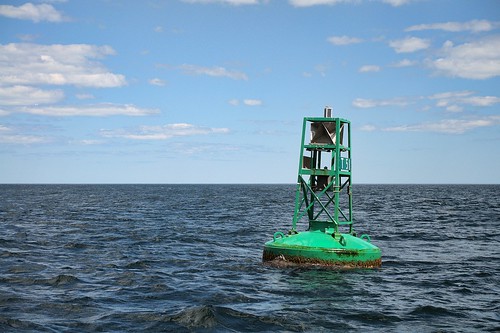
buoy
Photo © Teresa Alexander-Arab | Flickr / Creative Commons
[Image: A green buoy on the surface of a body of water on a sunny day.]
Autism is not behavioral. Atypical behavior is not autism. It is a consequence of autism. It is surface markers by which what is underneath may be suspected, diagnosed, and investigated. Altering behavior doesn't alter autism.

Everything we recognize has surface markers. Fear, for instance, may look like a cold sweat, breathing hard, and dilated pupils, but that is not what fear is.

ABA, the most popular monopoly for interacting with autistics, denies the "underneath." It says that the surface markers are all that matter. It is profoundly dehumanizing. It is also a worldview that is almost impossible to maintain.

When you call autism a behavioral disorder—and I am not touching the "disorder" part right here but I also do not accept it—you are focusing only on the part of the person that you can see, as filtered through your own neurocultural understanding. You are denying that there is something deeper.

Would that be how you would want people to relate to you?

When you say that autistic behavior has only four functions, you are denying that autistic people are moved, that we yearn and are repulsed, that we struggle to do the right thing against self-interest, that we tremble in terror and that we aspire. That we are human. Imagine any of the great poets rewritten to replace deep emotion and the human condition with attention and tangibles.

Would you accept that for yourself?

"They don't feel it like we do" is a dismissal of autistic humanity.

The fundamental core of allistic*/autistic relationships, at least where I am, is a refusal to take autistic humanity seriously, to accept that we are people with real perspectives and real understandings—no matter what our disabilities—that deserve to be taken seriously and treated with respect. These perspectives may not be readily accessible to others, but yet they exist. Instead, facile and frequently self-contradictory assumptions are drawn based on an assumption that the core of humanity is limited or absent, and autistic perspectives are regarded as innately deficient, if they exist at all.

The belief that rich personhood is incompatible with substantial disability, especially intellectual disability, drives this divide, so that personhood can only be acknowledged in those considered fundamentally nondisabled; and acknowledged disability is treated as inherently dehumanizing. It is not. Profound disability and profound personhood coexist everywhere.

Onto the dehumanized figure we project all kinds of horrors, and we become something to be controlled rather than someone to empower. And we return to ABA, a technology of control, of altering the surface behaviors while ignoring what lies beneath.

A child does not become more human because they become more familiar to those who deny their humanity. Aping the majority culture does not take away minority status. It merely makes them more palatable to those with power over their lives.

Is palatability the goal you would choose for yourself?

This is what you are doing when you say autism is behavioral. You are participating in a movement to deny autistic personhood.

----

*"Allistic" means "not autistic."
Share:

On ABA: They hate you. Yes, you.

Amanda Forest Vivian
adeepercountry.blogspot.com

Content note: Includes discussion of discrimination and abuse by teachers and ABA practitioners, and a photo of a child in ABA therapy receiving an electric shock.

----

I always think about Danny, who was not really named Danny. It's too bad I can't use his real name because it's one of my favorite names. I'm sure he's forgotten me, but I can remember his name, his face, his favorite subway train, and the words he made up.

He was a kid I met this summer at the school where I interned. I have written about him several times, sometimes at length. And although he was my favorite kid at the school, that isn't why Danny is always surfacing in my mind, tiny in his big t-shirts, flinging himself around and reciting things.

It's through Danny that I found out for sure, this stuff is about me.

Because the first thing people use on us is always, "It's not about you." When I was a kid, when I first started reading about autism rights, it was so instinctive: of course it's wrong to say "cure autism now." Of course it's wrong to say autism is a tragedy, a disease, it's wrong to give kids electric shocks, it's wrong to say you thought about killing your kid in a video about eliminating autistic people from the gene pool. Like Sinclair says it's wrong to mourn for a living person. All this stuff was plain and clear and bright, and I was autistic, and I was being attacked.

Right?

Well, not to anyone else.

Because, of course, if I told anyone I was autistic, they said I was lying, or I had a different kind of autism that made me smart and talented, so I wasn't like Those Kids, the kids who needed to be cured. And that I should think about their parents, about the money and time to care for a person like that, about the dreams that are shattered when your kid is really autistic—not smart autistic, the real kind.

So in my late teens when I put myself through my paces, when I figured out my deficiencies and set myself to systematically eradicating them, one of the deficiencies I eradicated was my use of the word autistic. Because you shouldn't use words people don't understand. And you shouldn't use words that will make someone feel bad, someone who has a kid who's Really Bad, Really Disabled. Because you're not that.

And I met some autistic kids and they were not much like me, and I didn't know to apply what I knew about myself to them, because I couldn't see what they were feeling inside. But I liked them. Then I met some people with intellectual disabilities and I liked them too; after a brief nervousness because some of them looked so different from me, and made noises I didn't understand, it was easy to like them. They were people who liked things, some of them the same things I liked. I could see that they weren't on the surface very similar to me, but I liked being around them almost more because of that, because it made me feel happy and chastened to misjudge them again and again. To be proven wrong when I thought I could quantify them just because I knew more words.

So by this point, I was pretty much sold, even if I wasn't Really Autistic, on the idea that people with developmental disabilities matter. Because I was around them all the time and it was obvious they mattered. But still, I felt my position was that of an outsider, an ally. I had opinions, but I didn't necessarily feel that I had much right to talk about them; I didn't feel I had as much right as the parents or teachers of people with developmental disabilities.

And then I interned at this school.

And I started out thinking: wow, ABA is so cool. I've heard negative things about it from other Not Really Autistic people, but who am I to talk about what these Really Autistic kids need? They can't even talk. They might bite themselves or something. What the hell do I know about that?

And then I met Danny and the other kids in his class. High-functioning kids. Verbal kids.

Tony, who had been nonverbal a few years before, was incredibly hardworking and sweet. When he went into the school director's office and turned out the lights as a joke, I laughed, but she said, "Tony. Look at my face. How do you think that made me feel?" She stood there looking grim until he apologized.

James was stressed out and upset; one of his teachers leaned towards him, staring fiercely into his eyes, talking with cold, strained-sounding words, the kind of voice I called "static" when I was a kid. James looked scaredly back at her, wriggling his hands around in his lap. "James," she said. "I know you're upset. But what you're doing with your hands looks silly." This boy, all the tension in him being channeled into something harmless, something she had to look under the table to see. His tension was silly. His discomfort was an inconvenience. He was eight or nine years old.

And Danny with his words. "Danny's an interesting kid," the school director told me. "He likes to be in charge." Danny and I were walking, holding hands, and when I responded with concern when he told me he was tired, another teacher told me, "He's playing you." It's true that Danny was a bossy little boy; when we played restaurant, he replied, "No, we're out of that" again and again until I ordered the food he wanted to pretend to make.

And his love of subway trains spilled out everywhere. He was supposed to write a story about a sad princess, and he did, but half the story was about the princess's friends taking her on the subway to cheer her up. He was supposed to write a crossword puzzle and the clues were things like, "Transfer is available to _____ North." The school was full of subway maps, since many field trips involved subways, and Danny would sometimes just lean over a desk, pressing his face into the shapes and colors, whispering his favorite schedules to himself.

Danny just liked words. When he was using his special words, the weird words he scrounged for or made up himself, he would find himself jerkily hopping across the room, speaking in a squeaky voice, his small face tense with excitement. "Presentation" was a weird word for movie, "document" was a way to talk about the letter he had typed on the computer for his parents. "I went to the barber," he said when I commented on his newly short hair, and then, with a rush of joy, "!but I like to call it the hair shop!"

I like words too. It was hard to watch Danny's teachers nudge him, sit down with him, say, "Danny, the word 'presentation' is a little weird; you need to say 'movie.'" It was hard to watch the way they looked at him, pointedly, until he stilled his hopping and lowered his voice to a more standard pitch. When Danny found out my middle name is Wood, he completely tripped out on it, hammering pretend nails into my stomach and giggling, "I'm gonna build something out of you!" "Danny," a teacher said, "don't be weird. You and Amanda were talking about names."

It was the word 'weird.' Nothing foreign my whole life. Tracing words and shapes in the air, crossing myself, my mom asking me a lot of questions, "Have you been feeling the urge to do that lately? Why do you do that?" with so much static voice it was clear I'd better keep my hands as still as possible when she was around. Running jerkily up the stairs at school, I couldn't help myself until I was fifteen or sixteen, despite the older boys laughing to each other—"is she trying to race you?" Movement just consumed me that way. And being a thirteen-year-old who said "suppose" and "quite" when no other kids did. Just loving words too much, finding it hard to stay away from the strange ones. And getting too excited. Being weird is not that alien for me.

So my divisions broke down a little, because I was watching a kid just like me, and I was learning, in very specific, qualitative terms, what other people thought of people like me. I was so nervous about keeping myself still and using the right words because I thought they wouldn't let me intern there if they knew I was actually like Danny, that I didn't think he was weird at all. All of Danny's teachers had been taught to grimace and say how annoying it was when he talked about trains. They watched The Office, but they never ever laughed when Danny told flat, self-referential jokes on purpose, twisting the ones he had been trained to say. I thought Danny was funny. Every time I talked to him I felt nervous about doing something that his teachers would think was wrong, and I also felt bad about perpetuating the attitude he was being taught, that none of the things he loved mattered.

So from specific to general, from Danny to James and Tony, to Max and John. John's teacher made him walk, in stiff, clean steps, and if he started doing anything that looked like skipping or jumping, she grabbed his arm, said "No," forced him again and again. Max liked to move his arm in circles while he was watching TV, so he was hauled off into an office, pushed down into a chair, had mouthwash forced into his mouth while he cried. They told me they were narrowing it down, he was moving less and less. Max and John didn't talk. James and Tony didn't talk as well as I do. But I move too much, and I move wrong, especially when I was a kid, and in that school I saw what they do to kids who move wrong.

I realized that, actually, a lot of it was about moving wrong. Or talking wrong, if you could talk. Or just taking too much initiative--wanting to make up songs, like Danny did, or playing a practical joke, like Tony did. That these kids looked and acted different and the school wanted to control them and make them as still and docile as they could possibly be. Watching them treat hopping, rocking, and neologisms like you'd treat a bomb on an airplane--it was like being at summer camp with a kid from the south, sitting in a car uncomfortably while he said he'd kill a gay person if they ever came near him. Wanting to say, no, it's not anything important; I'm like that, see? But I didn't talk in the car, and I didn't talk in the school.

This is too long. It's hard to even explain it. I just have to say, for the millionth time, that this whole functioning level thing—yes, it matters in certain ways. I can buy and cook food for myself, while high-support autistic people probably can't. I can hide the way I move and talk better than other people can. But this doesn't really have much to do with politics, because when people claim that "cure autism now" and the disease model and the Judge Rotenberg Center are not about me, well I beg to differ. The only reason they're not about me is that I'm old and verbal enough to not be vulnerable to that kind of abuse. They would be all too happy to practice it on me if they could. Autistic people do not get abused because they are low-functioning, they get abused because they do weird things.

So, the old-school ABA trials? With Lovaas?

This is a kid getting an electric shock:

[image: Black-and-white photo of an autistic child
receiving an electric shock as part of ABA therapy.]

This is why:

[image: black-and-white photo of a child who is
stimming by holding their hand in front
of their face, and also toe-walking.]

If you were in the wrong place at the wrong time, the wrong age, the wrong functioning level, this could be your life.

This what people like them think about people like us.


This post was originally published at adeepercountry.blogspot.com.

Author's disclaimer: This is a nine-year-old post and when I wrote it, I didn’t have close Autistic friends or much familiarity with self-advocacy or disability rights, except from reading. I don’t disagree with anything I said, except the part about being able to cook, but I would say a few things differently.

1) I obviously can’t speak about all ABA therapists/techs or schools. I will share a story though! When I was first blogging and vlogging about my internship experience, I exchanged messages with an ABA therapist who agreed that the school I interned at was doing certain things wrong, and recommended a better ABA school for me to intern at.

It was the same school.

2) I once read a thread of Autistic people discussing this post on a forum, where people criticized the post for speaking about the staff at the school as a monolith. But I want to clarify that—at least at this school, but I gather at ABA schools in general—they were a monolith by nature. All the teachers and staff had to follow the behavior plan which targeted the child’s “behaviors,” like stimming, neologisms, skipping, etc. and outlined how the child was supposed to be punished for doing those things. Teachers or staff weren't allowed to act in a way that deviated from this. So this is one case where saying “the staff did such-and-such” is not a generalization but just correct.
Share:

What the Neurodiversity Movement Does—And Doesn't—Offer

Emily Paige Ballou 
chavisory.wordpress.com

Autistic folk of diverse abilities somehow enjoying each other's company
[image: Three white autistic people. Two adults: Sara Luterman and John Marble,
and one teen, Leo Rosa, hanging out in front of a Hayes Valley coffee shop.]
It has long been a commonplace accusation against the neurodiversity movement that those of us among the autistic community who are neurodiversity supporters comprise the “very high-functioning,” and that while it’s fine for us to say that what we really need is acceptance and accommodation—we simply don’t understand the challenges of the truly disabled.

This accusation is in stark contradiction to the fact that, from its inception, not only did the neurodiversity movement’s values include the most significantly disabled, but that those individuals themselves were among our earliest pioneers. And that going back even further, the self-advocacy movement didn’t originate with the autistic community at all, but rather largely was led by institutionalized people with intellectual and other developmental disabilities.
We’ve also been having this discussion about neurodiversity, along these same basic parameters, for a long time now—with both sides firing back many of the same basic points:
  • Neurodiversity denialists: Neurodiversity advocates are fundamentally different from, and cannot speak for, the "severely affected," e.g., our autistic children who can’t communicate, self-injure, are aggressive, have epilepsy, have GI troubles, etc.
  • Neurodiversity proponents: You cannot actually know the particulars of another person’s disability by how well they can communicate on the internet. Many of us actually experience the same challenges neurodiversity antagonists cite as only afflicting the "truly disabled." We’re not trying to speak for everybody, we’re standing up for everyone’s right to speak for themselves.
We’re going on circles, and recently, I think I might have gotten a clue as to why.

Lately, on Twitter and elsewhere, I’ve witnessed this basic argument take on a new phrasing:  That we have “nothing to offer” autistic people with more significant support needs.

I was confused at first, thinking of many of the initiatives and developments undertaken by members of the neurodiversity and broader disability rights movements which absolutely apply to all of us, from the successful fight for the $10.10 minimum wage on federal contracts to include those employing disabled people in sheltered workshops, to advances in recognition of the rights of all disabled people to live in our communities with support and not in institutions, increased recognition of the right of all disabled students to meaningful inclusion, literacy instruction, and access to AAC.

I also think about how the Autistic Self Advocacy Network (ASAN)—which is entirely staffed by autistic people—has released toolkits written in plain, accessible language on subjects like political participation, voting, advocacy, safety in the community, abuse, and self-advocacy in sexual and romantic relationships. Their work this past year has been instrumental to preserving the Affordable Care Act, and the provisions of Medicaid that allow many autistic and disabled people to receive services and live at home, rather than being forced into institutions, and also in the fight against discrimination in organ transplant decisions on the basis of disability.

I think about how, when parents and families persistently report that they need better respite services, one of the major aspects of the neurodiversity movement’s long-running protest of Autism Speaks is that for all the revenue it takes in from community-based fundraising, it returns extremely little in the form of tangible support to families and autistic people ourselves.

I think about how Neurodiversity advocates plead with autism researchers for more and better research into co-occurring conditions and assisted communication.

These are all issues that absolutely and intimately affect the lives of autistic people who are significantly disabled, as well as those who are multiply disabled. Presuming that neurodiversity critics aren’t simply ignorant of these efforts (though that’s certainly possible), why do so many remain insistent that neurodiversity doesn’t have anything to offer their disabled loved ones?

I do my level best not to make presumptions about other people’s beliefs or mental states, but as I try to unravel what could possibly be meant by this, what I am beginning to suspect people mean when they say that neurodiversity has nothing to offer the severely disabled, or people like their child, is that we cannot make their loved one non-disabled.

To a large extent, they’re right. We can’t do that.

Or, we certainly can’t do it alone. The social model of disability, basically, says that disabled people are disabled not by our physical or sensory impairments, but by the failure of society to accommodate people with those conditions in the same ways as it does people without them. When businesses don’t have ramps, wheelchair users are disabled by lack of accommodation and not just inevitably by their physical condition. It is a massively important concept that underlies a lot of the recognition of disabled people as equally deserving of public access as non-disabled people.

And to be honest, I’ve always found it a little bit incomplete and unsatisfying.

There are aspects of being autistic, for me, that I doubt it’s possible for society to accommodate perfectly. That, even if society did a substantially better job at accommodating autistic people, being autistic would still markedly affect how I live, and will always leave me expending more effort than the non-autistic people around me just to get by. These experiences aren’t superficial, and they are never going away.

I say this not to undermine the importance of the social model to the thinking of the disability rights movement, but to say that I think I understand at least some of what neurodiversity skeptics are trying to convey, when they counter that accommodation doesn’t just solve everything.

I will always be disabled. I don’t see that not being the case within my lifetime. There are, without a doubt, important roles for government, education, technology, and medicine to play in mitigating disability, but I will always be disabled in ways that even perfect acceptance and accommodation probably cannot erase.

So, neurodiversity critics need to understand that we who support neurodiversity aren’t confused about the fact of your child or loved one being really, truly disabled. We know there are non-speaking autistic people, epileptic autistic people, self-injuring autistic people. We know this because many of us are non-speaking, epileptic, and self-injuring autistic people.

Those of us who can communicate on the Internet believe that what we are saying about our own needs applies to the rights and needs of other disabled people, including the children and loved ones of neurodiversity detractors. So when we talk about the rights, acceptance, and accommodation that autistic people deserve, we are not the ones who think those things are only for people like us. 

Those of you who say that your children or siblings would never be able to advocate in certain ways: Maybe. But, thing is, we don’t believe that those ways are the only kinds of advocacy that matter or count.
“When an autistic teen without a standard means of expressive communication suddenly sits down and refuses to do something he’s done day after day, this is self-advocacy ... When an autistic person who has been told both overtly and otherwise that she has no future and no personhood reacts by attempting in any way possible to attack the place in which she’s been imprisoned and the people who keep her there, this is self-advocacy ... When people generally said to be incapable of communication find ways of making clear what they do and don’t want through means other than words, this is self-advocacy,” -Mel Baggs in “The Meaning of Self-Advocacy,” from the anthology Loud Hands:  Autistic People Speaking
When we say “Everyone can self-advocate,” we don’t mean “All of us can speak in conventional and highly formalized ways in settings that favor a very narrow construction of political advocacy” (although if those settings were more prepared to offer accommodation for significant communication differences, it would certainly help). And we don’t believe that conventional communication should be the prerequisite for your loved one having their communication honored.

Neurodiversity critics say, "our children will never write or speak like you 'high functioning' autistics do." Maybe not. But then again, at least one person who I actually know has, within the space of a few years, gone from being considered incapable of meaningful communication, to authoring her own blog and co-directing a documentary film, after she was provided with the resources necessary for her to do so. So we neurodiversity supporters are not the ones who believe that verbal eloquence is the only form of expression with meaning or value. Your child might never testify in front of Congress, but we aren’t the ones who believe that that makes the rest of their communication unimportant.

You say your children will never go to Harvard or William and Mary. Maybe not, but an elite private college education isn’t the only viable path to a rewarding life (and besides, the first ever non-speaking autistic student just graduated from Oberlin College).

We neurodiversity supporters believe that what someone can do matters. We believe that the way someone can communicate matters.

We also reject the equation that accepting autism and disability means giving up. Research consistently shows that autism acceptance leads to better mental health for parents as well as autistic people themselves. Evidence is mounting that acceptance and accommodation provide a more reliable path to increased capability and independence than fighting autism or disability does. Acceptance isn’t a cure, but it does facilitate recognition and support of abilities that often go unrecognized and under-valued. We are better off when not only our disabilities, but our real abilities, are recognized.

It follows that autism—yes, even involving a significant degree of disability—should not be a reason why we are kept from accessing communication, education, employment, competent medical care, the right to make our own decisions and live on our own terms, friendship, romantic relationships and sexuality, freedom from abuse, or the basic premise of our lives being acceptable.

There is already a history of people trying to eliminate neurodevelopmentally disabled people. It’s not a good history. We can’t make anyone non-disabled—that isn’t what neurodiversity adovcates are offering—but we also don’t believe that being non-disabled is the only right way to be a person.

If you are a neurodiversity skeptic, maybe it looks like, from your end, that we who champion neurodiversity have the luxury of declaring “We’re okay the way we are; we’re valuable to humanity and people like us should exist” to the extent that we don’t seem disabled in the same ways that your loved ones are disabled. Their disabilities are such that we can’t take them away, nor can we make them into people more like us, whatever you imagine our abilities to be.

If I’m even a little bit right, if you recognize yourself at all in this conjecture, then what I want to ask of you is this:

Try to separate autism, or disability, in your mind, from the sense of impossibility of having lives that are rich and complete. From assumptions that people disabled in certain ways only get to have a certain kind of life. Whatever autism looks like for the person you love, disrupt the logic that says that only if they were not disabled in those ways, could they have something of value to contribute, or be entitled to lives of autonomy and acceptance.

You are right; we cannot make your autistic loved one non-disabled. But we can help make a future that has room for people like your child in it, complete with the rights, the access, and the supports they need to live their fullest life. We think that that is doable. We think that that is right.

Yes, autistic lives are different. Yes, they are often hard. No, they will not look like the lives of non-disabled people.

We just don’t think that that makes disabled lives wrong.
Share: