Showing posts with label dehumanization. Show all posts

Dangerous Assumptions

proud parents
Photo © Lucy Downey | Flickr / Creative Commons
[image: Two Canada geese swimming with a fluffy baby gosling.]

Julia Bascom
juststimming.wordpress.com

There is this thing that happens sometimes.

Parent has an autistic child. Autistic child doesn’t speak, or their speech isn’t an accurate window into what they are thinking. Autistic child is presumed to be very significantly intellectually disabled.

Years later, a method of communication is found that works for the child, and it turns out that they are in fact very smart. Very smart! The parents are overjoyed. They begin talking about presuming competence, the least dangerous assumption, that not being able to speak is not the same as not having anything to say.

They are so, so excited.

And they start talking about all the incorrect assumptions they had. If we’d known, they say, we wouldn’t have done X. If we had known they could read, think, hear us.

And it’s a big problem, because the way they talk… they think the problem was that they treated their child like they were intellectually disabled, and they weren’t. But that’s not the problem. The problem is that they thought their child was intellectually disabled, and so they didn’t treat them like a person.

These revelations, about presuming competence, human dignity, and the least dangerous assumption—they don’t apply only to kids who are secret geniuses. They apply to everyone. They are the most important for the kids who really do have intellectual disabilities, who really can’t read or use full sentences and who really do need extensive support. The people who came up with these terms came up with them for a population where there is very little doubt that significant disability is a factor. These terms don’t mean assume they aren’t actually disabled. These terms mean assume they are a person, and remember what you don’t know.

When the neurodiversity movement first got its legs, oh so many years ago, we got a LOT of pushback from people who thought we were denying disability. And we had to be clear that we meant everyone. And I worry, more and more, that certain very academic circles have left that behind, in practice as much as in theory. It makes liars out of the rest of us, and it makes a lot of work very, very difficult.

If I told the parents in question that I am thinking about this, they wouldn’t understand. They’re not saying intellectual disability doesn’t exist, they would say. But the truth is, they’re either saying that, or they’re saying thank god, it wasn’t my kid.

And it’s a slap in the face, every time.

----

Originally published at juststimming.wordpress.com. Sincere thanks to Julia for allowing us to share it here.
Share:

Autism Is Not "Behavioral"

Cal Montgomery

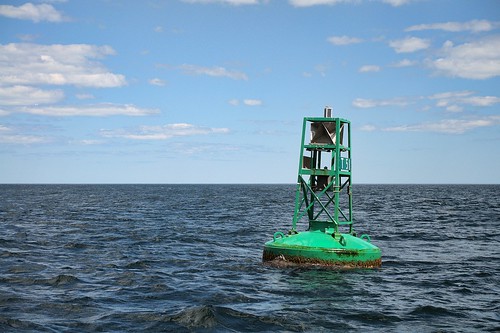
buoy
Photo © Teresa Alexander-Arab | Flickr / Creative Commons
[Image: A green buoy on the surface of a body of water on a sunny day.]
Autism is not behavioral. Atypical behavior is not autism. It is a consequence of autism. It is surface markers by which what is underneath may be suspected, diagnosed, and investigated. Altering behavior doesn't alter autism.

Everything we recognize has surface markers. Fear, for instance, may look like a cold sweat, breathing hard, and dilated pupils, but that is not what fear is.

ABA, the most popular monopoly for interacting with autistics, denies the "underneath." It says that the surface markers are all that matter. It is profoundly dehumanizing. It is also a worldview that is almost impossible to maintain.

When you call autism a behavioral disorder—and I am not touching the "disorder" part right here but I also do not accept it—you are focusing only on the part of the person that you can see, as filtered through your own neurocultural understanding. You are denying that there is something deeper.

Would that be how you would want people to relate to you?

When you say that autistic behavior has only four functions, you are denying that autistic people are moved, that we yearn and are repulsed, that we struggle to do the right thing against self-interest, that we tremble in terror and that we aspire. That we are human. Imagine any of the great poets rewritten to replace deep emotion and the human condition with attention and tangibles.

Would you accept that for yourself?

"They don't feel it like we do" is a dismissal of autistic humanity.

The fundamental core of allistic*/autistic relationships, at least where I am, is a refusal to take autistic humanity seriously, to accept that we are people with real perspectives and real understandings—no matter what our disabilities—that deserve to be taken seriously and treated with respect. These perspectives may not be readily accessible to others, but yet they exist. Instead, facile and frequently self-contradictory assumptions are drawn based on an assumption that the core of humanity is limited or absent, and autistic perspectives are regarded as innately deficient, if they exist at all.

The belief that rich personhood is incompatible with substantial disability, especially intellectual disability, drives this divide, so that personhood can only be acknowledged in those considered fundamentally nondisabled; and acknowledged disability is treated as inherently dehumanizing. It is not. Profound disability and profound personhood coexist everywhere.

Onto the dehumanized figure we project all kinds of horrors, and we become something to be controlled rather than someone to empower. And we return to ABA, a technology of control, of altering the surface behaviors while ignoring what lies beneath.

A child does not become more human because they become more familiar to those who deny their humanity. Aping the majority culture does not take away minority status. It merely makes them more palatable to those with power over their lives.

Is palatability the goal you would choose for yourself?

This is what you are doing when you say autism is behavioral. You are participating in a movement to deny autistic personhood.

----

*"Allistic" means "not autistic."
Share: