Showing posts with label labels. Show all posts

The Problems with Functioning Labels

Talent Show - Summer Academy 2014
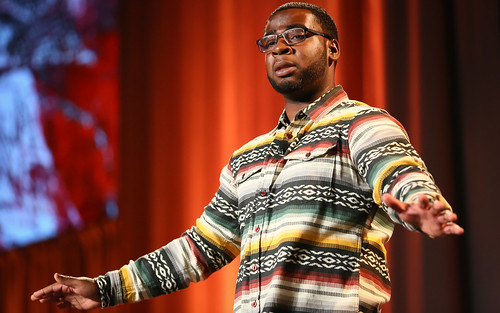
Photo © City Year | Flickr/Creative Commons
[image: Photo of a Black young man with short hair, close-cut beard, and
glasses, holding hands out to sides while on stage during a talent show.]
Finn Gardiner

Many professionals talk about autistic people’s “functioning labels.” Functioning labels are a way to describe how well people learn, take care of themselves, and live in the community. People will often talk about “high-functioning” and “low-functioning” autistic people when they are describing them. Even though people who talk about high-functioning and low-functioning autistic people often mean well, these labels are not accurate for many people. Functioning labels do not always relate to people’s real skills and can be based on hurtful stereotypes about autistic people. They also assume that people’s skills cannot change over time. 

Many people use people’s intelligence to determine whether they are high-functioning or low-functioning, but many autistic people’s daily living skills are not affected by how intelligent they are. Someone can learn quickly and have a hard time with daily living skills, while someone else who learns more slowly can find the same skills easy most of the time. Using these labels can make it hard for people to get services. If you do not have an intellectual disability, agencies may tell you that you are high-functioning and do not need help, even if you’re struggling to stay fed, clothed, and clean. If you do have an intellectual disability, you may be told you are low-functioning even if you don’t need as much help with daily living skills. 

Sometimes people can call the same person “high-functioning” and “low-functioning” at different times in their life. People have said I was “high-functioning” for most of my life, but when I was very young and was non-speaking, they would have said I was “low-functioning” because they thought I had an intellectual disability. Saying that people are “low-functioning” is especially hurtful, because it means that some people will have low expectations of you and will not expect you to learn, grow, and pick up new skills. 

When some doctors thought I had an intellectual disability, one of them said I would never learn anything. I do not have an intellectual disability, but even if I did, I would still be able to learn things. Everyone can learn and pick up new skills over time, whether or not they have an intellectual disability. This is part of why saying “low-functioning” is hurtful. 

Also, people’s functioning can change over time. People can need more or less support with daily living skills for several different reasons. Sometimes they can be having a bad day, or be depressed, or be going through major life changes that cause them stress, or it could be the opposite. Feeling good about yourself may make it easier to do tasks that would usually be hard for you. A “high-functioning” person may be having a bad day and have a hard time with self-care tasks like bathing, cooking, shopping, and dressing. A “low-functioning” person can have a good day, week, or month and do relatively well with the same tasks. 

Instead of talking about functioning labels, we should talk about the specific kinds of support people need. Professionals should treat autistic people and other people with disabilities as individuals that have their own needs instead of just saying that they are high- or low-functioning. Everyone is different and deserves help that will make sure they live the best life they can.
Share:

Labels Are Valuable Tools

Maxfield Sparrow
unstrangemind.com

There's something that kind-hearted and well-meaning people say that can hurt. And it usually goes like this:

"Let's go around the circle and introduce ourselves."

"Hi, my name is Max. I'm a writer, artist, musician, and public speaker. I live in a van with my cat, Fermat, and I am Autistic."

"Oh, Max, I don't think you should call yourself autistic. Labels are for soup cans, not people! You're such a sweet, intelligent man. You don't need to use that label on yourself any more. We all accept you here. You're just like us and seem totally normal to us. Don't label yourself."

[Image description: A bowl of alphabet soup with the word "Autistic" made of alphabet noodles floating in it.]
The person who says "Don't label yourself" is trying to be progressive and enlightened and kind and accepting. It is so hard to tell them that they are hurting me, because their words so obviously come from a place of love. But those words also come from a place of fear and misunderstanding, so it is only by explaining why telling me not to label myself hurts me, that I can help others to perfect that love they are trying to express:

In my opinion, labels are valuable tools.

Labels help us to find other people with whom we resonate. How many dating sites would people bother with if you couldn't use labels to tell prospective dates that you identify as: male, female, (on more enlightened sites, there are more gender options), Jewish, Neopagan, Christian, atheist, agnostic, Muslim, Buddhist, etc.; African-American, White, Asian, Native American, etc.;. smoker, non-smoker, and so on. Those labels are crucial if people are to find dates with the sort of people who "ring their bell," and so they can try to form intimate partnerships with them. Imagine trying to find a date on a site where all the people were just randomly jumbled together.

Labels help us to find groups with which we click. I wouldn't have studied Morse code if I weren't able to label myself as a ham radio operator and find other people who also call themselves hams. I would have missed out on a lot of great friendships if people from the Rainbow Family refused to use labels and didn't call themselves Rainbows. People use labels all the time when they are seeking groups with which to associate.

Labels help us to understand ourselves better. Yes, they are a sort of heuristic, meaning an imperfect, short-hand, and reductionist way to identify things that doesn't necessarily encapsulate the entirety of who and what a person is—but they are so useful. A woman who notices her stomach getting bigger and bigger is comforted by remembering that she is pregnant. Pregnant is a label. When I get frustrated that I have to slowly reason out people's words and actions, and cannot interpret them immediately and on-the-fly, it comforts me to remember that I am Autistic. Autistic is a label.

We've all heard someone say—either joking or seriously—"that's because I'm a man," or "I feel this way because I am transitioning," or "that's because I'm a woman," or "it's because I'm still a kid," or "come on, I'm a grown-up!" or any variety of these. Man, trans, woman, kid, grown-up—all labels. And all useful.

Abandoning labels is well-intentioned because it tries to seek to avoid harming others. But it can cause more harm than good. I view the drive to abandon labels as a close relative to person-first language, which also arose from good intentions, and which de-emphasizes labels out of respect for personhood (e.g., "person with autism"). Both seek to assert one's humanity in the face of something considered dehumanizing and horrible. But that's the problem: We don't find people insisting on person-first language for conditions considered positive or neutral, like being an artist, musician, male or female, etc.—people only get cranky about the "person living with Thingness" construction when being a Thing is assumed to be something terrible.

Likewise, people who say that people shouldn't be labeled ("labels are for soup cans, not people") have no problem with labels like "man," "woman," "artist," "musician," "writer," "Nobel Prize Winning Physicist," and so on. They only pull out their anti-label rhetoric when they are cringing about the particular label a person has been given, or has given to themselves.

Now, when that label is a genuine pejorative someone else is using to restrict or hurt a person, it's great to fight labels. Many people reading this have fought hard to wipe out the R-word, and I love you all for that! But when someone has embraced their label and is proud of it and feels that it conveys important information about their identity—like "Autistic," for example—it is a painful squashing of their identity to refuse to accept their label.

When we don’t allow people to label themselves, we are denying their autonomy. We are saying they don’t have the right to decide who they are and present that self to the world. We are treating them like little children who don’t know any better.

In some ways, it's even worse than person-first language. Person-first language says "I want to separate you and your autism and put you first to remind people that you are a human being because autism is such a terrible thing that they might forget you are human if I don't linguistically separate it from you." Anti-labeling says, "I want to deny the existence of your autism altogether. It is inherently dehumanizing so I want to use language to pretend it out of existence entirely."

Closely related to the “labels are for soup cans” comment are the comments like, “don’t allow autism to define you.” But it doesn’t matter what I do or don’t allow—every cell of my body, from the genetic code in my DNA to the neurons in my brain are autistic. Autism defines me every bit as much as being human defines me. If you don’t think there’s anything wrong with my “allowing” being human to define me, then please don’t try to tell me I shouldn’t allow autism to define me.

If someone is being bullied with labels and definitions that other people are forcing on them, it is great to step in and stop it. But when someone trusts you enough to share a core piece of their identity with you, it is a slap in the face to tell them that labels are for soup cans, not people.

When you say something like that, you are trying to keep the soup and throw the can in the trash. I am Autistic and if you try to throw that in the trash with the soup cans, you are throwing me in the trash and it hurts. Enjoy my soup (I think it's tomato-basil soup. I hope you like it) and learn to accept my label without cringing because I love my label.

Autistic is who and what I am. Yes, it is a heuristic—I am so much more than that word. But if you reject that word, you are rejecting me.
Share: