Showing posts with label stimming. Show all posts

The World Is Such a Loud Place And It Seldom Stops Talking

Mute
Photo © dan_giles | Flickr / Creative Commons
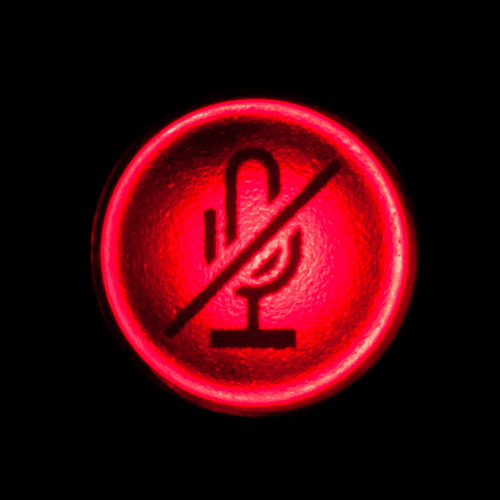
[image: A red lit-up mute button featuring a crossed-out microphone symbol.]
Sara Earhart
seekingsara174.com

Hearing is the sense that gives me the most trouble to the point that I often wish I had a mute button for the world around me. Sometimes I even wonder what it would be like to have a cochlear implant that I could detach when sound was just too overpowering. The world is such a loud place and it seldom stops talking.

Some days are better than others. Sometimes my brain does a better job at filtering sounds toward the back of my mind, but most days the sound comes at me all at once in a jumble of confusing, overwhelming chaos. Each sound jockeys for position at the front of my mind as each insists I pay close attention to its deafening shouts. It’s an exhausting experience to be constantly inundated with such a loud, insistent world without the ability to filter any of it out.

Even now while I write this post in a relatively quiet room, sound is everywhere. The high-pitched chirping of a bird outside the window is joined by the electric whine of the TV (which is off), the shower running upstairs, a family member walking on the floor above me, a goose in the front yard honking incessantly, the walls and windows settling, the wind swooshing through the trees out back, an electric toothbrush pulsing, a door opening and closing, the hum of the ice maker, the neighbor’s car door slamming…All loud. All insistent.

I am very easily startled, overwhelmed, or distracted by sounds. I’m likely to jump at a sudden loud noise, and it can often be very painful. A lot of sounds are physically painful to me: fireworks (which I also feel as a punch in the chest), alarms, sirens, anything shrill, etc. Some are less painful but more overwhelming; those make me feel like I’m drowning: crowds, loud music, revving engines, etc.

These are some of the most extreme sounds for me: fireworks, fire alarms, sirens of any kind, pitch-bending (sliding between notes), dentist drills, wood saws or drills, squealing bike brakes, shrill voices, whistles, people whistling, motorcycles revving, airplanes overhead, loud voices/shouting, loud and unexpected sounds in general, high-pitched noises, tapping or clicking, people talking behind me, crowds, out of key music, hairdryers, vacuum cleaners…

While I doubt that these things are pleasant for most people, they can be absolutely excruciating to me.

It’s important to note that auditory sensory overload isn’t always related to sounds I don’t like. When I’m overstimulated, I can’t handle any sound. Not my favorite song or an otherwise pleasant white noise or even the sound of a loved one’s voice. At that point, any sound is toxic until I recover.

Here are some examples of my intense auditory sensitivities to give you a better idea of my experiences:

LOOPING

Sometimes a noise or sound gets stuck in my head. I call this “looping” and it can be maddening. Think about something like nails on a chalkboard. (Even typing that makes me physically uncomfortable. But that cringing sensation that a lot of people experience is how many sounds feel to me!) Imagine that sound getting trapped in your head and sort of echoing again and again and again–long after the actual sound has passed. This happens to me fairly frequently and it’s extremely painful and distressing.

ELECTRONICS

I did an experiment with a friend once while studying abroad. After months of being annoyed by the high-pitched whine of the old TV in the corner of the dorm kitchen, I finally grumbled, “It’s so LOUD!!” My friend looked at the sumo match on the TV, back to me, and then back to the cheering crowd on the screen. “Loud? Ok, I’ll turn it down.”

I shook my head. “Not the program. That shrill sound that comes from the TV.” He cocked his head and muted the TV–listening intently. To my surprise, he said he couldn’t hear it. I was completely shocked.

You can’t hear that? Seriously? It’s all I can hear…” We decided to do an experiment. I turned my back on the TV. He kept the volume muted and silently turned the TV on and off and I told him whether it was on or not based on the whining sound. I left the kitchen and started to walk down the hallway, calling back to him “ON! OFF!!… ON! OFF! No, STILL ON! Ha, tricky!” as I passed room after room.

I made it all the way down to the end of the hallway where I could still hear the faint sound of the shrill TV. When I got back into the room my friend was shaking his head. “Is that why you always turn it off when no one’s watching it? I thought you just really hated sumo or something.”


FIRE ALARMS

One year while teaching in Japan, my desk was located directly beside the fire alarm. I didn’t realize this because it looked different from the ones I’m used to seeing. (In some ways I’m glad I didn’t know because if I had, I may not have been able to relax.) One day, we had an unexpected fire drill and the alarm blared directly at me. It was actual physical agony. I can still remember the physical pain throughout my body and the extreme nausea: I almost threw up. I was on edge for the rest of the day—jumpy and fidgety until I could go home and sit in a dark, quiet room with both earplugs and headphones.


When I was a kid and there were safety drills at school, I would be a complete wreck waiting for the alarm, during, and for the rest of the day. It would make me anxious and physically ill for the entire day. I remember trying to be “tough” like all the other kids who could walk down the hallways laughing and joking, but I always had to shove my fingers in my ears and grit my teeth as I raced out of the building.


COPING

  • Ear plugs: I wear earplugs while I sleep and I have done for at least a decade. I can’t fall asleep without them; I can’t even begin to relax and let down my guard without them. I’ve started to bring earplugs everywhere I go and wear them in restaurants especially.
  • Noise-canceling headphones: When I first got my headphones, I wore them every chance I got but found that I panicked when I had to take them off for work. I think they actually made me more sensitive to sound and that was a horrifying discovery. Now I only wear them when I really, really need to avoid a sound that earplugs just won’t help with.
  • Stimming (Blocking or recovering from bad sensory input with good/neutral stimuli): Humming or singing softly to myself is one of the most effective tools to help me deal with auditory overstimulation and sensory overload. This works by blocking out other sounds and giving me some control over what I’m hearing. Unfortunately, it’s something that society has made me feel uncomfortable doing in public, but sometimes I can’t help but do it to survive. I’m getting better at doing it in situations where I need to.
  • Silence: I bathe in silence whenever possible. Silence is a breath of life.
Share:

International Day of the Stim: The Worry Stone

Photo © the author
[image: Close up of fingertips grasping
a worn black pottery shard.]
Hannah King
mystinkybackpack.blogspot.ca


September 17, 2018 is International Day of the Stim! For more articles and information, see dayofthestim.blogspot.com.

I found this old piece of pottery at the beach. It’s been worn smooth from the waves, and it fits perfectly in my hand. My thumb rub it over and over and over and over—it feels great.

My thumbs are major in my stimming, always have been. I think one reason my thumb stims survived the years of stim-suppression I underwent at school and home is that I could stim—surreptitiously—with my thumbs. It was easy to tuck my hand into the folds of a cardigan sweater and reach for the nubby underside of a button, or to slide my thumbs and fingers quietly along the coolness beneath a school desk. And while I loved to glide my hands across a tree trunk with abandon when no one was watching, I could also quietly pinch a piece of moss-eaten bark between my thumb and forefinger, anytime.

I was told that stims were bad at a young age, and was shamed for them. It has taken me half a lifetime of learning to realize that my stims never should have been pathologized, to realize that no one should have been making a big deal about my stims, and that my stims have in fact been a helpful way for me to stay grounded—and also to cope in intense sensory situations.

Some of my early stims (such as walking in circles) have been extinguished, but many remain, though in modified form. I no longer tend to jump when I’m happy they way I did as a child, but I rock up and down at the knees. And though I used to flap my hands when I got excited, I now only flap when I’m very agitated: my hands fly around my head like a flock of birds, which is a way to get settled but is also a warning flare. If you see me flapping my hands, please give me some space!

For someone my age (40), the idea of stim toys, designed and made by autistics and for sale online, is totally amazing. (Way to win, Neurodiversity Movement!) All my life, I’ve just been grabbing at things that feel good and making use of them.

The closest thing I had to a stimmie toy when I was a child was a gift from my father’s fishing buddy, Uncle Scott, who handed a soft piece of marble to me one day, like an afterthought. “It’s a worry stone,” he said. I realize now that it was quite intentional, and also kind, when he gave me that gift. He somehow knew that would be the thing I liked the most: with one pointed edge, and a silky indentation just perfect for my thumb.

I wasn’t able to thank him at the time, but he was one of those special people who didn’t need a thank you to understand gratitude. We should all feel so comforted, understood, and validated for the beautiful forms of comfort we forge from the ordinary.

My new piece of pottery is a lot like the worry stone Uncle Scott gave me all those years ago. I’ll use it when I’m thinking hard, especially if I’m communicating—or when I’m just relaxing. Claiming it as a stim is part of healing from the abuse and suppression I faced as a kid.

Stimming shouldn’t have to be secret. NO ONE has the right to suppress an autistic person from stimming. Our hands were not meant to be quiet. Stim on!

----

This essay was originally featured at dayofthestim.blogspot.com.
Share:

Why I Do Not Hate Autism

Photo of a white woman with straight shoulder-length  dark brown hair. She is looking to her left, and smiling.
Shona Davison. Source: Author
[image: Photo of a white woman with straight shoulder-length
dark brown hair. She is looking to her left, and smiling.]

Shona Davison
shonadavison.co.uk

I do not hate autism. Sadly, many people do, including some autistic people. Recently I saw a post in a Facebook support group for autistic people. The original poster said that they hated autism and gave a list of reasons why. Many others agreed in the comments. There was almost relief that someone had said it. Autistic people sometimes feel like they are not allowed to say such things. In the comments many autistic people explained why they hate autism. The reasons were mostly to do with how difficult their lives are. I didn’t comment as I recognise when people need to vent, and arguing would not have been supportive. However, I found the thread extremely upsetting. I hate to see people suffer and this thread was evidence that many autistic people do indeed suffer.

One of the things that bothered me about the thread was I do not think their hatred was directed in the right place. Their comments suggested that they hated that their lives are so difficult. Are their lives difficult because of autism?

Life is difficult for me as an autistic woman. I’ve spent most of my life being criticised or rejected because of perceived social failings. It is difficult trying to keep up with conversations because my brain processes information more slowly, and people don't realize I need a few extra seconds to reply. It's difficult being in sensory overload because fluorescent lights exist (they wouldn't if autistics were the majority). I put in extra effort compared to most for every outing, every social interaction, everything I do, yet I still do not meet the appropriate ‘standard’ as defined by non autistic people. I get more tired and stressed from this extra effort, so I need more downtime. But if I take more downtime I am perceived as lazy. Yet if I don’t have downtime, I have anxiety attacks or meltdowns and I’m considered not to be "resilient." All of this means my life is difficult—more difficult that it would be if I were not autistic.

Many autistic people have really difficult lives through no fault of their own.

I therefore understand why some autistic people want a cure. But my view is that those people are putting the blame for their problems in the wrong place. If we blame autism, which is an integral part of us, the consequence is that we try to change ourselves for a better life.

I do not believe it is possible to be a happy autistic person whilst trying to behave like a non-autistic person. It is futile. Even if we are successful at ‘fitting in’ for many years, there is usually a price to pay in the long run. We will always stand out as different to some extent and for some of us the effort involved in acting ‘normal’ will kill us.

In my view, the blame for most of the challenges we face should be placed in our environments.

I’m autistic, I’m always going to be autistic. Whether or not I am happy depends on external factors such as the people around me, my physical environment, the type and amount of work I do. I believe that accepting this is key to wellbeing.

I have had more success improving my life once I stopped focusing on changing myself, and instead started to look at my surroundings. As my knowledge about my own brain and my own needs has increased, I have been able to educate my family and friends. I say ‘no’ to work or social events more often, so that I get the downtime I need. Our house has dimmer switches, headphones, weighted blankets, a mini trampoline, and so many stim toys. Changing our environments is not necessarily a simple task, but for lots of us autistics it is far easier than long-term masking. Research shows it is also less dangerous to our mental health. I believe it is more likely to result in happiness too, but how to be a happy autistic person is not a priority in autism research, so that is just my personal view based on my experience.

For those of us who are able and willing to go that step further there is a lot of work to be done changing wider society. Professionals need educating; laws, policies and diagnostic manuals need changing; public spaces need to be more sensory friendly.  But one step at a time—changing our immediate environment needs to come first.

I have seen some autistic people argue that blaming society for our difficulties is shirking personal responsibility and that we should be aiming to ‘improve’ ourselves. This stance says a lot about their conceptualisation of autism: If one sees autistic people as deficient or lacking in some way compared to non-autistic people then it is understandable that one would believe that acting more like a non-autistic person is "self-improvement."

I do not see autism that way at all. All humans learn and develop over their lifetime, and that is a positive thing. Why should autistic people be any different? It should be obvious that autism acceptance is compatible with personal development. I saw a really lovely phrase on Twitter once: "We do not grow out of autism, we grow into it."

I do not just accept I am autistic, I embrace it.  Autism is intertwined into every part of me and influences everything I do and feel.  I would not be me if I were not autistic, I’d be an entirely different person.

Do autistic people suffer? Sadly yes, lots of us do. Do we suffer from autism? No, I do not think so. That is why I do not hate autism.
Share:

Why Do So Many Autistic People Flap Our Hands?

Maxfield Sparrow
unstrangemind.com


[image: rainbow colored hands in silhouette,
upraised and reaching out with joy.]
The saying goes, “if you’ve met one Autistic person, you’ve met one Autistic person.” That was really hammered home for me today as I watched a short video in which an Autistic man explains why Autistic people flap our hands … and pretty much nothing he said matched up with my own experience. A few of the things he said even bothered me.

My intention is not to erase what he said, however. His view of why he used to flap his hands is just as valid as my view of why I still flap my hands. There are many ways of being Autistic.

(Since the video was not captioned, I took the time to make a transcript of it for those who can’t hear or understand it. That was fortunate as the original video was removed from YouTube.) The video explains,
“It comes down to repetition. When we, as people with Asperger’s, are in a really unknown situation or we’re in a situation where there’s a lot of anxiety […], there’s a lot of stress, the way that we manage that, is because generally it’s overwhelming we do repetitive motions, because then we at least know, hey, if I do this I have complete control over it. And I know that whatever I do, I have complete control and it’s going to happen the same time every time. Therefore, I get a little bit of comfort from it.”
This does not even begin to describe why I flap my hands or make other “Autistic movements.” Yes, I flap in stress. I flap in overwhelm. I flap when I get hurt. The video presents hand flapping as if it only occurs as a result of stress or anxiety, however, and that is not at all true for me.

I flap my hands when I am happy. I flap them when I am content. I flap them a lot when I get excited about something. I have as many different ways of flapping and twisting and ruffling and fluttering my hands as I have emotions and emotional combinations that wash over and through me. My hands are like barometers of my emotional climate.

There are plenty of things I do to try to increase the amount of control in my life, but flapping my hands is not really one of those things. I don’t flap my hands to have something reliable and constant in my life. I fill that need with other things, like small stuffed animals I carry in my pocket or ritual ways of doing certain things. For example, there is a little ritual to how my boyfriend and I say good night in the evening and that ritual comforts me, gives me a sense of stability and predictability in my life, and helps me to make the transition from visiting with him to being alone again. I do other things like always removing the ice cube trays from the freezer in the same order, always putting the same number of ice cubes in my glass, always walking or bicycling the same route to get places, always brushing my teeth for the same number of minutes every night, and so on.

These things serve my need to have a predictable, orderly world that is under my control as much as possible. The more I am able to feel a sense of control over my life, the calmer and happier I am. I suspect this is true for most or all people, but it is quite extreme in my case. Something small, like not getting my usual seat, or having the water turned off for twenty minutes in my apartment building in the middle of the day with no warning, can make me feel like my world is coming to an end.  I am always fighting back the forces of chaos. But I do not wage this war with hand flaps.

The most common reason for me to flap my hands is that I am very happy and excited about something. My boyfriend told me that he loves to see my hands flap because there is a lovely joy that goes along with it that is fresh and appealing, without guile or artifice. If I recall correctly, he used the word “childlike” and meant it in a beautifully loving and respectful sense. Over the month of December, we went through a Jacquie Lawson advent calendar together every morning right after having breakfast together and he got to see lots of hand-flapping on the days when the calendar surprise was a steam locomotive or a peacock spreading his bright tail feathers, or a mansion kitchen staffed entirely by giant teddy bears.

I’d see these things that made me really happy and excited and there would go the hands. By the time I was aware that I was flapping my hands, they’d already been going wild all on their own without my awareness. My hand flapping is so often an expression of sheer, unadulterated joy—pretty much the exact opposite of what is being taught in the video, when Asperger Experts says, “it’s basically a giant signal saying, “hey! I’m not comfortable right now. Things are too much pressure or too much, just, overwhelm of sensation to the point that I need to do something to feel better about it.”

Yes, I can feel pretty overwhelmed by joy! But the kind of flapping I do when I’m not comfortable and suffering is another kind of hand flap. It’s a whole language of flaps and twists and shifts and strokes and claps. My hands speak my emotions so clearly, but only to those who are willing to learn what they are saying. My hand flapping is not a single message of suffering. It is a multi-faceted expression of my complex and beautiful emotional life.

As an alexithymic, I’m not usually aware of my emotions. So I even watch my own hands flapping away to help me understand what emotions I’m experiencing. I am “blind” to my emotions—I have emotions, usually very strong ones, but I am unable to know what I am feeling so I have to play detective and watch my body for clues.

My hands are always telling me what I am feeling. Without my hand flaps, I would not be anywhere near as connected to my inner life. Without my hand flaps, I would struggle so much more every day, just trying to understand what my body and spirit were experiencing. My hands are my teachers and they educate me about my deepest self every day.

While I feel as if my three-dimensional experience of hand flapping is described in a very one-dimensional way in the video, that’s not what really bothered me about the message. I was bothered by the way hand flapping was presented as something bad, undesirable, ridiculous looking, and mainly restricted only to small children. The video admitted that hand flapping is necessary, but presented it as something annoying and embarrassing that should be substituted as quickly as possible with something less visible, like repetitive thoughts:
“You shouldn’t just try to stop it because then they’re just going to find some other way of gaining comfort. […] All of a sudden, they might gain a tic, like [clicks tongue several times] and then that’s just even more annoying.”
No.

You shouldn’t try to stop hand flapping because it is part of who we are. Would you like it if everyone were trying to make you stop smiling? Or tucking your hair behind your ear? Or putting your sunglasses on top of your head? Or crossing your legs when you sat? That is what people are doing to us when they try to make us stop flapping our hands: they are trying to force us to stop moving in ways that are natural, healthy, and comfortable to us.

(And when I say “we” and “us,” I mean those of us who do flap our hands or otherwise naturally move in different ways from the rest of society. Not all Autists move in the same ways and that includes the fact that not all of us rock or flap or spin (although the vast majority of us do) so don’t assume someone is not Autistic because you don’t see them moving in different ways. Or they speak. Or hold a job. As I always say, there is no one way of being Autistic.)

The Asperger's Experts video presents hand flapping as a necessary evil—something that is annoying but has to be tolerated because we do it to soothe anxiety, and might end up doing something even more annoying if we’re forced to stop. In my opinion, hand flapping is a fundamental manifestation of the native nervous system of those who flap. It is how we are built, it is what we do. The focus should not be on whether it “might look ridiculous” or whether it’s better to “[transition] into listening to the same song over and over again, [or]  say the same thing in [one’s] mind over and over again.” the focus should be on building a society that understands that we don’t all move our bodies the same way and that’s okay.

“You know, you don’t see many people that are forty doing this [waves hands].” I am fifty and I flap my hands. Many of my friends who flap their hands are older than me. I know people in their twenties, thirties, forties, and fifties who flap their hands and even someone in his seventies who flaps his hands. It’s okay to move differently from others. It’s okay to have a different neurology and it’s okay to be who you are.

There is a much worse risk that comes from trying to suppress hand flapping than developing an “annoying tic.”

When I was a child, I felt like there was no place that was safe, no place where it was okay to be who I am, no place where I could just relax and be myself. Everybody was trying to give me the advice of “just relax and be yourself,” but when I would actually do that, I would be yelled at, criticized, punished, bullied. I lived in fear and anger because nothing I did, no matter what, was ever right or good enough. At school, I was bullied by the students and even by many of the teachers.

At home, I was blamed for the bullying and told I was bringing it on myself. In a misguided attempt to shape me into someone who would not deserve to be bullied so much, all my mannerisms and stims and quirks were under attack. I felt like I was constantly picked apart for behaviors like walking on tiptoe, clearing my throat, flicking my fingers, spinning around, talking too loudly, grunting instead of talking, and so on. I spent … wasted … so much energy and focus on trying to make my body and face and voice do all the proper things. But no matter how hard I tried, I kept always doing something wrong, and getting called out for it.

As a result, I was filled with so much anger toward everyone around me and so much self-loathing. I felt like nothing I did was ever right and I had no place to relax – school was filled with bullies and home was filled with picking apart my stims. I grew to hate everyone and often would lose myself in bitter daydreams with imagery I don’t care to re-visit now. My whole life was torment and I was in agony. This is the reason to let Autistic people be, not the fear that they might develop new behaviors that are even more annoying to the people around them.

The Asperger's Expert video’s reason for tolerating hand flapping was all about what makes other people feel okay or uncomfortable and had almost nothing to do with what the Autistic person wants and needs. Hand flapping almost had to be defined in that very one-dimensional manner, because if hand flapping is nothing but a comfort for excruciating anxiety, it is easier to decide to tolerate the “annoying” and “ridiculous” behavior, but if hand flapping is something that can be a sign of happiness as well as of more difficult emotions it’s harder to justify allowing people to be “annoying” just because they are happy.

But the problem is not with the hand flapping. The problem comes when the decision has been made that hand flapping is annoying or weird and not natural and adorable (which happens to be how it appears to me. I love to see people hand flapping! It makes me happy to see someone making a happy hand flap.)

The makers of the video may be Asperger’s Experts, but they are most surely not Maxfield Experts, because I’m not at all like what was portrayed in that video and I have many Autistic friends who are similar to me. Of course some Autistic people must resemble the portrait that was painted by the educational video purporting to explain hand flapping because that is how those two young men experienced their own Autistic movements. I don’t want to erase their voice when raising mine. But I also want to make sure their message is not the only one available to people.

So, as I said, the lesson here is that if you’ve met one Autistic person, you’ve met one Autistic person. There is not just one way to be Autistic. I’m sure the makers of the hand flapping video were expressing the truth about what being Autistic is like for them. Just be careful to remember that no one (including me!) speaks for all Autists. It is a pretty safe bet that there are also Autists out there who aren’t like the description in the video but aren’t like me, either.

So when you see someone flapping their hands, don’t make assumptions about what it means. There are some meanings that are more likely and some that are less likely, but better than guessing—better even than statistically-backed guessing—is getting to know the individual Autist and learning what hand flapping means for them.  Engaging with humans is almost never a one-size-fits-all scenario. We Autists are individuals; it’s good to learn general autism data, but “at the end of the day” there is no substitute for learning the language, including the body language, of the special person in your life. Or of yourself, if that’s how it’s all playing out for you.

But no matter what the flaps mean where you are, I do hope you will take one thing seriously that I said: don’t hate on the flaps, don’t be afraid of them, don’t judge them so harshly. Learn to live with the hand flaps because they are a good and useful thing for Autists, no matter what purpose they serve for each individual Autistic person. And, who knows: if you don’t already, there may come a day when you begin to see the beauty in hand flaps. Hand flapping and other Autistic stims are quite exuberant and lovely if you remember that they are a person’s heart and spirit made visible in time and space for all to behold.

(Note: A version of this post was published at unstrangemind.com in 2014.)
Share:

The New Sesame Street Julia Doll: An Autistic Review

Kris Guin
queerability.tumblr.com

Update August 6, 2019: The author no longer supports Sesame Street's "See Amazing" project because of their promotion of Autism Speaks. Please also note the following insights from Cal Montgomery:

The new Julia toy! Photo courtesy Kris Guin
[image: Stuffed "Julia" doll with orange hair, green eyes, yellow skin,
big happy mouth, pink dress, green pants, and black shoes.]

Sesame Street is a staple in children's television, and has used its platform to educate children about topics that need to be talked about and that children all over experience from racism to incarcerated parents to people with HIV and has shown support the LGBT community. Sesame Street has also included topics about people with disabilities from featuring a child with Downs Syndrome and a child who uses a wheelchair, and, now, Sesame Street has a character on the autism spectrum named Julia.

Sesame Street’s introduction of Julia has given visibility and dignity to autistic people of all ages. She is regularly shown as being accepted by her friends, and it is clear that her being autistic is not something to look down upon, but something to celebrate.

A part of Sesame Street’s promotion of autism acceptance is a line of Julia dolls. As an autistic person who grew up watching Sesame Street, I am thrilled to have the privilege to review a toy of an autistic character, and I am thankful to Hasbro for providing me with a toy of my own.

The doll looks just like the character from the television show. She has the same orange hair, green eyes, yellow skin, big and happy mouth, pink dress, green pants, and black shoes. The doll is made of polyester and filled with polyester fibers and stiffener. The mouth is kept wide open with plastic inserts. She has mobile ears, legs, arms, and neck.

Autistic people participate in something called “stimming.” Stimming can involve rocking back and forth, flapping hands, or fidgeting with something in our hands among other things and is a response to our sensory environment and way to communicate. As such, it is important that the toys we provide for autistic children are sensory-inclusive. The type of polyester used for Julia’s hair on this doll was pleasing for me to play with, but the type of polyester used on the rest of the doll was uncomfortable, especially for the dress which is loose on the doll and something that autistic children might want to stim with. As pleasing as the fabric on the hair was, I was disappointed to find that the hair was not stringy. Some autistic people like to stim with stringy things, and it would have been a good element to the doll if the hair was soft and stringy.

I also found it perplexing to have the mouth fixed wide open with plastic inserts because it might confuse some autistic children about why they can’t close Julia’s mouth. It would also be a good idea to have Julia’s nose be a fuzzy ball instead of being flat to give autistic children another part of Julia to stim with.

Overall, I’m very pleased that Sesame Street is not only including an autistic character but is also making toys that children who are autistic and not autistic can play with. This will help autistic children learn that they are celebrated, and it will help children who are not autistic learn to include autistic people as our friends.
Share:

Elizabeth Bartmess Interviewed on autchat, Autistic Community, and Autism in Fiction

Elizabeth Bartmess runs the autistics-and-cousins autchat discussions on Twitter, and also writes and critiques autism-themed fiction. We talked with Bartmess about why autchat matters, sometimes in surprising ways, and also about why "'Autistic character learns empathy' is the character arc I most wish would go away."

image: photo of a white person with short light brown hair and glasses, smiling
Elizabeth Bartmess
[image: photo of a white person with short
light brown hair and glasses, smiling.]
Thinking Person's Guide to Autism: Tell us about autchat. What is it, exactly? 

Elizabeth Bartmess: Autchat is a Twitter hashtag by and for autistic people and "autistic cousins"—people who have similar experiences due to other disabilities like hydrocephalus, cerebral palsy, ADHD, etc. We welcome people whether they are formally diagnosed, self-diagnosed, or wondering whether they might be autistic or similar.

We have weekly hour-long chats on our experiences, with topics such as  accommodations, burnout, and sexuality. During a chat, the moderator asks 4-5 questions and participants answer them. We post the questions online ahead of time for people who need more time to think, and people can chime in with answers any time during the week. Outside of chats, people may also use the hashtag to ask questions or post information of interest. We save transcripts of the chats to our website, to help keep a record of our collective knowledge.

The chats are Sundays 4pm Eastern, and the website has information on how to participate. We ask people who are neither autistic nor autistic cousins to refrain from posting on the tag, but everyone is welcome to read along or to check out the archives.

TPGA: How did autchat come into being? Was it a collaboration or a solo project?

Bartmess: Autchat came out of the autistic community on Twitter in February 2015. I'd been on Twitter for about a year then, and had met a lot of other autistic people and been having great conversations with them. Twitter is a very ephemeral medium, though—you have a conversation, it scrolls off your timeline, and you stop thinking about it. And if it's just between you and someone else, people who don't follow both of you won't see the conversation on their timelines. So I asked whether other people would mind if we started tagging some of these conversations so other people could find them by searching for the tag.

A number of people were interested. We came up with the #autchat tag, decided to try weekly chats, and collaborated on planning. The primary people involved back then were me, @AskCisco (who had been thinking along similar lines), @Ask_anAspergirl, and @erabrand, who also did our website. For a while, Cisco also ran a second autchat session on Sundays, where we revisited previous topics.

We've now been running for over two years have have had over a hundred and sixty chats on more than eighty topics. Some other projects have also come out of people who either met through autchat or were involved in planning it, such as Autistic Flappy Hour, a podcast run by autchat co-founder @AskCisco and two other autchat regulars; and the #AutismMeans hashtag series, run by me, @FilmSpectrum, and @rsocialskills. @neurocouture, an autchat participant, has also run a number of Twitter chats on autistic burnout on the #AutBurnout tag.

TPGA: Can you tell us about some specific instances in which you've seen autchat make a difference in someone's life, or in which you've heard it helped a person through a tough spot?

Bartmess: Specific instances blur together in my mind because there have been so many of them! For some people, it's their first foray into autistic community. Many people have said it's helped them with self-understanding, self-acceptance, and coping skills. Other people have said it's helped them get through their diagnostic process, or help make sense of things after a diagnosis. I know many people make friends through the chats and develop a sense of belonging to a community. I've also seen people say autchat has helped widen their understanding of what it means to be autistic. There are also some good stories in this post that @AskCisco wrote about autchat's origins.

TPGA: What are some examples of autchat scenarios that surprised you, or widened your understanding of other autistic people's experiences?

Bartmess: I was surprised by how central stimming is for many people, both with respect to coping and with respect to social experiences and the need for acceptance. My own experiences have centered primarily on difficulty with social scripting and figuring out how to respond to social cues—not so much now but certainly up through my early thirties—and I thought that would be more universal than it was. I also wasn't expecting sensory issues to be as salient a feature of many people's experiences as they are.

Another thing that surprised me was experiences with gender and gender identity. Before becoming involved in Twitter's autistic community, and in autchat, I hadn't realized how common it was for autistic people to be trans and/or nonbinary, or gender non-conforming.

TPGA: Are there any autchat topics you haven't broached yet? If not, why?

Bartmess: I have a list of almost twenty topics that have been suggested that we haven't covered yet (two of which I've thought of while answering these questions!), so the most common reason to not cover topics is just that I haven't gotten around to them yet.

There are some topics I would particularly like to cover, but haven't attempted. The biggest one is chronic interpersonal trauma, specifically abuse and bullying. I write most of the questions for the the weekly chats, and I try to write them so that participants can come up with useful things to take away. I don't know how to do that for chronic interpersonal trauma, in part because what we need often doesn't exist. There's very little effective treatment for chronic trauma specifically, and the treatments that have been developed are not widely available and don't take into account autistic and similarly neurodivergent people's specific needs and vulnerabilities, even though we experience abuse and bullying at high rates.  My worry is that because what our community really needs—effective and widely available treatment and support—largely aren't available to us, we'll wind up at the same place we started from at the end of the chat, and possibly in more distress.

There are also some topics I would like to run where I don't have the relevant personal experience to write good questions. We've had topic requests for co-occurring conditions like eating disorders, personality disorders, plurality, and psychosis. I'd also like to have a chat on race and ethnicity and how that affects experiences of being autistic or similar. I've been looking for volunteers to do these for a while, but have not had any success yet.

I'd also like to have a chat on autistic cousins and autistic communities. Communities formed by autistic people can be quite strong and sometimes also insular. That can be hard on neurodivergent people who have a lot in common with autistic people, but who are not necessarily invited to autistic communities and activities and may not feel comfortable joining in even when they are. I haven't had that chat yet because autchat's participants are almost always autistic, and the chat would need to primarily involve autistic cousins speaking and autistic participants listening. I don't have the cross-community connections to network for that and am not very good at reaching out. (I am open to collaboration, though. If someone who is reading this is a disabled person who shares significant similarities in experience with autistic people and would like to develop a Twitter chat or chats on this, either for autchat or as a separate chat, DM the mod account on Twitter at @autchatmod or email autchatmod@gmail.com.)

TPGA: How do you think people who aren't themselves autistic can benefit from reading the autchat archives?

Bartmess: Some of the benefits for non-autistic people are the same as for autistic people: A better sense of autistic people's similarities to and differences from non-autistic people, and a better sense of autistic people's similarities to and differences from each other (as the saying goes, if you've met one autistic person, you've met one autistic person). Autistic cousins may get some of the same benefits that autistic people do, by seeing experiences they personally identify with, or ideas for new coping skills.

I think many people who read the archives, whether they are autistic or not, will be surprised by the range of topics and the many ways those issues affect our lives. For example, many people don't know that sleep difficulties, or differences in pain perception and expression, or difficulty eating, are common for autistic people, even if we know those are issues for ourselves personally, or for an autistic person we know. Popular representations of autism often focus on a limited number of topics, and have a narrow scope even for those topics.

TPGA: You are also a fiction writer, and a contributor to Disability in Kid Lit. What are some stereotypical autistic character arcs you wish would go away?

Bartmess: "Autistic character learns empathy" is the character arc I most wish would go away. There's a common and inaccurate belief that autistic people don't have empathy. While some autistic people do describe being lower in empathy than neurotypical people, it's very common for us to have painfully high levels of empathy. It sometimes looks like we have less empathy because we have difficulty intuiting how a given person wants us to express that empathy, and asking outright can sometimes make people angry. It's also hard to enact empathy when we're overstimulated or anxious or overwhelmed, and our energy is so taken up by the immediate situation that we have nothing left to give.

These are both situations where empathy and understanding from other people can help us get to a position where we can return that empathy and understanding. But it's common for us instead to hear that we're not empathic enough, and if we really cared about other people, we'd do what they want. Hearing that—whether in real life or in fiction—is frustrating, not just because it's inaccurate but because it means nobody gets what they what! And that belief—the belief that we lack empathy—is also sometimes used as justification for treating us badly.

Another character arc I would like to go away is one where we learn to "push through" or learn to tolerate things that, in real life, are either not good ideas for us to try to push through, or are not actually things it is possible for us to learn to tolerate. This is a variation on a larger theme where character growth is shown as becoming more neurotypical. That's depressing to read because, while autistic people continue to learn skills throughout our lifetimes, we don't become neurotypical; what looks like becoming more neurotypical / less autistic is often compliance with expectations that we act neurotypical regardless of the cost, and the cost can be very high.

A third character arc I'd like to go away is actually not a character arc at all—it's the absence of one, where an autistic secondary character is included in a story so that neurotypical characters can show they're good people, or included to provide conflict for other characters to work through (often in the form of being embarrassing to other characters in front of their friends).

When I wrote that article you linked to in the question I was thinking of things not to do—and I think if I wrote it again I'd focus more on arcs I would like to see, or like to see more of. (I still like that article and I'm glad I wrote it, but I wish I'd included more positive things.)

One thing I'm struck by in fiction is the rarity of autism-related arcs that are very common in real life. For example, realizing you are autistic, or being diagnosed, as a teen or adult, and re-evaluating your life in light of that. Fiction often shows us as already diagnosed (and in fact I can only think of one major exception in kid lit—Rogue, by Lynn Lachmann-Miller, an autistic author, although there are some books that never identify us as autistic at all).

Another real-life arc is joining autistic community; many books have one autistic person and that's it, although there are some great exceptions, especially by autistic authors. Other real-life arcs include learning to better advocate for your needs and improving your self-care skills, and learning coping skills for things that don't show up in fiction much, like autistic inertia and other aspects of executive dysfunction, or motor issues.

All of those arcs involve the opposite of becoming more neurotypical, and in real life they often involve becoming more visibly autistic. So they don't necessarily look like character growth to people who haven't lived them, or who aren't on close terms with people who have. But they're some of the most important and helpful character growth we can have.

And, of course, autistic people go through character growth that isn't specifically about being autistic, and I'd love to see more of those arcs, too.

TPGA: Who is your favorite autistic character in literature, and why? What resources would you recommend for people who want good portrayals of autistic characters?

My favorite autistic character is Oscar from Anne Ursu's middle grade book The Real Boy, for many reasons. He has domains of competence and difficulty, and he has adventures that are not specifically or exclusively about being autistic—while still being portrayed as autistic throughout—and winds up being a hero. The book is very good at portraying his internal experiences, and some of his difficulties with social cognition are quite close to ones I had when I was younger.

My favorite resources for good portrayals of autistic characters are Disability in Kid Lit (which includes reviews of both good and less good portrayals), and Ada Hoffman's Autistic Book Party, which has a stronger focus on fiction for adults, particularly science fiction and fantasy. It includes novels, as well as many recommended short stories that are available for free online.
Share: