Showing posts with label speech. Show all posts

Being Hyper-Verbal Is A Real—And Disabling—Autistic Experience

Two Vietnamese men, seen from behind, wearing billed caps and squatting as they have a conversation. The man on the right is gesticulating with his left hand
Photo © ePi.Longo | Flickr / Creative Commons
[image: Two Vietnamese men, seen from behind, wearing billed caps and squatting as
they have a conversation. The man on the right is gesticulating with his left hand.]

M. Kelter
www.TheInvisibleStrings.com

Content note: This article discusses suicide risk factors specific to the autistic experience.

I worry that too many people think of hyper-verbal autistic speech as being synonymous with "articulate" or "fast" or as something purely beneficial. This is actually not correct. Hyper-verbal autism is autism, and it is a disability. I want to provide a few details about how it generally works, so that I can draw a line connecting it to what people generally think of, when they think of autism.

I am on the spectrum, and I was fortunate enough to spend a few years working with a specialist who taught me the parameters of my particular way of engaging with language. We found that my verbal processing tends to create difficulties for me when it connects up with three factors: Emotional volume, thought speed, and social pragmatics.

What I am going to describe here is the way hyper-verbal speech works for myself—one, non -representative individual—and the way that these factors are exactly what you would expect to find in the realm of autism.

Some who have children with significant degrees of intellectual disability feel like conversations like this can obscure what they call "real" autism. But this, too, is incorrect. The distinction they are making only manages to cut the common thread that connects varied autistic experiences into a coherent neurological profile.

To explain what I mean by that: there simply is no reason to see different experiences with autism as mutually exclusive, as if they are in competition for territory. Autism is a disability that impacts communication. And because there is predominantly a genetic basis—there are currently 102 genes associated with ASD—you would actually expect for people on the spectrum to be very different from one another. The genetic complexity means that people are taking many different neurological pathways into an autistic profile.

The unifying component of autism is communication, not the many individualized forms communication can take. If you focus only on differences at the expression side of autism—whether someone is verbal or non-verbal—you are going to skip over that essential shared ground. Variations are not invalidating of a diagnosis, they are what you would expect to find in a condition this genetically heterogeneous.

So, that's how the different types of autistic communication link up, but I do want to go into some detail about accelerated language since it is one of the ways that autistic communication happens.

Take that word "accelerated" and think of hyper-verbal speech as an accelerant or a fuel, something combustible that can turn volatile when mixed with the wrong variables (like fire, for example). Then take that accelerant and throw it on a mood.

When words are naturally assembled in such a way that they bring a detailed, granular focus to an experience, it can become quite destabilizing if that experience is an emotion. The words take the volume of a mood and turn them to a much higher level.

Hyper-verbal autism is no joke. It is not an affectation. When anger or depression or self-hatred gets a boost from this kind of added intensity, it can be very difficult to steer in a better direction. The interplay between mood volume and hyper-verbal speech is under-discussed and under-appreciated as a risk factor for suicide in autistic people. Please believe me when I tell you this.

These concerns include risks for children, as well as teens and adults. If you are a parent and you do not believe me when I say this kind of speech can be extraordinarily difficult to manage, ask another parent of a hyper-verbal autistic child. I am quite confident that they will tell you, at least in many cases, that the internal fights these children go through as they battle with their own words; it can be a terribly difficult situation.

If we are thinking of words as a kind of fuel, thoughts are what drive the vehicle. The speed with which words can form and race to new and varied patterns can make concentration a daily, hourly nightmare. I am rarely able to concentrate. Simple tasks are not simple. Every possible thought is instantly ten alternate thoughts that quickly grow to a hundred and then more and when you take that head space into a grocery store or a school test or a job interview, most of every day can feel like an incredibly frustrating obstacle course.

That's internally. Externally, people interpret your concentration issues a lot of way. It can scan as not paying attention, as rude, as flighty, as indifferent, as lacking empathy (because you're too overwhelmed to notice subtle emotions and people, not understanding autism, feel neglected and inadvertently spread myths about empathy) and so on. The concentration issue alone can lead to significant degrees of impact and disability when it comes to daily functioning.

Take the mood thing, the thought thing and imagine how they play out in the middle of a real-time social interaction. It can be extremely disruptive. The impact of this kind of autistic speech can be significant and—due to the hostile reactions it receives from the rest of the word—it can easily lead to depression and social isolation.

Via front-line observation, I can report to you that in social contexts, hyper-verbal autistic speech functions like a chain event. As a child, I had social needs, I liked approaching other kids and sharing my thoughts, but that's now how interactions work. You have to know the social codes and hidden social rituals, and my words blew past all of that like a boulder going downhill. I would approach kids and start talking out of my head in a deluge of monologue, and that only ever drove kids away, or elicited bullying (aka violence). Mood disorders and social isolation ensued. It was a chain event.

To be clear, the answer back then would not have simply been to have me talk less. People tried that, but it didn't take because that's not how autism works. The answer would have had a lot more to do with changing the way people react to autistic differences, but we can take that up in another post.

If you are someone who generally believes that hyper-verbal autistics are arrogant, or have it easy, or that they do not have "real" autism: please know that you do not understand what autism is, and you are not helping autism conversations. What you are doing is are disparaging a group that doesn't need more disparagement. My only hope is that you can sense that I am trying to share good information with you here, and that you do not need to shout at autistics on twitter because they said a thing.

I honestly believe people will have an easier time understanding the autism spectrum the instant they stop creating nonsensical barriers between autistic people and their lived experience, and the ways that they engage with communication. New school, 2019 autism is simply a better conversation to have. I did not like the old one.
Share:

Dangerous Assumptions

proud parents
Photo © Lucy Downey | Flickr / Creative Commons
[image: Two Canada geese swimming with a fluffy baby gosling.]

Julia Bascom
juststimming.wordpress.com

There is this thing that happens sometimes.

Parent has an autistic child. Autistic child doesn’t speak, or their speech isn’t an accurate window into what they are thinking. Autistic child is presumed to be very significantly intellectually disabled.

Years later, a method of communication is found that works for the child, and it turns out that they are in fact very smart. Very smart! The parents are overjoyed. They begin talking about presuming competence, the least dangerous assumption, that not being able to speak is not the same as not having anything to say.

They are so, so excited.

And they start talking about all the incorrect assumptions they had. If we’d known, they say, we wouldn’t have done X. If we had known they could read, think, hear us.

And it’s a big problem, because the way they talk… they think the problem was that they treated their child like they were intellectually disabled, and they weren’t. But that’s not the problem. The problem is that they thought their child was intellectually disabled, and so they didn’t treat them like a person.

These revelations, about presuming competence, human dignity, and the least dangerous assumption—they don’t apply only to kids who are secret geniuses. They apply to everyone. They are the most important for the kids who really do have intellectual disabilities, who really can’t read or use full sentences and who really do need extensive support. The people who came up with these terms came up with them for a population where there is very little doubt that significant disability is a factor. These terms don’t mean assume they aren’t actually disabled. These terms mean assume they are a person, and remember what you don’t know.

When the neurodiversity movement first got its legs, oh so many years ago, we got a LOT of pushback from people who thought we were denying disability. And we had to be clear that we meant everyone. And I worry, more and more, that certain very academic circles have left that behind, in practice as much as in theory. It makes liars out of the rest of us, and it makes a lot of work very, very difficult.

If I told the parents in question that I am thinking about this, they wouldn’t understand. They’re not saying intellectual disability doesn’t exist, they would say. But the truth is, they’re either saying that, or they’re saying thank god, it wasn’t my kid.

And it’s a slap in the face, every time.

----

Originally published at juststimming.wordpress.com. Sincere thanks to Julia for allowing us to share it here.
Share:

“Can My Child Ever Learn to Speak?” Authentic Communication and Autistic People

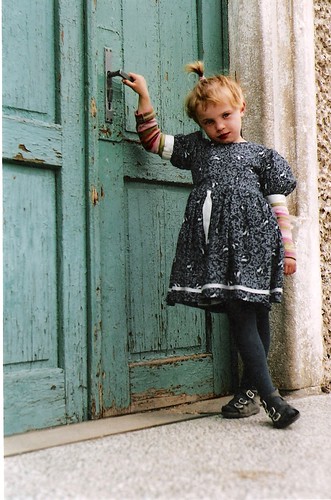
girl
Photo © Kasia_Jot | Flickr / Creative Commons
[image: Photo of a young blonde girl standing outside a
wooden door painted with aqua paint. Her legs are crossed at
the ankle. She is holding on to the door handle with one hand.]
Ann Memmott
annsautism.blogspot.com

Often, in my consultancy and training work, we get questions such as, “Can my child ever learn to speak?”

The answer to this is important, because, for a lot of parents of newly diagnosed autistic children, it’s easy to become misinformed or misled on this point. A number of organisations will be keen to tell such parents that without their ‘ACME Treatment X’ or ‘Potion Y with Added Secret Ingredient,’ their child will never speak, never learn to communicate. The parents may be told that most autistic children who do not use speech at (say) four years of age will never do so. “Early intervention to enforce speech is vital!” they’re told.

Is it?

Frankly, too much of this is scaremongering. It may lead to some parents being parted from a lot of their money, for treatments that are unwarranted, ineffective, or—in some cases—harmful.  We sometimes see autistic children pushed for endless hours to attain developmental milestones they’re simply not yet ready to attain.

Most parents of course only want the very best for their child. I do not doubt that many therapists are good people who also only want the best for the child. They may have been misled into thinking that early intervention is the Only Way, no matter the cost to the child. Little wonder that parents believe someone who seem to be providing an answer, even if the child seems distressed, bewildered, exhausted by it.

Am I saying that parents should not help their child or support their child in good ways? No, I’m absolutely not saying that. We’re talking about what is in an autistic child’s best interests here, though. I’ll generalise throughout.

Firstly, what do we mean by good communication? I’d say that it means a person is communicating authentically with one or more other people, using their own best way of doing so. Communicating with others about things practical, emotional, spiritual, enjoyable, intellectual or otherwise. Communicating in ways that means others respond safely and well.

Is spoken language the only way to achieve this? We might look at the Deaf communities and their use of sign language and technology for an answer here. It’s very possible to communicate very well, without using spoken words, with a rich and deep pattern of communication, a genuine alternative.

For some autistic children, it could well be that they won’t use spoken words as their way of communicating at any point during their lives. Instead, they may use a variety of authentic autistic ways. Perhaps through technology. Perhaps through other assisted/assistive communication methods. Perhaps through sign languages, or through any combination of other vocalisations, movement, gesture, pattern, rhythm, music, drawing, etc.

In 20 years of having the honour of working with and alongside countless autistic people of all kinds, I’ve yet to find one who doesn’t communicate. I’ve met a number of parents and professionals who don’t notice the communication, though. Or who had misinterpreted it. Or who were insistent that communication had to be the way they want it, when they want it, or it didn’t count.

Can autistic children and young people develop speech, if they are not using spoken language before (say) age 4? Yes. In fact, most do, according to research by Wodja, Mathy and Kalb (2012). The team examined 535 autistic children and young people with "severe" speech delay, and found that 372 of their subjects (7 out of every 10) managed to say phrases by age eight, and 253 (nearly half) could speak fluently at age eight or after.

What is the amazing ingredient that does this? Is it an expensive therapy? A pill or potion? A genetic scientist? No, it’s time. Quite simply, autistic children may well learn to speak at a later time than non-autistic children, and that’s the natural pace for us. Certainly, working with an autism-trained, qualified speech and language therapist is a sensible thing for many. Good therapists of this kind will look at all sorts of ways to communicate, and will enable the child’s own best way. But supporting and encouraging communication should never be about forcing autistic children down a path they cannot take, or are not ready to take.

I bring personal experience of speech delay to this subject: For the first ten years of my life, I could not use words to communicate with others in any social way. I could, in the latter part of this and with effort, repeat phrases or individual words well enough to make it seem like I was ‘communicating.’ But I had absolutely no idea what I was saying, or what it meant. I knew I was rewarded from making sound A, and punished for making sound B. But in no way was that communication: I wasn’t communicating a thing, any more than making an accordion play a note means it’s communicating with you. My natural, authentic communication was in pictures, in pattern, in colour, in drawing, in movement. It still is. And, as an autistic person, my natural non-verbal communication is also authentically different. I won’t choose to look into eyes to communicate emotion or attention, as doing so is painful, and prevents me from comprehending what’s said to me.

By the age of 11, I could make a small amount of spoken conversation with a trusted person, if I thought about it hard enough. By age 18, I could speak more. Some of my teachers failed to notice that I was in their classes, as they had never heard me speak—that was how good I had become at making myself unnoticeable, lest someone should try to talk to me. Awful, because I actually love being with people, and love sharing with them. It was assumed that I was just painfully shy.

In a world before most autism in young people was recognised, it never occurred to people that I was autistic and communicated differently. By my teens, I’d mostly learned to disguise (‘mask’) any visible trace of my autistic behaviour, out of fear of the responses of some non-autistic others and their bullying and ostracism. I kept my repetitive movements small. I pretended an interest in ‘things-I-should-be-interested-in,’ by displaying the ‘right’ posters for right TV shows and pop stars. By feigning the excitement I saw others show.

I recall trying to pronounce the right words at the right time, in conversation. How hard was it? By the time I’d heard something…translated it to pictures in my mind…thought about an answer in pictures in my mind…thought of some words to put together…and remembered how to make my mouth, lips and tongue move correctly, the conversation would have moved on. If I was not putting 100% concentration into it, I would also say the wrong word, or a mispronounced word, or say them too fast, too slow, too slurred, in a strange accent. Or respond by just describing the picture in my mind, which is not the communication expected.

Natural autistic communication is genuinely different. It was hell, trying to communicate in a way entirely not my own. Easier to be with a person who spoke 100% of the time at me, and my role was just to listen 100% of the time and occasionally agree. Using spoken language was like clambering up a cliff face in a gale force wind, weighed down with ever-shifting boulders. Clinging on in desperation, making my brain and body do something utterly alien to it, fearful of a wrong move, a wrong grasp of a situation. How much do autistic people have to care about others, to try to do this, time after time after time? I learned to talk, but the effort remains the same.

In my mind, I could visualise whole 3-D scenes, create incredible 3D rendering of situations past and present. In my heart, I could feel so intensely the emotions and joys of those around me. But my ways of sharing those emotions using spoken words would be deemed clumsy, insulting, or humiliatingly hilarious for others. So, I created with music, with art, with sharing unspoken but (for me) beautiful prayer and emotion. I communicated by movement, by rocking, by flapping. I communicated really well with other autistic people, and really well with animals. Some of my good friends are translators by trade, who have no difficulties understanding that I communicate differently.

None of my own ways of communicating were seen by those in power as communicating. None of it counted.

I’m in my 50s now, with a good job running a company, an achievement only possible with the support and encouragement of so many other fantastic autistic people and allies around me. I speak at conferences, on a subject I know well, amongst autistic colleagues. I train people, on a subject I know well, amongst autistic colleagues. I have to balance my time and energy very carefully to ensure I can speak when I need to.

How did I achieve this? Some therapy? No, just time and personal effort. And being punished if I did not. I wouldn’t recommend that for any child; it shows a deep lack of empathy for autistic individuals, and colleague Dr Damian Milton has much to say about this with his work on Double Empathy.

For me, using words is inauthentic—often as far from how I’m actually feeling inside as it’s possible to get. Speaking is a very poor ‘second language’ compared to what I can express through other means.

I am sometimes not able to use spoken language, in common with 80% of other autistic people (from informal online research). When too tired, too stressed, too unwell, in pain from sensory or social overload, I become as unable to speak as I was as a young child. This, to the point where I could be in any amount of distress or danger, and still not be able to utter a word. In reality, I might even be smiling when most in pain, most terrified.  

I would like us to think about this. We’re telling children spoken language is worthwhile, because when they’re in most danger, they’ll be able to ‘use their words’ to ask for help.

Will they?

And, if they do, will anyone listen and respond well?

If you go onto social media, you will find yourself awash with accounts from autistic people who asked for help, but were judged as ‘attention seeking,’ as liars, as fakers. As not being in pain, because they hadn’t done precisely the right amount of crying, screaming, grimacing, etc. You’ll also find yourself in the midst of a community grieving for all the autistic people now living with PTSD, all the autistic friends now dead, having taken their own lives because ‘use your words’ got them nothing. Those dead because some in the medical profession didn’t listen.

When I need spoken language most, it deserts me. It is a fickle friend, not an ally. When I do use it, it often gets me nothing, because language is only part of the hugely nuanced and complex social communication system of non-autistic people.

Why not give us things we can reliably use to summon assistance and communicate our whole selves, instead?

Using technology, I can ‘speak,’ I can ask for help. I can share friendship and love. I can add photos, and diagrams, and artwork, and charts, and numbers, and music. I can make my communication into the authentic me. I can share my faith and my emotions, authentically, and express all that is dear to me. Freed from the suffocation of having to use spoken words. Freed from the humiliation of others finding my speech amusing or insulting, or the outrage of those who misunderstand the difficulty and accuse me of ‘just not trying’ to be friends.

I think we have done a generation of autistic children a disservice, by saying that speech is the pinnacle of achievement. That if they can ‘use their words,’ life will be much easier for them. That people will like them more as a result. That well paid jobs will fall from the proverbial heavens into their laps.

I suspect that by forcing them to communicate inauthentically, we have set some of them up for a lifetime of exhaustion and misunderstanding of autism. A world where our different use of spoken language has been seen as just more evidence of us being faulty, a minority to be erased from the future. Where we have been misunderstood as rude, as lacking in caring about others and about the world around us.  Good evidence shows this is entirely mistaken for the majority. The researchers had been so keen to look at spoken words in a ‘correct’ formula that it has never occurred to them that many of us were communicating emotions and caring differently, I suspect.

“My child will never be able to tell me that they love me,” I’ve been told by a number of distraught parents. Yet when I’ve met the child, their love for the parent has been apparent to me from the outset. The problem is that the parents would only accept “love” if communicated in spoken words.

If you are the parent or carer of a fantastic young autistic person who does not use spoken words, your quest is to enable them to find their own best way to communicate. To really listen, with your heart, with your eyes, with your love…not just with your ears. To be patient and let them develop in their own natural time frame. To allow them to use their own best body language and movement, their own best choice of eye contact, or not. All, of course, with the love, help and support around them they need to enable them to thrive, autistically. With that good speech and language professional to guide you. The child’s future should not depend on being an inauthentic copy of non-autistic children.

Ask the #ActuallyAutistic communities online for some ideas and inspiration, and learn from them. There are some fantastic people out there, who are all too willing to pass on their wisdom on good social media pages, on blogs, in books or otherwise.

Most of all,  trust that your autistic child can thrive alongside others, whether with spoken words, or not. Do not be afraid to tell the next salesperson, arriving with a false horror story about how your child will never achieve anything without their ‘Patented Treatment,’ that you have more confidence in your child than they do.

Then, walk into the future, alongside that fantastic young person, sharing the journey together and truly communicating as two equal and wonderful people.

Thank you for reading.
Share:

Are Co-occurring Conditions Part of Autism?

Neutron Stars Rip Each Other Apart to Form Black Hole
Photo © NASA Goddard Space Flight Center | Flickr / Creative Commons
[image: Photo of two neutron stars ripping each other apart.]
Maxfield Sparrow
unstrangemind.com

Sometimes when I’m talking with someone about autism it feels like we’re talking about two different things. For example, I’ve had countless conversations that go something like this:
“You’re nothing like my child. My child has the serious kind of autism,” they might open with. 
“Autism is serious stuff,” I respond. “It’s important to take it seriously.” 
“No, I mean my child has the autism with digestive stuff and physical involvement. The severe autism.” 
“I have intermittent gastroparesis that has sent me to the hospital multiple times. I have a connective tissue disorder that has caused pelvic organ prolapse. These things aren’t autism.”
And it’s the truth: the co-occurring conditions we cope with are not autism; they are the “genetic hitchhikers” that love to travel with autism. Even being non-speaking—a trait that some people view as the true core of autism—is due to conditions that more frequently occur among those of us with developmental disabilities such as autism or cerebral palsy. However it is not autism itself that prevents speech, but rather these “hitchhikers” like apraxia and extreme sensory processing issues.

Questions immediately arise: how many of these commonly co-occurring conditions are there? How prevalent are the conditions that tend to accompany autism? And if autism is not simply a cluster of co-occurring conditions, then what is it?

The August 2018 issue of The Journal of Autism and Developmental Disorders is publishing a paper called Prevalence of Co-occurring Medical and Behavioral Conditions/Symptoms Among 4- and 8-Year-Old Children with Autism Spectrum Disorder in Selected Areas of the United States in 2010, written by researchers from the Center for Disease Control and the University of Arizona.

While this paper barely brushes on that third question: what is autism really? (“Autism spectrum disorder (ASD) is a group of neurodevelopmental disorders characterized by deficits in social communication and interaction and the presence of restricted and repetitive patterns of behaviors, interests, and activities (American Psychiatric Association 2013).”), it does go a long way toward addressing the first two questions about the number and prevalence of co-occurring conditions in autistic children.

How the Study was Conducted


The study collected information in the Autism and Developmental Disabilities Monitoring Network (ADDM) from the calendar year 2010. ADDM is a project that has been tracking eight-year-old autistic children since 2000, and added four-year-old children, starting in select areas, in 2010.

The researchers collected their data by looking only at the five sites that had included data from four-year-old autistic children that year (Arizona, Missouri, New Jersey, Utah, and Wisconsin). They pulled all the records of children diagnosed autistic and verified the diagnoses using DSM-IV-TR criteria (that being the standard diagnostic criteria used in 2010).

The paper claims this study is the first one to look at two age groups of autistic children using a large sample and studying a diverse group of co-occurring conditions. One of the biggest things the researchers discovered was that eight-year-olds had more co-occurring conditions than four-year-olds, and more than 95% of the children had at least one co-occurring condition.

The researchers report that the wide variety of co-occurring conditions and the great diversity among the children, as far as what patterns of co-occurring conditions each child exhibited, often contributed to difficulties in accessing autism diagnoses. They noted that a very small fraction of children had no co-occurring conditions. While they could not explain why autism tends to come along with so many, varied co-occurring conditions, the researchers noted that the varying patterns of co-occurring conditions make autism very heterogeneous—that is to say, each autistic person has a specific pattern of strengths and weaknesses that is often quite different from other autistic people.

This pronounced variety can make it harder for people to get diagnosed as autistic, especially early in life when there is no single marker of autism or autistic behavior. The authors suggested including co-occurring conditions in the autism screening procedures, in order to catch more autistic children who are slipping through the diagnostic cracks. The variety also cautions against seeking one-size-fits-all systems to address autistic needs.

Some Statistics From the Study


The data was analyzed statistically and measures were taken to mathematically account for the following factors: sex, race-ethnicity, maternal education, and geographical location of the study. All statistics I am mentioning in this article are ones that were statistically significant—that is, the differences were large enough for the researchers to pay attention to them as actual signals, rather than just random differences that don’t mean much.

The researchers looked at the following eighteen items that they determined to be the most common co-occurring conditions found among autistic people:
  1. Developmental disability - cognitive
  2. Congenital conditions (cerebral palsy, encephalopathy, vision impairment, hearing loss)
  3. Self-injurious behaviors
  4. Sensory integration disorder
  5. Developmental regression
  6. Epilepsy/seizure disorder
  7. ADHD
  8. Oppositional Defiant Disorder
  9. Anxiety
  10. Aggression
  11. Language disorder
  12. Sleep abnormalities
  13. Developmental disability - motor
  14. Genetic conditions (Down syndrome, Fragile X syndrome, Tuberous sclerosis)
  15. Mood disorder
  16. Developmental disability - adaptive
  17. Abnormalities in eating, drinking
  18. Temper tantrum
One thing they found was that some co-occurring conditions (gastrointestinal problems, sleep problems, and epilepsy) seemed to intensify the core traits of autism while others (ADHD, ODD, and aggression) appeared to “mask” autism traits, often resulting in a later diagnosis.

They also found that autistic children with intellectual disability were more likely to be diagnosed before age six than autistic children without intellectual disability.

The eight-year-olds had more cases of twelve of the above eighteen co-occurring conditions, but only eight of these were statistically significant: ADHD, Oppositional Defiant Disorder, anxiety, aggression, language disorder, sleep abnormalities, motor disability, mood problems.

The eight-year-olds had an average of 4.9 co-occurring conditions, and 98% of them had at least one co-occurring condition.  The four-year-olds had an average of 3.8 co-occurring conditions, and 96% of them had at least one co-occurring condition.

The statistically significant conditions that caused children to be diagnosed earlier were: Developmental regression, developmental disability - adaptive, abnormalities in eating and drinking, developmental disability - cognitive, temper tantrums, developmental disability - motor, and self-injurious behaviors. Those conditions that caused children to be diagnosed autistic later were: ADHD, oppositional defiant disorder, and anxiety.

The most prevalent co-occurring conditions according to the study were: Mood disorder (75.4%), Anomalies in eating and drinking (61%), Temper tantrums (56.5%), Aggression (55.40%), and Sleep abnormalities (40.7%).

Something that surprised me about the study were the co-occurring conditions with prevalence far lower than I had expected to see. These include: Developmental disability - cognitive (present in 15.6% of the autistic children in the study), Self-injurious behaviors (27.3%), Sensory integration disorder (10.1%), Language disorder (35.5%), Epilepsy (3.6%), and Anxiety (12%).

Analysis and Discussion of the Implications of the Study


The findings of this study could change the way autism is understood and diagnosed, which is important. While other researchers have looked at co-occurring conditions in autism, this is the first thorough survey of them, even though it is not entirely representative of the entire United States since the sample was not chosen completely randomly.

Before this study, the only academic writing I was aware of that looked at co-occurring conditions in such depth is Polly Samuel/Donna William’s work on the “Fruit Salad Theory of Autism” which is found in detail in her book The Jumbled Jigsaw, or in summary in her blog post “What is Autism?

Many Autistic activists express the importance of viewing co-occurring conditions as something separate from autism itself. As I mentioned above, I sometimes call them “genetic hitchhikers” because the anxiety, stomach problems, sleep issues, etc. are not autism, and are found among people who are not autistic, though we seem to have them with more intensity and/or higher frequency than the general population. These co-occurring complications can make the overall picture of autism look very different from person to person, and may necessitate a lot of support, accommodation, and assistance for us to navigate and manage.

People who have a hard time understanding why we say we are proud to be Autistic and don’t want or need our autism to be taken away often feel that way because they have defined “autism” as “the cluster of co-occurring conditions experienced by the autistic people I know or have heard of.” Research like this new study important for the implications in the medical world, with respect to diagnosis and therapies, but it’s equally important for those of us in the lay community who are trying to communicate across a gap of understanding—a gap caused by people defining autism in radically different ways.

Hopefully this research and similar research that will follow and build upon this foundation will help those of us in the Autism community (that community made up of everyone from Autistic people to our families to therapists to researchers and beyond) to agree upon shared definitions of autism. This will be a necessary first step, before we can really get down to meaningful dialogue across the gaps in our lived experiences: the lived experience of being autistic and the experience of loving or working with someone who is. We in one or more of those groups can and very much should seek to unite with the others because we are stronger together. Coming to a place of mutual understanding of the foundational nature of autism will start us down that path, toward joining our forces to change the world.
Share:

What Good Representation of Autistic Characters Looks Like, Part I: Interiority and Neurology

Elizabeth Bartmess
elizabethbartmess.com

This is a three-part series. Part II explores Diversity in Autistic Characteristics and Demographics. Part III explores Setting, Plot, and Character Growth.
"A lot of writers and actors seem to be able to get their heads around what autism basically is, in terms of language, sensory, and social communication difficulties. But then it’s as if they don’t know, or can’t extrapolate to, the full range of experiences that autistic people actually live. That things have happened to us, and things have happened in certain ways for us all our lives, and those things have had consequences for who we become and who we are....[T]he autistic characters [readers and viewers] are used to seeing have no depth of experience. They are people without history." —Chavisory, at Chavisory's Notebook
This series is about what autistic characters look like when they're written well, when they have the depth of experience referenced in the above quote. I've included examples from books and short stories, mainly middle grade and young adult books and adult science fiction and fantasy, where I've found the best representation.

Today, I'll talk about interiority and neurology: how autistic people are people with inner experiences who do things for reasons, with those reasons influenced by common aspects of our neurologies. I'll give examples of good portrayals, and I'll talk about common consequences of having these kinds of experiences, and how they shape who we are.

Tomorrow in Part II, I'll talk about variation in autistic traits and in demographic characteristics, how others respond to us based on their perceptions and beliefs, and how that shapes us, along with examples of good portrayals. I'll also talk briefly about setting, plot, and character growth, and why they're relevant to good representation.

On Friday in Part III, I'll wrap things up and add some links for writers along with a list of some real-life things often missing from fiction. I'll also list all the books and short stories I've mentioned, with content warnings and links to reviews.

Although I've focused on autistic characters, I think much of this also applies to other disabled people and characters, particularly "autistic cousins": people who share significant life experiences with autistic people due to hydrocephalus, cerebral palsy, ADHD, PTSD/CPTSD, or something else. When I use the term neurotypical in this series, I'm using it to mean, loosely, "people who are neither autistic nor autistic cousins." Because I've focused on stories with autistic characters, I often wind up contrasting "autistic people" with "neurotypical people," but I don't mean that to suggest that there are no other people in the world.

Interiority: People With Inner Experiences Who Do Things For Reasons

Like all people, autistic people are people with inner experiences who do things for reasons. We differ neurologically from neurotypical people in various ways, including sensory perception, language and speech, social abilities and skills, and ability to take intense enjoyment in specific interests, and a variety of other things. We may also have co-conditions that aren't part of autism but are more common in autistic people, like depression or OCD.

Our neurological differences mean that our experiences can differ from neurotypical people's experiences, in significant ways. We might look like we're in the same situation as a neurotypical person, yet the situation can be different for us—and our actions need to be responses to the situations we're actually in.

When others don't understand our experiences and don't understand how our actions are meaningful responses to them, they may think our actions don't make sense, and try to control them in ways that are harmful to us. That changes the situations we're in, too.

These experiences build up over our lifetimes, and when we can, we develop strategies—sometimes quite effortfully—for coping with and influencing situations and others' responses to our actions.

Bad representation in fiction upholds the idea that our actions are "behaviors" without reasons or causes, and doesn't take into account that we change in response to our experiences. Good representation portrays autistic characters' experiences and actions as comprehensible, often through narration or (if the autistic character is not the viewpoint character) someone else's awareness of our experiences and the reasons for our actions—which can include our expectations and skills learned from past situations. Showing us as comprehensible helps neurotypical people understand autistic people better, and—importantly—lets autistic people see themselves understood and reflected, something that's often missing from real life and is extremely satisfying to encounter, whether in real life or in fiction.

While reading this, keep in mind that while autistic people have neurological differences from neurotypical people, we're not made up of neurological differences; we're full people whose experiences often differ from neurotypical people's, and whose strategies for living in the world have to take our differences into account.

Sensory Differences

Sensory differences can make the world more painful; they can also make some sensory experiences exceptionally meaningful and rewarding. Often other people don't understand the intensity of these experiences or how they affect us.

[image: The book You Look Different in
Real Life, with a black background, white
block text reading "You Look Different"
over blue script text reading "in real life"
over an illustration of four teens sitting on
a gray wall, with a hoodie-wearing teen
standing in front, with one arm raised.]
Many stories show our experiences of sensory overload, and how that leads to our responses. In You Look Different in Real Life, a group of teenagers are in a busy city looking for one character's missing mother. The autistic character, Rory, is undergoing increasing sensory overload, and her experiences are clearly shown through her body language: when a car honks, she jumps, freezes, and then breathes in slowly to get herself under control; she winces when people shout, when a baby cries, when dogs bark, and finally has a meltdown in response to sirens and kids shouting. (Note that while her breathing in slowly is a strategy, her meltdown is not. Meltdowns aren't strategies; they're involuntary responses that happen when all our other strategies for managing intolerable situations aren't enough.)

In The Someday Birds, Charlie has an overly intense sense of smell. He's on a cross-country road trip with family, and his siblings have adopted a dog who's packed into the car with them. Charlie describes his experience evocatively: "[The dog] started out smelling like rotting fish. Now he smells like rotting fish someone left in a public porta potty overnight. I am gagging so bad, I'm riding with my head out the window" (location 1167). Other stories that show sensory sensitivities particularly well include M is for Autism, The State of Grace, and Water Bound.

Many autistic people take special joy in particular sensory experiences, including stimming: forms of fidgeting like hand-flapping, rocking, leg-jiggling, which can help regulate sensory overload, lower anxiety, and increase concentration. In Water Bound, Rikki stims for enjoyment by using her magical ability to manipulate water. She also immerses herself in water's sensory qualities to calm herself; her relaxation and intense enjoyment are vividly described, as is her love interest's enjoyment when he psychically shares her sensory experiences. In M in the Middle, M's teacher shows her Van Gogh's paintings Sunflowers and Starry Night:
"And I was struck. Just like being love struck. I could feel myself slipping...disappearing, sinking into these orange colours and fragile textures....Little electric explosions fire off all round my body. It's like nothing I'd ever seen before and my eyes were sharpened!" (211-212).
Some stories show characters using stimming as a strategy to help self-regulate sensory overload or manage distress. In On the Edge of Gone, Denise is trying to get her family onto a generation ship after an apocalyptic meteor hits the Earth, and is overwhelmed from multiple stressful situations:
"I'm rocking, I realize....moving like this helps keep the thoughts at bay, lets me focus on the shifting, roiling pressure and relief, like that of shrugging into a soft robe after coming inside from the rain, or turning down the volume after it's been screeching in my ears for hours" (356). 
Some other stories with relevant stimming-as-coping-strategy scenes include Failure to Communicate and Queens of Geek.

All these stories show the autistic characters' sensory experiences and reasons for actions, either through narration by the characters themselves or evocative descriptions from someone who knows them well.

Language and Speech Differences

Autistic people can have various language and speech differences, including ongoing or intermittent difficulty or inability to speak, using speech in different ways, difficulty with auditory processing, and a preference for text over speech.

In "Difference of Opinion," Keiya, a janitor and a former anti-eugenics activist, uses a tablet to communicate, but is reluctant to communicate at all, both because it's difficult to organize her thoughts and because she's had her past work co-opted for non-disabled people's inspiration and edification. In "Iron Aria," the protagonist Kyru's difficulty with expressive speech is described in sensory, immediate terms: "The words clink and scrape, wrong angles and too loud against his teeth." In A Wizard Alone (New Millennium Edition), Darryl needs extra time to compose most spoken sentences; when the protagonist, Kit, takes on some of Darryl's characteristics as a result of magic, he has even more difficulty speaking, because he has Darryl's difficulties with speech but not Darryl's strategies for managing it. In Experimental Film, the autistic protagonist Lois's also-autistic son Clark uses echolalia to communicate: he "speaks mainly in echolalia; haphazardly grafting great chunks of memorized dialogue from movies, cartoons, commercials, and songs together to get a point across" (locations 266-267). In An Unkindness of Ghosts, Aster learned to speak late and speaks pedantically and precisely as an adult; she sometimes has difficulty speaking, and uses echolalia to help prompt herself back into speech. Many other stories show or reference ongoing or episodic speech difficulties or differences, including "Geometries of Belonging," "Grandmother-nai-Leylit's Cloth of Winds," Al Capone Does My Shirts, M in the Middle, "They Jump Through Fires," A Wizard Alone (New Millennium Edition), Failure to Communicate, and The Real Boy.

The State of Grace shows auditory processing difficulties visually on the page, during a date at a sensorily overloading bowling alley:
"I can't hear very well and now my brain's doing that thing it does where it sort of goes on a
delay
so
when
someone
speaks
I
watch their mouth move but the processor takes a moment to translate the words and by the time I've caught what they mean they've started to say something else." (127-128). 
Aster from An Unkindness of Ghosts has similar intermittent auditory processing problems.

Multiple stories reflect a common real-world autistic preference for text over speech. In Unauthorized Access, Aedo notes that typing would give her:
"a chance to get all the information in the right order instead of just blurting it out and hoping the recipient could extract the meaning from all the noise....If she sat down and thought through the sentences, she wasn’t talking fast enough; if she talked fast enough, her words were a mess. She was so much more comfortable in text, where latency was fine." 
The autistic protagonists in Queens of Geek and A Boy Called Bat share this preference.

These stories use various techniques to show characters' interior experiences and the reasons their speech and comprehension differ, including direct explanation by the protagonist, other characters' observations, and the actual appearance of text on the page.

Social Skills and Abilities

Autistic people often have difficulty performing social interactions in ways expected of us. In addition to language and speech difficulties, we may be unable to get adequate information about what other people mean or want, may not know what responses are expected, or may be unable to enact those responses. Despite this, we can work quite hard to learn them.

In The Real Boy, Oscar, a young boy who's learned to interpret the nonverbal behavior and words of the people he lives with, has difficulty understanding people he knows less well:
"They said words they did not mean, and their conversations seemed to follow all kinds of rules–rules that no one had ever explained to Oscar. And if that weren’t enough, people talked in other ways, too, ways that had nothing to do with the things coming out of their mouths" (31). 
This description makes his difficulty enacting socially expected responses completely comprehensible. Other stories that show similar issues: An Unkindness of Ghosts, The State of Grace, On the Edge of Gone. A Desperate Fortune, Harmonic Feedback, and Rogue reference extensive past support from family members in learning to interpret and respond to social situations, and in Failure to Communicate the protagonist has learned on her own through intensive observation.

Even when we do know what responses others expect from us, performing them can be intensely draining. Good portrayals acknowledge this cost. In The State of Grace, Grace describes the burden this imposes:
"[M]y head is full of all the things I have to remember when I'm being a person every day: don't be rude, don't stare, don't look blankly into space when you're not thinking anything, shut down the noises of everything talking, concentrate, hold it together, don't have a meltdown.…Oh God" (101-102). 
Eye contact is a particular point of contention, because it's often uncomfortable and uninformative. In On the Edge of Gone, Denise's love interest asks whether eye contact hurts her. She responds:
"'Eye contact? No. Maybe it hurts for some people, but not for me. It's...' I've tried for years to put it into words. All the things I want to compare it to—music that's too loud, flavor that's too strong, images that flash too quickly—are different for other people too, so it never feels quite right....'I can do it for, like, half a second. Anything longer is just too much. Too intense. It scrambles my brain.' It's intimate, I think but don't say aloud" (232). 
In A Rational Arrangement and A Boy Called Bat both autistic protagonists note that the information others expect them to get from eye contact simply isn't there. Other stories: M is for Autism, How to Become a Robot in 12 Easy Steps, Anything But Typical.

Although we're stereotyped as lacking empathy, many autistic people describe high levels of empathy, though often difficulty figuring out how other people want us to express it. In A Boy Called Bat, Bat wants to do something kind for his sister Janie, so he gives a pet baby skunk Janie's favorite pajama top so the skunk will develop a bond with her; when this upsets her, he suggests a way to make her feel better. In Rogue, Kiara uses her skills with video editing and setting scenes to music to evoke in her mother the empathy Kiara feels for her friend Chad, who has gone through a particularly devastating family situation. Other stories with good portrayals of empathy include Queens of Geek, Failure to Communicate, A Wizard Alone (New Millennium Edition), and A Desperate Fortune.

Sometimes, we develop unusual social strengths due to workarounds. We frequently interact with people whose communication is not intuitive to us, and consciously learn skills for it. Several speculative fiction stories extend this, showing an autistic character as the first person to figure out how an alien species communicates ("Touch of Tides," "Becoming," and Failure to Communicate).

In these stories, we see characters' social difficulties, the reasons for those difficulties, their consequences, and the skills they develop—as well as the effort that goes into learning and enacting those skills. When this is shown on the page, our social miscommunications are more comprehensible to neurotypical readers, something especially important in a real-world context where our social difficulties are sometimes misinterpreted as being uncooperative or unempathic.

Special Interests

Many autistic people derive intense enjoyment, and sometimes other benefits, from special interests in particular topics. These provide fun and respite in an often-unfriendly world, although neurotypical people don't always understand the extent to which they're important and valuable, and may try to take them away from us.

In Harmonic Feedback, Drea's special interest is sound design. She becomes absorbed in sounds and ideas when making music with her friends:
"My fingertips buzzed with anticipation, and I heard a billion different guitar melodies over the top....Every note made me shiver, each one building into something even more amazing...It tore at my gut and haunted my mind until all I wanted to do was get lost in it for hours" (110-111). 
In Al Capone Does My Shirts, Moose's sister Natalie has a collection of buttons which she has memorized and loves to arrange; when a school takes them away from her, it's extremely upsetting to her. In The State of Grace, "You Have to Follow the Rules," and Queens of Geek, characters' special interests in real and fictional fandoms are fun, rewarding, and social.

In some cases, special interests help us make sense of the world. In Rogue, Kiara uses her special interest in the X-Men to help her understand other people, by mapping people and events onto ones she's read about. In You Look Different in Real Life, Rory explains why she finds Tudor-era history so compelling:
“Because it’s full of characters who are more interesting than the ones in any fiction book I’ve read, except these were real people. The more I learn about them, the more I learn about people in general” (109). 
In "Difference of Opinion," the protagonist, Keiya, frequently references relevant lyrics from her favorite singer Nash, using them to characterize situations and to help cope.

Some special interests can facilitate a career, when economically valued and when we have the other skills or support needed to develop them. In "The Scrape of Tooth and Bone," Lillian uses her robotics skills to maintain robots used on fossil excavations; in A Desperate Fortune, the protagonist, Sara, works as a code-breaker; in This Alien Shore, Masada is an expert programmer, and his wife (also autistic) was a musician; and in Experimental Film Lois previously worked as a film critic and teacher.

The stories I've included for this series have many other examples of special interests, including birds (The Someday Birds), writing (Anything But Typical), rocks ("Inappropriate Behavior"), herbs (The Real Boy), and magic ("Geometries of Belonging"); in "Difference of Opinion" the protagonist has multiple special interests, including the fictional singer Nash and polar coordinates.

By showing what special interests do for us, good representation helps show how our interests are reasonable and valuable. It's important to note, though, that special interests don't have to lead to a career or social connections to have value—any more than hobbies do.

Other Common Neurological Differences

Earlier, I talked about sensory, language, and social differences, plus skills and special interests. Autistic people have many other common neurological differences, as well as co-occurring neurological conditions; often, these are underrecognized in real life and underrepresented in fiction.

Executive function refers to the many abilities needed for planning and carrying out tasks. This can include many daily life activities that neurotypical people have relatively little difficulty with, like remembering what you're doing, changing from one task to another, or keeping your space clean. I've only found a couple instances of executive function difficulties in stories with good representation: In "Inappropriate Behavior," Annie attempts to alert her therapist to an emergency situation; she has difficulty with working memory, and when he repeatedly interrupts her, she's unable to remember it long enough to keep bringing it up. In The State of Grace, Grace can't keep her room clean, to the point that the carpet can't be seen. When her grandmother helps clean out her room, they throw away trash bags' worth of junk.

Executive dysfunction is valuable to portray because it's often misunderstood as laziness or willfulness, rather than an inability that's intensely frustrating to us—a common misconception that results in counterproductive demands that we "just do" things that are very effortful or impossible.

Change is especially hard; routines and structures help. Change disrupts the structure and routines that help us manage executive dysfunction, sensory overload, and stress and anxiety. In A Wizard Alone (New Millennium Edition), a character notes that structure is important because it helps autistic people manage the pressure and intensity of daily life. In M is for Autism, M describes what happens when her timetable for the day suddenly changes: "A vast, scary nothingness is opening up ahead of me which I cannot measure or feel, like other people seem to" (63). It's valuable to portray why change is hard and how routines and structures help us, because in real life they are often treated as irrelevant and counterproductive attachments that we need to be broken of—rather than the coping skills that they actually are.

Motor difficulties are common in autistic people. These include difficulty initiating, planning, and coordinating movements, and difficulty imitating others' movements. In Failure to Communicate, the protagonist has both gross motor issues and fine motor issues; she can't tie a knot, has difficulty navigating uneven ground, and has to work very hard to learn the complex system of bows used by the culture she's being a diplomat for. The autistic character in "Geometries of Belonging" often falls and breaks things. In "Difference of Opinion," there's a toe-walking scene with socially trenchant commentary. Motor difficulties are also briefly referenced in Blind Lake, Al Capone Does My Shirts, A Wizard Alone (New Millennium Edition), and A Boy Called Bat, though they don't play a role in the story. Showing that these are neurological differences related to autism, rather than carelessness or laziness, is important.

Other neurological differences: The State of Grace references prosopagnosia (difficulty recognizing faces) and sleep dysregulation. Failure to Communicate and "They Jump Through Fires" both portray grieving in ways that don't necessarily match what's expected of us. The protagonist in Failure to Communicate has difficulty remembering to eat and eating enough, causing the captain of her ship to explicitly assign people to make sure she at least eats protein bars. A Wizard Alone (New Millennium Edition) references intense emotions, and hyperfocus and burnout are both important to the storyline. On the Edge of Gone and "Difference of Opinion" both show self-injury as a consequence of severe stress.

There are many other autistic characteristics I haven't (yet) found good representation of, and I'll mention some on Friday.

Co-Conditions: Various neurological and psychiatric conditions are more likely in autistic people, such as synesthesia ("Touch of Tides," "Becoming," Failure to Communicate), OCD (The Someday Birds), anxiety (vividly described in both Queens of Geek and M is for Autism), depression (Experimental Film, "How to Become a Robot in 12 Easy Steps"), and ADHD (referenced in Harmonic Feedback). Representing these is valuable both because it reflects real life and because autism is commonly overlooked in favor of other conditions by healthcare providers (though the reverse sometimes happens, too). These aren't the only common co-conditions, and I'll mention some of these on Friday as well.

Intellectual disability is common in real life, though rarer in good representation. I could not find good representation with explicitly intellectually disabled autistic characters, although there are several characters who may be, including Natalie from Al Capone Does My Shirts, Kami from "Grandmother-nai-Leylit's Cloth of Winds," and Clark from Experimental Film (who his mother Lois mentions can't be assessed because he's not currently able to take standardized tests). Good representation with intellectually disabled characters is important because in real life, intellectually disabled people's experiences are often discounted by other people, despite being as real and important as everyone else's experiences.

Conclusion, And a Note About Voice and Detail

Today I've talked about how good representation portrays our interiority, including how our experiences influence our actions, and how those experiences build up over time and affect who we are and how we approach situations.

Many of these stories are narrated in first person, in realistic voices. The characters primarily describe their experiences rather than describing themselves as they would be seen through a neurotypical person's eyes. This helps avoid the phenomenon where characters perform autism for an assumed-neurotypical audience, whether through a narrative style that focuses the audience on the character's otherness at the expense of the story or by being turned into a self-narrating zoo exhibit. It's realistic, and it helps autistic readers connect with the characters, too.

Often stories with good representation do include more detail when describing autistic characters' experiences and actions than when describing neurotypical characters' experiences and actions. This helps neurotypical people understand us better; it also helps build autistic readers' trust and let us see ourselves reflected and understood. In an ideal world, we wouldn't need any extra detail, because autistic people would already be understood, and we'd be able to see ourselves reflected in real life. But we don't live in that ideal world; we live in this one.

An important caveat: in real life, giving this level of detail is effortful and sometimes impossible. We might sometimes decide to do so anyway, but we shouldn't be required to justify our actions, disclose very personal details, and be extremely skilled at explanation to receive support and understanding.

In Part II, I'll talk about how autistic people vary both in autistic traits and demographic characteristics, how other people respond to us, and how that affects us. In Part III, I'll talk briefly about how everything I've discussed relates to setting, plot, and character growth. I'll also give some links for writers, a list of some real-life things often missing from fiction, and a list of books and short stories I've mentioned.

Share:

Coping with a Crisis When You Have Unreliable or Intermittent Speech

Maxfield Sparrow
Unstrangemind.com

Cornerstone Breakdown Club
Photo © Marcia Furman | Flickr/Creative Commons
[image: White person with tousled medium brown hair slumped over at a restaurant table,
face hidden, with sunglasses resting on the top of their head and hair.]

Autistic people already know how alarming and overwhelming a crisis can be. But when we have unreliable and intermittent speech, a crisis can go beyond stressful, even becoming deadly. I’d like to share a few tips on how I’ve managed to stay alive despite intermittent speech.

Sections:
  • What is unreliable and intermittent speech?
  • People With unreliable and intermittent speech can help others in emergencies
  • What to do when you are in a crisis and need to contact someone 
    • Text someone you know or a professional helper
    • Use TTY/Relay to contact someone
    • Use an AAC over the telephone
    • Use the Text Crisis Line
  • How to interact with others during a crisis
    • Decide whether and how to disclose your autism
    • Communicating With Others
      • Use an AAC device or app
      • Use sign language
      • Use a white board
      • Use the emergency chat app
  • How to remember these options in a crisis
    • Make a folder on your phone or tablet
    • Add the crisis text line to your contact list
    • Make a reminder image on your lock screen or background
    • Make a personal checklist to troubleshoot problems

What is Unreliable and Intermittent Speech?


First, a bit of explanation for those unfamiliar with these terms. People sometimes talk about Autistic people as “verbal” or “nonverbal” but there are a couple of reasons why I don’t embrace that language. One big reason is that “verbal” means “of words” rather than “of speech.”  I know plenty of Autistics who don’t speak at all but type with beautifully expressive, often highly poetic, language. To call someone who writes more lyrically than 99% of the population “nonverbal” is so incorrect. To call anyone at all who types or writes or points or otherwise uses language to communicate “nonverbal” is so insulting.

An even bigger reason why I don’t use the language of verbal/nonverbal is because it implies that speech is like a light switch: either on or off. Many of us do not fit into that on/off model at all.

Unreliable speech is when a person can speak but the words do not always match what the person is trying to say.

One example of unreliable speech comes from Emma Zurcher-Long’s blog, Emma’s Hope Book. Emma calls fireworks “motorcycle bubbles” and stars “sorry bubbles” which is lovely and poetic (if cryptic to those who don’t know Emma’s language.)

But her speech becomes unreliable in certain situations, particularly with multiple choice questions. Emma’s mother wrote a blog entry about Emma struggling with a standardized assessment test. “I read the facts to Emma and then asked her to give me the answers by saying the correct answer out loud. This is how the test is typically done. Emma chose the last choice to each question every single time,” Ariane writes.

Imagine a crisis situation with a person who can only repeat the last option given. “Do you want to tell me what you are doing here or do you want to go to jail?” “Go to jail.”

Intermittent speech is when a person can speak sometimes but is unable to speak at other times. Sometimes the inability to speak is due to illness or stress (conditions often present during a crisis!) and sometimes speech comes and goes but no one knows why. Sometimes even the person with intermittent speech does not know why they cannot speak sometimes.

I have intermittent speech and that’s why I can share tips with you: I have lived experience with being in crisis situations without the ability to speak. Sometimes people are surprised that I cannot speak because they have heard me speak very well before that moment when I cannot speak. Sometimes people do not believe that I am unable to speak because I can speak so fluently at other times.

It is important to believe people when they are unable to speak. I know college professors and graduate students who are able to teach classes, using their voice to speak, but sometimes cannot utter a single word. When we are unable to speak it might indicate that something is terribly wrong, but that is not always the case.

For example, Alyssa Hillary is a graduate student with echolalia and intermittent speech. They write about interacting with the other members of their college Ultimate Frisbee Team, “It took some time for them to figure out that I really do understand when I should say a thing and what I should say, I'm just not always capable of doing so (it took until I managed to explain this, which it doesn't occur to me to do except right after this happens- you know, while I'm probably still not able to speak?”

People with unreliable and intermittent speech are clearly not “nonverbal” or even “non-speaking,” so we need to have language for how speech shows up in our lives.

People With Unreliable and Intermittent Speech Can Help Others in Emergencies


Just because we can’t always communicate with our voices doesn’t mean we can’t help people get help during emergencies. I have found that it can be easier to help others in crisis than to help myself because I am much calmer if it is someone else’s emergency. I might go into a meltdown because I can’t find the can opener but I was completely calm and knew exactly what to do to help when I witness a car crash right in front of me while I was waiting for the bus.

Aaron Cahal, who has unreliable speech, was able to use Facebook to save the life of a drowning child. First Aaron texted his dad, “I hear a scary cry.” Aaron’s dad started looking for Aaron, not realizing his 23-year-old son had already left the house and was moving toward the sound. Aaron took pictures of the house where he heard the sounds from and then messaged local police through their Facebook account, writing, “big crying people scary people.”

While emergency responders weren’t sure at first where to send help, they took Aaron’s message seriously. Someone else pulled the child out of the water and began administering CPR, but emergency vehicles were able to arrive quickly because of Aaron’s alert. Aaron Cahill’s story shows the importance of cell phones for those of us with unreliable and intermittent speech. We can save the lives of ourselves and others if we have a way to communicate. Cell phones are marvelous technology and very helpful assistive devices.

What to Do When You Are in a Crisis and Need to Contact Someone


The standard advice for coping with a crisis is to call 911 or a crisis hotline. Both of these seem impossible if you can’t use your voice. Here are some options:

Text a Friend, Family Member, or Professional


Just as Aaron did in the story above, your problem might be best addressed by texting or otherwise messaging a person in your life who can help you or contacting the authorities through text or Facebook.

Some people don’t like to get the police involved in crisis situations, especially sensitive situations like potential suicide. If you are interested in other options besides contacting the police, you will want to read What to Do Instead of Calling the Police.

Use Technology Developed for Deaf People


One of the mandates of the ADA (Americans with Disabilities Act) was making the phone system accessible to Deaf and Hard of Hearing people. This access has primarily been provided through TTY and Relay calls.

TTY means teletypewriter. That is a piece of machinery that is rarely used today but the word has stuck around, just like you will hear older people talk about “taping” a show even though they are doing it digitally. Back in the late 1980s when I met my first Deaf friends, their TTY was a clunky, heavy machine that never left their dorm room. Relay calls are calls made using a special service that takes your TTY typing and speaks it out loud to a person on the phone, then types their answers back to you.

I used to have a friend who taught me that Autistic people are allowed to use TTY/Relay technology even if we aren't Deaf. The system is free to use. It's been six years since the friend said anything about the technology they were using, but they had a free account with NexTalk. They said it took some time to get a number and activate it, but once that was done, they could make and take outgoing and incoming TTY calls on their computer with no problem.

I note on the NexTalk site that they intend to provide Apple/Android access to NexTalk in the future although it is not currently available. Many smart phones have TTY services built into them now, however.

For example, Apple iPhones running iOS 10 or later have built-in TTY which you can turn on by going to settings > general > accessibility > tty. You can use 711  to access Relay services. To access TTY on other types of smart phones, Google your phone, read the manual, or consult with the store where you bought your phone.

If you’re buying a new cell phone and want to make sure you can use TTY/Relay on it, look for the TTY symbol:

[image description: a graphic depicting an old-fashioned 
telephone handset resting on a computer keyboard.]

Use a Text-to-Speech Device on a Regular Phone Line


A TTS or text-to-speech device is a form of Alternative and Augmented Communication (AAC) that synthesizes a voice and reads written text in that voice. Most people are familiar with physicist Stephen Hawking’s TTS voice. Another well-known synthesized voice is Apple’s Siri.

In the past, TTS was expensive and required carrying around a heavy machine. Cell phones and tablet devices have made TTS lightweight and much more affordable.

My friend Cal Montgomery was recently trapped in a Chicago train station and tried to use a TTS to get help. Metra Emergency Services hung up on him every time he called. This is one of the biggest drawbacks of having a “machine voice” to speak through. In person, someone can see that you are using a device to speak. While people won’t always be patient or observe proper etiquette, they tend to listen. But over the telephone, people get impatient and assume you are a computerized telemarketer or worse.

Cal’s story is helpful because he explains his step-by-step problem-solving process as he is going through it. He uses multiple methods to try to contact people who can help him. While his TTS doesn’t yield good results and flagging down trains doesn’t get useful results, he is also able to get someone to show up by using the police call box. He even brings the firefighters into the situation to help. Eventually someone figures out that the elevator was turned off.  Once the elevator got turned back on, he was able to leave the train station. The situation was a major fail on the part of Chicago Metra, but a great case study in communication problem solving.

I have two different AAC apps that are my favorites. On my iPad mini I use an app called Verbally that allows me to type words in regularly and pre-program frequently used phrases. On my cell phone I use Speak It! These are both Apple OS apps. If you are looking for an AAC app to use on your tablet or smartphone, Practical AAC has a great information resource.

Use the Text Crisis Line


There is a text-only crisis line for those of us who can’t or don’t want to seek help in a crisis using our voices. The way it works is to text “HOME” to 741-741. A real person will respond and help you with your crisis.

It can take five minutes or more for a person to get on the line with you, so if you have a crisis that you know requires a call to 911, you may want to try a different route first, like a TTY/Relay call to 911 or texting a person you know who can call 911 for you. The text crisis line might also be a useful place to find someone to call 911 for you, if that’s what you need in the moment.

If you’re anxious, depressed, suicidal, and so on, the text-only crisis line may be exactly what you need. It’s primary purpose is for managing painful emotions. It’s not a long-term solution and the people staffing the line are only trained to get you from a “hot” moment to a “cool” moment, but many times that’s exactly what a person needs.

How to Interact With Others During a Crisis


So far, I’ve covered ways to get hold of people who aren’t right there with you. Now let’s talk about some useful ways to interact with people who are on the scene and might be able to help you with your crisis.

Identifying Yourself as Autistic


Sometimes you need a quick and easy way to let someone know that you are Autistic. A medical ID card can be very useful. Unlike other options like registries, you can choose when to disclose or not by handing your ID card to someone, or keeping it to yourself.

There are many available ID cards to choose from. You can also design one yourself to meet your personal needs. ID cards can be on cardstock, like business cards, or they can be on plastic, like a credit card.

One way to use an autism ID card is to hand it along with your regular ID card when someone asks for your ID. This is especially useful if you are being questioned by a police officer and feel that knowledge of your autism will help the police officer make better decisions about the encounter.

The ID card I use was made by the Disability Independence Group. Their website includes a helpful video about how to use an autism ID card when interacting with the police. I highly recommend watching the video even if you choose a different card or no card at all. The video is geared mainly toward those with full speech. There is one person in the video with intermittent speech but she may have more speech ability than you do.

Still, she models showing her identification card which is something you could do without speaking, especially if you have the card already out so you don’t have to reach into a pocket to get it. If you frequently have problems with being stopped by police (as many of us do!) you might try putting an autism disclosure card in a privacy sleeve on a lanyard to make it easier to give it to a police officer without speaking while not appearing threatening the way you would if you suddenly reached into a pocket or bag without saying anything.

Some other helpful cards include Autistic Hoya’s Disclosure Cards, Autism ID cards sold by the city of Pittsburgh , or the ICE4Autism  phone app, which I also have installed on my iPad mini.

Communicating With Others


In addition to an AAC device, which is covered above in the section about using a text-to-speech device to communicate on the telephone, some options for communicating with people in person during a crisis include:

Using Sign Language


If you are able to learn sign language and this form of communication works for you during moments of stress, you may want to devote some time to it. Most people do not understand sign language itself, but most people do understand what it is. While sign language is less universal than written text or words spoken by a synthesized voice, it has the advantage of being a method of communication most people can relate to and are willing to try to work with, or find you someone who can work with it.

I am not fluent in sign language, but I’ve learned enough of it to be understood during a crisis situation if I have no other way to communicate with people. I once had a problem with a hospital emergency room claiming they couldn’t provide an interpreter at 3:00 AM, but another patient in the emergency room immediately took them to task, claiming to be a lawyer. It was amazing how quickly the hospital woke someone up who could help me be understood.

Using a White Board


I’ve only used a white board when communicating with police officers who came to my home during a situation, but it worked well enough to protect me from harm. Using a notebook or other paper would also work, but I have dysgraphia and have found that writing on a white board is much easier for me than writing on paper.

My white board is small enough that I have brought it along with me on my travels because it slides easily into a bag. It might not be an optimal solution for you or it might be perfect for your needs. Either way, if you are able to use a white board you might want to keep one around just in case. I have found that it’s a good idea to keep multiple means of communication available to me because I never know when I might need something different. If the battery on my phone is dead, a white board could save me.

Using the Emergency Chat App


Jeroen De Busser designed an Emergency Chat app for Apple and Android. He is Autistic and designed what he knew would help him in situations where he was unable to use his voice or ears to communicate with others.

When you open the app, you see a default screen that explains your situation. This screen can be customized and here’s what I’ve written for mine:

[image description: a screen that says: I need help.
I gave you my phone because I can’t use or process speech right now,
but I am still capable of text communication.
My hearing and tactile senses are extremely sensitive in this state
so please refrain from touching me. Please keep calm, and proceed
to the next screen that has a simple chat client through
which we can communicate. Continue.]


You might notice that I used very formal language in my description. I did that on purpose because I’ve found that people often treat me poorly when I’m unable to speak. I intentionally used my best language in the description to help set the tone for any typed conversation that follows. You may consider doing the same: use your words, but use your best words. Think of it like putting on a suit or nice dress in order to put forth the best impression you can.

People who don’t know us can sometimes treat us as lesser when they realize we can’t speak. Trying to make our best impression possible can help keep us alive and free and help us get our needs met. I wish this weren’t the case, but it is, so we need to do whatever we can to protect ourselves until the world learns that not being able to make speech does not  mean anything about who we are as human beings.

When the person you’ve handed your phone or tablet to clicks on “Continue” a chat screen will come up. You and the person you’re communicating with can type back and forth to one another just as if you were sending texts to each other.

[image description: a chat screen with a back and forth conversation that reads:
This is what the app looks like in use. You can hand the phone back and forth
to type messages. And it’s just like a text chat, but in person.]

How to Remember These Options in a Crisis


I have a few things set up on my phone to help me remember that some of these options are available to me.

Make a Folder on Your Phone or Tablet


One thing I’ve done is set up a folder on my phone, named “crisis help” with a link to the webpage for the crisis text and my AAC and in-person text app. Putting all my crisis tools together in a single folder makes it easier for me to access them when I need them most.

Add The Crisis Text Line to Your Contact List


Another thing I’ve done is to add the crisis text line to my phone contact list. I added it by setting the first name as “Crisis Text Line” and the last name as “AAAAA Text HOME to Start”. That way it shows up at the very top of my contact list so it’s easy to find and “staring right at me” when I open my contact list to decide who I should text. If I’m not in crisis, I can look through my contacts and find someone else. If I am in crisis, I’m grateful to find help right there on top.

[image description: Maxfield Sparrow’s contact list, with the
Crisis Text Line at the very top of the list. The rest of Max’s
contacts have been blacked out to protect their privacy.]


Make a Reminder Image on Your Lock Screen or Background


Another way to remind yourself what to do in a crisis is to create a lock screen and/or background screen for your phone or tablet with words to remind yourself what options are available so that you don’t have to count on being able to remember what you can do when things get intense.

You can create an image or text file with step-by-step instructions or a checklist to help you decide what to do and use your lock/background screen to remind you to look at your list.

Make a Personal Checklist to Troubleshoot Problems


If you often find yourself distressed but unsure why, you might want to make a personal checklist when you are feeling good.  The list can help you work through what might be bothering you. Start with the most serious issues you might be facing.

For example, a personal checklist for me would start with: Have you checked your blood sugar? I have diabetes and a very low or very high blood sugar affects me emotionally and cognitively so it might be the root of my distress. Blood sugar disruption could kill me so it belongs on the top of my personal checklist, above questions like: Are you too hot or too cold? Or: Did you drink enough water today? Both temperature and dehydration are things I struggle to maintain and both can cause me to be very irritable or stressed out, but since blood sugar variations can kill me more quickly than overheating or dehydration, it goes higher on my personal checklist.

Only you can know what should be on your checklist, but the interactive self-care guide can help you decide what sort of things you want to put on your list and what order you want your checklist to have.

Conclusion


Despite how long this article is, it’s really just a basic overview of ways to find help, ask for help, and help yourself. Self advocacy and self care are important skills that everyone should continue to work to develop throughout the course of their entire life. We can never have too much skill when it comes to taking care of ourselves and reaching out to the people who can help us take care of ourselves.

Be well, stay safe, and take care of yourself. The world needs you, the people in your life need you, but most importantly of all, you need you. I hope these tips have been helpful to you and may you always find your calm in the midst of all of life’s storms.
Share: