Showing posts with label employment. Show all posts

How Being a Minority (of Mixed Race) on the Autistic Spectrum Shaped My Life

Emanuel Frowner
www.instagram.com/emanuelfrowner

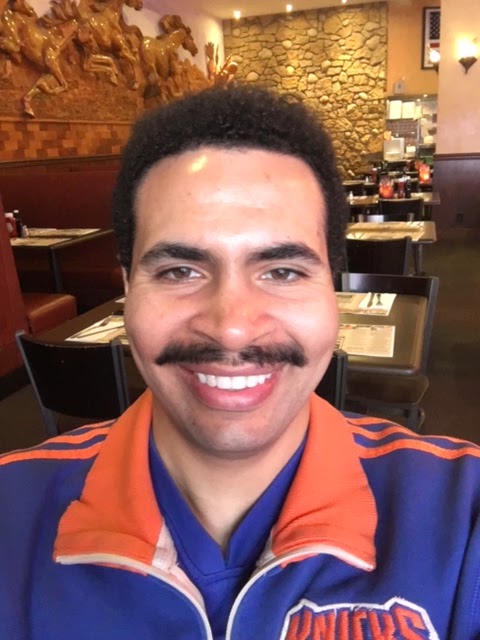
Emanuel Frowner (photo courtesy the author)
[image: A smiling mixed race man with short black
hair in a natural style, and a mustache. he is wearing a
collared orange-and-blue Knicks pullover.]
I grew up mostly in the Bronx with my dad and my grandmother, and I still live there. The neighborhood was dangerous during my childhood because of fighting and drugs—a few people were killed. Therefore, I could not go out alone (until I was 17) and my folks were very protective of me. I would see my mom on the weekends. Sometimes, I would hang out with my siblings (with my folks). They had a different mom than I did, but we had the same dad and grandmother. Even though my grandmother looked very white, she called herself black, but my dad did not agree with her on that. My mom called herself black as well.

I was very quiet, and I would stutter sometimes.  My grandmother told me that this was because I think faster than I talk. She also told me that a still tongue keeps a wise head. I took these as compliments.

I went to an elementary school right near where I lived. At first, I did some mischievous things like breaking forks. During a test, I bubbled in all of the choices and the kids started saying that I was all wrong. The teacher erased them. My grandmother found out about this and she was not happy. At that point, I started doing a lot better and I began getting good grades on my report card. I kept working hard and with the help of my folks, I was named student of the month. This was an honor for me and it made me feel proud.

This did not prevent me from being bullied by other students and teachers just because I was different, which led to my dad homeschooling me from the 6th grade until I got my GED in 2000.  Being homeschooled helped me excel academically. It also helped me develop a strong work ethic, and it helped me to think outside the box.

Another reason my dad homeschooled me was because he did not want me to be fed nonsense. My dad did not want me to get a diagnosis that would put me in a box, or have a label so others could categorize me. He also did not want my brilliance and sensitivity to be overlooked, or want me to be marginalized to the point where it would do irreparable damage. This was a culturally specific issue (which is described later in this essay) as well as a generational issue; my folks stressed that getting an education was the most important thing. And my dad also did not want me to be apart of the herd mentality; he wanted me to develop along my own lines. He took me to his job to meet his coworkers and we all would hang out sometimes. It was okay for a while, but I would have liked to been around others who were similar to me.

Technology really came into my life when I was in my late teens. I began emailing and texting, and no longer had to rely on talking when communicating with others: I could take my time, and respond at my own pace. This also helped me have more privacy, and over time I began making my own decisions.

Before I knew I was autistic, quite a few people told me that I was very bright person who was just quiet and shy—even though I had particular interests like dates, sports stats, being punctual and being patient, yet did not have a few social nuances that others had. This may be because, being mixed race and from a minority culture (I am part Caucasian, part African American, some Native American, some German and a little Scottish, just to name a few), I found that talking about psychological subjects like autism is overlooked and is often talked about in a bad way. Also, I hardly received the type of support or empathy I needed when I was struggling. For example, when I stuttered a bit, I was told that I was hesitating. Another example is when I chose Psychology as my major in the summer 2004, one of my relatives was not supportive of this. But it made me even more determined to do well and I got my BA in Psychology from St. John’s.

In 2005, I started hanging out with my oldest brother Blair, who lived in Canada. He knew an autistic lady, started reading about ASD, and began telling me that I might be autistic. He did some research online and found the Seaver Autism Center at Mt Sinai for me. I did interviews and tests there, and the doctor told me that I was on the autistic spectrum. I was a little surprised, but it was a blessing in disguise.

I began reading up on autism. Two years later When I told my dad what the doctor said about me, he was surprised, but then he came to accept it. I joined some support groups over the years and made a few friends. In 2009, a lady, Katrina R. from Job Path, helped me obtain two jobs through customized employment. I have had those jobs for eight and a half years.

Today, I still work, and also do some speaking gigs. I am also a die-hard Knicks fan, and have been for years. In the future, I would like to do even more public speaking and I would like to run workshops relating to autism. I would like to write a book about my life story and I would like to write more articles on topics relating to autism. I would like to one day run an autistic group designed for minorities. I would definitely like to do more acting in order to improve my skills.
Share:

A Conversation About Autism and Neurodiversity with Steve Silberman and John Marble

Steve Silberman, Shannon Rosa, and John Marble
[image: Three adult white nerds, posing together and smiling.]

Shannon Des Roches Rosa
Senior Editor

A large, friendly, and neurodiverse crowd came together at Square headquarters in San Francisco last night, to hear Steve Silberman and John Marble in conversation about autism and neurodiversity. The event was organized by by TPGA contributor Chris Williams and TPGA friend Chris Ereneta, Square employees both.

We live-tweeted both the witty, empathy-filled conversation and the useful Q and A afterwards, but as tweet streams can be hard for some people to parse, here's a streamlined text (and typos-fixed) version:

Steve is talking about the origins of his book NeuroTribes, how in the early aughts, before he began his research, he thought autism was rare. And how the conspiracy theories about causation were really running rampant. He wrote his classic Wired article The Geek Syndrome in 2001, talking about how some autistic people were finding refuge in the Tech industries of Silicon Valley—and would often have autistic offspring. Steve got weekly emails about his Wired article on autism for 10 years, and during that time noticed that the media emphasis on autism was skewed—people were arguing about vaccines, instead of focusing on the day-to-day needs of autistic people and their families.

There was a book in the 80s by a marriage and family therapist, called “Silicon Valley Syndrome” that appeared before the Asperger’s diagnosis was even part of the DSM, and Aspergians were even recognized as existing en masse. But they obviously existed and were definitely not getting the support they needed. Steve said the author could have changed the title to "Asperger Syndrome" without changing a word of the book itself. So people with autistic trait have been building Silicon Valley and the industries around it for decades. This is a place where autistic traits and talents can be appreciated.

John, who is 42, said that most people his age did not have diagnoses as kids. But he was lucky in that he grew up in a small town, and educated with the same cohort of kids, who knew him.

A few years ago, while working in the Obama administration, John was trying to figure out what was going on with him; he thought he was having episodes of being “deaf” but was actually having sensory overwhelm that was shutting down that sensory channel.

John initially resisted his autism diagnosis. Then a friend introduced him to Ari Ne'eman, and said maybe Ari could help him. Ari and John had coffee, but Ari intentionally asked to meet in a super-busy Starbucks. When John got overwhelmed, Ari suggested moving to his quiet office, and then they talked about the autistic reasons for what John was experiencing.

John says that getting an adult diagnosis is still really difficult. It’s mostly not covered by insurance, and private pay can be $5K+. Ari advised John to go to an autistic meetup. And he met his peeps and got to ask them about What. Autistic. People. Do. Which was revelatory. And then John went to an all-autistic retreat, and got to meet all sorts of autistic people—with ID, Down syndrome, AAC users, and more, and realized that autistic people are diverse, but share commonalities. The same was that French people are diverse but all understand French.

Steve says that Ari Ne'eman helped him too, by encouraging him to go to Autreat and see autistic people on their own turf (rather than in the previous stress bomb NT environs he was used to witnessing autistic people coping in) before he started his #NeuroTribes research in earnest. At Autreat, Steve had so many of his assumptions about autistic people exploded into dust. Like about having a sense of humor, e.g., when Ari was greeted by another autistic person with, “We love you Ari — if we were capable of feeling such an emotion!" At Autreat, everyone was so accepted and encouraged to do their own thing, that Steve found re-emerging into the NT world toxic and overwhelming.

(John mentioned the he was actually a member of the Obama administration before Ari, who was feted as the first actually autistic Presidential appointee; John just wasn’t out as autistic then. :) )

John on the absurdity of the “no humor” stereotype for #autistic people: How could that be true, when no one can even get tickets to autistic comedian Hannah Gadsby’s sold out shows?

John on the social vs. medical model approaches: Social means the difficulties disabled/autistic people experience are imposed by society. Medical model is deficit-based (what is wrong with the person). [We think life is mostly social model, but also disability is real, so.]

John also asserts that everyone stims! For autistic people having their stims suppressed is like an non-autistic person being at a rad dance concert and not being allowed to move their bodies at all.

John is name-checking AASCEND, a local group for autistic people and parents which has a monthly TV show. But whenever he was at a gathering the socializing changed the moment the non-autistic people left. Code switching for autistic people is a thing just like in any other non-majority group.

When Steve started looking at autism and autistic culture, he was able to identify with the cultural/outsider/marginalized/identity aspects because of growing up Gay when homosexuality was still part of the DSM.

ohn found it easier to come out as autistic because he’d already gone through the process of coming out as gay—he had a template.

Steve wants to know what John things companies who want to do right by autistic people/employees need to do.

John: Acceptance and accommodation. Most of the managers he consults with worry about how to retain their employees. Acceptance and accommodation is how.

John: Autistic people are EVERYWHERE. So the more we can educate people about autism and accept autistic people as a different type of normal, that’s what will make the difference. And we need to stop forcing autistic kids to fit into non-autistic roles.

Steve: We need to redirect autism research. Currently 32% of research is genetics and only 2% is only lifespan/QoL issues. That is messed up.

Steve: And we STILL don’t know how many autistic adults exist in the US, because we’ve never had a comprehensive prevalence study. So all those people who need support are not getting it. We do know that the UK did a study, and the kid/adult #autism prevalence was identical. So when people talk about autism “epidemics” or “tsunamis” that is not only completely wrong, but it ignores all the undiagnosed autistic people who are struggling to get by with supports and accommodations.

Steve: And we have to broaden our perception of what autistic people can do, because they are not all tech geeks. Many have no interest in working at places like Square.

John: Not. All. Autistic. People. Are. White. Men. That’s just the stereotype. Autistic people are as diverse as the rest of the population. And the increasing autism prevalence rates in the US mean we’re getting better at recognizing people, not that there’s an autism “epidemic."

Steve: As part of his research. he realized the reason autism prevalence rates are lowest among Hispanic families in Florida is lack of access to health care, not due to lack of autism prevalence.

Steve: John, if you could reinvent the world to accommodate autistic people, what would you do?

John: Center autistic people in autism conversations, policy, curriculum, and organizations. This is why most autism tech is junk; autistic people weren’t consulted. [He] is done with autistic people being excluded from autism conversations. This has real-world effects, because we need solutions and autistic people largely aren’t involved in working towards them.

John is passionate about connecting autistic adults with parents of autistic kids. He wants to buy all the parents a big box of wine. And he feels like a translator between the two groups.

John is talking about how he and my son Leo are examples of autistic people who look very different superficially, in terms of traits, but who are actually really similar in so many autistic ways. They are very same same and enjoy hanging together. It’s delightful.

Steve: While not all autistic people will be able to support themselves, we need to communicate to all autistic people that they can have a great future.

When Steve spoke at UN world autism day, he met a guy who was diagnosed with autism at age 70. Steve asked him what people thought he was before his diagnosis. His answer? “An engineer."

John likes to show parents autistic ppl who are successful, but also wants to be honest about the current challenges are. But he sincerely believes that all autistic people could probably have better supports than they have now. Society needs to change its priorities for autism.

John had always made his own accommodations while working at the White House, until he hit a wall. He asked his boss for an one, though worried he would lose his security clearance, get fired, etc...

mentions His boss’s response? “That’s fantastic.”

Why? He needed people who saw things differently, had different perspectives, solved problems differently. It changed John’s life, and he started leaning into being autistic.

John: The problem for most autistic people who are seeking jobs is the employment/interview process. It’s not autism-friendly. The culture needs to change. Because the skills needed to succeed in a job often have nothing to do with autistic interviewability. This is why John started @PivotDiversity, to change the culture of Silicon Valley, tech, and other industries to accommodate autistic and neurodiverse potential employees. Because until that happens, everyone is losing out on opportunities.

John: Autistic people are not down for exclusion and often walk off panels when there isn’t sufficient representation.

Now Chris Williams is speaking. When he was hired at Square, he had just been diagnosed as autistic, and disclosed during the process. It was astounding for him to be hired under those circumstances. And then at the office Chris W. ran into co-worker Chris Ereneta, who was wearing a neurodiversity tee. Chris W. saw his brain on someone else's shirt! And they connected about their neurodiverse families. Plus it was the first time anyone had told Chris W. he didn’t need to apologize for the way he communicated, which was revelatory.

(And then the entire room erupted in applause for Chris W.!)

An audience member asked about DSM changes. Steve: Important to note that the DSM 5 is the first time autistic adults had input on the autism diagnostic criteria.

Steve: People ask him which orgs to support since Autism Speaks is not good (euphemism), and he tends to recommend the Autistic Self Advocacy Network (as do we).

John: Professionals need to learn from autistic people, because most of them don’t really know much about autism (esp. doctors/therapists) and so helping autistic people is going to be really challenging under those circumstances.

Steve: Only 2% of the autism research outlay is on lifespan/QoL because the mainstream approach to autism is all about pathology. And so we keep overlooking autistic people who don’t fit typically-perceived autism molds.

John: A lot of autistic people don’t like Autism Speaks because they spend less than 2% of their budget on Lifespan/Quality of Life supports for autistic people and their families. But we have to have empathy for parents who listen to the mainstream narrative bc it dominates and it’s hard to find good information [which is why TPGA exists, in large part.]

John and Steve: The most important thing for parents who want to help their autistic kids, especially post-diagnosis, is to find autistic-informed resources. (Like our guide After an Autism Diagnosis: 13 Necessary Next Steps For Parents.)
Share:

Neurodiverse-Friendly Workplaces in Your Community: A Symposium Report

Photo courtesy Max Sparrow
[image: Symposium organizers and presenters stand in front of the Dirt Coffee
Truck while the Dirt workers smile from the left window of the truck.
From left to right, the people pictured are: Dr. Elaine Meyer, Bill Morris,
Lauren Burgess, Kris Harrington, Drew Webster, Dr. Stephen Shore,
Dr. Kristie Koenig, Thomas Koenig, David Finch, Becca Lory Hector,
Philip Tedeschi, Antonio Hector, Erica Elvove.]

Maxfield Sparrow

UnstrangeMind.com

I am sitting in Dirt Coffee in Littleton, Colorado. Ryan, an outgoing young woman with enormous blue eyes, has served me a massive Americano to which I’ve added tons of cream. “Do you know about our mission?” she asks me.

I do know the mission of Dirt Coffee, but I let her tell me anyway because I want the joy of hearing the words again.  I discovered Dirt Coffee earlier today when I attended a symposium at the University of Denver’s Graduate School of Social Work where I heard heartening words about local workplaces that are making the effort to create friendly, inclusive environments for their neurodivergent workers.

The symposium, which ran from nine in the morning until half past eleven on Friday, September 21st, 2018 (after which many of us retired to the excellent mediterranean restaurant across the street to continue networking and sharing information), was sponsored by Colorado’s Center for Neurodiversity and The University of Denver Institute for Human-Animal Connection.  The headliners were Dr. Stephen Mark Shore of Adelphi University in New York and Dr. Kristie Patten Koenig of NYU. The two joined an impressive panel with Philip Tedeschi of the Institute for Animal-Human Connection, Lauren Burgess, founder of DIRT Coffee, and Bill Morris, the CEO and director of Blue Star Recyclers.

First, however, Becca Lory Hector, the Director of Communications/Program Design and Admin at the Center for Neurodiversity, spoke, setting the tone for the event by talking about the importance of community and thanking everyone for taking the time to change the conversation around neurodiversity because we can do so much better than we are. Then the host and moderator, David Finch, author of The Journal of Best Practices: A Memoir of Marriage, Asperger Syndrome, and One Man’s Quest to Be a Better Husband and second-season consultant for the Netflix show Atypical, got the audience laughing by sprinkling jokes through his introductions of the panel members.

Dr. Stephen Shore opened his presentation by talking about central coherence and hyperfocusing. This autistic trait is often framed as a negative “symptom” of an “illness,” but Dr. Shore demonstrated why that is an erroneous way to view such a core aspect of how our brains work. He put up two photos of the same carousel and asked the audience to find ten or eleven tiny differences between the two photos. My friend Dennis Mashue, seated next to me, cracked me up by saying, “the top box is labelled number one and the bottom box is labelled number two.” I shot him a look and he shrugged, “At lunch yesterday Stephen said we should all think outside the box.”

We found a few differences, and then Dr. Shore revealed all the rest of the differences to us. Then he removed the photos from the screen and asked us: what was this a picture of? What animal was in the foreground? What color is the animal behind the first one? How many animals are in the row closest to us? We could only answer the first two questions because the exercise had forced us to focus on the details so much that we missed seeing much of the big picture. Dr. Shore explained that we had just engaged in an autistic thinking style and asked us: Since neurotypical people are usually better at seeing the big picture, does that mean they have a deficit of detail-oriented observation?

Of course that’s not the case. Our society does not generally view the ways a majority of people view things as deficits. Dr. Shore clearly demonstrated that focusing on details is not a deficit, simply a different way of engaging with the world—in fact, it is a way of engaging that can have a lot of benefits. Dr. Shore asked the audience to name some tasks that benefit from detail-oriented thinking. Audience members called out: coding, film production, reading knitting charts, technical editing. Being detail-oriented, as well as many other autistic traits, are labeled as deficits or deficiencies, but Dr. Shore implored us to instead look at autism and other neurodivergences as presenting challenges, but stressed the importance of focusing on strengths when considering autistic people.

Instead of thinking of autism as deficits in communication, socialization, and restricted interests, Dr. Shore told us, we should be focusing on possible areas of success by looking at how an autistic person prefers to spend most of their time. What are their abilities? What are their interests? (Dr. Shore interchangeably used the term “special interest” and “focused interest.” I’ve been fumbling for a better phrase than “special interest” because I don’t like using the word “special” to describe aspects of autism or other developmental disabilities. I really like “focused interest” a lot as an accurate, non-pathologizing term.)

Another question Dr. Shore recommended for those seeking to help an autistic person find their areas of employment success was: What kind of mind does the person have? To illustrate the last concept, he asked the audience if they knew what kind of mind autistics have, asking, “is it a visual mind?” Dr. Shore was pleased to see that no one raised their hand and explained that, while many, perhaps most, autistics are visual thinkers, others are so much the opposite they can’t even read a map. It was a caution against stereotyping the entire body of autistic people as having one particular type of thinking or the same learning needs. I particularly appreciated Dr. Shore making this point because I am not much of a visual thinker. I can mostly read a map but that’s the summit of my abilities.

Dr. Shore talked about the “three As” of autism: awareness, acceptance, and appreciation. He said that organizations have done a pretty good job of awareness and explained that acceptance does not mean just giving up on a person and their future but rather viewing autistic people as whole and valuable human beings who do not need to be eliminated, cured, or made to look and sound like everybody else. Appreciation, of course, would be a natural result of reframing how society views autistic people, using an abilities-based model to help channel people into employment that suits them, and seeing society’s benefits, the results of including neurodiverse people in the workforce.

Dr. Shore mentioned a Los Angeles organization called Autism Works Now and the Glorious Pie business that has come out of it. While the page has some language that does not match Dr. Shore’s message (e.g. “Larry King’s fight against autism”) the organization overall appears to be doing a lot of good work in helping autistic people find jobs, and helping employers understand why autistic people make great employees.

This was my first time seeing Dr. Shore speak and I am a huge fan now. I admit that I was worried about what he might say since he is on the board of Autism Speaks and most people familiar with my writing already know that I do not like Autism Speaks. But after hearing what Dr. Shore had to say, I am grateful that he is working with Autism Speaks and hope that his message of acceptance, focusing on strengths, and inclusion are influencing the organization in positive, helpful ways. I unreservedly recommend Dr. Shore’s work as he is so clearly a force for good in our community and in the world.

After Dr. Shore spoke, his close colleague and friend of many years, Dr. Koenig, spoke about the difference between equality and equity. She showed a slide of four people who each got a bicycle. The bicycles were all the same: it was equal and ‘fair.’ But one person couldn’t use their bicycle because they were a wheelchair user who didn’t have leg strength to use the pedals. Another was too tall to use the bicycle and a third was far too short. Only one person could enjoy the bicycles—not fair at all!

But in the next slide the short person had a smaller bicycle, the tall person had a bigger bicycle, and the person who uses a wheelchair had a hand-pedaled quad bicycle. When all the bicycles were the same only 25% of the users were able to enjoy the bicycles. When each bicycle was different, to accommodate for the differences between riders, 100% of the users were able to enjoy the bicycles and instead of being merely equal, there was actual equity.

Dr. Koenig used this example to illustrate an important consideration: individuals know what they need. Professionals should listen to people explaining their needs rather than assuming they can just figure out people’s needs and fill them with no input from those who will have to live with those professionals’ choices.

In addition to speaking, Dr. Koenig showed some film clips. One clip said that neurodiversity is as important for the human race as biodiversity is for life itself. She also showed a clip of the actor Benedict Cumberbatch in The Imitation Game, a film about genius mathematician Alan Turing. (Turing was quite likely neurodivergent, possibly autistic.) Dr. Koenig showed a clip in which Turing was very literally interpreting what his colleagues said, and she talked about how Autistic people can leave others feeling as if they are rude or irritating because of the differences in how we communicate.

Dr. Koenig also pointed out that whenever businesses support neurodiversity in their workforce they see an increase in productivity and profit as a result. The diverse strengths, skills, and abilities autistic people have mean that matching autistic minds to the best fitting trajectory will not only be transformative for us but also for the employing workplace and for society at large.

After Dr. Koenig spoke, David Finch began asking questions of the entire panel. Sometimes I could tell who was saying what, but not always because I was sitting in the back. Here are some of the things people talked about:

We have to force inclusion. It will not happen naturally. But we can force inclusion in powerful and compassionate ways. One panel member suggested that a Christian model might call that sort of forced inclusion “grace.”

Communication is very important. Many people type to communicate, and we have to keep offering that option (as well as other forms of communication beyond speech) to everyone to keep communication channels as open as possible. Most people tend to be lazy communicators so we need to help autistic people with the tools to engage in communication as much as wanted/needed.

Small talk is virtually useless, but people engage in it anyway. How long does it take to genuinely check in with someone? If we think that extra time is a burden we need to re-think. A work environment that is humane and inclusive is also economically valuable. Companies will want to choose humane communities and look for strong inclusive values and attitudes plus policies in place to support those values. Building accepting communities helps everyone. There is research supporting this but it’s hard to briefly cite because it’s multi-disciplinary and you have to integrate findings from many places to come to these conclusions. (Note from Max: I hope some academics do that integrating work, write down the results, and publish. I’d jump at the chance to read and write about that research!)

Someone (I think it was Dr. Koenig) mentioned the importance of authentic autistic involvement in all research about us and our lives. In that vein, they recommended PARC: The Participatory Autism Research Collective.

Lauren Burgess talked about the DIRT coffee shop she founded in 2013, its mission to employ neurodiverse people, and their internship program and education. More than once Burgess mentioned that neurotypical employees routinely required more training and more supports (like visual aids) than the neurodiverse employees. Burgess told a story about an employee who developed a highly efficient way to do inventory. Burgess mentored him by suggesting he train all the other employees in his system. He wrote detailed instructions in an email and now everyone uses his system.

David Finch responded that one mentor can put everything on track for an autistic worker by suggesting things (like taking a leadership role) that might not have occurred to the autistic person.

Bill Morris talked about his business, Blue Star Recycling. He talked about his early struggles when he was first promoted to management in his twenties and learned “Be the kind of boss you’d like to work for.” As a result, he runs his business that way. His employees are neurodiverse—from entry-level employees to management. Morris praised the strengths of the autistic people working in his business, and said that the attention to detail was perfect for the work they do: dismantling old electronics so the parts can be reused in other devices and projects.

Finally Dr. Elaine Meyer , who was in the audience, spoke about a press release issued earlier this month, announcing that Harvard’s Center for Bioethics will be collaborating with Colorado’s Center for Neurodiversity in studying issues surrounding “ethics, human rights and neurodiverse qualities of life.” The press release states the goals and aspirations of this collaboration are, “expected to evolve and, most importantly, be responsive to the priorities and needs of a neurodiverse population. There will be an emphasis on joint projects including conferences serving academic and lay audiences; innovative educational offerings such as webinars and simulation-enhanced learning opportunities; a range of scholarship; media presence; and timely policy statements. It is anticipated that the Center for Neurodiversity may serve as a placement for the Master of Bioethics students to fulfill their year-long Capstone Project requirements, culminating in scientific poster sessions and scholarly publications.”

Overall, the symposium was very upbeat and positive. Attendance was good, and many people raised their hands when asked how many were neurotypical (NT) professionals who work with autistic people. Hopefully the information everyone shared will help professionals and employers better serve autistic adults, and make a significant dent in the distressingly high unemployment rate autistic workers face.

Later, at Dirt Coffee, Ryan mentioned that high unemployment rate. I asked for the WiFi password and it turned out to be a variation on the statistic of 90%. “Do you know why that’s our password?” Ryan asked me, looking genuinely eager to tell me the answer.

“Why?” I was genuinely curious to hear the answer. I had instantly liked Ryan. She is authentically friendly and made me feel welcome from the moment I walked in the door.

“Because 90% of people on the spectrum are unemployed or underemployed,” she told me.

The statistic I’ve always seen is 85% so I have no problem accepting that Dirt Coffee found a source citing 90%. What an important WiFi password, and opportunity for education.

Companies like Dirt Coffee and Blue Star Recycling, academics and researchers, writers and advocates, parents, adult autistics, and more are all working toward a brighter future for autistic adults. It was so uplifting to hear words of hope and progress at the symposium and so comforting to end my day at a coffee house that loves and values my neurotribe. We live in uncertain times. I am reassured when I see so many people working so hard toward so much good.
Share:

Why Is the Autistic Unemployment Rate So High?

Office
Photo © Terry Chay | Flickr/Creative Commons
[image: A colorful office workstation with two large computer monitors.]
Maxfield Sparrow
unstrangemind.com

In the United States, thirty-five percent of Autistic eighteen-year-olds go to college. Of those American Autistics with university diplomas, only 15 percent are employed. This 85 percent unemployment rate (among college-educated Autistic adults) is massive—the general population’s unemployment rate (at all education levels) is only 4.5 percent.

There are some obvious reasons for this disparity. Just as with all Disabled people, workplace understanding and accommodations are a huge reason why Autistic people have such a hard time finding and keeping employment. Making it past an interview can be an insurmountable hurdle for many of us. While organizations and employer programs are popping up to help Autistic adults find and keep employment, with an estimated 50,000 new Autists entering the workplace every year, the few programs that exist cannot possibly keep up with the demand.

What many don’t realize is that the Autistic unemployment rate is higher than the unemployment rate for all disabled Americans in general (disabled people comprise about 20% of the population and have an unemployment rate of 10.5%) and higher than the unemployment rate for non-Autistic Americans with developmental disabilities (people with intellectual disabilities have an unemployment rate around 21%.)

Aren’t There So Many Unemployed Autistic People Because of Those With Severe
Disabilities?

In case you aren’t familiar with unemployment terminology, I should note that these unemployment rates for disabled Americans do not reflect whether some of us are too disabled to work at all. By definition, an unemployment rate only counts those who are ready to work and actively seeking employment. The Census Bureau divides the adult population into various groups, and people of working age are either counted as being in the workforce or not. Someone who is not in the workforce is not only not working but not even looking for work. The unemployment rate for any group of people—whether Autistic, Disabled, or the general population—is the percentage of the workforce who are not employed. Those too disabled to work are not in the workforce to begin with.

This also means that those Autistics who have become discouraged by the difficulty in finding employment and have given up looking for a job are not counted in these unemployment figures. Autistics who are living in institutions such as jails or hospitals are also not being counted in the unemployment figures. A much higher percentage of all Autistic adults than that 85% unemployment rate are not working for a variety of reasons. Those adults who are not institutionalized and who are prepared to work and could be in the workforce but have given up are called “discouraged workers.”

In the United States, the estimated number of discouraged workers in the general population is 451,000. The CDC has estimated an autism prevalence of 1 in 68. If that proportion also applies to discouraged workers, that would mean 6,632 discouraged Autistic workers. I couldn’t find a statistic for how many of those discouraged workers are Disabled or Autistic, but the actual statistics are so horrifying I don’t really need to add discouraged workers to those numbers to convey the employment crisis Autistic adults are facing.

So Why Are So Many Autistic Adults Unemployed?

The unemployment rate for all Disabled people is 10.5%. That rate accounts for stigma, lack of understanding, lack of appropriate accommodations, internalized and external ableism, plus all the reasons that lead to the 4.5% unemployment rate in the general population. The unemployment rate for Disabled people with non-autistic developmental disabilities is roughly twice that, at 21%. That leaves another 64 percentage points unaccounted for when we are looking specifically at Autistic members of the workforce.

I’d like to try to connect the dots a little bit by talking about a few of the special issues Autistic people face when we can’t find and keep employment as well as factors that drive some Autistic people from the workforce, converting them to discouraged workers.

Unusual Stigma Pattern

All disabilities come with social stigma and presumptions of incompetence. Autism comes with a particularly unusual set of assumptions that leave the Autistic person pressed from both directions into a pinched space no one can actually live or work in. This twin set of oversimplifications about who and how Autistic people are may be one of the biggest barriers to employment we face.

Most people get their understanding of autism from television and the movies, so the average person “understands” autism through models like the counter of toothpicks and playing cards who is re-institutionalized because he can’t use a toaster safely. On the other end of the representation spectrum are the socially naive surgeons people tolerate because they’re so incredibly brilliant at saving lives. Actual Autistic adults seeking employment fall somewhere inbetween those two portrayals by an extremely wide margin, which means there’s no room for us.

People who think autism is Rain Man will not even consider hiring us, because being Autistic means we’re obviously incompetent. If they meet us and we do not come across as incompetent, we’re obviously lying about being Autistic—not something likely to make an employer interested in hiring us.

People who think autism is savant geniuses like Dr. Virginia Dixon from Grey’s Anatomy and Dr. Shaun Murphy from The Good Doctor don’t understand why we need accommodations if we’re so brilliant and accomplished. They are disappointed, or even angry, when they learn we’re bright and motivated but just regular people. (My apologies to you if you actually are a real-life brilliant Autistic superstar like Dr. Temple Grandin, whose work in animal husbandry and slaughterhouse design is accepted internationally as the game-changing genius work it truly is. The majority of us are not.)

The vast majority of Autistics in the workforce fall through this “crack” between too-low expectations and too-high demands and either get turned away from employment or offered underemployment positions that do not pay enough money to support us. If we do not disclose our autism, we are viewed as “weird” or even “creepy” by potential employers and co-workers who can see our differences but can’t understand what is behind them. If we do disclose our autism, we face the strangely-shaped stigma that comes from not being well understood by a population flooded with “autism awareness” campaigns that deliver little useful content that could lead to genuine autism acceptance.

“Falling Off The Cliff” of Low Expectations

When Autistic people reach age 21, they age out of most available services. Some people call this “falling off the cliff” because of the drastic change one day (a birthday) makes is as sudden as hiking along a trail only to step off the edge of a cliff. When that cliff comes, it hits hard, especially for those who were previously underestimated and thus not prepared for employment. I have watched schools and families underestimate Autistic young adults and actively steer them away from an employment path. When those young adults age out of the system, there is nothing available to correct the skewed trajectory they have ended up on.

What happens to those who fall off the cliff? Some never enter the workforce in the first place. Some try and end up gravely underemployed. Some end up as discouraged workers. Some end up institutionalized. Statistics tell us that many end up dead from suicide. A study of newly diagnosed adults with Asperger’s syndrome found that 66% had felt suicidal, and 35% had attempted suicide. Of course that doesn’t count the number who attempted suicide and succeeded—we just don’t have statistics for that. We don’t know how many lives have already been lost, many before even being identified as Autistic and being counted among the 85% of unemployed Autistics and unknown number of Autistic discouraged workers.

Multiple and Sometimes Conflicting Needs

Not only do Autistic workers and Autistic would-be workers face the struggle for acceptance and the struggle for accommodation, but Autistic people experience a higher-than-average rate of other issues that affect employability such as gender and sexual identity issues and other, co-occurring disabilities.

Autistic people are seven times more likely to be Transgender than the general population. Since the Transgender unemployment rate is three times the unemployment rate among the general population, the intersection of autism and gender identity issues is bound to be another aspect that explains the high rate of unemployment among Autistic people. Other marginalized gender and sexual identities experience high rates of workplace discrimination and poverty as well. These difficulties compound the employment struggles Autistic people already face.

As for other disabilities, nearly half of all Autistic people meet the criteria for anxiety disorders, between 10% and 33% of Autistic people qualified for the workforce have epilepsy, around 30% of Autistics also have obsessive-compulsive disorder, Autistic people experience at least double the amount of sleep disorders as the general population, and so on. There are other conditions that are not yet strongly documented in scientific literature but which the Autistic community has noticed appearing at a much increased rate among us, for example Ehlers-Danlos syndrome. Just as being multiply disabled presents extra challenges in education, it presents extra struggles in employment.

An example from my own life: in addition to being Autistic, I have other disabilities. Two of them have access needs that conflict with each other in ways that significantly narrow the pool of jobs I am capable of pursuing. I have a circadian rhythm disorder called N24 that requires me to have a great deal of sun exposure in order to maintain a schedule compatible with work. At the same time, I have Ehlers-Danlos Syndrome which significantly limits me physically, ruling out jobs like park ranger, groundskeeper, or construction worker. I am not physically capable of the heavy manual labor that comes with outdoor jobs but an indoor job makes it impossible for my brain to keep accurate time, sending me into a schedule more fit for living on Mars. I can’t keep a job when I keep falling asleep in the middle of a sentence at work!

Draconian and Discouraging Social Security Rules

To continue with my own situation, I realized I would have to “think outside the box” when it comes to employment, so I have been self-employed for the last several years, working on building up my own business. I have run into many other Autistic people who are pursuing or attempting to pursue the same course themselves.

The main ingredients to self-employment are possessing a strong skill that there is also a demand for and having sufficient support to develop that skill into marketable products and/or services. Some governments even offer support, such as Australia’s New Enterprise Incentive Scheme. Autistic self-employment can get pretty far outside the box. For example, Brad Fremmerlid assembles IKEA furniture for a fee. That’s a business so many people are eager and grateful for that it’s surprising it didn’t already exist.

In my own case, I’ve come up against all the difficulties of starting and running one’s own business—including the fact that my business is still not fully independently supporting me—and something even worse: Social Security rules. The Social Security Administration wants disabled people to work. Their rules for those who pursue traditional employment are generous and easy to work with. Since most jobs provide regular paychecks, a person’s Supplemental Security Income (SSI) or Social Security Disability Insurance (SSDI) is reduced according to what their monthly income is. (I apologize for focusing on the U.S. here. I don’t have experience working in other countries.)

As a self-employed worker, my income is irregular. One month it can be very high and another month it can be very low. My business expenses are also variable and sometimes the highs and lows of expenses do not come in the same months as the highs and lows of income. After some wrestling over the royalties from my memoir, No You Don’t, the Social Security Administration (SSA) and I came to an agreement: I would file taxes every year and they would adjust my benefits check based on my tax return amount.

As it turns out, they weren’t able to stick to their side of the agreement. I had a phone interview with the SSA late last year in which they insisted that I had to pay them back for an overpayment due to my income being too high. I tried to talk about the plan we already had in place but they would have none of it. They docked my SSI check.

Now that I have filed taxes, I see that not only did they not overpay me at all, I had a business loss last year. My business expenses were slightly higher than my business income. So now I am struggling along on a diminished benefits check and the same uncertain, variable business income and expenses. One thing has changed: once again, I am wondering why I am doing this? Why am I working so hard to build a business only to have to pay the government and have zero profits to live on?

This is not just my story. I have heard similar versions of this from so many other Autistics trying to start or continue their own royalty-based business for their writing, art, music, etc. I am dangerously close to leaving the workforce and returning to the ranks of the discouraged workers. After all, why should I try if the government is just going to break its word to me, and come take away what little I have?

What Help Is Available?

If you’re still with me, you’re probably reeling from the bleak picture I’ve painted. Fortunately it’s not all so grim! First, an 85% unemployment rate means that 15% of Autistic workers are employed! Okay, that’s a horrible statistic, but those people who make up that 15% need us to remember them and support them. Many of them are just hanging on by a thread and could lose their job any day. Many of them are stressed to the edge of breaking. They need more accommodations and more understanding. While we need to work hard to improve life for the 85% who are not succeeding, we can’t forget to take care of that 15% who have jobs.

When it comes to self-employment, in addition to government programs to encourage small businesses and the assistance and mentorship of offices of Vocational Rehabilitation, you can check out this mini-guide written by a self-employed Autistic for other Autistic people who are considering self-employment: Self-Employed Aspie. Cynthia Kim has more than one iron in the fire, since she wrote this series before starting the company you are probably more familiar with, but she’s also the entrepreneur behind Stimtastic. Another popular article written by an Autistic for other Autistics is Silent Wave’s essay: Self-employment for people on the Asperger’s/autism spectrum.

There are a few companies out there attempting to match Autistic workers with understanding employers. A big complaint a lot of people have about these companies is how computer-focused they are. There is an assumption that all Autistic people are great with computers and should go into computer work for a living. This is untrue, and focusing only on computer work leaves a huge number of unemployed Autistics out in the cold.

On the other hand, many Autistic people actually are good with computers and attempts to help reduce our unemployment rate had to start somewhere. Matching Autistics up with computer jobs was easy, and so between stereotypes and the path of least resistance, this is what we have the most of right now. I suggest we thank those people who are working to offer us computer jobs and ask if they have anything else. I am grateful that these tech companies exist and I will do all I can to keep getting the word out to people who might want to start another business to help us: we need a wider variety of job types available to us, please!

With that said, here are some of the groups that I’m aware of. Some don’t immediately look like job-finding organizations but have indicated in interviews that they do this work. When in doubt, contact a group to see if and how they can help you. In no particular order:


Share:

Ultra Testing: When Companies Actively Recruit Autistic Employees

M. Kelter
theinvisiblestrings.com

Ultra Testing is a New York-based tech firm that was founded on the idea of incorporating autistic differences into their work ethos. At a time when an estimated 80% of adults on the spectrum are unemployed, Ultra Testing is using attribute metrics and other non-traditional hiring practices to recruit autistic employees. A 2016 Recode article reported that 75% of the company's employee base identifies as being on the spectrum.

I recently communicated with the firm's co-founder, Art Shectman, about how the company began, the value of ditching traditional hiring practices, and what employers need to know about developing a neurodiverse workforce.

M: Regarding Ultra Testing's decision to focus on hiring autistic employees: can you describe the origins of this idea, both generally (how the idea came about), and specifically (how you actually went about recruiting and bringing in folks on the spectrum?)

Art Shectman | source: Twitter
[image: White man in dark suit jacket, posing in
front of a summer-foliage wisteria bush
Art Shectman: My co-founder Rajesh Anandan is my hero, my MIT schoolmate, and fraternity pledge brother. He's the one person I know who's chosen a path of philanthropic and foundational social impact work, and he works every day to make the world a better place. In his travels with UNICEF he saw many children and disabled folks discarded, and living very difficult lives. He had a theory on sustainable change, that if you could align the extra abilities that sometimes accompany disabilities with a competitive advantage, you could create a competitive business and a job creation engine.

We had dinner, and we're reviewing a list of disability, size of population and extra ability and possible career alignment. That list was compiled by a  strategy firm called STAX, run by our first supporter, Rafi Musher, a great philanthropist and impact investor. I saw Autism and Software getting on the list and as I also run a software engineering firm and buy QA services. I said "let's give it a try." Three days later, we hired some testers and gave it a rip, and the results were great. Then we set to work to operationalize that early success into a scalable repeatable differentiated service provider.

The recruiting process at first was to call GRASP and ASTEP for referrals. Over time, we've built a network of some 200 "nodes," where we hunt for talent on the spectrum. We have a community manager who is on the spectrum, and who helps us build that network out and helps us coordinate candidates.

Once we had a process for sourcing candidates, we had to build an attribute and simulation-based set of recruiting tasks that try to leverage the most current talent research—which mostly says traditional interviews are junk. It's been a unique challenge to make it all work, but really it is a system or set of behaviors around recruiting that would apply for neurotypical and neurodivergent folks alike.

M: Work places tend to develop a distinctive office culture over time, though if I understand correctly, Ultra Testing employees work remotely. Are people doing their jobs independently, or is it more of a cooperative, interactive scene?

Art: We have rich interactions every day with Engagement Managers, other testers and on our corporate Slack channels of all varieties. The culture is extremely interactive and collaborative.

M: Does Ultra Testing have an "office culture"? I wonder if this concept looks any different when many of your employees are autistic. If you could paint a picture of what it feels like to work at Ultra Testing on a daily basis, I would love to hear that.

Art: There is an amazingly rich corporate culture. It looks very much the same as any other culture, folks are serious, silly, insightful, and a whole host of other emotions that you might find anywhere else. Above all our team has a culture of collaboration over accommodation, and we are focused on creating a neurodiverse space where we embrace our differences. It's a fun and caring place to work. If we succeed we want people to have options of where to work, and to stay at ULTRA because it's a great place to work.

M: There are ongoing concerns in the autism community about the way the media presents any job for an autistic as a positive thing, regardless of whether or not the work is actually meaningful or valuable to the autistic employee. I think people are hoping to see more of an emphasis on good jobs, not just busywork that others may not want to do.

Art: I disagree to some degree here. I feel that there are a spectrum of jobs that are great fits for the spectrum of folks on the spectrum. Where do I agree is that there is a knee jerk concept of what those jobs should be (busywork).

While there are many jobs regardless of whether you are on the spectrum that are busy work, a job still brings empowerment and self-sufficiency in a way that being unemployed does not. There are neurodiverse folks who are happy to do all kinds of jobs. With 1MM or so folks on the spectrum who are readily employable, any job where an employer is embracing neurodiversity (not accommodating it), and where a candidate wants the job, and has a natural propensity to do that job, is a good job in my opinion.

I do take your point, and we fight the general media bias all the time. We created the DifferentBetter Challenge to try to shift the discussion to competitive advantage, and away from human interest, for many of the same reasons.

This is somewhat of a loaded question, and there's a personal bias there about "meaningful" and "fulfilling." However, that said, I'd agree that a person should have employment options and should be able to have a job that they find meaningful and fulfilling. Maybe I'll defer to a quote from a recent neo.life article about Ultra Testing:
"Now the fact of his employment has become routine for Cha. When asked whether he plans to stay on, he says, simply: “The work is interesting, and I like the people. As long as those two conditions apply, I will be here.”"
M: I know Ultra Testing does regular satisfaction checks with employees. Can you discuss that—why Ultra Testing decided to perform satisfaction checks, and how you ensure that they are meaningful and not just a token effort?

Art: We decided to do it because there is documented research on the productivity costs of team happiness, and how it pays to measure and track it. We've evolved our survey over the years to gauge the many facets of anxiety and job satisfaction that our teams have taught us are meaningful, through their survey responses.

The only way to ensure the responses are meaningful is to really care about them from the most senior level down, which we do, and then to make a culture and habit of responding to feedback. If the staff thinks feedback isn't heard or acted upon, they stop giving it. If they feel they don't have a sense of agency to impact their environment, they stop trying.

Most of our staff need to be coaxed out of their shell, and our super supportive and caring culture helps us do that. Many employees have had experiences where their differences were a source of stress, conflict and ridicule. It takes time to feel comfortable sharing and embracing differences, and realizing that we are all building the company together, and that their feedback is welcome.

M: I read that you tailor hiring practices to a variety of autistic differences (for example, you offer alternatives to traditional interviews, and do not emphasize a need for prior work experience). At first glance, these seem like genuinely beneficial practices that many businesses could replicate. Help me understand employer thinking about this. What are the barriers that would make it difficult for other companies to engage in similar efforts and find alternatives to old school hiring methods?

Art: Folks just can't let go of tradition, even when the research says people are terrible at interviews, and suffer nearly insurmountable first impression biases. It also takes work, measurement of data, and testing and learning and reconfiguring until you get to role-specific practices that help you recruit in non-traditional ways. Most bigger companies do this, but they haven't expanded their programs to include neurodiversity yet.

M: What would your advice be to other companies, about creating mutually beneficial spaces for autistic workers?

Art: Recruit for unbiased attributes that make an employee successful in the job. Then exercise and build collaboration over accommodation.

M: On a personal level, have you learned anything about autism from your experiences at Ultra Testing that you didn't know before? Popular culture generally offers a distorted view of what autism is really like, so I was wondering if your view of autism has evolved in any unexpected ways.

Art: It has, but I'm not qualified to have an opinion here. I would just say that I'm continually reminded that our original theory that our differences make us better remains true. I'd say my views on the power of a neurodiverse workforce are what have evolved the most, and it is a really powerful thing.
Share: