Showing posts with label bullying. Show all posts

How Being a Minority (of Mixed Race) on the Autistic Spectrum Shaped My Life

Emanuel Frowner
www.instagram.com/emanuelfrowner

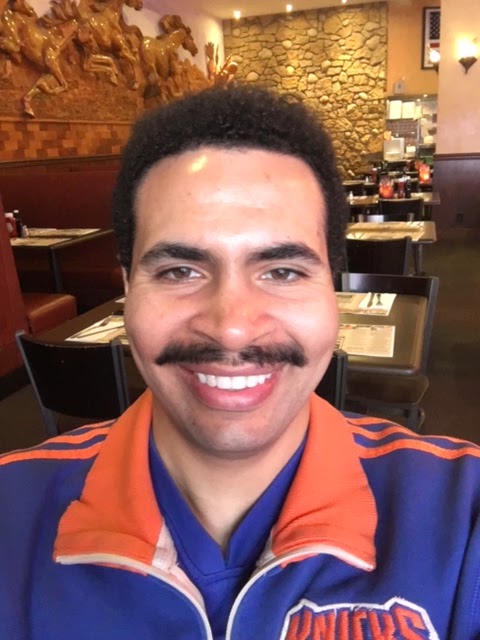
Emanuel Frowner (photo courtesy the author)
[image: A smiling mixed race man with short black
hair in a natural style, and a mustache. he is wearing a
collared orange-and-blue Knicks pullover.]
I grew up mostly in the Bronx with my dad and my grandmother, and I still live there. The neighborhood was dangerous during my childhood because of fighting and drugs—a few people were killed. Therefore, I could not go out alone (until I was 17) and my folks were very protective of me. I would see my mom on the weekends. Sometimes, I would hang out with my siblings (with my folks). They had a different mom than I did, but we had the same dad and grandmother. Even though my grandmother looked very white, she called herself black, but my dad did not agree with her on that. My mom called herself black as well.

I was very quiet, and I would stutter sometimes.  My grandmother told me that this was because I think faster than I talk. She also told me that a still tongue keeps a wise head. I took these as compliments.

I went to an elementary school right near where I lived. At first, I did some mischievous things like breaking forks. During a test, I bubbled in all of the choices and the kids started saying that I was all wrong. The teacher erased them. My grandmother found out about this and she was not happy. At that point, I started doing a lot better and I began getting good grades on my report card. I kept working hard and with the help of my folks, I was named student of the month. This was an honor for me and it made me feel proud.

This did not prevent me from being bullied by other students and teachers just because I was different, which led to my dad homeschooling me from the 6th grade until I got my GED in 2000.  Being homeschooled helped me excel academically. It also helped me develop a strong work ethic, and it helped me to think outside the box.

Another reason my dad homeschooled me was because he did not want me to be fed nonsense. My dad did not want me to get a diagnosis that would put me in a box, or have a label so others could categorize me. He also did not want my brilliance and sensitivity to be overlooked, or want me to be marginalized to the point where it would do irreparable damage. This was a culturally specific issue (which is described later in this essay) as well as a generational issue; my folks stressed that getting an education was the most important thing. And my dad also did not want me to be apart of the herd mentality; he wanted me to develop along my own lines. He took me to his job to meet his coworkers and we all would hang out sometimes. It was okay for a while, but I would have liked to been around others who were similar to me.

Technology really came into my life when I was in my late teens. I began emailing and texting, and no longer had to rely on talking when communicating with others: I could take my time, and respond at my own pace. This also helped me have more privacy, and over time I began making my own decisions.

Before I knew I was autistic, quite a few people told me that I was very bright person who was just quiet and shy—even though I had particular interests like dates, sports stats, being punctual and being patient, yet did not have a few social nuances that others had. This may be because, being mixed race and from a minority culture (I am part Caucasian, part African American, some Native American, some German and a little Scottish, just to name a few), I found that talking about psychological subjects like autism is overlooked and is often talked about in a bad way. Also, I hardly received the type of support or empathy I needed when I was struggling. For example, when I stuttered a bit, I was told that I was hesitating. Another example is when I chose Psychology as my major in the summer 2004, one of my relatives was not supportive of this. But it made me even more determined to do well and I got my BA in Psychology from St. John’s.

In 2005, I started hanging out with my oldest brother Blair, who lived in Canada. He knew an autistic lady, started reading about ASD, and began telling me that I might be autistic. He did some research online and found the Seaver Autism Center at Mt Sinai for me. I did interviews and tests there, and the doctor told me that I was on the autistic spectrum. I was a little surprised, but it was a blessing in disguise.

I began reading up on autism. Two years later When I told my dad what the doctor said about me, he was surprised, but then he came to accept it. I joined some support groups over the years and made a few friends. In 2009, a lady, Katrina R. from Job Path, helped me obtain two jobs through customized employment. I have had those jobs for eight and a half years.

Today, I still work, and also do some speaking gigs. I am also a die-hard Knicks fan, and have been for years. In the future, I would like to do even more public speaking and I would like to run workshops relating to autism. I would like to write a book about my life story and I would like to write more articles on topics relating to autism. I would like to one day run an autistic group designed for minorities. I would definitely like to do more acting in order to improve my skills.
Share:

Running Away: Autism and Elopement

#vscocam run away child!
Photo © Gonsalo Gomes | Creative Commons / Flickr
[image: Sepia-toned photo of a small child with short dark hair,
seen from behind, running.]

Marie Porter
www.celebrationgeneration.com

In an effort to raise a bit more “AutismAwareness,” I’d like to discuss “elopement.” I invite other autistics to add in their own experiences in the comments—this could be educational! But as far as what I’m about to say, I’m really just speaking to my own experience and thoughts.

First, I’d like to say that “elopement” is a ridiculous term. Right up there with “differently abled,” IMHO. It’s running away. It’s wandering. Call it what it is!

Secondly—and this is in response to an "autism warrior mom" who recently came at me to defend ABA—no one “dies from elopement,” just like no one dies from “running away.” Yes, there are all kinds of ways that one can meet their end running away, but those would be the cause of death—drowning, starvation, hypothermia, murder, etc. I don’t know why “died from elopement” rubs me the wrong way, but it does.

Now that my pedantry is out of the way, I’d like to discuss autistic running and wandering. It’s been really upsetting to see how it’s discussed among allistic (non-autistic) parents of autistics. I feel like there’s this idea that we just mindlessly wander, or run without intention, or that there’s no thought at all involved.

I’m sure that idea is a comfort to warrior parents but—at least in my case—that’s not accurate.

I ran to get away. Plain and simple.

Living with parents who are awful, unaccommodating, without empathy, who are abusive—verbally, physically, emotionally—is bad for anyone. I’m not discounting the awfulness of abuse when it happens to allistic kids.

But picture being alone. You aren’t like your own family, and everyone—even family—treats you like an outsider. You don’t relate to your “peers” at school, are constantly bullied, etc.… and on top of that, those closest to you are awful to you. Home feels like such an unsafe space, that even school—bullies, noise, crowds, and all—feels like a little bit of respite.

That is the reality I lived, and that’s the reality that so many of my autistic friends lived.

So when I ran, it was to get away.

I had many thoughts on this: Maybe a nice family would find and rescue me. Maybe I’d find my “real” parents (I often wondered if I’d been switched at birth, being that different from everyone I was related to). Maybe I’d get arrested, and somehow that would lead to a better life. Maybe I’d get kidnapped, maybe even worse; but anything would have been better than what I was living.

I had thoughts like that at least as early as six or seven years old—as far as I can remember. It may even have been earlier.

On a less… dark… note, I also did my share of “wandering” at school, usually at recess. Our recess area was a playground and fields, bordered with sidewalk—and we were not to go beyond that sidewalk. I did, and I did so knowingly, because that sidewalk represented a clear delineation between utter chaos, and peace. Beyond that sidewalk was a few meters of lightly wooded area, ending in fencing, separating the school area from the homes beyond it. I would sit among the trees, playing with leaves, and generally enjoying the solitude and quiet.

In the winter time, I’d hang out in the space between the snow drifts and that fencing, usually making a fort-type area. I’d carve seating out of the snow, and again… just enjoy the solitude. Sometimes I’d miss hearing the buzzer, of course, but I really needed that mental health break. Sometimes, that fifteen minutes, twice a day, was the only peace and quiet I had access to. It really made a difference!

As I got older—about eleven years old—I did more wandering. I enjoyed it, and I would purposefully try to get lost, almost as a challenge. I loved getting on my bike and just randomly turning down streets, eventually ending up on the far side of the city. It was fun. It was exploring, it was learning new things, seeing new sights, and it was being 100% in control of my environment.

I could go somewhere more quiet if I liked, I could head in areas with fewer people if I liked, and I didn’t have anyone telling me how broken I was. It was peaceful. I enjoyed having that peace.

Running, wandering... it was always conscious, and with purpose. It was escaping a bad environment, and that rings true for others I know. Maybe it wasn’t full-out abuse, maybe it was just being in a situation that was too noisy, or too bright, or whatever… but many/most of those I know who ran… it was to get away from something, or someone.

In my experience with autism warrior parents, they don’t want to hear this, because it contradicts their victimization narrative. They take it as an attack on them, rather than as a valuable source of information that they can learn from. They don’t want to consider the possibility that they are what the kid is running away from, whether personally, or as a matter of the overall environment provided.

They would rather buy a leash and subject the kid to ABA, than to invest time in investigating what could possibly be inspiring their kid to run. It could literally be as simple as their TV and/or lights emitting a high pitched noise that is intolerable. Maybe the cleaning solution used on the floors in the house just smells super noxious. Either can definitely inspire an autistic to run.

Imagine being put through 40 hours a week of abusive compliance therapy, because your parents didn’t want to change the types of lightbulb in the house!

In this sense, running and wandering are very much like many of the “negative” aspects of autism that parents want to “therapy” out of a kid, rather than address the underlying issue. Maybe it’s banging their heads. Maybe it’s another stim. Maybe it’s something verbal, like yelling—these are all signals that something is wrong. They’re all communication.

Compliance therapy isn’t going to make that lightbulb or that cleaning solution any less painful to deal with, it’s just going to make that kid bottle it up.

Cutting off a major means of communication doesn’t do anything good for the person being “silenced,” whether literally or figuratively silenced.

The completely wild thing, to me, is that the concept of running and wandering to get away from something shouldn’t be foreign to many people. You take vacations to get away from work. You go to the gym to get away from stress. You leave toxic friendships, and…I’m sure there’s some sort of sensory equivalent, but to be honest, the amount of sensory hell that is acceptable to allistics is completely beyond my comprehension. I’m sure some must like, leave restaurants that are too loud, or…?

Anyway.

I guess what I really want parents to take away from this is that anything your autistic child is doing that is annoying or distressing to you… is because something is annoying or distressing to them. You can take that as a personal slight, or you can take that as inspiration to make the environment better for your child.

Personally, I hope you go with the latter, as it will make things better for everyone.

Fin.
Share:

Hard Truths: Disability and Poverty Go Hand in Hand

Maxfield Sparrow
unstrangemind.com

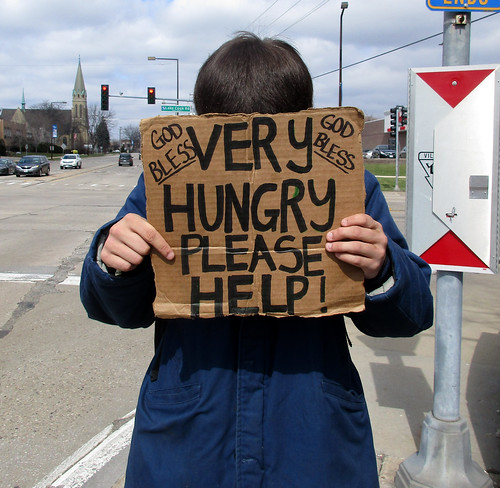
Homeless
Photo © *Hajee | Flickr/Creative Commons
[image: Person with black hair and a blue coat. They are holding a hand-lettered
cardboard sign over their face. Sign reads, "VERY HUNGRY PLEASE HELP!"]
I am not the only Disabled person economically struggling, as disability and poverty go hand in hand. Why is that? The answer is complex, since disability leads to poverty and poverty leads to disability. It's a vicious cycle and sometimes a downward spiral, leading people to lead lives perpetually circling the drain, always on the edge of annihilation.

Let me see if I can untangle some of it for you.

“You’re dooming yourself to a hand-to-mouth existence.”

That’s what my parents told me when I dropped out of high school. And they were right.

Well, they were half-right, anyway. I have spent the last three decades living hand to mouth, but it is not a fate that I brought upon myself. I am Autistic, but that is only part of the picture. I am multiply Disabled and the requirements and limitations of my various disabilities bounce off each other in difficult and sometimes devastating ways.

These cycles of disability and poverty can go all the way back to childhood. Starting life in poverty is an immediate disadvantage in life. That’s probably obvious, right? Less money often means poorer health coverage and poorer nutrition, which can cause additional health problems for the rest of a person’s life, even creating new disability where none was to start with.

A family without financial resources is not able to help their children launch into the world as successfully as a family that can afford to help young people with their start in life. Fewer resources mean less attention paid to mental health needs. A family with one or more disabled members will have additional costs. And expenses considered burdensome for a middle-class family can be the difference between life and death for a poor family.

A disability present from childhood can mean less access to a quality education; poverty also lowers access to such an education. Disability and poverty together can block a child’s future earning potential entirely. But the cycle of disability and poverty do not stop at childhood’s end. Nor does growing up in a middle-class home necessarily shelter a disabled adult from falling into and/or failing to climb out of poverty.

The poverty rate for disabled working-age adults in the United States is more than twice as high as for non-disabled adults in the same age range. A September 2009 Center for Economic and Poverty Research report on poverty and disability found that half of all adults who have experienced at least one year of poverty are disabled, two-thirds of those with longer periods of poverty have a disability, and people with disabilities are significantly more likely to experience homelessness, food insecurity, and inadequate health care when compared to non-disabled people with the same income.

How can it be that disabled people have more serious markers of poverty at the same income level as non-disabled people? Literally, our poverty is “more poor.” One reason is that we have higher needs than most non-disabled people. Some of us need medications or medical devices that are not covered by Medicaid or other insurance. Some of us require special diets that cost more. Some of us need apartments on the bottom floor, so we can access them, or on the top floor, to mitigate sensory sensitivities, and have to pay more for an accessible apartment (and “accessible” does not always mean the same thing from person to person, so many disabled people have access needs that are not well understood or supported, even by ADA laws meant to protect us),

A 2012 study, published by the National Disability Institute, found that 70% of people with disabilities said they “certainly or probably” could not come up with $2000 in an emergency while only 37% of people without disabilities said the same. Without a savings cushion, an annoyance becomes expensive, and an expense becomes deadly.

Not so long ago, I looked at my tax records and saw that I have a lifetime earning total of $17,358. Since that sum covers the years from 1985 through 2016, it averages to $542 per year. That’s not a lot of money.

How have I lived on an average of $542 per year? Some of that time was spent institutionalized. Much of it was spent homeless. I’ve eaten at soup kitchens and out of dumpsters. I’ve slept under bushes and in public bathrooms. I’ve escaped the heat of summer and the cold of winter in shopping malls and libraries—often even when I had a place to live, because when I have had a roof over my head, it’s often a roof that leaks. I’ve lived without heat, running water, or even panes of glass in the windows.

And much of that substandard housing was only made possible because I have been receiving Supplemental Security Income (SSI) for disability since 1994.

“So you shouldn’t have dropped out of high school,” you say. “You should work harder. You should get a better job. You should try harder. Give up that dream of supporting yourself through writing and go get a real job.”

Let me see if I can untangle some of that for you.

I was forced out of high school because no one was protecting me from severe bullying that included having rocks thrown at my head and bleach thrown on my clothes. I had books and papers stolen. Bullies slipped laxatives into my food, so I stopped eating or drinking at school. And I was pushed into isolated building niches where I was sexually molested.

This is why I am so stern about the incredible burden of bullying that Autistic students endure. Bullies stole my guaranteed education and my future earning potential from me. Bullies stole the life I might have had, and set me on this hand-to-mouth path, one I have been fighting for three decades to escape.

As I detailed in my book, The ABCs of Autism Acceptance, CBS reports that 63% of Autistic children have been bullied, and they are three times more likely to be bullied than children without autism. Time Magazine reports a 46% bullying rate for Autistic children and cites that figure as being nearly five times higher than non-autistic classmates. And the bullying Autistic students face is particularly brutal, including documented cases such as being covered in human excrement, choked and threatened with a knife, or having both hands blown off by explosives.

If we want to fight the life-long poverty so many Autists live with, we cannot ignore the role that abuse from both age peers and adults plays in setting us up for ongoing poverty, whether due to not completing our educations, or mental distress and complex PTSD from being targeted by bullies, or both.

Mental health issues are huge when it comes to keeping disabled people in poverty. Some people’s primary disability is psychiatric, while others develop psychiatric disabilities as a result of the poverty and isolation brought on by living with another disability in a society that does not adequately address the needs of disabled adults.

Those of us with developmental disabilities often have added cognitive burdens. For example, my executive dysfunction already makes it difficult for me to focus on a task. Once I am well into the task, I have strong abilities to hyperfocus—I wrote my book, No You Don’t: Essays from an Unstrange Mind, in just two weeks because I was finally living alone with no one to distract me from my work. But any distraction is fatal to my flow, and it can take me hours to get back on task.

My executive function worsens when I am sick or stressed out. Not having enough money to eat or pay my bills is incredibly stressful. That means that one of the factors that keeps me in poverty—my uneven energy and focus abilities—worsens with poverty, making me even more likely to remain in poverty once I find myself firmly wedged there. I am like a plane that keeps circling the runway because I can’t get enough power to take off and the circling is running through my fuel reserves, ensuring that my plane will never leave the tarmac.

Another disability I live with is Ehlers Danlos Syndrome (EDS), which is a connective tissue disorder that may turn out to be one of autism’s “genetic hitchhikers,” potentially occurring more often among us than in the general population. Anecdotally, a significant proportion of the Autists I know are also diagnosed with EDS or related syndromes. Having EDS has led to a range of seemingly unrelated health conditions. (Doctors have a saying, “if you can’t connect the issues, think connective tissues.”) Along with such “delights” as pelvic organ prolapse and intermittent gastroparesis, EDS has given me feet that shred and tear when I use them. After much expensive experimentation (and a lot of classes missed because my feet were so damaged I could only crawl), I found shoes that don’t damage my feet. They cost over $100 and need to be replaced every six months when I have walked holes through the soles. That’s $100 that has to come from a budget stretched so thin I regularly go days without food.

I count myself lucky, though. I know people with cerebral palsy who have to replace their shoes on a monthly basis because their gait destroys even the toughest shoes in a matter of weeks. And this is something that has to come from our budgets because Medicaid won’t pay for non-prescription clothing. And those of us living on Supplemental Social Security (SSI) are roughly 20% below the poverty threshold to start with.

The federal poverty threshold in the United States for a household of one is currently $12,060. That’s $1005 per month. Right now, I get $735 per month to live on, but starting in December the government will be holding back $73.50, leaving $661.50 per month because I earned $1229 from my writing last year—and that means I owe the government some of the SSI money it gave me. Social Security’s rules are set up to help disabled people transition from SSI to employment, but since I began writing I have learned that those rules are not as easy to live with for those trying to build their own business rather than stepping into traditional employment for others.

So why don’t I just go get a job? Yeah, I tried that. I tried it a lot. Before I finally got on SSI, I’d held 27 jobs and none of them for a full month. I work hard and learn quickly but I … well, employers have always been careful what they said when they fired me, but from what I gather, I kind of creep people out. I don’t smile at the right time. I do smile at the wrong time. I don’t respond to sudden, unexpected questions the way people expect people to respond. I’m too rule-bound (or, conversely, I break rules that “everyone knows” but were never explained to me).

My job pool was limited early on by a neurological disorder I was born with, called delayed sleep phase syndrome (DSPS). From a very early age, I had difficulty staying awake in the daytime, and was unable to sleep at night. But back then it was “diagnosed” as lazy and undisciplined. I never even knew I had a disorder until my thirties, when it shifted into a much more severe related disorder, hypernychthemeral syndrome (also known as non-24-hour sleep-wake syndrome or N24 for short) that shares many genetic markers with DSPS.

DSPS and N24 are also “genetic hitchhikers,” occurring much more frequently among Autists than in the general population. When I was exhausted or asleep in the daytime and wide awake at night, my job options were largely limited to restaurant and bar work, or night security guard.

Once I developed N24, my brain’s subjective “day” became longer than 24 hours, and my wakeful period began moving every day. Imagine if you had to go to work an hour earlier every day, until your 9 to 5 job went from a 9am start time to a 9pm start time in just a couple of weeks, and then continued to get earlier until you were arriving at work at 9am again ... but completely drained from weeks of little or no sleep. That’s what it feels like to try to function with N24.

That is why I cannot work for someone else. I can’t keep someone else’s hours because it’s as if my brain and body are living on Mars time while every employer out there has a timeclock programmed in Earth hours. Even Vocational Rehabilitation admitted that there was nothing they could do to help someone with my circadian rhythm disability.

I have estimated that Autistic people are three times more likely to have a sleep-related disorder than the general population. (I can’t cite a source for this, because I came at this number by combing through medical studies and running lots of calculations. It would take an entire paper all its own to show my work—and I might write that paper at some point.)

With an estimated prevalence of 1% in the general population and as much as 16% among adolescents (most of whom grow out of circadian disruptions by their mid twenties), Autistic rates of circadian disorders could range from 3% to as much as 48% (since many of the studies I analyzed were of youth and no one to date has studied lifespan prevalence of circadian disorders among Autists).

While I know many Autistics who have little or no circadian struggles, those of us who do experience these neurological sleep disruptions are destined to struggle with employment. Those of us with N24 tend to find employment altogether impossible. And, of course, not being able to work is a major contributor to poverty.

So it’s clear that there’s a problem with disability and poverty, but what are some solutions we can work toward?

  • Disabled people need mentors to help them navigate governmental systems. Many disabilities make it more difficult to fill out forms, make phone calls, travel to offices to meet in person, or even understand the complex legalese so much of the government information about benefits is written in. I’m not talking about payees or guardians but mentors—workers dedicated to helping disabled people to live more fully, with full agency and autonomy.
  • We need to raise the asset limits for people receiving benefits. Currently, SSI recipients are not allowed to have more than $2000 in assets. Yes, the ABLE Act increased that asset limit, but only for those with documentation of disability onset before age 26. That doesn’t help those with disabilities that occurred later in life, and it doesn’t help a lot of Autistics, even though we were born Autistic, because not all Autists can produce acceptable documentation.

    I wrestled for a while with the Social Security Administration (SSA), trying to get my benefits changed from SSI to SSDI-Adult Child. I qualify in every way, and have clear documentation of disability from age 17, but the SSA repeatedly refused to accept that my institutionalization —for the same disability I was later awarded SSI for—counts as evidence. I finally gave up the fight through sheer exhaustion. I could not find a lawyer to represent my case because I am poor, plus switching from SSI to SSDI would not create a back payment to pay the lawyer with.

    Because of that battle, I have not even bothered to see if I could get an ABLE account. (See my point above about Disabled people needing a mentor to help them navigate these shark-infested waters of government benefits.) I am assuming the answer would be “no.”
  • Reform the work rules to make it easier for Disabled people to earn money and eventually transition out of poverty.
  • Raise the SSI amount to the poverty threshold. It is scandalous that SSI recipients are expected to live in poverty, since the program is specifically designed for those who cannot work. The most recent report (2007) showed that only 19.5% of people on SSDI, and 12.6% of people on SSI, worked in that year. Only 2.9% of disability beneficiaries earned income at the poverty threshold or above in that year.
  • Support more job opportunities for disabled people. Work programs for Autistic people should not be limited to tech jobs, as those only target a narrow slice of the Autistic population. Encourage supported work in the community rather than sheltered workshops. Encourage programs for Autistics to start and build their own businesses. Support programs that offer legitimate opportunities for Autistics to work from home. Create mentorship programs to help Autistics who have never created a resume or CV, have never gone on a professional job interview, and are lost when it comes to the networking that is so crucial for many careers.
  • Support affordable housing for disabled people in the community that are not institutions or group homes.
  • Help eliminate “food deserts,” those communities where it is impossible or very difficult for those with limited mobility or transportation resources to access healthy food for reasonable prices.

The list of what we Autistics specifically and Disabled people in general need is overwhelming. And this is a bare bones list, just a starting point. What we really need is huge: a complete overhaul in how society views us.

Until we achieve that shift in social perspective, let’s start chipping away at the barriers. Write letters and make phone calls—not just to politicians, but to entrepreneurs and charitable organizations as well. Advocate for Disabled people’s unmet needs, and promote that social shift at the same time, as and how you can.

Stop people when they talk about “moochers” and “welfare leeches” because that kind of talk primarily hurts disabled people. Seventy-five percent of food stamp recipients are families with dependent children. Twenty-five percent of food stamp recipients are elderly or disabled. Allowing gripes about “people who don’t want to work” to go unanswered adds to the stigma that keeps disabled people in poverty.

We are counting on you to help. Disabled people can’t fight this battle—a fight for our lives!—alone.
Share: