 |
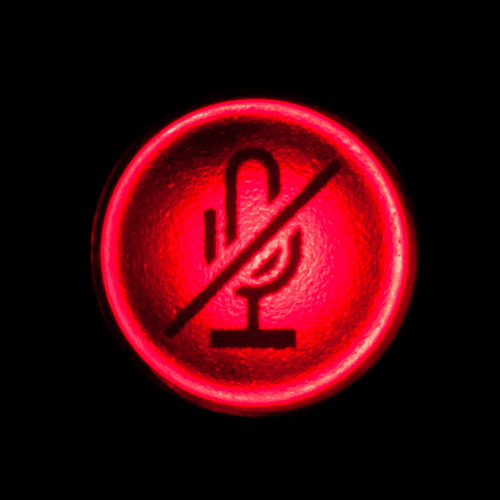
| Photo © dan_giles | Flickr / Creative Commons [image: A red lit-up mute button featuring a crossed-out microphone symbol.] |
seekingsara174.com
Hearing is the sense that gives me the most trouble to the point that I often wish I had a mute button for the world around me. Sometimes I even wonder what it would be like to have a cochlear implant that I could detach when sound was just too overpowering. The world is such a loud place and it seldom stops talking.
Some days are better than others. Sometimes my brain does a better job at filtering sounds toward the back of my mind, but most days the sound comes at me all at once in a jumble of confusing, overwhelming chaos. Each sound jockeys for position at the front of my mind as each insists I pay close attention to its deafening shouts. It’s an exhausting experience to be constantly inundated with such a loud, insistent world without the ability to filter any of it out.
Even now while I write this post in a relatively quiet room, sound is everywhere. The high-pitched chirping of a bird outside the window is joined by the electric whine of the TV (which is off), the shower running upstairs, a family member walking on the floor above me, a goose in the front yard honking incessantly, the walls and windows settling, the wind swooshing through the trees out back, an electric toothbrush pulsing, a door opening and closing, the hum of the ice maker, the neighbor’s car door slamming…All loud. All insistent.
I am very easily startled, overwhelmed, or distracted by sounds. I’m likely to jump at a sudden loud noise, and it can often be very painful. A lot of sounds are physically painful to me: fireworks (which I also feel as a punch in the chest), alarms, sirens, anything shrill, etc. Some are less painful but more overwhelming; those make me feel like I’m drowning: crowds, loud music, revving engines, etc.These are some of the most extreme sounds for me: fireworks, fire alarms, sirens of any kind, pitch-bending (sliding between notes), dentist drills, wood saws or drills, squealing bike brakes, shrill voices, whistles, people whistling, motorcycles revving, airplanes overhead, loud voices/shouting, loud and unexpected sounds in general, high-pitched noises, tapping or clicking, people talking behind me, crowds, out of key music, hairdryers, vacuum cleaners…
While I doubt that these things are pleasant for most people, they can be absolutely excruciating to me.
It’s important to note that auditory sensory overload isn’t always related to sounds I don’t like. When I’m overstimulated, I can’t handle any sound. Not my favorite song or an otherwise pleasant white noise or even the sound of a loved one’s voice. At that point, any sound is toxic until I recover.
Here are some examples of my intense auditory sensitivities to give you a better idea of my experiences:
LOOPING
Sometimes a noise or sound gets stuck in my head. I call this “looping” and it can be maddening. Think about something like nails on a chalkboard. (Even typing that makes me physically uncomfortable. But that cringing sensation that a lot of people experience is how many sounds feel to me!) Imagine that sound getting trapped in your head and sort of echoing again and again and again–long after the actual sound has passed. This happens to me fairly frequently and it’s extremely painful and distressing.
ELECTRONICS
I did an experiment with a friend once while studying abroad. After months of being annoyed by the high-pitched whine of the old TV in the corner of the dorm kitchen, I finally grumbled, “It’s so LOUD!!” My friend looked at the sumo match on the TV, back to me, and then back to the cheering crowd on the screen. “Loud? Ok, I’ll turn it down.” I shook my head. “Not the program. That shrill sound that comes from the TV.” He cocked his head and muted the TV–listening intently. To my surprise, he said he couldn’t hear it. I was completely shocked.
“You can’t hear that? Seriously? It’s all I can hear…” We decided to do an experiment. I turned my back on the TV. He kept the volume muted and silently turned the TV on and off and I told him whether it was on or not based on the whining sound. I left the kitchen and started to walk down the hallway, calling back to him “ON! OFF!!… ON! OFF! No, STILL ON! Ha, tricky!” as I passed room after room.
I made it all the way down to the end of the hallway where I could still hear the faint sound of the shrill TV. When I got back into the room my friend was shaking his head. “Is that why you always turn it off when no one’s watching it? I thought you just really hated sumo or something.”
FIRE ALARMS
One year while teaching in Japan, my desk was located directly beside the fire alarm. I didn’t realize this because it looked different from the ones I’m used to seeing. (In some ways I’m glad I didn’t know because if I had, I may not have been able to relax.) One day, we had an unexpected fire drill and the alarm blared directly at me. It was actual physical agony. I can still remember the physical pain throughout my body and the extreme nausea: I almost threw up. I was on edge for the rest of the day—jumpy and fidgety until I could go home and sit in a dark, quiet room with both earplugs and headphones.
When I was a kid and there were safety drills at school, I would be a complete wreck waiting for the alarm, during, and for the rest of the day. It would make me anxious and physically ill for the entire day. I remember trying to be “tough” like all the other kids who could walk down the hallways laughing and joking, but I always had to shove my fingers in my ears and grit my teeth as I raced out of the building.
COPING
- Ear plugs: I wear earplugs while I sleep and I have done for at least a decade. I can’t fall asleep without them; I can’t even begin to relax and let down my guard without them. I’ve started to bring earplugs everywhere I go and wear them in restaurants especially.
- Noise-canceling headphones: When I first got my headphones, I wore them every chance I got but found that I panicked when I had to take them off for work. I think they actually made me more sensitive to sound and that was a horrifying discovery. Now I only wear them when I really, really need to avoid a sound that earplugs just won’t help with.
- Stimming (Blocking or recovering from bad sensory input with good/neutral stimuli): Humming or singing softly to myself is one of the most effective tools to help me deal with auditory overstimulation and sensory overload. This works by blocking out other sounds and giving me some control over what I’m hearing. Unfortunately, it’s something that society has made me feel uncomfortable doing in public, but sometimes I can’t help but do it to survive. I’m getting better at doing it in situations where I need to.
- Silence: I bathe in silence whenever possible. Silence is a breath of life.


