I'm Not Just Socially Awkward

Photo courtesy the author
[image: Blurry photo of a pink ride-on bouncy balloon with
an animal face and two "horns" for handles. Overlaid white text
reads, "I'm not just socially awkward." Smaller white text in the
lower right corner reads, "@oufoxgloved"
and "Autnot.Wordpress.com"]
Rhi Lloyd-Williams
autistrhi.com

When I tell people I’m autistic, it usually goes one of two ways; either they can’t make me fit into their idea of what autism is and completely reject it, or they mark me down as “socially awkward” and leave it there.

Autism explains my lack of constant contact, it explains my monologuing about things that interest me, it explains why on social occasions I move around a room like a loose cog in a machine—catching on things, getting stuck in places, jarring against this and that before being knocked into a corner and staying there.

Those are the things about me that you can see. What you can’t see are the other bits; my problems with Executive Function, my never-ending battle with literalness, my lip-reading over auditory-processing, my sensory issues, my affinity with numbers and disassociation with names, and on and on and on.

When people classify me as “socially awkward” they expect too much from me. They’re surprised when I find some things hard. I’m not telling you that I can’t make a shopping list because it’s boring and takes time, I’m telling you that it’s incredibly hard. There are too many variables, I have to hold them all in my head, I can’t, it gets too big. I falter and have to start again, but then the same thing happens. I cannot juggle the thoughts needed like that. I cannot think in a linear way, I have to include all the forks going off in different directions.

You may think in straight lines, but my thoughts are like lightning bolts. They flash brightly, sparking off in every direction, and by the time the thunder rumbles, I have lost the central bolt and am caught in how my hairs all stand on end.

I am not socially awkward, I am socially different. Autism isn’t about not making connections, it’s about making different ones.

I am built to logicise and problem-solve, and this means I am brilliant at certain aspects of thinking, but terrible at things that other people take for granted as "easy."

When I say I find something hard, please don’t tell me how easy it is. Please don’t tell me I just have to do it like this or like that. It will never be easy for me. It will always take time and energy that could be spent elsewhere. If you found quadratic equations hard, I wouldn’t tell you how easy they are. I wouldn’t tell you to just do this or just do that. I accept that although I can explain and help you get to the answer, this may be something you will always need support with.

I am not socially awkward and lazy or incompetent. I did not get this autism diagnosis diagnosis because of shyness. I am autistic, with all the joys and pains being human brings. I am creative and imaginative, I am loving and thoughtful, I am good at things and bad at things. The things you find easy may not be the same as the things I find easy, and that is just fine too.
Share:

Your Brain and Spirituality.


Stained glass brain (stock image).  Credit: © Katharine / Fotolia

Scientists have identified a possible neurobiological home
for the spiritual experience -- the sense of connection to 
something greater than oneself.

I would find it strange for someone to deny ever having a spiritual experience.  We all have them.  What is different from person to person is what we attribute the experience to.

The brain is an amazing organ, our sole interpreter of the greater world around us.  However, whether you believe that spirituality emanates from God or hold the position that our apparently three dimensional reality is actually a two dimensional projection from the nearest black hole, this is how you and I experience the spiritual.

*  *  *  *  *


Where the brain processes spiritual experiences

Spiritual experiences can be religious in nature or not, such as feeling
of oneness in nature or the absence of self during sporting events.

Yale scientists have identified a possible neurobiological home for the spiritual experience -- the sense of connection to something greater than oneself.

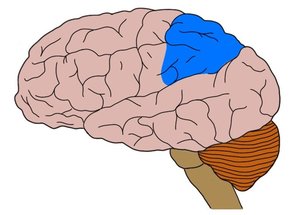
 posterior parietal cortex in blue.
Source:  Neuroscientifically Challenged
Activity in the parietal cortex (area in blue, left), an area of the brain involved in awareness of self and others as well as attention processing, seems to be a common element among individuals who have experienced a variety of spiritual experiences, according to a study published in the journal Cerebral Cortex.

"Spiritual experiences are robust states that may have profound impacts on people's lives," said Marc Potenza, professor of psychiatry, of the Yale Child Study Center, and of neuroscience. "Understanding the neural bases of spiritual experiences may help us better understand their roles in resilience and recovery from mental health and addictive disorders."

Spiritual experiences can be religious in nature or not, such as feeling of oneness in nature or the absence of self during sporting events.

Researchers at Yale and the Spirituality Mind Body Institute at Columbia University interviewed 27 young adults to gather information about past stressful and relaxing experiences as well as their spiritual experiences. The subjects then underwent fMRI scans while listening for the first time to recordings based on their personalized experiences. While individual spiritual experiences differed, researchers noted similar patterns of activity in the parietal cortex as the subjects imagined experiencing the events in the recordings.

Potenza stressed other brain areas are probably also involved in formation of spiritual experiences. The method can help future researchers study spiritual experience and its impact on mental health, he said.

Story Source:  Materials provided by Yale University.   Lisa Miller, Iris M Balodis, Clayton H McClintock, Jiansong Xu, Cheryl M Lacadie, Rajita Sinha, Marc N Potenza. Neural Correlates of Personalized Spiritual Experiences. Cerebral Cortex, 2018.
Share:

War Leaves 17 Women for Every Man

Image result for one man many women
Source: Psychology Today

This report of a "Y-chromosone Bottleneck" that occurred seven thousand years ago raises some interesting questions.

In it, the author theorizes that war may have the effect of simplifying the male genome to the point that it's like having but one man for every 17 women.  Sounds like a male fantasy, but is it good for humanity and the potential for our survival on our planet?

Research shows that healthy populations depend on genetic diversity such as in this report from 2015, Genetic Diversity Linked to Today's Taller, Smarter People.  So if war has the effect of creating a male genome bottleneck, does the bottleneck limit the diversity needed to maintain a healthy population?  Could genetic bottlenecks be the reason that some militarily aggressive cultures such as the ancient Romans and Greeks are very peaceful today?  i.e., have they had the aggression breed out of them by years of wars in which the most warlike men died in battle or the epidemics that spread through armies?

The flip side is the question of whether a successful culture can maintain it's edge so to speak by encouraging immigration and intermixing?

And what happens to groups that reject others genetically different than themselves?  Are they creating a genetic bottleneck that will impact their descendants for generations to come?

A side thought:  could genetic bottlenecks of the past created pressure that led to cultures allowing polygamy as so many men had died in battle that multiple wives became a way of maintaining a population large enough to continue the war?

Here's the report -
*  *  *  *  *

Wars and clan structure may explain
a strange biological event 7,000 years ago

". . .it's almost as if everyone in a clan has the same father."

Starting about 7,000 years ago, something weird seems to have happened to men: Over the next two millennia, recent studies suggest, their genetic diversity -specifically, the diversity of their Y chromosomes -- collapsed. So extreme was that collapse that it was as if there was only one man left to mate for every 17 women.

Anthropologists and biologists were perplexed, but Stanford researchers now believe they've found a simple -- if revealing -- explanation. The collapse, they argue, was the result of generations of war between patrilineal clans, whose membership is determined by male ancestors.

The outlines of that idea came to Tian Chen Zeng, a Stanford undergraduate in sociology, after spending hours reading blog posts that speculated -- unconvincingly, Zeng thought -- on the origins of the "Neolithic Y-chromosome bottleneck," as the event is known. He soon shared his ideas with his high school classmate Alan Aw, also a Stanford undergraduate in mathematical and computational science.

"He was really waxing lyrical about it," Aw said, so the pair took their idea to Marcus Feldman, a professor of biology in Stanford's School of Humanities and Sciences. Zeng, Aw and Feldman published their results May 25 in Nature Communications.

A cultural culprit
It's not unprecedented for human genetic diversity to take a nosedive once in a while, but the Y-chromosome bottleneck, which was inferred from genetic patterns in modern humans, was an odd one. 
  1. First, it was observed only in men -- more precisely, it was detected only through genes on the Y chromosome, which fathers pass to their sons. 
  2. Second, the bottleneck is much more recent than other biologically similar events, hinting that its origins might have something to do with changing social structures.

Certainly, the researchers point out, social structures were changing. After the onset of farming and herding around 12,000 years ago, societies grew increasingly organized around extended kinship groups, many of them patrilineal clans -- a cultural fact with potentially significant biological consequences. The key is how clan members are related to each other. While women may have married into a clan, men in such clans are all related through male ancestors and therefore tend to have the same Y chromosomes. From the point of view of those chromosomes at least, it's almost as if everyone in a clan has the same father.

That only applies within one clan, however, and there could still be considerable variation between clans. To explain why even between-clan variation might have declined during the bottleneck, the researchers hypothesized that wars, if they repeatedly wiped out entire clans over time, would also wipe out a good many male lineages and their unique Y chromosomes in the process.

Computing clans
To test their ideas, the researchers turned to mathematical models and computer simulations in which men fought -- and died -- for the resources their clans needed to survive. As the team expected, wars between patrilineal clans drastically reduced Y chromosome diversity over time, while conflict between non-patrilineal clans -- groups where both men and women could move between clans -- did not.

Zeng, Aw and Feldman's model also accounted for the observation that among the male lineages that survived the Y-chromosome bottleneck, a few lineages underwent dramatic expansions, consistent with the patrilineal clan model, but not others.

Now the researchers are looking at applying the framework in other areas -- anywhere "historical and geographical patterns of cultural interactions could explain the patterns you see in genetics," said Feldman, who is also the Burnet C. and Mildred Finley Wohlford Professor.

Feldman said the work was a unusual example of undergraduates driving research that was broad both in terms of the academic disciplines spanned -- in this case, sociology, mathematics and biology -- and in terms of its potential implications for understanding the role of culture in shaping human evolution. And, he said, "Working with these talented guys is a lot of fun."

Story Source:  Materials provided by Stanford University.   Tian Chen Zeng, Alan J. Aw, Marcus W. Feldman. Cultural hitchhiking and competition between patrilineal kin groups explain the post-Neolithic Y-chromosome bottleneck. Nature Communications, 2018.

Share:

#AutINSAR 2018: What Do Autistic People Want from Autism Research?

Some of the onsite #AutINSAR participants, left to right: Jon Adams,
Sara LutermanDonna Bish, Andrew Colombo-Dougovito, Lily Levy,
Laura Crane, Mel Bovis, Carol GreenburgGeorgina Perez Liz,
and Shannon Rosa
Not pictured: Jelle van Dijk
Photo by Josie Blagrave

[Image description: Neurodiverse adults smiling and posing together]

The #AutINSAR chat was an in-person and online Twitter discussion about autism research priorities, with the conversation taking place directly between autistic and/or autism researchers on May 11, 2018, at #INSAR2018, the International Society for Autism Research conference in Rotterdam, Netherlands.

Many thanks to participants, and partners NOS Magazine, Autistic Self Advocacy Network, Autistic Women and Nonbinary Network, autchat, and We Are Like Your Child.

We discussed the following questions:
Q1: What should be the top three priorities for autism research? 
Q2: Which topics do #ActuallyAutistic people discuss that are missing from research conversations? 
Q3: What kind of technology research do you think would most improve #ActuallyAutistic people’s lives? 
Q4: What are examples of existing autism research that look promising for helping #actuallyautistic people? 
Q5: Which co-occurring conditions need more research attention, and why? 
Q6: What are some concerns of minority autistic community members that don’t get enough research attention? 
Q7: How can we better support #ActuallyAutistic autism researchers? 
Q8: Any topics we’ve missed that you’d like to discuss?

Who participated in #AutINSAR?


Q1: What should be the top three priorities for autism research?


Q2: Which topics do #ActuallyAutistic people discuss that are missing from research conversations?


Q3: What kind of technology research do you think would most improve #ActuallyAutistic people’s lives?


Q4: What are examples of existing autism research that look promising for helping #ActuallyAutistic people?


Q5: Which co-occurring conditions need more research attention, and why?


Q6: What are some concerns of minority autistic community members that don’t get enough research attention?


Q7: How can we better support #ActuallyAutistic autism researchers?


Q8: Any topics we’ve missed that you’d like to discuss?


Thanks so much for joining #AutINSAR


Share: